


FORCE
GCSE
ART
INDEPENDENT
PROJECT
ASSESSMENT OBJECTIVES:
AO1: Develop ideas through sustained and focused investigations
informed by contextual and other sources, demonstrating analytical and
critical understanding.
AO2: Experiment with and select appropriate resources, media, materials,
techniques and processes, reviewing and refining ideas as work develops
AO3: Record in visual and/or other forms ideas, observations and insights
relevant to their intentions, demonstrating an ability to reflect on work and
progress.
AO4: Present a personal, informed and meaningful response
demonstrating critical understanding, realising intentions and, where
appropriate, making connections between visual, oral or other elements.
STARTING POINTS
The following starting points are to start you
thinking about your ideas. You may work from
any one of the starting points, or you may
develop a relevant starting point of your own that
explores the theme ‘Force’.
PEOPLE
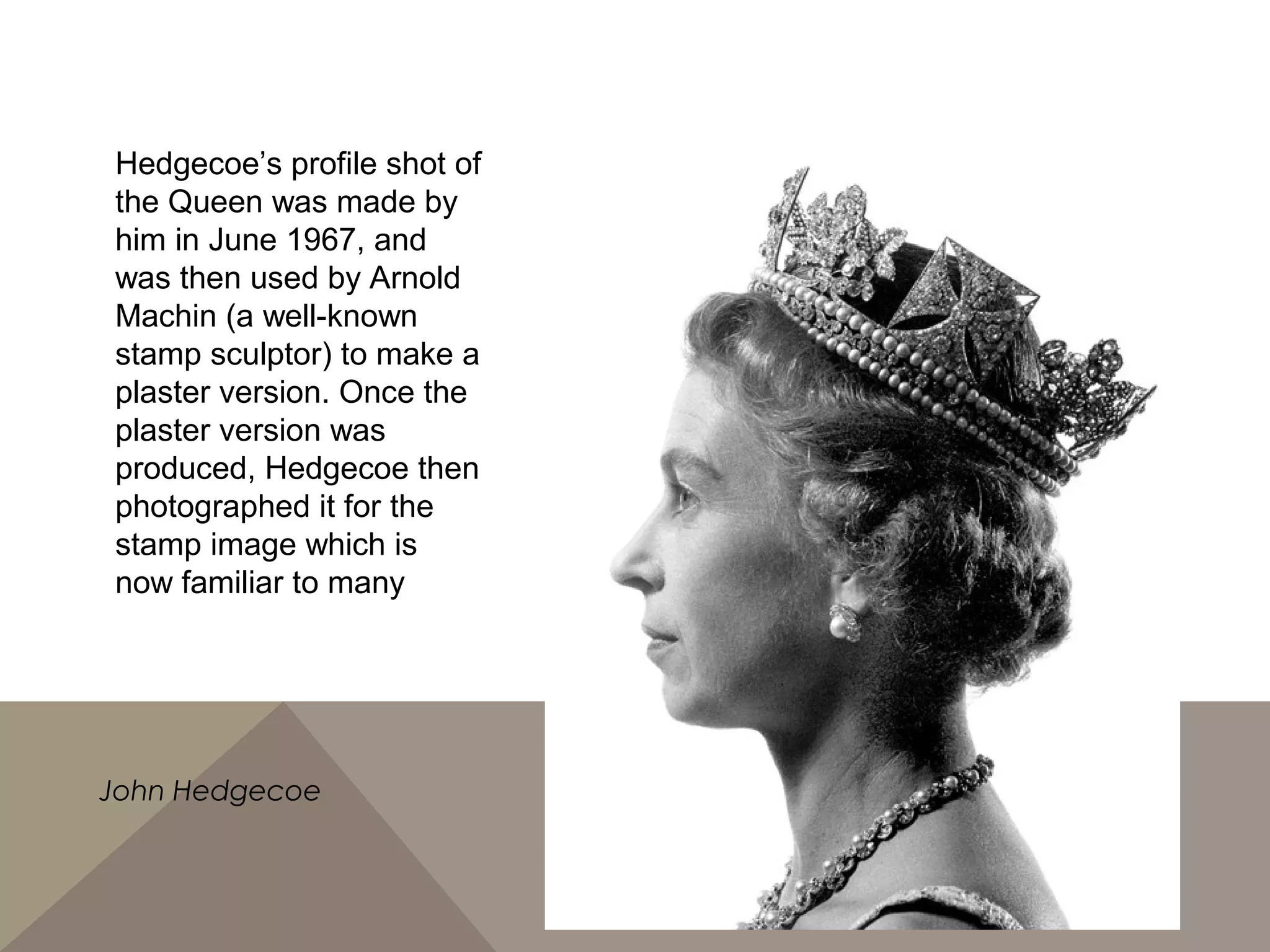
Hedgecoe’s profile shot of
the Queen was made by
him in June 1967, and
was then used by Arnold
Machin (a well-known
stamp sculptor) to make a
plaster version. Once the
plaster version was
produced, Hedgecoe then
photographed it for the
stamp image which is
now familiar to many
John Hedgecoe
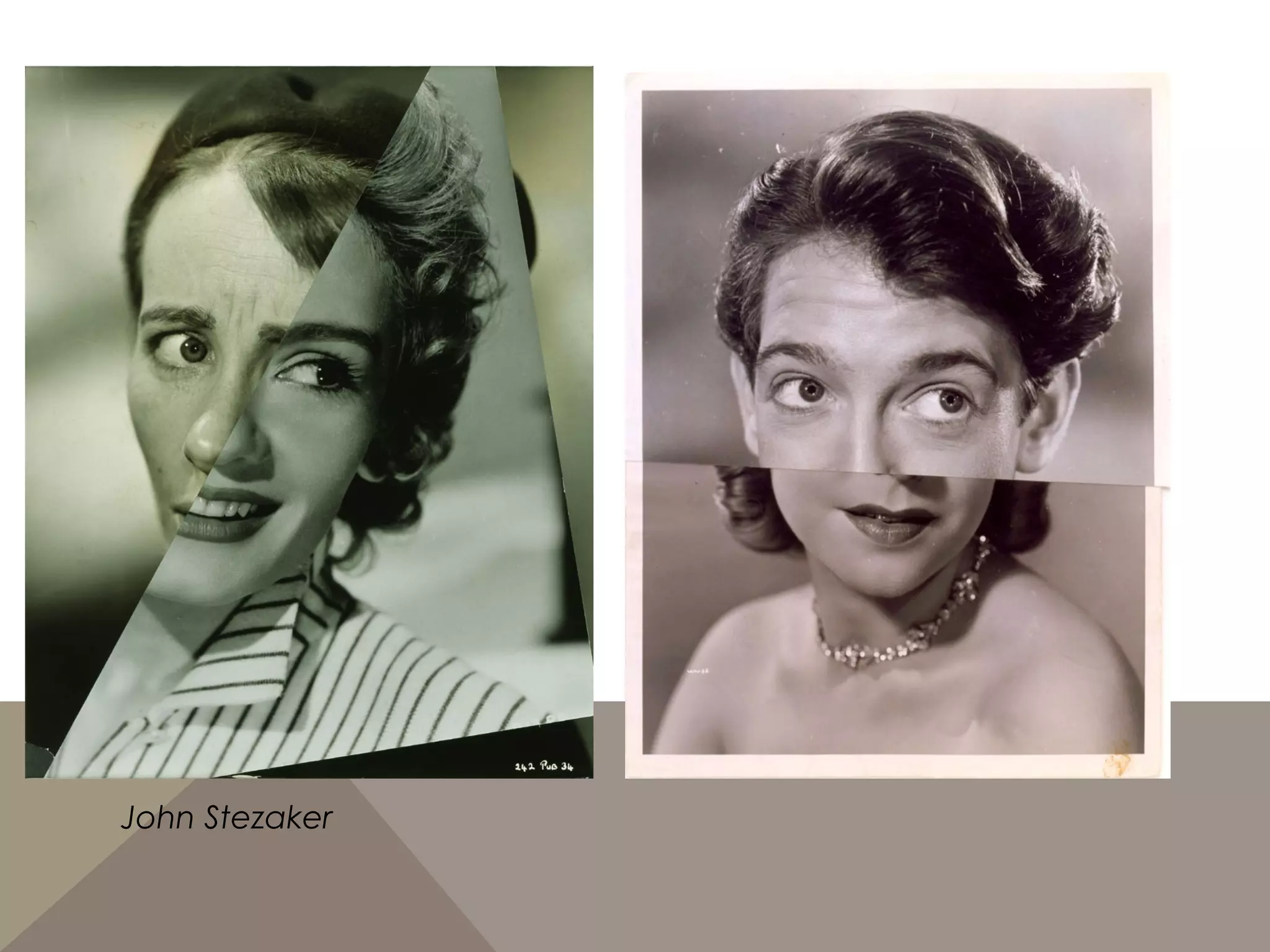
John Stezaker
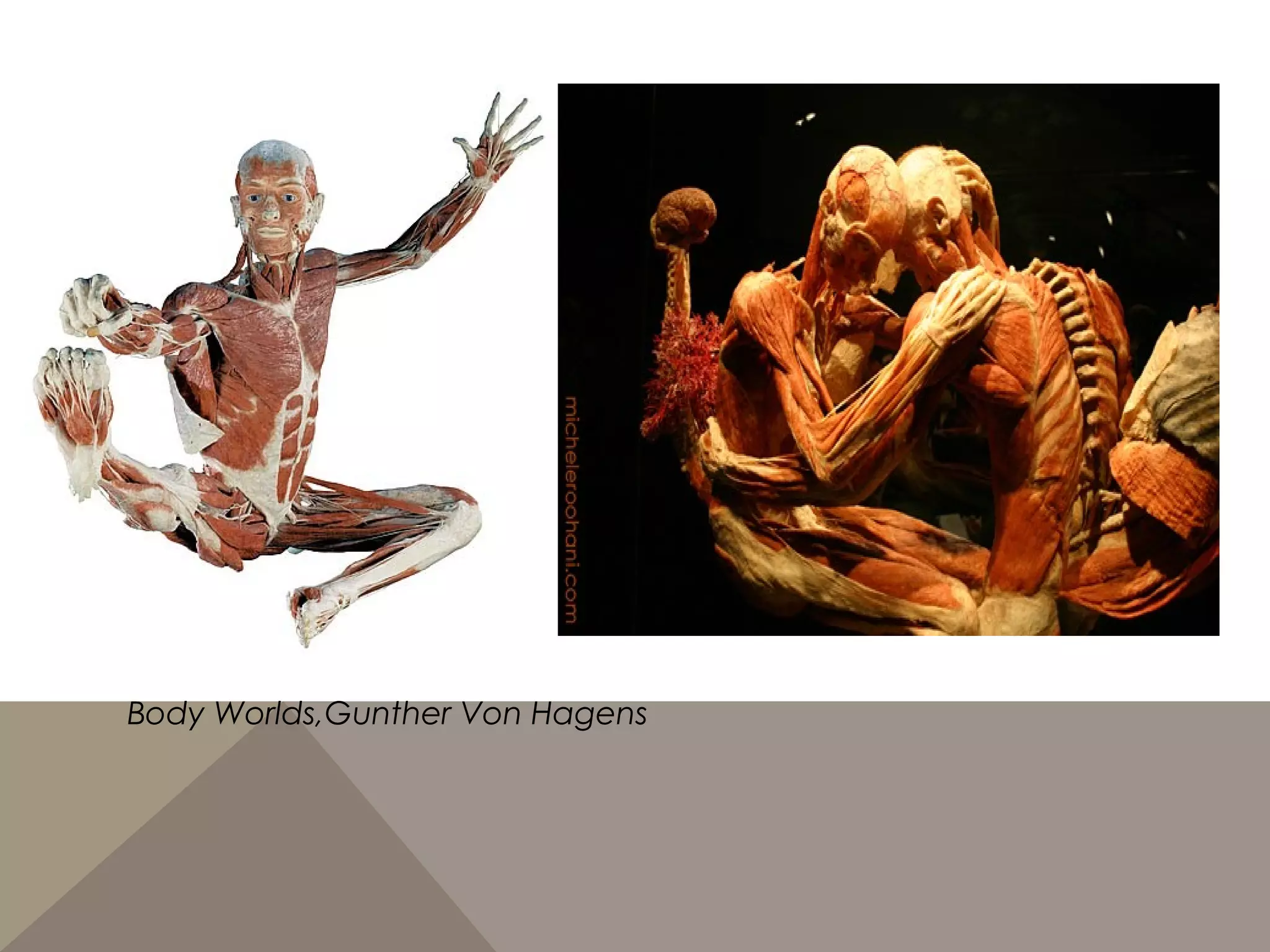
Body Worlds,Gunther Von Hagens
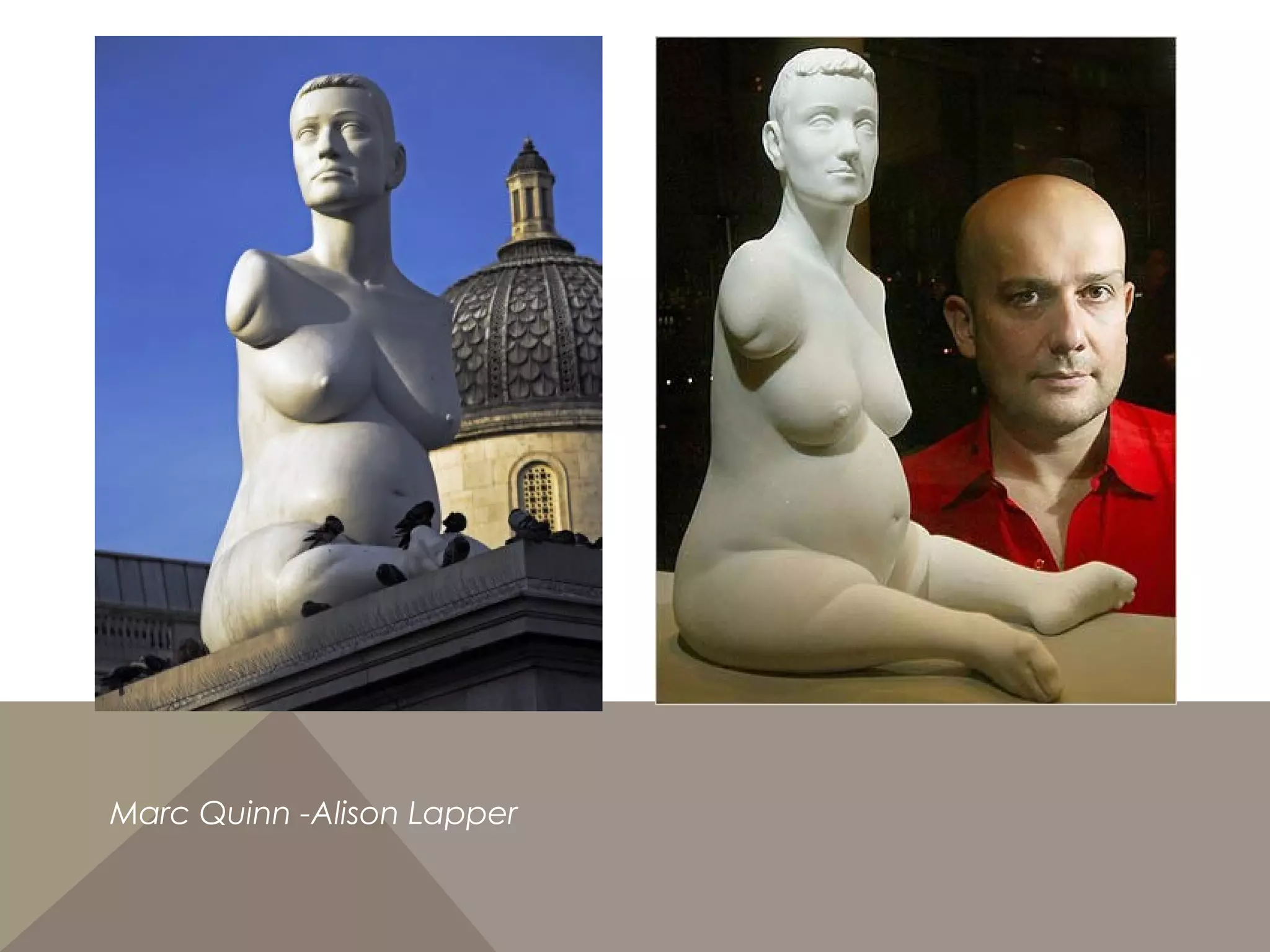
Marc Quinn -Alison Lapper
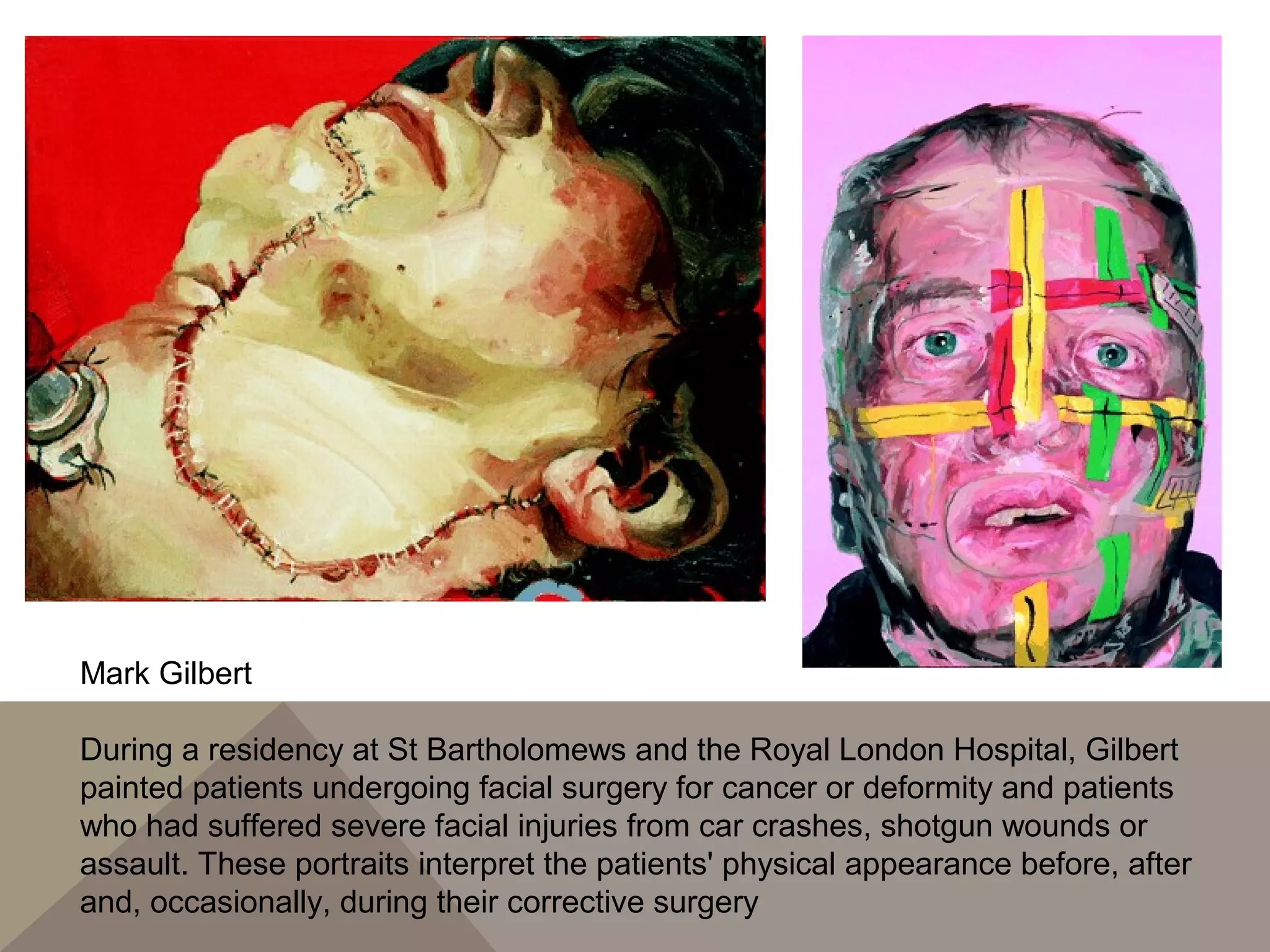
Mark Gilbert
During a residency at St Bartholomews and the Royal London Hospital, Gilbert
painted patients undergoing facial surgery for cancer or deformity and patients
who had suffered severe facial injuries from car crashes, shotgun wounds or
assault. These portraits interpret the patients' physical appearance before, after
and, occasionally, during their corrective surgery
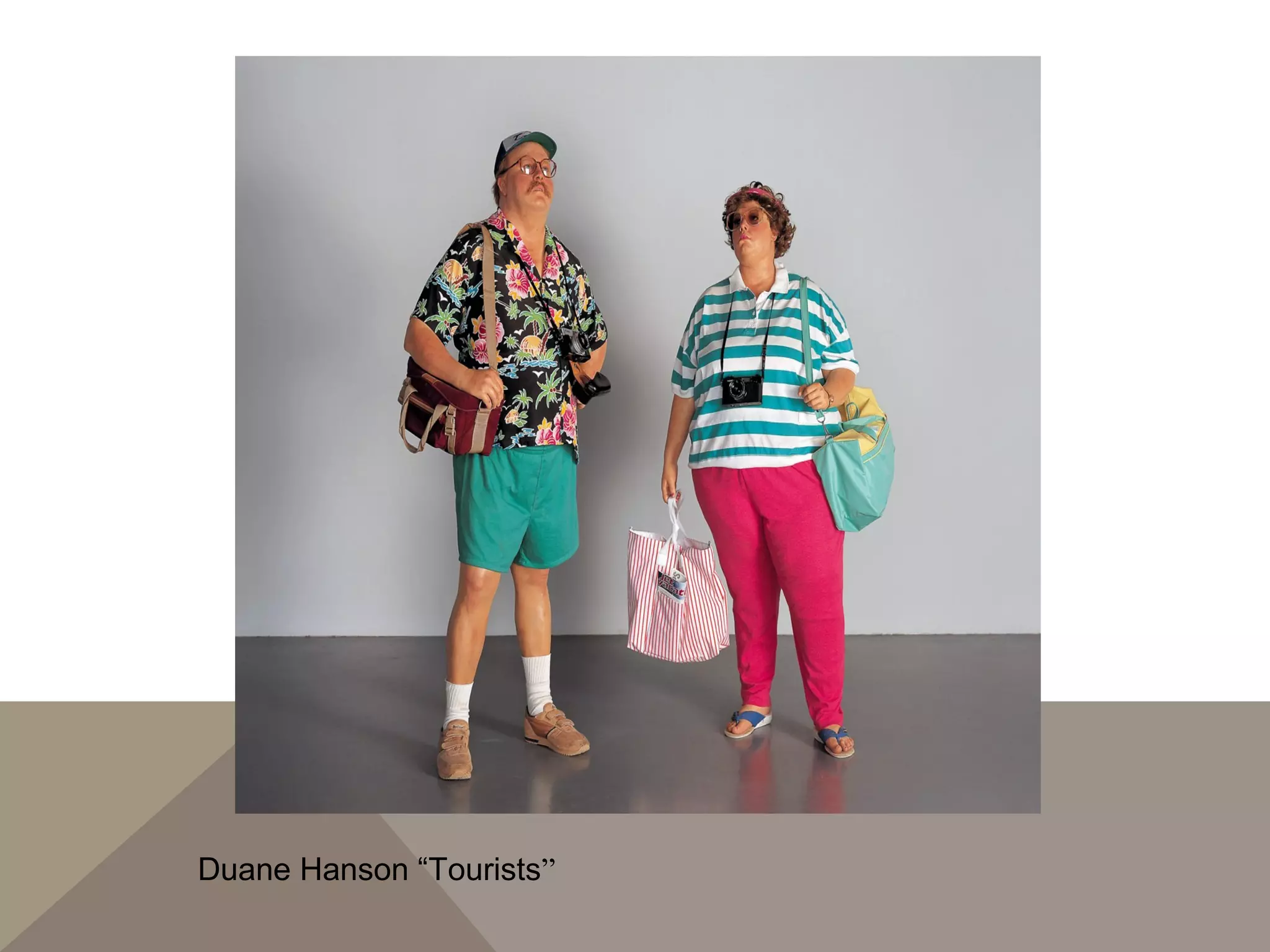
Duane Hanson “Tourists”
Martin Parr
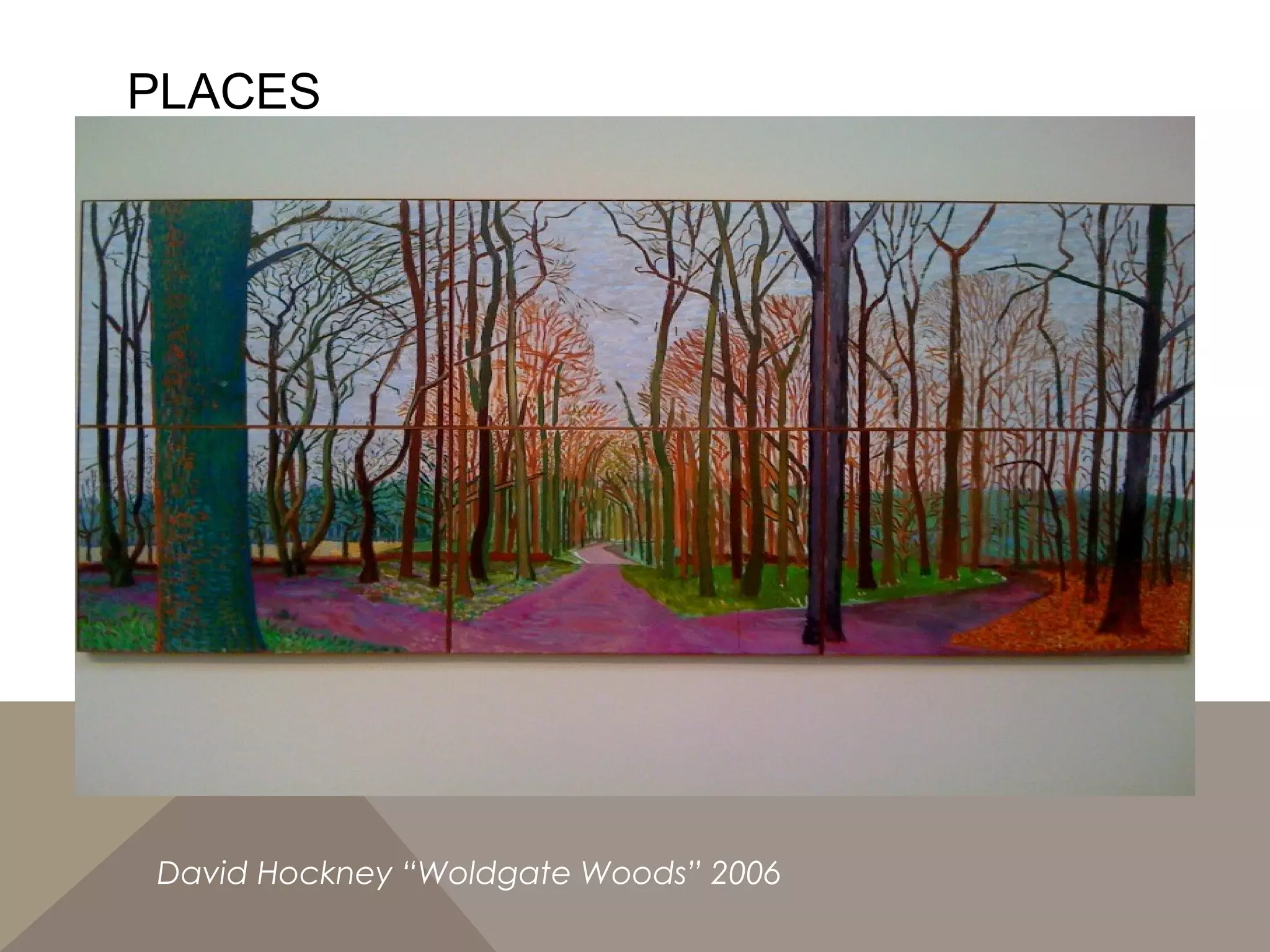
PLACES
David Hockney “Woldgate Woods” 2006
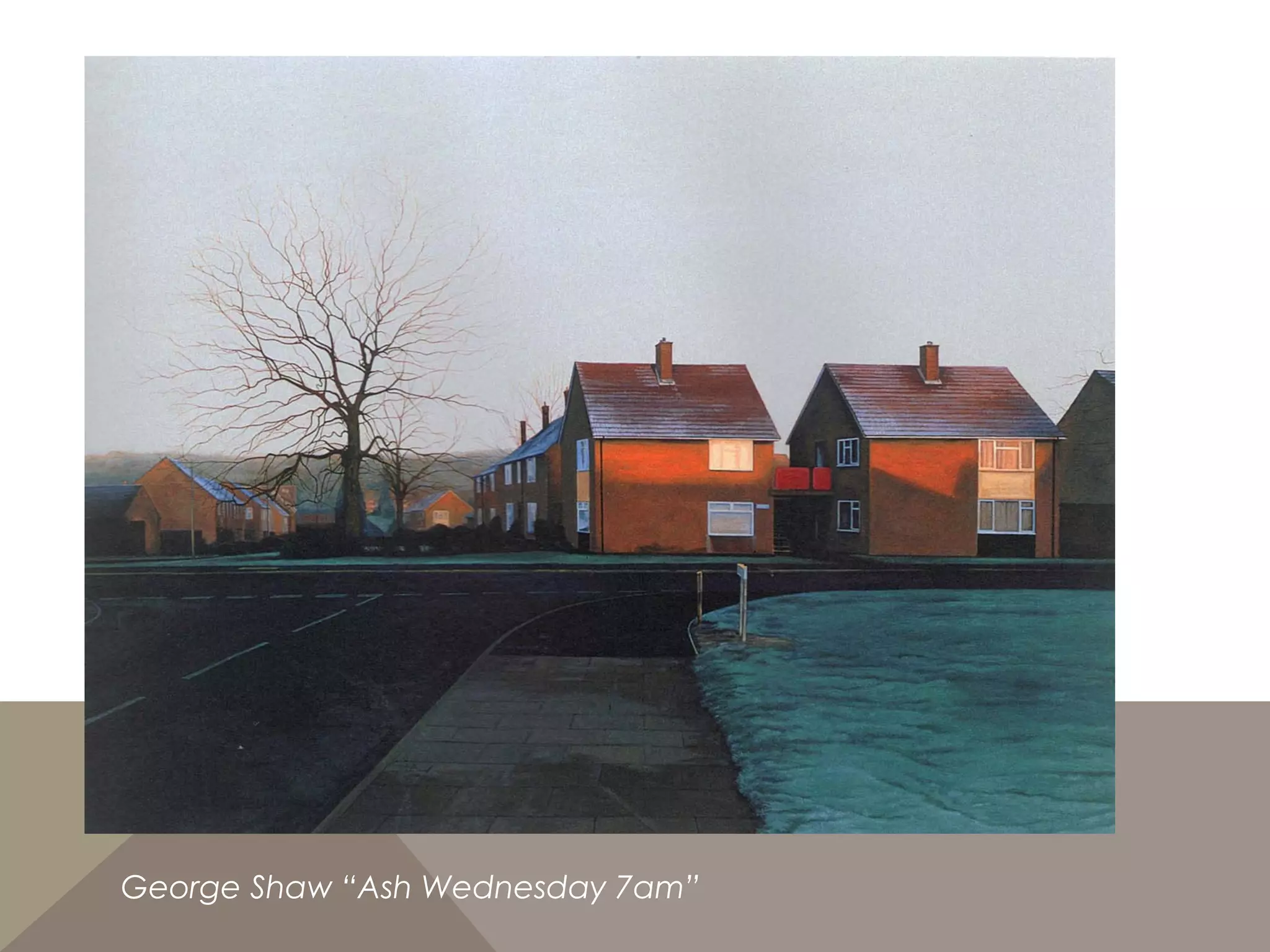
George Shaw “Ash Wednesday 7am”
Rich Little Girls" by Yinka Shonibare
Yinka Shonibare -: "People have come to
associate the fabric with Africa, but actually
it is Indonesian-influenced fabric produced
by the Dutch for sales to the African market.
It was made in Hyde...and I buy it in Brixton
market. I like the fact that something seen as
being African is actually the product of quite
complex cultural relationships."
Rich Little Girls,, explores that complexity in
Shonibare's juxtaposition of the Victorian and
the "African". It's interesting that clothes, if we
pay closer attention to them, are usually more
than just clothes - their threads could very well
be binding the Netherlands, Indonesia and much
of Africa in a historical triangle of sorts. For Rich
Little Girls, it's fashion, it's art, it's culture/race,
and it's "African".
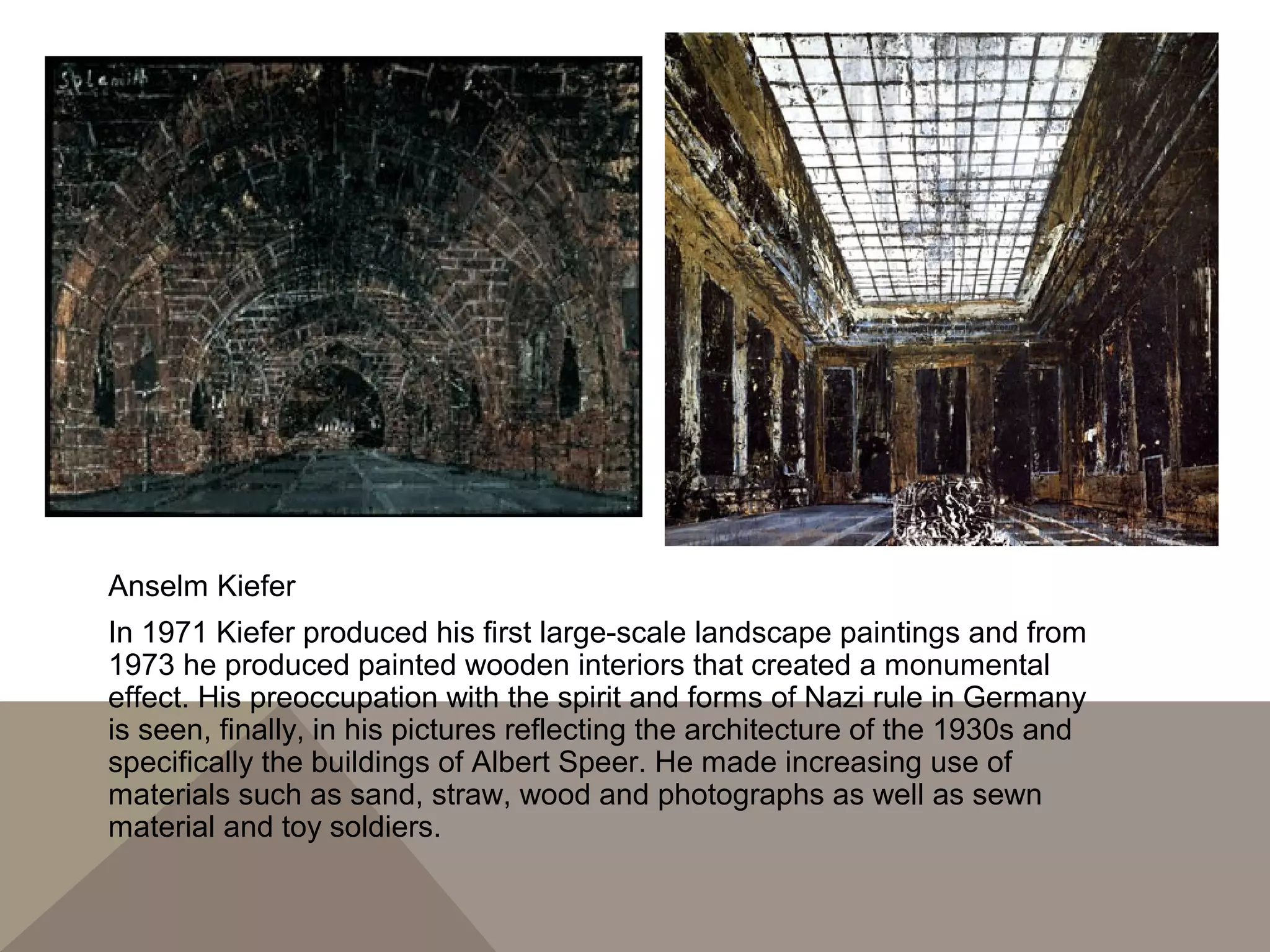
Anselm Kiefer
In 1971 Kiefer produced his first large-scale landscape paintings and from
1973 he produced painted wooden interiors that created a monumental
effect. His preoccupation with the spirit and forms of Nazi rule in Germany
is seen, finally, in his pictures reflecting the architecture of the 1930s and
specifically the buildings of Albert Speer. He made increasing use of
materials such as sand, straw, wood and photographs as well as sewn
material and toy soldiers.
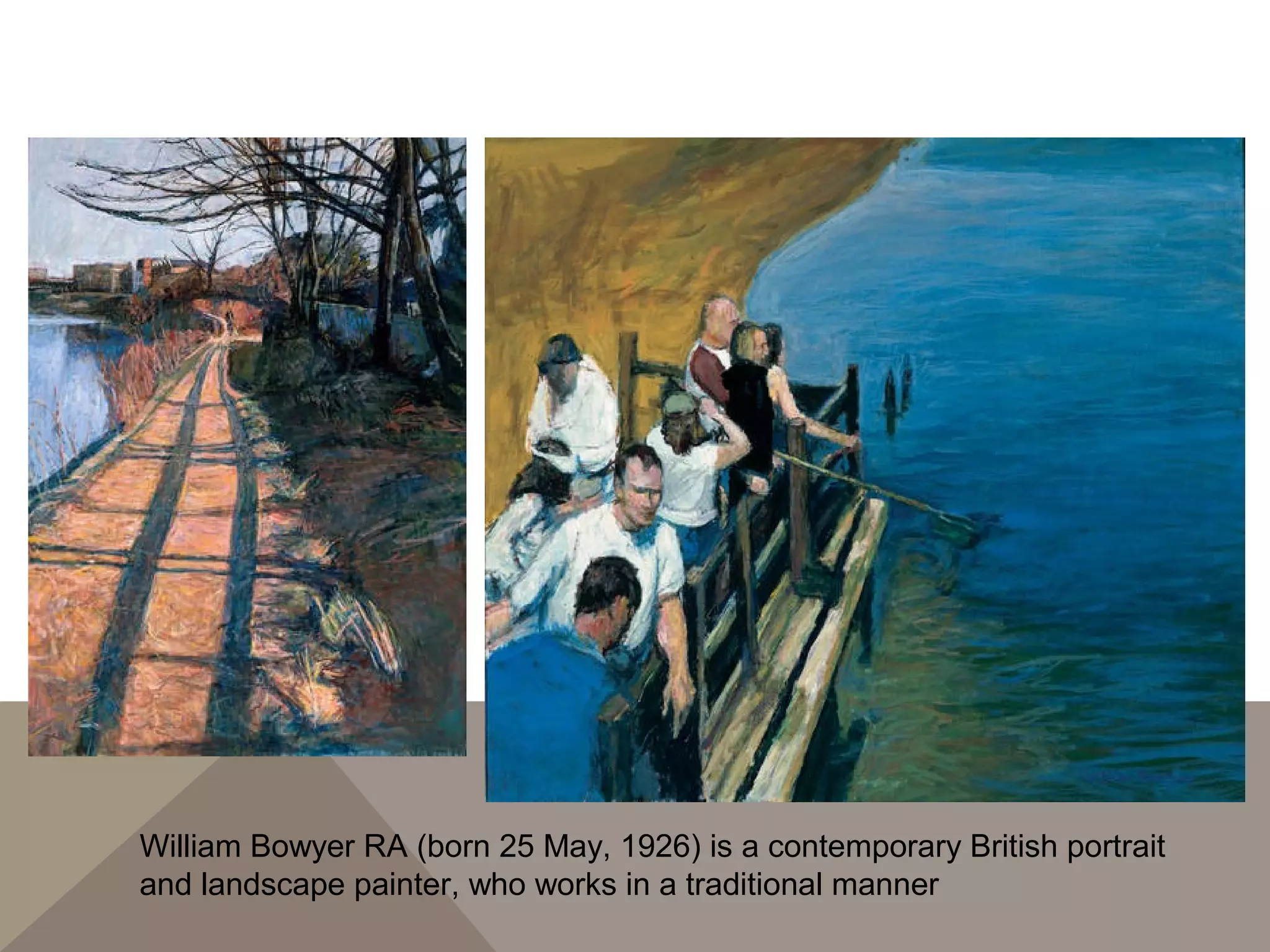
William Bowyer RA (born 25 May, 1926) is a contemporary British portrait
and landscape painter, who works in a traditional manner
Phillippe Ramette
Paul Smith
Smith acts as the unnamed hero for these dramatics, in a die-hard, James
Bond style character. Although independently coherent, the images are
deliberately montaged to create an overtly fabricated scene. In doing so
avoiding any documentary overtones and producing an entirely fantastical
environment in which to place the hero.
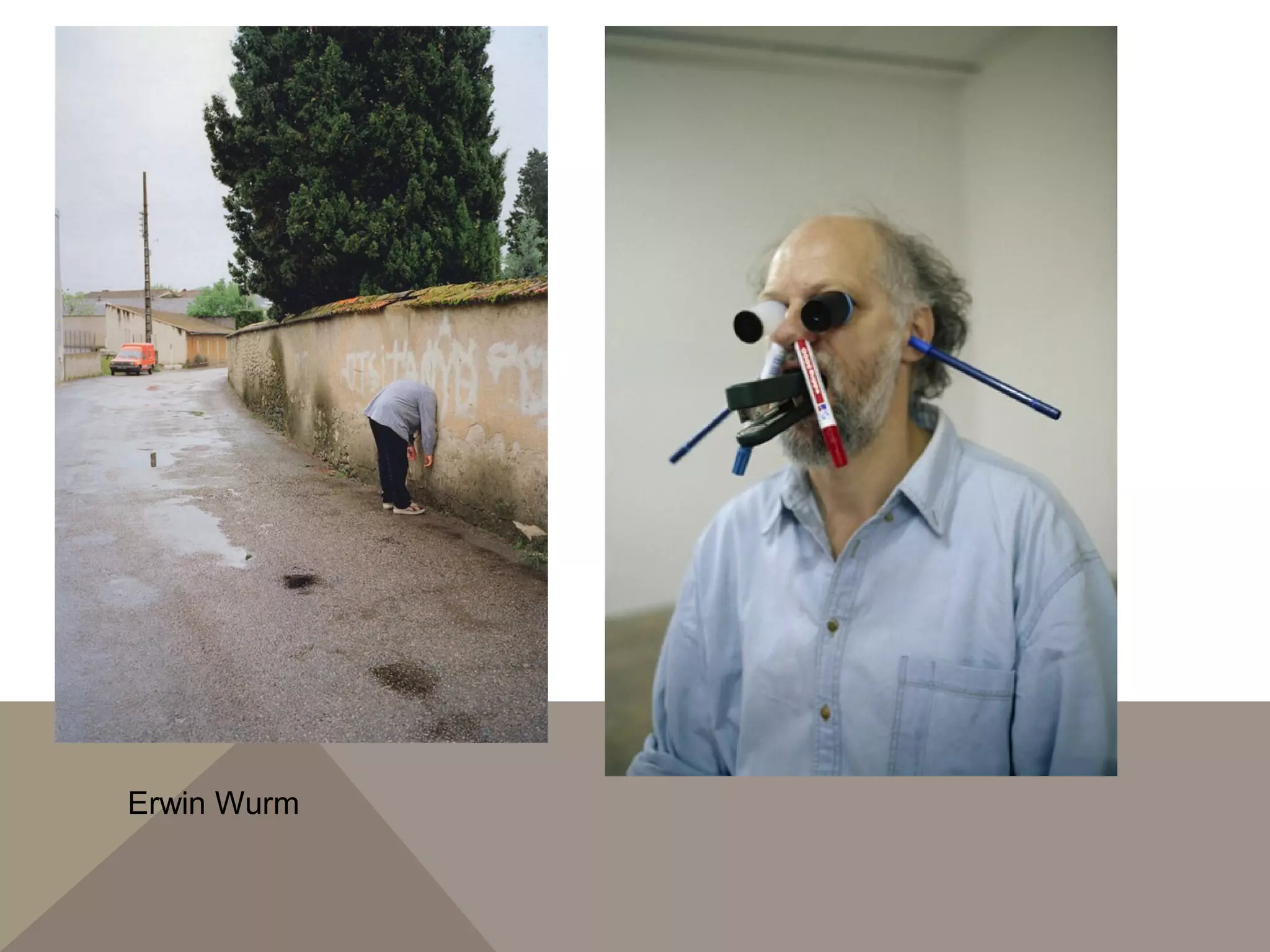
Erwin Wurm
Paul Smith
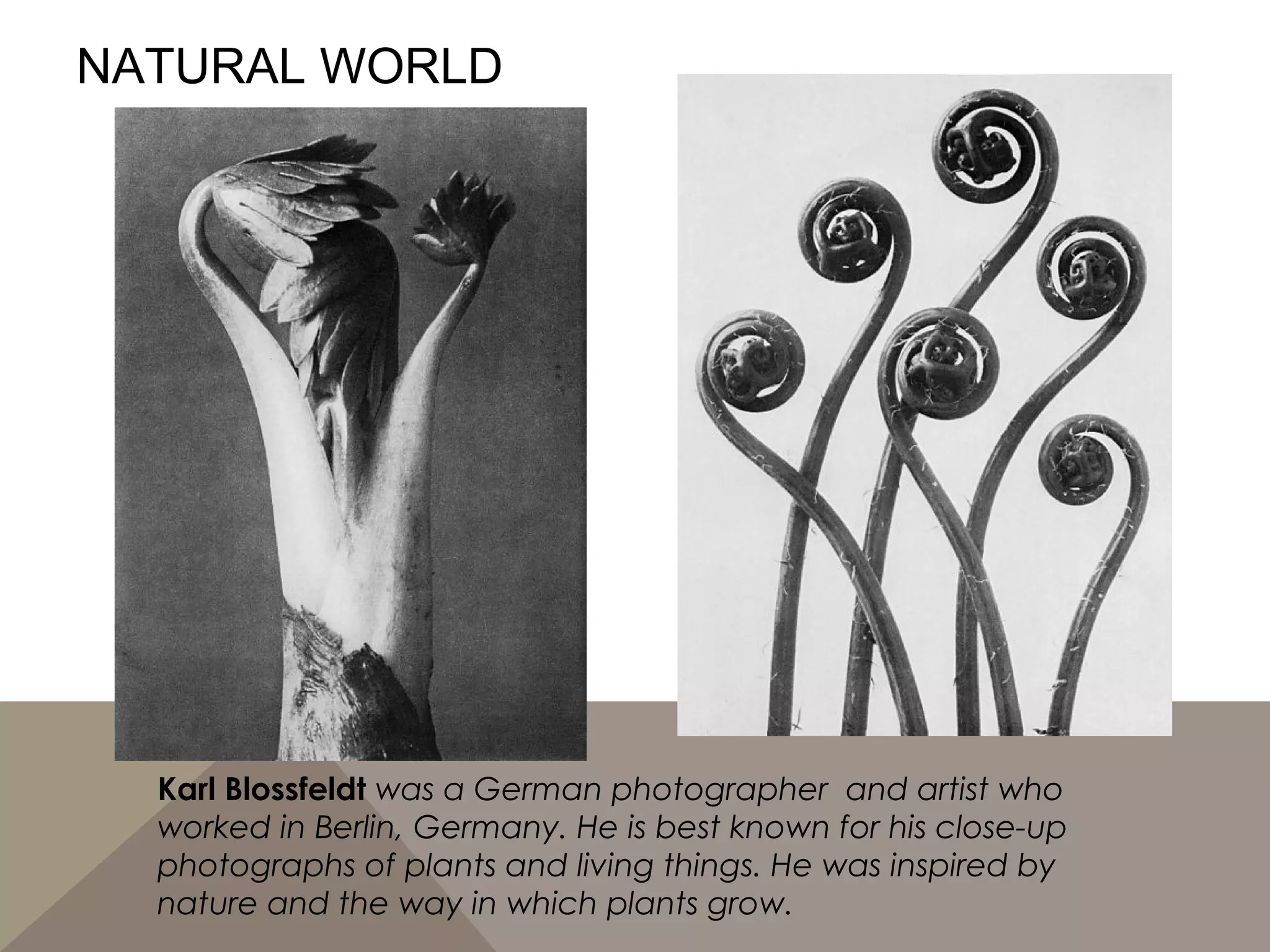
NATURAL WORLD
Karl Blossfeldt was a German photographer and artist who
worked in Berlin, Germany. He is best known for his close-up
photographs of plants and living things. He was inspired by
nature and the way in which plants grow.
Damien Hirst
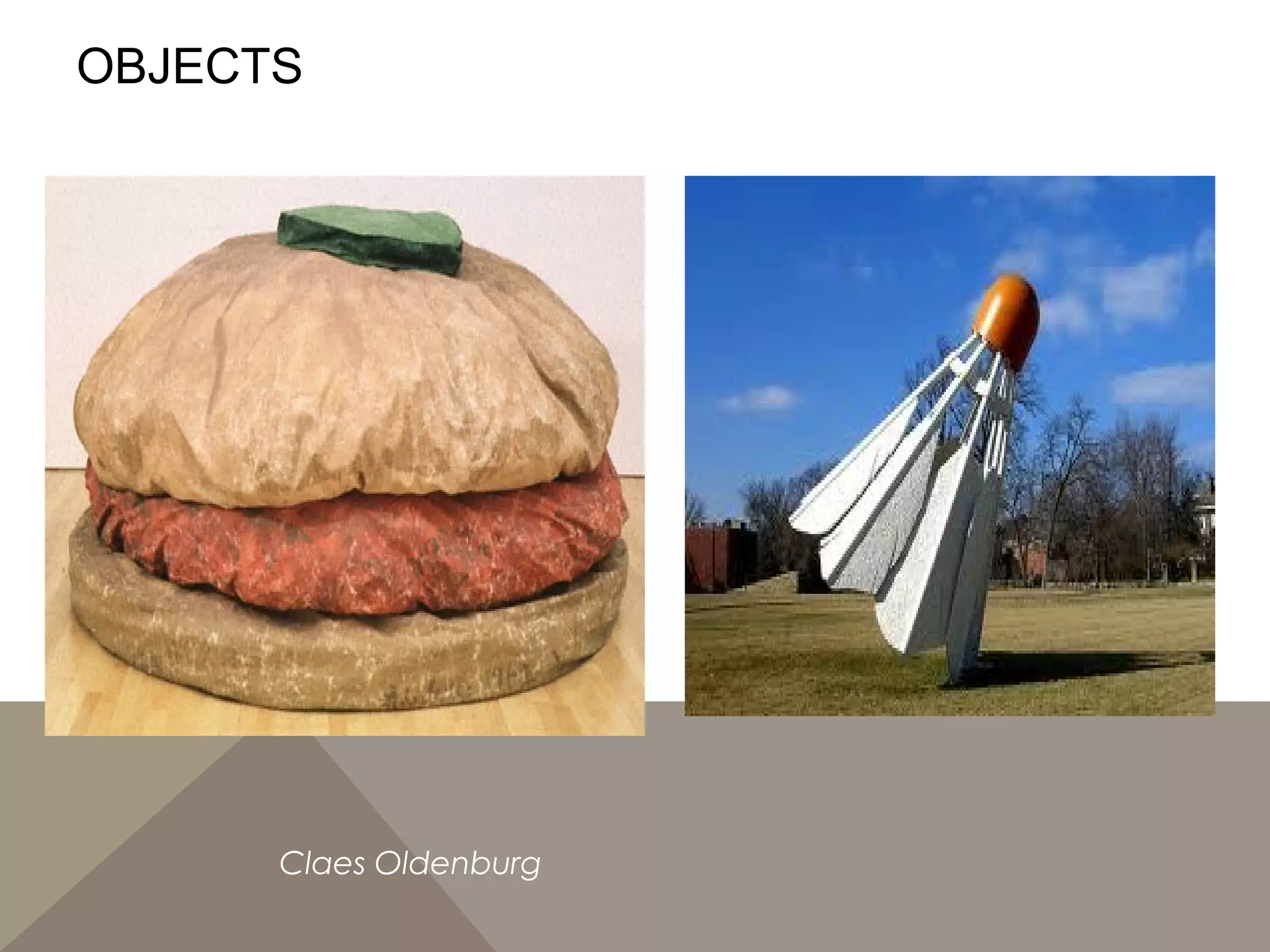
OBJECTS
Claes Oldenburg
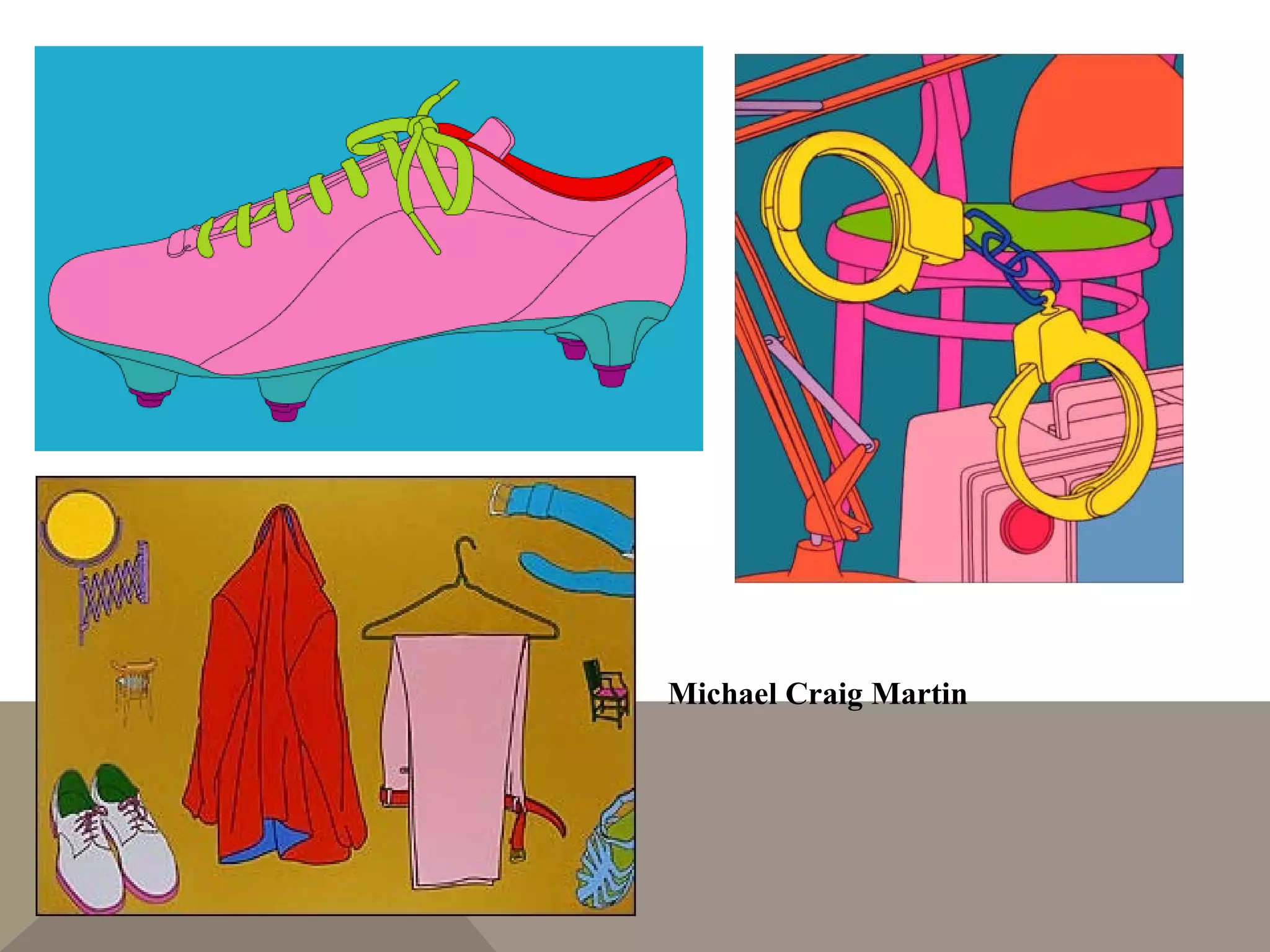
Michael Craig Martin
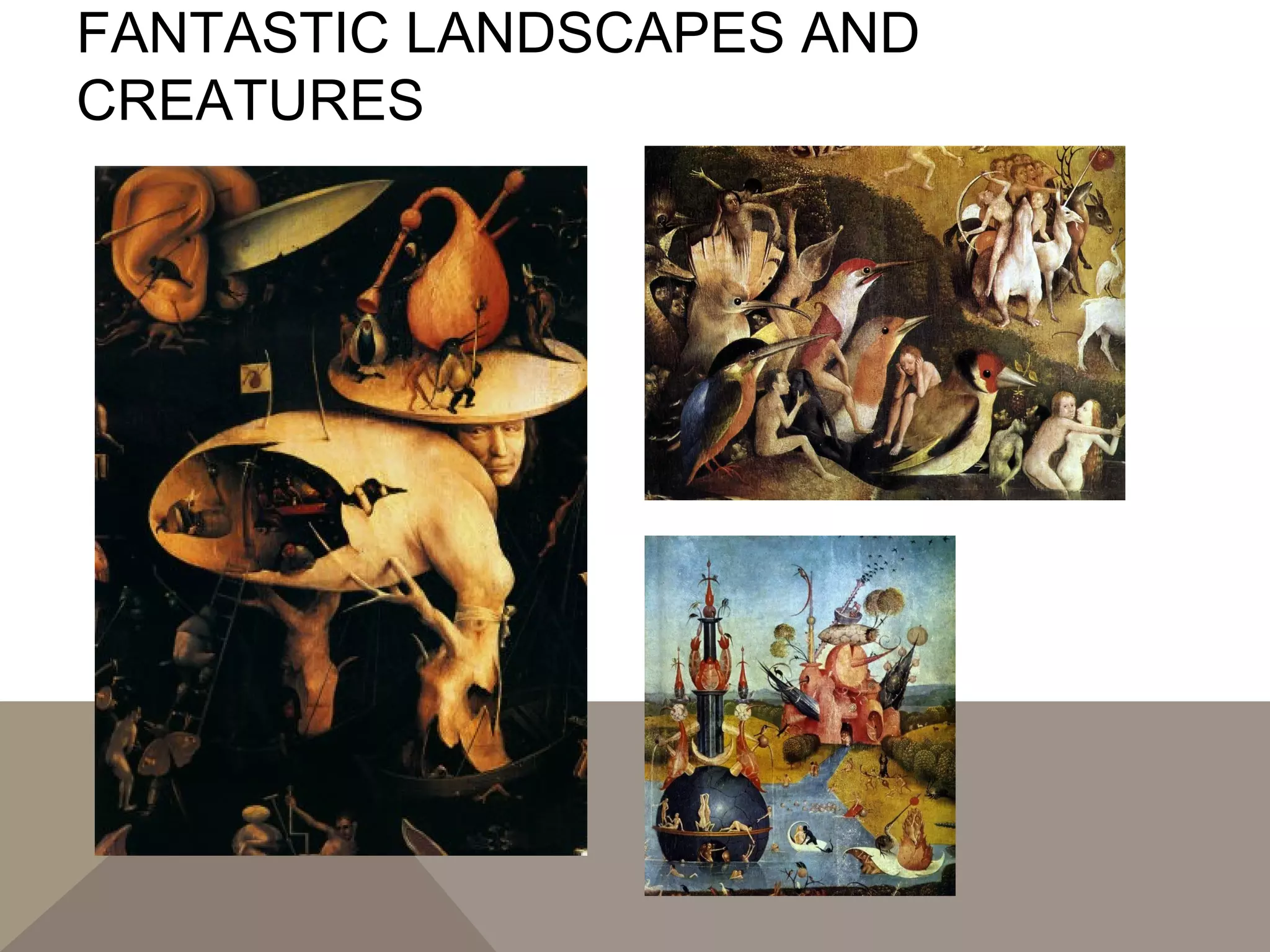
FANTASTIC LANDSCAPES AND
CREATURES
Jake and Dinos ChapmanBrad Holland
Thomas Grunfeld
Susan Hiller “Witness “ 2000
IMAGINATION
Cornelia Parker
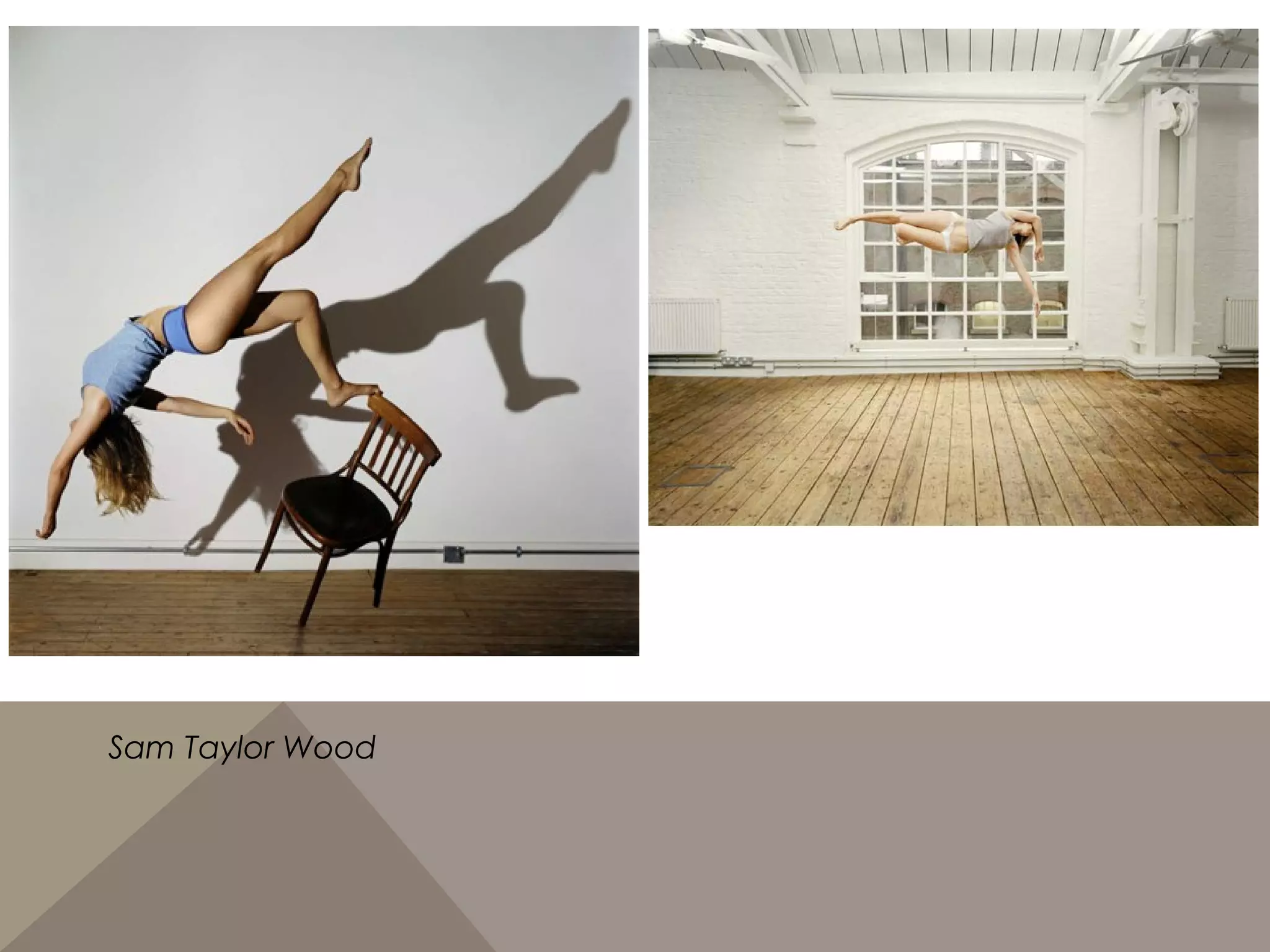
Sam Taylor Wood
William Daniels
Daniels begins his painting process
by first constructing models and lo-fi
maquettes, often of well-known paintings,
from cereal boxes, masking tape and
cigarette papers. After each model has
been completed Daniels starts the slow
process of rendering in painstaking detail
each of its cuts, tears and folds.
Force powerpoint

Force powerpoint

  • 1.
  • 2.
    ASSESSMENT OBJECTIVES: AO1: Developideas through sustained and focused investigations informed by contextual and other sources, demonstrating analytical and critical understanding. AO2: Experiment with and select appropriate resources, media, materials, techniques and processes, reviewing and refining ideas as work develops AO3: Record in visual and/or other forms ideas, observations and insights relevant to their intentions, demonstrating an ability to reflect on work and progress. AO4: Present a personal, informed and meaningful response demonstrating critical understanding, realising intentions and, where appropriate, making connections between visual, oral or other elements.
  • 3.
    STARTING POINTS The followingstarting points are to start you thinking about your ideas. You may work from any one of the starting points, or you may develop a relevant starting point of your own that explores the theme ‘Force’.
  • 4.
  • 5.
    Hedgecoe’s profile shotof the Queen was made by him in June 1967, and was then used by Arnold Machin (a well-known stamp sculptor) to make a plaster version. Once the plaster version was produced, Hedgecoe then photographed it for the stamp image which is now familiar to many John Hedgecoe
  • 6.
  • 7.
  • 8.
  • 9.
    Mark Gilbert During aresidency at St Bartholomews and the Royal London Hospital, Gilbert painted patients undergoing facial surgery for cancer or deformity and patients who had suffered severe facial injuries from car crashes, shotgun wounds or assault. These portraits interpret the patients' physical appearance before, after and, occasionally, during their corrective surgery
  • 10.
  • 11.
  • 12.
  • 13.
    George Shaw “AshWednesday 7am”
  • 14.
    Rich Little Girls"by Yinka Shonibare Yinka Shonibare -: "People have come to associate the fabric with Africa, but actually it is Indonesian-influenced fabric produced by the Dutch for sales to the African market. It was made in Hyde...and I buy it in Brixton market. I like the fact that something seen as being African is actually the product of quite complex cultural relationships." Rich Little Girls,, explores that complexity in Shonibare's juxtaposition of the Victorian and the "African". It's interesting that clothes, if we pay closer attention to them, are usually more than just clothes - their threads could very well be binding the Netherlands, Indonesia and much of Africa in a historical triangle of sorts. For Rich Little Girls, it's fashion, it's art, it's culture/race, and it's "African".
  • 15.
    Anselm Kiefer In 1971Kiefer produced his first large-scale landscape paintings and from 1973 he produced painted wooden interiors that created a monumental effect. His preoccupation with the spirit and forms of Nazi rule in Germany is seen, finally, in his pictures reflecting the architecture of the 1930s and specifically the buildings of Albert Speer. He made increasing use of materials such as sand, straw, wood and photographs as well as sewn material and toy soldiers.
  • 16.
    William Bowyer RA(born 25 May, 1926) is a contemporary British portrait and landscape painter, who works in a traditional manner
  • 17.
  • 18.
    Paul Smith Smith actsas the unnamed hero for these dramatics, in a die-hard, James Bond style character. Although independently coherent, the images are deliberately montaged to create an overtly fabricated scene. In doing so avoiding any documentary overtones and producing an entirely fantastical environment in which to place the hero.
  • 19.
  • 20.
  • 21.
    NATURAL WORLD Karl Blossfeldtwas a German photographer and artist who worked in Berlin, Germany. He is best known for his close-up photographs of plants and living things. He was inspired by nature and the way in which plants grow.
  • 22.
  • 23.
  • 24.
  • 26.
  • 27.
    Jake and DinosChapmanBrad Holland
  • 28.
  • 29.
    Susan Hiller “Witness“ 2000 IMAGINATION
  • 30.
  • 31.
  • 32.
    William Daniels Daniels beginshis painting process by first constructing models and lo-fi maquettes, often of well-known paintings, from cereal boxes, masking tape and cigarette papers. After each model has been completed Daniels starts the slow process of rendering in painstaking detail each of its cuts, tears and folds.