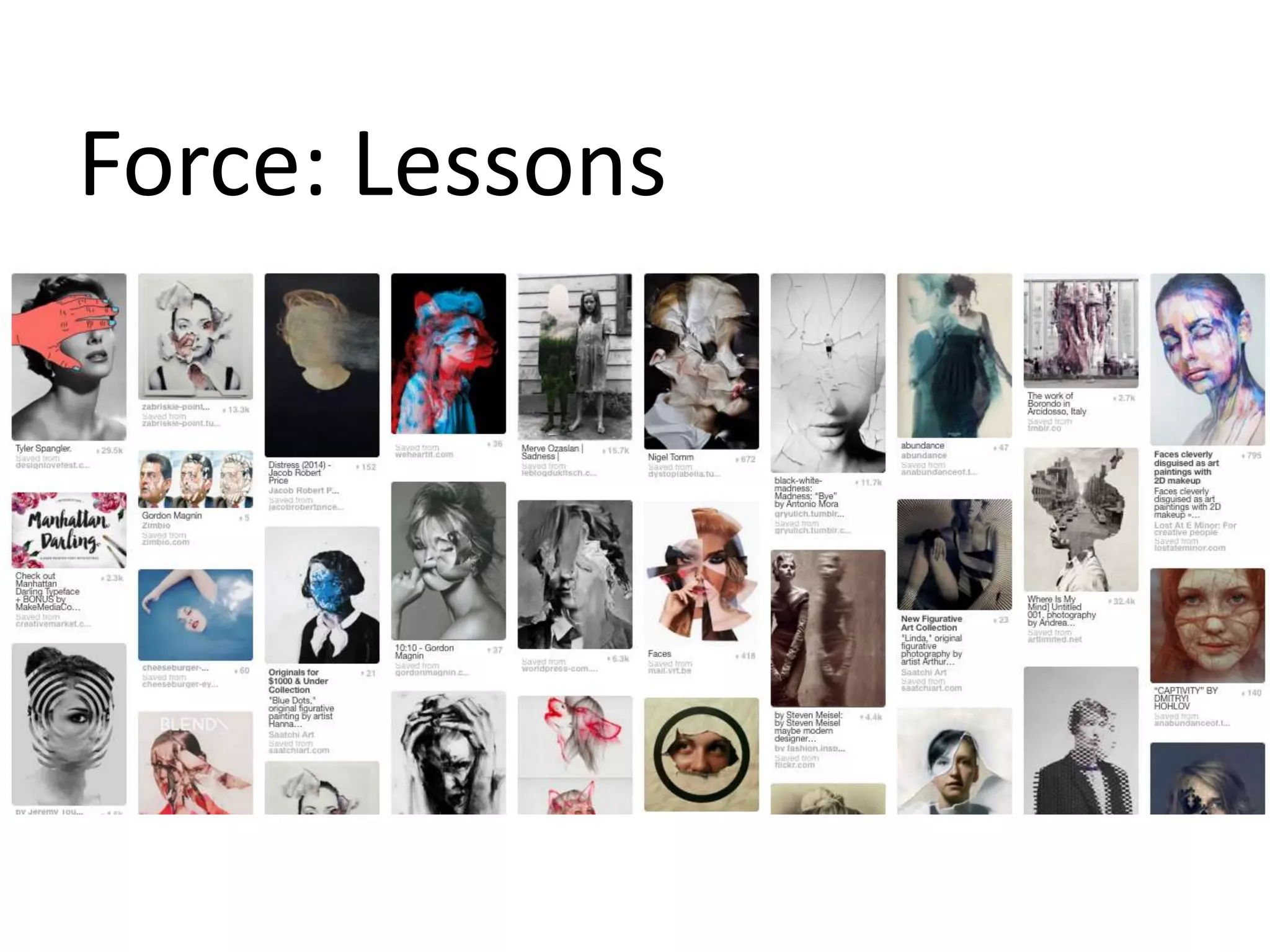
Force: Lessons
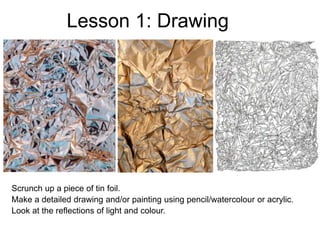
Lesson 1: Drawing
Scrunch up a piece of tin foil.
Make a detailed drawing and/or painting using pencil/watercolour or acrylic.
Look at the reflections of light and colour.
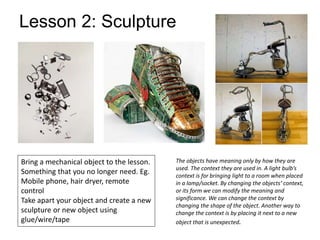
Lesson 2: Sculpture
The objects have meaning only by how they are
used. The context they are used in. A light bulb’s
context is for bringing light to a room when placed
in a lamp/socket. By changing the objects’ context,
or its form we can modify the meaning and
significance. We can change the context by
changing the shape of the object. Another way to
change the context is by placing it next to a new
object that is unexpected.
Bring a mechanical object to the lesson.
Something that you no longer need. Eg.
Mobile phone, hair dryer, remote
control
Take apart your object and create a new
sculpture or new object using
glue/wire/tape
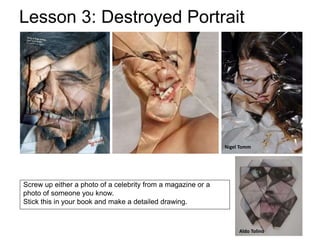
Screw up either a photo of a celebrity from a magazine or a
photo of someone you know.
Stick this in your book and make a detailed drawing.
Lesson 3: Destroyed Portrait
Nigel Tomm
Aldo Tolino
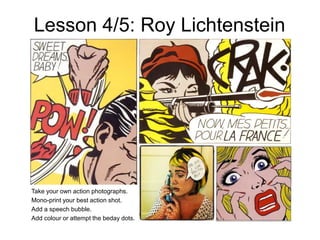
Lesson 4/5: Roy Lichtenstein
Take your own action photographs.
Mono-print your best action shot.
Add a speech bubble.
Add colour or attempt the beday dots.
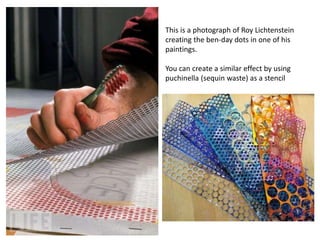
This is a photograph of Roy Lichtenstein
creating the ben-day dots in one of his
paintings.
You can create a similar effect by using
puchinella (sequin waste) as a stencil
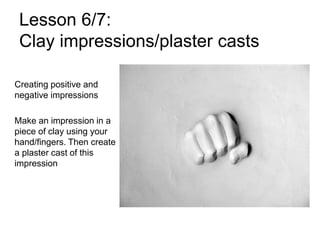
Lesson 6/7:
Clay impressions/plaster casts
Creating positive and
negative impressions
Make an impression in a
piece of clay using your
hand/fingers. Then create
a plaster cast of this
impression
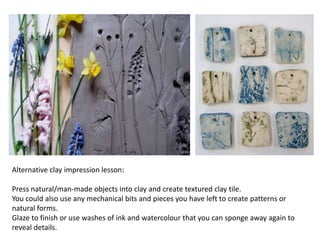
Alternative clay impression lesson:
Press natural/man-made objects into clay and create textured clay tile.
You could also use any mechanical bits and pieces you have left to create patterns or
natural forms.
Glaze to finish or use washes of ink and watercolour that you can sponge away again to
reveal details.

Force lessons

  • 1.
  • 2.
    Lesson 1: Drawing Scrunchup a piece of tin foil. Make a detailed drawing and/or painting using pencil/watercolour or acrylic. Look at the reflections of light and colour.
  • 3.
    Lesson 2: Sculpture Theobjects have meaning only by how they are used. The context they are used in. A light bulb’s context is for bringing light to a room when placed in a lamp/socket. By changing the objects’ context, or its form we can modify the meaning and significance. We can change the context by changing the shape of the object. Another way to change the context is by placing it next to a new object that is unexpected. Bring a mechanical object to the lesson. Something that you no longer need. Eg. Mobile phone, hair dryer, remote control Take apart your object and create a new sculpture or new object using glue/wire/tape
  • 4.
    Screw up eithera photo of a celebrity from a magazine or a photo of someone you know. Stick this in your book and make a detailed drawing. Lesson 3: Destroyed Portrait Nigel Tomm Aldo Tolino
  • 5.
    Lesson 4/5: RoyLichtenstein Take your own action photographs. Mono-print your best action shot. Add a speech bubble. Add colour or attempt the beday dots.
  • 6.
    This is aphotograph of Roy Lichtenstein creating the ben-day dots in one of his paintings. You can create a similar effect by using puchinella (sequin waste) as a stencil
  • 7.
    Lesson 6/7: Clay impressions/plastercasts Creating positive and negative impressions Make an impression in a piece of clay using your hand/fingers. Then create a plaster cast of this impression
  • 8.
    Alternative clay impressionlesson: Press natural/man-made objects into clay and create textured clay tile. You could also use any mechanical bits and pieces you have left to create patterns or natural forms. Glaze to finish or use washes of ink and watercolour that you can sponge away again to reveal details.