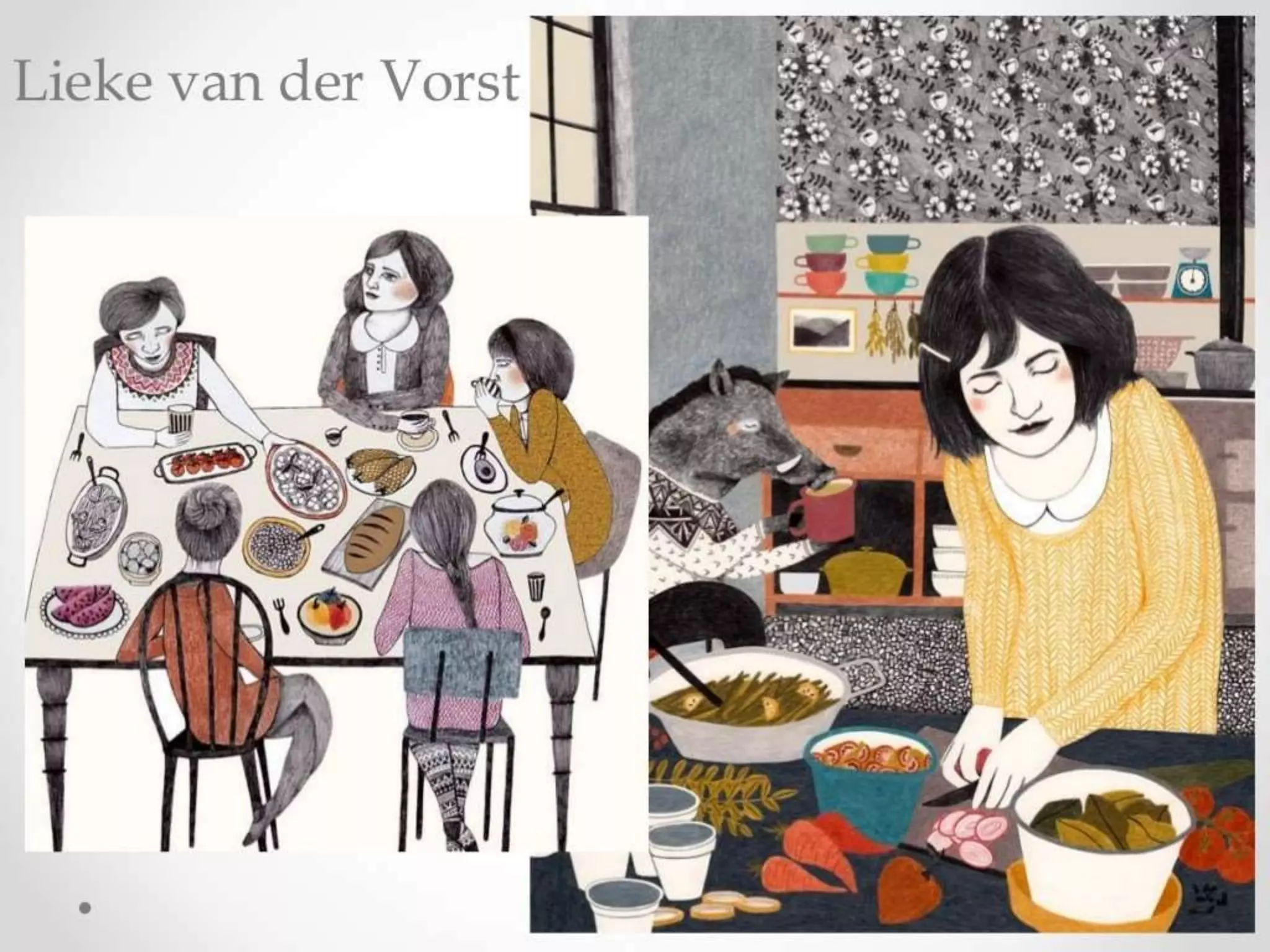
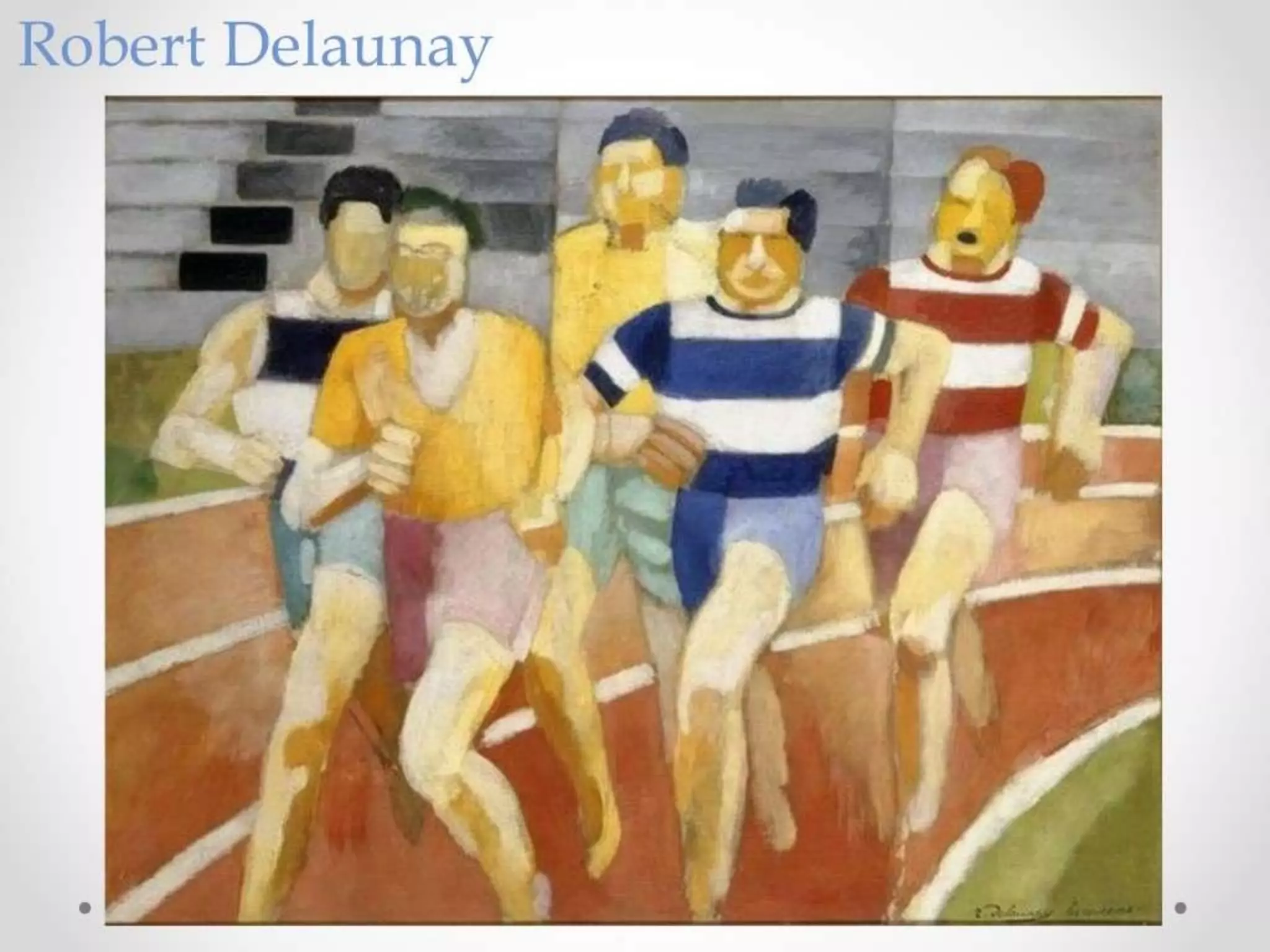
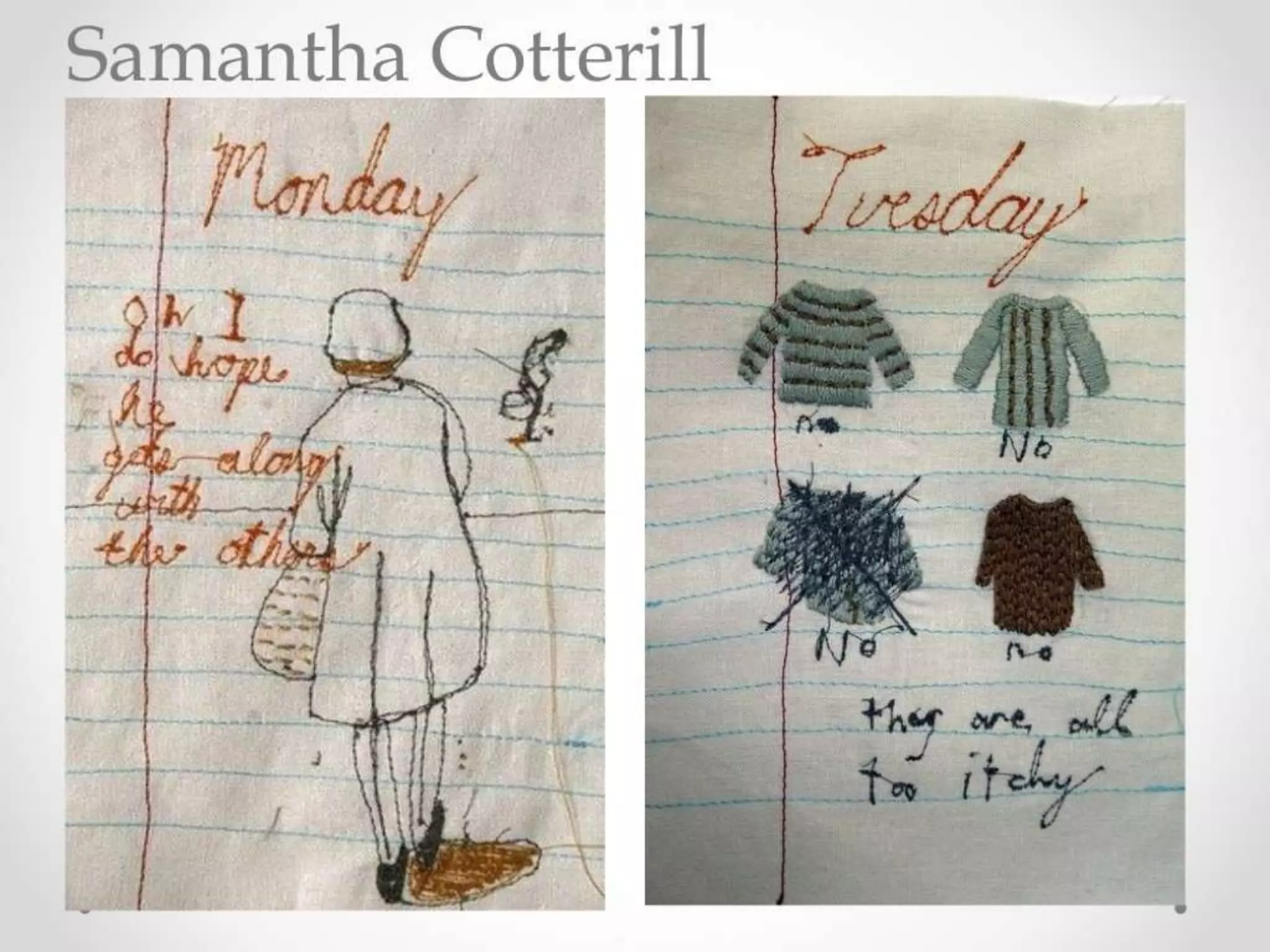
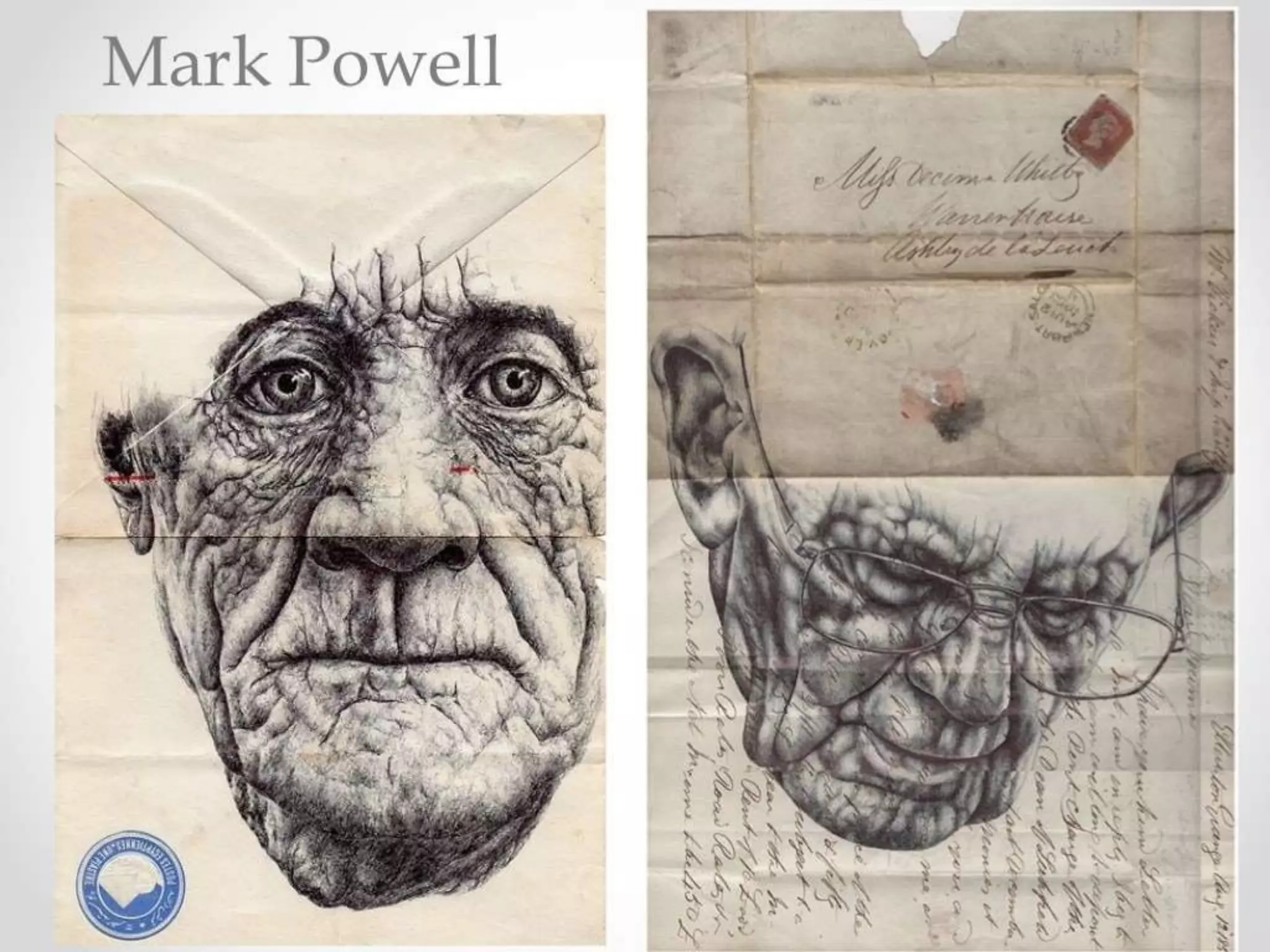
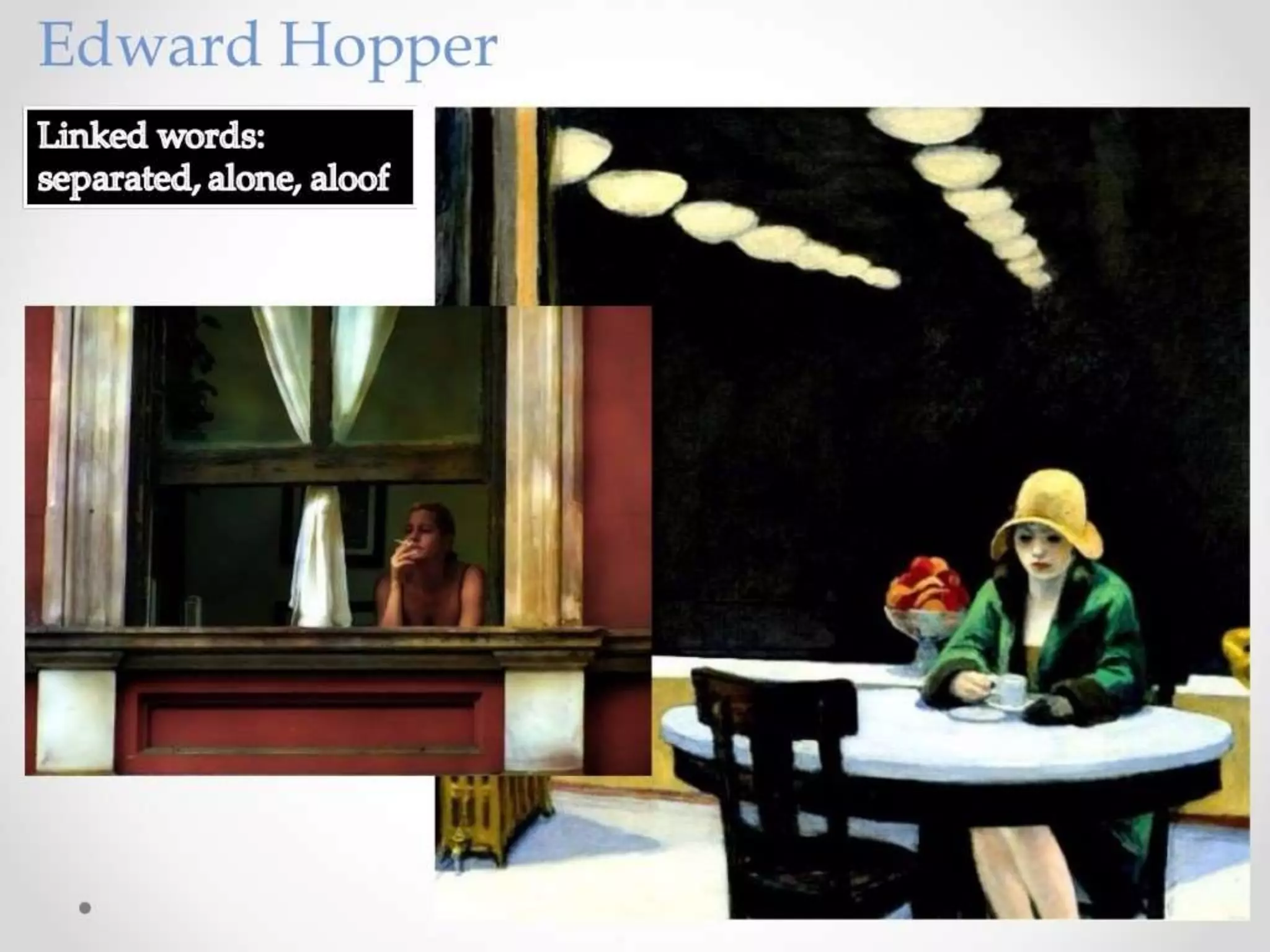
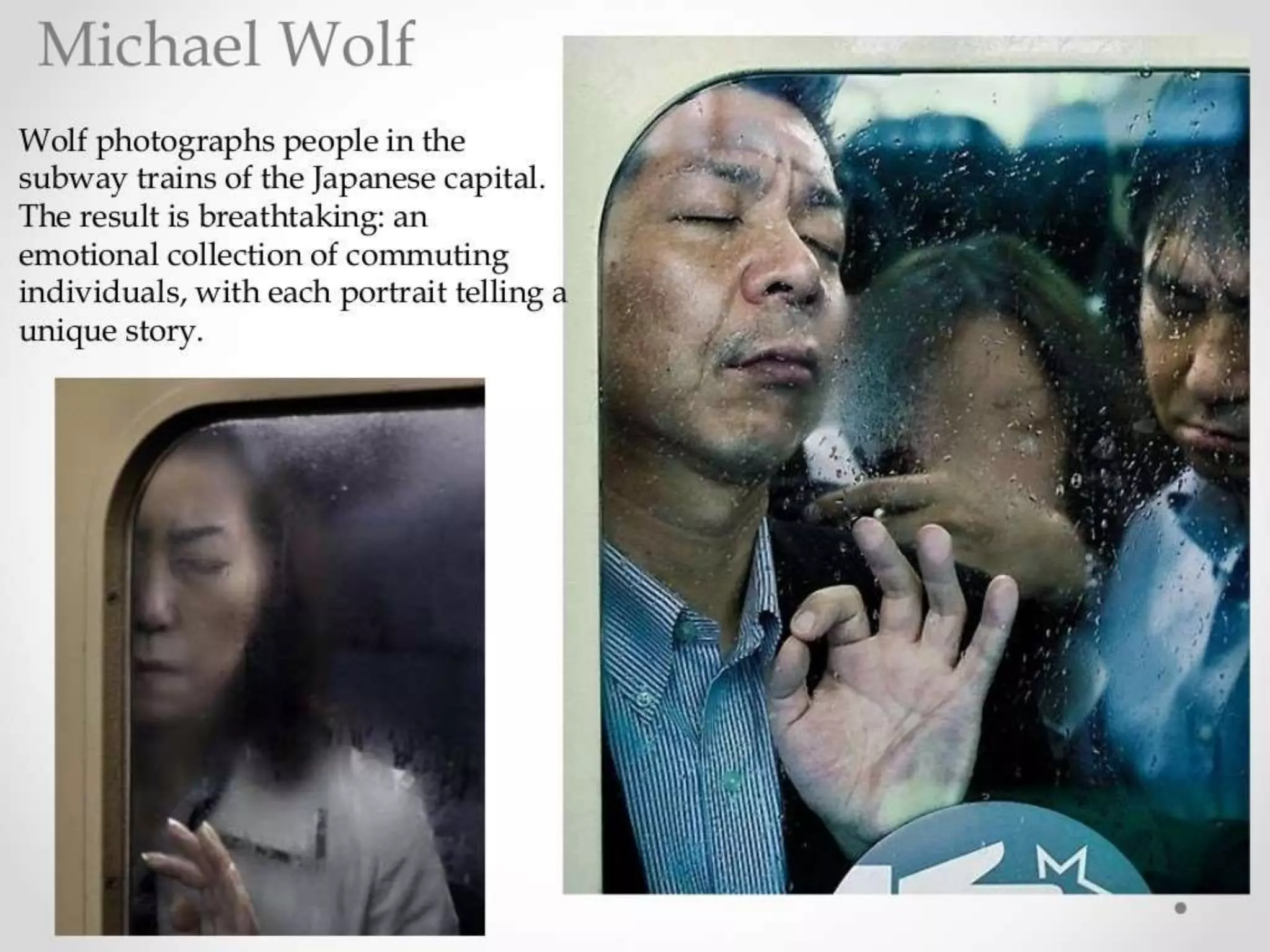
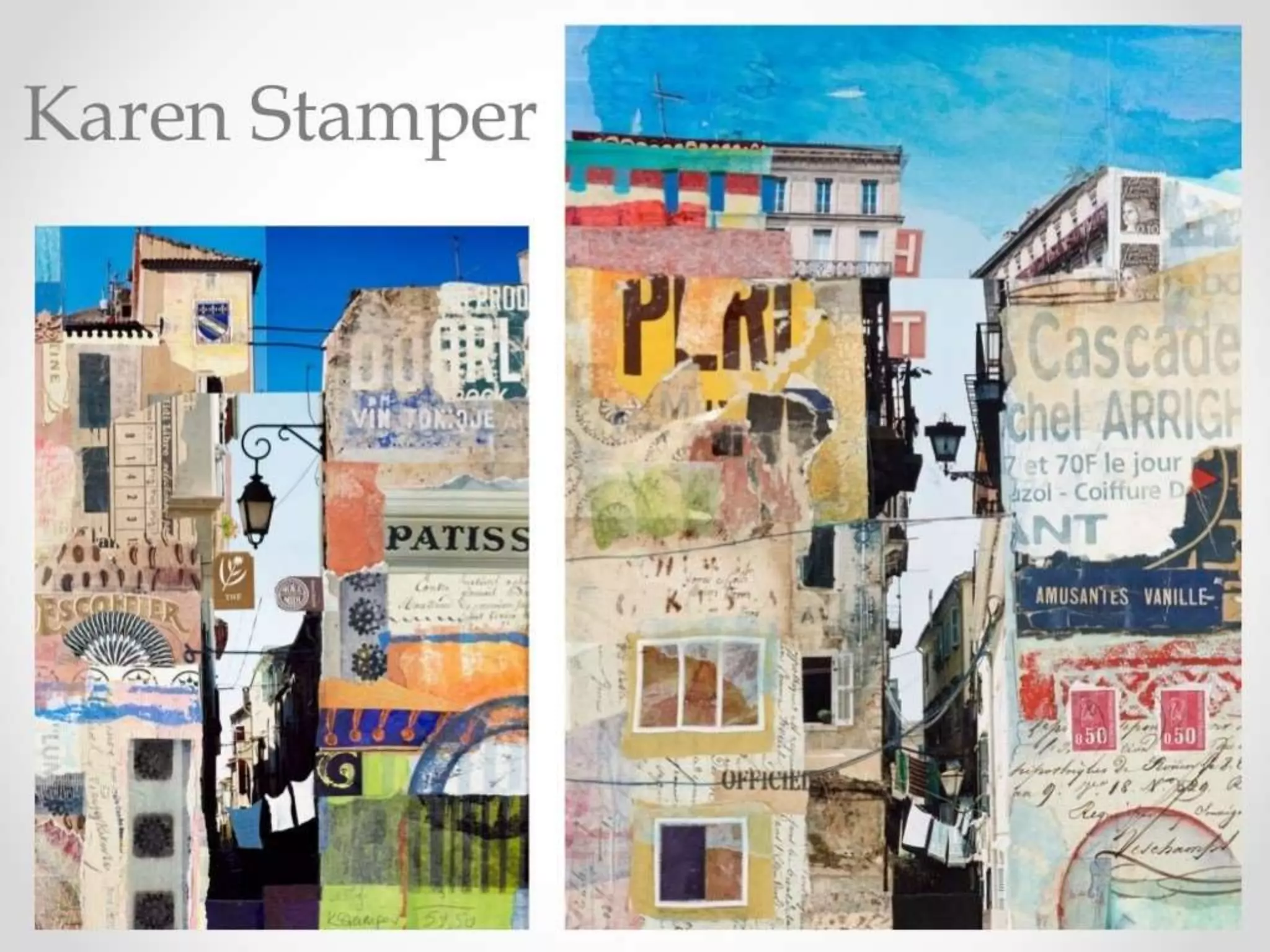
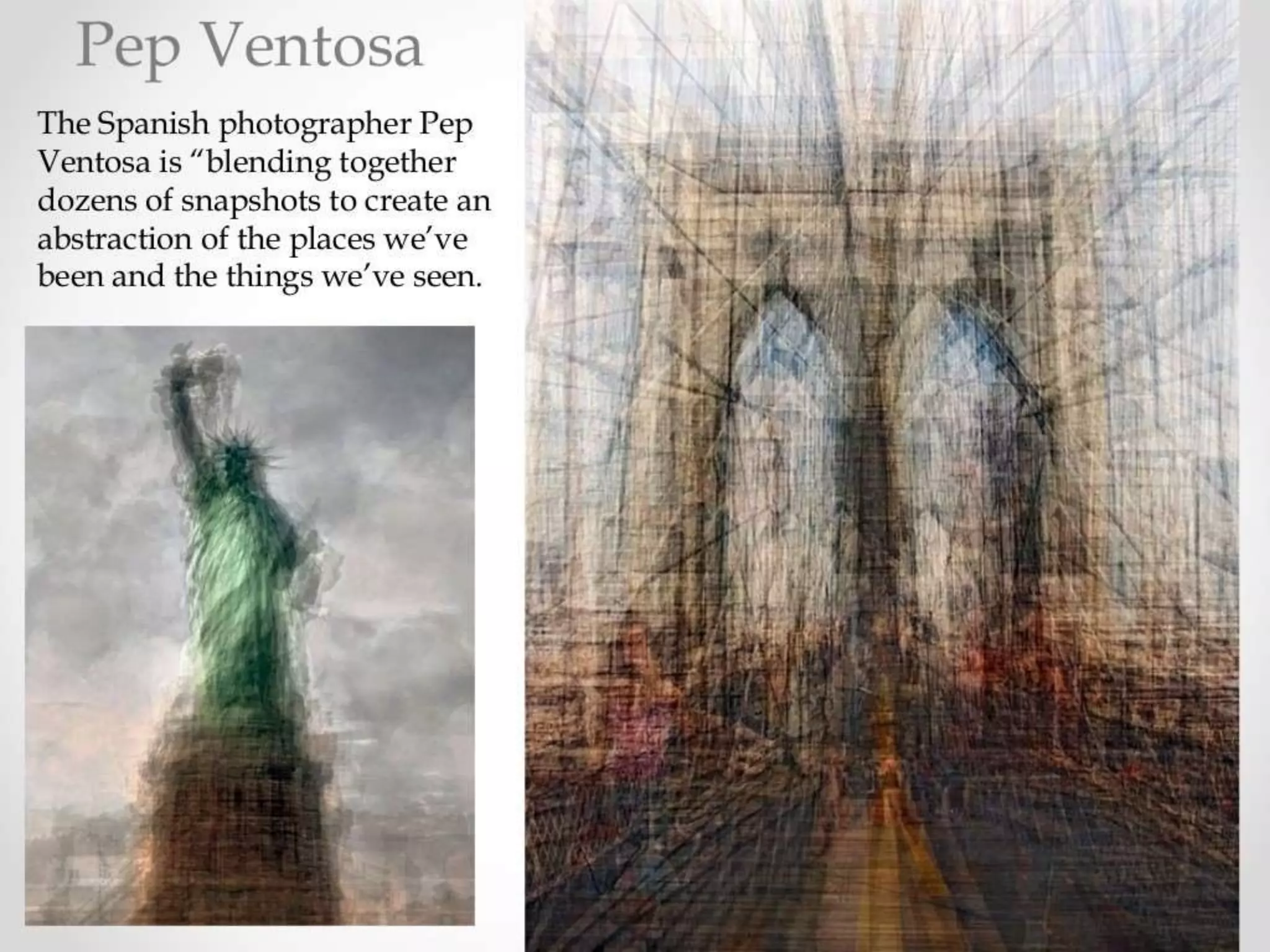
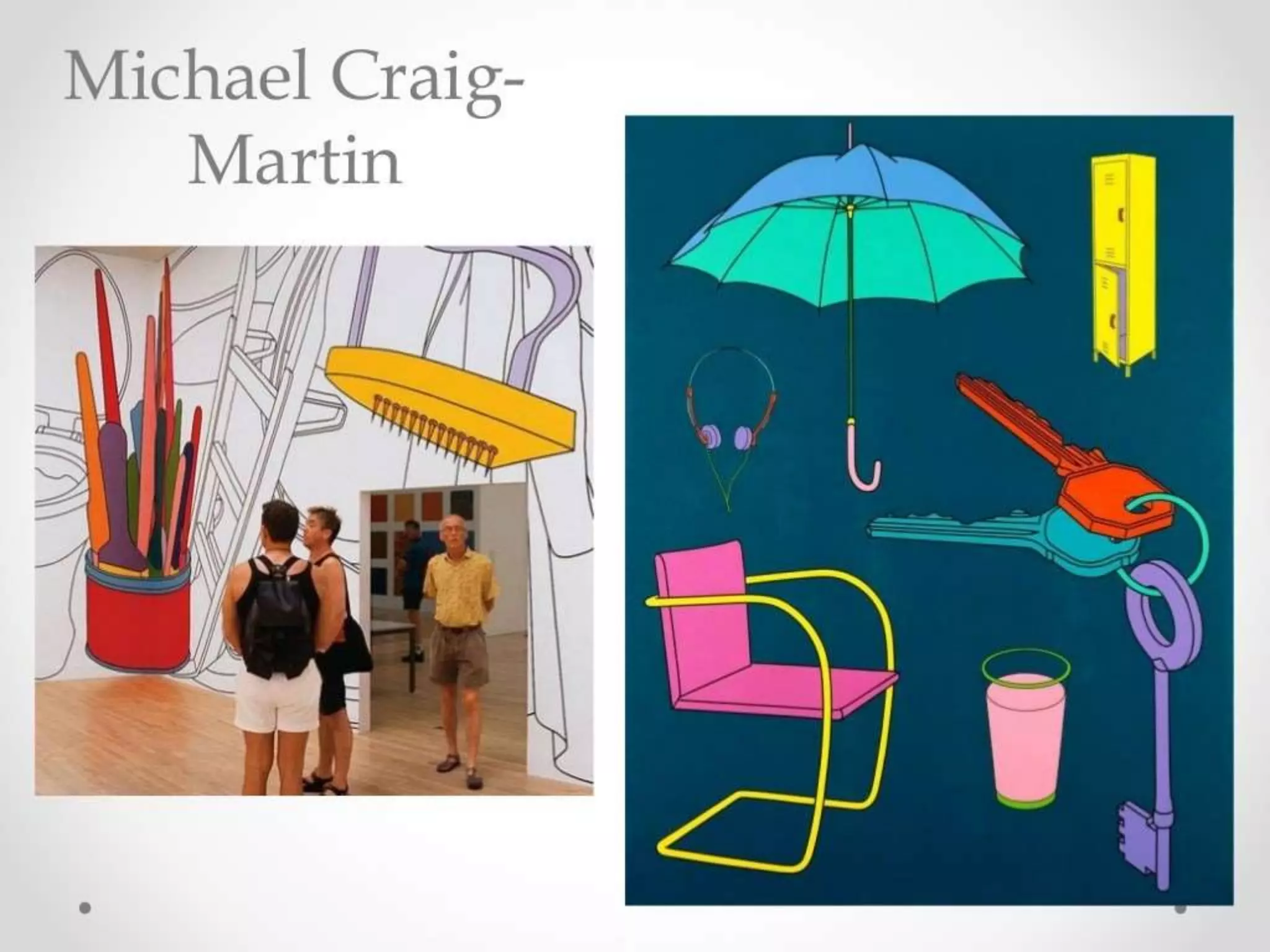
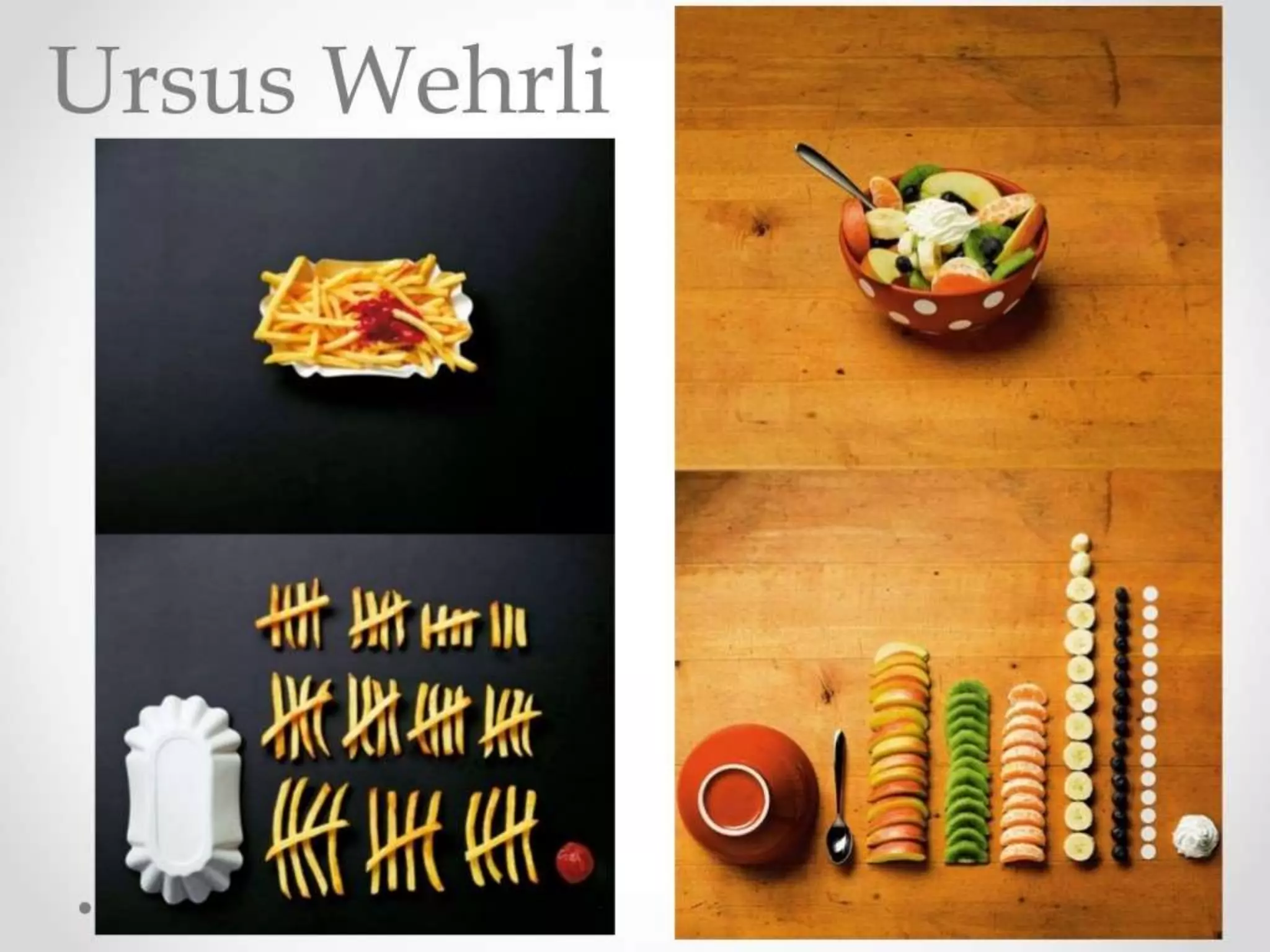
People
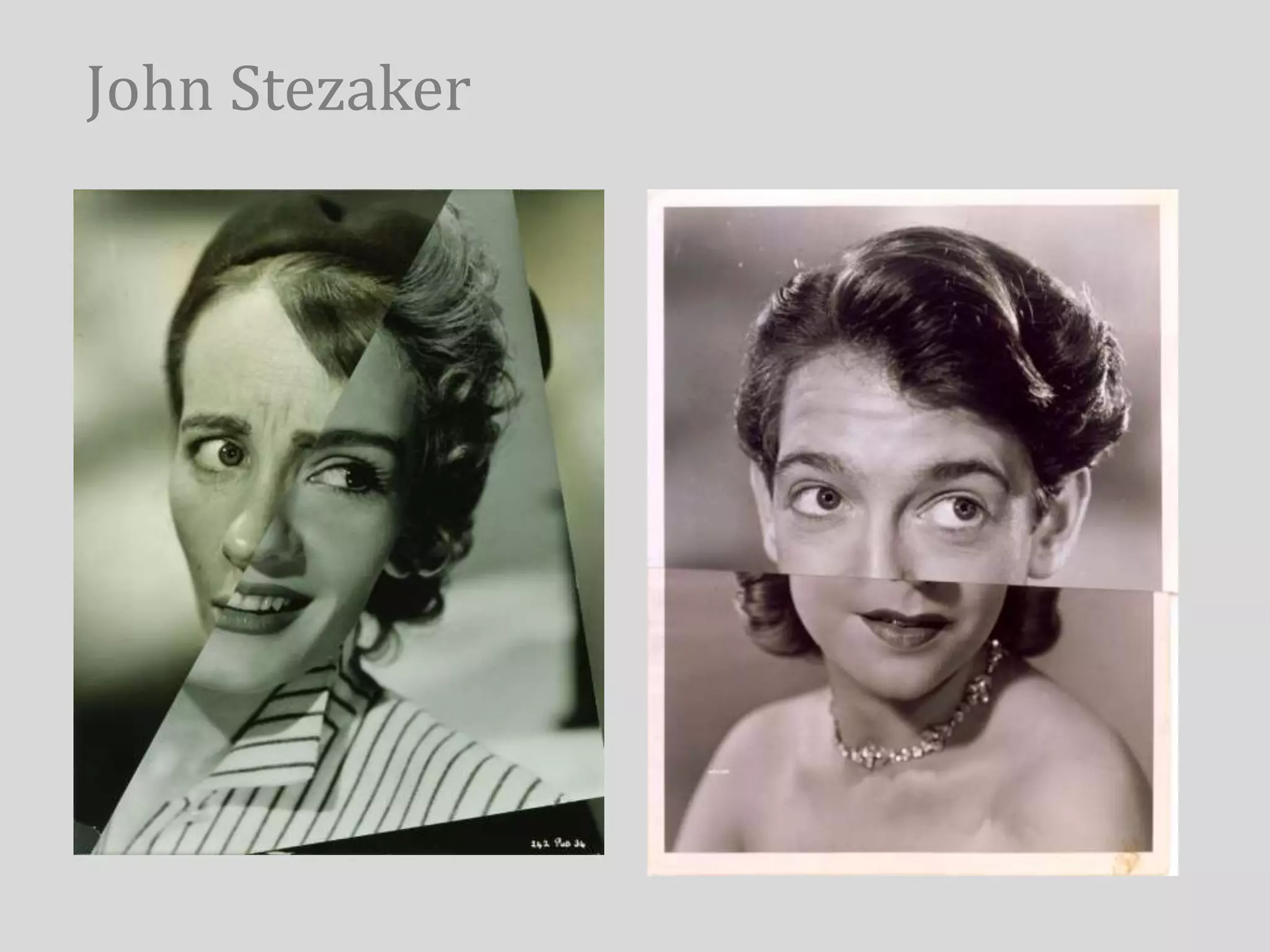
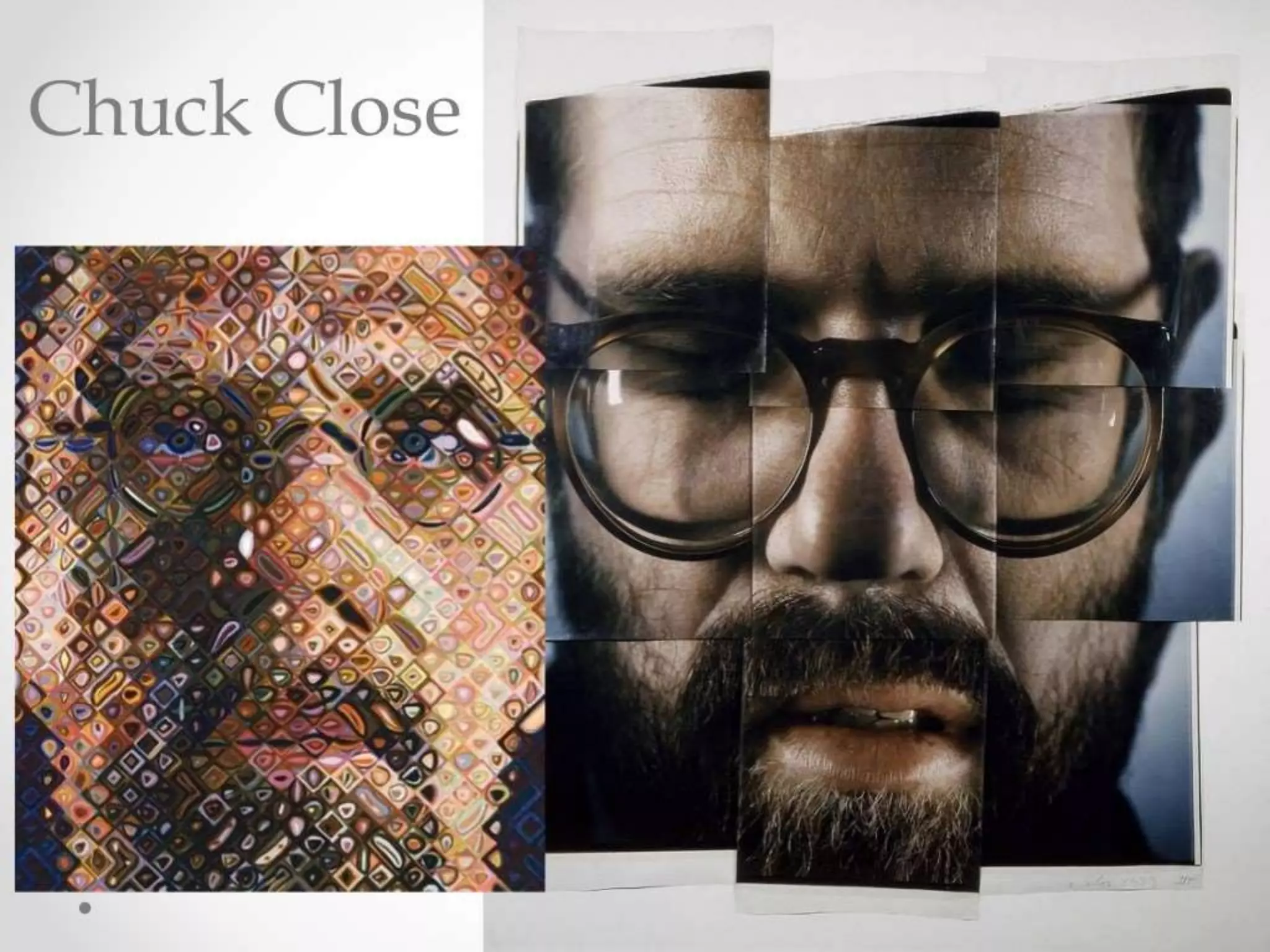
John Stezaker
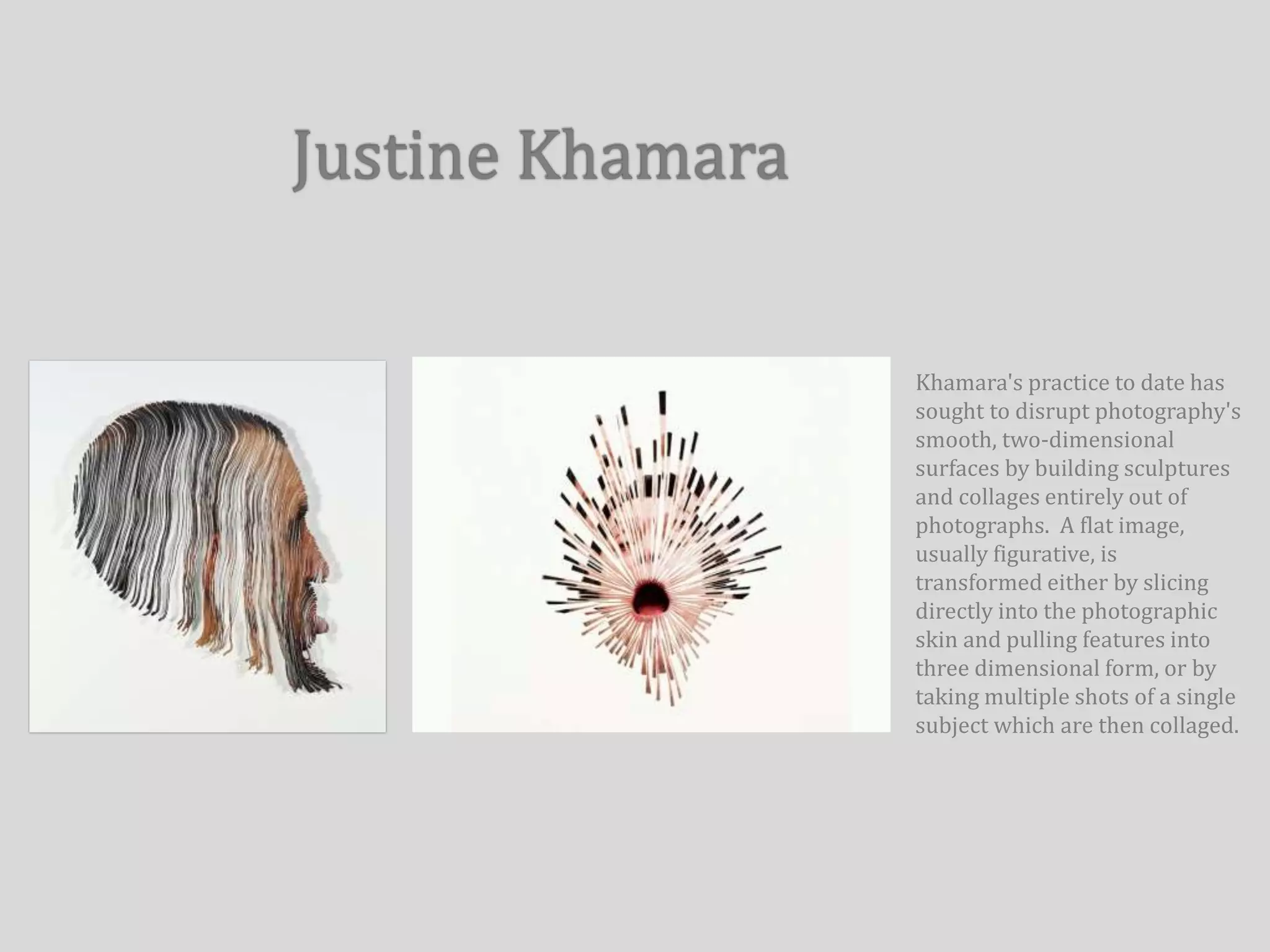
Khamara's practice to date has
sought to disrupt photography's
smooth, two-dimensional
surfaces by building sculptures
and collages entirely out of
photographs. A flat image,
usually figurative, is
transformed either by slicing
directly into the photographic
skin and pulling features into
three dimensional form, or by
taking multiple shots of a single
subject which are then collaged.
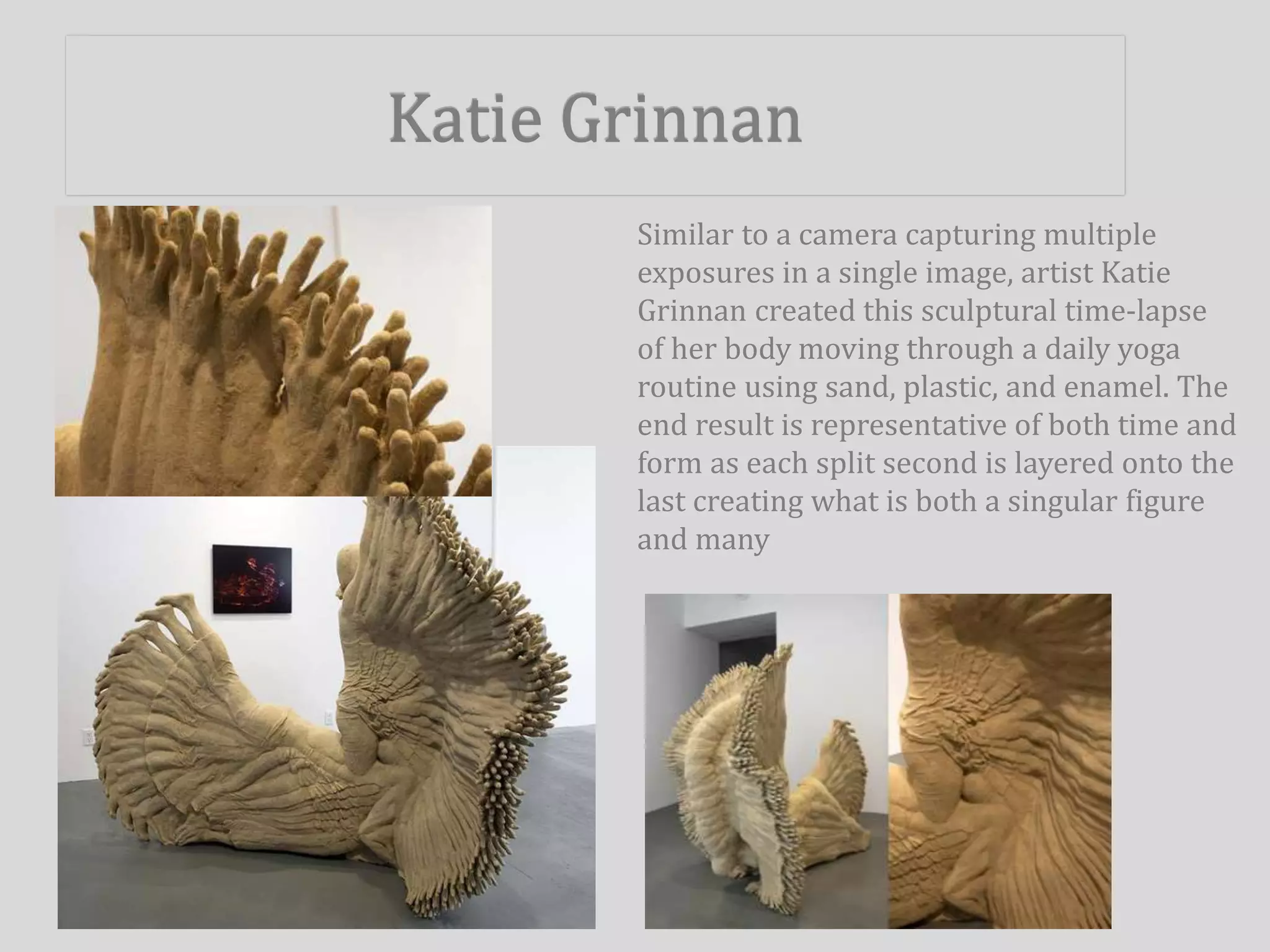
Similar to a camera capturing multiple
exposures in a single image, artist Katie
Grinnan created this sculptural time-lapse
of her body moving through a daily yoga
routine using sand, plastic, and enamel. The
end result is representative of both time and
form as each split second is layered onto the
last creating what is both a singular figure
and many
Environment
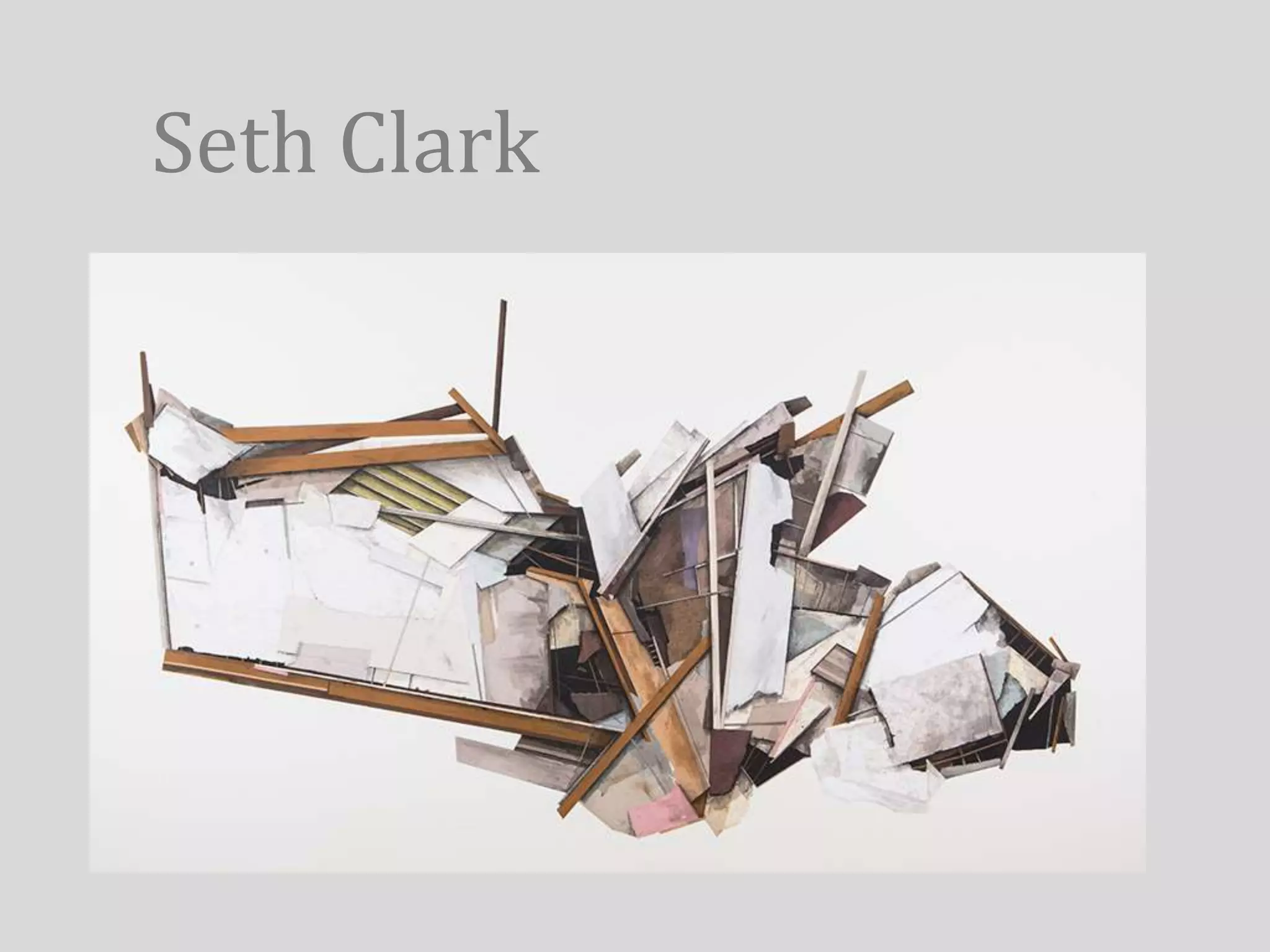
Seth Clark
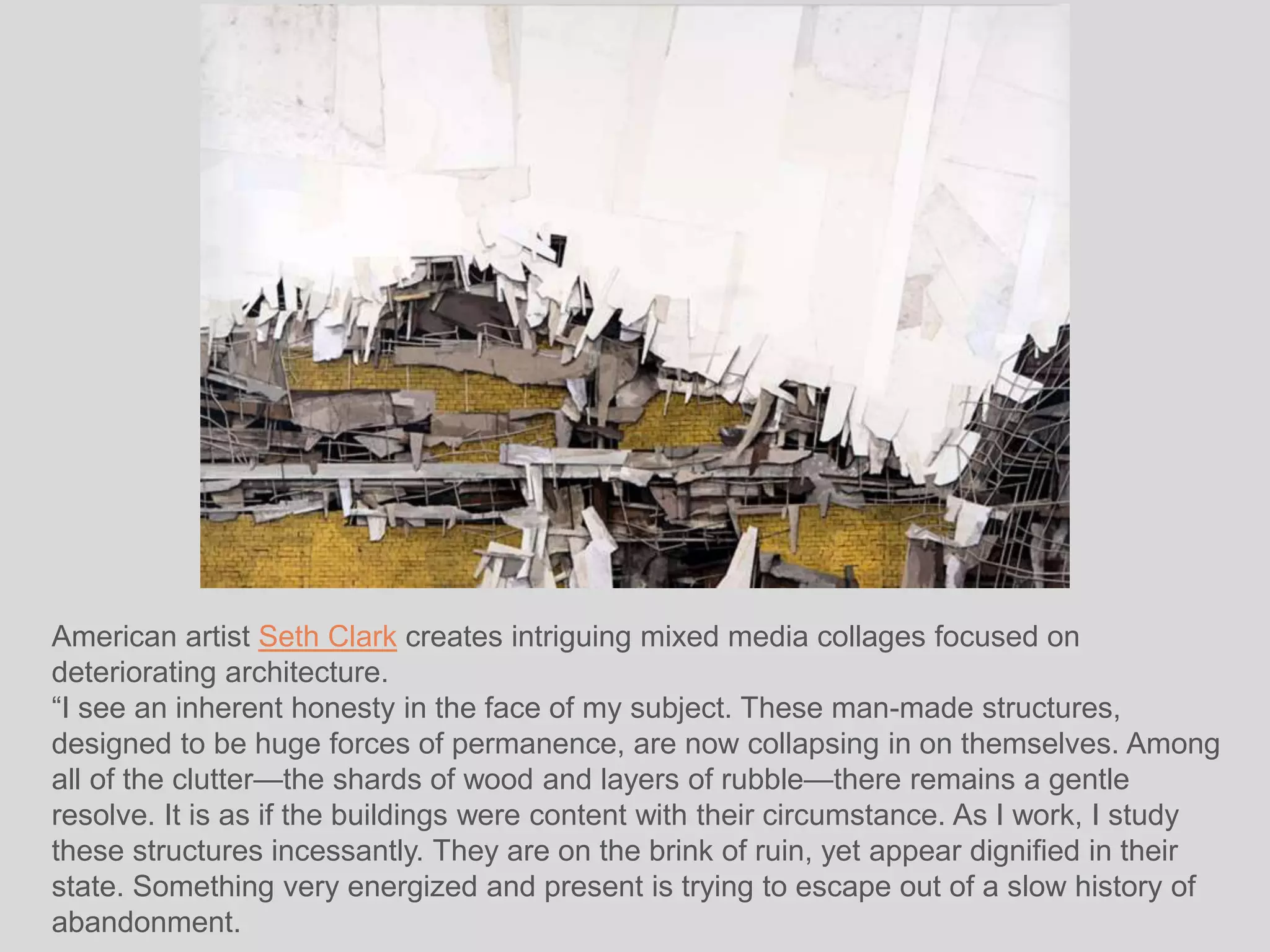
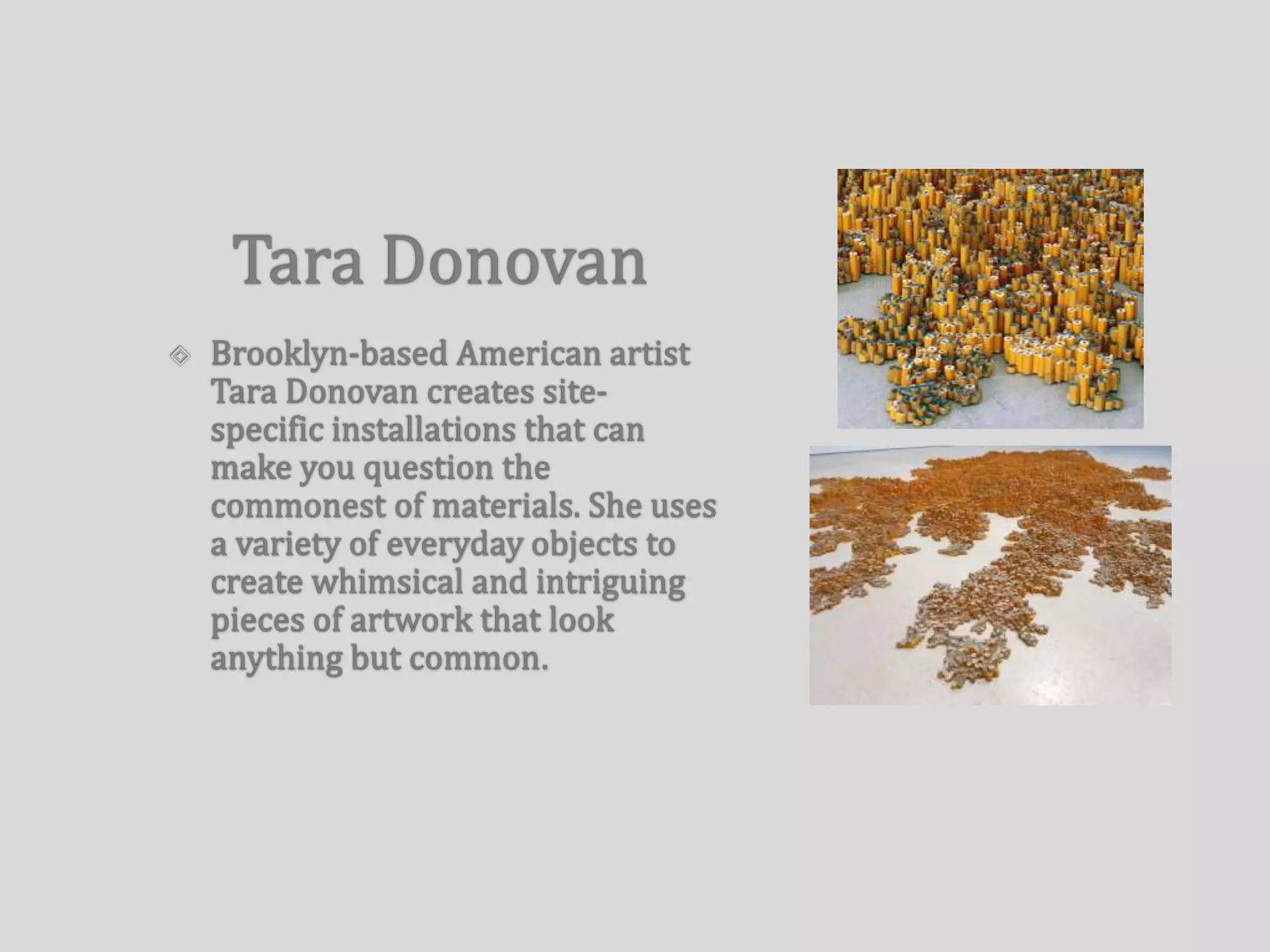
American artist Seth Clark creates intriguing mixed media collages focused on
deteriorating architecture.
“I see an inherent honesty in the face of my subject. These man-made structures,
designed to be huge forces of permanence, are now collapsing in on themselves. Among
all of the clutter—the shards of wood and layers of rubble—there remains a gentle
resolve. It is as if the buildings were content with their circumstance. As I work, I study
these structures incessantly. They are on the brink of ruin, yet appear dignified in their
state. Something very energized and present is trying to escape out of a slow history of
abandonment.
Louise McRae’s sculptural,
wall-based assemblages
bring discarded building
materials and the debris of
her rural environment into
new frames of reference.
McRae’s practice involves
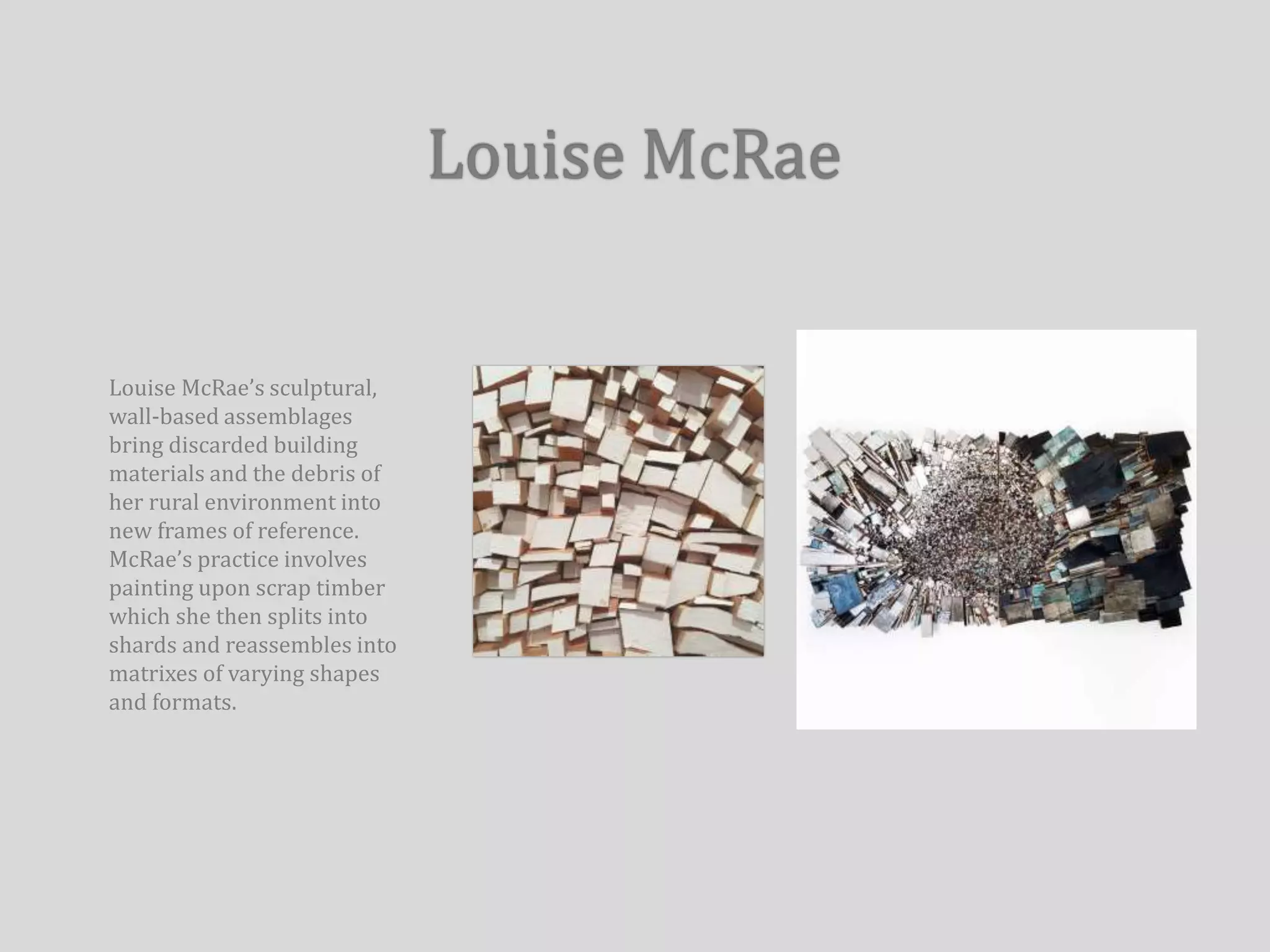
painting upon scrap timber
which she then splits into
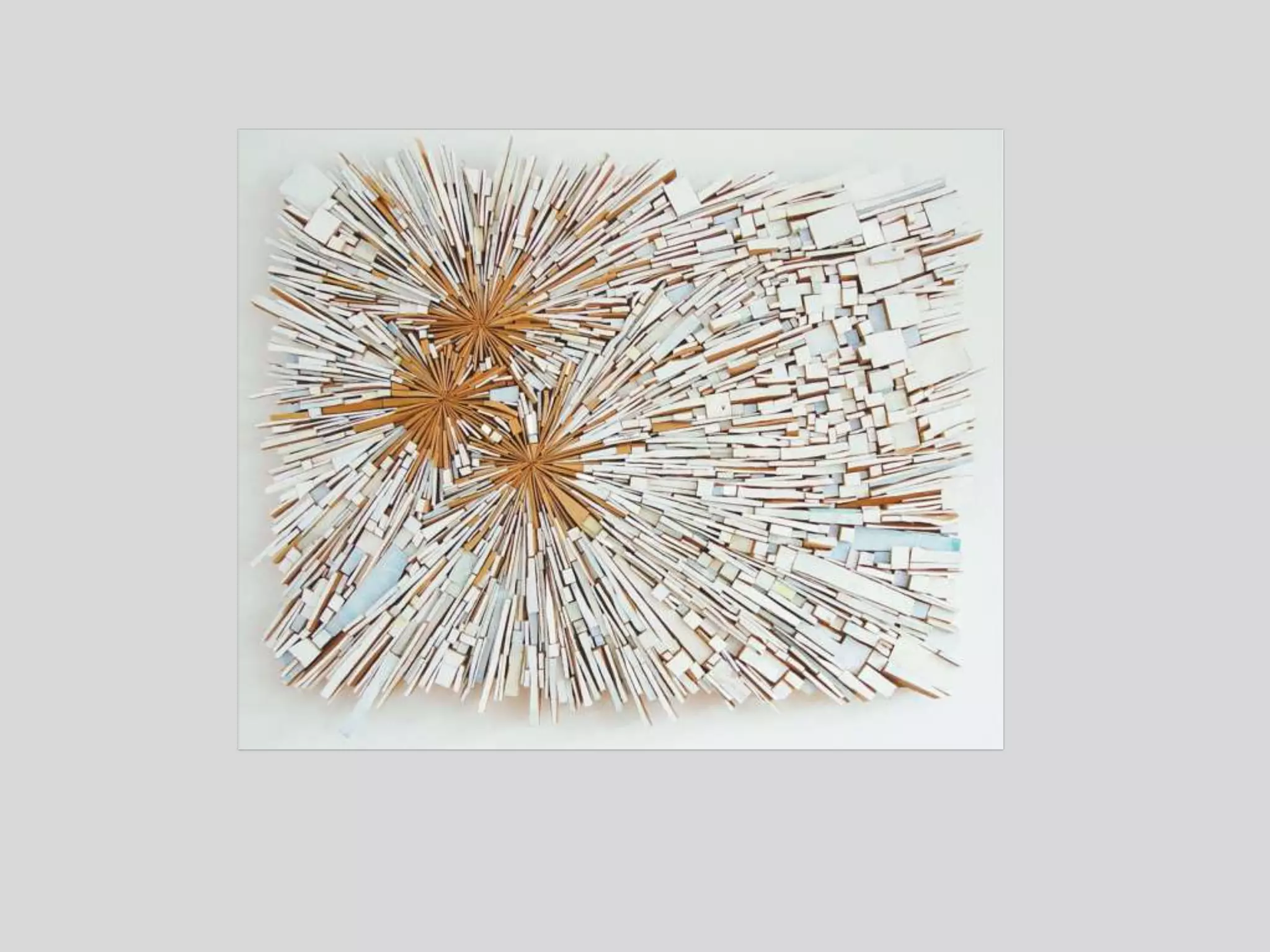
shards and reassembles into
matrixes of varying shapes
and formats.
Vasco Mourao is an architect and illustrator originally from Portugal
who now lives and works in Barcelona. His densely illustrated cities
and structures are drawn entirely by hand and while all are of course
fictional places, they often incorporate real buildings. For instance, in
the most dense piece above entitled New Yorker one can find the
Chrysler building, the Met, the Whitney, and the Guggenheim among
others
Andreas Gursky
Natural World
The shapes of Rorschach tests are intentionally flawed and
ambiguous — allowing us to draw conclusions about a
person’s psyche based on what organic matter they claim to
see growing in the inkblots. In her series, Mirrors,
photographer Traci Griffin flips that concept. By applying
symmetry to natural subjects, they are rendered unnatural
and too perfect for this world.
Traci Griffin
https://www.youtube.com/watch?v=isnuLXjzvNw
Daniel Siering and Mario
Shu in Potsdam, Germany.
The duo wrapped a tree in
plastic sheeting and then
mimicked the background
landscape using detailed
spray paint strokes to
create the illusion of a tree
cut in half.
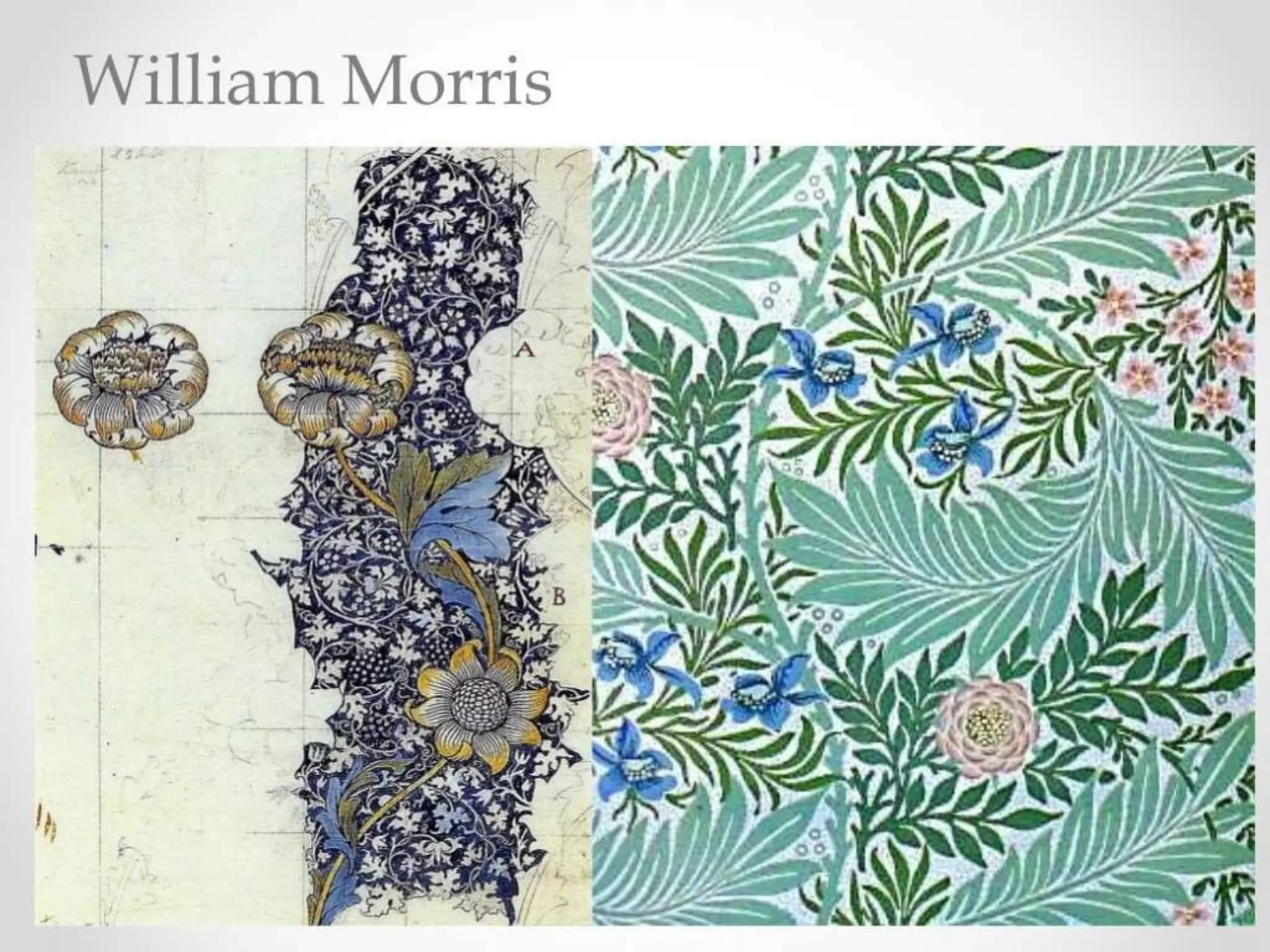
Susan Hillier – botanical illustrator
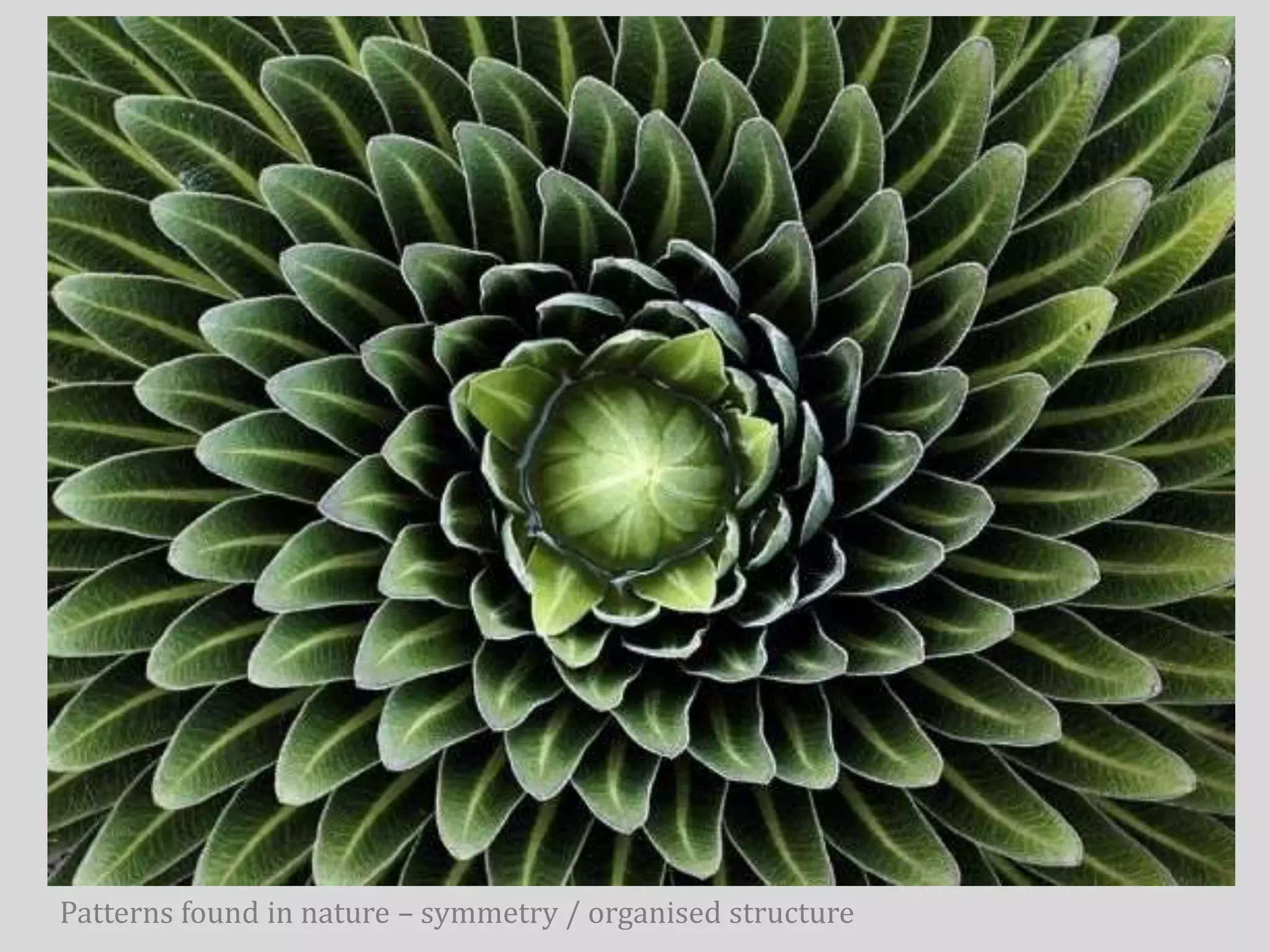
Patterns found in nature – symmetry / organised structure
The organised, patterned
structure of a wasp’s nest
inspired Andy
Goldsworthy to create his
sculptures…
Man-Made/Objects
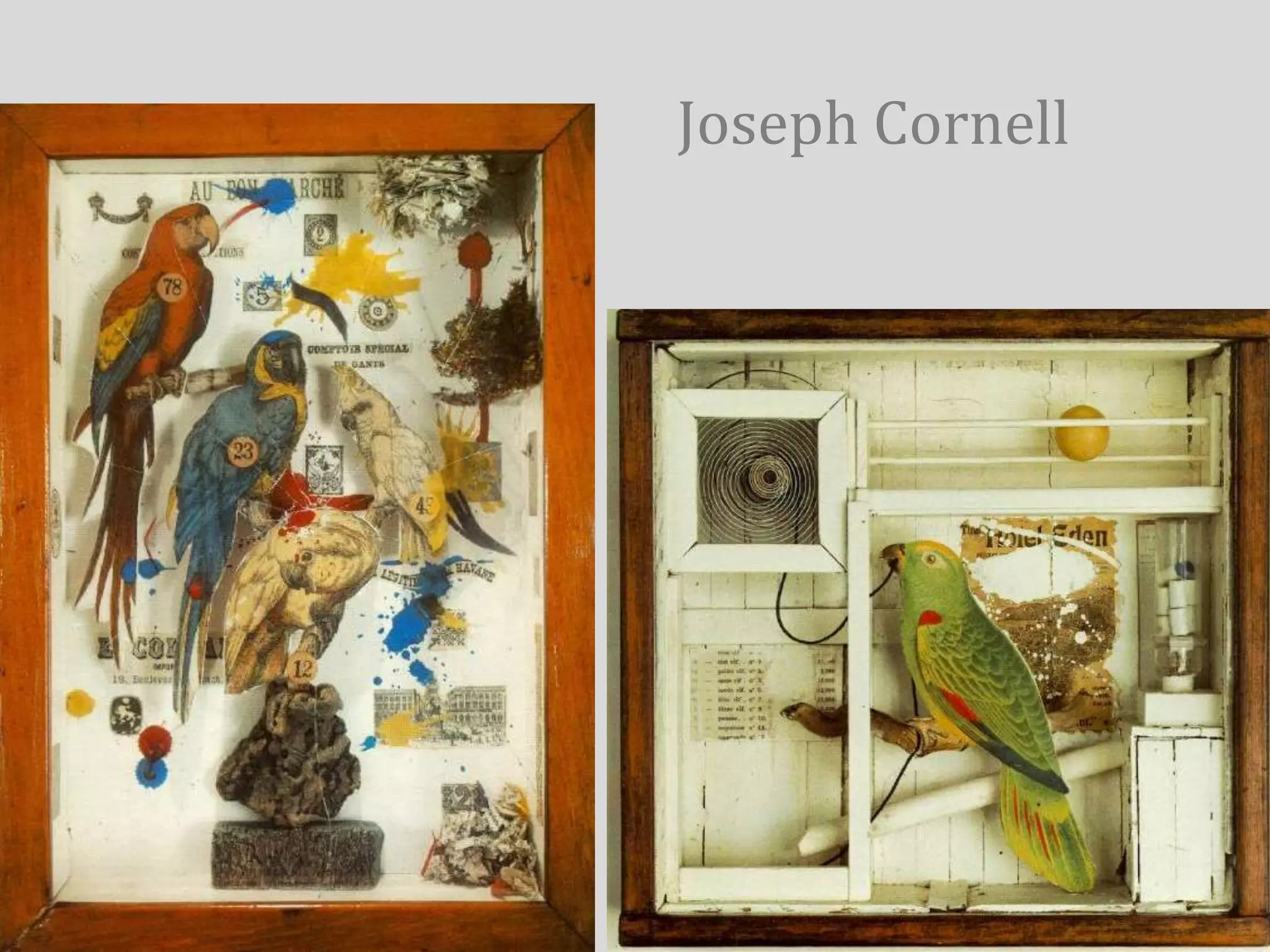
Joseph Cornell
Artist Robert Wechsler (previously) was recently comissioned by
the The New Yorker to create a series of coin sculptures for their
October 14th money-themed edition. Wechsler used a jeweler’s
saw to cut precise notches in coins from various currencies and
then joined them together in several geometric forms
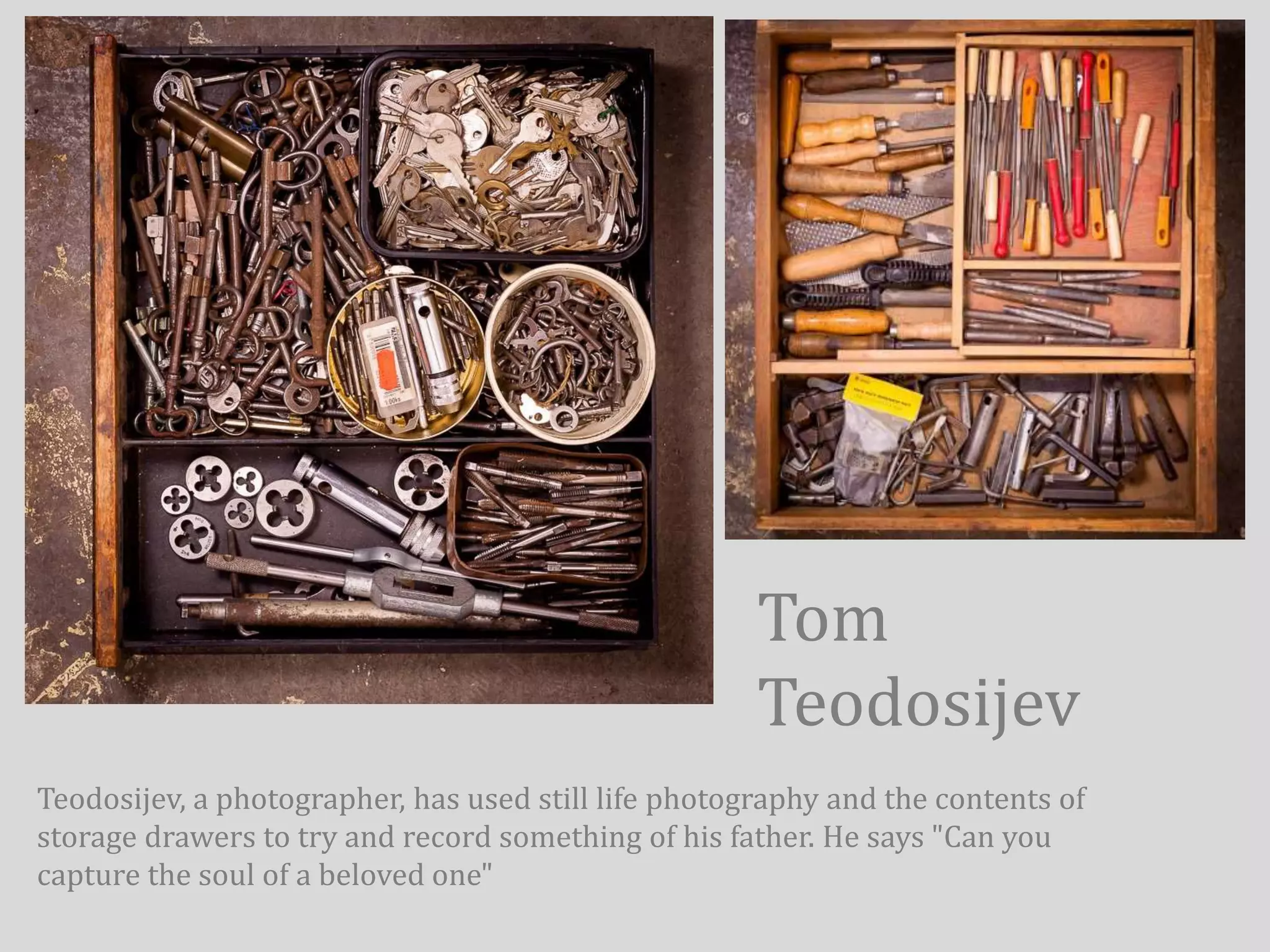
Teodosijev, a photographer, has used still life photography and the contents of
storage drawers to try and record something of his father. He says "Can you
capture the soul of a beloved one"
Tom
Teodosijev
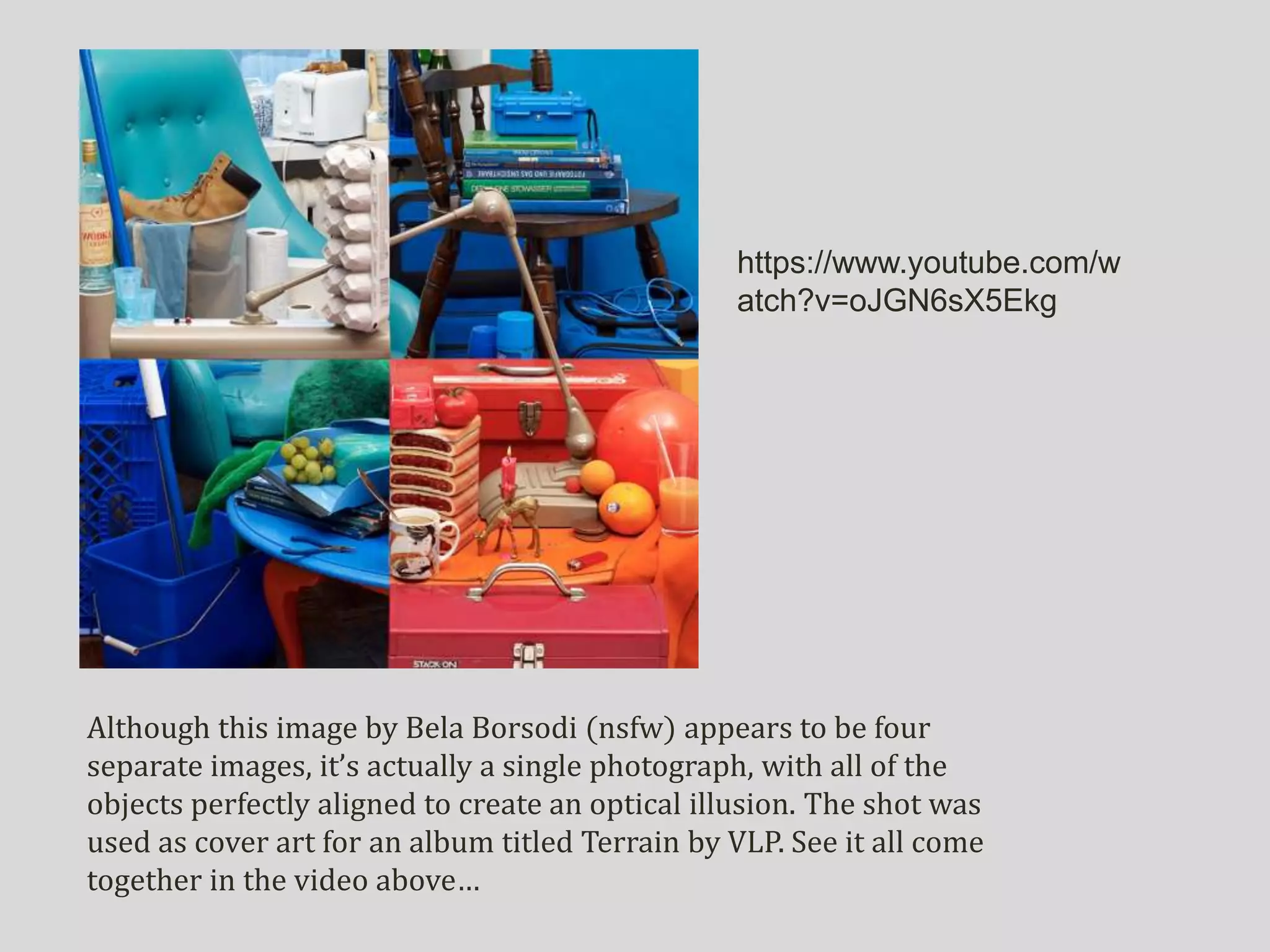
Although this image by Bela Borsodi (nsfw) appears to be four
separate images, it’s actually a single photograph, with all of the
objects perfectly aligned to create an optical illusion. The shot was
used as cover art for an album titled Terrain by VLP. See it all come
together in the video above…
https://www.youtube.com/w
atch?v=oJGN6sX5Ekg
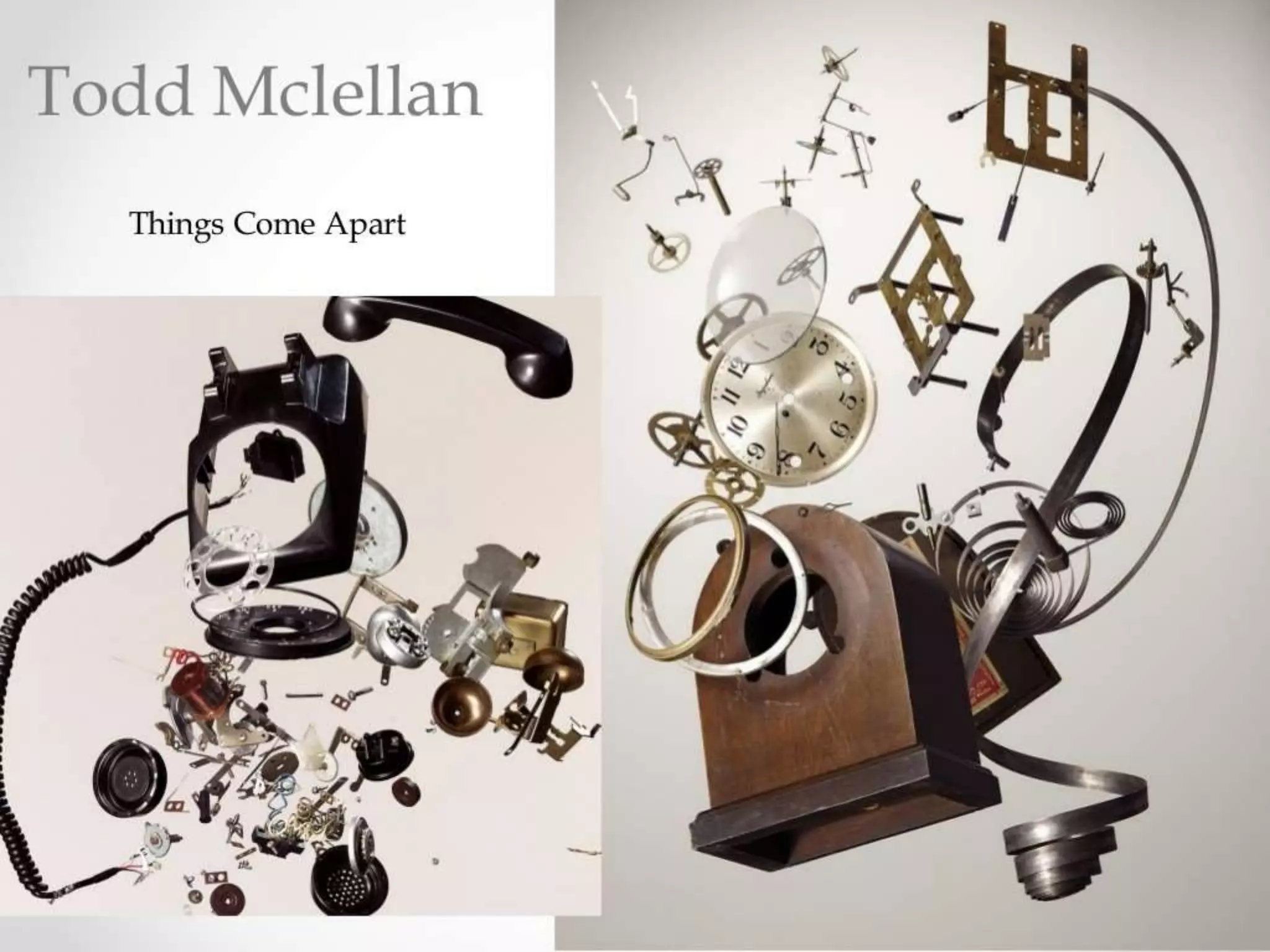
In Things Come Apart, Todd McLellan exposes the inner working of 50
objects and 21,959 individual components as he reflects on the permanence
of vintage machines built several decades ago—sturdy gadgets meant to be
broken and repaired—versus today’s manufacturing trend of limited use
followed by quick obsolescence.
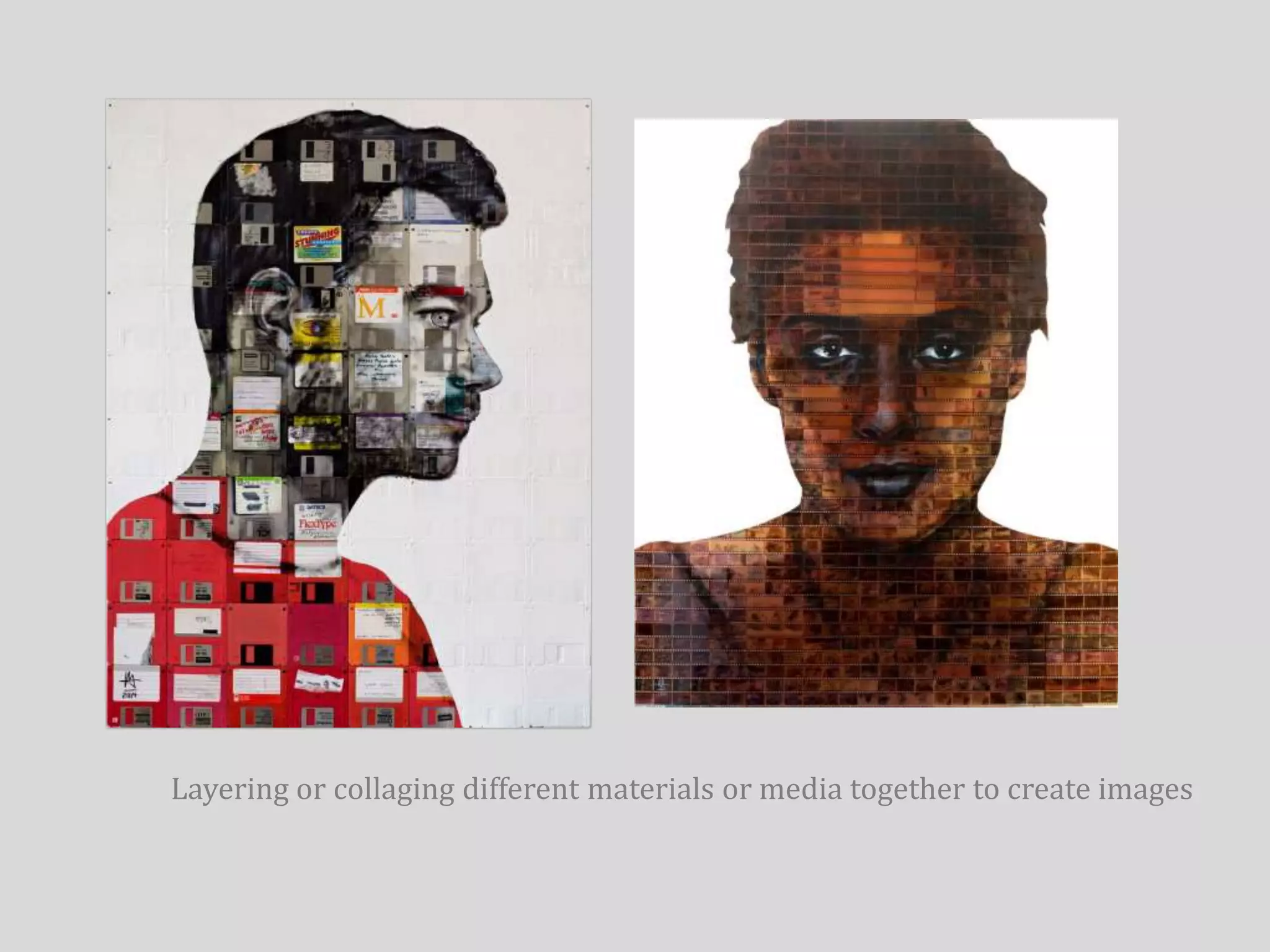
Layering or collaging different materials or media together to create images
John Chamberlain Tambourinfrappe
Michael Brennand -Wood
Bruce Gray Assemblage
Zac Freeman started
creating assemblage
artworks of this type in
1999. All artworks are
made entirely out of
collected junk, found
objects, and general
trash. By glueing the
bits of junk to a
wooden substrate, Zac
is able to form an
image, usually faces,
which only can be
seen at a distance
Fragments GCSE Art Exam 2018

Fragments GCSE Art Exam 2018

  • 5.
  • 8.
  • 12.
    Khamara's practice todate has sought to disrupt photography's smooth, two-dimensional surfaces by building sculptures and collages entirely out of photographs. A flat image, usually figurative, is transformed either by slicing directly into the photographic skin and pulling features into three dimensional form, or by taking multiple shots of a single subject which are then collaged.
  • 26.
    Similar to acamera capturing multiple exposures in a single image, artist Katie Grinnan created this sculptural time-lapse of her body moving through a daily yoga routine using sand, plastic, and enamel. The end result is representative of both time and form as each split second is layered onto the last creating what is both a singular figure and many
  • 34.
  • 35.
  • 36.
    American artist SethClark creates intriguing mixed media collages focused on deteriorating architecture. “I see an inherent honesty in the face of my subject. These man-made structures, designed to be huge forces of permanence, are now collapsing in on themselves. Among all of the clutter—the shards of wood and layers of rubble—there remains a gentle resolve. It is as if the buildings were content with their circumstance. As I work, I study these structures incessantly. They are on the brink of ruin, yet appear dignified in their state. Something very energized and present is trying to escape out of a slow history of abandonment.
  • 38.
    Louise McRae’s sculptural, wall-basedassemblages bring discarded building materials and the debris of her rural environment into new frames of reference. McRae’s practice involves painting upon scrap timber which she then splits into shards and reassembles into matrixes of varying shapes and formats.
  • 54.
    Vasco Mourao isan architect and illustrator originally from Portugal who now lives and works in Barcelona. His densely illustrated cities and structures are drawn entirely by hand and while all are of course fictional places, they often incorporate real buildings. For instance, in the most dense piece above entitled New Yorker one can find the Chrysler building, the Met, the Whitney, and the Guggenheim among others
  • 55.
  • 56.
  • 61.
    The shapes ofRorschach tests are intentionally flawed and ambiguous — allowing us to draw conclusions about a person’s psyche based on what organic matter they claim to see growing in the inkblots. In her series, Mirrors, photographer Traci Griffin flips that concept. By applying symmetry to natural subjects, they are rendered unnatural and too perfect for this world. Traci Griffin
  • 62.
    https://www.youtube.com/watch?v=isnuLXjzvNw Daniel Siering andMario Shu in Potsdam, Germany. The duo wrapped a tree in plastic sheeting and then mimicked the background landscape using detailed spray paint strokes to create the illusion of a tree cut in half.
  • 64.
    Susan Hillier –botanical illustrator
  • 65.
    Patterns found innature – symmetry / organised structure
  • 66.
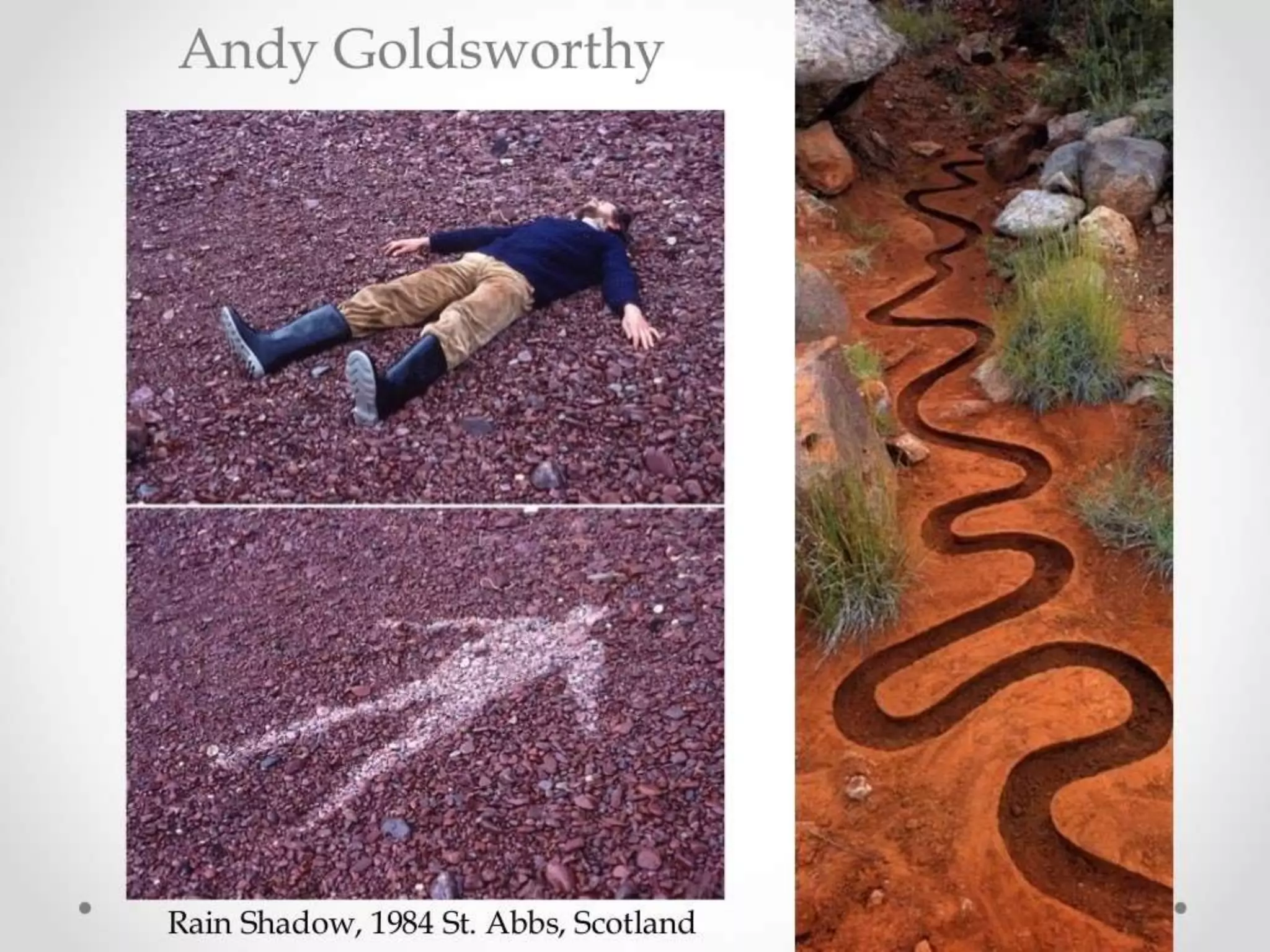
    The organised, patterned structureof a wasp’s nest inspired Andy Goldsworthy to create his sculptures…
  • 77.
  • 84.
  • 85.
    Artist Robert Wechsler(previously) was recently comissioned by the The New Yorker to create a series of coin sculptures for their October 14th money-themed edition. Wechsler used a jeweler’s saw to cut precise notches in coins from various currencies and then joined them together in several geometric forms
  • 86.
    Teodosijev, a photographer,has used still life photography and the contents of storage drawers to try and record something of his father. He says "Can you capture the soul of a beloved one" Tom Teodosijev
  • 87.
    Although this imageby Bela Borsodi (nsfw) appears to be four separate images, it’s actually a single photograph, with all of the objects perfectly aligned to create an optical illusion. The shot was used as cover art for an album titled Terrain by VLP. See it all come together in the video above… https://www.youtube.com/w atch?v=oJGN6sX5Ekg
  • 88.
    In Things ComeApart, Todd McLellan exposes the inner working of 50 objects and 21,959 individual components as he reflects on the permanence of vintage machines built several decades ago—sturdy gadgets meant to be broken and repaired—versus today’s manufacturing trend of limited use followed by quick obsolescence.
  • 94.
    Layering or collagingdifferent materials or media together to create images
  • 97.
  • 102.
  • 103.
  • 104.
    Zac Freeman started creatingassemblage artworks of this type in 1999. All artworks are made entirely out of collected junk, found objects, and general trash. By glueing the bits of junk to a wooden substrate, Zac is able to form an image, usually faces, which only can be seen at a distance