Antiplatelet & Anticogulant in
stroke
Prashant shringi
DM Neurology resident
AHA Guidelines for starting of antiplatelets
in acute ischemic stroke (AIS)
• Adminstration of aspirin is recommended in
patients with AIS within 24 to 48 hrs of onset.
• After IV thrombolysis aspirin should be given
after 24 hrs.
• Aspirin is not recommended as a substitute for
acute stroke treatment in patients who are
otherwise eligible for IV alteplase ormechanical
thrombectomy.
• COR-1
• LOE- A
Minor stroke-
• NIHSS<3
• ABCD2 SCORE >4
• Dual antiplatelet (aspirin with clopidogrel) for
21 days begun within 24 hrs followed by
clopidogrel alone to 90 days, in patients with
minor stroke
• COR-2A
• LOE-B
• Efficacy of IV Tirofiban and eptifibatide is npt
well established . Further clinical trials are
needed
• COR-2B
• LOE -B
• administration of other glycoprotein IIb/IIIa
receptor antagonists, including abciximab, in
the treatment of AIS is potentially harmful and
should not be performed. Further
researchtesting the safety and efficacy of
these medications in patients with AIS is
required
• COR-3-harm
Aspirin in sec. prevention
• For patients with non-cardioembolic AIS, the
use of antiplatelet agents rather than oral
anticoagulation is recommended to reduce
the risk of recurrent stroke and other
cardiovascular events.
• COR-1
• LOE- A
• For patients who have a noncardioembolic AIS
while taking antiplatelet therapy, switching to
warfarin is not beneficial for secondary stroke
prevention
• COR-III: No Benefit
• For most patients with an AIS in the setting of
atrial fibrillation, it is reasonable to initiate
oral anticoagulation within 4 to 14 days after
the onset of neurological symptoms
• COR-2A
• For patients with AIS and extracranial carotid
or vertebral arterial dissection, treatment with
either antiplatelet or anticoagulant therapy
for 3 to 6 months may be reasonable.
• COR -IIb
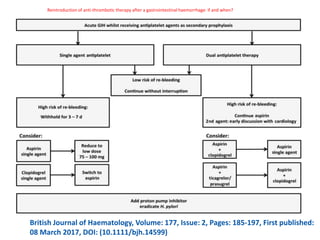
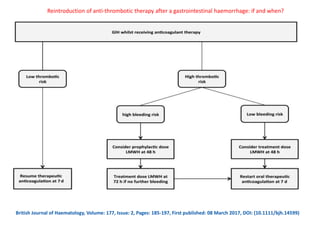
Reintroduction of anti‐thrombotic therapy after a gastrointestinal haemorrhage: if and when?
British Journal of Haematology, Volume: 177, Issue: 2, Pages: 185-197, First published:
08 March 2017, DOI: (10.1111/bjh.14599)
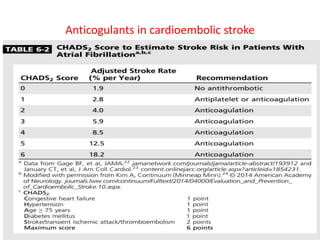
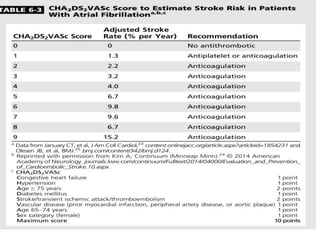
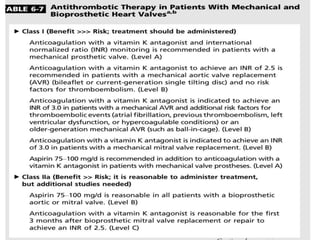
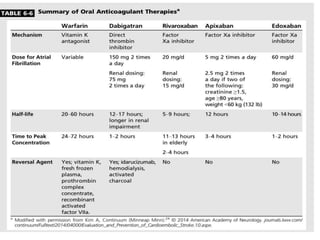
Anticogulants in cardioembolic stroke
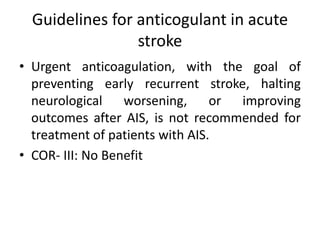
Guidelines for anticogulant in acute
stroke
• Urgent anticoagulation, with the goal of
preventing early recurrent stroke, halting
neurological worsening, or improving
outcomes after AIS, is not recommended for
treatment of patients with AIS.
• COR- III: No Benefit
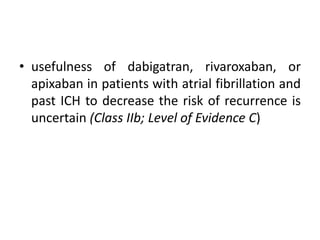
• usefulness of dabigatran, rivaroxaban, or
apixaban in patients with atrial fibrillation and
past ICH to decrease the risk of recurrence is
uncertain (Class IIb; Level of Evidence C)
• The usefulness of urgent anticoagulation in patients
with severe stenosis of an internal carotid artery
ipsilateral to an ischemic stroke is not well
established.
• COR- IIb
• At present, the usefulness argatroban, dabigatran, or
other thrombin inhibitors for the treatment of
patients with AIS is not well established.
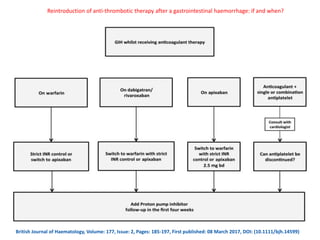
Reintroduction of anti‐thrombotic therapy after a gastrointestinal haemorrhage: if and when?
British Journal of Haematology, Volume: 177, Issue: 2, Pages: 185-197, First published: 08 March 2017, DOI: (10.1111/bjh.14599)
Reintroduction of anti‐thrombotic therapy after a gastrointestinal haemorrhage: if and when?
British Journal of Haematology, Volume: 177, Issue: 2, Pages: 185-197, First published: 08 March 2017, DOI: (10.1111/bjh.14599)
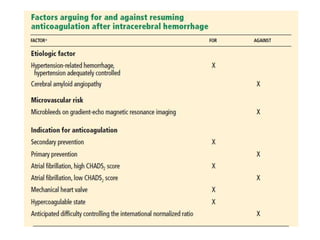
Guidelines for restarting of
antiplatelet/anticogulant after ICH
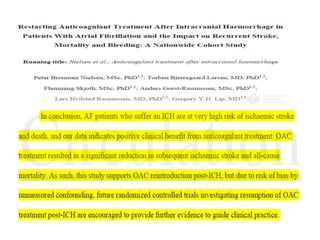
• Anticoagulation after nonlobar ICH and
antiplatelet monotherapy after any ICH might
be considered, particularly when there are
strong indications for these agents (Class IIb;
Level of Evidence B)
• optimal timing to resume oral
anticoagulation after anticoagulant-related
ICH is uncertain.
• Avoidance of oral anticoagulation for at least
4 weeks, in patients without mechanical heart
valves, might decrease the risk of ICH
recurrence (Class IIb; Level of Evidence B)
• If indicated, aspirin monotherapy can
probably be restarted in the days after ICH,
although the optimal timing is uncertain (Class
IIa; Level of Evidence B).
When to start
• American College of Chest Physicians
recommends starting prophylactic-dose
heparin the day after an ICH, with no clear
guidance on restarting warfarin
• If risk of thromboemboloism very high (in a
case of DVT/pulmonary thromboembolism)
When to start
• European Stroke Initiative recommends that
patients with a strong indication for
anticoagulation, such as a history of embolic
stroke with atrial fibrillation, should be restarted
on warfarin after 10 to 14 days
• American Heart Association suggests that, in
patients with a very high risk of
thromboembolism for whom restarting warfarin
is considered, warfarin may be restarted 7 to 10
days after ICH onset
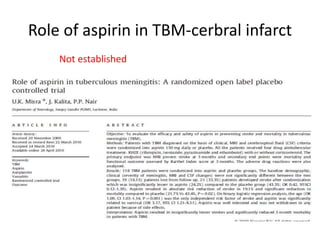
Role of aspirin in TBM-cerbral infarct
Not established
• Thank you

Antiplatelets in stroke recent scenario

  • 1.
    Antiplatelet & Anticogulantin stroke Prashant shringi DM Neurology resident
  • 2.
    AHA Guidelines forstarting of antiplatelets in acute ischemic stroke (AIS) • Adminstration of aspirin is recommended in patients with AIS within 24 to 48 hrs of onset. • After IV thrombolysis aspirin should be given after 24 hrs. • Aspirin is not recommended as a substitute for acute stroke treatment in patients who are otherwise eligible for IV alteplase ormechanical thrombectomy. • COR-1 • LOE- A
  • 3.
    Minor stroke- • NIHSS<3 •ABCD2 SCORE >4 • Dual antiplatelet (aspirin with clopidogrel) for 21 days begun within 24 hrs followed by clopidogrel alone to 90 days, in patients with minor stroke • COR-2A • LOE-B
  • 4.
    • Efficacy ofIV Tirofiban and eptifibatide is npt well established . Further clinical trials are needed • COR-2B • LOE -B
  • 5.
    • administration ofother glycoprotein IIb/IIIa receptor antagonists, including abciximab, in the treatment of AIS is potentially harmful and should not be performed. Further researchtesting the safety and efficacy of these medications in patients with AIS is required • COR-3-harm
  • 6.
    Aspirin in sec.prevention • For patients with non-cardioembolic AIS, the use of antiplatelet agents rather than oral anticoagulation is recommended to reduce the risk of recurrent stroke and other cardiovascular events. • COR-1 • LOE- A
  • 7.
    • For patientswho have a noncardioembolic AIS while taking antiplatelet therapy, switching to warfarin is not beneficial for secondary stroke prevention • COR-III: No Benefit
  • 8.
    • For mostpatients with an AIS in the setting of atrial fibrillation, it is reasonable to initiate oral anticoagulation within 4 to 14 days after the onset of neurological symptoms • COR-2A
  • 9.
    • For patientswith AIS and extracranial carotid or vertebral arterial dissection, treatment with either antiplatelet or anticoagulant therapy for 3 to 6 months may be reasonable. • COR -IIb
  • 10.
    Reintroduction of anti‐thrombotictherapy after a gastrointestinal haemorrhage: if and when? British Journal of Haematology, Volume: 177, Issue: 2, Pages: 185-197, First published: 08 March 2017, DOI: (10.1111/bjh.14599)
  • 11.
  • 15.
    Guidelines for anticogulantin acute stroke • Urgent anticoagulation, with the goal of preventing early recurrent stroke, halting neurological worsening, or improving outcomes after AIS, is not recommended for treatment of patients with AIS. • COR- III: No Benefit
  • 16.
    • usefulness ofdabigatran, rivaroxaban, or apixaban in patients with atrial fibrillation and past ICH to decrease the risk of recurrence is uncertain (Class IIb; Level of Evidence C)
  • 17.
    • The usefulnessof urgent anticoagulation in patients with severe stenosis of an internal carotid artery ipsilateral to an ischemic stroke is not well established. • COR- IIb • At present, the usefulness argatroban, dabigatran, or other thrombin inhibitors for the treatment of patients with AIS is not well established.
  • 18.
    Reintroduction of anti‐thrombotictherapy after a gastrointestinal haemorrhage: if and when? British Journal of Haematology, Volume: 177, Issue: 2, Pages: 185-197, First published: 08 March 2017, DOI: (10.1111/bjh.14599)
  • 19.
    Reintroduction of anti‐thrombotictherapy after a gastrointestinal haemorrhage: if and when? British Journal of Haematology, Volume: 177, Issue: 2, Pages: 185-197, First published: 08 March 2017, DOI: (10.1111/bjh.14599)
  • 20.
    Guidelines for restartingof antiplatelet/anticogulant after ICH • Anticoagulation after nonlobar ICH and antiplatelet monotherapy after any ICH might be considered, particularly when there are strong indications for these agents (Class IIb; Level of Evidence B)
  • 22.
    • optimal timingto resume oral anticoagulation after anticoagulant-related ICH is uncertain. • Avoidance of oral anticoagulation for at least 4 weeks, in patients without mechanical heart valves, might decrease the risk of ICH recurrence (Class IIb; Level of Evidence B)
  • 23.
    • If indicated,aspirin monotherapy can probably be restarted in the days after ICH, although the optimal timing is uncertain (Class IIa; Level of Evidence B).
  • 24.
    When to start •American College of Chest Physicians recommends starting prophylactic-dose heparin the day after an ICH, with no clear guidance on restarting warfarin • If risk of thromboemboloism very high (in a case of DVT/pulmonary thromboembolism)
  • 25.
    When to start •European Stroke Initiative recommends that patients with a strong indication for anticoagulation, such as a history of embolic stroke with atrial fibrillation, should be restarted on warfarin after 10 to 14 days • American Heart Association suggests that, in patients with a very high risk of thromboembolism for whom restarting warfarin is considered, warfarin may be restarted 7 to 10 days after ICH onset
  • 27.
    Role of aspirinin TBM-cerbral infarct Not established
  • 28.