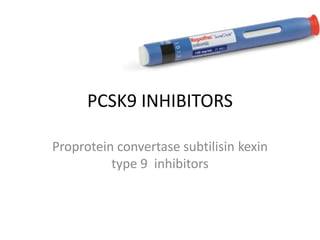
PCSK9 INHIBITORS
Proprotein convertase subtilisin kexin
type 9 inhibitors
2
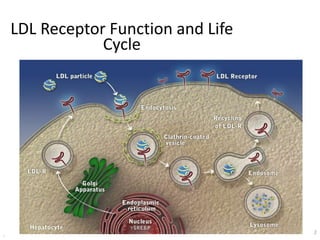
LDL Receptor Function and Life
Cycle
22
3
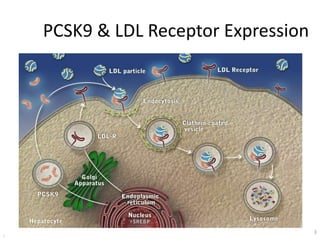
PCSK9 & LDL Receptor Expression
3
4
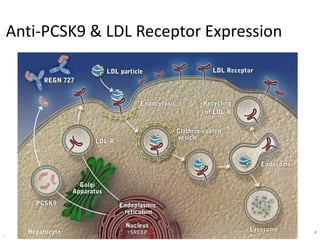
Anti-PCSK9 & LDL Receptor Expression
4
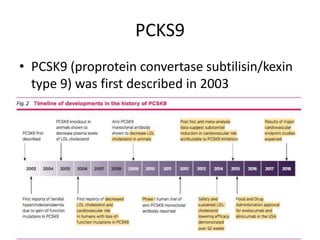
PCKS9
• PCSK9 (proprotein convertase subtilisin/kexin
type 9) was first described in 2003
PCSK9 Inhibitors
• There are three drugs in this class being developed
• All are monoclonal antibodies for subcutaneous
injection
• Alirocumab
– Currently marketed by Sanofi
• Evolocumab
– marketed by Amgen
• Bococizumab
– Expected release around 2017-2018 by Pfizer
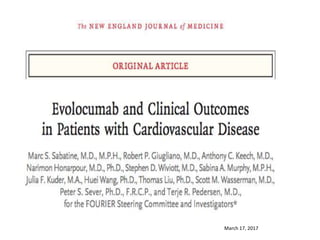
March 17, 2017
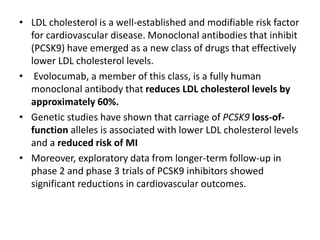
• LDL cholesterol is a well-established and modifiable risk factor
for cardiovascular disease. Monoclonal antibodies that inhibit
(PCSK9) have emerged as a new class of drugs that effectively
lower LDL cholesterol levels.
• Evolocumab, a member of this class, is a fully human
monoclonal antibody that reduces LDL cholesterol levels by
approximately 60%.
• Genetic studies have shown that carriage of PCSK9 loss-of-
function alleles is associated with lower LDL cholesterol levels
and a reduced risk of MI
• Moreover, exploratory data from longer-term follow-up in
phase 2 and phase 3 trials of PCSK9 inhibitors showed
significant reductions in cardiovascular outcomes.
METHODS
• Trial Design and Oversight
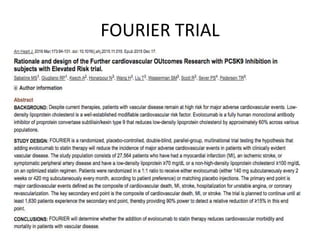
• The FOURIER trial was a randomized, double- blind, placebo-
controlled, multinational clinical trial in which patients at
1242 sites in 49 countries underwent randomization
• The executive committee and Amgen, the trial sponsor,
collaborated in designing the trial.
• The protocol and amendments were approved by the relevant
ethics committees at all participating sites. The sponsor was
responsible for data collection.
• The raw database was provided to the TIMI Study Group,
which conducted data analyses independently of the sponsor.
• The first draft of the manuscript was written by the first
author. All the coauthors participated in subsequent revisions
of the manuscript. The executive committee decided to
submit the manuscript for publication and assumes
responsibility for the accuracy and completeness of the data
and analyses and the fidelity of the trial to the protocol,
TRIAL POPULATION
• ELIGIBILITY CRITERIA:
1. 40 and 85 years of age and had clinically evident
atherosclerotic cardiovascular disease, defined as a
 history of MI
 nonhemorrhagic stroke,
 or symptomatic PAD, as well as additional characteristics that
placed them at higher cardiovascular risk.
2. fasting LDL cholesterol level of 70 md/dl or higher or a non–
HDL cholesterol level of 100 md/dl or higher while they were
taking an optimized regimen of lipid-lowering therapy, which
was defined as preferably a high-intensity statin but must have
been at least atorvastatin at a dose of 20 mg daily or its
equivalent, with or without ezetimibe.
3. Written informed consent was obtained from all the patients.
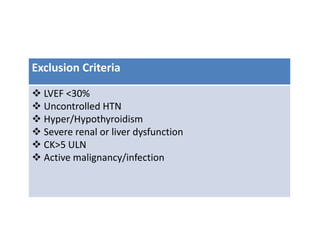
Exclusion Criteria
 LVEF <30%
 Uncontrolled HTN
 Hyper/Hypothyroidism
 Severe renal or liver dysfunction
 CK>5 ULN
 Active malignancy/infection
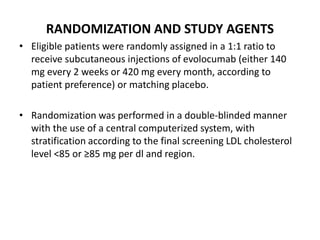
RANDOMIZATION AND STUDY AGENTS
• Eligible patients were randomly assigned in a 1:1 ratio to
receive subcutaneous injections of evolocumab (either 140
mg every 2 weeks or 420 mg every month, according to
patient preference) or matching placebo.
• Randomization was performed in a double-blinded manner
with the use of a central computerized system, with
stratification according to the final screening LDL cholesterol
level <85 or ≥85 mg per dl and region.
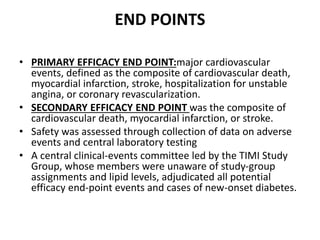
END POINTS
• PRIMARY EFFICACY END POINT:major cardiovascular
events, defined as the composite of cardiovascular death,
myocardial infarction, stroke, hospitalization for unstable
angina, or coronary revascularization.
• SECONDARY EFFICACY END POINT was the composite of
cardiovascular death, myocardial infarction, or stroke.
• Safety was assessed through collection of data on adverse
events and central laboratory testing
• A central clinical-events committee led by the TIMI Study
Group, whose members were unaware of study-group
assignments and lipid levels, adjudicated all potential
efficacy end-point events and cases of new-onset diabetes.
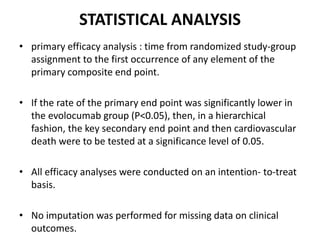
STATISTICAL ANALYSIS
• primary efficacy analysis : time from randomized study-group
assignment to the first occurrence of any element of the
primary composite end point.
• If the rate of the primary end point was significantly lower in
the evolocumab group (P<0.05), then, in a hierarchical
fashion, the key secondary end point and then cardiovascular
death were to be tested at a significance level of 0.05.
• All efficacy analyses were conducted on an intention- to-treat
basis.
• No imputation was performed for missing data on clinical
outcomes.
• Safety evaluations included all the patients who underwent
randomization and received at least one dose of a study agent
and for whom post-dose data were available.
• The size of the patient population in the trial was based on
the key secondary end point, and they estimated that 1630
such end-point events were required to provide 90% power to
detect a 15% relative risk reduction with evolocumab as
compared with placebo.
• Hazard ratios and 95% confidence intervals were generated
with the use of a Cox proportional-hazards model with
stratification factors as covariates, and P values for time-to-
event analyses were calculated with the use of log-rank tests.
RESULTS
• Patients
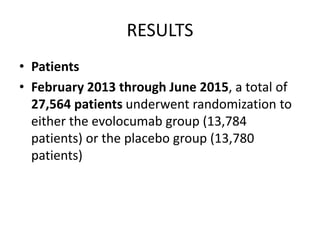
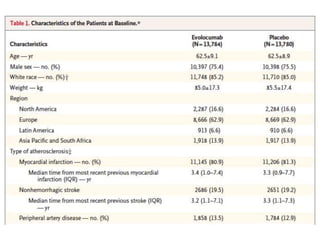
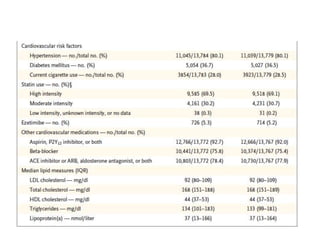
• February 2013 through June 2015, a total of
27,564 patients underwent randomization to
either the evolocumab group (13,784
patients) or the placebo group (13,780
patients)
• During the trial, only 9.8% of patients had alterations in their
background lipid-lowering therapy
• total of 27,525 patients (99.9%) received at least one dose of
a study agent.
• Premature permanent discontinuation of the study regimen
occurred in 12.5% of patients (5.7% per year), withdrawal of
consent in 0.7% (0.3% per year), and loss to follow-up in less
than 0.1% (0.03% per year), with similar rates in the two
study groups
• The median duration of follow-up was 26 months
(interquartile range, 22 to 30), which resulted in 59,865
patient- years of follow-up.
• Ascertainment of the primary end point was complete for
99.5% of potential patient-years of follow-up.
At 48 weeks, the least-squares mean percentage reduction in LDL cholesterol levels with
evolocumab, as compared with placebo, was 59% (95% confidence interval [CI], 58 to 60;
P<0.001), for a mean absolute reduction of 56 mg per deciliter (95% CI, 55 to 57) to a median of
30 mg per deciliter (interquartile range, 19 to 46) .The reduction in LDL cholesterol levels was
maintained over time
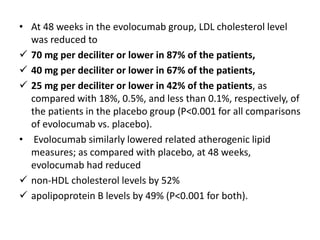
• At 48 weeks in the evolocumab group, LDL cholesterol level
was reduced to
 70 mg per deciliter or lower in 87% of the patients,
 40 mg per deciliter or lower in 67% of the patients,
 25 mg per deciliter or lower in 42% of the patients, as
compared with 18%, 0.5%, and less than 0.1%, respectively, of
the patients in the placebo group (P<0.001 for all comparisons
of evolocumab vs. placebo).
• Evolocumab similarly lowered related atherogenic lipid
measures; as compared with placebo, at 48 weeks,
evolocumab had reduced
 non-HDL cholesterol levels by 52%
 apolipoprotein B levels by 49% (P<0.001 for both).
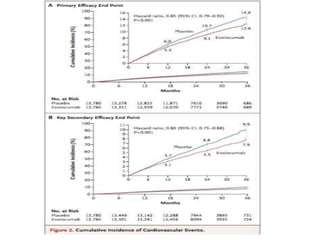
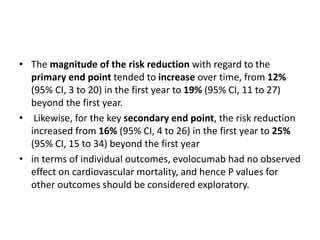
• The magnitude of the risk reduction with regard to the
primary end point tended to increase over time, from 12%
(95% CI, 3 to 20) in the first year to 19% (95% CI, 11 to 27)
beyond the first year.
• Likewise, for the key secondary end point, the risk reduction
increased from 16% (95% CI, 4 to 26) in the first year to 25%
(95% CI, 15 to 34) beyond the first year
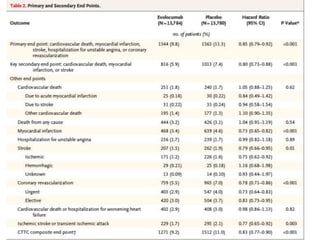
• in terms of individual outcomes, evolocumab had no observed
effect on cardiovascular mortality, and hence P values for
other outcomes should be considered exploratory.
• There were reductions of 21 to 27% in the risk of myocardial
infarction, stroke, and coronary revascularization but no ob-
served effect on the rates of hospitalization for unstable
angina, cardiovascular death or hospitalization for worsening
heart failure, or death from any cause
• The benefits of evolocumab with regard to the risk of the
primary and key secondary composite end points were largely
consistent across major subgroups, including those based on
age, sex, and type of atherosclerotic vascular disease
• the benefits were also consistent across quartiles of baseline
LDL cholesterol levels,
• patients in the top quartile, who had a median LDL
cholesterol level of 126 mg per deciliter (interquar- tile range,
116 to 143) at baseline, down to those in the lowest quartile,
who had a median LDL cholesterol level of 74 mg per deciliter
(inter- quartile range, 69 to 77) at baseline.
• The benefit of evolocumab was also consistent across levels of
intensity of statin therapy, regardless of ezetimibe use, and
with both the dosing regimen of 140 mg every 2 weeks and
that of 420 mg monthly.
Safety
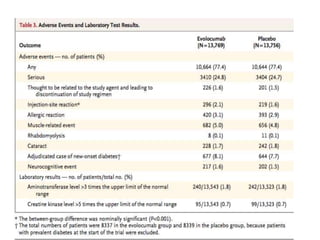
• No significant between-group differences were seen in the
overall rates of adverse events, serious adverse events, or
adverse events thought to be related to the study agent and
leading to discontinuation of the study regimen
• Like- wise, the rates of muscle-related events, cataract,
neurocognitive adverse events, and hemorrhagic stroke did
not differ significantly between the two groups.
• Injection-site reactions were rare, but they were more
frequent with evolocumab (2.1% vs. 1.6%).
• The large majority of reactions (approximately 90% in
each group) were classified as mild, and only 0.1% of
the patients in each group stopped receiving the study
agent because of an injection-site reaction.
• The rates of adjudicated cases of new-onset diabetes
did not differ significantly between the two groups
(hazard ratio, 1.05; 95% CI, 0.94 to 1.17).
• In the evolocumab group, new binding antibodies
developed in 43 patients (0.3%), and development of
neutralizing antibodies did not occur in any patient.
Discussion
• When added to statin therapy, the PCSK9 inhibitor
evolocumab lowered LDL cholesterol levels by 59% from
baseline levels as compared with placebo, from a median of
92 mg/dl to 30 md/dl.
• This effect was sustained without evidence of attenuation.
• addition of evolocumab to statin therapy significantly reduced
the risk of cardiovascular events, with a 15% reduction in the
risk of the primary composite end point of cardiovascular
death, myocardial infarction, stroke, hospitalization for
unstable angina, or coronary revascularization
• 20% reduction in the risk of the more clinically serious key
secondary end point of cardiovascular death, myocardial
infarction, or stroke.
• During a median of 26 months of follow-up, the only adverse events
that were noted to be nominally significantly more common in
association with evo- locumab were injection-site reactions, but
these were rare, and the rate of discontinuation of the study
regimen was no higher with evolocumab than with placebo.
• The data from the trial provide insight into the benefit of decreasing
LDL cholesterol levels to median levels lower than those in previous
trials
• Previously, significant reductions in major cardio- vascular events
were found in the Pravastatin or Atorvastatin Evaluation and
Infection Therapy– Thrombolysis in Myocardial Infarction 22
(PROVE IT–TIMI 22) and Treating to New Targets (TNT) trials, in
which the more intensive statin regimen lowered LDL cholesterol
levels from approximately 100 mg per deciliter to 70 mg per
deciliter
• More recently, the addition of ezetimibe to statin therapy in the
Improved Reduction of Outcomes: Vytorin Efficacy International
Trial (IMPROVE-IT) lowered LDL cholesterol levels from 70 mg per
deciliter to 54 mg per deciliter and significantly reduced major
cardiovascular events.
• In extending this concept further in FOURIER,they found consistent
reductions in rates of cardiovascular events across the range of
baseline LDL cholesterol levels.
• 17% reduction in the risk of the key secondary end point among
patients in the top quartile for baseline LDL cholesterol level, in
whom evolocumab lowered the median LDL cholesterol level from
126 mg per to 43 mg per deciliter (with the achieved level similar
to that achieved with ezetimibe in patients in the lowest quartile for
admission LDL cholesterol levels in IMPROVE-IT16)
• 22% reduction in the risk of the key secondary end point among
the patients in the lowest quartile for baseline LDL cholesterol
level, in whom evolocumab lowered the median LDL cholesterol
level from 73 mg per deciliter to 22 mg per deciliter
• These observations align well with the effects of evolocumab on
coronary atherosclerotic plaque volume in the Global Assessment of
Plaque Regression with a PCSK9 Antibody as Measured by
Intravascular Ultrasound (GLAGOV) trial and show that continued
cardiovascular benefit can be accrued even when LDL cholesterol
levels are reduced to 20 to 25 mg per deciliter a range that is well
below current targets.
• A delay between the onset of LDL cholesterol lowering and the
emergence of the full clinical benefit of the intervention in terms of
clinical risk reduction has been well documented in trials of statins,
ezetimibe, and other LDL cholesterol– lowering therapies.
• Likewise, in FOURIER, the magnitude of the risk reduction with
regard to the key secondary end point appeared to grow over time,
from 16% during the first year to 25% beyond 12 months, which
suggests that the translation of reductions in LDL cholesterol levels
into cardiovascular clinical benefit requires time.
• Over- all, 74 patients would need to be treated over a period of 2
years to prevent a cardiovascular death, myocardial infarction, or
stroke.
• In an observation consistent with previous trials of more intensive
LDL cholesterol–lowering therapy as compared with moderate-
intensity statin therapy,they found no effect of additional low- ering
of LDL cholesterol levels on cardiovascular mortality.
• The rate of use of evidence-based cardiovascular
pharmacotherapies that lower cardio- vascular mortality was very
high in FOURIER, in which the rates of cardiovascular mortality were
one third of the rates in the Scandinavian Simvastatin Survival Study
(4S)
• Similar to the findings in the Study of the Effectiveness of
Additional Reductions in Cholesterol and Homocysteine
(SEARCH) and IMPROVE-IT, in this trial they found no effect
on hospitalization for unstable angina.
• The advent of increasingly sensitive cardiac troponin assays
probably makes cardiac ischemia increasingly questionable as
the true cause of a hospitalization for chest-pain symptoms
without biochemical evidence of myocyte injury.
• Finally, the rate of urgent coronary revascularization
appeared to be more modifiable than that of elective
revascularization.
• Given these caveats, the magnitude of benefit of evolocumab
in reducing the risk of major coronary events, stroke, and
urgent coronary revascularization is largely consistent with
the benefit seen with statins on a per–millimole-per-liter basis
of LDL cholesterol lowering
• These observations are in accord with meta-analyses of data
from clinical trials of different lipid-lowering interventions,
which show consistent clinical benefits per unit reduction in
LDL cholesterol.
• Achievement of these very low LDL cholesterol levels with
evolocumab did not lead to any significant differences
between the two study groups in the overall rates of adverse
events or in rates of study-regimen discontinuation.
• The rate of discontinuation of evolocumab injections because
of adverse events that were ascribed to the drug was similar
to the rate with placebo (0.76% vs. 0.67% per year) and
compares favorably to the rates that have been found with
atorvastatin at a dose of 80 mg daily (1.5% per year) and with
ezetimibe (1.1% per year) in other trials.
• The risk of new- onset diabetes in this trial appeared to be
similar in the two groups, although the 95% confidence
intervals did not exclude the point estimates observed with
statins.
• Potential concerns about an increased risk of neurocognitive
adverse events were not borne out in this trial.
• In contrast to recent data for bococizumab (a humanized but
not fully human monoclonal antibody against PCSK9),
evolocumab-binding antibodies were rarely detected in this
trial, no neutralizing anti- bodies developed, and the overall
LDL cholesterol–lowering effect continued without
attenuation.
• Furthermore, similarly reassuring findings with evolocumab
were observed over a period of 4 years in the Open Label
Study of Long-Term Evaluation against LDL-C Trial (OSLER-1).
LIMITATION
• relatively short duration of follow-up as compared with that
in other lipid-lowering trials, in which follow-up periods have
averaged approximately 5 years.
• Although the median follow-up period in FOURIER was
originally planned to be approximately 4 years, an event rate
that was approximately 50% higher than had been postulated
led to a shorter required duration of follow-up to accrue the
prespecified number of events
• Most but not all of the patients in the trial received high-
intensity statin therapy, and ezetimibe use was infrequent.
• However, the benefit of evolocumab was consistent
regardless of the intensity of statin therapy or ezetimibe use.
CONCLUSION
• inhibition of PCSK9 with evolocumab on a background of
statin therapy lowered LDL cholesterol levels to a median of
30 mg /dl and reduced the risk of cardiovascular events.
• These findings show that patients with atherosclerotic cardio-
vascular disease benefit from the lowering of LDL cholesterol
levels below current targets.
• Thank you
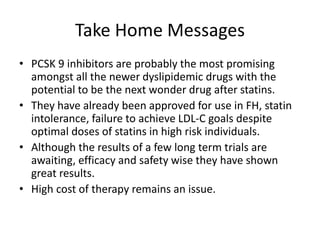
Take Home Messages
• PCSK 9 inhibitors are probably the most promising
amongst all the newer dyslipidemic drugs with the
potential to be the next wonder drug after statins.
• They have already been approved for use in FH, statin
intolerance, failure to achieve LDL-C goals despite
optimal doses of statins in high risk individuals.
• Although the results of a few long term trials are
awaiting, efficacy and safety wise they have shown
great results.
• High cost of therapy remains an issue.
THANK YOU
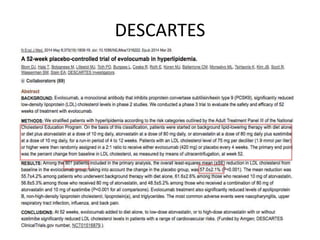
DESCARTES
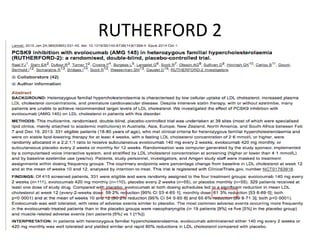
RUTHERFORD 2
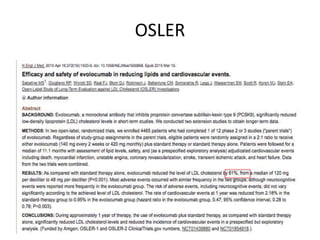
OSLER
FOURIER TRIAL
Clinical Trials For Alirocumab
PCKS9 INHIBITORS
PCKS9 INHIBITORS

PCKS9 INHIBITORS

  • 1.
    PCSK9 INHIBITORS Proprotein convertasesubtilisin kexin type 9 inhibitors
  • 2.
    2 LDL Receptor Functionand Life Cycle 22
  • 3.
    3 PCSK9 & LDLReceptor Expression 3
  • 4.
    4 Anti-PCSK9 & LDLReceptor Expression 4
  • 5.
    PCKS9 • PCSK9 (proproteinconvertase subtilisin/kexin type 9) was first described in 2003
  • 6.
    PCSK9 Inhibitors • Thereare three drugs in this class being developed • All are monoclonal antibodies for subcutaneous injection • Alirocumab – Currently marketed by Sanofi • Evolocumab – marketed by Amgen • Bococizumab – Expected release around 2017-2018 by Pfizer
  • 7.
  • 8.
    • LDL cholesterolis a well-established and modifiable risk factor for cardiovascular disease. Monoclonal antibodies that inhibit (PCSK9) have emerged as a new class of drugs that effectively lower LDL cholesterol levels. • Evolocumab, a member of this class, is a fully human monoclonal antibody that reduces LDL cholesterol levels by approximately 60%. • Genetic studies have shown that carriage of PCSK9 loss-of- function alleles is associated with lower LDL cholesterol levels and a reduced risk of MI • Moreover, exploratory data from longer-term follow-up in phase 2 and phase 3 trials of PCSK9 inhibitors showed significant reductions in cardiovascular outcomes.
  • 9.
    METHODS • Trial Designand Oversight • The FOURIER trial was a randomized, double- blind, placebo- controlled, multinational clinical trial in which patients at 1242 sites in 49 countries underwent randomization • The executive committee and Amgen, the trial sponsor, collaborated in designing the trial. • The protocol and amendments were approved by the relevant ethics committees at all participating sites. The sponsor was responsible for data collection.
  • 10.
    • The rawdatabase was provided to the TIMI Study Group, which conducted data analyses independently of the sponsor. • The first draft of the manuscript was written by the first author. All the coauthors participated in subsequent revisions of the manuscript. The executive committee decided to submit the manuscript for publication and assumes responsibility for the accuracy and completeness of the data and analyses and the fidelity of the trial to the protocol,
  • 11.
    TRIAL POPULATION • ELIGIBILITYCRITERIA: 1. 40 and 85 years of age and had clinically evident atherosclerotic cardiovascular disease, defined as a  history of MI  nonhemorrhagic stroke,  or symptomatic PAD, as well as additional characteristics that placed them at higher cardiovascular risk. 2. fasting LDL cholesterol level of 70 md/dl or higher or a non– HDL cholesterol level of 100 md/dl or higher while they were taking an optimized regimen of lipid-lowering therapy, which was defined as preferably a high-intensity statin but must have been at least atorvastatin at a dose of 20 mg daily or its equivalent, with or without ezetimibe. 3. Written informed consent was obtained from all the patients.
  • 12.
    Exclusion Criteria  LVEF<30%  Uncontrolled HTN  Hyper/Hypothyroidism  Severe renal or liver dysfunction  CK>5 ULN  Active malignancy/infection
  • 13.
    RANDOMIZATION AND STUDYAGENTS • Eligible patients were randomly assigned in a 1:1 ratio to receive subcutaneous injections of evolocumab (either 140 mg every 2 weeks or 420 mg every month, according to patient preference) or matching placebo. • Randomization was performed in a double-blinded manner with the use of a central computerized system, with stratification according to the final screening LDL cholesterol level <85 or ≥85 mg per dl and region.
  • 14.
    END POINTS • PRIMARYEFFICACY END POINT:major cardiovascular events, defined as the composite of cardiovascular death, myocardial infarction, stroke, hospitalization for unstable angina, or coronary revascularization. • SECONDARY EFFICACY END POINT was the composite of cardiovascular death, myocardial infarction, or stroke. • Safety was assessed through collection of data on adverse events and central laboratory testing • A central clinical-events committee led by the TIMI Study Group, whose members were unaware of study-group assignments and lipid levels, adjudicated all potential efficacy end-point events and cases of new-onset diabetes.
  • 15.
    STATISTICAL ANALYSIS • primaryefficacy analysis : time from randomized study-group assignment to the first occurrence of any element of the primary composite end point. • If the rate of the primary end point was significantly lower in the evolocumab group (P<0.05), then, in a hierarchical fashion, the key secondary end point and then cardiovascular death were to be tested at a significance level of 0.05. • All efficacy analyses were conducted on an intention- to-treat basis. • No imputation was performed for missing data on clinical outcomes.
  • 16.
    • Safety evaluationsincluded all the patients who underwent randomization and received at least one dose of a study agent and for whom post-dose data were available. • The size of the patient population in the trial was based on the key secondary end point, and they estimated that 1630 such end-point events were required to provide 90% power to detect a 15% relative risk reduction with evolocumab as compared with placebo. • Hazard ratios and 95% confidence intervals were generated with the use of a Cox proportional-hazards model with stratification factors as covariates, and P values for time-to- event analyses were calculated with the use of log-rank tests.
  • 17.
    RESULTS • Patients • February2013 through June 2015, a total of 27,564 patients underwent randomization to either the evolocumab group (13,784 patients) or the placebo group (13,780 patients)
  • 20.
    • During thetrial, only 9.8% of patients had alterations in their background lipid-lowering therapy • total of 27,525 patients (99.9%) received at least one dose of a study agent. • Premature permanent discontinuation of the study regimen occurred in 12.5% of patients (5.7% per year), withdrawal of consent in 0.7% (0.3% per year), and loss to follow-up in less than 0.1% (0.03% per year), with similar rates in the two study groups • The median duration of follow-up was 26 months (interquartile range, 22 to 30), which resulted in 59,865 patient- years of follow-up. • Ascertainment of the primary end point was complete for 99.5% of potential patient-years of follow-up.
  • 21.
    At 48 weeks,the least-squares mean percentage reduction in LDL cholesterol levels with evolocumab, as compared with placebo, was 59% (95% confidence interval [CI], 58 to 60; P<0.001), for a mean absolute reduction of 56 mg per deciliter (95% CI, 55 to 57) to a median of 30 mg per deciliter (interquartile range, 19 to 46) .The reduction in LDL cholesterol levels was maintained over time
  • 22.
    • At 48weeks in the evolocumab group, LDL cholesterol level was reduced to  70 mg per deciliter or lower in 87% of the patients,  40 mg per deciliter or lower in 67% of the patients,  25 mg per deciliter or lower in 42% of the patients, as compared with 18%, 0.5%, and less than 0.1%, respectively, of the patients in the placebo group (P<0.001 for all comparisons of evolocumab vs. placebo). • Evolocumab similarly lowered related atherogenic lipid measures; as compared with placebo, at 48 weeks, evolocumab had reduced  non-HDL cholesterol levels by 52%  apolipoprotein B levels by 49% (P<0.001 for both).
  • 25.
    • The magnitudeof the risk reduction with regard to the primary end point tended to increase over time, from 12% (95% CI, 3 to 20) in the first year to 19% (95% CI, 11 to 27) beyond the first year. • Likewise, for the key secondary end point, the risk reduction increased from 16% (95% CI, 4 to 26) in the first year to 25% (95% CI, 15 to 34) beyond the first year • in terms of individual outcomes, evolocumab had no observed effect on cardiovascular mortality, and hence P values for other outcomes should be considered exploratory.
  • 26.
    • There werereductions of 21 to 27% in the risk of myocardial infarction, stroke, and coronary revascularization but no ob- served effect on the rates of hospitalization for unstable angina, cardiovascular death or hospitalization for worsening heart failure, or death from any cause • The benefits of evolocumab with regard to the risk of the primary and key secondary composite end points were largely consistent across major subgroups, including those based on age, sex, and type of atherosclerotic vascular disease
  • 27.
    • the benefitswere also consistent across quartiles of baseline LDL cholesterol levels, • patients in the top quartile, who had a median LDL cholesterol level of 126 mg per deciliter (interquar- tile range, 116 to 143) at baseline, down to those in the lowest quartile, who had a median LDL cholesterol level of 74 mg per deciliter (inter- quartile range, 69 to 77) at baseline. • The benefit of evolocumab was also consistent across levels of intensity of statin therapy, regardless of ezetimibe use, and with both the dosing regimen of 140 mg every 2 weeks and that of 420 mg monthly.
  • 28.
    Safety • No significantbetween-group differences were seen in the overall rates of adverse events, serious adverse events, or adverse events thought to be related to the study agent and leading to discontinuation of the study regimen • Like- wise, the rates of muscle-related events, cataract, neurocognitive adverse events, and hemorrhagic stroke did not differ significantly between the two groups. • Injection-site reactions were rare, but they were more frequent with evolocumab (2.1% vs. 1.6%).
  • 30.
    • The largemajority of reactions (approximately 90% in each group) were classified as mild, and only 0.1% of the patients in each group stopped receiving the study agent because of an injection-site reaction. • The rates of adjudicated cases of new-onset diabetes did not differ significantly between the two groups (hazard ratio, 1.05; 95% CI, 0.94 to 1.17). • In the evolocumab group, new binding antibodies developed in 43 patients (0.3%), and development of neutralizing antibodies did not occur in any patient.
  • 31.
    Discussion • When addedto statin therapy, the PCSK9 inhibitor evolocumab lowered LDL cholesterol levels by 59% from baseline levels as compared with placebo, from a median of 92 mg/dl to 30 md/dl. • This effect was sustained without evidence of attenuation. • addition of evolocumab to statin therapy significantly reduced the risk of cardiovascular events, with a 15% reduction in the risk of the primary composite end point of cardiovascular death, myocardial infarction, stroke, hospitalization for unstable angina, or coronary revascularization • 20% reduction in the risk of the more clinically serious key secondary end point of cardiovascular death, myocardial infarction, or stroke.
  • 32.
    • During amedian of 26 months of follow-up, the only adverse events that were noted to be nominally significantly more common in association with evo- locumab were injection-site reactions, but these were rare, and the rate of discontinuation of the study regimen was no higher with evolocumab than with placebo. • The data from the trial provide insight into the benefit of decreasing LDL cholesterol levels to median levels lower than those in previous trials • Previously, significant reductions in major cardio- vascular events were found in the Pravastatin or Atorvastatin Evaluation and Infection Therapy– Thrombolysis in Myocardial Infarction 22 (PROVE IT–TIMI 22) and Treating to New Targets (TNT) trials, in which the more intensive statin regimen lowered LDL cholesterol levels from approximately 100 mg per deciliter to 70 mg per deciliter
  • 33.
    • More recently,the addition of ezetimibe to statin therapy in the Improved Reduction of Outcomes: Vytorin Efficacy International Trial (IMPROVE-IT) lowered LDL cholesterol levels from 70 mg per deciliter to 54 mg per deciliter and significantly reduced major cardiovascular events. • In extending this concept further in FOURIER,they found consistent reductions in rates of cardiovascular events across the range of baseline LDL cholesterol levels. • 17% reduction in the risk of the key secondary end point among patients in the top quartile for baseline LDL cholesterol level, in whom evolocumab lowered the median LDL cholesterol level from 126 mg per to 43 mg per deciliter (with the achieved level similar to that achieved with ezetimibe in patients in the lowest quartile for admission LDL cholesterol levels in IMPROVE-IT16) • 22% reduction in the risk of the key secondary end point among the patients in the lowest quartile for baseline LDL cholesterol level, in whom evolocumab lowered the median LDL cholesterol level from 73 mg per deciliter to 22 mg per deciliter
  • 34.
    • These observationsalign well with the effects of evolocumab on coronary atherosclerotic plaque volume in the Global Assessment of Plaque Regression with a PCSK9 Antibody as Measured by Intravascular Ultrasound (GLAGOV) trial and show that continued cardiovascular benefit can be accrued even when LDL cholesterol levels are reduced to 20 to 25 mg per deciliter a range that is well below current targets. • A delay between the onset of LDL cholesterol lowering and the emergence of the full clinical benefit of the intervention in terms of clinical risk reduction has been well documented in trials of statins, ezetimibe, and other LDL cholesterol– lowering therapies.
  • 35.
    • Likewise, inFOURIER, the magnitude of the risk reduction with regard to the key secondary end point appeared to grow over time, from 16% during the first year to 25% beyond 12 months, which suggests that the translation of reductions in LDL cholesterol levels into cardiovascular clinical benefit requires time. • Over- all, 74 patients would need to be treated over a period of 2 years to prevent a cardiovascular death, myocardial infarction, or stroke. • In an observation consistent with previous trials of more intensive LDL cholesterol–lowering therapy as compared with moderate- intensity statin therapy,they found no effect of additional low- ering of LDL cholesterol levels on cardiovascular mortality. • The rate of use of evidence-based cardiovascular pharmacotherapies that lower cardio- vascular mortality was very high in FOURIER, in which the rates of cardiovascular mortality were one third of the rates in the Scandinavian Simvastatin Survival Study (4S)
  • 36.
    • Similar tothe findings in the Study of the Effectiveness of Additional Reductions in Cholesterol and Homocysteine (SEARCH) and IMPROVE-IT, in this trial they found no effect on hospitalization for unstable angina. • The advent of increasingly sensitive cardiac troponin assays probably makes cardiac ischemia increasingly questionable as the true cause of a hospitalization for chest-pain symptoms without biochemical evidence of myocyte injury. • Finally, the rate of urgent coronary revascularization appeared to be more modifiable than that of elective revascularization.
  • 37.
    • Given thesecaveats, the magnitude of benefit of evolocumab in reducing the risk of major coronary events, stroke, and urgent coronary revascularization is largely consistent with the benefit seen with statins on a per–millimole-per-liter basis of LDL cholesterol lowering • These observations are in accord with meta-analyses of data from clinical trials of different lipid-lowering interventions, which show consistent clinical benefits per unit reduction in LDL cholesterol.
  • 38.
    • Achievement ofthese very low LDL cholesterol levels with evolocumab did not lead to any significant differences between the two study groups in the overall rates of adverse events or in rates of study-regimen discontinuation. • The rate of discontinuation of evolocumab injections because of adverse events that were ascribed to the drug was similar to the rate with placebo (0.76% vs. 0.67% per year) and compares favorably to the rates that have been found with atorvastatin at a dose of 80 mg daily (1.5% per year) and with ezetimibe (1.1% per year) in other trials. • The risk of new- onset diabetes in this trial appeared to be similar in the two groups, although the 95% confidence intervals did not exclude the point estimates observed with statins.
  • 39.
    • Potential concernsabout an increased risk of neurocognitive adverse events were not borne out in this trial. • In contrast to recent data for bococizumab (a humanized but not fully human monoclonal antibody against PCSK9), evolocumab-binding antibodies were rarely detected in this trial, no neutralizing anti- bodies developed, and the overall LDL cholesterol–lowering effect continued without attenuation. • Furthermore, similarly reassuring findings with evolocumab were observed over a period of 4 years in the Open Label Study of Long-Term Evaluation against LDL-C Trial (OSLER-1).
  • 40.
    LIMITATION • relatively shortduration of follow-up as compared with that in other lipid-lowering trials, in which follow-up periods have averaged approximately 5 years. • Although the median follow-up period in FOURIER was originally planned to be approximately 4 years, an event rate that was approximately 50% higher than had been postulated led to a shorter required duration of follow-up to accrue the prespecified number of events • Most but not all of the patients in the trial received high- intensity statin therapy, and ezetimibe use was infrequent. • However, the benefit of evolocumab was consistent regardless of the intensity of statin therapy or ezetimibe use.
  • 41.
    CONCLUSION • inhibition ofPCSK9 with evolocumab on a background of statin therapy lowered LDL cholesterol levels to a median of 30 mg /dl and reduced the risk of cardiovascular events. • These findings show that patients with atherosclerotic cardio- vascular disease benefit from the lowering of LDL cholesterol levels below current targets.
  • 45.
  • 46.
    Take Home Messages •PCSK 9 inhibitors are probably the most promising amongst all the newer dyslipidemic drugs with the potential to be the next wonder drug after statins. • They have already been approved for use in FH, statin intolerance, failure to achieve LDL-C goals despite optimal doses of statins in high risk individuals. • Although the results of a few long term trials are awaiting, efficacy and safety wise they have shown great results. • High cost of therapy remains an issue.
  • 47.
  • 49.
  • 50.
  • 52.
  • 54.
  • 55.