ANTI-CONVULSANT
MEDICATION
JOHNY WILBERT, M.Sc[N]
LECTURER,
APOLLO INSTITUTE OF HOSPITAL
MANAGEMENT AND ALLIED SCIENCE
ANTICONVULSANT MEDICATION
• Anticonvulsant medication are medicines used
to prevent convulsions or seizures
MECHANISM OF ACTION
• Anticonvulsant medication depress abnormal
neuronal discharge and prevent the spread of
seizures to adjacent neurons.
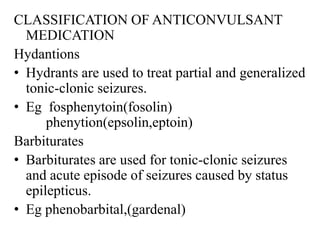
CLASSIFICATION OF ANTICONVULSANT
MEDICATION
Hydantions
• Hydrants are used to treat partial and generalized
tonic-clonic seizures.
• Eg fosphenytoin(fosolin)
phenytion(epsolin,eptoin)
Barbiturates
• Barbiturates are used for tonic-clonic seizures
and acute episode of seizures caused by status
epilepticus.
• Eg phenobarbital,(gardenal)
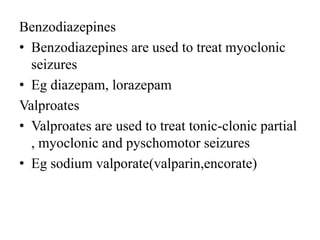
Benzodiazepines
• Benzodiazepines are used to treat myoclonic
seizures
• Eg diazepam, lorazepam
Valproates
• Valproates are used to treat tonic-clonic partial
, myoclonic and pyschomotor seizures
• Eg sodium valporate(valparin,encorate)
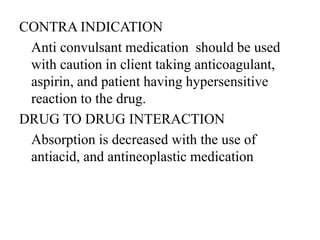
CONTRA INDICATION
Anti convulsant medication should be used
with caution in client taking anticoagulant,
aspirin, and patient having hypersensitive
reaction to the drug.
DRUG TO DRUG INTERACTION
Absorption is decreased with the use of
antiacid, and antineoplastic medication
SIDE EFFECT
• Drowsiness , Dizziness
• Nausea and vomiting
• Dry mouth, Constipation
• Visual abnormalities
• Head ache, confusion
• Slurred speech, mood changes
• Hypotension, respiratory depression
• Dose &Dilution
• Dose 20-30 mg/kg
• Anticonvulsant medication must be diluted in
100 ml normal saline(or)ringer lactate (or) 5%
dextrose.
• Anti convulsive medication must should be
given over 15-20 minutes
NURSES RESPONSIBILITY
• Follow ten rights
• Monitor for side effects
• Initiate seizures
• Monitor urine out put
• Monitor renal and liver function
• Monitor for side effect
• Protect client from hazards in the environment
• Monitor for drug toxicity
• When administering phenytoin IV dilute in NS
Because dextrose causes the medication
precipitation
• Administer phenytoin IV very slowly between
25-30 mg/min
• Advice the client take medication with milk to
prevent GI irritation
• Advice client to wear medic alert bracelet
Thank you

Anticonvulsive medication

  • 1.
    ANTI-CONVULSANT MEDICATION JOHNY WILBERT, M.Sc[N] LECTURER, APOLLOINSTITUTE OF HOSPITAL MANAGEMENT AND ALLIED SCIENCE
  • 2.
    ANTICONVULSANT MEDICATION • Anticonvulsantmedication are medicines used to prevent convulsions or seizures MECHANISM OF ACTION • Anticonvulsant medication depress abnormal neuronal discharge and prevent the spread of seizures to adjacent neurons.
  • 3.
    CLASSIFICATION OF ANTICONVULSANT MEDICATION Hydantions •Hydrants are used to treat partial and generalized tonic-clonic seizures. • Eg fosphenytoin(fosolin) phenytion(epsolin,eptoin) Barbiturates • Barbiturates are used for tonic-clonic seizures and acute episode of seizures caused by status epilepticus. • Eg phenobarbital,(gardenal)
  • 4.
    Benzodiazepines • Benzodiazepines areused to treat myoclonic seizures • Eg diazepam, lorazepam Valproates • Valproates are used to treat tonic-clonic partial , myoclonic and pyschomotor seizures • Eg sodium valporate(valparin,encorate)
  • 5.
    CONTRA INDICATION Anti convulsantmedication should be used with caution in client taking anticoagulant, aspirin, and patient having hypersensitive reaction to the drug. DRUG TO DRUG INTERACTION Absorption is decreased with the use of antiacid, and antineoplastic medication
  • 6.
    SIDE EFFECT • Drowsiness, Dizziness • Nausea and vomiting • Dry mouth, Constipation • Visual abnormalities • Head ache, confusion • Slurred speech, mood changes • Hypotension, respiratory depression
  • 7.
    • Dose &Dilution •Dose 20-30 mg/kg • Anticonvulsant medication must be diluted in 100 ml normal saline(or)ringer lactate (or) 5% dextrose. • Anti convulsive medication must should be given over 15-20 minutes
  • 8.
    NURSES RESPONSIBILITY • Followten rights • Monitor for side effects • Initiate seizures • Monitor urine out put • Monitor renal and liver function • Monitor for side effect • Protect client from hazards in the environment
  • 9.
    • Monitor fordrug toxicity • When administering phenytoin IV dilute in NS Because dextrose causes the medication precipitation • Administer phenytoin IV very slowly between 25-30 mg/min • Advice the client take medication with milk to prevent GI irritation • Advice client to wear medic alert bracelet
  • 10.