








Antibiotic Policy
Dr. Chinmay Dash
Department of Microbiology
IQ City Medical College, Durgapur
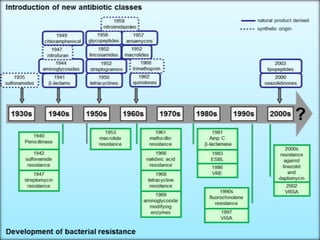
• Intensive use of antibiotics –
increase prevalence of
resistance
• Due to the selective pressure of antibiotic use
• The modification of the endogenous flora
• Other risk factors:- presence of indwelling devices,
-Exposure to broad spectrum antibiotics and
treatment under dosing,
-Admission to wards where resistant strains are
epidemic or endemic and
-Frequent exposure to nursing and invasive
procedures.
Antibiotic Control Programs
Its an ongoing effort by a health care institution to
optimize antimicrobial use among hospitalized patients in
order to improve patient outcomes, ensure cost- effective
therapy, and reduce adverse sequelae of antimicrobial use
To recommend specific intervention measures such as
rational use of antibiotics and antibiotic policies in
hospitals which can be implemented as early as possible.
Intervention Measures
• Formulation of antibiotic policies
• Education and training of all prescribers
• Implementation of infection control guidelines
• Formulation of an antibiotic policy
• Implementation of an antibiotic policy
• Antibiotic Management Team
• The policy for Presumptive / Empiric therapy
and Prophylactic therapy
• Monitor implementation
• Assess outcome
• With quality assured laboratory data in real time
( develop antibiotic policies that are standard national / local
treatment guidelines)
• This must include consideration of spectrum of antibiotics,
pharmacokinetics / pharmacodynamics, adverse effects, cost
and special needs of individual patient groups.
A. Formulation And Implementation of an antibiotic policy
o Compile Local Hospital data based on AMR
o Site of infection
o Geographic Variations
(ICUs / Wards / Surgical Site Infections etc.)
o % Distribution of organisms
o %Susceptibility to identified antibiotics
A.1. Formulation-Step I
Put the data in given template:
o Site of Infection, Type of Infection.
o Causative pathogens.
o Recent 12 month antimicrobial data.
o Capture pathogens contributing to (80-90)% of infections.
o Capture the susceptibility of antimicrobials from highest to
lowest.
o Pneumonia
o IAI
o UTI
o BSI
o SSTI
o Surgical Prophylaxis.
A.2. Formulation-Step II
o Put in database, based on site of infection?
o Data will be separate for Ward and ICU isolates
o 5 most common pathogens be identified and most antibiotics
in decreasing order of sensitivity also be identified.
o Generate the Validity period (X+1yr)
A.3. Formulation-Step III
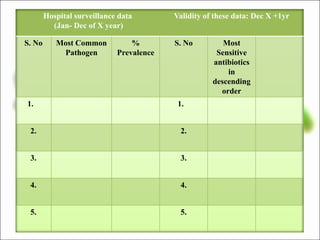
Hospital surveillance data
(Jan- Dec of X year)
Validity of these data: Dec X +1yr
S. No Most Common
Pathogen
%
Prevalence
S. No Most
Sensitive
antibiotics
in
descending
order
1. 1.
2. 2.
3. 3.
4. 4.
5. 5.
B. Implementation
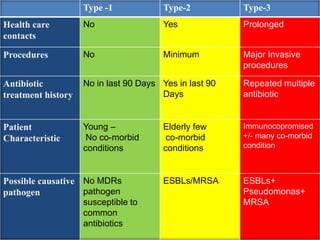
Do Stratification for each patients’ type
Type -1 Type-2 Type-3
Health care
contacts
No Yes Prolonged
Procedures No Minimum Major Invasive
procedures
Antibiotic
treatment history
No in last 90 Days Yes in last 90
Days
Repeated multiple
antibiotic
Patient
Characteristic
Young –
No co-morbid
conditions
Elderly few
co-morbid
conditions
Immunocopromised
+/- many co-morbid
condition
Possible causative
pathogen
No MDRs
pathogen
susceptible to
common
antibiotics
ESBLs/MRSA ESBLs+
Pseudomonas+
MRSA
5
WHO?
Antibiotic Management Team
Functions
The policy for Presumptive / Empiric therapy and
Prophylactic therapy
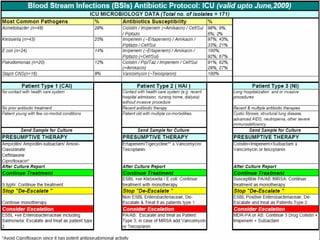
Presumptive/ Empiric antibiotic policy
• should be simple, clear, non-controversial, clinically
relevant, flexible and applicable to day-to-day practice
and available in user friendly format.
• should also include optimal selection dosage, route of
administration, duration, alternatives for allergic to first-line
agents; adjusted dosage for patients with impaired renal
functions.
• Previous history of antimicrobials or current antibiotics
along with patient co morbidities may play a role in final
prescribing.
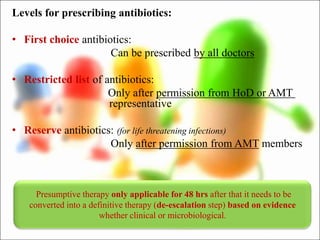
Levels for prescribing antibiotics:
• First choice antibiotics:
Can be prescribed by all doctors
• Restricted list of antibiotics:
Only after permission from HoD or AMT
representative
• Reserve antibiotics: (for life threatening infections)
Only after permission from AMT members
Presumptive therapy only applicable for 48 hrs after that it needs to be
converted into a definitive therapy (de-escalation step) based on evidence
whether clinical or microbiological.
Prophylactic Antibiotic Policy
• Procedure for which antibiotic are needed should be posted in
Operating Room with Optimal agents, dosage, timing, route
and duration of administration
e.g. Inj Cefuroxime 1.5 gm I/V before induction of anaesthesia,
repeat another dose if procedure extends beyond 4 hrs.
• should be given for a short duration, free of side effects and
relatively inexpensive and should not be used as a therapy
Constructive FEEDBACK of policy prior to implementation
After formulation of the presumptive / empiric & prophylactic
policies they should be circulated to receive constructive
feedback. Policy should be reviewed by respected peers who are
not the members of the AMT, but are also experts in the
relevant field
 Formulation of an antibiotic policy
 Implementation of an antibiotic policy
 Antibiotic Management Team
 The policy for Presumptive / Empiric therapy and
Prophylactic therapy
• Monitor implementation
• Assess outcome
Monitor implementation: we may form Drug and
Therapeutics Committee (DTC)
1. Basis for approval of new drugs:
Based on safety, efficacy, availability and cost of the
medication.
2. Fixing of three brands per approved generic
3. Banning of harmful drugs in the Hospital
(viz. Phenylpropanolamine (PPA), Nimesulide etc)
4. Development of over the counter (OTC) drug list.
This OTC drug list should also contain the quantity to
be dispensed
Which may carry out the following:
Assess outcome of Intervention
A monthly update of antibiotic consumption of a unit is
sent with a comparison of other units in the institute this
highlights any excess.
Update and Revise
Should be updated EVERY YEAR
(based on local surveillance of antimicrobial susceptibility
data, clinical practice and local circumstances)
What India need ?????
“An Implementable antibiotic policy”
and
NOT “ A perfect policy”
"A Roadmap to Tackle the Challenge of
Antimicrobial Resistance “
A Joint meeting of Medical Societies in India" was organized
as a pre-conference symposium of the 2 nd annual conference
of the Clinical Infectious Disease Society (CIDSCON 2012) at
Chennai on 24th August.
Introduce STEP BY STEP
regulation of antibiotic usage,
concentrating on higher end antibiotics
first and then slowly extending the list to
second and first line antibiotics
ROAD MAP
Conclusion
Although many measures may impact on antimicrobial
resistance, reducing the use of antimicrobials to only those
situations where they are warranted, at the proper dose and
for the proper duration, is the best solution.
Hospitals, as the primary incubators of
antimicrobial-resistant pathogens, carry the highest
responsibility for proper stewardship of our antimicrobial
resources.
Florence Nightingale, Notes on Hospitals, 1863
It may seem a strange principle
to enunciate as the very first requirement
of a hospital
that it do the sick no harm
THANK YOU

Antibiotic policy

  • 3.
    Antibiotic Policy Dr. ChinmayDash Department of Microbiology IQ City Medical College, Durgapur
  • 6.
    • Intensive useof antibiotics – increase prevalence of resistance • Due to the selective pressure of antibiotic use • The modification of the endogenous flora • Other risk factors:- presence of indwelling devices, -Exposure to broad spectrum antibiotics and treatment under dosing, -Admission to wards where resistant strains are epidemic or endemic and -Frequent exposure to nursing and invasive procedures.
  • 7.
    Antibiotic Control Programs Itsan ongoing effort by a health care institution to optimize antimicrobial use among hospitalized patients in order to improve patient outcomes, ensure cost- effective therapy, and reduce adverse sequelae of antimicrobial use
  • 8.
    To recommend specificintervention measures such as rational use of antibiotics and antibiotic policies in hospitals which can be implemented as early as possible. Intervention Measures • Formulation of antibiotic policies • Education and training of all prescribers • Implementation of infection control guidelines
  • 9.
    • Formulation ofan antibiotic policy • Implementation of an antibiotic policy • Antibiotic Management Team • The policy for Presumptive / Empiric therapy and Prophylactic therapy • Monitor implementation • Assess outcome
  • 10.
    • With qualityassured laboratory data in real time ( develop antibiotic policies that are standard national / local treatment guidelines) • This must include consideration of spectrum of antibiotics, pharmacokinetics / pharmacodynamics, adverse effects, cost and special needs of individual patient groups. A. Formulation And Implementation of an antibiotic policy
  • 11.
    o Compile LocalHospital data based on AMR o Site of infection o Geographic Variations (ICUs / Wards / Surgical Site Infections etc.) o % Distribution of organisms o %Susceptibility to identified antibiotics A.1. Formulation-Step I
  • 12.
    Put the datain given template: o Site of Infection, Type of Infection. o Causative pathogens. o Recent 12 month antimicrobial data. o Capture pathogens contributing to (80-90)% of infections. o Capture the susceptibility of antimicrobials from highest to lowest. o Pneumonia o IAI o UTI o BSI o SSTI o Surgical Prophylaxis. A.2. Formulation-Step II
  • 13.
    o Put indatabase, based on site of infection? o Data will be separate for Ward and ICU isolates o 5 most common pathogens be identified and most antibiotics in decreasing order of sensitivity also be identified. o Generate the Validity period (X+1yr) A.3. Formulation-Step III
  • 14.
    Hospital surveillance data (Jan-Dec of X year) Validity of these data: Dec X +1yr S. No Most Common Pathogen % Prevalence S. No Most Sensitive antibiotics in descending order 1. 1. 2. 2. 3. 3. 4. 4. 5. 5.
  • 15.
    B. Implementation Do Stratificationfor each patients’ type
  • 16.
    Type -1 Type-2Type-3 Health care contacts No Yes Prolonged Procedures No Minimum Major Invasive procedures Antibiotic treatment history No in last 90 Days Yes in last 90 Days Repeated multiple antibiotic Patient Characteristic Young – No co-morbid conditions Elderly few co-morbid conditions Immunocopromised +/- many co-morbid condition Possible causative pathogen No MDRs pathogen susceptible to common antibiotics ESBLs/MRSA ESBLs+ Pseudomonas+ MRSA
  • 17.
  • 18.
  • 19.
  • 20.
  • 21.
    The policy forPresumptive / Empiric therapy and Prophylactic therapy
  • 22.
    Presumptive/ Empiric antibioticpolicy • should be simple, clear, non-controversial, clinically relevant, flexible and applicable to day-to-day practice and available in user friendly format. • should also include optimal selection dosage, route of administration, duration, alternatives for allergic to first-line agents; adjusted dosage for patients with impaired renal functions. • Previous history of antimicrobials or current antibiotics along with patient co morbidities may play a role in final prescribing.
  • 23.
    Levels for prescribingantibiotics: • First choice antibiotics: Can be prescribed by all doctors • Restricted list of antibiotics: Only after permission from HoD or AMT representative • Reserve antibiotics: (for life threatening infections) Only after permission from AMT members Presumptive therapy only applicable for 48 hrs after that it needs to be converted into a definitive therapy (de-escalation step) based on evidence whether clinical or microbiological.
  • 24.
    Prophylactic Antibiotic Policy •Procedure for which antibiotic are needed should be posted in Operating Room with Optimal agents, dosage, timing, route and duration of administration e.g. Inj Cefuroxime 1.5 gm I/V before induction of anaesthesia, repeat another dose if procedure extends beyond 4 hrs. • should be given for a short duration, free of side effects and relatively inexpensive and should not be used as a therapy
  • 25.
    Constructive FEEDBACK ofpolicy prior to implementation After formulation of the presumptive / empiric & prophylactic policies they should be circulated to receive constructive feedback. Policy should be reviewed by respected peers who are not the members of the AMT, but are also experts in the relevant field
  • 26.
     Formulation ofan antibiotic policy  Implementation of an antibiotic policy  Antibiotic Management Team  The policy for Presumptive / Empiric therapy and Prophylactic therapy • Monitor implementation • Assess outcome
  • 27.
    Monitor implementation: wemay form Drug and Therapeutics Committee (DTC) 1. Basis for approval of new drugs: Based on safety, efficacy, availability and cost of the medication. 2. Fixing of three brands per approved generic 3. Banning of harmful drugs in the Hospital (viz. Phenylpropanolamine (PPA), Nimesulide etc) 4. Development of over the counter (OTC) drug list. This OTC drug list should also contain the quantity to be dispensed Which may carry out the following:
  • 28.
    Assess outcome ofIntervention A monthly update of antibiotic consumption of a unit is sent with a comparison of other units in the institute this highlights any excess.
  • 29.
    Update and Revise Shouldbe updated EVERY YEAR (based on local surveillance of antimicrobial susceptibility data, clinical practice and local circumstances)
  • 30.
    What India need????? “An Implementable antibiotic policy” and NOT “ A perfect policy”
  • 31.
    "A Roadmap toTackle the Challenge of Antimicrobial Resistance “ A Joint meeting of Medical Societies in India" was organized as a pre-conference symposium of the 2 nd annual conference of the Clinical Infectious Disease Society (CIDSCON 2012) at Chennai on 24th August.
  • 33.
    Introduce STEP BYSTEP regulation of antibiotic usage, concentrating on higher end antibiotics first and then slowly extending the list to second and first line antibiotics
  • 34.
  • 36.
    Conclusion Although many measuresmay impact on antimicrobial resistance, reducing the use of antimicrobials to only those situations where they are warranted, at the proper dose and for the proper duration, is the best solution. Hospitals, as the primary incubators of antimicrobial-resistant pathogens, carry the highest responsibility for proper stewardship of our antimicrobial resources.
  • 37.
    Florence Nightingale, Noteson Hospitals, 1863 It may seem a strange principle to enunciate as the very first requirement of a hospital that it do the sick no harm THANK YOU