Dr. Brad Cut rel l , 
VANTHCS ASP 
Di rector 
CDC GET SMART WEEK 
NOVEMBER 17-23, 2014
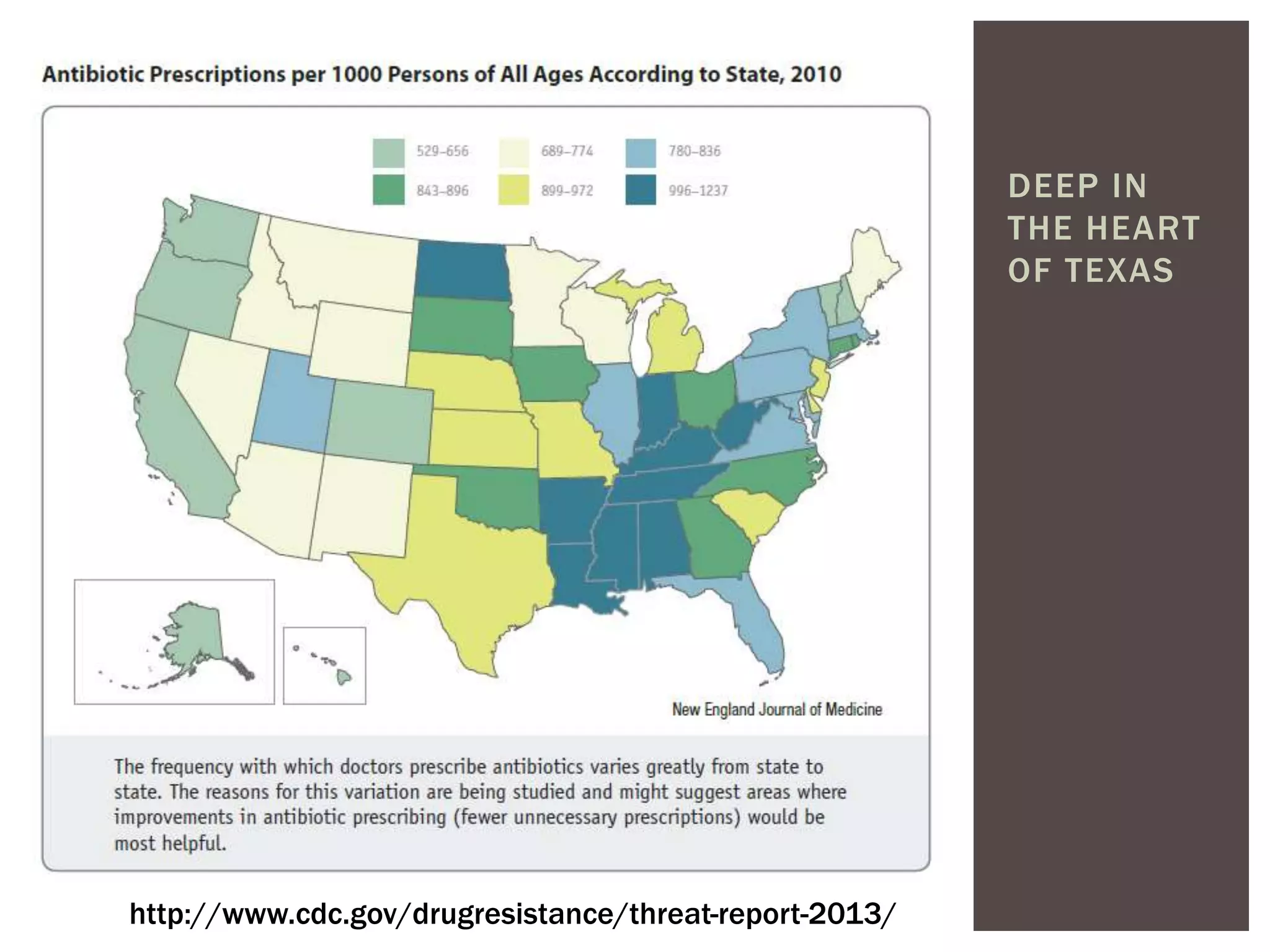
DEEP IN 
THE HEART 
OF TEXAS 
http://www.cdc.gov/drugresistance/threat-report-2013/
WHY CARE ABOUT ANTIBIOTIC OVERUSE? 
Unintended Consequences of Antibiotic Prescribing 
Adverse Drug Events 
Antibiotic Drug Resistance 
Clostridium difficile Infections
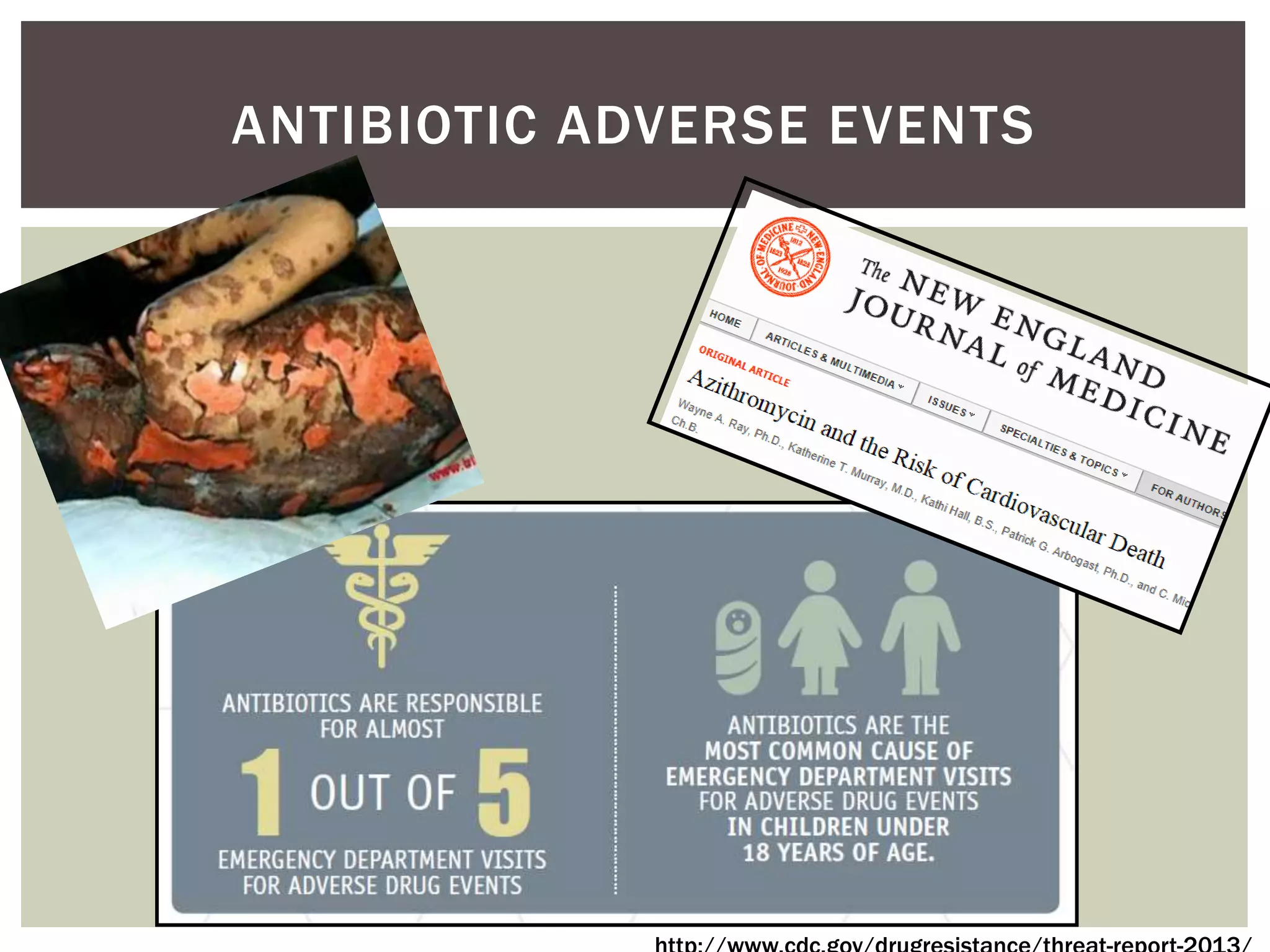
ANTIBIOTIC ADVERSE EVENTS 
http://www.cdc.gov/drugresistance/threat-report-2013/
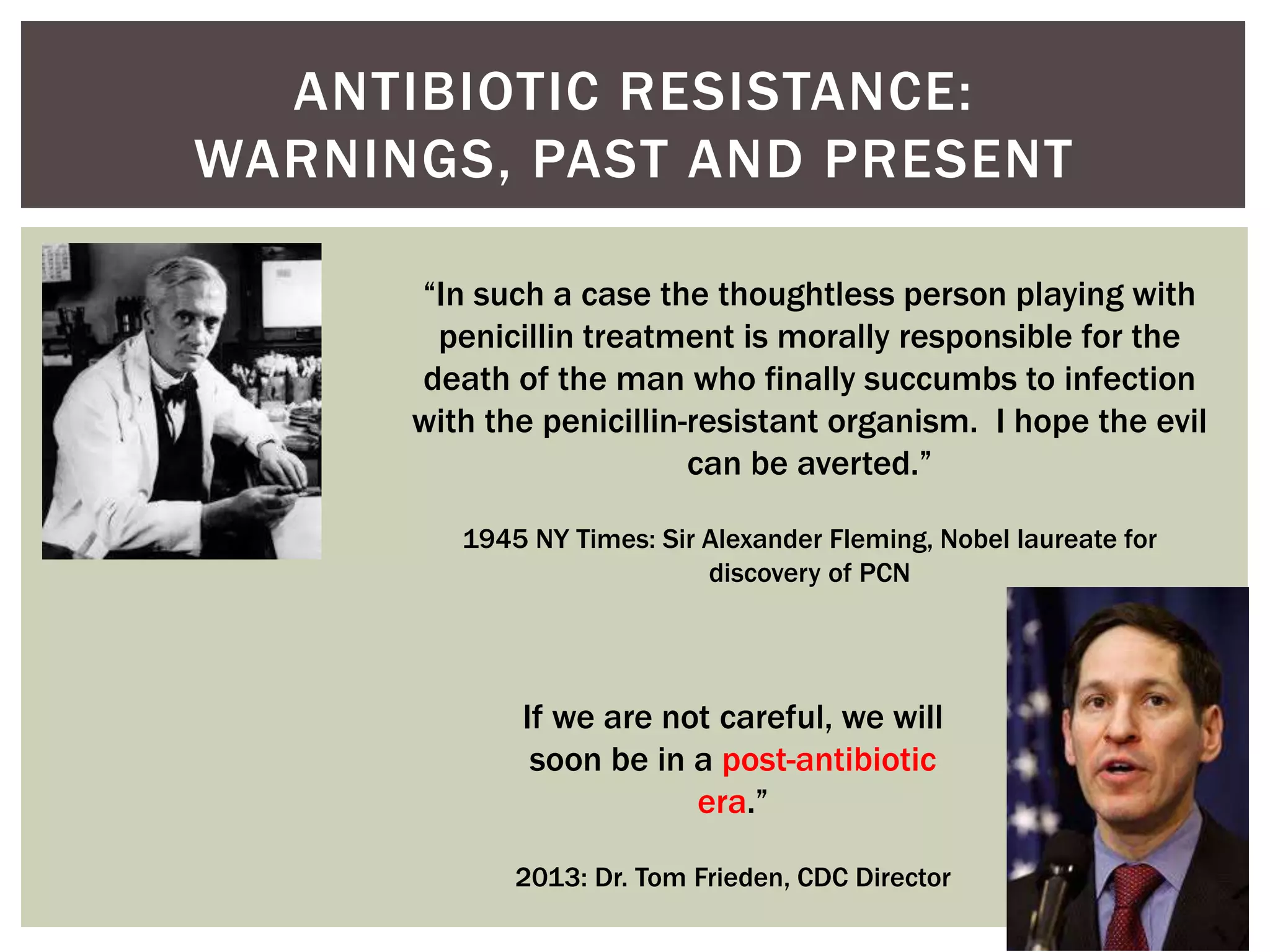
ANTIBIOTIC RESISTANCE: 
WARNINGS, PAST AND PRESENT 
“In such a case the thoughtless person playing with 
penicillin treatment is morally responsible for the 
death of the man who finally succumbs to infection 
with the penicillin-resistant organism. I hope the evil 
can be averted.” 
1945 NY Times: Sir Alexander Fleming, Nobel laureate for 
discovery of PCN 
If we are not careful, we will 
soon be in a post-antibiotic 
era.” 
2013: Dr. Tom Frieden, CDC Director
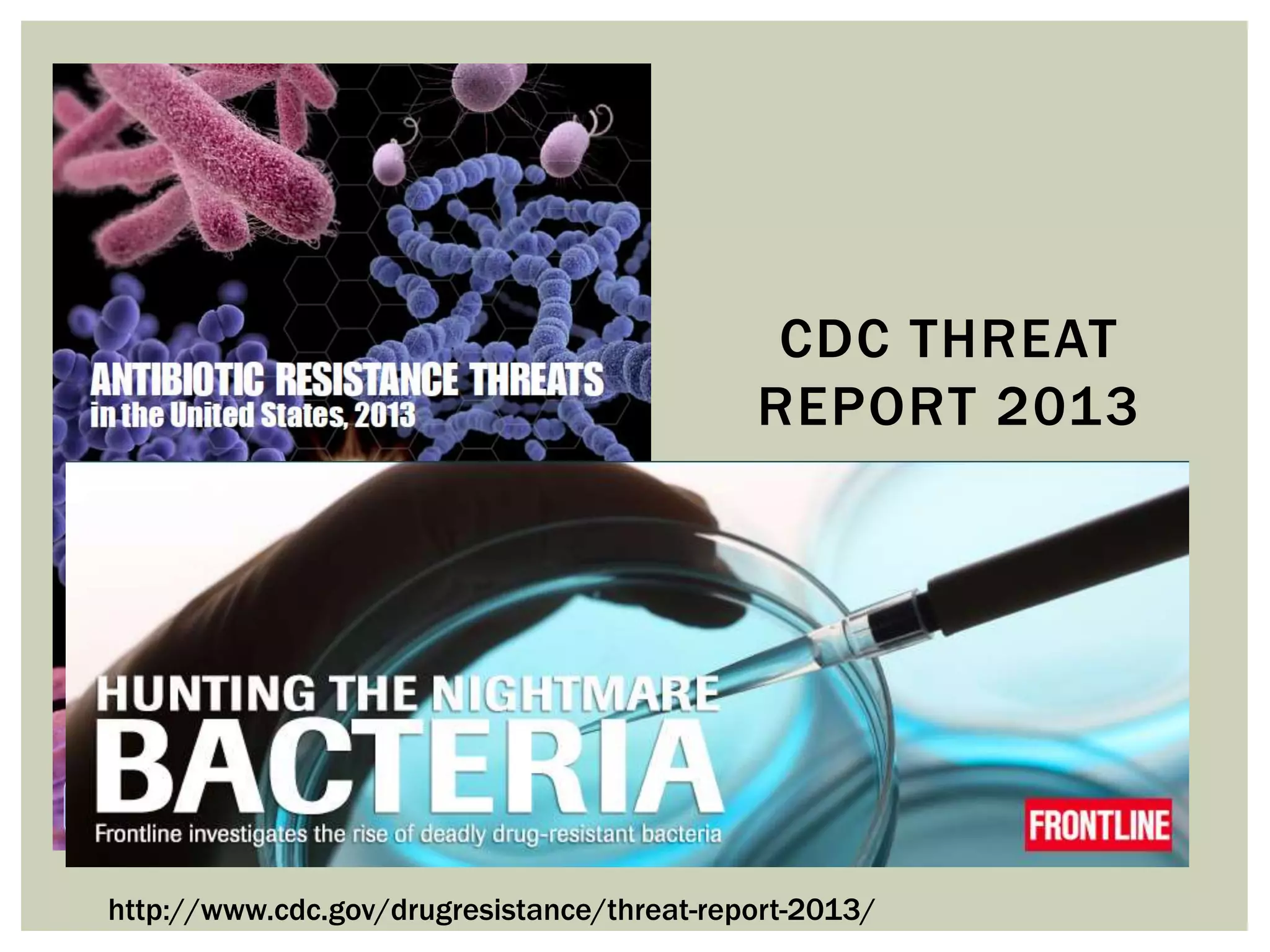
CDC THREAT 
REPORT 2013 
http://www.cdc.gov/drugresistance/threat-report-2013/
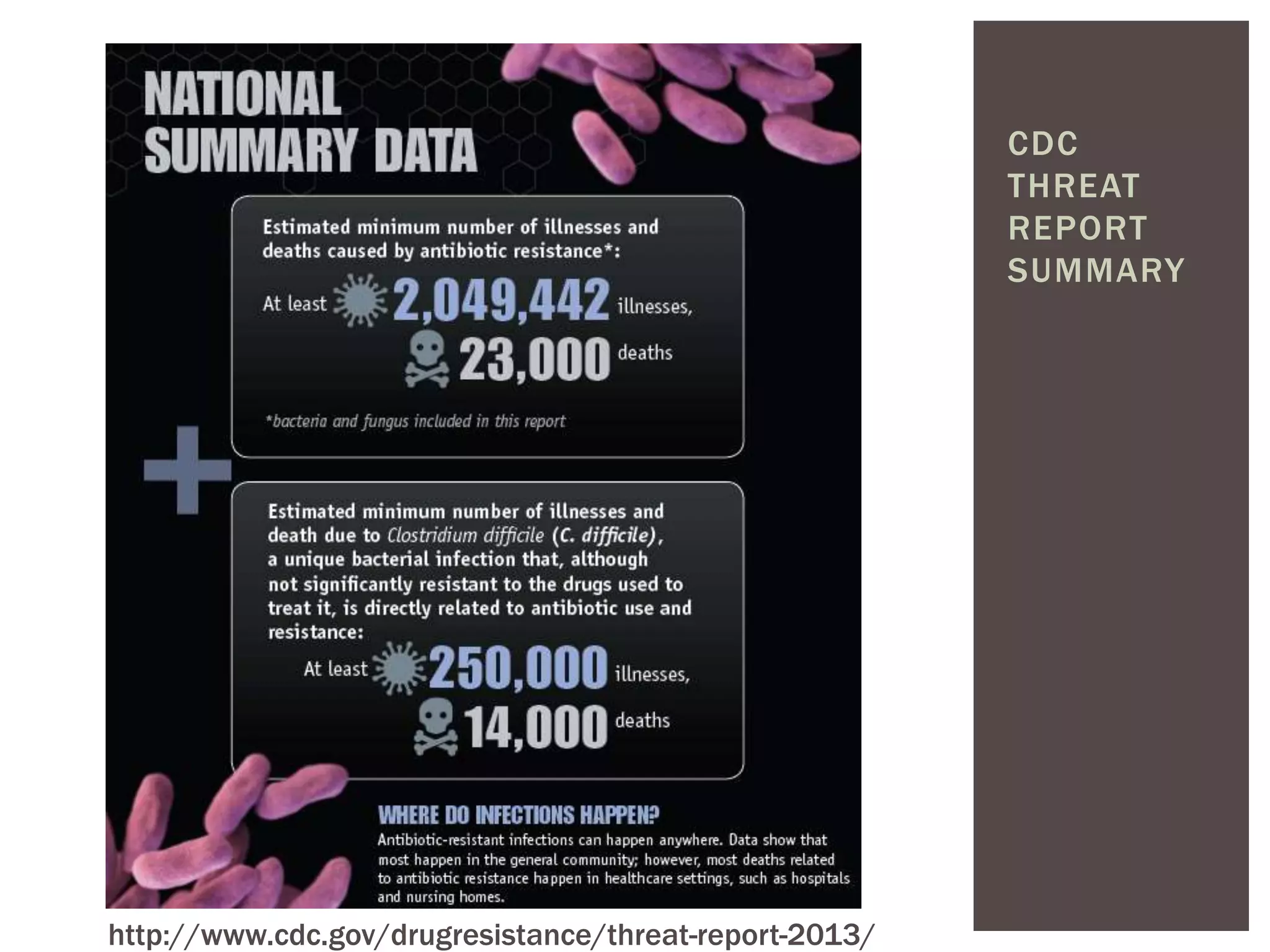
CDC 
THREAT 
REPORT 
SUMMARY 
http://www.cdc.gov/drugresistance/threat-report-2013/
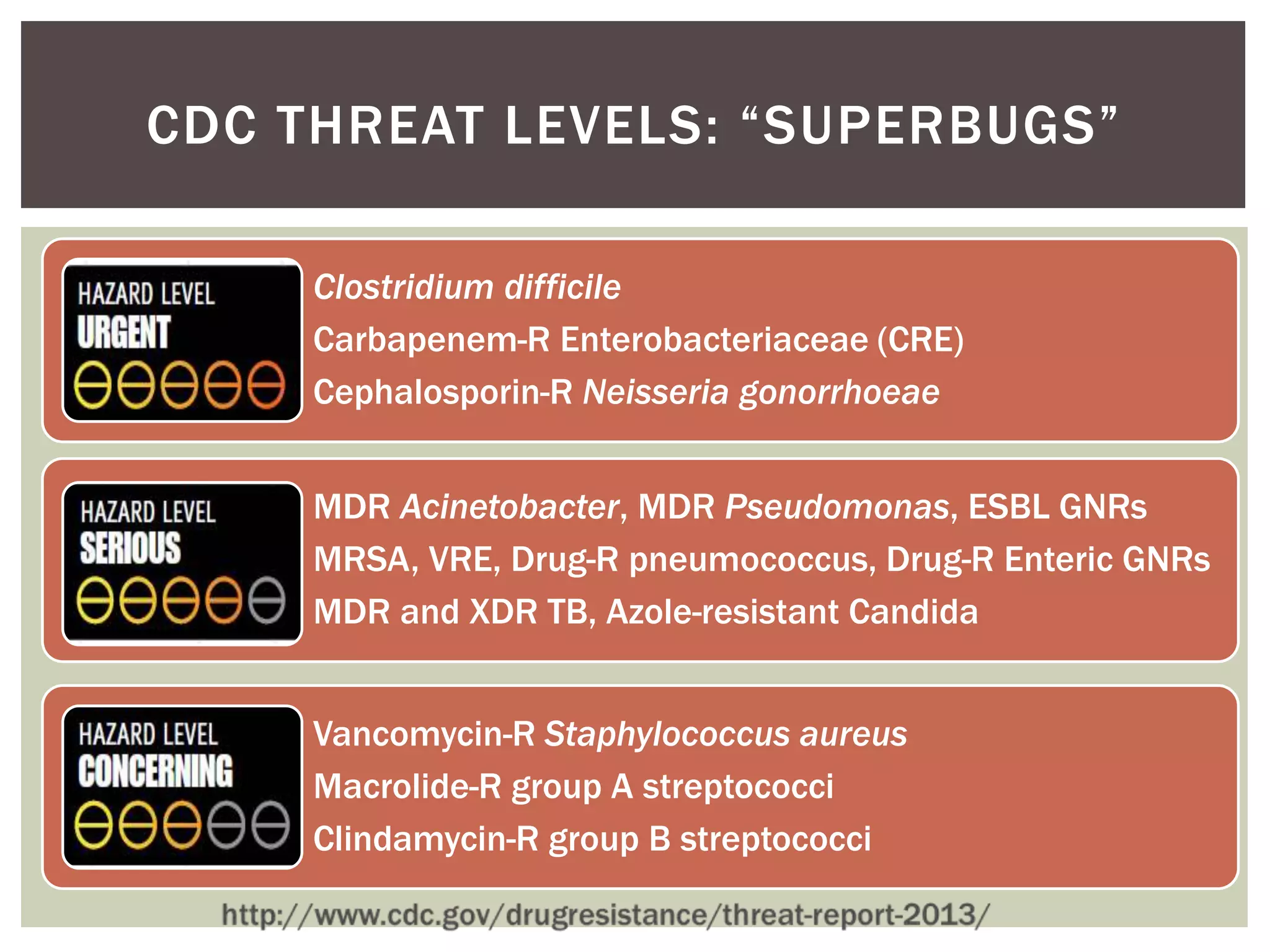
CDC THREAT LEVELS: “SUPERBUGS” 
Clostridium difficile 
Carbapenem-R Enterobacteriaceae (CRE) 
Cephalosporin-R Neisseria gonorrhoeae 
MDR Acinetobacter, MDR Pseudomonas, ESBL GNRs 
MRSA, VRE, Drug-R pneumococcus, Drug-R Enteric GNRs 
MDR and XDR TB, Azole-resistant Candida 
Vancomycin-R Staphylococcus aureus 
Macrolide-R group A streptococci 
Clindamycin-R group B streptococci
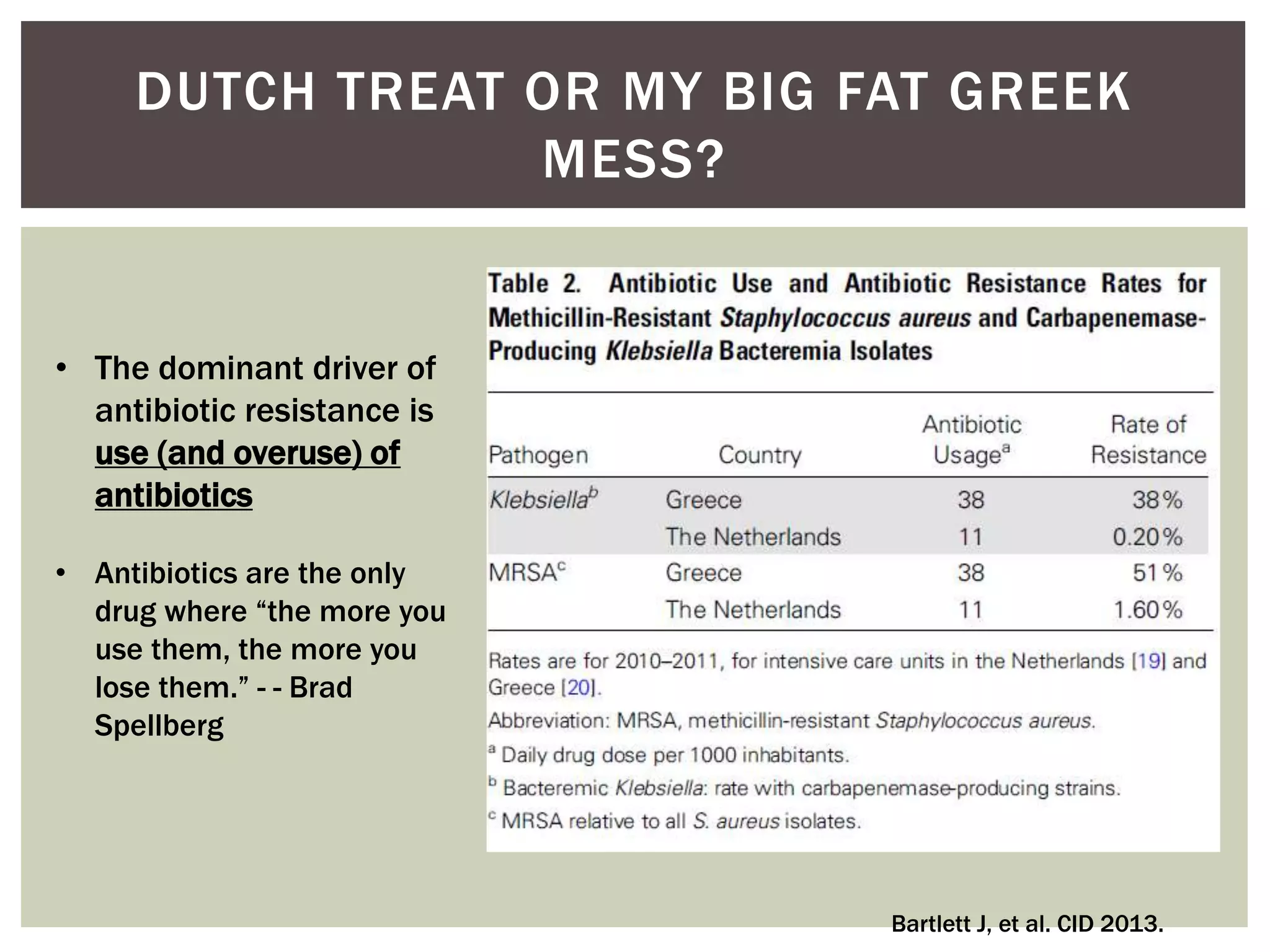
DUTCH TREAT OR MY BIG FAT GREEK 
MESS? 
Bartlett J, et al. CID 2013. 
• The dominant driver of 
antibiotic resistance is 
use (and overuse) of 
antibiotics 
• Antibiotics are the only 
drug where “the more you 
use them, the more you 
lose them.” - - Brad 
Spellberg
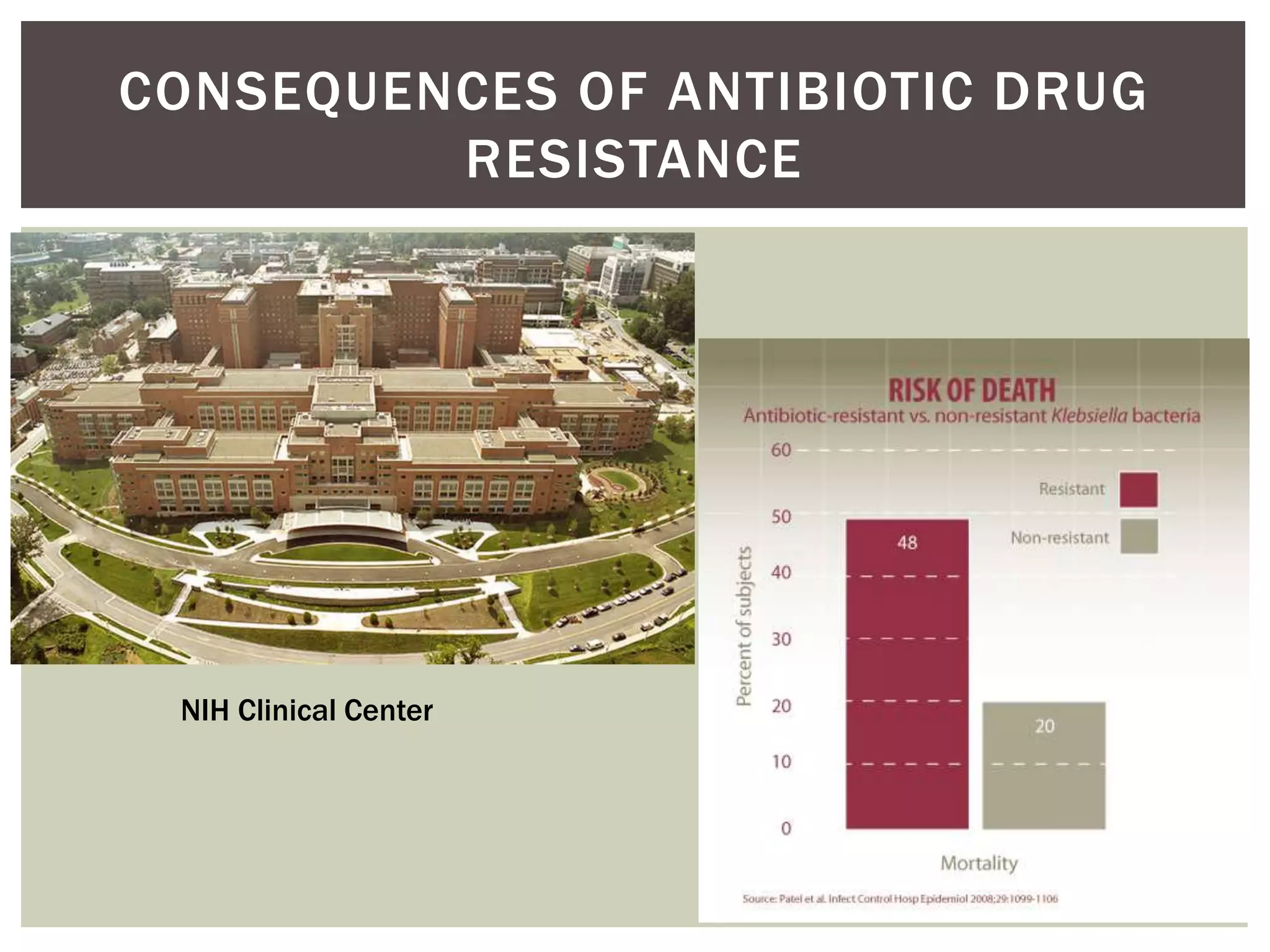
CONSEQUENCES OF ANTIBIOTIC DRUG 
RESISTANCE 
NIH Clinical Center
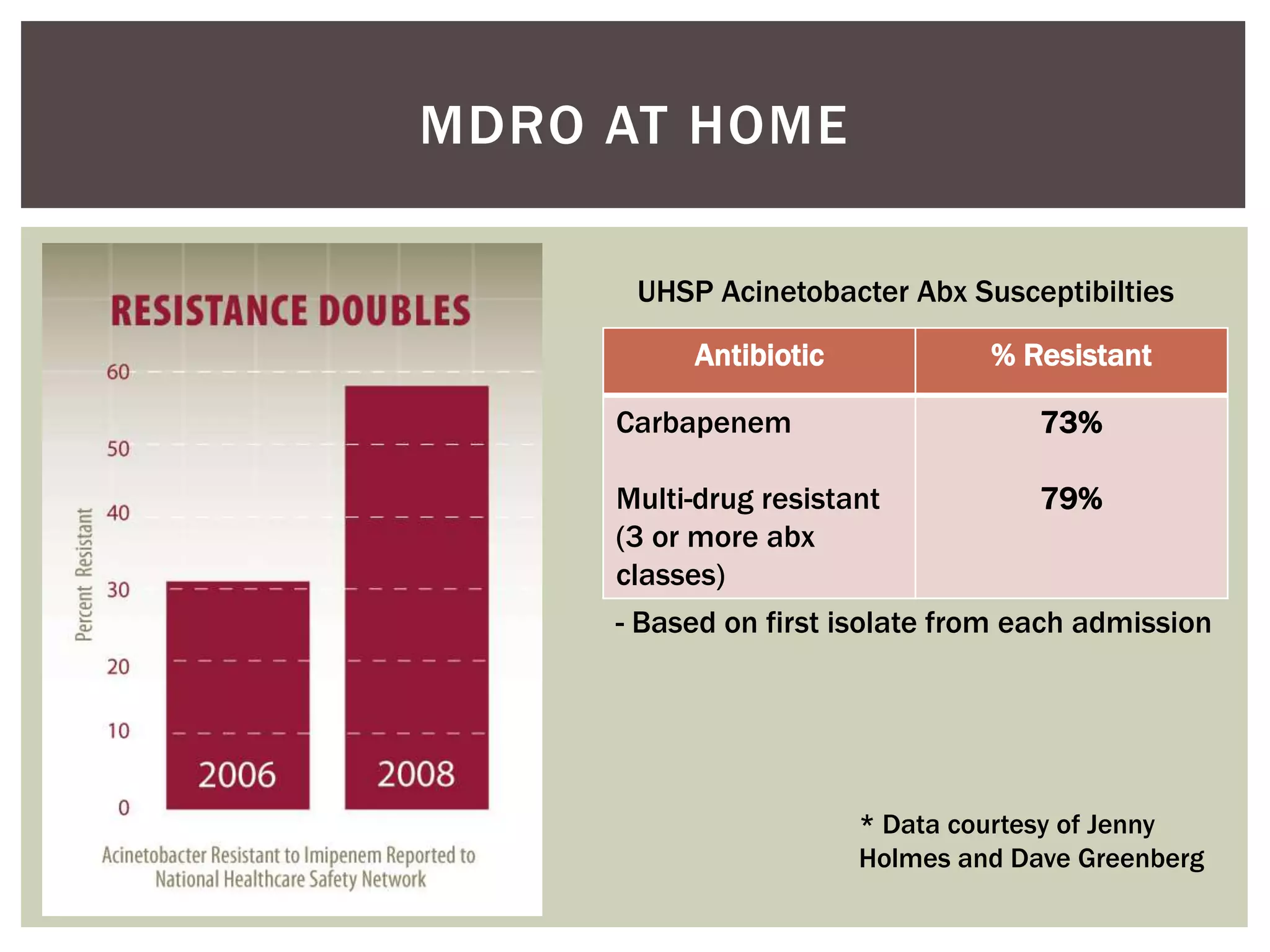
MDRO AT HOME 
UHSP Acinetobacter Abx Susceptibilties 
Antibiotic % Resistant 
Carbapenem 
Multi-drug resistant 
(3 or more abx 
classes) 
73% 
79% 
- Based on first isolate from each admission 
* Data courtesy of Jenny 
Holmes and Dave Greenberg
WHAT DO ALL THESE HAVE IN COMMON?
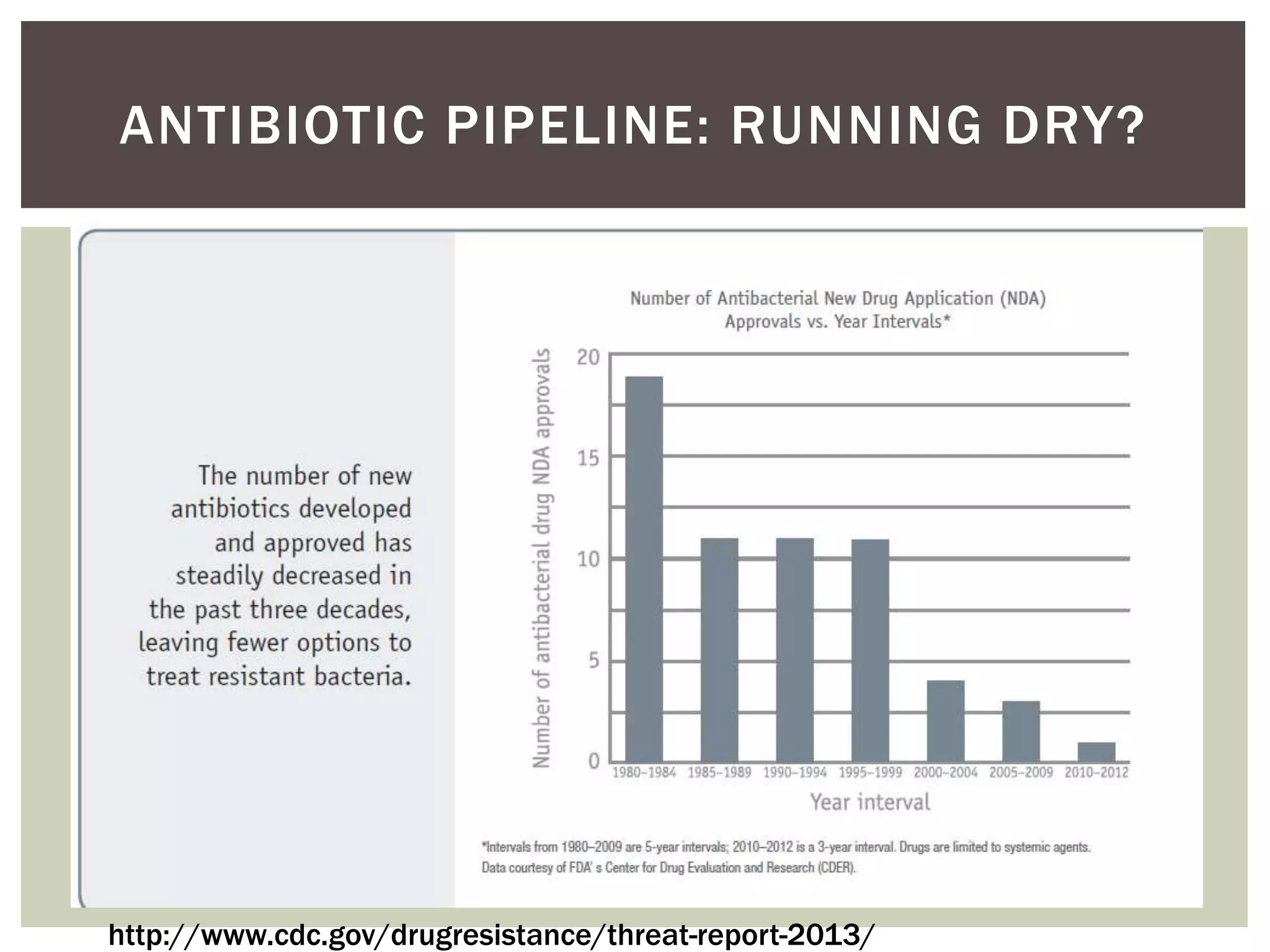
ANTIBIOTIC PIPELINE: RUNNING DRY? 
http://www.cdc.gov/drugresistance/threat-report-2013/
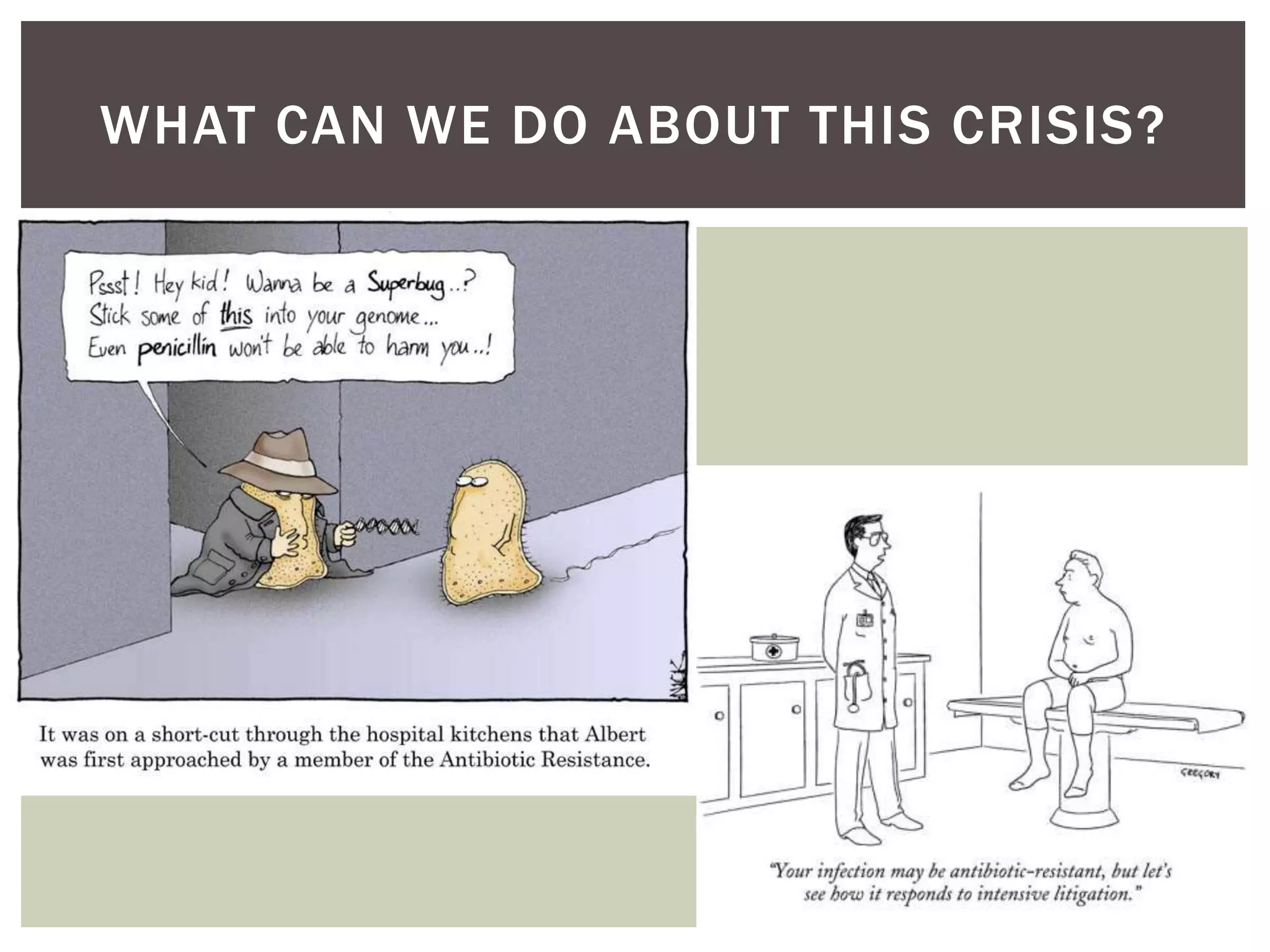
WHAT CAN WE DO ABOUT THIS CRISIS?
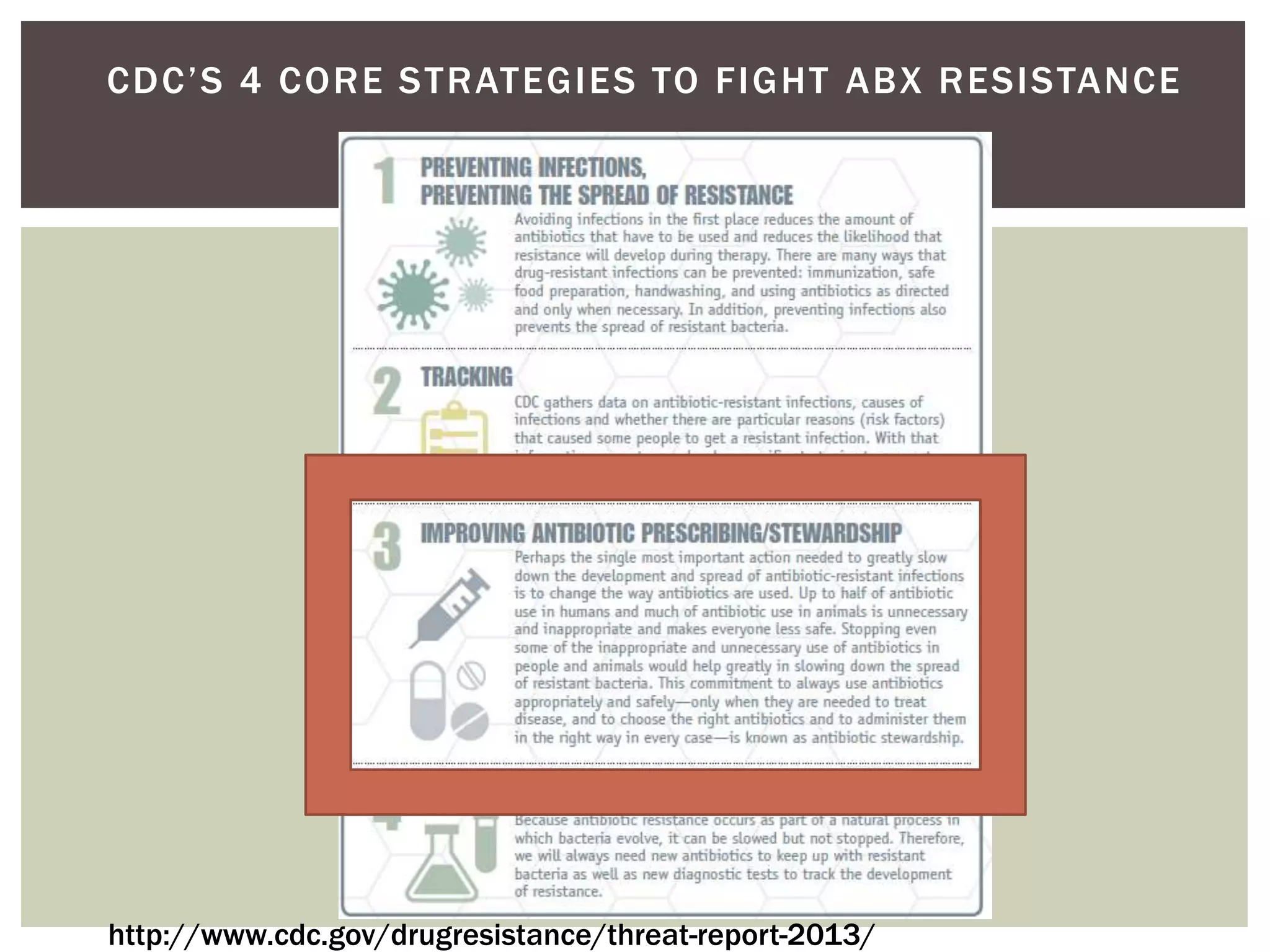
C D C ’ S 4 C O R E S T R AT E G I E S TO F I G H T ABX RESISTANCE 
http://www.cdc.gov/drugresistance/threat-report-2013/
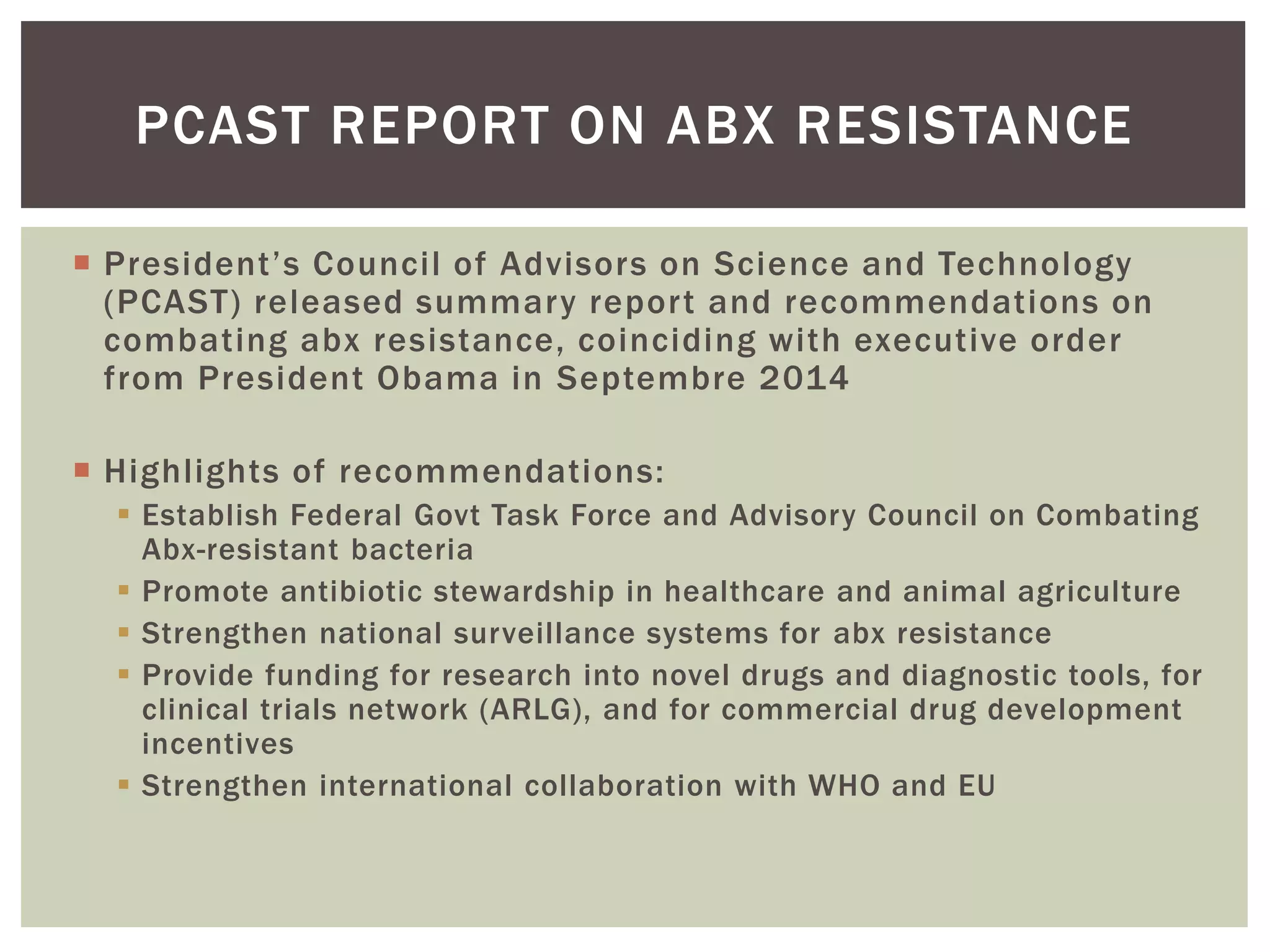
PCAST REPORT ON ABX RESISTANCE 
 P re s i dent ’ s C o u nc i l o f Ad v is o r s o n S c i e nc e a nd Te c hno l o gy 
(PCAST) released summary repor t and recommendations on 
combating abx resistance, coinciding with executive order 
from President Obama in Septembre 2014 
 Highlights of recommendations: 
 Establish Federal Govt Task Force and Advisory Council on Combating 
Abx-resistant bacteria 
 Promote antibiotic stewardship in healthcare and animal agriculture 
 Strengthen national surveillance systems for abx resistance 
 Provide funding for research into novel drugs and diagnostic tools, for 
clinical trials network (ARLG), and for commercial drug development 
incentives 
 Strengthen international collaboration with WHO and EU
WHAT CAN YOU DO? 7 WAYS TO GET 
SMART WITH ANTIBIOTICS 
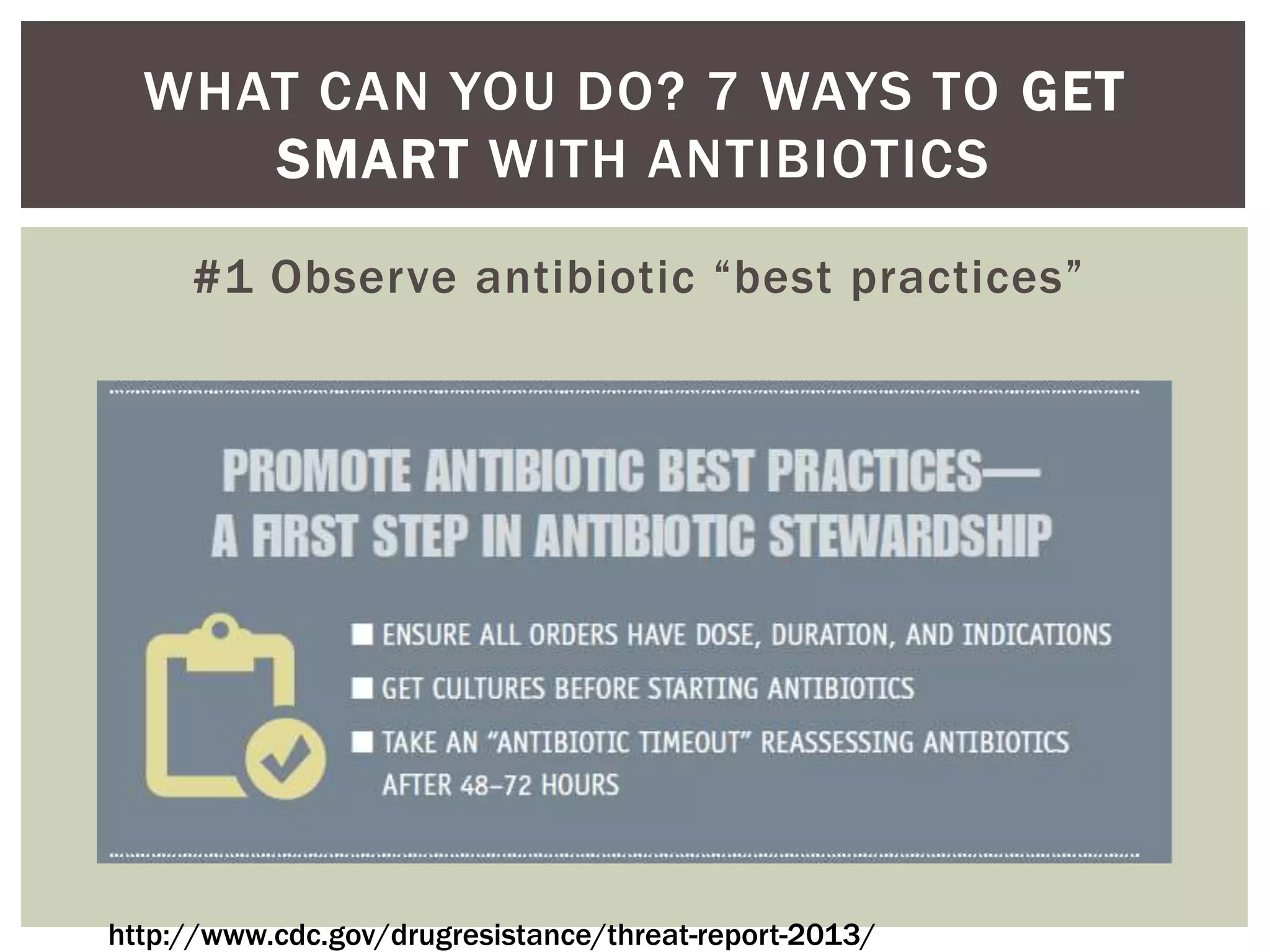
#1 Observe antibiotic “best practices” 
http://www.cdc.gov/drugresistance/threat-report-2013/
WHAT CAN YOU DO? 7 WAYS TO GET 
SMART WITH ANTIBIOTICS 
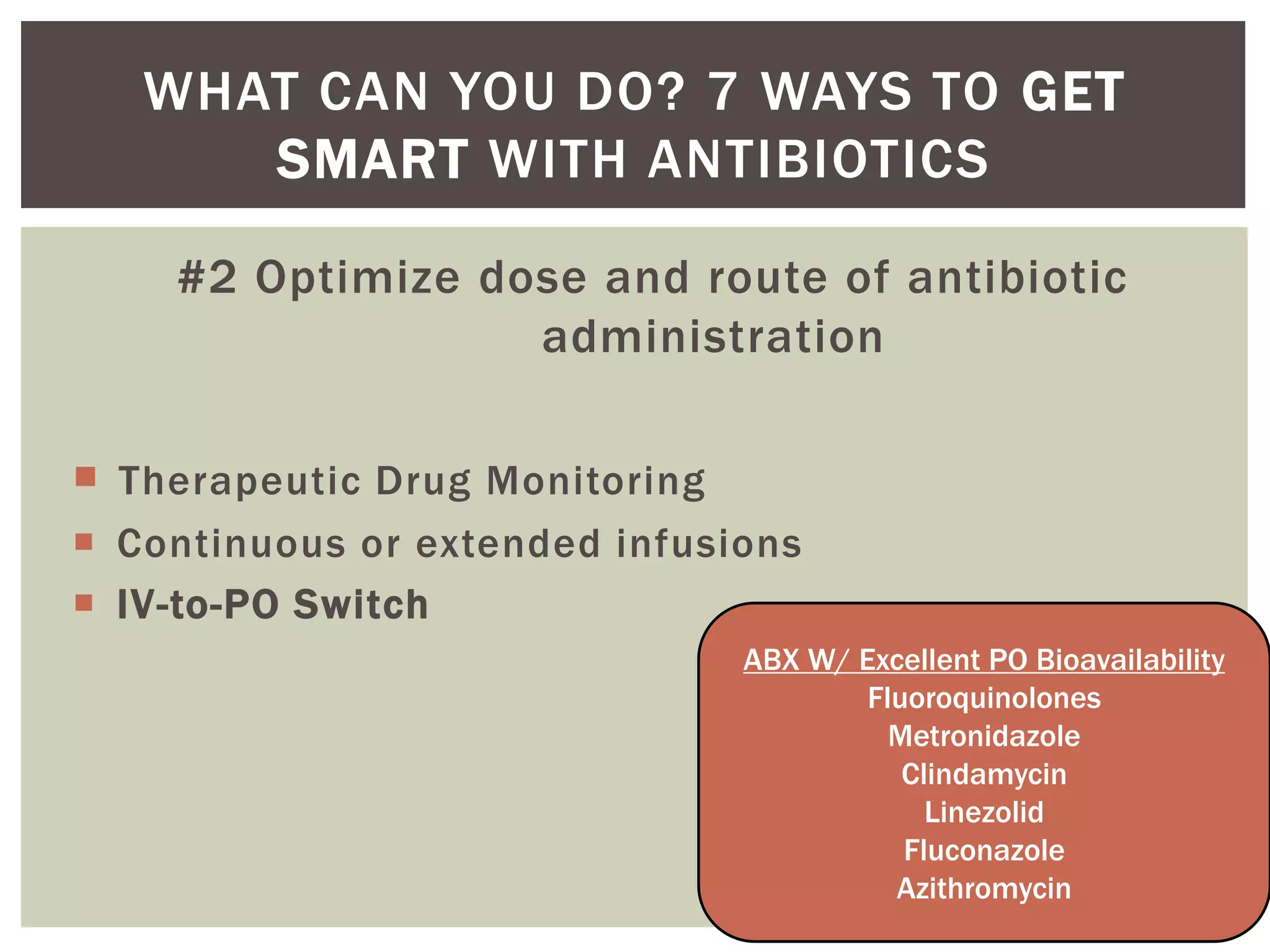
#2 Optimize dose and route of antibiotic 
administration 
 Therapeutic Drug Monitoring 
 Continuous or extended infusions 
 IV-to-PO Switch 
ABX W/ Excellent PO Bioavailability 
Fluoroquinolones 
Metronidazole 
Clindamycin 
Linezolid 
Fluconazole 
Azithromycin
WHAT CAN YOU DO? 7 WAYS TO GET 
SMART WITH ANTIBIOTICS 
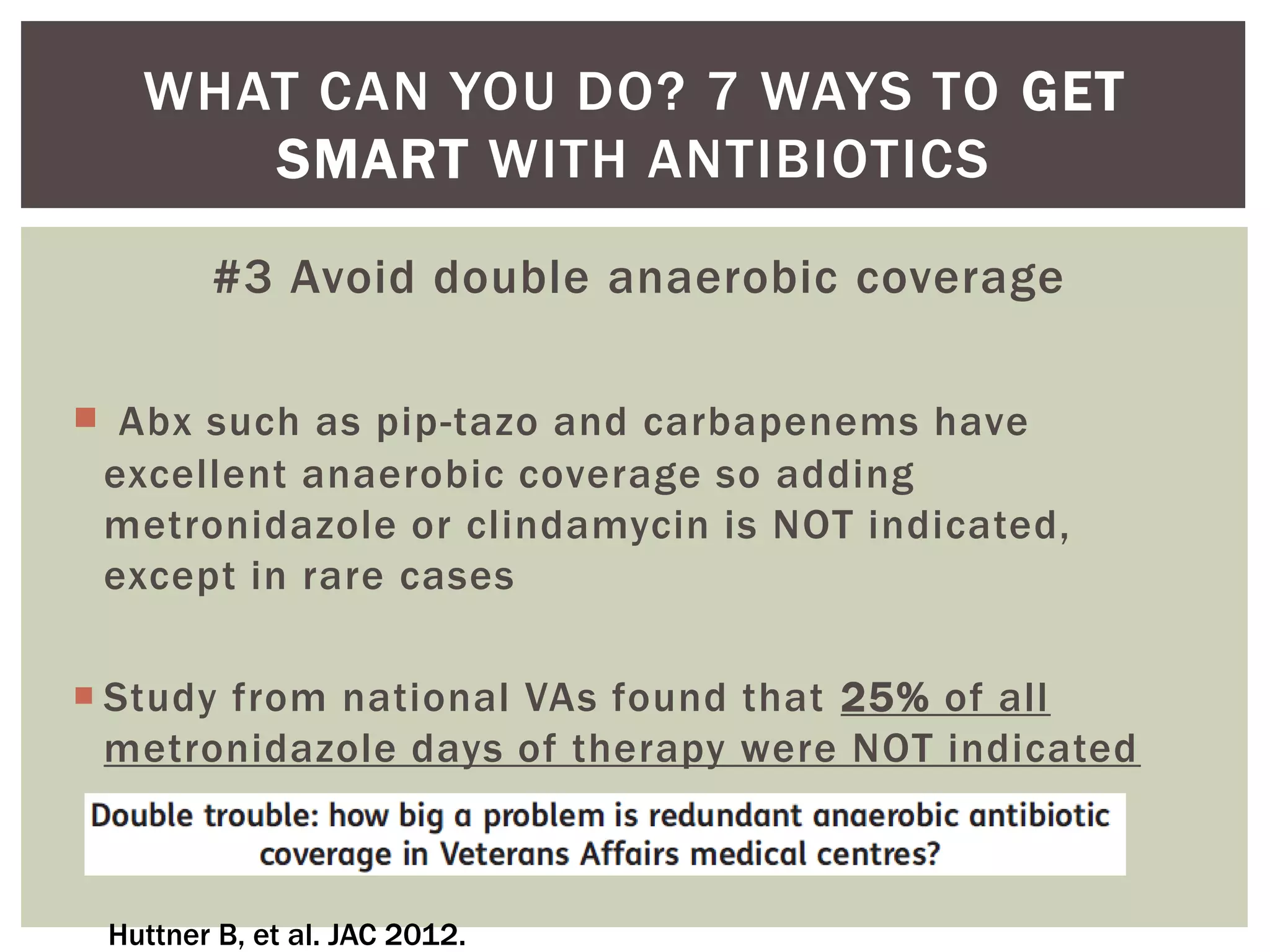
#3 Avoid double anaerobic coverage 
 Abx such as pip-tazo and carbapenems have 
excellent anaerobic coverage so adding 
metronidazole or clindamycin is NOT indicated, 
except in rare cases 
 Study from national VAs found that 25% of all 
metronidazole days of therapy were NOT indicated 
Huttner B, et al. JAC 2012.
WHAT CAN YOU DO? 7 WAYS TO GET 
SMART WITH ANTIBIOTICS 
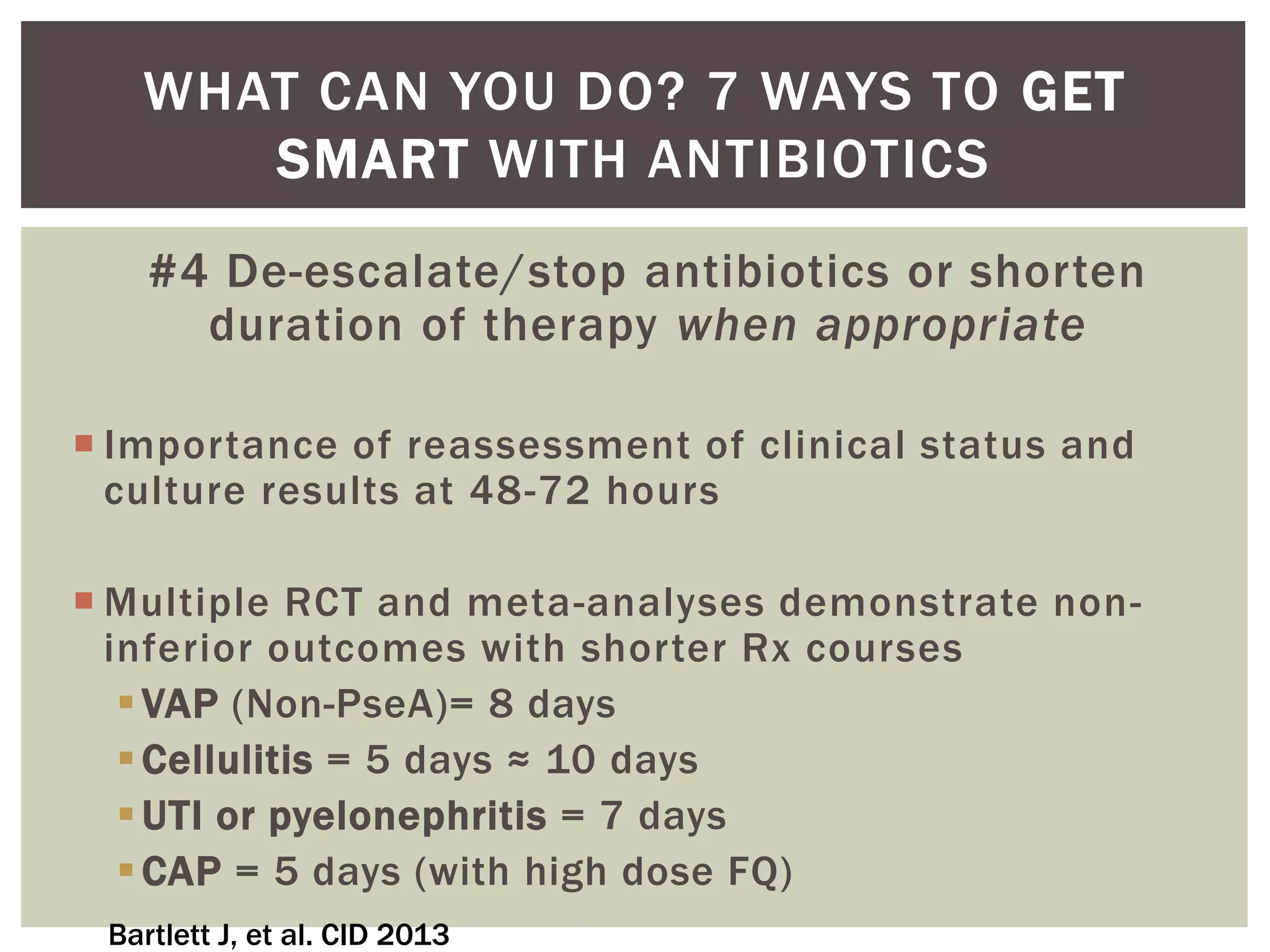
#4 De-escalate/stop antibiotics or shorten 
duration of therapy when appropriate 
 Importance of reassessment of clinical status and 
culture results at 48-72 hours 
Multiple RCT and meta-analyses demonstrate non-inferior 
outcomes with shorter Rx courses 
 VAP (Non-PseA)= 8 days 
Cellulitis = 5 days ≈ 10 days 
UTI or pyelonephritis = 7 days 
CAP = 5 days (with high dose FQ) 
Bartlett J, et al. CID 2013
WHAT CAN YOU DO? 7 WAYS TO GET 
SMART WITH ANTIBIOTICS 
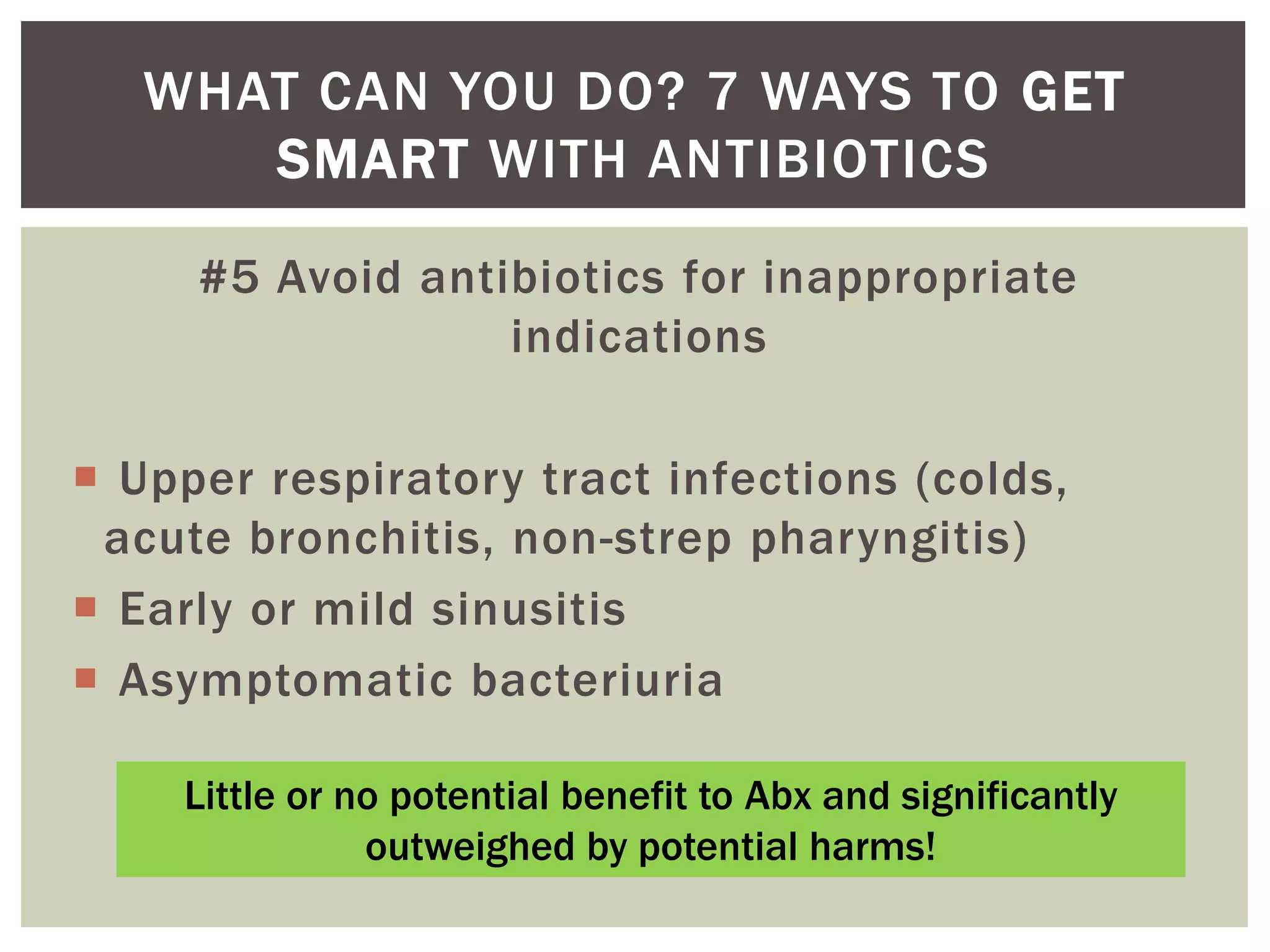
#5 Avoid antibiotics for inappropriate 
indications 
 Upper respiratory tract infections (colds, 
acute bronchitis, non-strep pharyngitis) 
 Early or mild sinusitis 
 Asymptomatic bacteriuria 
Little or no potential benefit to Abx and significantly 
outweighed by potential harms!
WHAT CAN YOU DO? 7 WAYS TO GET 
SMART WITH ANTIBIOTICS 
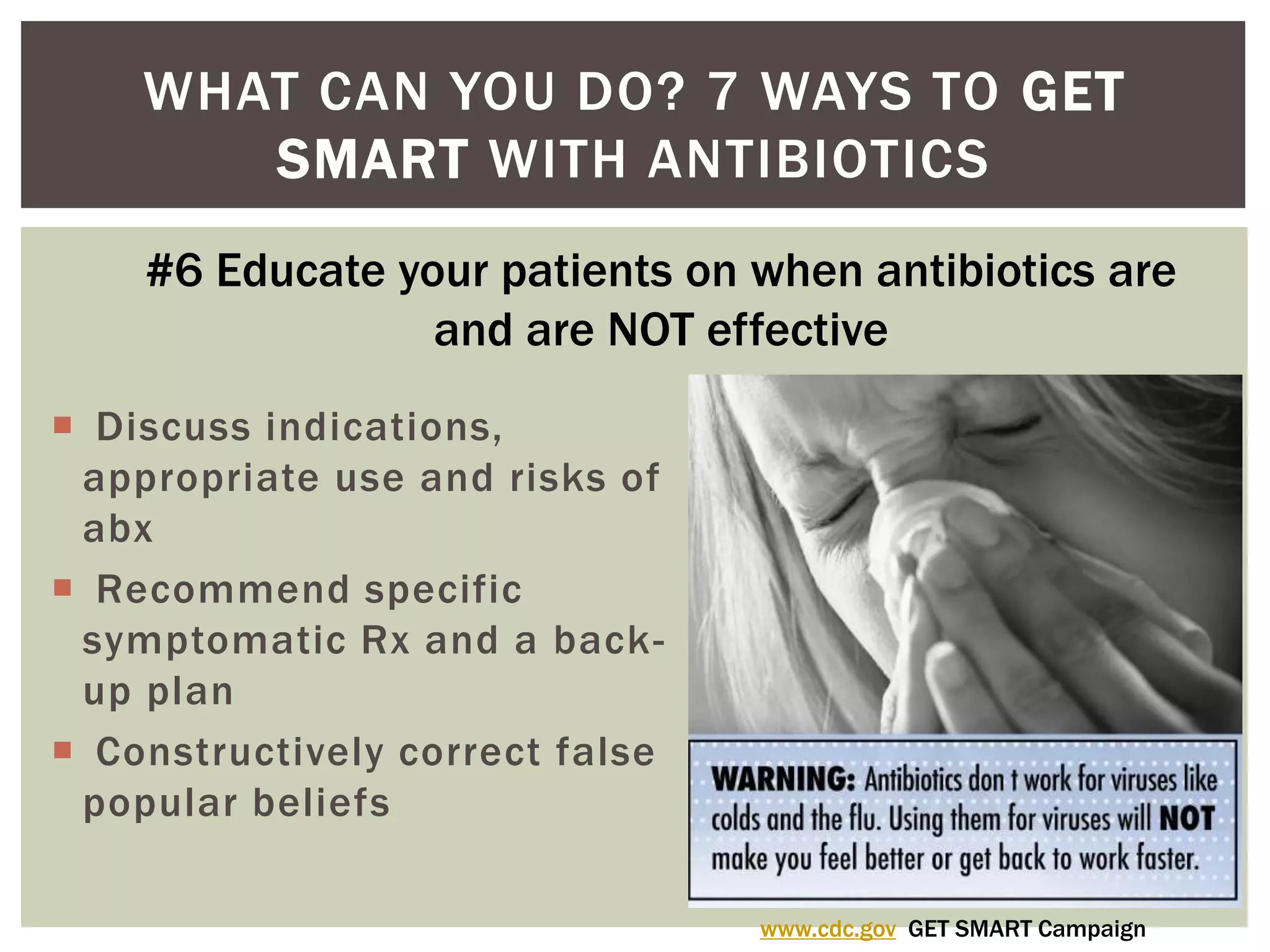
#6 Educate your patients on when antibiotics are 
and are NOT effective 
 Discuss indications, 
appropriate use and risks of 
abx 
 Recommend specific 
symptomatic Rx and a back-up 
plan 
 Constructively correct false 
popular beliefs 
www.cdc.gov GET SMART Campaign
WHAT CAN YOU DO? 7 WAYS TO GET 
SMART WITH ANTIBIOTICS 
#7 Follow and become good antibiotic 
stewardship “mentors”
ANTIMICROBIAL STEWARDSHIP: 
WHAT IS IT? 
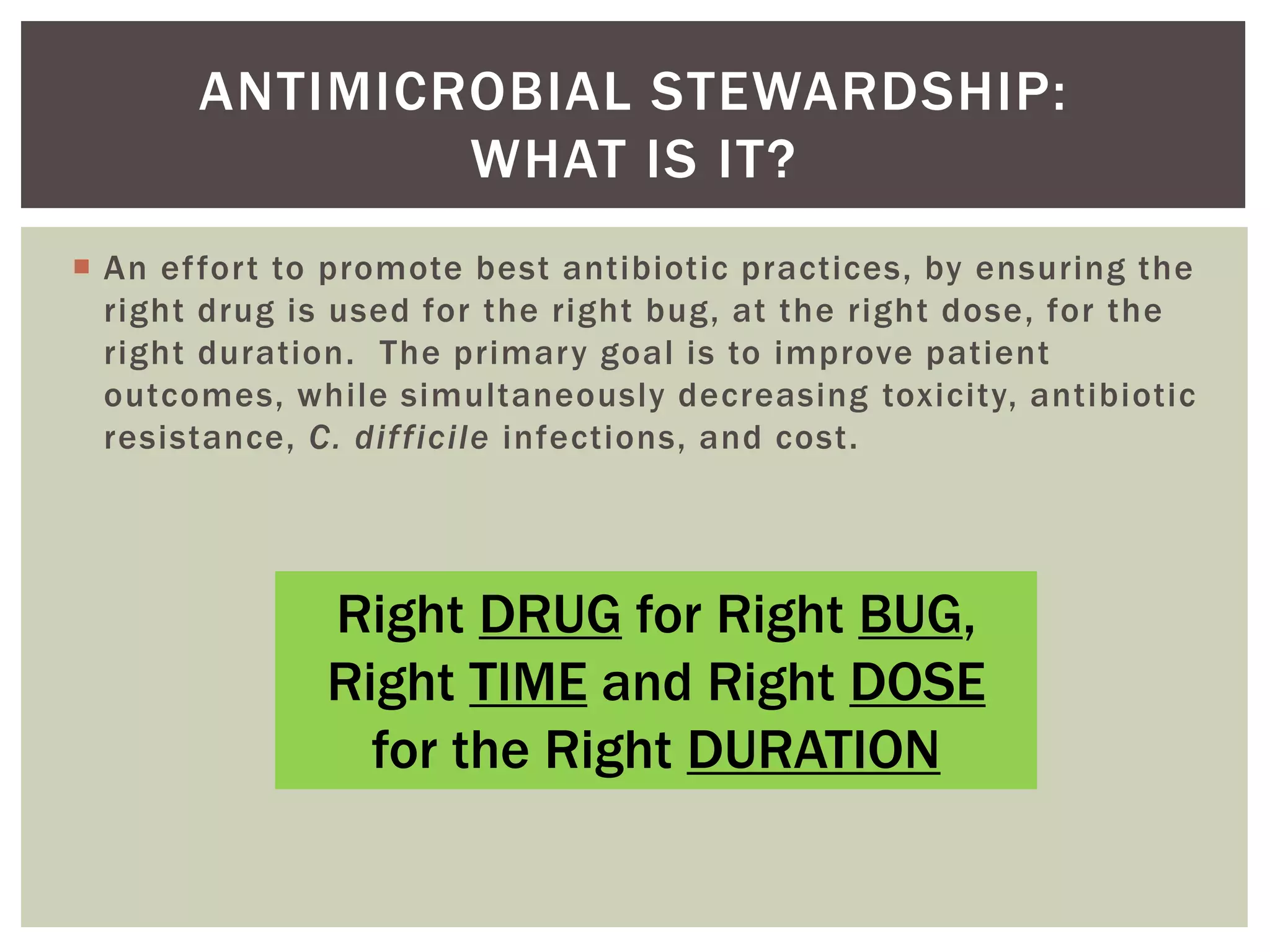
 An ef for t to promote best antibiotic practices, by ensuring the 
right drug is used for the right bug, at the right dose, for the 
right duration. The primary goal is to improve patient 
outcomes, whi le simultaneously decreasing toxicity, antibiotic 
resistance, C. dif f icile infections, and cost. 
Right DRUG for Right BUG, 
Right TIME and Right DOSE 
for the Right DURATION
OUTCOMES WITH ANTIMICROBIAL 
100 
90 
80 
70 
60 
50 
40 
30 
20 
10 
0 
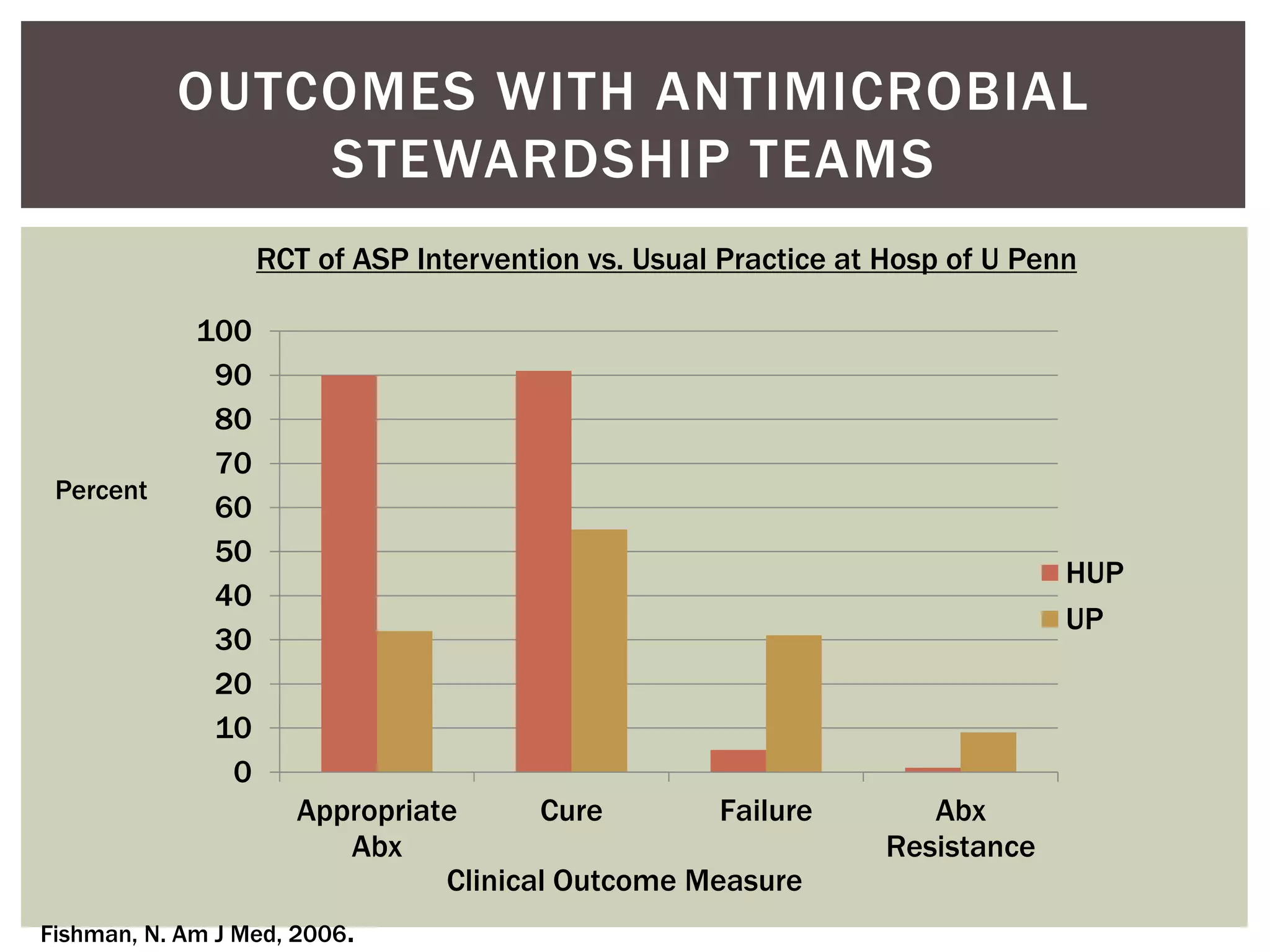
RCT of ASP Intervention vs. Usual Practice at Hosp of U Penn 
Appropriate 
Abx 
Cure Failure Abx 
Resistance 
HUP 
UP 
STEWARDSHIP TEAMS 
Percent 
Fishman, N. Am J Med, 2006. 
Clinical Outcome Measure
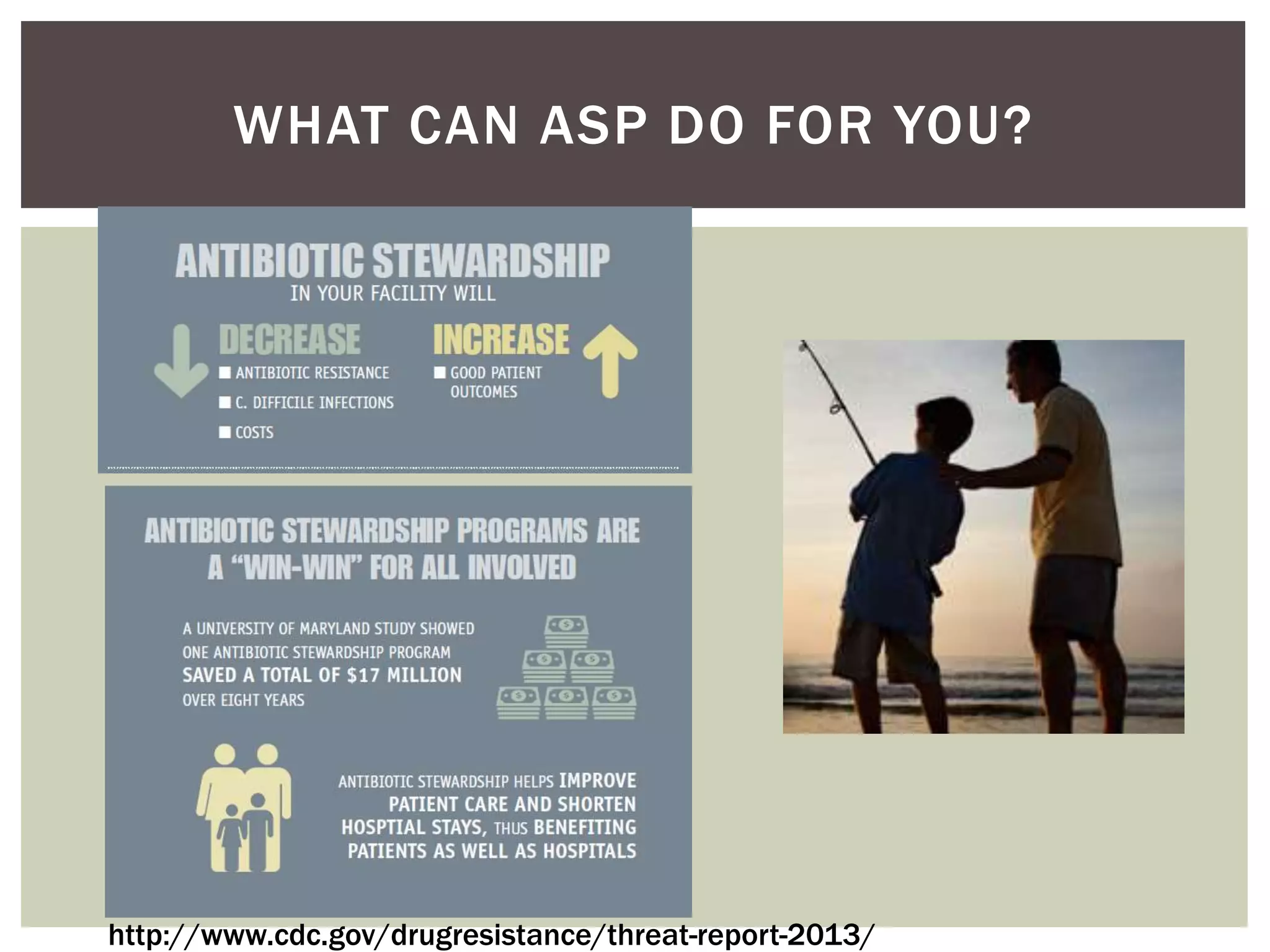
WHAT CAN ASP DO FOR YOU? 
http://www.cdc.gov/drugresistance/threat-report-2013/
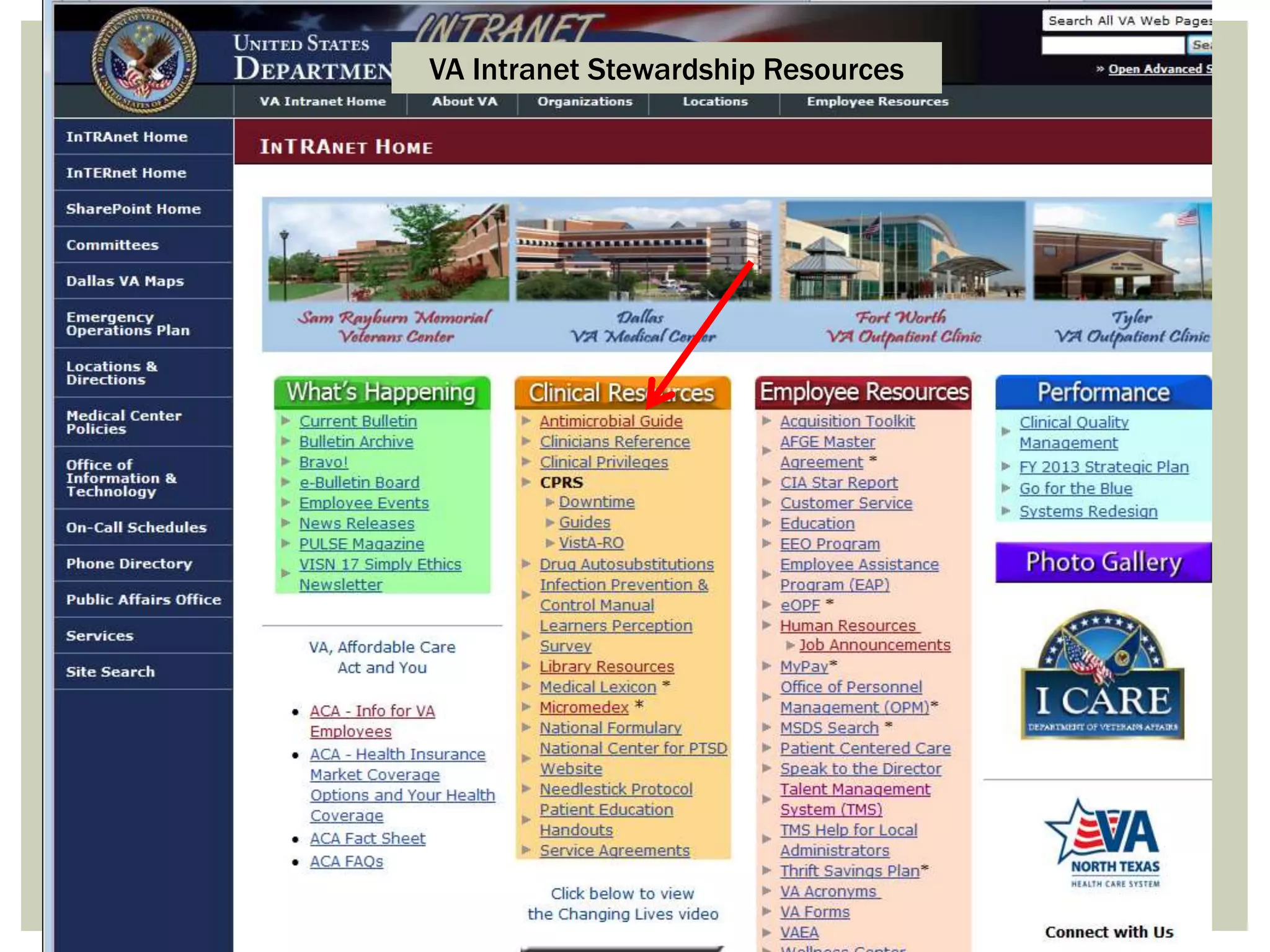
VA Intranet Stewardship Resources
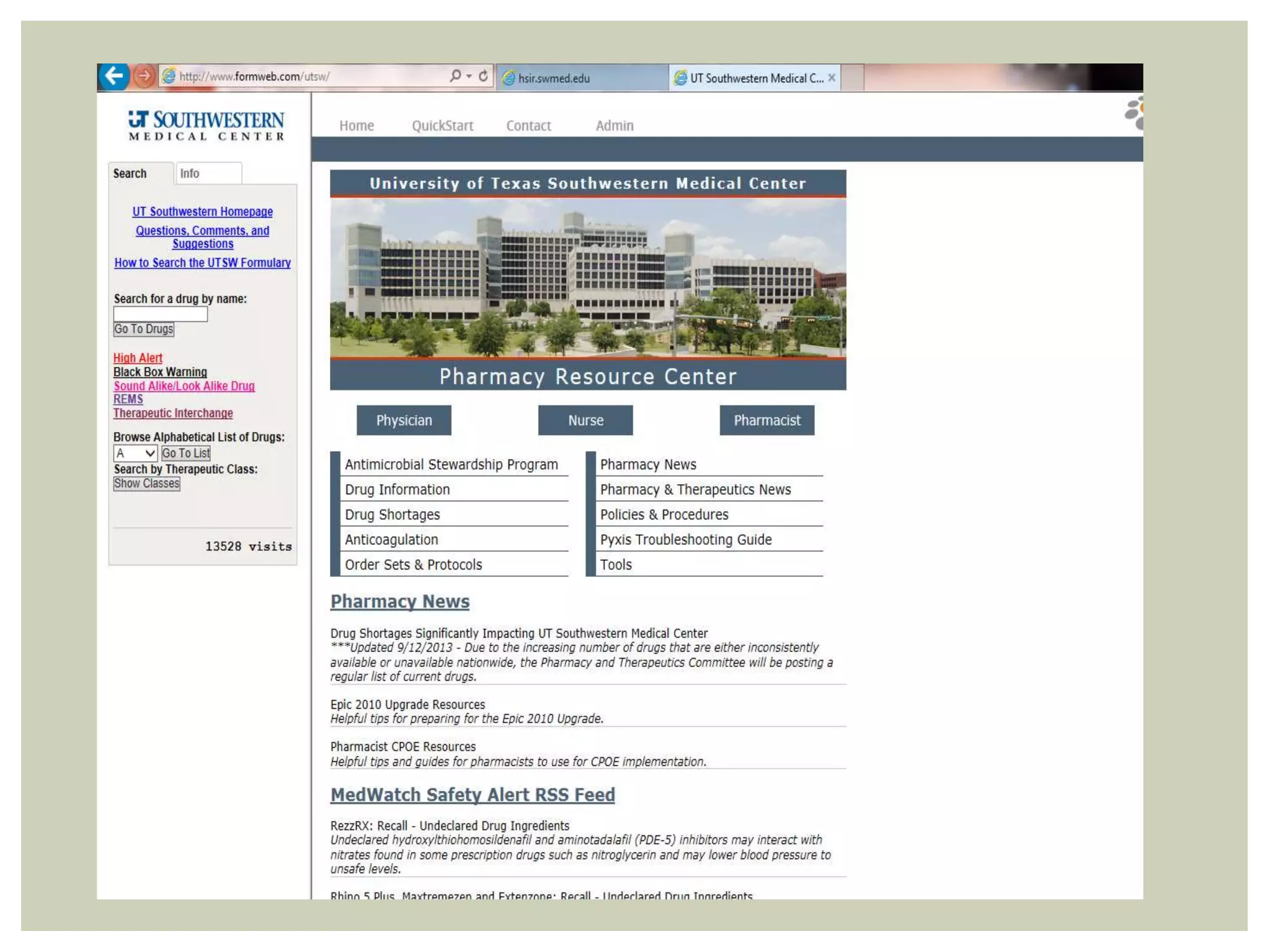
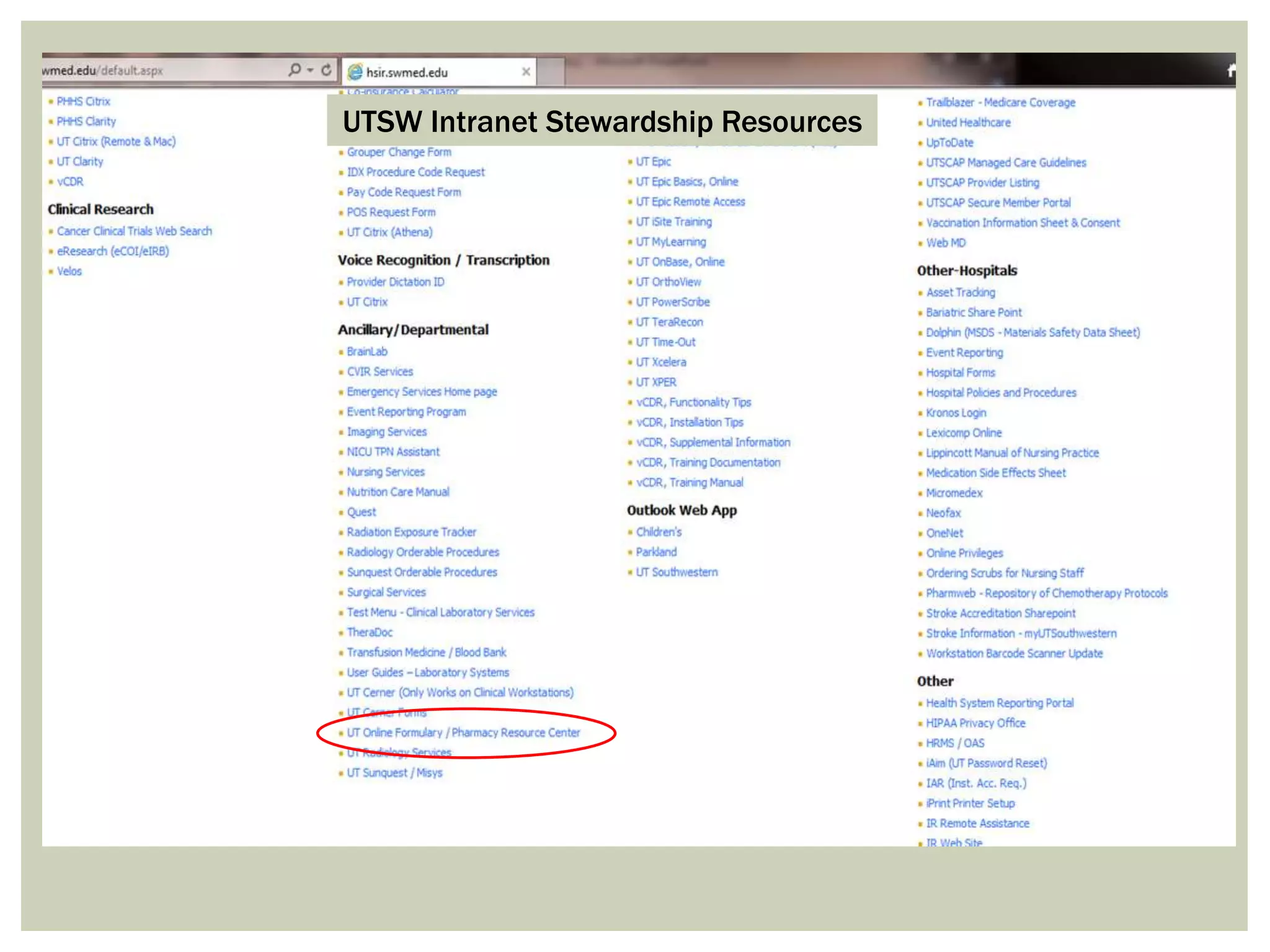
UTSW Intranet Stewardship Resources
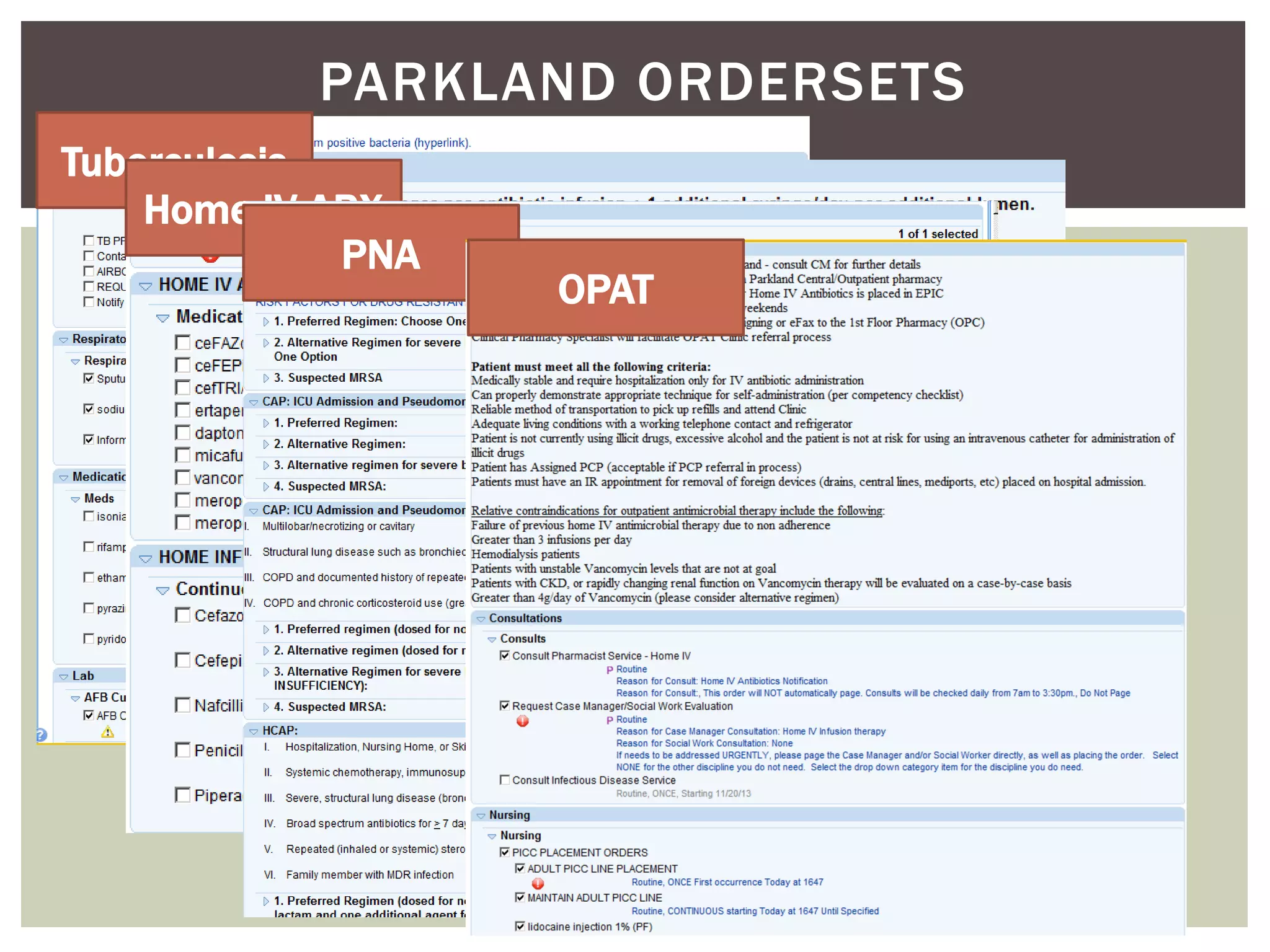
Tuberculosis 
PARKLAND ORDERSETS 
Home IV ABX 
PNA 
OPAT
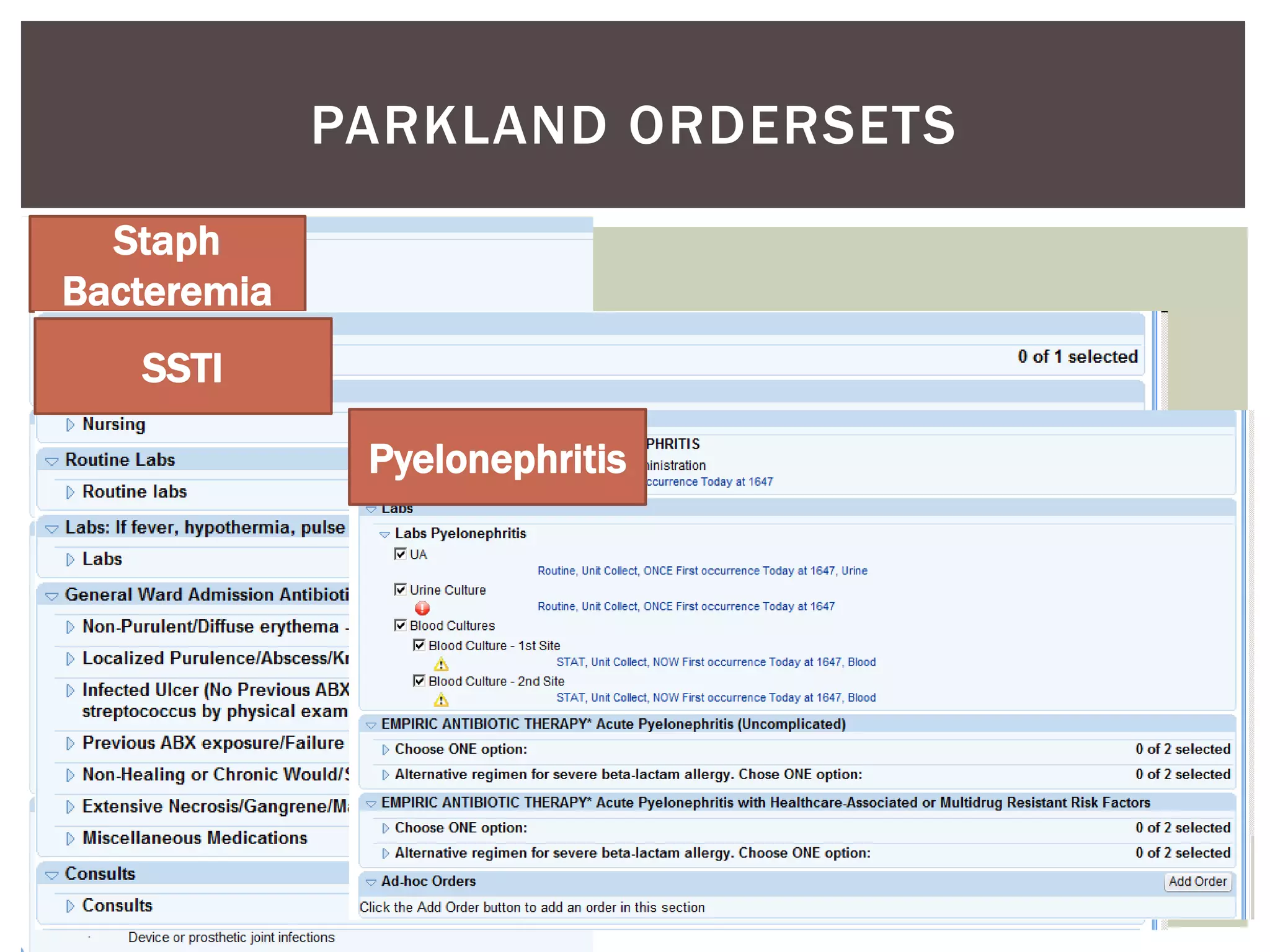
PARKLAND ORDERSETS 
Staph 
Bacteremia 
SSTI 
Pyelonephritis
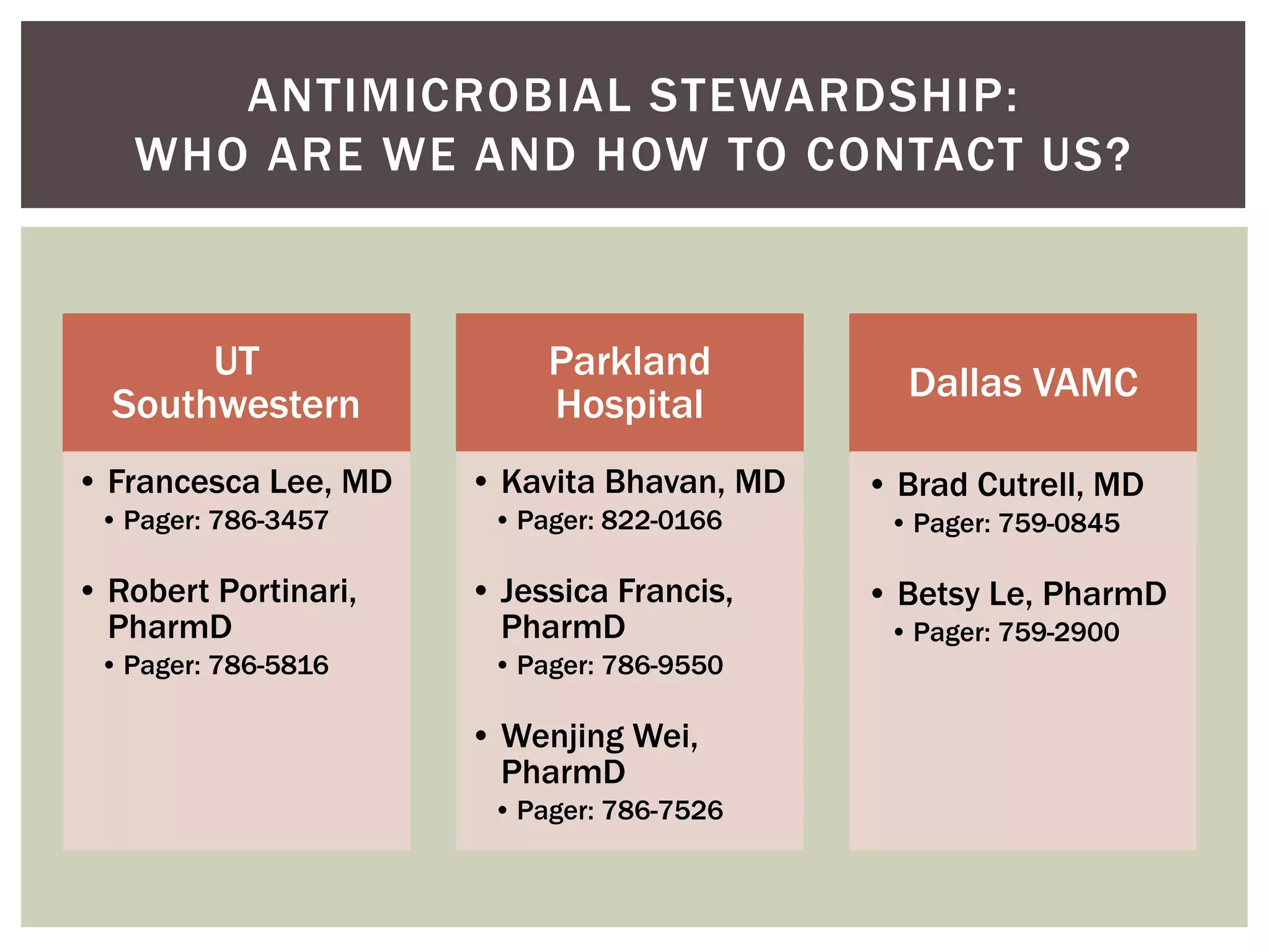
ANTIMICROBIAL STEWARDSHIP: 
WHO ARE WE AND HOW TO CONTACT US? 
UT 
Southwestern 
• Francesca Lee, MD 
• Pager: 786-3457 
• Robert Portinari, 
PharmD 
• Pager: 786-5816 
Parkland 
Hospital 
• Kavita Bhavan, MD 
• Pager: 822-0166 
• Jessica Francis, 
PharmD 
• Pager: 786-9550 
• Wenjing Wei, 
PharmD 
• Pager: 786-7526 
Dallas VAMC 
• Brad Cutrell, MD 
• Pager: 759-0845 
• Betsy Le, PharmD 
• Pager: 759-2900
QUESTIONS?

Cdc get smart week resident presentation 2014

  • 1.
    Dr. Brad Cutrel l , VANTHCS ASP Di rector CDC GET SMART WEEK NOVEMBER 17-23, 2014
  • 3.
    DEEP IN THEHEART OF TEXAS http://www.cdc.gov/drugresistance/threat-report-2013/
  • 4.
    WHY CARE ABOUTANTIBIOTIC OVERUSE? Unintended Consequences of Antibiotic Prescribing Adverse Drug Events Antibiotic Drug Resistance Clostridium difficile Infections
  • 5.
    ANTIBIOTIC ADVERSE EVENTS http://www.cdc.gov/drugresistance/threat-report-2013/
  • 6.
    ANTIBIOTIC RESISTANCE: WARNINGS,PAST AND PRESENT “In such a case the thoughtless person playing with penicillin treatment is morally responsible for the death of the man who finally succumbs to infection with the penicillin-resistant organism. I hope the evil can be averted.” 1945 NY Times: Sir Alexander Fleming, Nobel laureate for discovery of PCN If we are not careful, we will soon be in a post-antibiotic era.” 2013: Dr. Tom Frieden, CDC Director
  • 7.
    CDC THREAT REPORT2013 http://www.cdc.gov/drugresistance/threat-report-2013/
  • 8.
    CDC THREAT REPORT SUMMARY http://www.cdc.gov/drugresistance/threat-report-2013/
  • 9.
    CDC THREAT LEVELS:“SUPERBUGS” Clostridium difficile Carbapenem-R Enterobacteriaceae (CRE) Cephalosporin-R Neisseria gonorrhoeae MDR Acinetobacter, MDR Pseudomonas, ESBL GNRs MRSA, VRE, Drug-R pneumococcus, Drug-R Enteric GNRs MDR and XDR TB, Azole-resistant Candida Vancomycin-R Staphylococcus aureus Macrolide-R group A streptococci Clindamycin-R group B streptococci
  • 10.
    DUTCH TREAT ORMY BIG FAT GREEK MESS? Bartlett J, et al. CID 2013. • The dominant driver of antibiotic resistance is use (and overuse) of antibiotics • Antibiotics are the only drug where “the more you use them, the more you lose them.” - - Brad Spellberg
  • 11.
    CONSEQUENCES OF ANTIBIOTICDRUG RESISTANCE NIH Clinical Center
  • 12.
    MDRO AT HOME UHSP Acinetobacter Abx Susceptibilties Antibiotic % Resistant Carbapenem Multi-drug resistant (3 or more abx classes) 73% 79% - Based on first isolate from each admission * Data courtesy of Jenny Holmes and Dave Greenberg
  • 13.
    WHAT DO ALLTHESE HAVE IN COMMON?
  • 14.
    ANTIBIOTIC PIPELINE: RUNNINGDRY? http://www.cdc.gov/drugresistance/threat-report-2013/
  • 15.
    WHAT CAN WEDO ABOUT THIS CRISIS?
  • 16.
    C D C’ S 4 C O R E S T R AT E G I E S TO F I G H T ABX RESISTANCE http://www.cdc.gov/drugresistance/threat-report-2013/
  • 17.
    PCAST REPORT ONABX RESISTANCE  P re s i dent ’ s C o u nc i l o f Ad v is o r s o n S c i e nc e a nd Te c hno l o gy (PCAST) released summary repor t and recommendations on combating abx resistance, coinciding with executive order from President Obama in Septembre 2014  Highlights of recommendations:  Establish Federal Govt Task Force and Advisory Council on Combating Abx-resistant bacteria  Promote antibiotic stewardship in healthcare and animal agriculture  Strengthen national surveillance systems for abx resistance  Provide funding for research into novel drugs and diagnostic tools, for clinical trials network (ARLG), and for commercial drug development incentives  Strengthen international collaboration with WHO and EU
  • 18.
    WHAT CAN YOUDO? 7 WAYS TO GET SMART WITH ANTIBIOTICS #1 Observe antibiotic “best practices” http://www.cdc.gov/drugresistance/threat-report-2013/
  • 19.
    WHAT CAN YOUDO? 7 WAYS TO GET SMART WITH ANTIBIOTICS #2 Optimize dose and route of antibiotic administration  Therapeutic Drug Monitoring  Continuous or extended infusions  IV-to-PO Switch ABX W/ Excellent PO Bioavailability Fluoroquinolones Metronidazole Clindamycin Linezolid Fluconazole Azithromycin
  • 20.
    WHAT CAN YOUDO? 7 WAYS TO GET SMART WITH ANTIBIOTICS #3 Avoid double anaerobic coverage  Abx such as pip-tazo and carbapenems have excellent anaerobic coverage so adding metronidazole or clindamycin is NOT indicated, except in rare cases  Study from national VAs found that 25% of all metronidazole days of therapy were NOT indicated Huttner B, et al. JAC 2012.
  • 21.
    WHAT CAN YOUDO? 7 WAYS TO GET SMART WITH ANTIBIOTICS #4 De-escalate/stop antibiotics or shorten duration of therapy when appropriate  Importance of reassessment of clinical status and culture results at 48-72 hours Multiple RCT and meta-analyses demonstrate non-inferior outcomes with shorter Rx courses  VAP (Non-PseA)= 8 days Cellulitis = 5 days ≈ 10 days UTI or pyelonephritis = 7 days CAP = 5 days (with high dose FQ) Bartlett J, et al. CID 2013
  • 22.
    WHAT CAN YOUDO? 7 WAYS TO GET SMART WITH ANTIBIOTICS #5 Avoid antibiotics for inappropriate indications  Upper respiratory tract infections (colds, acute bronchitis, non-strep pharyngitis)  Early or mild sinusitis  Asymptomatic bacteriuria Little or no potential benefit to Abx and significantly outweighed by potential harms!
  • 23.
    WHAT CAN YOUDO? 7 WAYS TO GET SMART WITH ANTIBIOTICS #6 Educate your patients on when antibiotics are and are NOT effective  Discuss indications, appropriate use and risks of abx  Recommend specific symptomatic Rx and a back-up plan  Constructively correct false popular beliefs www.cdc.gov GET SMART Campaign
  • 24.
    WHAT CAN YOUDO? 7 WAYS TO GET SMART WITH ANTIBIOTICS #7 Follow and become good antibiotic stewardship “mentors”
  • 25.
    ANTIMICROBIAL STEWARDSHIP: WHATIS IT?  An ef for t to promote best antibiotic practices, by ensuring the right drug is used for the right bug, at the right dose, for the right duration. The primary goal is to improve patient outcomes, whi le simultaneously decreasing toxicity, antibiotic resistance, C. dif f icile infections, and cost. Right DRUG for Right BUG, Right TIME and Right DOSE for the Right DURATION
  • 26.
    OUTCOMES WITH ANTIMICROBIAL 100 90 80 70 60 50 40 30 20 10 0 RCT of ASP Intervention vs. Usual Practice at Hosp of U Penn Appropriate Abx Cure Failure Abx Resistance HUP UP STEWARDSHIP TEAMS Percent Fishman, N. Am J Med, 2006. Clinical Outcome Measure
  • 27.
    WHAT CAN ASPDO FOR YOU? http://www.cdc.gov/drugresistance/threat-report-2013/
  • 28.
  • 29.
  • 31.
    Tuberculosis PARKLAND ORDERSETS Home IV ABX PNA OPAT
  • 32.
    PARKLAND ORDERSETS Staph Bacteremia SSTI Pyelonephritis
  • 33.
    ANTIMICROBIAL STEWARDSHIP: WHOARE WE AND HOW TO CONTACT US? UT Southwestern • Francesca Lee, MD • Pager: 786-3457 • Robert Portinari, PharmD • Pager: 786-5816 Parkland Hospital • Kavita Bhavan, MD • Pager: 822-0166 • Jessica Francis, PharmD • Pager: 786-9550 • Wenjing Wei, PharmD • Pager: 786-7526 Dallas VAMC • Brad Cutrell, MD • Pager: 759-0845 • Betsy Le, PharmD • Pager: 759-2900
  • 34.

Editor's Notes

  • #2 This week is the annual Get Smart Week developed by the CDC to highlight concerns regarding increasing abx resistance and the need for more effective stewardship of antibiotics in the medical community. I think increasingly this is a hot topic that is getting a lot of attention in the media and public. However, as practitioners in IM we are on the frontlines of preventing and treating infections and I think that we should really be leading the way in the efforts of abx stewardship to stem the tide of resistance. I wanted to take this brief time to sketch some of the highlights of the current situation, and then highlight what you can do as medical students, residents and clinicians to make a difference—and how we are here to help as your antibiotic stewardship team.
  • #3 Want to start with this slide that shows that here in the United States, we use a lot of antibiotics and many of those antibiotics are not needed or inappropriately prescribed. Startling Facts: -- U.S makes up 5% of the world’s population but we use almost 50% of the total antibiotics used worldwide -- Estimates are that 2/3 of all inpatients receive an antibiotic during their hospital stay, and 50% are receiving one at any given point -- Up to 50% of antibiotics prescribed are either inappropriate or improperly given (Leading reasons—inappropriate duration, Rx of colonization or contamination, Rx for viral or non-infectious conditions) Where else in medicine would we tolerate this performance?
  • #4 Here in Texas, we are also on the wrong end of the curve as well for antibiotic prescribing. Have one of the higher rates of abx prescriptions per 1000 persons of any of the states.
  • #5 There are many potential unintended consequences of abx prescribing but I want to highlight the following 3
  • #6 We worry about the rare, life-threatening adverse events like SJS, anaphylaxis, fulminant hepatic failure, QTc prolongation leading to torsades and sudden cardiac death. Although extremely rare, some of our highest risk patients are the most likely to receive abx. Per CDC Report, Antibiotics cause 1 out of 5 ADEs causing ED visits : 140,000 visits/yr and majority (80%) of these are allergic reactions And on the wards or in the clinics, we all see many antibiotic adverse events as well – allergic reactions, interstitial nephritis, C.diff, leading to prolonged hospital stays. And the list of potential ADE grows every day; FDA recently changed Quinolone labeling update to warn of Risk for Nerve Damage
  • #7 Sir Alexander Fleming, the Nobel prize winner for the discovery of PCN, warned in his Nobel address and a NYT article of the dangers associated with indiscriminate abx use. The full quote is this:” The public will demand the drug and then will begin an era of abuses. The microbes are educated to resist penicillin and a host of penicillin-fast organisms is bred out which can be passed to others and perhaps from there to others until they reach someone who gets a septicemia or a pneumonia which penicillin cannot save.”
  • #8 Comprehensive report from CDC released on 9/16/2013 really grabbed media’s attention to become aware of this issue and problem. Was then followed up shortly after that with a PBS Frontline hour long special describing the crisis of MDR Gram negative infections
  • #9 Best estimates from the limited data, most likely conservative in their numbers: -- Over 2 million infections from drug resistant bacteria and Candida that account for 23,000 deaths / year (more than the number of patients that die annually from AIDS in this country) -- Leads to prolonged hospital stay and costs - $18-29,000 (CID 2013;56:1445) per hospital stay, in aggregate as high as $35 billion dollars in direct excess healthcare costs -- C. diff infection is now epidemic in this country and the primary driver of this is directly related to antibiotic use. C.diff cases – 250,000 / year and 14,000 attributable deaths…. Huge increases in costs of care
  • #10 Here is the list of the 3 Threat levels and the pathogens that are listed in each category. They are categorized based on their prevalence, their potential to spread among patients and in the healthcare environment, and the severity of illness that they cause as well as the available antibiotics to treat them.
  • #11 Slide illustrates the striking correlation between antibiotic usage and rates of antibiotic resistance. Both of these countries are part of the EU, which has a very sophisticated tracking mechanism for abx usage and resistance patterns. But the data is really quite striking with KPC strains and MRSA strains. The question is: are we more like the Dutch or the Greeks in our abx prescribing practices? I think that we all know the answer to that.

  • #12 The problem of drug resistant organisms is particularly problematic with Gram negative bacteria because we increasingly have little to no options for treatment. The most concerning emerging threats are the carbapenem-resistant enterobacteriaceae or CRE. You have probably heard of the NDM-1 strain that was isolated first in India, and there have been several imported cases to the US as well as around the world. However, the more widespread problem is with KPC or Klebsiella producing carbapenemase strains. These are US home-grown strains that started in the 1990s in North Carolina and since then have spread to 44 states. We have had a couple of cases at Parkland and University hospital, but fortunately no sustained outbreaks so far. However, the NIH Clinical Center in Bethesda, MD, widely regarded as one of the top hospitals in the country, was almost brought to its knees from an outbreak of KPC in its ICU. The index patient was transferred in June 2011 already colonized with the bacteria. Despite attempted strict infection control measures, over the next 6 months, 18 patients were found to be infected or colonized with KPC and 6 directly attributable deaths. They shut down one whole ICU, started an entire separate ward just for KPC patients and literally were in serious discussions of shutting down the entire hospital before the outbreak finally ended.
  • #13 We have significant problems with MDR gram negatives of our own here in Dallas. I chose just one example, Acinetobacter baumanii to illustrate this issue. You can see the national trend of carbapenem resistance which almost doubled in the span of 2 years. Based on data from a retrospective review of AcB isolates at UHSP (252 isolates from 2008-2011) found that our local rates of carbapenem resistance are even higher, which probably would be mirrored in national data as well. We would see similar data at our other institutions if we looked.
  • #14 What do all of these have in common? Heart and bone marrow transplant, LVAD, prosthetic joints, TNF inhibitors or other monoclonal therapies. You cannot use any of them, if you don’t have antibiotics that work. They are too risky if your patients are at high risk for developing infections that you subsequently have no options to treat. So, not only are we threatening to lose abx, but we are jeopardizing many of our other greatest medical advances.
  • #15 --No longer are we going to be able to depend on the Big Pharma and the Abx pipeline to bail us out --Statistics are sobering Prior to 2013, only 2 new antibiotics approved in last 5 years (telavancin and ceftaroline); one is already not available on the market due to toxicity and neither are active against resistant GNB. However, starting to see an increase in abx approvals thanks to the GAIN legislation and other incentive programs. Only 2 new abx with novel drug targets since 1998 (linezolid and daptomycin); no new abx classes for GNR in last 4 decades Well, just tell Big Pharma to make more; Won’t happen unless the market changes drastically, 16 of 18 largest pharmaceutical companies have completely abandoned the abx market because it is economically unsustainable. Study from London School of Economics reported that the net ROI for a new neuromuscular drug is $1 billion dollars while a new abx would be expected to lose $50 million dollars
  • #17 These are the 4 core strategies that the CDC has proposed to fight this problem. Obviously, all of these are critically important but I am going to focus on #3, which they single out as perhaps the single most important action needed to slow the development of drug resistance. Infection control, preventing infections, surveillance for drug resistance, developing better diagnostics and drugs are all important. But, improving our ability to effectively and wisely use and be stewards of the abx we have will play a central role.
  • #19 The first thing that we can all do is get back to the basics—the so-called antibiotic best practices. Every antibiotic you prescribe should have the right dose, should have a planned duration even if it ends up changing and an indication for why you are giving it. At UHSP and PMH, you have to specify your indication in the EMR and regulatory bodies are moving toward requiring this nationally. Get cultures before starting antibiotics. I don’t have time to talk about some of the micro and diagnostic advances that are coming, because the reality is that our culture methods are imperfect. But the yield really goes down if you don’t get them before abx! It is kind of like giving thrombolytics before you do a CT scan, you will never know what you are treating. Take an “abx timeout” after 48-72 hours to reassess, particularly if the abx you started were empiric therapy…more on this in a minute
  • #20 This is an area where the input of our pharmacists are invaluable. We are truly fortunate that at all of the hospitals we train at, we have outstanding pharmacists with ID training who know more about abx than most of us, and have a lot to teach and to help with. TDM for drugs like vancomycin or aminoglycosides is critical for safe administration of these drugs. CI or EI help to optimize the PK/PD parameters, particularly with the beta-lactams and in some cases, have been shown to have superior outcomes in serious infections. But, for most of us, our pharmacists will need to help us with this. **I want to highlight something that we can all do which is switch from IV-to-PO antibiotics with great po bioavailability in patients who have an intact GI tract. If you are giving one of the abx listed here and your patient is eating a diet and taking other po meds, you should give the abx po as well. It is a win-win because the abx levels are essentially the same, it helps you remove lines quicker, the patient is not tied down to an IV pole in bed and you can get them out of the hospital faster. Plus, the po abx is substantially cheaper, for the patient and the hospital.
  • #21 This next one is a pet peeve of ASP teams, particularly Dr. Frankie Lee and myself so we will call you about this. Many of the broad spectrum abx that commonly as used have excellent anaerobic coverage like zosyn or carbapenems. So if you are treating an infection with possible anaerobes (lung abscess, abdominal infection) there is NO need to add flagyl or clindamycin. It adds nothing but it is done very commonly as shown in this recent VA study. There are essentially only 2 scenarios where one of those drugs should be added to zosyn or carbapenems. What are they? GAS Necrotizing SSTI where you might add clinda for toxin inhibition; Severe complicated CDI where you might give IV flagyl, but hopefully you are trying to stop the other abx.
  • #22 We already mentioned this but it is important to emphasize again. Usually, the residents are great at choosing the correct empiric regimens for HCAP or sepsis or meningitis or whatever. But then, at 72 hours, no one looks at the cultures and de-escalates, they just say well they are getting better on this vanc/zosyn/levaquin so I guess I will continue it. Now it can be difficult sometimes to de-escalate if your cultures are negative or the patient is worsening, but it is a skill that you can and should try to learn. The other thing this slide emphasizes is that we frequently treat most infections for too long. Some of this is because of a lack of good data on how long to treat infections—this is why everything in ID seems to be in intervals of 7 days or 1 week. 2 weeks for this, 4 weeks for that, 6-8 weeks for that. But, where we do have data, we should use it and almost every RCT or meta-analysis that has looked at shorter courses have shown non-inferior outcomes to longer Rx courses. I have listed a few of the diagnoses. It is important to understand that most of these had clinical criteria the patient met to show an appropriate response, so you have to take that into account. But you will find that many of your patients will do just as well with shorter courses. If we can treat a VAP in 8 days, why do we need to treat pyelonephritis or cellulitis for 14 days?
  • #23 This applies somewhat to the inpatient side, but also to the outpatient arena which is really a critical area where we need better stewardship. I have listed 3 of the most common infections where we have good evidence and guidelines that state abx should NOT be routinely given. 60% of all abx are given for outpt respiratory infections and almost all of them don’t need abx. 70% of patients with URI and > 90% of patients with acute sinusitis are given abx, but essentially 100% of URIs are viral and 70-80% of uncomplicated bronchitis is as well with no benefit from abx. In journal club, we talk about NNT to benefit a patient. For these conditions, the NNT is > 4000 patients to benefit 1 patient. But in the meantime think of all the potential risks and side effects to the patient, not to mention drug resistance. One course of an abx doubles a patient’s risk for a drug-resistant infection and this risk persists for up to a year after the abx is given. Think of the patients with simple cystitis who have to get admitted to the hospital for a PICC line and carbapenem because of their MDR organisms. The only indications for treating asymptomatic bacteriuria is in pregnancy and in patients preparing to undergo a urologic procedure. Presence of pyuria or “smelly urine” is not a symptom either, just like greenish nasal discharge or phlegm doesn’t equal a bacterial RTI
  • #24 This is the key step in the outpt clinic, but it is a skill that you have to learn. I think the key is that you have to have a plan and a systematic approach. There are some good resources on the CDC website, one in particular that I like called the Viral Rx pad, which is a preprinted sheet where you can check the boxes for symptomatic relief Rx for viral colds, decongestants, etc. This gives you something to give the patient to walk out of your office with so they don’t leave empty-handed. There are also a lot of false messages floating around in the general public and social media that we as clinicians have to correct. My favorite example is a Twitter message that said “Finally over my cold and thank God for Z-pack” which had over 850,000 followers. We have our work cut out for us.
  • #25 I think this one is often overlooked but is really important, particularly at a teaching institution. Every time we prescribe an abx, someone is watching us and learning from us. May be our patient, may be a resident, an intern, a medical student. Ultimately, the only way that we can change abx prescribing is to change the culture and attitudes about antibiotics and how they should be used. Example: Why does everyone who gets admitted, whether with septic shock or toenail fungus, get put on Vanc and zosyn? It is not because you had a pharmacology lecture in medical school called the Vanc and zosyn empirically for everything lecture. It is because we learn from what we see done and what is modeled for us. There are times when vanc and zosyn is a great choice, but there are other times when it is not. Find someone—an attending, a fellow, a resident, an intern– that takes a little bit of time to thoughtfully decide, What is my diagnosis? What am I treating? What bacteria am I trying to cover? How long am I going to treat for? If you find someone who thinks about and can articulate answers to these questions, watch and learn from them.
  • #26 So, we have talked about what you can do. Now in the last few minutes, I want to talk about what the ASP can do to help you be successful. I borrowed this definition from Dr. Lee, who modified it from the IDSA guidelines and also an article which coined the phrase at the bottom. It is a pithy way of remembering what ASP is all about. Even though it may seem like it sometimes, we are NOT the Abx police. We want your patients to have the best outcome possible, for the abx that you give to be maximally effective and to minimize the potential harms along the way, to your patient and to future patients at our hospitals.
  • #27 This is an older but classic RCT performed at U Penn just showing that ASP do in fact work. This compared two groups of about 65 patients each and found statistically significant superior outcomes in all of these measures in the patients where the ASP gave input to the clinicians on appropriate abx therapy.
  • #28 Our goal as an ASP is to be your partner for your patients. Nothing makes us happier than for your patients to get better and walk out of the hospital, even if we play a very small part in that. Our goal is to improve quality of care and patient outcomes while reducing abx resistance, CDI and costs if possible. Multiple studies have consistently shown these improvements accrue with a comprehensive ASP team. Interestingly, in the hospital from the Univ of Maryland, after 8 years of successful savings, the administrators cut the ASP out and said we are just going to hire more ID physicians. Over the next two years, abx costs increased by 32%, almost 2 million dollars. Finally, I included this picture, not because we are going to take you out to the lake fishing (Maybe Dr. Lee and Bhavan will). It is meant to remind me of the proverb that says Give a man a fish and you feed him for a day. Teach a man to fish and you feed him for a lifetime. At the heart of what we do as an ASP team, is education. We want to teach and empower you to handle abx effectively and wisely so that you are able to make the right decisions for your patients on your own.
  • #29 This slide just shows you where on the VA homepage you can find our website, with a variety of helpful resources—antibiograms, guidelines for C. diff Rx, vancomycin and AG dosing, all kinds of great stuff.
  • #34 This is who we are and how you can contact us. During normal business hours M-F at the VA or UTSW, you should call the pharmacist first or the attending physician second with questions. At night and on the weekends at the VA or UTSW and all of the time at Parkland, the first call should be to the on-call ID provider. However, all of us are happy to talk to you and help with any questions that you have and none of us is going to get upset if you call us for help to do the right thing for your patient in terms of antibiotics.
  • #35 Thanks for your attention, I can take any questions you may have.