ANTIBIOTIC GROWTH
PROMOTERS IN ANIMAL
FEEDS
by
Dr. Pankaj Kumar SinghDr. Pankaj Kumar Singh
Assistant Professor (Animal Nutrition)Assistant Professor (Animal Nutrition)
Bihar Veterinary College, PatnaBihar Veterinary College, Patna
E-mail:vetpank@gmail.comE-mail:vetpank@gmail.com
1
Antibiotic use in poultry endangered human lives
IMA demands to ban on USE of AGPs
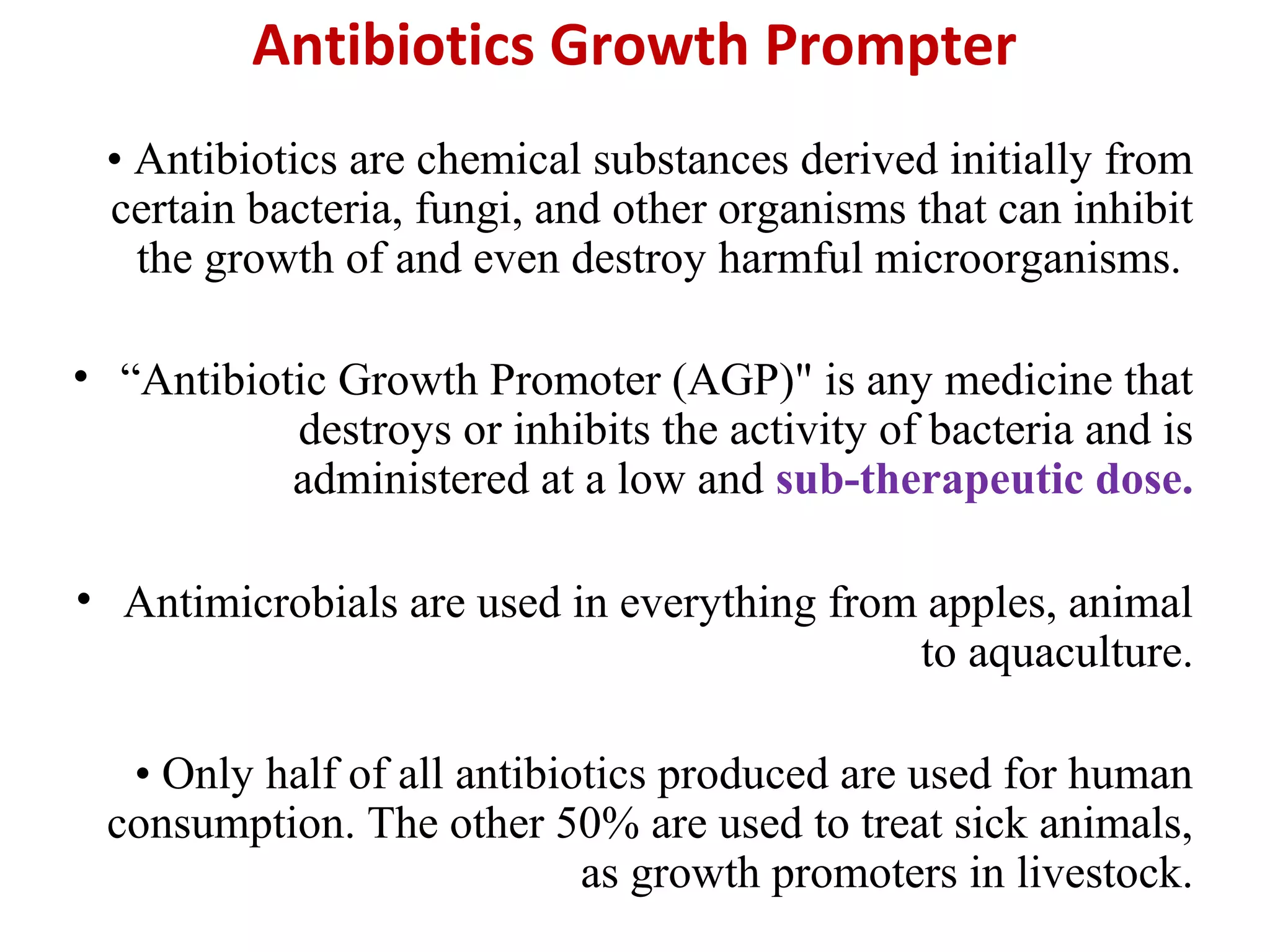
Antibiotics Growth Prompter
• Antibiotics are chemical substances derived initially from
certain bacteria, fungi, and other organisms that can inhibit
the growth of and even destroy harmful microorganisms.
• “Antibiotic Growth Promoter (AGP)" is any medicine that
destroys or inhibits the activity of bacteria and is
administered at a low and sub-therapeutic dose.
• Antimicrobials are used in everything from apples, animal
to aquaculture.
• Only half of all antibiotics produced are used for human
consumption. The other 50% are used to treat sick animals,
as growth promoters in livestock.
Why to use antibiotics for animals?
• Therapeutic
Use of antimicrobial in animals with diagnosed disease.
• Prophylactic
Use of antimicrobial in healthy animals in advanced of
expected exposure or after an exposure to an infectious
agent, before laboratory diagnosis
• Non therapeutic
Any use of antimicrobial in the absence of disease or
documented exposure to microbial disease
Antibiotic consumption in animals, 2000
Source: Follet,G (2000) Agbioforum
Complexity of the antimicrobial web
History of use of AGP
• 1940s: Growth enhancement properties of antimicrobials
identified
• Fermentation waste from tetracycline production was fed
to chickens as a source of vitamin B12 and it was observed
that the chickens fed the waste grew more rapidly than
the controls. Later on it was found that this effect was
not due to the vitamin content of the feed but due to
residual tetracycline (Stokstad and Jukes, 1949).
• 1950s: widespread use of antimicrobials as feed additives
– Usage without veterinary prescription
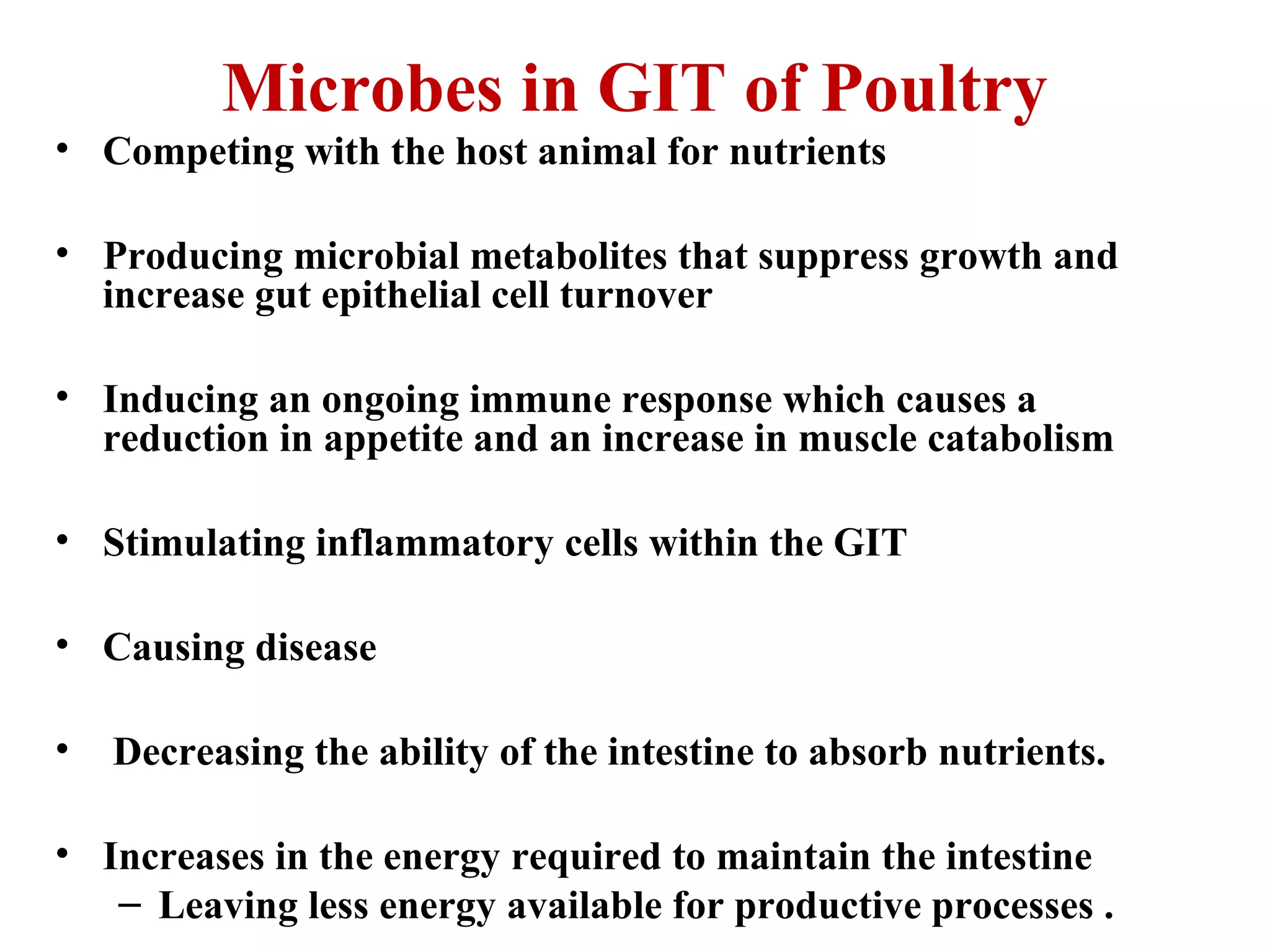
Microbes in GIT of Poultry
• Competing with the host animal for nutrients
• Producing microbial metabolites that suppress growth and
increase gut epithelial cell turnover
• Inducing an ongoing immune response which causes a
reduction in appetite and an increase in muscle catabolism
• Stimulating inflammatory cells within the GIT
• Causing disease
• Decreasing the ability of the intestine to absorb nutrients.
• Increases in the energy required to maintain the intestine
– Leaving less energy available for productive processes .
Mechanism of action of AGPs
Experiments with germ-free chickens indicate that the action
of the growth promoters is mediated by their antibacterial
effect (Feighner and Dashkevicz, 1987):
(i) Nutrients may be protected against bacterial destruction;
(ii) Absorption of nutrients may improve because of a
thinning of the small intestinal barrier;
(iii) The antibiotics may decrease the production of toxins by
intestinal bacteria;
(iv) There may be a reduction in the incidence of subclinical
intestinal infections.
Non therapeutic use of antibiotics
• Reduce subclinical populations of pathogenic
microorganisms in gut mass, lessening metabolic drain.
• Growth promotion
• Feed efficiency
• Weight gain
• Preventing illness caused by poor sanitation
• Prevent irritation to the intestinal lining.
Consumers of Antimicrobials
(A) Largest five consumers of antimicrobials in livestock in 2010.
(B) Largest five consumers of antimicrobials in livestock in 2030 (projected).
(C) Largest Increase in antimicrobial consumption between 2010 and 2030.
(D) Largest relative increase in antimicrobial consumption between 2010 and 2030.
CHN, China; USA, United States; BRA, Brazil; DEU, Germany; IND, India; MEX, Mexico; IDN
Indonesia; MMR, Myanmar; NGA, Nigeria; PER, Peru; PHL, Philippines.
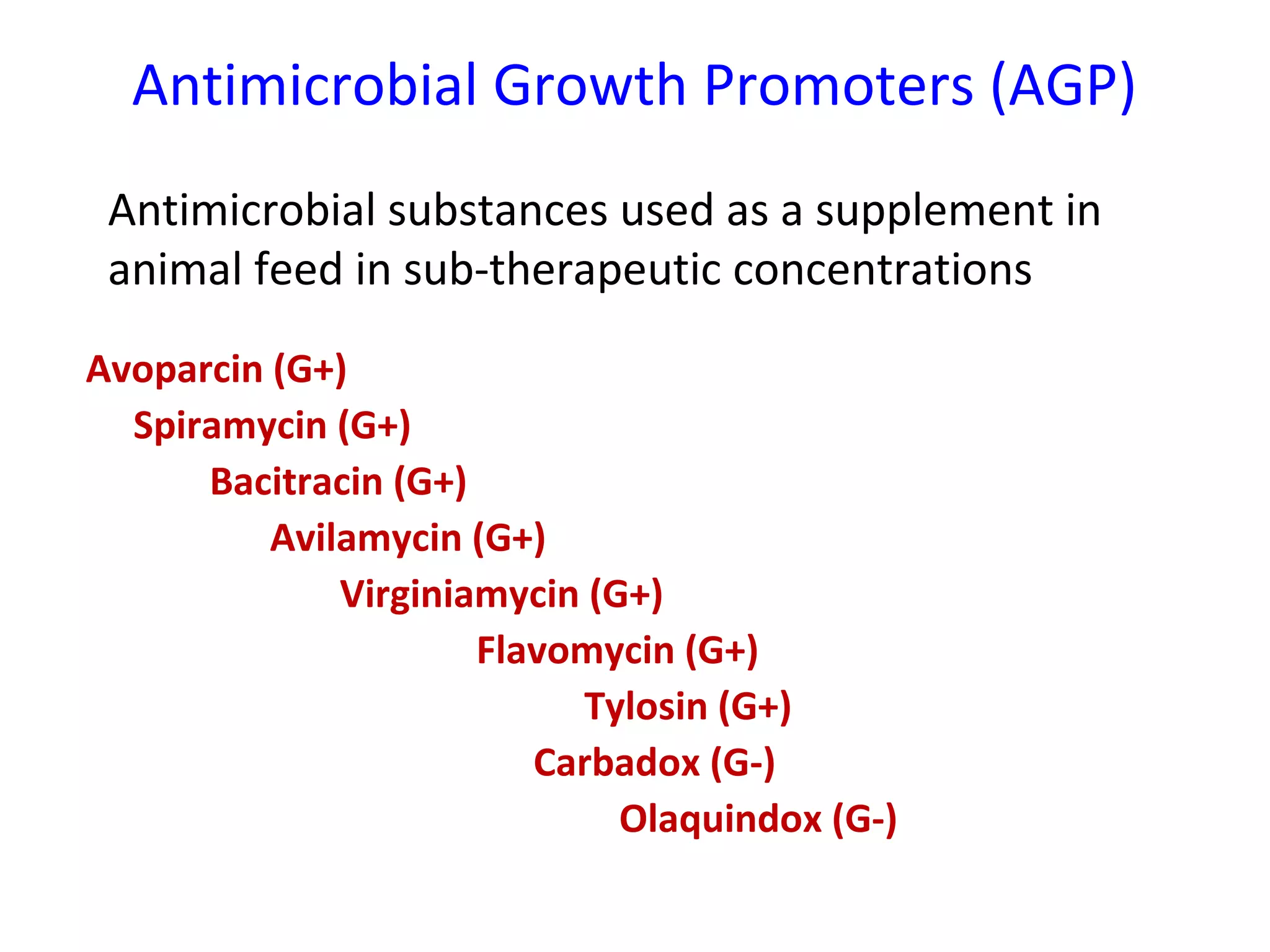
Antimicrobial Growth Promoters (AGP)
Avoparcin (G+)
Spiramycin (G+)
Bacitracin (G+)
Avilamycin (G+)
Virginiamycin (G+)
Flavomycin (G+)
Tylosin (G+)
Carbadox (G-)
Olaquindox (G-)
Antimicrobial substances used as a supplement in
animal feed in sub-therapeutic concentrations
AGPs in Indian Poultry Market
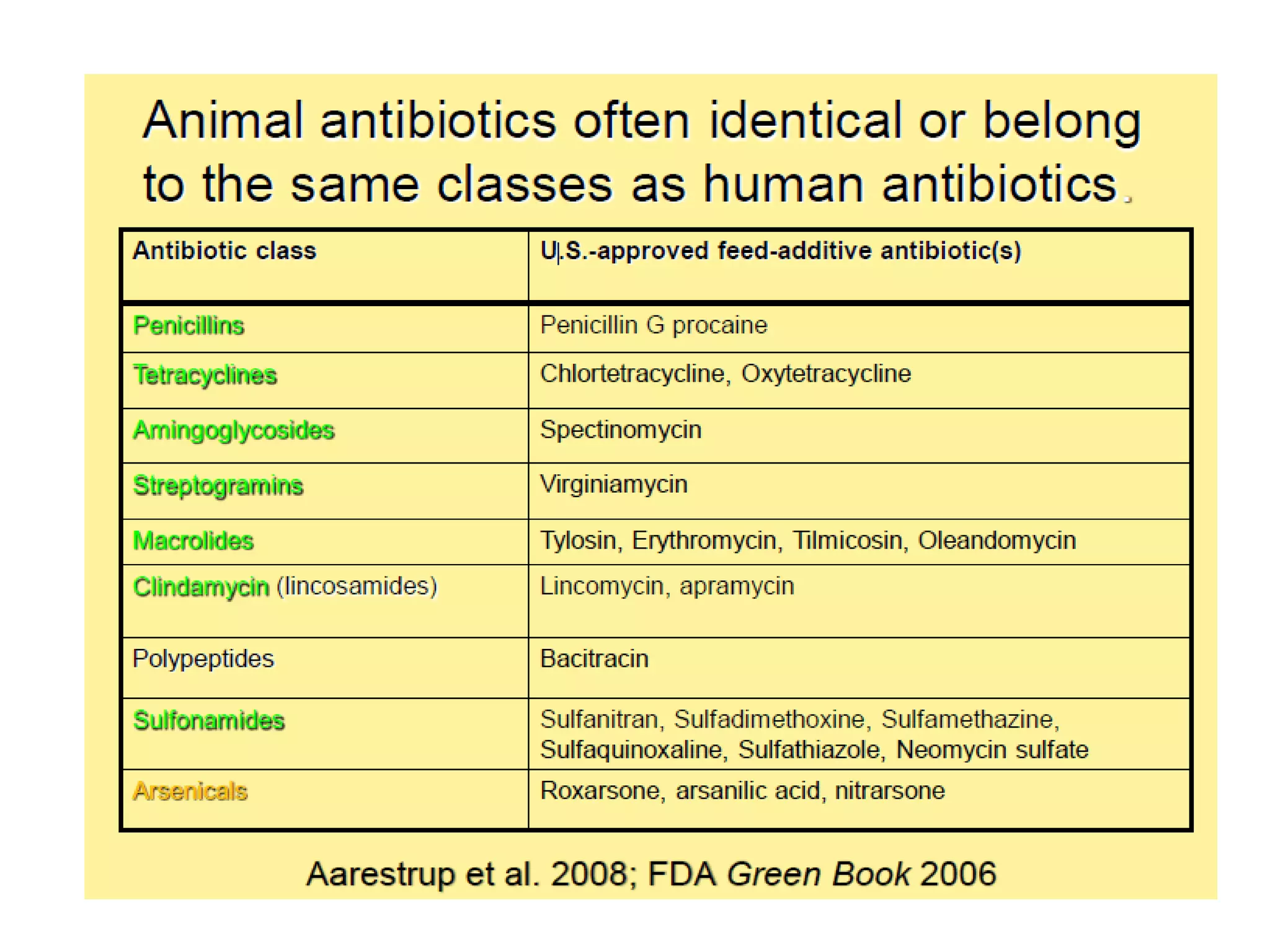
Drugs most likely to be detected in Meat
• Penicillin (including ampicillin)
• Tetracycline (including
chlortetracycline,oxytetracycline)
• Sulfanamides (including sulfamethoxine
,sulfamethazine and sulfamethoxazole)
• Neomycin
• Gentamycin
• Streptomycin
• arsenicals
Antibiotic
Resistance
Transfer of antimicrobial resistance
between animals and humans
EnvironmentEnvironment
Direct contactDirect contact
Antimicrobial resistance
• 1960s: Resistance in Salmonella from calves lead to ban in
penicillin and tetracycline as feed Additive
1970s: reports of multidrug resistant bacteria
• 1978: WHO defines rules for monitoring bacterial
resistance in veterinary and human origin organisms
• 1980-90s: Emergence of antimicrobial resistance
– Vancomycin resistance Enterococci
– Mulitdrug resistance S. Typhimurium DT104
– Floroquinolone resistance Campylobacter
• 2001: Beta-lactam resistant Salmonella found in meat
Antibiotic Resistant pathogens
• Studies show there is horizontal gene transfer of
antibiotic resistant genes in farm animal colons and
there is stable maintenance of resistance transferred
genes.(e.g. tetracycline, erythromycin, ampicillin,
vancomycin, clindamycin resistance common)
• Studies show that antibiotic resistance genes in
animals and humans contain identical elements,
enabling spread from animal microflora to human
microflora through the fecal-oral route.
Antimicrobial resistant Pathogens
• Campylobacter spp
–Macrolide and fluoroquinolone resistance
• Salmonella spp
–Fluoroquinolone resistance
• Enterococci
–Vancomycin and macrolide resistance in chickens
• Meticillin-resistant Staphylococcus aureus in pork and chicken
• E. coli and Salmonella spp
–Quinolone resistance (qnr)
–Extended-spectrum β-lactamases
- Gentamycin resistant E.coli in chickens
Genetic Basis For Antimicrobial Resistance
• Chromosomal mutation
• Acquisition of exogenous genes (or DNA)
• Conjugation (plasmids, transposons)
• Transformation (acquisition of foreign DNA)
• Transduction (bacteriophage-mediated transfer of
genes or DNA)
Mechanisms of Antimicrobial Resistance
• Enzymatic modification
– Beta lactamases
• Decreased accumulation of
antibiotic
– Permeability barriers - outer
membrane Gram negatives
– Porin mutations
- carbapenems
– Antibiotic efflux pumps -
tetracyclines, macrolides
• Alteration of the drug target
– Methicillin, vancomycin,
macrolides
Drug resistance pattern E.coli
Drug resistance pattern in E.coli isolates from chicken
colibacillosis (Homaei,2003-2008)
• Erythromycin :75.36%
• Enrofloxacin :64.46%
• Flumequine :75.51%
• Lincomycin :52.8%
• Tetracycline :89.81%
• Difloxacine :59.92%
• Ciprofloxacin :59%
• Doxycycline :70.06%
Preventive
Measures
Bans on antimicrobial use
Trends in consumption of antimicrobials
in food animals in Denmark
Trends in consumption of antimicrobials
in food animals in Denmark
Antibiotics: therapeutic use and growth
promotion, pigs, Denmark 1992 - 2008
Mg/kg
Source: Aarestrup F. Danish Government
Annual antibiotic use for human and
veterinary practice in Denmark
Strategies to curb antimicrobial resistance
• Hygienic animal husbandry
• Restricted use of antimicrobials
Ban the use of antibiotics for non-therapeutic uses.
• Clarify definitions for drug use:
Non-therapeutic and therapeutic antibiotics.
Increased public awareness
Improvement of monitoring and surveillance of antimicrobial
use in food animal productions.
Precise Feed formulation
 Use of antimicrobials under supervision of Veterinarians
Basic and applied research
– Mechanisms and risk factors
– New antimicrobials
- Newer technologies for alternatives to antimicrobials
WHO Global Principles for use of Antibiotics
• Antimicrobials should be prescribed only when
indicated
• Use of antimicrobials for prevention of disease can
only be justified where it can be shown that a
particular disease is present on the premises or is
likely to occur.
• The routine prophylactic use of antimicrobials
should never be a substitute for good animal health
management.
Judicious use of ‘Critical’ or last-resort or reserve
antibiotics
Class of antibiotic Examples
Glycopeptides Vancomycin, Teicoplanin, Avoparcin
3rd and 4th generation
cephalosporins
Cefotaxime, Ceftriaxone, Ceftiofur, Cefipime
Anti Pseudomonal Penicillins Piperacillin, Ticarcillin
Anti tuberculosis drugs Rifampicin, Isoniazid, Ethambutol, Pyrazinamide
Fluoroquinolones Ciprofloxacin, Levofloxacin, Enrofloxacin),
Aminoglycosides Amikacin
Carbapenems Imipenem, Meropenem
Streptogramins Synercid, Virginiamycin
Oxazidolones Linezolid
These ‘critical’ antibiotics should not be used for therapy or any other purpose in food producing animals.
Success factors on growth promoters
Measures to stop antimicrobial resistance in animals
• Increased public awareness
• Clean agriculture
• Use existing vaccines
• Work across sectors
• Regulation with enforcement
• Monitoring effectiveness of above and other interventions
• Research and development
- newer technologies,
-point of care diagnostics
- vaccines
• Consider an international treaty
Possible alternatives to Antibiotic Growth
promoters
• Hygienic Animal husbandry practices
• Probiotics
• Prebiotics
• Organic acids (Acidifers)
• Gastrointestinal enzymes to increase digestability of feed
• Immune modulators to enhance resistance to infection
• Herbs (Thyme, garlic, turmeric, black cumin etc.)
Thank You

Antibiotic growth promoter in livestock and Poultry: Antimicrobial Resistance and Antibiotic residue

  • 1.
    ANTIBIOTIC GROWTH PROMOTERS INANIMAL FEEDS by Dr. Pankaj Kumar SinghDr. Pankaj Kumar Singh Assistant Professor (Animal Nutrition)Assistant Professor (Animal Nutrition) Bihar Veterinary College, PatnaBihar Veterinary College, Patna E-mail:vetpank@gmail.comE-mail:vetpank@gmail.com 1
  • 2.
    Antibiotic use inpoultry endangered human lives
  • 3.
    IMA demands toban on USE of AGPs
  • 5.
    Antibiotics Growth Prompter •Antibiotics are chemical substances derived initially from certain bacteria, fungi, and other organisms that can inhibit the growth of and even destroy harmful microorganisms. • “Antibiotic Growth Promoter (AGP)" is any medicine that destroys or inhibits the activity of bacteria and is administered at a low and sub-therapeutic dose. • Antimicrobials are used in everything from apples, animal to aquaculture. • Only half of all antibiotics produced are used for human consumption. The other 50% are used to treat sick animals, as growth promoters in livestock.
  • 6.
    Why to useantibiotics for animals? • Therapeutic Use of antimicrobial in animals with diagnosed disease. • Prophylactic Use of antimicrobial in healthy animals in advanced of expected exposure or after an exposure to an infectious agent, before laboratory diagnosis • Non therapeutic Any use of antimicrobial in the absence of disease or documented exposure to microbial disease
  • 7.
    Antibiotic consumption inanimals, 2000 Source: Follet,G (2000) Agbioforum
  • 8.
    Complexity of theantimicrobial web
  • 9.
    History of useof AGP • 1940s: Growth enhancement properties of antimicrobials identified • Fermentation waste from tetracycline production was fed to chickens as a source of vitamin B12 and it was observed that the chickens fed the waste grew more rapidly than the controls. Later on it was found that this effect was not due to the vitamin content of the feed but due to residual tetracycline (Stokstad and Jukes, 1949). • 1950s: widespread use of antimicrobials as feed additives – Usage without veterinary prescription
  • 10.
    Microbes in GITof Poultry • Competing with the host animal for nutrients • Producing microbial metabolites that suppress growth and increase gut epithelial cell turnover • Inducing an ongoing immune response which causes a reduction in appetite and an increase in muscle catabolism • Stimulating inflammatory cells within the GIT • Causing disease • Decreasing the ability of the intestine to absorb nutrients. • Increases in the energy required to maintain the intestine – Leaving less energy available for productive processes .
  • 11.
    Mechanism of actionof AGPs Experiments with germ-free chickens indicate that the action of the growth promoters is mediated by their antibacterial effect (Feighner and Dashkevicz, 1987): (i) Nutrients may be protected against bacterial destruction; (ii) Absorption of nutrients may improve because of a thinning of the small intestinal barrier; (iii) The antibiotics may decrease the production of toxins by intestinal bacteria; (iv) There may be a reduction in the incidence of subclinical intestinal infections.
  • 12.
    Non therapeutic useof antibiotics • Reduce subclinical populations of pathogenic microorganisms in gut mass, lessening metabolic drain. • Growth promotion • Feed efficiency • Weight gain • Preventing illness caused by poor sanitation • Prevent irritation to the intestinal lining.
  • 13.
    Consumers of Antimicrobials (A)Largest five consumers of antimicrobials in livestock in 2010. (B) Largest five consumers of antimicrobials in livestock in 2030 (projected). (C) Largest Increase in antimicrobial consumption between 2010 and 2030. (D) Largest relative increase in antimicrobial consumption between 2010 and 2030. CHN, China; USA, United States; BRA, Brazil; DEU, Germany; IND, India; MEX, Mexico; IDN Indonesia; MMR, Myanmar; NGA, Nigeria; PER, Peru; PHL, Philippines.
  • 14.
    Antimicrobial Growth Promoters(AGP) Avoparcin (G+) Spiramycin (G+) Bacitracin (G+) Avilamycin (G+) Virginiamycin (G+) Flavomycin (G+) Tylosin (G+) Carbadox (G-) Olaquindox (G-) Antimicrobial substances used as a supplement in animal feed in sub-therapeutic concentrations
  • 15.
    AGPs in IndianPoultry Market
  • 17.
    Drugs most likelyto be detected in Meat • Penicillin (including ampicillin) • Tetracycline (including chlortetracycline,oxytetracycline) • Sulfanamides (including sulfamethoxine ,sulfamethazine and sulfamethoxazole) • Neomycin • Gentamycin • Streptomycin • arsenicals
  • 18.
  • 19.
    Transfer of antimicrobialresistance between animals and humans EnvironmentEnvironment Direct contactDirect contact
  • 20.
    Antimicrobial resistance • 1960s:Resistance in Salmonella from calves lead to ban in penicillin and tetracycline as feed Additive 1970s: reports of multidrug resistant bacteria • 1978: WHO defines rules for monitoring bacterial resistance in veterinary and human origin organisms • 1980-90s: Emergence of antimicrobial resistance – Vancomycin resistance Enterococci – Mulitdrug resistance S. Typhimurium DT104 – Floroquinolone resistance Campylobacter • 2001: Beta-lactam resistant Salmonella found in meat
  • 22.
    Antibiotic Resistant pathogens •Studies show there is horizontal gene transfer of antibiotic resistant genes in farm animal colons and there is stable maintenance of resistance transferred genes.(e.g. tetracycline, erythromycin, ampicillin, vancomycin, clindamycin resistance common) • Studies show that antibiotic resistance genes in animals and humans contain identical elements, enabling spread from animal microflora to human microflora through the fecal-oral route.
  • 23.
    Antimicrobial resistant Pathogens •Campylobacter spp –Macrolide and fluoroquinolone resistance • Salmonella spp –Fluoroquinolone resistance • Enterococci –Vancomycin and macrolide resistance in chickens • Meticillin-resistant Staphylococcus aureus in pork and chicken • E. coli and Salmonella spp –Quinolone resistance (qnr) –Extended-spectrum β-lactamases - Gentamycin resistant E.coli in chickens
  • 24.
    Genetic Basis ForAntimicrobial Resistance • Chromosomal mutation • Acquisition of exogenous genes (or DNA) • Conjugation (plasmids, transposons) • Transformation (acquisition of foreign DNA) • Transduction (bacteriophage-mediated transfer of genes or DNA)
  • 25.
    Mechanisms of AntimicrobialResistance • Enzymatic modification – Beta lactamases • Decreased accumulation of antibiotic – Permeability barriers - outer membrane Gram negatives – Porin mutations - carbapenems – Antibiotic efflux pumps - tetracyclines, macrolides • Alteration of the drug target – Methicillin, vancomycin, macrolides
  • 26.
    Drug resistance patternE.coli Drug resistance pattern in E.coli isolates from chicken colibacillosis (Homaei,2003-2008) • Erythromycin :75.36% • Enrofloxacin :64.46% • Flumequine :75.51% • Lincomycin :52.8% • Tetracycline :89.81% • Difloxacine :59.92% • Ciprofloxacin :59% • Doxycycline :70.06%
  • 27.
  • 28.
  • 30.
    Trends in consumptionof antimicrobials in food animals in Denmark
  • 31.
    Trends in consumptionof antimicrobials in food animals in Denmark
  • 32.
    Antibiotics: therapeutic useand growth promotion, pigs, Denmark 1992 - 2008 Mg/kg Source: Aarestrup F. Danish Government
  • 33.
    Annual antibiotic usefor human and veterinary practice in Denmark
  • 34.
    Strategies to curbantimicrobial resistance
  • 35.
    Strategies to curbantimicrobial resistance • Hygienic animal husbandry • Restricted use of antimicrobials Ban the use of antibiotics for non-therapeutic uses. • Clarify definitions for drug use: Non-therapeutic and therapeutic antibiotics. Increased public awareness Improvement of monitoring and surveillance of antimicrobial use in food animal productions. Precise Feed formulation  Use of antimicrobials under supervision of Veterinarians Basic and applied research – Mechanisms and risk factors – New antimicrobials - Newer technologies for alternatives to antimicrobials
  • 36.
    WHO Global Principlesfor use of Antibiotics • Antimicrobials should be prescribed only when indicated • Use of antimicrobials for prevention of disease can only be justified where it can be shown that a particular disease is present on the premises or is likely to occur. • The routine prophylactic use of antimicrobials should never be a substitute for good animal health management.
  • 37.
    Judicious use of‘Critical’ or last-resort or reserve antibiotics Class of antibiotic Examples Glycopeptides Vancomycin, Teicoplanin, Avoparcin 3rd and 4th generation cephalosporins Cefotaxime, Ceftriaxone, Ceftiofur, Cefipime Anti Pseudomonal Penicillins Piperacillin, Ticarcillin Anti tuberculosis drugs Rifampicin, Isoniazid, Ethambutol, Pyrazinamide Fluoroquinolones Ciprofloxacin, Levofloxacin, Enrofloxacin), Aminoglycosides Amikacin Carbapenems Imipenem, Meropenem Streptogramins Synercid, Virginiamycin Oxazidolones Linezolid These ‘critical’ antibiotics should not be used for therapy or any other purpose in food producing animals.
  • 38.
    Success factors ongrowth promoters
  • 39.
    Measures to stopantimicrobial resistance in animals • Increased public awareness • Clean agriculture • Use existing vaccines • Work across sectors • Regulation with enforcement • Monitoring effectiveness of above and other interventions • Research and development - newer technologies, -point of care diagnostics - vaccines • Consider an international treaty
  • 40.
    Possible alternatives toAntibiotic Growth promoters • Hygienic Animal husbandry practices • Probiotics • Prebiotics • Organic acids (Acidifers) • Gastrointestinal enzymes to increase digestability of feed • Immune modulators to enhance resistance to infection • Herbs (Thyme, garlic, turmeric, black cumin etc.)
  • 42.