Anterior VitrectomyAnterior Vitrectomy
· Mohamed Zaki (M.Sc)
· Tanta University
Aim
· Prevent intra/post-operative vitreous
traction
· Leave a clean anterior segment
· IOL implantation
Event
· * PCT
· * Zonular dialysis
1- Once you suspect
Keep irrigation till inject methyl
Vitreous flow from high to low pressure
2- Keep the AC formed
The anterior vitrectomy should be done
through tight paracentesis
(not the main wound)
Make new paracentesis to fit bare
vitrector shaft using original side-port
for irrigation
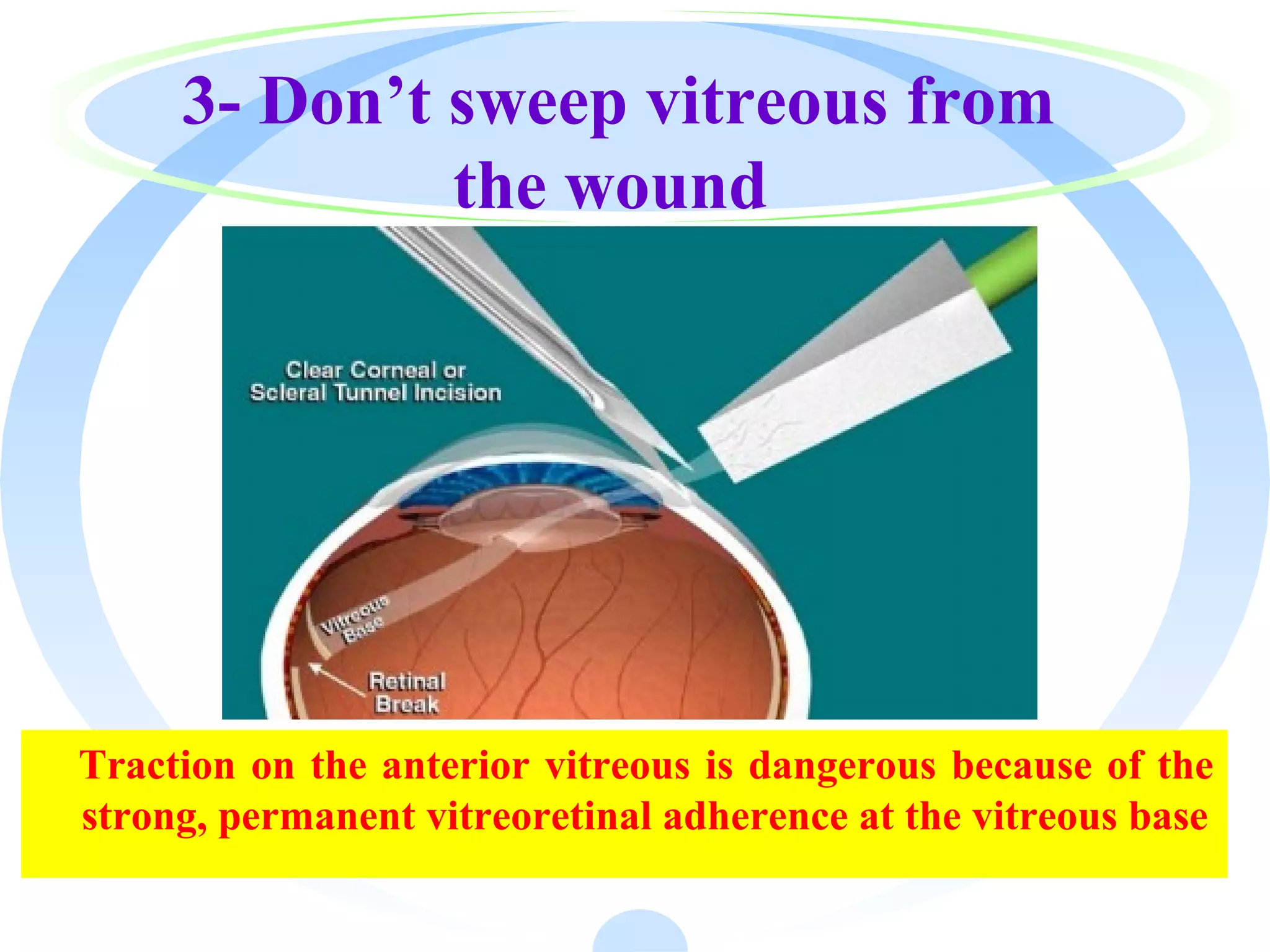
3- Don’t sweep vitreous from
the wound
Traction on the anterior vitreous is dangerous because of the
strong, permanent vitreoretinal adherence at the vitreous base
· The vitreous cutter should be used to
amputate any posterior connection
to wound entrapped vitreous.
· OVD can be used to reposit vitreous
through the incision
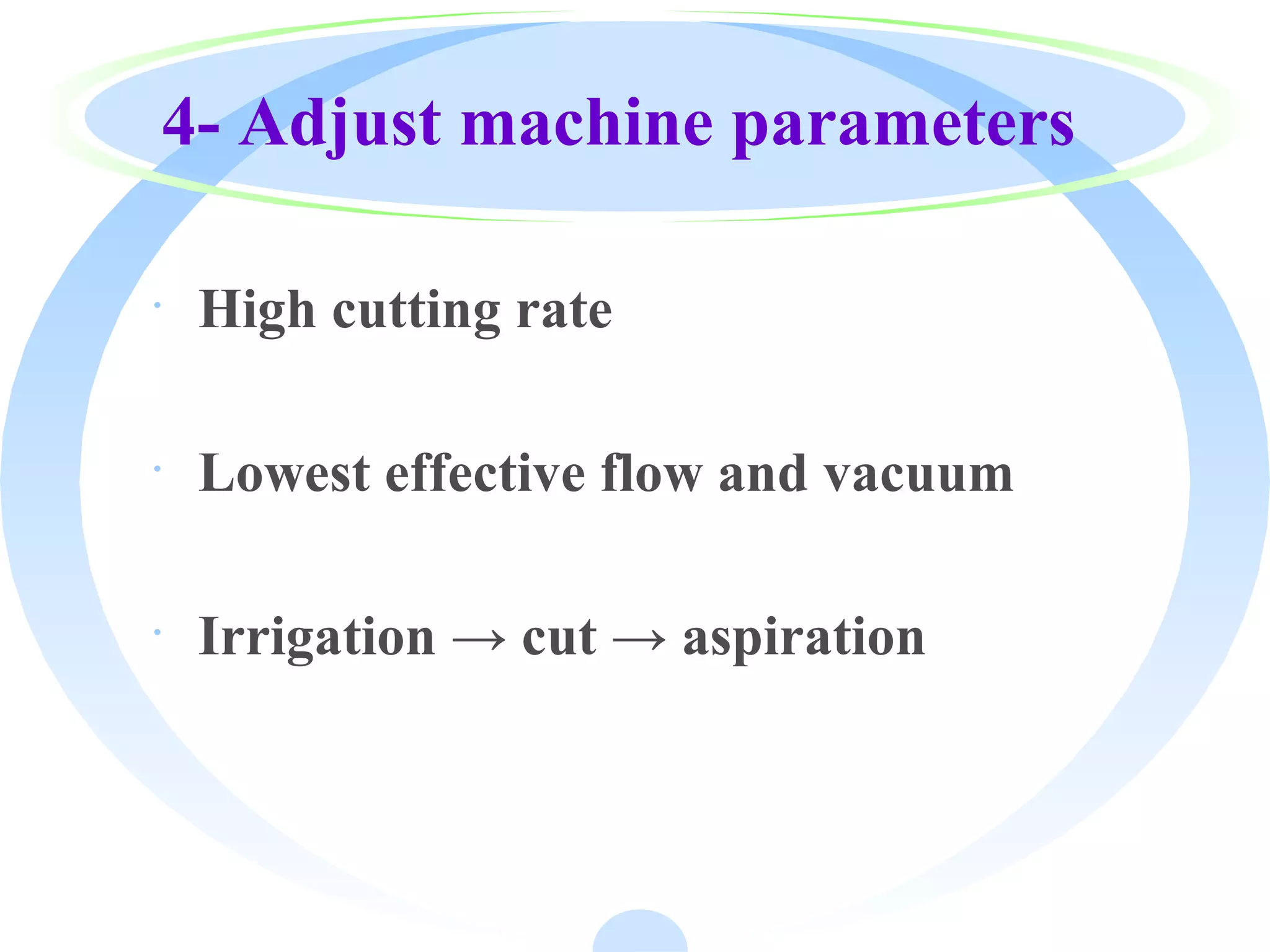
4- Adjust machine parameters
· High cutting rate
· Lowest effective flow and vacuum
· Irrigation → cut → aspiration
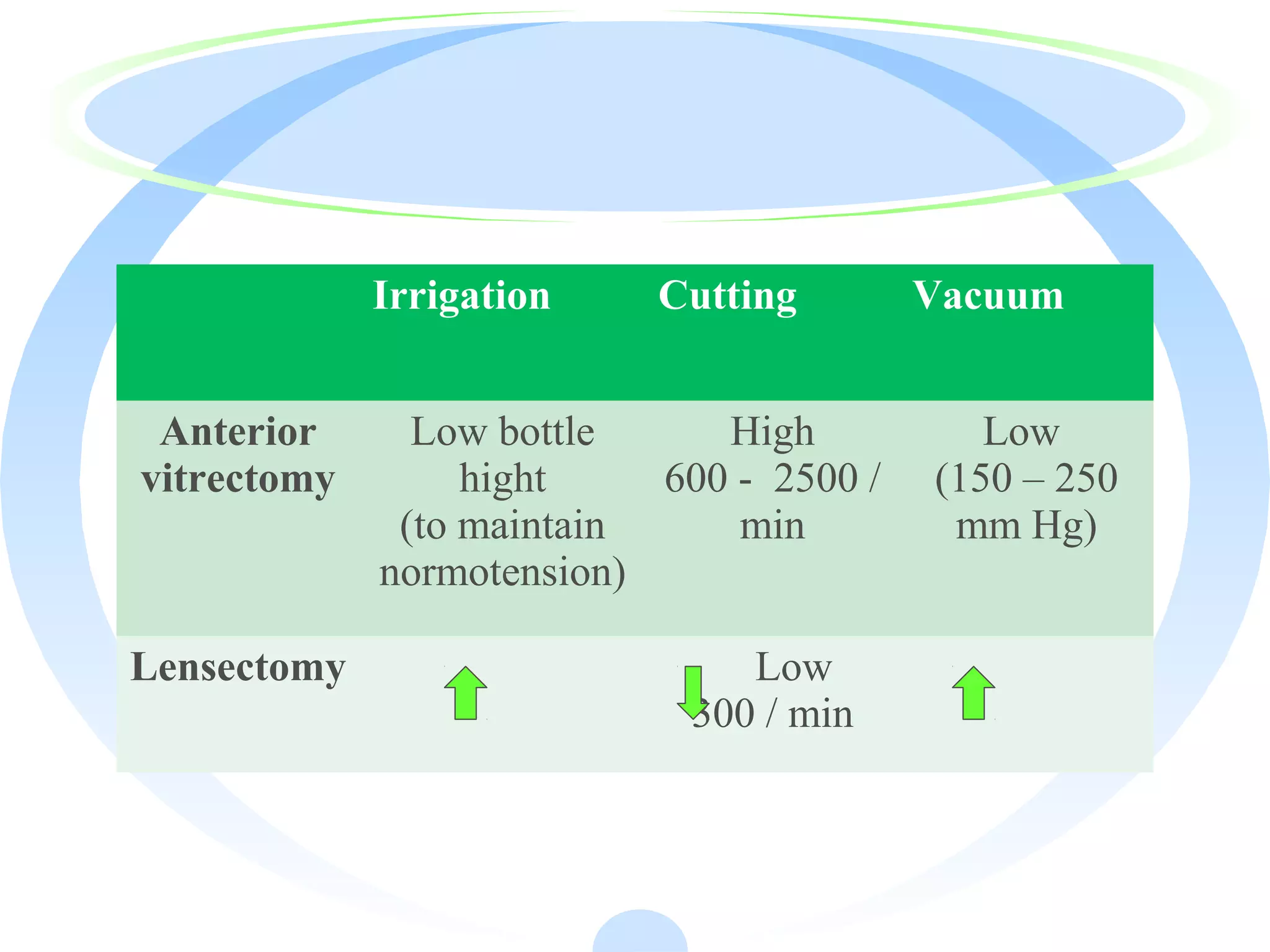
Irrigation Cutting Vacuum
Anterior
vitrectomy
Low bottle
hight
(to maintain
normotension)
High
600 - 2500 /
min
Low
(150 – 250
mm Hg)
Lensectomy Low
300 / min
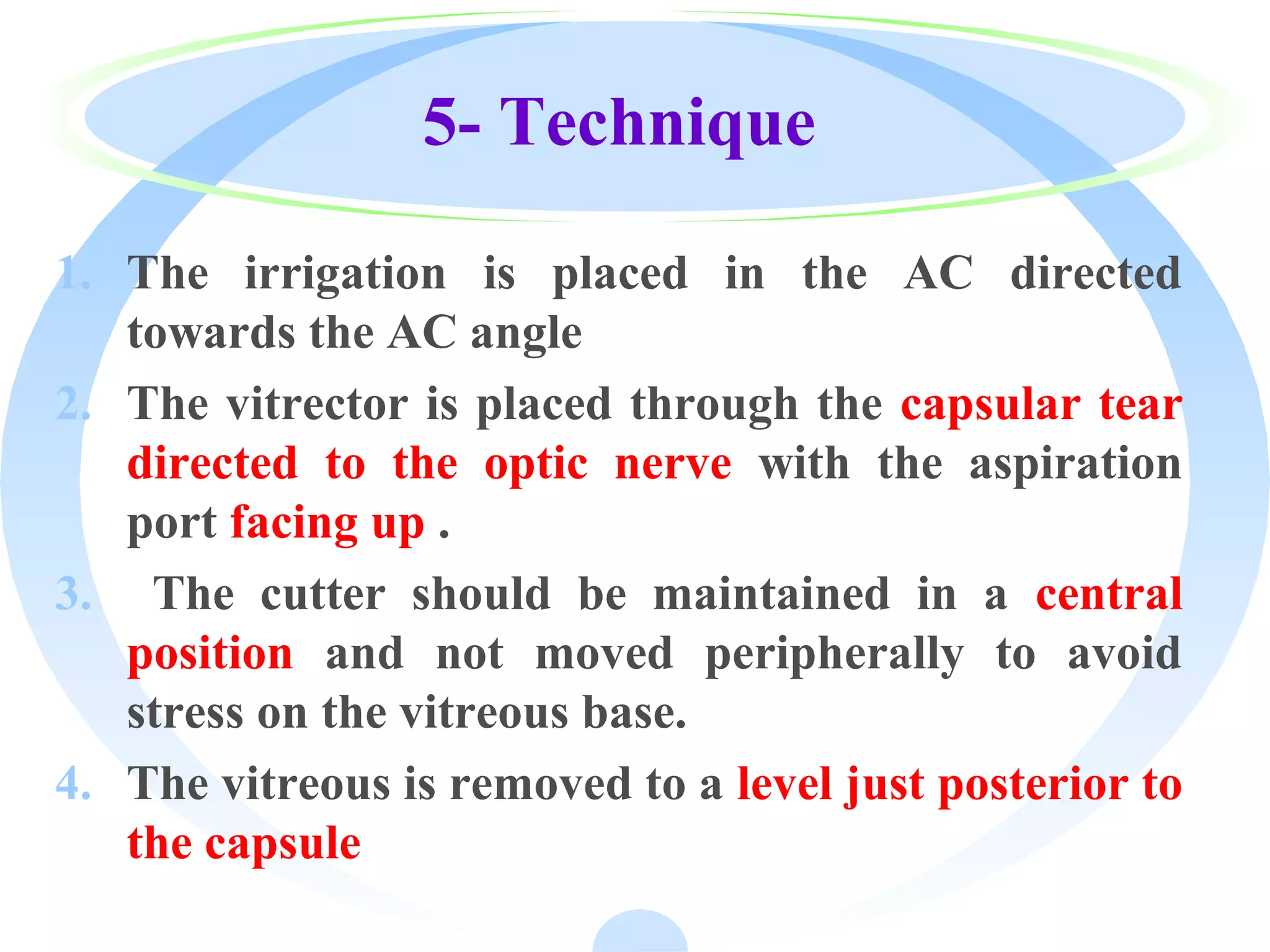
5- Technique
1. The irrigation is placed in the AC directed
towards the AC angle
2. The vitrector is placed through the capsular tear
directed to the optic nerve with the aspiration
port facing up .
3. The cutter should be maintained in a central
position and not moved peripherally to avoid
stress on the vitreous base.
4. The vitreous is removed to a level just posterior to
the capsule
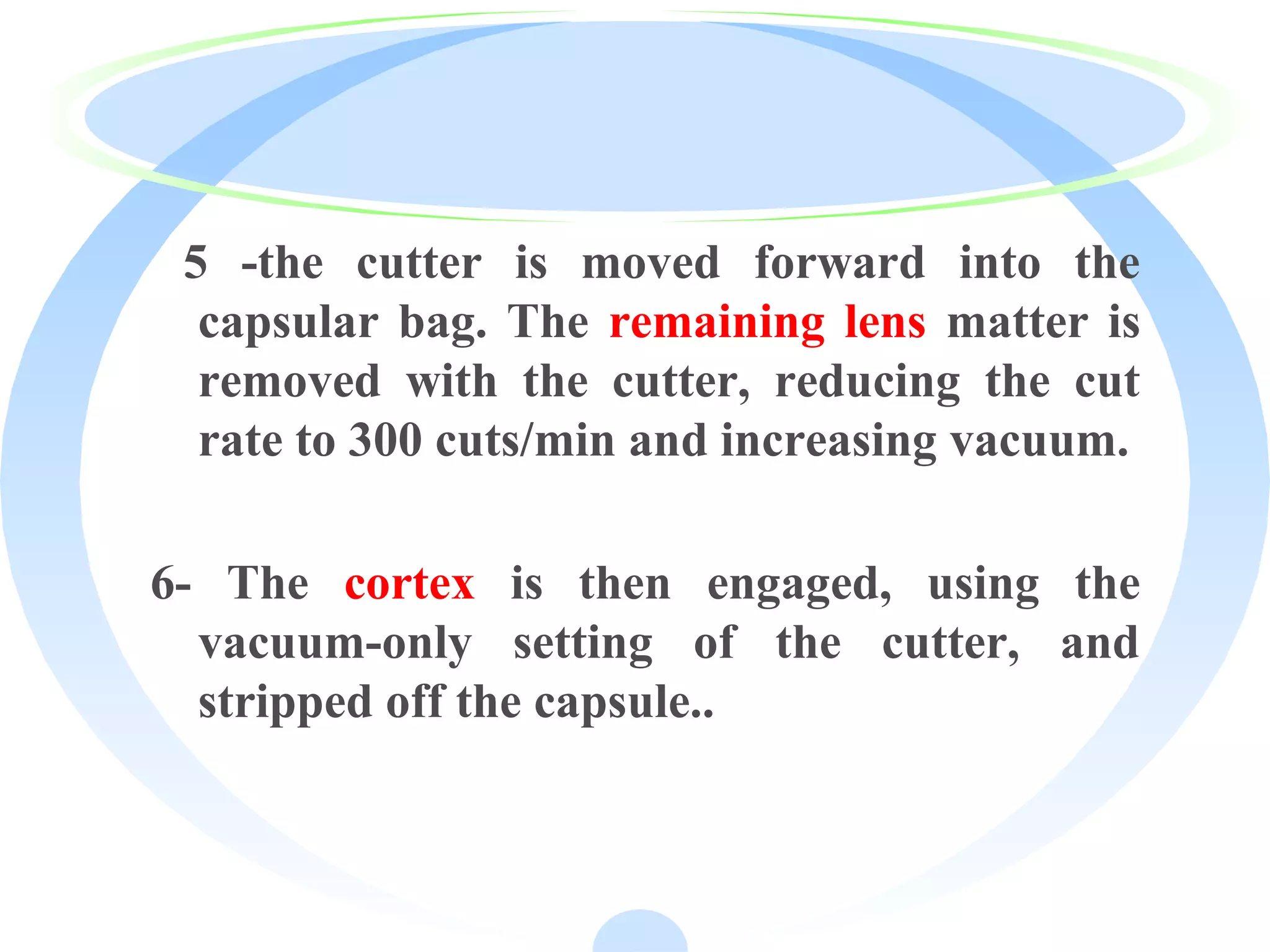
5 -the cutter is moved forward into the
capsular bag. The remaining lens matter is
removed with the cutter, reducing the cut
rate to 300 cuts/min and increasing vacuum.
6- The cortex is then engaged, using the
vacuum-only setting of the cutter, and
stripped off the capsule..
· The cutter should be held stationary
while suction is applied to reduce
traction;
· The cutter tip should always be in view
when activated.
video
End point : no vitreous in the
AC & no vitreous in the bag
· * rounded pupil
· * Clean incision
· * Sweep infusion canula from angle to
angle
· *Instill air or triamcinolone and rinse
away.
TAAC
· Diluted 1 : 10
· Should be completely
removed by end of
case (  IOP )
Types of anterior vitrectomy
Bi manual
Coaxial
Dry ( small amount of vitreous)
Parsplana anterior vitrectomy
(single pars plana port )
Coaxial
· Easy but may increase the tear
· Irrigation is directed to the vitreous
lead to more prolapse.
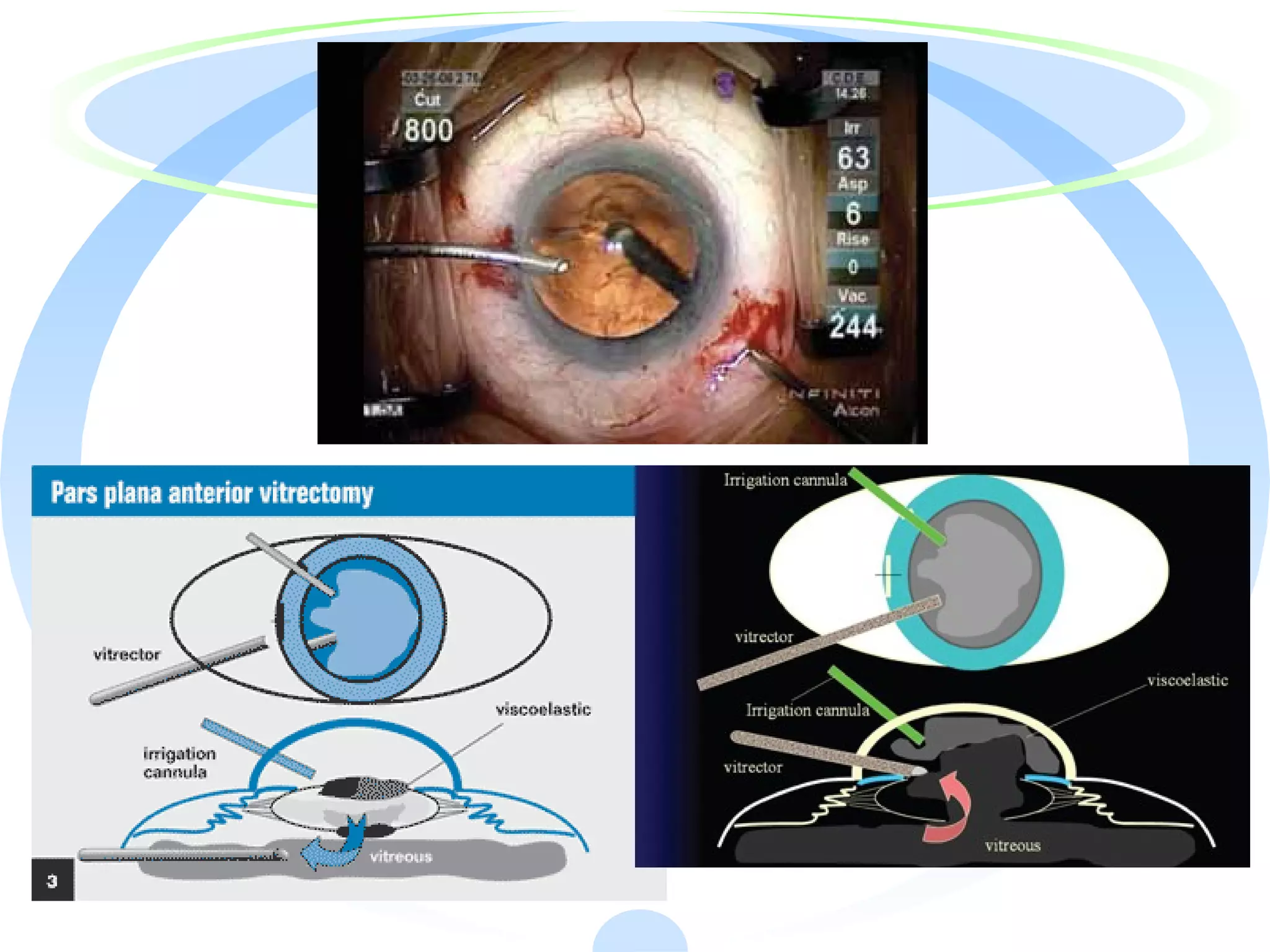
Pars plana Anterior
vitrectomy
· More efficent particularly in extensive
prolapse
· Used also in traumatic lens
sublaxation or angle closure glaucoma.
· Cutter should be visualized , surgeon
should be familial with the technique
Residual cortex
· After completeing anterior vitrectomy
· Dry technique
· Or : with the vitrectomy cutter set to :
· I / A / cut
Conclusion
• Maintain a closed chamber
• Separate the infusion from the cutter
• Use a low bottle height
• Use a high cut rate
• Use low to moderate aspiration
• Identify any vitreous remaining with
triamcinolone stain
• Preserve the capsule
Anterior vitrectomy

Anterior vitrectomy

  • 2.
    Anterior VitrectomyAnterior Vitrectomy ·Mohamed Zaki (M.Sc) · Tanta University
  • 3.
    Aim · Prevent intra/post-operativevitreous traction · Leave a clean anterior segment · IOL implantation
  • 4.
    Event · * PCT ·* Zonular dialysis
  • 5.
    1- Once yoususpect Keep irrigation till inject methyl Vitreous flow from high to low pressure
  • 6.
    2- Keep theAC formed The anterior vitrectomy should be done through tight paracentesis (not the main wound) Make new paracentesis to fit bare vitrector shaft using original side-port for irrigation
  • 7.
    3- Don’t sweepvitreous from the wound Traction on the anterior vitreous is dangerous because of the strong, permanent vitreoretinal adherence at the vitreous base
  • 8.
    · The vitreouscutter should be used to amputate any posterior connection to wound entrapped vitreous. · OVD can be used to reposit vitreous through the incision
  • 9.
    4- Adjust machineparameters · High cutting rate · Lowest effective flow and vacuum · Irrigation → cut → aspiration
  • 10.
    Irrigation Cutting Vacuum Anterior vitrectomy Lowbottle hight (to maintain normotension) High 600 - 2500 / min Low (150 – 250 mm Hg) Lensectomy Low 300 / min
  • 12.
    5- Technique 1. Theirrigation is placed in the AC directed towards the AC angle 2. The vitrector is placed through the capsular tear directed to the optic nerve with the aspiration port facing up . 3. The cutter should be maintained in a central position and not moved peripherally to avoid stress on the vitreous base. 4. The vitreous is removed to a level just posterior to the capsule
  • 13.
    5 -the cutteris moved forward into the capsular bag. The remaining lens matter is removed with the cutter, reducing the cut rate to 300 cuts/min and increasing vacuum. 6- The cortex is then engaged, using the vacuum-only setting of the cutter, and stripped off the capsule..
  • 14.
    · The cuttershould be held stationary while suction is applied to reduce traction; · The cutter tip should always be in view when activated.
  • 15.
  • 16.
    End point :no vitreous in the AC & no vitreous in the bag · * rounded pupil · * Clean incision · * Sweep infusion canula from angle to angle · *Instill air or triamcinolone and rinse away.
  • 18.
    TAAC · Diluted 1: 10 · Should be completely removed by end of case (  IOP )
  • 20.
    Types of anteriorvitrectomy Bi manual Coaxial Dry ( small amount of vitreous) Parsplana anterior vitrectomy (single pars plana port )
  • 21.
    Coaxial · Easy butmay increase the tear · Irrigation is directed to the vitreous lead to more prolapse.
  • 22.
    Pars plana Anterior vitrectomy ·More efficent particularly in extensive prolapse · Used also in traumatic lens sublaxation or angle closure glaucoma. · Cutter should be visualized , surgeon should be familial with the technique
  • 24.
    Residual cortex · Aftercompleteing anterior vitrectomy · Dry technique · Or : with the vitrectomy cutter set to : · I / A / cut
  • 25.
    Conclusion • Maintain aclosed chamber • Separate the infusion from the cutter • Use a low bottle height • Use a high cut rate • Use low to moderate aspiration • Identify any vitreous remaining with triamcinolone stain • Preserve the capsule