ANATOMY AND PHYSIOLOGY OF THE
AUTONOMIC NERVOUS SYSTEM
INTRODUCTION
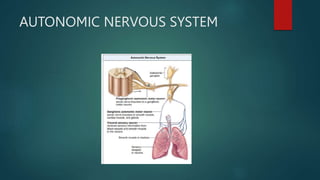
 The autonomic nervous system operates via reflex arcs.
 Structurally the autonomic nervous system includes:
• Autonomic sensory neuron
• Integrating centers in the central nervous system
• Autonomic motor neurons
• The enteric division.
 The ANS innervates:
• Smooth muscle
• Cardiac muscle
• Glands
• Controls involuntary motor activities
OVERVIEW OF AUTONOMIC NERVOUS
SYSTEM
 The autonomic nervous system is subdivided into parasympathetic and
sympathetic division
 Both use pre ganglionic and ganglionic neurons to innervate muscles or
glands
 Parasympathetic is most active when the body is at rest or digesting a
meal. Also it helps maintain homeostasis a constant internal environment
 Sympathetic is primarily concerned with preparing the body for
emergencies often referred to as flight or fight.
 Both division are similar in that their preganglionic axons are myelinated
while the preganglionic axons are unmyelinated.
AUTONOMIC NERVOUS SYSTEM
PARASYMPATHETIC DIVISION
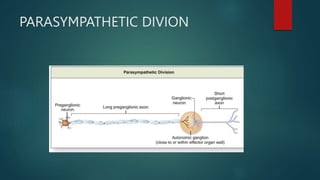
 The parasympathetic preganglionic neurons are housed either within the
brainstem or within the sacral region of the spinal cord.
 The ganglionic neurons in the parasympathetic division are located within
either terminal ganglia or intramural ganglia.
 Terminal ganglia located close to the target organ, intramural ganglia
located within the wall of the target organ
 Length of preganglionic axon is long
 Length of postganglionic axon is short.
PARASYMPATHETIC DIVION
CRANIAL NERVES
 Parasympathetic preganglionic axons extend from cell bodies in brainstem
nuclei through the oculomotor, facial, glossopharyngeal, and vagus cranial
nerves.
 Oculomotor nerve originates from mesencephalon and effector organs
innervated are ;ciliary muscle, sphincter pupillae muscle.
 Facial nerve originates from pons and innervates lacrimal glands; of nasal
cavity, palate, oral cavity and salivary glands.
 Glossopharyngeal nerve originates from medulla oblongata and
innervates parotid salivary glands.
 Vagus nerve originates from medulla oblongata and innervates thoracic
viscera and most abdominal viscera.
SACRAL SPINAL NERVES
 Originates from S2-S4 segments of spinal cord.
 Effectors organs innervated are some abdominal viscera and most pelvic
viscera.
 This parasympathetic innervation causes :
• Increase smooth muscle motility and secretory activity in the digestive
organs
• Contraction of smooth muscle in the bladder wall
• Erection of the female clitoris and male penis
GENERAL FUNCTIONS OF
PARASYMPATHETIC DIVISION
 Parasympathetic responses can cause:
• an increase in gastric secretions
• an increase in salivary secretion and peristalsis
• Pupillary constriction
• Decrease in smooth muscle tone such that sphincters are relaxed and
erection
• Decrease in heart rate
SYMPATHETIC DIVISION
 Also called the thoracolumbar division because the preganglionic neuron
cell bodies innervates and are housed between the first thoracic and the
second lumbar spinal segments
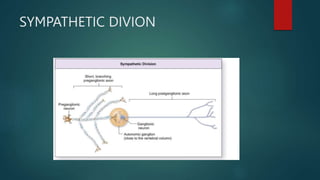
 Ganglionic neuron cell bodies are located in the sympathetic trunk
ganglion or prevertebral ganglion
 Length of preganglionic axon is short
 Length of postganglionic axon is long
 Sympathetic division prepares body to cope with emergencies and
intensive muscle activity
SYMPATHETIC DIVION
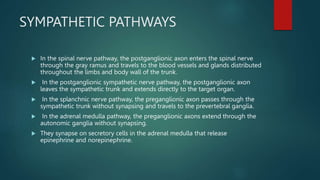
SYMPATHETIC PATHWAYS
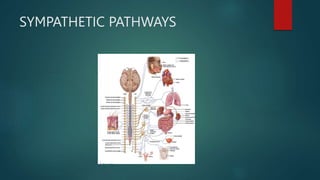
 In the spinal nerve pathway, the postganglionic axon enters the spinal nerve
through the gray ramus and travels to the blood vessels and glands distributed
throughout the limbs and body wall of the trunk.
 In the postganglionic sympathetic nerve pathway, the postganglionic axon
leaves the sympathetic trunk and extends directly to the target organ.
 In the splanchnic nerve pathway, the preganglionic axon passes through the
sympathetic trunk without synapsing and travels to the prevertebral ganglia.
 In the adrenal medulla pathway, the preganglionic axons extend through the
autonomic ganglia without synapsing.
 They synapse on secretory cells in the adrenal medulla that release
epinephrine and norepinephrine.
SYMPATHETIC PATHWAYS
GENERAL FUNCTIONS OF THE
SYMPATHETIC DIVISION
 Activation of sympathetic division and release of hormones by the adrenal
medullae set in motion a series of physiological responses collectively
called the fight or flight response which includes the following effects:
 Dilation of the pupil
 Increase in heart rate , force of contraction and blood pressure
 Constriction of blood vessels
 Release of glucose by the liver increases blood glucose level
 Digestive secretions slow down
 Relaxes the bladder
AUTONOMIC NERVOUS SYSTEM
NEUOROTRANSMITTERS AND RECEPTORS
Cholinergic fibers :preganglionic axons of both parasympathetic and
sympathetic systems and parasympathetic post ganglionic axons release
acetylcholine
Adrenergic fibers :axons of sympathetic post ganglionic neurons release
norepinephrine (noradrenaline)
Acetylcholine and norepinephrine are not exclusively autonomic
neurotransmitters e.g. axons of somatic motor neurons release acetylcholine
and axons of various neurons located in central nervous system are now
known to release norepinephrine

ANS POWERPOINT (1).pptx

  • 1.
    ANATOMY AND PHYSIOLOGYOF THE AUTONOMIC NERVOUS SYSTEM
  • 2.
    INTRODUCTION  The autonomicnervous system operates via reflex arcs.  Structurally the autonomic nervous system includes: • Autonomic sensory neuron • Integrating centers in the central nervous system • Autonomic motor neurons • The enteric division.  The ANS innervates: • Smooth muscle • Cardiac muscle • Glands • Controls involuntary motor activities
  • 3.
    OVERVIEW OF AUTONOMICNERVOUS SYSTEM  The autonomic nervous system is subdivided into parasympathetic and sympathetic division  Both use pre ganglionic and ganglionic neurons to innervate muscles or glands  Parasympathetic is most active when the body is at rest or digesting a meal. Also it helps maintain homeostasis a constant internal environment  Sympathetic is primarily concerned with preparing the body for emergencies often referred to as flight or fight.  Both division are similar in that their preganglionic axons are myelinated while the preganglionic axons are unmyelinated.
  • 4.
  • 5.
    PARASYMPATHETIC DIVISION  Theparasympathetic preganglionic neurons are housed either within the brainstem or within the sacral region of the spinal cord.  The ganglionic neurons in the parasympathetic division are located within either terminal ganglia or intramural ganglia.  Terminal ganglia located close to the target organ, intramural ganglia located within the wall of the target organ  Length of preganglionic axon is long  Length of postganglionic axon is short.
  • 6.
  • 7.
    CRANIAL NERVES  Parasympatheticpreganglionic axons extend from cell bodies in brainstem nuclei through the oculomotor, facial, glossopharyngeal, and vagus cranial nerves.  Oculomotor nerve originates from mesencephalon and effector organs innervated are ;ciliary muscle, sphincter pupillae muscle.  Facial nerve originates from pons and innervates lacrimal glands; of nasal cavity, palate, oral cavity and salivary glands.  Glossopharyngeal nerve originates from medulla oblongata and innervates parotid salivary glands.  Vagus nerve originates from medulla oblongata and innervates thoracic viscera and most abdominal viscera.
  • 8.
    SACRAL SPINAL NERVES Originates from S2-S4 segments of spinal cord.  Effectors organs innervated are some abdominal viscera and most pelvic viscera.  This parasympathetic innervation causes : • Increase smooth muscle motility and secretory activity in the digestive organs • Contraction of smooth muscle in the bladder wall • Erection of the female clitoris and male penis
  • 9.
    GENERAL FUNCTIONS OF PARASYMPATHETICDIVISION  Parasympathetic responses can cause: • an increase in gastric secretions • an increase in salivary secretion and peristalsis • Pupillary constriction • Decrease in smooth muscle tone such that sphincters are relaxed and erection • Decrease in heart rate
  • 10.
    SYMPATHETIC DIVISION  Alsocalled the thoracolumbar division because the preganglionic neuron cell bodies innervates and are housed between the first thoracic and the second lumbar spinal segments  Ganglionic neuron cell bodies are located in the sympathetic trunk ganglion or prevertebral ganglion  Length of preganglionic axon is short  Length of postganglionic axon is long  Sympathetic division prepares body to cope with emergencies and intensive muscle activity
  • 11.
  • 12.
    SYMPATHETIC PATHWAYS  Inthe spinal nerve pathway, the postganglionic axon enters the spinal nerve through the gray ramus and travels to the blood vessels and glands distributed throughout the limbs and body wall of the trunk.  In the postganglionic sympathetic nerve pathway, the postganglionic axon leaves the sympathetic trunk and extends directly to the target organ.  In the splanchnic nerve pathway, the preganglionic axon passes through the sympathetic trunk without synapsing and travels to the prevertebral ganglia.  In the adrenal medulla pathway, the preganglionic axons extend through the autonomic ganglia without synapsing.  They synapse on secretory cells in the adrenal medulla that release epinephrine and norepinephrine.
  • 13.
  • 14.
    GENERAL FUNCTIONS OFTHE SYMPATHETIC DIVISION  Activation of sympathetic division and release of hormones by the adrenal medullae set in motion a series of physiological responses collectively called the fight or flight response which includes the following effects:  Dilation of the pupil  Increase in heart rate , force of contraction and blood pressure  Constriction of blood vessels  Release of glucose by the liver increases blood glucose level  Digestive secretions slow down  Relaxes the bladder
  • 15.
    AUTONOMIC NERVOUS SYSTEM NEUOROTRANSMITTERSAND RECEPTORS Cholinergic fibers :preganglionic axons of both parasympathetic and sympathetic systems and parasympathetic post ganglionic axons release acetylcholine Adrenergic fibers :axons of sympathetic post ganglionic neurons release norepinephrine (noradrenaline) Acetylcholine and norepinephrine are not exclusively autonomic neurotransmitters e.g. axons of somatic motor neurons release acetylcholine and axons of various neurons located in central nervous system are now known to release norepinephrine