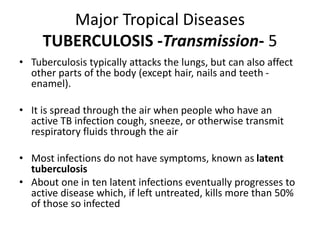
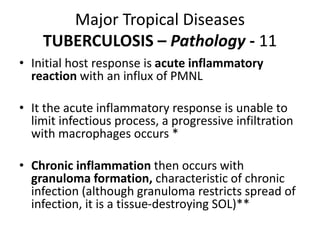
1. Tuberculosis is an infectious disease caused by the bacterium Mycobacterium tuberculosis, which most commonly affects the lungs. It spreads through inhaling droplets from infected individuals when they cough, sneeze or speak.
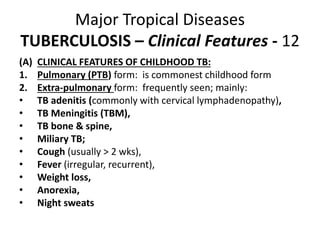
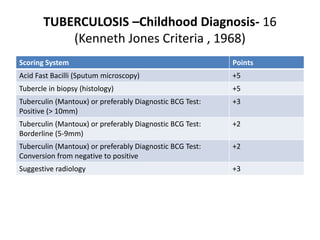
2. Symptoms typically include coughing, weight loss, fever, and night sweats. Diagnosis involves tests of sputum, tissue biopsies, chest imaging, and tuberculin skin tests.
3. Treatment requires taking multiple antibiotics for a minimum of 6 months. Failure to complete treatment can result in drug-resistant strains of the disease. Tuberculosis remains a major global health issue and is a leading cause of death worldwide.








![Major Tropical Diseases
(A) ACTIVE TB-Diagnosis - 20
1. Suggestive history: (High index of suspicion; Constitutional S&S > 2
wks: cough, night sweats, weight loss/wasting, ?HIV cases)
2. Suggestive Imaging features: CXR, (CT, US, MRI or radioisotope)
scans
3. Bacteriological examinations: [Multiple sputum (AAFB), tissue
biopsy, blood , pus, CSF, bronchial, pleural, pericardial, gastric,
peritoneal aspirates ] for microscopy and cultures
4. Immunological Tests: These include:
i. Tuberculin skin (Mantoux) Test : useless in HIV cases
ii. Interferon-γ release assays (IGRA) : little use in the developing
world and in HIV cases
5. Haematological/Biochemical: CBC, ESR, LFTs (Ltd diagnostic roles)
6. Molecular Techniques: (PCR/DNA-based rapid TB tests):
Nucleic acid amplification tests, Adenosine deaminase tests; others)](https://image.slidesharecdn.com/tb-tropicalmedicine-230207122906-0e7346d3/85/TB-TropicalMedicine-pptx-21-320.jpg)


![TBc[1].ppt comuuintiy awwenaes in somali](https://cdn.slidesharecdn.com/ss_thumbnails/tbc1-241211101334-4fc36c41-thumbnail.jpg?width=640&height=640&fit=bounds)


