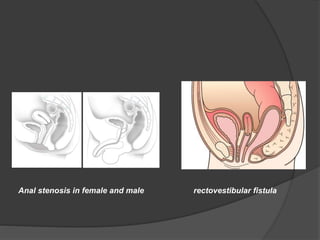
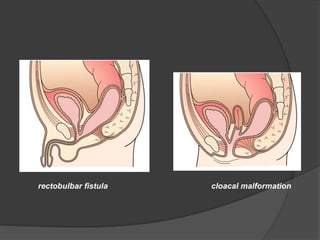
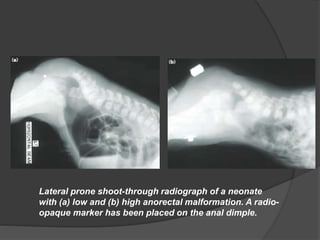
This document discusses anorectal malformations (ARMs), which occur due to imperfect fusion of the post-allantoic gut and proctodaeum during embryonic development. ARMs are divided into high and low abnormalities based on whether the termination of the bowel is above or below the pelvic floor. Low abnormalities are easier to diagnose and treat with good outcomes, while high abnormalities require early colostomy followed by definitive repair months later. Clinical assessment of newborns involves checking for inability to pass meconium, abdominal distension, and improper anal dimple. Treatment depends on whether it is a low or high abnormality.