Animal Cell

By:   Aaishah Baksh
About animal cells
• An animal cell is a form of eukaryotic
  cell or cells with a membrane-bound
  nucleus.
• They lack cell walls, plastids and
  chloroplasts.
• The shape of the animal cell is not
  rigid but is of any shape and size.
Typical animal cell
Organelles in an animal cell
• Cell          • Mitochondrion
  membrane
                • Smooth ER
• Cytoplasm
                • Vacuole
• Nucleus
                • Ribosomes
• Rough ER
• Cell membrane
The animal cell has a plasma cell
membrane encloses the cell contents.
Its main function is to control what
gets into and out of the cell.
• Cytoplasm
The cytoplasm contains primarily
water and protein material. This is
where the other cell organelles
reside, and where most of the
cellular activities take place.
• Nucleus
The nucleus generally contains the
genetic material for the cell. Because
it contains the DNA and
chromosomes, which affect the
proteins that determine the activities
of the cell, the nucleus can be
considered to be the cell's control
center.
• Rough ER
The rough endoplasmic reticulum
manufactures membranes and
secretory proteins. The rough ER
also produces antibodies.
• Smooth ER
The smooth endoplasmic reticulum is
tubular in form and is involved in the
synthesis of phospholipids, the main
lipids in cell membranes.
• Vacoule
A vacuole is a membrane-bound
organelle which is present in all plant
and fungal cells and some protist,
animal and bacterial cells. It exports
unwanted substances from the cell.
• Ribosomes
Free ribosomes usually make
proteins that will function in the
cytosol, while bound ribosomes
usually make proteins that are
exported or included in the cell's
membranes.
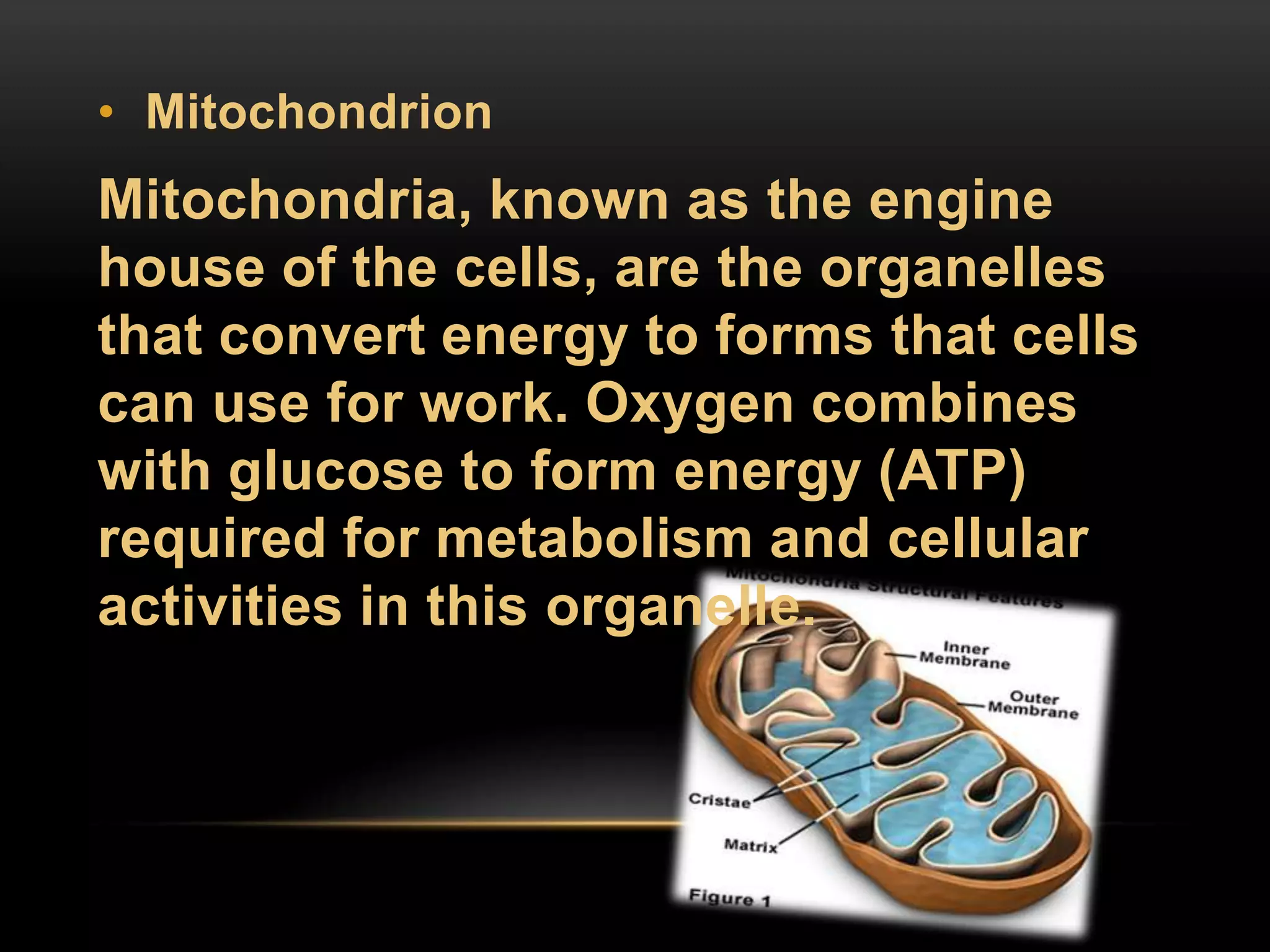
• Mitochondrion
Mitochondria, known as the engine
house of the cells, are the organelles
that convert energy to forms that cells
can use for work. Oxygen combines
with glucose to form energy (ATP)
required for metabolism and cellular
activities in this organelle.
animal cell

animal cell

  • 1.
    Animal Cell By: Aaishah Baksh
  • 2.
    About animal cells •An animal cell is a form of eukaryotic cell or cells with a membrane-bound nucleus. • They lack cell walls, plastids and chloroplasts. • The shape of the animal cell is not rigid but is of any shape and size.
  • 3.
  • 4.
    Organelles in ananimal cell • Cell • Mitochondrion membrane • Smooth ER • Cytoplasm • Vacuole • Nucleus • Ribosomes • Rough ER
  • 5.
    • Cell membrane Theanimal cell has a plasma cell membrane encloses the cell contents. Its main function is to control what gets into and out of the cell.
  • 6.
    • Cytoplasm The cytoplasmcontains primarily water and protein material. This is where the other cell organelles reside, and where most of the cellular activities take place.
  • 7.
    • Nucleus The nucleusgenerally contains the genetic material for the cell. Because it contains the DNA and chromosomes, which affect the proteins that determine the activities of the cell, the nucleus can be considered to be the cell's control center.
  • 8.
    • Rough ER Therough endoplasmic reticulum manufactures membranes and secretory proteins. The rough ER also produces antibodies.
  • 9.
    • Smooth ER Thesmooth endoplasmic reticulum is tubular in form and is involved in the synthesis of phospholipids, the main lipids in cell membranes.
  • 10.
    • Vacoule A vacuoleis a membrane-bound organelle which is present in all plant and fungal cells and some protist, animal and bacterial cells. It exports unwanted substances from the cell.
  • 11.
    • Ribosomes Free ribosomesusually make proteins that will function in the cytosol, while bound ribosomes usually make proteins that are exported or included in the cell's membranes.
  • 12.
    • Mitochondrion Mitochondria, knownas the engine house of the cells, are the organelles that convert energy to forms that cells can use for work. Oxygen combines with glucose to form energy (ATP) required for metabolism and cellular activities in this organelle.