John Christopher E.
Pangilinan
Biology
Ms. Pyles
1/17/14
2.03 Cell Structure and Function
• Cell membrane
• Nucleus
•
Cytoplasm & cytoskeleton
• Ribosome
• Endoplasmic reticulum
• Rough ER
• Smooth ER
• Golgi Apparatus
• Lysosomes
• Vacuoles
• Mitochondria
• Cell wall
• Chloroplasts
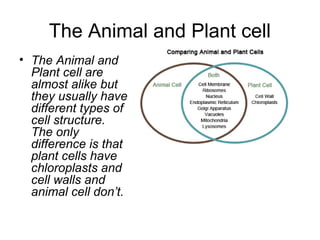
The Animal and Plant cell
• The Animal and
Plant cell are
almost alike but
they usually have
different types of
cell structure.
The only
difference is that
plant cells have
chloroplasts and
cell walls and
animal cell don’t.
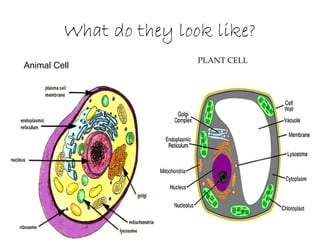
What do they look like?
Animal Cell
PLANT CELL
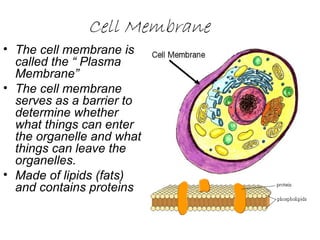
Cell Membrane
• The cell membrane is
called the “ Plasma
Membrane”
• The cell membrane
serves as a barrier to
determine whether
what things can enter
the organelle and what
things can leave the
organelles.
• Made of lipids (fats)
and contains proteins
Nucleus
The nucleus usually holds
most of the cell’s genetic
information.
What is inside the Nucleus?
The nucleus inside is that
DNA and proteins are
packed together into a
chromosomes.
Cytoplasm & Cytoskeleton
• Cytoplasm is a “ thick
fluid that is surrounded
of the cell.
• The cytoplasm contains
a mixture of water and
salt that is dissolved,
ions ,and the organic
molecules.
• Cytoskeleton was
discovered by a new
improved technology of
the microscope. What
scientist found are fiber
in the cell.
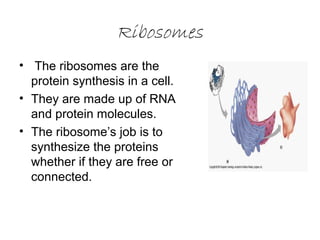
Ribosomes
• The ribosomes are the
protein synthesis in a cell.
• They are made up of RNA
and protein molecules.
• The ribosome’s job is to
synthesize the proteins
whether if they are free or
connected.
Endoplasmic reticulum
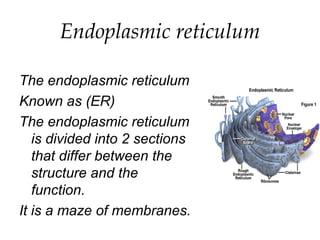
The endoplasmic reticulum
Known as (ER)
The endoplasmic reticulum
is divided into 2 sections
that differ between the
structure and the
function.
It is a maze of membranes.
Rough ER
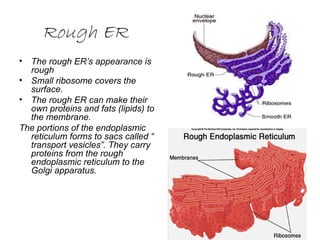
• The rough ER’s appearance is
rough
• Small ribosome covers the
surface.
• The rough ER can make their
own proteins and fats (lipids) to
the membrane.
The portions of the endoplasmic
reticulum forms to sacs called “
transport vesicles”. They carry
proteins from the rough
endoplasmic reticulum to the
Golgi apparatus.
Smooth ER
• The membrane does
not have any ribosome.
• The smooth
endoplasmic reticulum
takes part of the
metabolic process.
• The appearance of
Smooth ER is smooth.
Golgi Apparatus
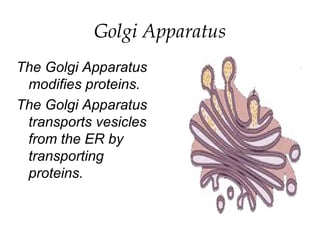
The Golgi Apparatus
modifies proteins.
The Golgi Apparatus
transports vesicles
from the ER by
transporting
proteins.
Lysosomes
The lysosomes
contains enzymes
in a membrane
sac.
Each cell contains
different enzymes
that break down
into a
macromolecules.
Vacuoles
• Vacuoles are known
as “ membrane-
enclosed sacs that
serves storage
functions.
• The vacuoles are
larger.
Mitochondria
• The Function of the
mitochondria is that
the organelles act like
a cell’s digestive
system by taking
nutrients and break
them down to release
energy to give the cell
to power up.
• ATP is produced.
Cell wall
• The cell wall is usually
found in the plant cell.
• They are not found in the
animal cell.
• The cell wall surrounds the
cell membrane and giving
the support by adding a
layer of protection for the
plant cells.
chloroplasts
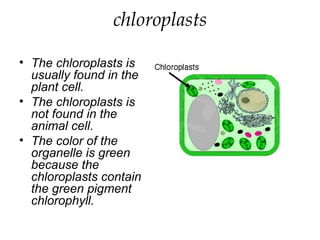
• The chloroplasts is
usually found in the
plant cell.
• The chloroplasts is
not found in the
animal cell.
• The color of the
organelle is green
because the
chloroplasts contain
the green pigment
chlorophyll.
image Links
• Slide 3 – picture from FLVS Biology 2.03 lesson
• Slide 4-
http://www.biologycorner.com/bio1/notes_cell.html
• Slide 5-
http://www.biologycorner.com/bio1/notes_cell.html
• Slide 6 –
http://www.biologycorner.com/bio1/notes_cell.html
Image links
cont…
• Slide 7-http://legacy.owensboro.kctcs.edu/gcaplan/anat/study
%20guide/api%20study%20guide%20d%20cell%20structures.htm
• Slide 8- http://legacy.owensboro.kctcs.edu/gcaplan/anat/study
%20guide/api%20study%20guide%20d%20cell%20structures.htm
Slide 9-
http://micro.magnet.fsu.edu/cells/endoplasmicreticulum/endoplasmic
reticulum.html
Slide 10- http://www.biologycorner.com/bio1/notes_cell.html
http://legacy.owensboro.kctcs.edu/gcaplan/anat/study%20guide/api%20study
Image links
cont..
• Slide 11- http://www.biologycorner.com/bio1/notes_cell.html
• Slide 12
• Slide 13- http://www.biologycorner.com/bio1/notes_cell.html
• Slide 14- http://plantcellsorganelles.weebly.com/vacuoles.html
• Slide 15- http://www.biologycorner.com/bio1/notes_cell.html
• Slide 16- https://www.adapaonline.org/bbk/tiki-index.php?page=Leaf
%3A+What+are+cell+walls%3F
• Slide 17 -
http://bms.westfordk12.us/Pages/teams/7green/cells/GroupH/images/plantc
ell%20chloroplast
THE END!THE END!
That’s the end of the slideshow for 2.03 cellThat’s the end of the slideshow for 2.03 cell
structure and function.structure and function.

2 03 cell structure and function

  • 1.
  • 2.
    2.03 Cell Structureand Function • Cell membrane • Nucleus • Cytoplasm & cytoskeleton • Ribosome • Endoplasmic reticulum • Rough ER • Smooth ER • Golgi Apparatus • Lysosomes • Vacuoles • Mitochondria • Cell wall • Chloroplasts
  • 3.
    The Animal andPlant cell • The Animal and Plant cell are almost alike but they usually have different types of cell structure. The only difference is that plant cells have chloroplasts and cell walls and animal cell don’t.
  • 4.
    What do theylook like? Animal Cell PLANT CELL
  • 5.
    Cell Membrane • Thecell membrane is called the “ Plasma Membrane” • The cell membrane serves as a barrier to determine whether what things can enter the organelle and what things can leave the organelles. • Made of lipids (fats) and contains proteins
  • 6.
    Nucleus The nucleus usuallyholds most of the cell’s genetic information. What is inside the Nucleus? The nucleus inside is that DNA and proteins are packed together into a chromosomes.
  • 7.
    Cytoplasm & Cytoskeleton •Cytoplasm is a “ thick fluid that is surrounded of the cell. • The cytoplasm contains a mixture of water and salt that is dissolved, ions ,and the organic molecules. • Cytoskeleton was discovered by a new improved technology of the microscope. What scientist found are fiber in the cell.
  • 8.
    Ribosomes • The ribosomesare the protein synthesis in a cell. • They are made up of RNA and protein molecules. • The ribosome’s job is to synthesize the proteins whether if they are free or connected.
  • 9.
    Endoplasmic reticulum The endoplasmicreticulum Known as (ER) The endoplasmic reticulum is divided into 2 sections that differ between the structure and the function. It is a maze of membranes.
  • 10.
    Rough ER • Therough ER’s appearance is rough • Small ribosome covers the surface. • The rough ER can make their own proteins and fats (lipids) to the membrane. The portions of the endoplasmic reticulum forms to sacs called “ transport vesicles”. They carry proteins from the rough endoplasmic reticulum to the Golgi apparatus.
  • 11.
    Smooth ER • Themembrane does not have any ribosome. • The smooth endoplasmic reticulum takes part of the metabolic process. • The appearance of Smooth ER is smooth.
  • 12.
    Golgi Apparatus The GolgiApparatus modifies proteins. The Golgi Apparatus transports vesicles from the ER by transporting proteins.
  • 13.
    Lysosomes The lysosomes contains enzymes ina membrane sac. Each cell contains different enzymes that break down into a macromolecules.
  • 14.
    Vacuoles • Vacuoles areknown as “ membrane- enclosed sacs that serves storage functions. • The vacuoles are larger.
  • 15.
    Mitochondria • The Functionof the mitochondria is that the organelles act like a cell’s digestive system by taking nutrients and break them down to release energy to give the cell to power up. • ATP is produced.
  • 16.
    Cell wall • Thecell wall is usually found in the plant cell. • They are not found in the animal cell. • The cell wall surrounds the cell membrane and giving the support by adding a layer of protection for the plant cells.
  • 17.
    chloroplasts • The chloroplastsis usually found in the plant cell. • The chloroplasts is not found in the animal cell. • The color of the organelle is green because the chloroplasts contain the green pigment chlorophyll.
  • 18.
    image Links • Slide3 – picture from FLVS Biology 2.03 lesson • Slide 4- http://www.biologycorner.com/bio1/notes_cell.html • Slide 5- http://www.biologycorner.com/bio1/notes_cell.html • Slide 6 – http://www.biologycorner.com/bio1/notes_cell.html
  • 19.
    Image links cont… • Slide7-http://legacy.owensboro.kctcs.edu/gcaplan/anat/study %20guide/api%20study%20guide%20d%20cell%20structures.htm • Slide 8- http://legacy.owensboro.kctcs.edu/gcaplan/anat/study %20guide/api%20study%20guide%20d%20cell%20structures.htm Slide 9- http://micro.magnet.fsu.edu/cells/endoplasmicreticulum/endoplasmic reticulum.html Slide 10- http://www.biologycorner.com/bio1/notes_cell.html http://legacy.owensboro.kctcs.edu/gcaplan/anat/study%20guide/api%20study
  • 20.
    Image links cont.. • Slide11- http://www.biologycorner.com/bio1/notes_cell.html • Slide 12 • Slide 13- http://www.biologycorner.com/bio1/notes_cell.html • Slide 14- http://plantcellsorganelles.weebly.com/vacuoles.html • Slide 15- http://www.biologycorner.com/bio1/notes_cell.html • Slide 16- https://www.adapaonline.org/bbk/tiki-index.php?page=Leaf %3A+What+are+cell+walls%3F • Slide 17 - http://bms.westfordk12.us/Pages/teams/7green/cells/GroupH/images/plantc ell%20chloroplast
  • 21.
    THE END!THE END! That’sthe end of the slideshow for 2.03 cellThat’s the end of the slideshow for 2.03 cell structure and function.structure and function.