
Anatomy of General
Gynecology
Presenter: Dr. Dheeraj Kumar
MRIT, Ph.D. (Radiology and Imaging)
Assistant Professor
Medical Radiology and Imaging Technology
School of Health Sciences, CSJM University, Kanpur
31/07/2023 Anatomy of General Gynecology By- Dheeraj Kumar 1
Definition of Gynecology
• Gynecology is the medical specialty that focuses on the health and well-
being of the female reproductive system, including the uterus, ovaries,
fallopian tubes, vagina, and associated structures.
• Importance of Gynecology in Women's Health: Gynaecologists play a
crucial role in diagnosing and treating various gynecological conditions,
promoting reproductive health, providing family planning options,
managing pregnancy and childbirth, and addressing women's health
concerns throughout different life stages.
31/07/2023 Anatomy of General Gynecology By- Dheeraj Kumar 2
Anatomy of the Female Reproductive System
• Overview of the female reproductive organs: The female reproductive system
consists of internal and external structures, including the ovaries, fallopian tubes,
uterus, cervix, and vagina.
• Detailed explanation of the uterus, ovaries, fallopian tubes, and vagina: Provide
information on the functions and roles of each organ in the reproductive process.
• Diagrams and visuals: Include labeled diagrams of the female reproductive system
to aid in understanding its anatomy.
31/07/2023 Anatomy of General Gynecology By- Dheeraj Kumar 3
Anatomy of the Uterus
• The uterus, also known as the
womb, is a pear-shaped, hollow
organ located in the female pelvis. It
is a crucial component of the female
reproductive system and plays a
central role in menstruation,
pregnancy, and childbirth. Let's
explore its anatomy in detail:
31/07/2023 Anatomy of General Gynecology By- Dheeraj Kumar 4
Structure and Position
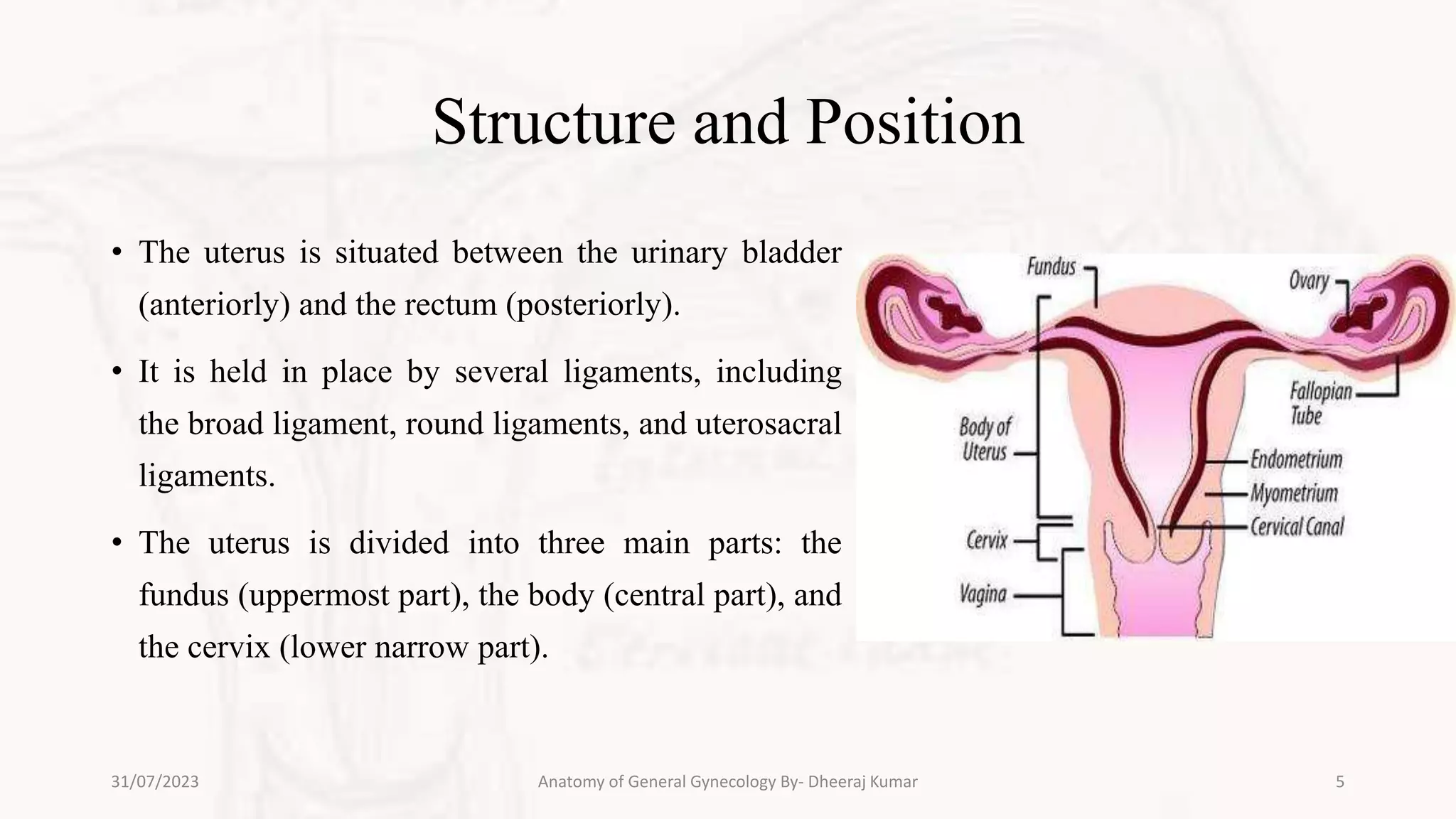
• The uterus is situated between the urinary bladder
(anteriorly) and the rectum (posteriorly).
• It is held in place by several ligaments, including
the broad ligament, round ligaments, and uterosacral
ligaments.
• The uterus is divided into three main parts: the
fundus (uppermost part), the body (central part), and
the cervix (lower narrow part).
31/07/2023 Anatomy of General Gynecology By- Dheeraj Kumar 5
Layers of the Uterus
The uterus has three primary layers, each with specific functions:
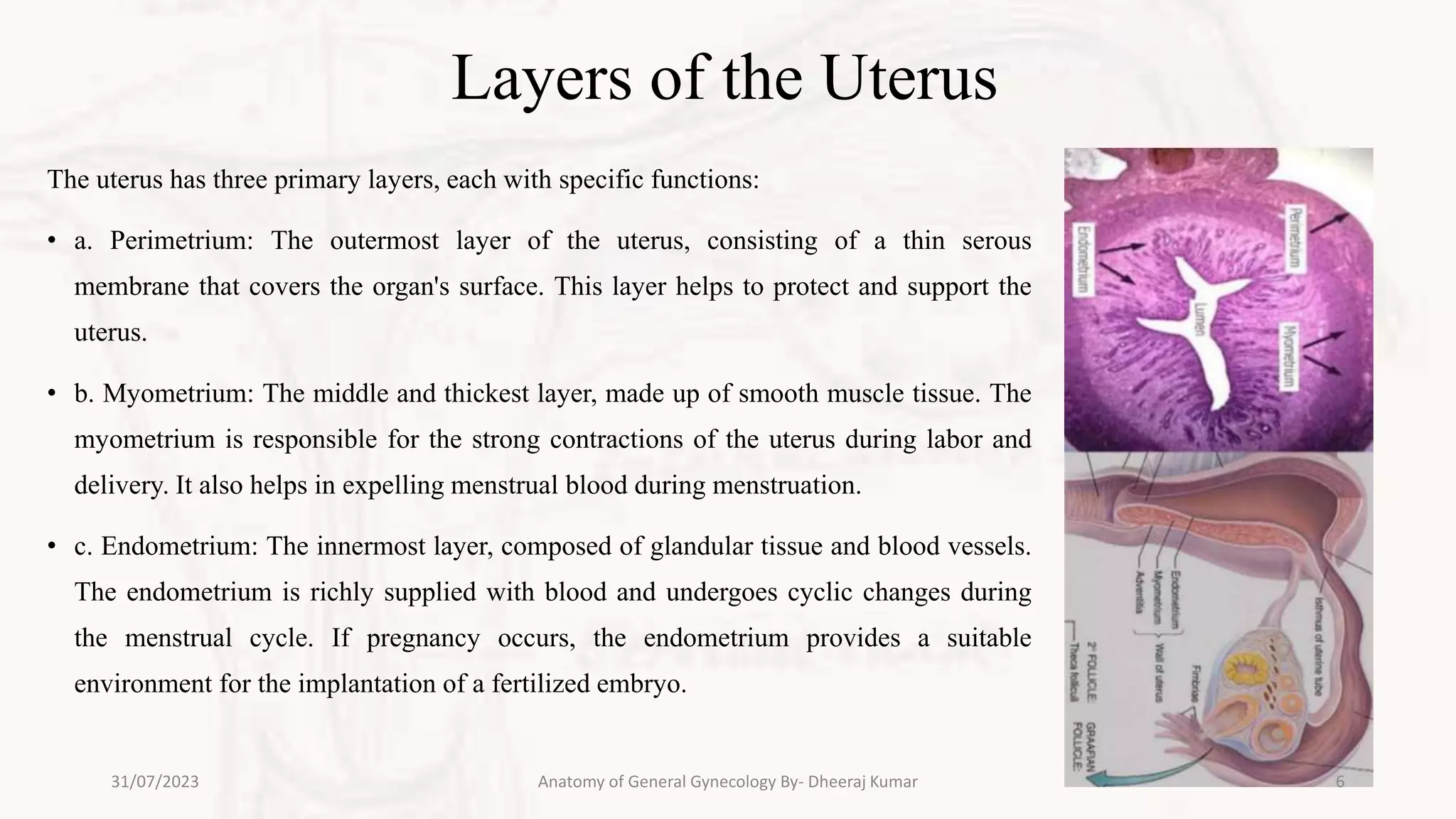
• a. Perimetrium: The outermost layer of the uterus, consisting of a thin serous
membrane that covers the organ's surface. This layer helps to protect and support the
uterus.
• b. Myometrium: The middle and thickest layer, made up of smooth muscle tissue. The
myometrium is responsible for the strong contractions of the uterus during labor and
delivery. It also helps in expelling menstrual blood during menstruation.
• c. Endometrium: The innermost layer, composed of glandular tissue and blood vessels.
The endometrium is richly supplied with blood and undergoes cyclic changes during
the menstrual cycle. If pregnancy occurs, the endometrium provides a suitable
environment for the implantation of a fertilized embryo.
31/07/2023 Anatomy of General Gynecology By- Dheeraj Kumar 6
• Uterine Cavity: The uterine cavity is the space inside the uterus, where a
fertilized egg can implant and develop into a fetus during pregnancy. The cavity
is continuous with the cervical canal, which connects to the vagina.
• Blood Supply: The uterus receives its blood supply from two main arteries:
• Uterine arteries: Branches of the internal iliac arteries that provide oxygenated
blood to the uterus.
• Ovarian arteries: Arise from the abdominal aorta and supply blood to the ovaries,
fallopian tubes, and parts of the uterus.
• Innervation: The uterus is innervated by both sympathetic and parasympathetic
nerves from the autonomic nervous system. These nerves control the contractions
of the uterus during labor and delivery.
31/07/2023 Anatomy of General Gynecology By- Dheeraj Kumar 7
31/07/2023 Anatomy of General Gynecology By- Dheeraj Kumar 8
Functions of the Uterus
• Menstruation: The endometrial lining of the uterus sheds during
menstruation when pregnancy does not occur.
• Pregnancy: If fertilization occurs, the uterus provides a suitable
environment for the implantation and development of the embryo.
• Labor and Delivery: During labor, the myometrium contracts to push the
fetus out through the cervix and vagina.
31/07/2023 Anatomy of General Gynecology By- Dheeraj Kumar 9
Variations and Anomalies
• Bicornuate uterus: Some women may have a congenital anomaly
where the uterus has a heart-shaped appearance due to incomplete
fusion during development.
• Uterine fibroids: Non-cancerous growths in the myometrium that can
cause symptoms like heavy menstrual bleeding and pelvic pain.
31/07/2023 Anatomy of General Gynecology By- Dheeraj Kumar 10
Anatomy of the Ovaries
• The ovaries are a pair of small, oval-
shaped organs located on either side
of the female pelvis. They are
essential components of the female
reproductive system and play a
crucial role in hormone production,
ovulation, and fertility.
31/07/2023 Anatomy of General Gynecology By- Dheeraj Kumar 11
Location and Position
• The ovaries are situated in the lower
abdomen, on either side of the uterus,
near the opening of the fallopian tubes.
• They are held in place by ligaments,
including the ovarian ligament,
suspensory ligament of the ovary, and
broad ligament.
31/07/2023 Anatomy of General Gynecology By- Dheeraj Kumar 12
Structure
• Each ovary is approximately the size of an almond and measures about 3-5
centimetres in length.
• The outer surface of the ovary is covered by a layer of simple cuboidal epithelium
known as the germinal epithelium.
• Beneath the germinal epithelium lies the ovarian cortex, which contains the
majority of ovarian structures.
• The central part of the ovary is called the ovarian medulla, consisting of
connective tissue, blood vessels, and nerves.
31/07/2023 Anatomy of General Gynecology By- Dheeraj Kumar 13
Ovarian Follicles
• The ovarian cortex contains numerous structures called
ovarian follicles. Each follicle consists of an immature
egg (oocyte) surrounded by specialized cells known as
granulosa cells.
• Ovarian follicles go through various stages of
development, starting from primordial follicles (the
most basic form) to mature Graafian follicles (ready for
ovulation).
• During each menstrual cycle, one follicle becomes
dominant and matures to release an egg during
ovulation.
31/07/2023 Anatomy of General Gynecology By- Dheeraj Kumar 14
Ovulation
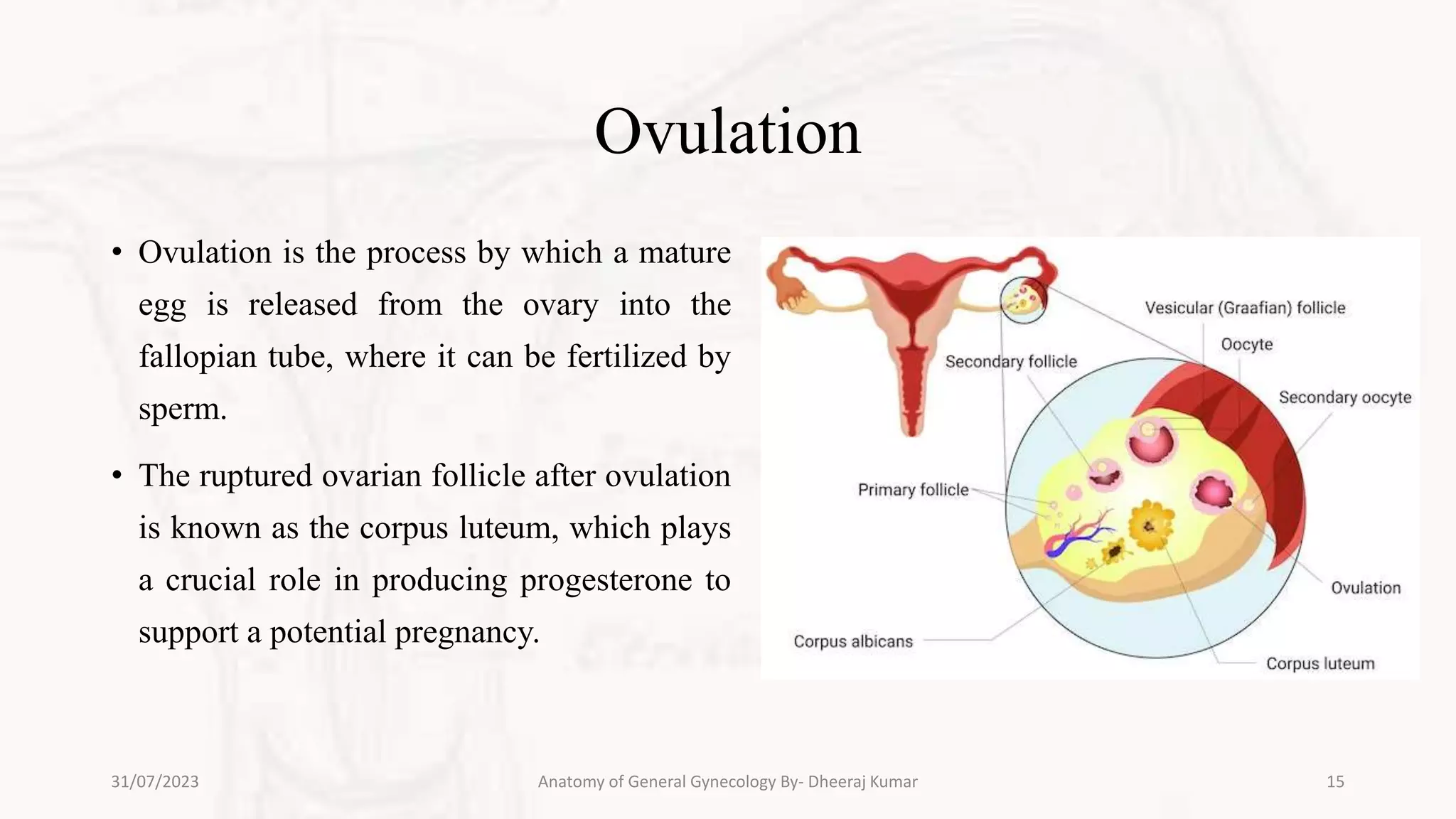
• Ovulation is the process by which a mature
egg is released from the ovary into the
fallopian tube, where it can be fertilized by
sperm.
• The ruptured ovarian follicle after ovulation
is known as the corpus luteum, which plays
a crucial role in producing progesterone to
support a potential pregnancy.
31/07/2023 Anatomy of General Gynecology By- Dheeraj Kumar 15
Blood Supply and Innervation
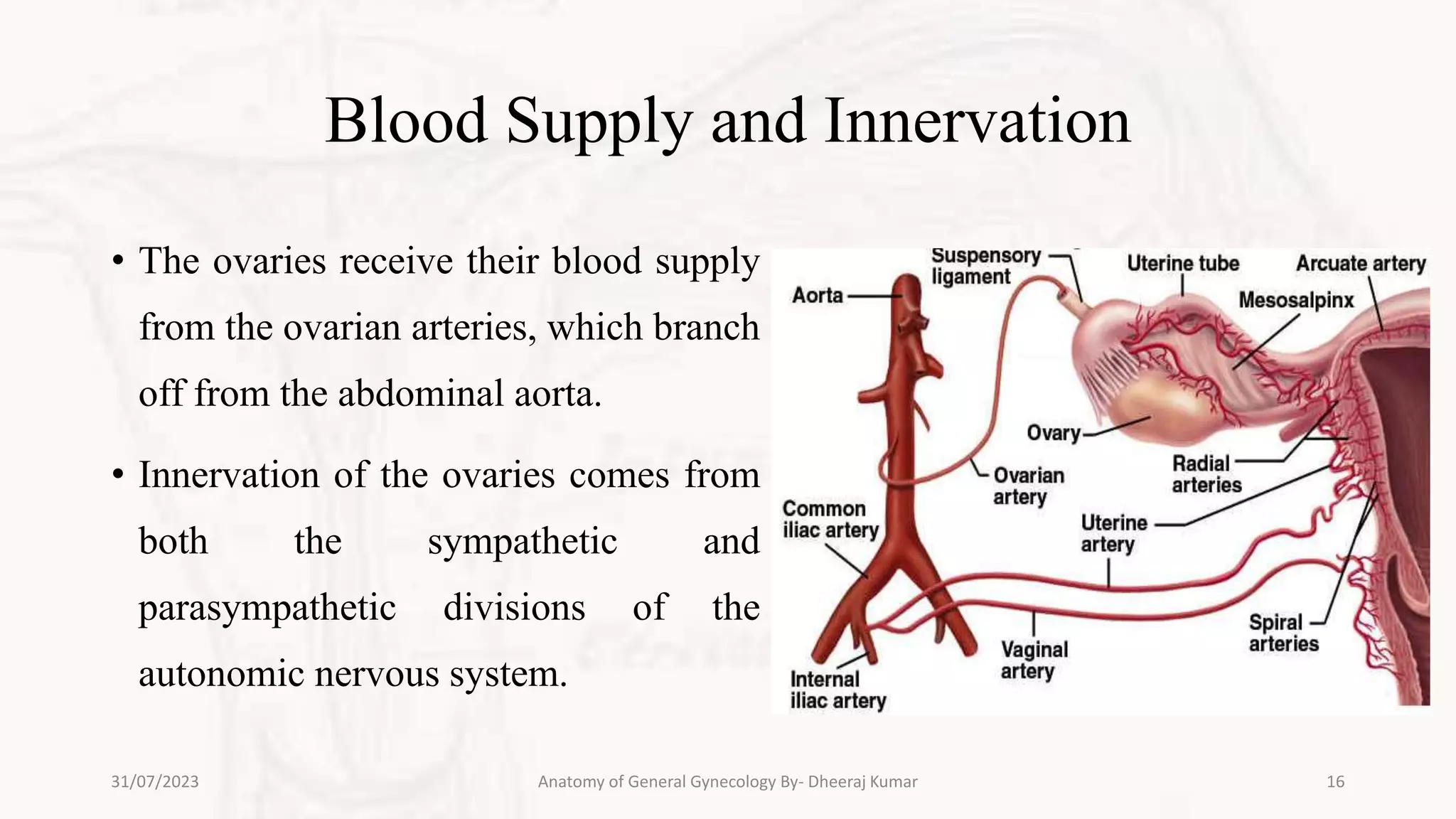
• The ovaries receive their blood supply
from the ovarian arteries, which branch
off from the abdominal aorta.
• Innervation of the ovaries comes from
both the sympathetic and
parasympathetic divisions of the
autonomic nervous system.
31/07/2023 Anatomy of General Gynecology By- Dheeraj Kumar 16
Functions of the Ovaries
• Egg Production: The ovaries produce and release eggs (oocytes)
during the menstrual cycle, allowing for potential fertilization.
• Hormone Production: The ovaries produce hormones, including
oestrogen and progesterone, which play essential roles in regulating
the menstrual cycle, supporting pregnancy, and maintaining overall
reproductive health.
31/07/2023 Anatomy of General Gynecology By- Dheeraj Kumar 17
Hormonal Regulation
• Hormonal regulation of the ovaries is coordinated by the hypothalamus,
pituitary gland, and the ovaries themselves.
• The hypothalamus releases gonadotropin-releasing hormone (GnRH),
which stimulates the pituitary gland to release follicle-stimulating hormone
(FSH) and luteinizing hormone (LH).
• FSH and LH, in turn, stimulate the growth and maturation of ovarian
follicles, leading to ovulation.
31/07/2023 Anatomy of General Gynecology By- Dheeraj Kumar 18
Menopause
• As women age, the number and quality of ovarian follicles decline,
leading to menopause, which marks the end of reproductive capacity.
• During menopause, oestrogen and progesterone levels decrease,
leading to various physical and hormonal changes in the body.
31/07/2023 Anatomy of General Gynecology By- Dheeraj Kumar 19
Fallopian Tubes
• The fallopian tubes, also known as uterine tubes or oviducts, are a pair of slender, tubular structures that
connect the ovaries to the uterus in the female reproductive system. They play a vital role in fertilization, as
well as in the transport of eggs (oocytes) from the ovaries to the uterus. Let's explore their anatomy in detail:
• Structure and Location:
• There are two fallopian tubes, one on each side of the uterus. Each tube is about 10 to 12 centimetres long.
• The fallopian tubes extend laterally from the superior corners of the uterus, forming a connection with the
ovaries.
• They are held in place by the broad ligament, which is a fold of peritoneum that supports and encloses the
reproductive organs.
31/07/2023 Anatomy of General Gynecology By- Dheeraj Kumar 20
Regions of the Fallopian Tubes
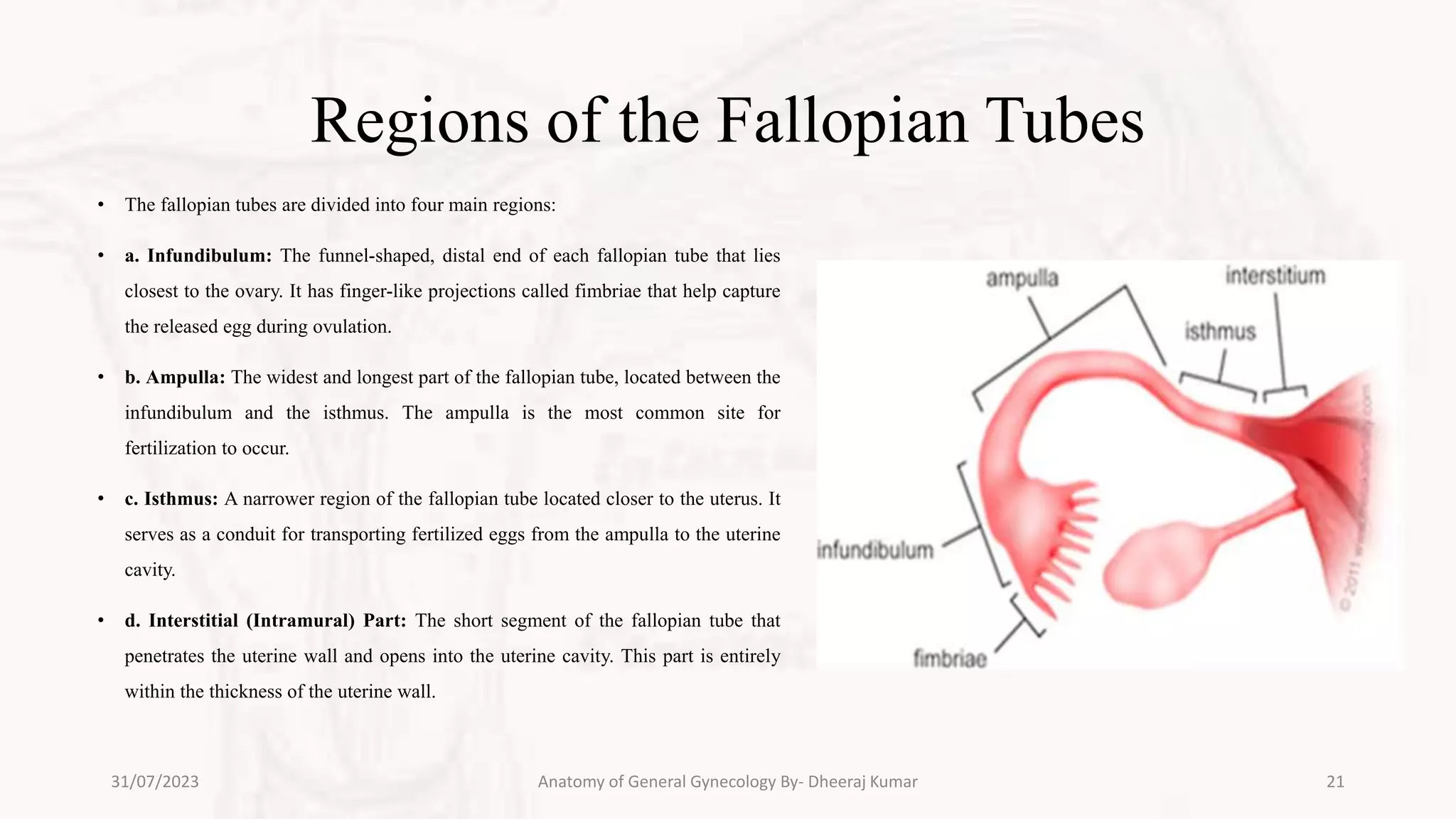
• The fallopian tubes are divided into four main regions:
• a. Infundibulum: The funnel-shaped, distal end of each fallopian tube that lies
closest to the ovary. It has finger-like projections called fimbriae that help capture
the released egg during ovulation.
• b. Ampulla: The widest and longest part of the fallopian tube, located between the
infundibulum and the isthmus. The ampulla is the most common site for
fertilization to occur.
• c. Isthmus: A narrower region of the fallopian tube located closer to the uterus. It
serves as a conduit for transporting fertilized eggs from the ampulla to the uterine
cavity.
• d. Interstitial (Intramural) Part: The short segment of the fallopian tube that
penetrates the uterine wall and opens into the uterine cavity. This part is entirely
within the thickness of the uterine wall.
31/07/2023 Anatomy of General Gynecology By- Dheeraj Kumar 21
Structure of the Fallopian Tube Wall
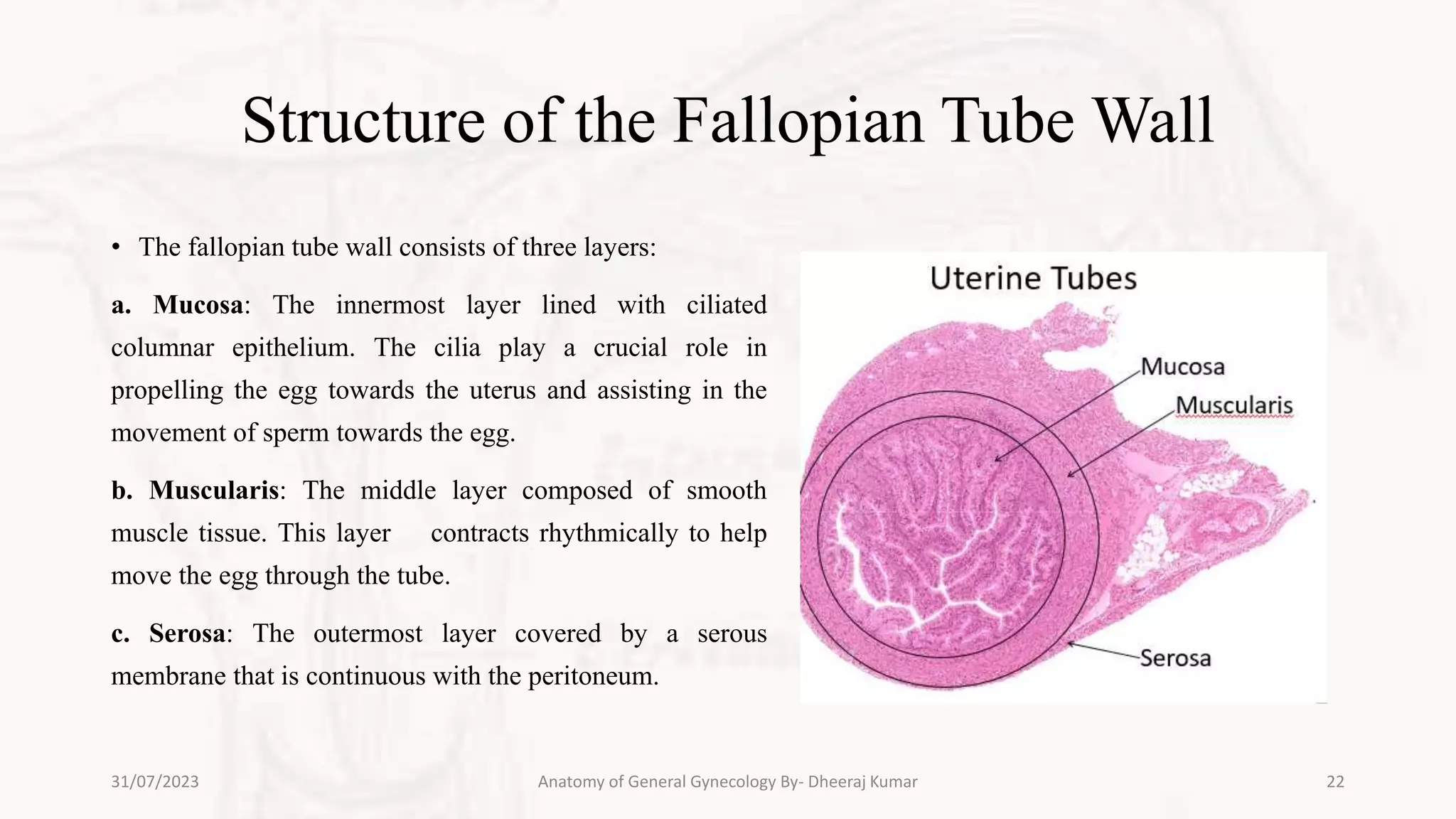
• The fallopian tube wall consists of three layers:
a. Mucosa: The innermost layer lined with ciliated
columnar epithelium. The cilia play a crucial role in
propelling the egg towards the uterus and assisting in the
movement of sperm towards the egg.
b. Muscularis: The middle layer composed of smooth
muscle tissue. This layer contracts rhythmically to help
move the egg through the tube.
c. Serosa: The outermost layer covered by a serous
membrane that is continuous with the peritoneum.
31/07/2023 Anatomy of General Gynecology By- Dheeraj Kumar 22
Egg Transport and Fertilization
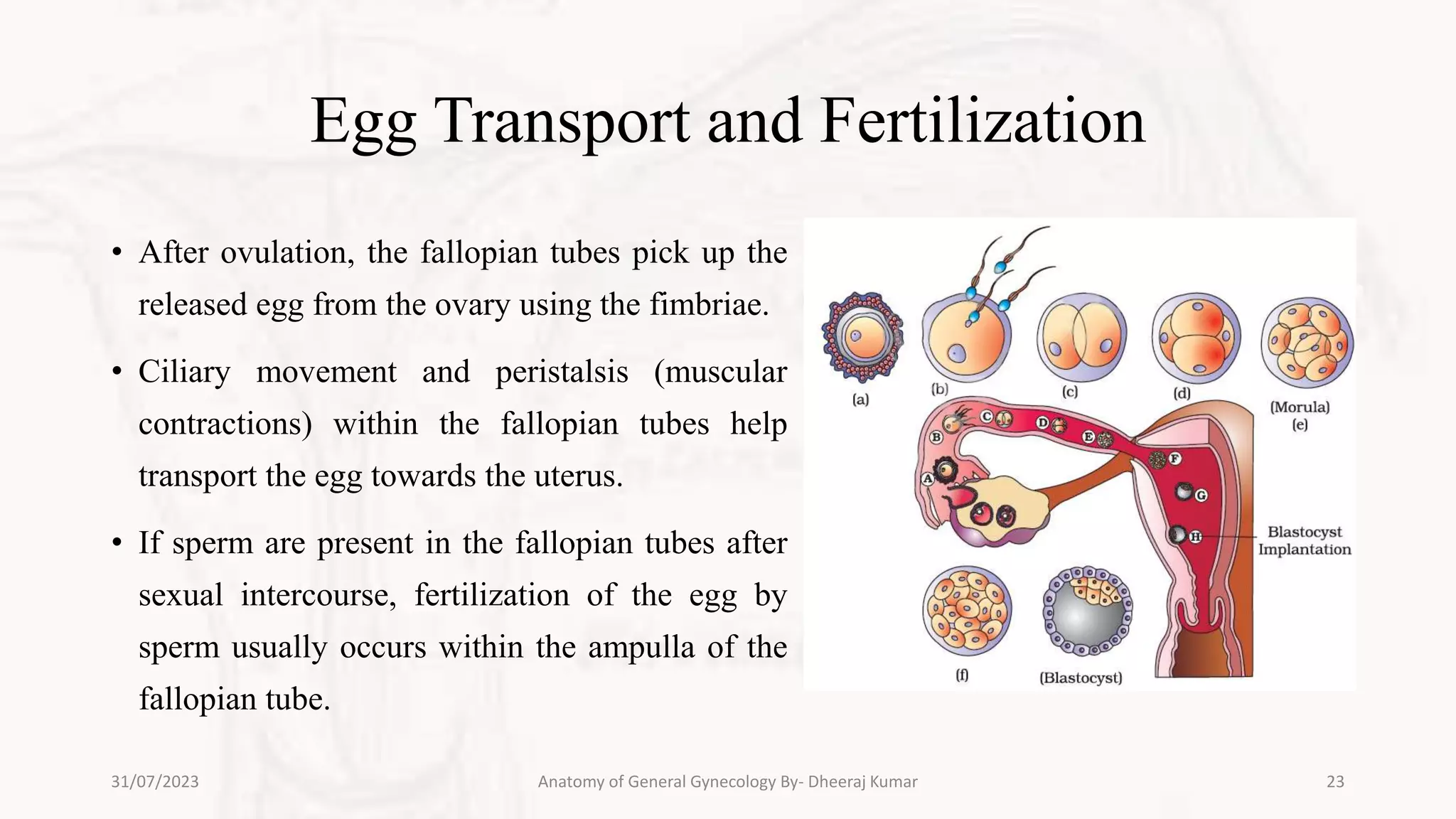
• After ovulation, the fallopian tubes pick up the
released egg from the ovary using the fimbriae.
• Ciliary movement and peristalsis (muscular
contractions) within the fallopian tubes help
transport the egg towards the uterus.
• If sperm are present in the fallopian tubes after
sexual intercourse, fertilization of the egg by
sperm usually occurs within the ampulla of the
fallopian tube.
31/07/2023 Anatomy of General Gynecology By- Dheeraj Kumar 23
Ectopic Pregnancy
• Ectopic pregnancy is a condition
where a fertilized egg implants outside
the uterine cavity, most commonly in
the fallopian tubes.
• An ectopic pregnancy is a medical
emergency, as it can lead to life-
threatening complications if not
diagnosed and treated promptly.
31/07/2023 Anatomy of General Gynecology By- Dheeraj Kumar 24
Vagina
• The vagina is a muscular, tubular structure that forms
part of the female reproductive system. It is located
between the external genitalia (vulva) and the cervix
of the uterus. Here's a brief overview of the anatomy
of the vagina:
• Structure: The vagina is a flexible, fibromuscular
canal that extends from the vaginal opening
(introitus) at the external genitalia to the cervix of the
uterus.
31/07/2023 Anatomy of General Gynecology By- Dheeraj Kumar 25
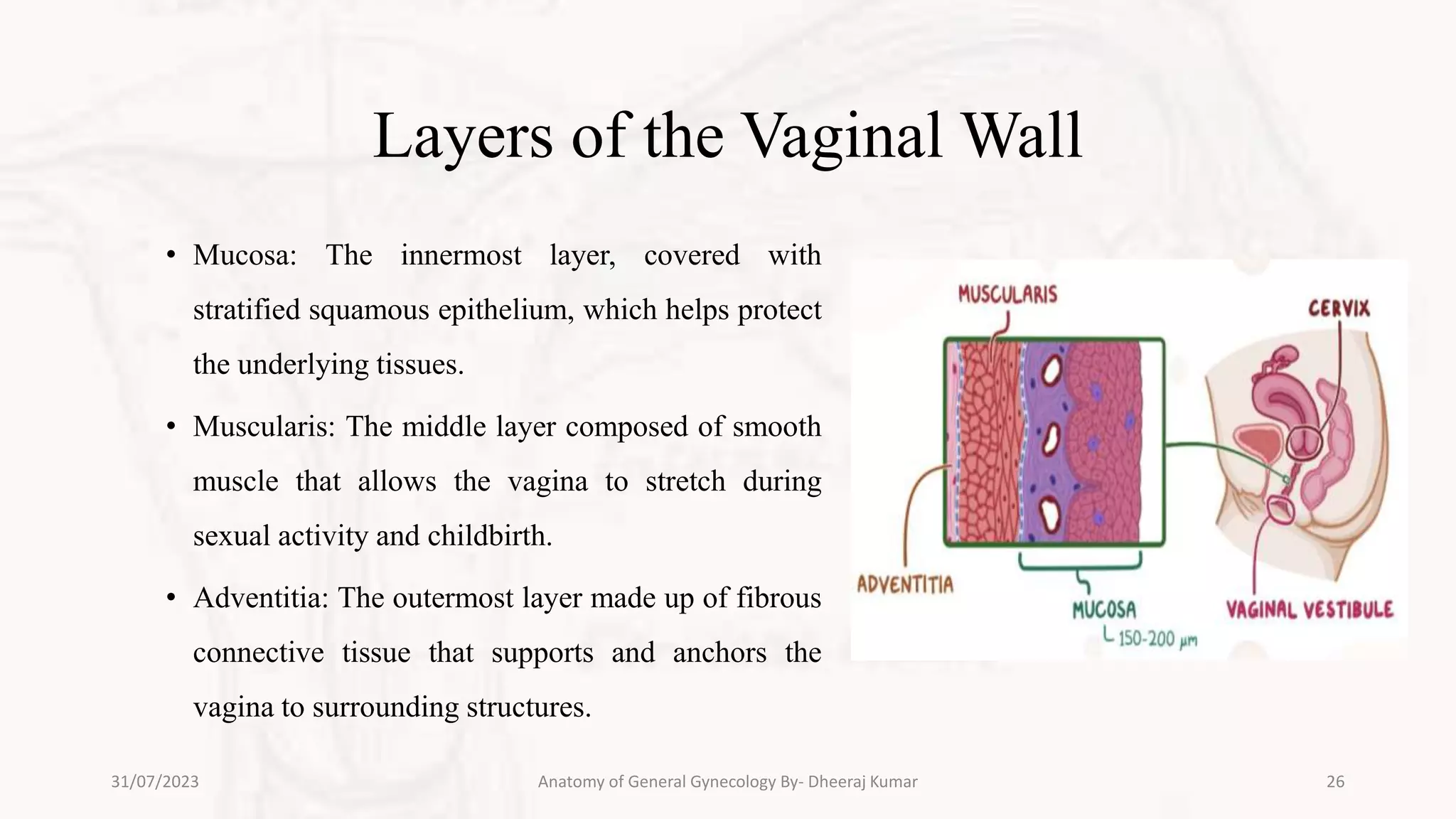
Layers of the Vaginal Wall
• Mucosa: The innermost layer, covered with
stratified squamous epithelium, which helps protect
the underlying tissues.
• Muscularis: The middle layer composed of smooth
muscle that allows the vagina to stretch during
sexual activity and childbirth.
• Adventitia: The outermost layer made up of fibrous
connective tissue that supports and anchors the
vagina to surrounding structures.
31/07/2023 Anatomy of General Gynecology By- Dheeraj Kumar 26
Functions
• Sexual Intercourse: The vagina serves as the receptacle for the penis
during sexual intercourse.
• Birth Canal: During childbirth, the baby passes through the vagina as
it exits the uterus and enters the world.
• Menstrual Flow: The vagina allows menstrual blood and uterine
secretions to exit the body during menstruation.
31/07/2023 Anatomy of General Gynecology By- Dheeraj Kumar 27
• pH and Microbiota: The vagina has a slightly acidic pH, which is maintained by
beneficial bacteria (Lactobacilli). These bacteria help prevent the overgrowth of
harmful microorganisms and maintain a healthy vaginal environment.
• Elasticity: The vaginal walls are highly elastic, which allows the vagina to
accommodate various sizes, such as during sexual intercourse and childbirth, and
then return to its original shape.
• Nerve Supply: The vagina is richly supplied with sensory nerves, making it
sensitive to touch and stimulation.
31/07/2023 Anatomy of General Gynecology By- Dheeraj Kumar 28
Menstrual Cycle
• Explanation of the menstrual cycle and its phases: The
menstrual cycle is a monthly hormonal process that prepares
the body for pregnancy. It typically consists of four phases:
menstruation, follicular phase, ovulation, and luteal phase.
• Hormonal changes during each phase: Describe the role of
hormones, such as estrogen and progesterone, in regulating
the menstrual cycle and preparing the body for conception.
• Common menstrual disorders and their management: Discuss
disorders like irregular periods, dysmenorrhea (painful
periods), and amenorrhea (absence of periods), along with
their potential causes and treatment options.
31/07/2023 Anatomy of General Gynecology By- Dheeraj Kumar 29
Common Gynecological Conditions
• Discussing common gynecological problems such as:
• Polycystic Ovary Syndrome (PCOS): Explain the hormonal imbalances and clinical features
associated with PCOS, along with its management and long-term implications.
• Endometriosis: Describe the condition where endometrial tissue grows outside the uterus, leading to
pain and fertility issues. Discuss treatment options, including medications and surgery.
• Fibroids: Discuss uterine fibroids, their types, symptoms, and treatment options, including medication
and surgical interventions.
• Pelvic Inflammatory Disease (PID): Explain the infection of the female reproductive organs and its
complications. Emphasize the importance of early diagnosis and treatment.
• Menopause and Perimenopause: Explain the natural process of menopause and the symptoms
experienced during perimenopause. Discuss management options and lifestyle changes.
31/07/2023 Anatomy of General Gynecology By- Dheeraj Kumar 30
Gynecological Emergencies
• Identifying and managing gynecological emergencies: Describe critical
situations such as ectopic pregnancy (a pregnancy outside the uterus),
ovarian torsion (twisting of the ovary), and acute pelvic inflammatory
disease (PID).
• Symptoms and urgent interventions: Highlight the symptoms associated
with each emergency and the immediate medical actions required to
stabilize the patient.
31/07/2023 Anatomy of General Gynecology By- Dheeraj Kumar 31
Cultural Sensitivity in Gynecology
• Understanding the importance of cultural sensitivity in patient care: Emphasize the
significance of respecting cultural beliefs, practices, and traditions when providing
gynecological care to diverse populations.
• Addressing cultural barriers in gynecological healthcare: Discuss potential challenges that
may arise due to cultural differences and how healthcare professionals can overcome
these barriers.
• Strategies to improve cross-cultural communication: Provide practical tips for effective
communication and building trust with patients from different cultural backgrounds.
31/07/2023 Anatomy of General Gynecology By- Dheeraj Kumar 32
Summary of Anatomy of General Gynecology
• General Gynecology encompasses the study of the female reproductive system and its associated structures. Key
anatomical components include the uterus, ovaries, fallopian tubes, vagina, and external genitalia (vulva).
• The uterus is a pear-shaped organ with three layers: Perimetrium, myometrium, and endometrium. It plays a central
role in menstruation, pregnancy, and childbirth. The ovaries are paired organs responsible for egg production and
hormone production (estrogen and progesterone).
• The fallopian tubes connect the ovaries to the uterus and serve as pathways for egg transport and fertilization. The
vagina is a muscular canal that acts as the birth canal during childbirth and facilitates sexual intercourse.
Understanding the anatomy of general Gynecology is crucial for medical students to diagnose and manage various
gynecological conditions, promote women's reproductive health, and provide comprehensive care to female patients.
31/07/2023 Anatomy of General Gynecology By- Dheeraj Kumar 33
References
• Williams Gynecology" by Barbara L. Hoffman, John O. Schorge, and Karen D. Bradshaw.
• "Beckmann and Ling's Obstetrics and Gynecology" by Robert Casanova, Frank Ling, and Barbara
Hoffman.
• "Novak's Gynecology" by Jonathan S. Berek.
• "Comprehensive Gynecology" by Gretchen M. Lentz, Rogerio A. Lobo, David M. Gershenson,
and Vern L. Katz.
• "Danforth's Obstetrics and Gynecology" by Ronald S. Gibbs, Beth Y. Karlan, Arthur F. Haney, and
Ingrid Nygaard.
31/07/2023 Anatomy of General Gynecology By- Dheeraj Kumar 34
31/07/2023 Anatomy of General Gynecology By- Dheeraj Kumar 35

anatomy of general gynecology.pptx

  • 1.
    Anatomy of General Gynecology Presenter:Dr. Dheeraj Kumar MRIT, Ph.D. (Radiology and Imaging) Assistant Professor Medical Radiology and Imaging Technology School of Health Sciences, CSJM University, Kanpur 31/07/2023 Anatomy of General Gynecology By- Dheeraj Kumar 1
  • 2.
    Definition of Gynecology •Gynecology is the medical specialty that focuses on the health and well- being of the female reproductive system, including the uterus, ovaries, fallopian tubes, vagina, and associated structures. • Importance of Gynecology in Women's Health: Gynaecologists play a crucial role in diagnosing and treating various gynecological conditions, promoting reproductive health, providing family planning options, managing pregnancy and childbirth, and addressing women's health concerns throughout different life stages. 31/07/2023 Anatomy of General Gynecology By- Dheeraj Kumar 2
  • 3.
    Anatomy of theFemale Reproductive System • Overview of the female reproductive organs: The female reproductive system consists of internal and external structures, including the ovaries, fallopian tubes, uterus, cervix, and vagina. • Detailed explanation of the uterus, ovaries, fallopian tubes, and vagina: Provide information on the functions and roles of each organ in the reproductive process. • Diagrams and visuals: Include labeled diagrams of the female reproductive system to aid in understanding its anatomy. 31/07/2023 Anatomy of General Gynecology By- Dheeraj Kumar 3
  • 4.
    Anatomy of theUterus • The uterus, also known as the womb, is a pear-shaped, hollow organ located in the female pelvis. It is a crucial component of the female reproductive system and plays a central role in menstruation, pregnancy, and childbirth. Let's explore its anatomy in detail: 31/07/2023 Anatomy of General Gynecology By- Dheeraj Kumar 4
  • 5.
    Structure and Position •The uterus is situated between the urinary bladder (anteriorly) and the rectum (posteriorly). • It is held in place by several ligaments, including the broad ligament, round ligaments, and uterosacral ligaments. • The uterus is divided into three main parts: the fundus (uppermost part), the body (central part), and the cervix (lower narrow part). 31/07/2023 Anatomy of General Gynecology By- Dheeraj Kumar 5
  • 6.
    Layers of theUterus The uterus has three primary layers, each with specific functions: • a. Perimetrium: The outermost layer of the uterus, consisting of a thin serous membrane that covers the organ's surface. This layer helps to protect and support the uterus. • b. Myometrium: The middle and thickest layer, made up of smooth muscle tissue. The myometrium is responsible for the strong contractions of the uterus during labor and delivery. It also helps in expelling menstrual blood during menstruation. • c. Endometrium: The innermost layer, composed of glandular tissue and blood vessels. The endometrium is richly supplied with blood and undergoes cyclic changes during the menstrual cycle. If pregnancy occurs, the endometrium provides a suitable environment for the implantation of a fertilized embryo. 31/07/2023 Anatomy of General Gynecology By- Dheeraj Kumar 6
  • 7.
    • Uterine Cavity:The uterine cavity is the space inside the uterus, where a fertilized egg can implant and develop into a fetus during pregnancy. The cavity is continuous with the cervical canal, which connects to the vagina. • Blood Supply: The uterus receives its blood supply from two main arteries: • Uterine arteries: Branches of the internal iliac arteries that provide oxygenated blood to the uterus. • Ovarian arteries: Arise from the abdominal aorta and supply blood to the ovaries, fallopian tubes, and parts of the uterus. • Innervation: The uterus is innervated by both sympathetic and parasympathetic nerves from the autonomic nervous system. These nerves control the contractions of the uterus during labor and delivery. 31/07/2023 Anatomy of General Gynecology By- Dheeraj Kumar 7
  • 8.
    31/07/2023 Anatomy ofGeneral Gynecology By- Dheeraj Kumar 8
  • 9.
    Functions of theUterus • Menstruation: The endometrial lining of the uterus sheds during menstruation when pregnancy does not occur. • Pregnancy: If fertilization occurs, the uterus provides a suitable environment for the implantation and development of the embryo. • Labor and Delivery: During labor, the myometrium contracts to push the fetus out through the cervix and vagina. 31/07/2023 Anatomy of General Gynecology By- Dheeraj Kumar 9
  • 10.
    Variations and Anomalies •Bicornuate uterus: Some women may have a congenital anomaly where the uterus has a heart-shaped appearance due to incomplete fusion during development. • Uterine fibroids: Non-cancerous growths in the myometrium that can cause symptoms like heavy menstrual bleeding and pelvic pain. 31/07/2023 Anatomy of General Gynecology By- Dheeraj Kumar 10
  • 11.
    Anatomy of theOvaries • The ovaries are a pair of small, oval- shaped organs located on either side of the female pelvis. They are essential components of the female reproductive system and play a crucial role in hormone production, ovulation, and fertility. 31/07/2023 Anatomy of General Gynecology By- Dheeraj Kumar 11
  • 12.
    Location and Position •The ovaries are situated in the lower abdomen, on either side of the uterus, near the opening of the fallopian tubes. • They are held in place by ligaments, including the ovarian ligament, suspensory ligament of the ovary, and broad ligament. 31/07/2023 Anatomy of General Gynecology By- Dheeraj Kumar 12
  • 13.
    Structure • Each ovaryis approximately the size of an almond and measures about 3-5 centimetres in length. • The outer surface of the ovary is covered by a layer of simple cuboidal epithelium known as the germinal epithelium. • Beneath the germinal epithelium lies the ovarian cortex, which contains the majority of ovarian structures. • The central part of the ovary is called the ovarian medulla, consisting of connective tissue, blood vessels, and nerves. 31/07/2023 Anatomy of General Gynecology By- Dheeraj Kumar 13
  • 14.
    Ovarian Follicles • Theovarian cortex contains numerous structures called ovarian follicles. Each follicle consists of an immature egg (oocyte) surrounded by specialized cells known as granulosa cells. • Ovarian follicles go through various stages of development, starting from primordial follicles (the most basic form) to mature Graafian follicles (ready for ovulation). • During each menstrual cycle, one follicle becomes dominant and matures to release an egg during ovulation. 31/07/2023 Anatomy of General Gynecology By- Dheeraj Kumar 14
  • 15.
    Ovulation • Ovulation isthe process by which a mature egg is released from the ovary into the fallopian tube, where it can be fertilized by sperm. • The ruptured ovarian follicle after ovulation is known as the corpus luteum, which plays a crucial role in producing progesterone to support a potential pregnancy. 31/07/2023 Anatomy of General Gynecology By- Dheeraj Kumar 15
  • 16.
    Blood Supply andInnervation • The ovaries receive their blood supply from the ovarian arteries, which branch off from the abdominal aorta. • Innervation of the ovaries comes from both the sympathetic and parasympathetic divisions of the autonomic nervous system. 31/07/2023 Anatomy of General Gynecology By- Dheeraj Kumar 16
  • 17.
    Functions of theOvaries • Egg Production: The ovaries produce and release eggs (oocytes) during the menstrual cycle, allowing for potential fertilization. • Hormone Production: The ovaries produce hormones, including oestrogen and progesterone, which play essential roles in regulating the menstrual cycle, supporting pregnancy, and maintaining overall reproductive health. 31/07/2023 Anatomy of General Gynecology By- Dheeraj Kumar 17
  • 18.
    Hormonal Regulation • Hormonalregulation of the ovaries is coordinated by the hypothalamus, pituitary gland, and the ovaries themselves. • The hypothalamus releases gonadotropin-releasing hormone (GnRH), which stimulates the pituitary gland to release follicle-stimulating hormone (FSH) and luteinizing hormone (LH). • FSH and LH, in turn, stimulate the growth and maturation of ovarian follicles, leading to ovulation. 31/07/2023 Anatomy of General Gynecology By- Dheeraj Kumar 18
  • 19.
    Menopause • As womenage, the number and quality of ovarian follicles decline, leading to menopause, which marks the end of reproductive capacity. • During menopause, oestrogen and progesterone levels decrease, leading to various physical and hormonal changes in the body. 31/07/2023 Anatomy of General Gynecology By- Dheeraj Kumar 19
  • 20.
    Fallopian Tubes • Thefallopian tubes, also known as uterine tubes or oviducts, are a pair of slender, tubular structures that connect the ovaries to the uterus in the female reproductive system. They play a vital role in fertilization, as well as in the transport of eggs (oocytes) from the ovaries to the uterus. Let's explore their anatomy in detail: • Structure and Location: • There are two fallopian tubes, one on each side of the uterus. Each tube is about 10 to 12 centimetres long. • The fallopian tubes extend laterally from the superior corners of the uterus, forming a connection with the ovaries. • They are held in place by the broad ligament, which is a fold of peritoneum that supports and encloses the reproductive organs. 31/07/2023 Anatomy of General Gynecology By- Dheeraj Kumar 20
  • 21.
    Regions of theFallopian Tubes • The fallopian tubes are divided into four main regions: • a. Infundibulum: The funnel-shaped, distal end of each fallopian tube that lies closest to the ovary. It has finger-like projections called fimbriae that help capture the released egg during ovulation. • b. Ampulla: The widest and longest part of the fallopian tube, located between the infundibulum and the isthmus. The ampulla is the most common site for fertilization to occur. • c. Isthmus: A narrower region of the fallopian tube located closer to the uterus. It serves as a conduit for transporting fertilized eggs from the ampulla to the uterine cavity. • d. Interstitial (Intramural) Part: The short segment of the fallopian tube that penetrates the uterine wall and opens into the uterine cavity. This part is entirely within the thickness of the uterine wall. 31/07/2023 Anatomy of General Gynecology By- Dheeraj Kumar 21
  • 22.
    Structure of theFallopian Tube Wall • The fallopian tube wall consists of three layers: a. Mucosa: The innermost layer lined with ciliated columnar epithelium. The cilia play a crucial role in propelling the egg towards the uterus and assisting in the movement of sperm towards the egg. b. Muscularis: The middle layer composed of smooth muscle tissue. This layer contracts rhythmically to help move the egg through the tube. c. Serosa: The outermost layer covered by a serous membrane that is continuous with the peritoneum. 31/07/2023 Anatomy of General Gynecology By- Dheeraj Kumar 22
  • 23.
    Egg Transport andFertilization • After ovulation, the fallopian tubes pick up the released egg from the ovary using the fimbriae. • Ciliary movement and peristalsis (muscular contractions) within the fallopian tubes help transport the egg towards the uterus. • If sperm are present in the fallopian tubes after sexual intercourse, fertilization of the egg by sperm usually occurs within the ampulla of the fallopian tube. 31/07/2023 Anatomy of General Gynecology By- Dheeraj Kumar 23
  • 24.
    Ectopic Pregnancy • Ectopicpregnancy is a condition where a fertilized egg implants outside the uterine cavity, most commonly in the fallopian tubes. • An ectopic pregnancy is a medical emergency, as it can lead to life- threatening complications if not diagnosed and treated promptly. 31/07/2023 Anatomy of General Gynecology By- Dheeraj Kumar 24
  • 25.
    Vagina • The vaginais a muscular, tubular structure that forms part of the female reproductive system. It is located between the external genitalia (vulva) and the cervix of the uterus. Here's a brief overview of the anatomy of the vagina: • Structure: The vagina is a flexible, fibromuscular canal that extends from the vaginal opening (introitus) at the external genitalia to the cervix of the uterus. 31/07/2023 Anatomy of General Gynecology By- Dheeraj Kumar 25
  • 26.
    Layers of theVaginal Wall • Mucosa: The innermost layer, covered with stratified squamous epithelium, which helps protect the underlying tissues. • Muscularis: The middle layer composed of smooth muscle that allows the vagina to stretch during sexual activity and childbirth. • Adventitia: The outermost layer made up of fibrous connective tissue that supports and anchors the vagina to surrounding structures. 31/07/2023 Anatomy of General Gynecology By- Dheeraj Kumar 26
  • 27.
    Functions • Sexual Intercourse:The vagina serves as the receptacle for the penis during sexual intercourse. • Birth Canal: During childbirth, the baby passes through the vagina as it exits the uterus and enters the world. • Menstrual Flow: The vagina allows menstrual blood and uterine secretions to exit the body during menstruation. 31/07/2023 Anatomy of General Gynecology By- Dheeraj Kumar 27
  • 28.
    • pH andMicrobiota: The vagina has a slightly acidic pH, which is maintained by beneficial bacteria (Lactobacilli). These bacteria help prevent the overgrowth of harmful microorganisms and maintain a healthy vaginal environment. • Elasticity: The vaginal walls are highly elastic, which allows the vagina to accommodate various sizes, such as during sexual intercourse and childbirth, and then return to its original shape. • Nerve Supply: The vagina is richly supplied with sensory nerves, making it sensitive to touch and stimulation. 31/07/2023 Anatomy of General Gynecology By- Dheeraj Kumar 28
  • 29.
    Menstrual Cycle • Explanationof the menstrual cycle and its phases: The menstrual cycle is a monthly hormonal process that prepares the body for pregnancy. It typically consists of four phases: menstruation, follicular phase, ovulation, and luteal phase. • Hormonal changes during each phase: Describe the role of hormones, such as estrogen and progesterone, in regulating the menstrual cycle and preparing the body for conception. • Common menstrual disorders and their management: Discuss disorders like irregular periods, dysmenorrhea (painful periods), and amenorrhea (absence of periods), along with their potential causes and treatment options. 31/07/2023 Anatomy of General Gynecology By- Dheeraj Kumar 29
  • 30.
    Common Gynecological Conditions •Discussing common gynecological problems such as: • Polycystic Ovary Syndrome (PCOS): Explain the hormonal imbalances and clinical features associated with PCOS, along with its management and long-term implications. • Endometriosis: Describe the condition where endometrial tissue grows outside the uterus, leading to pain and fertility issues. Discuss treatment options, including medications and surgery. • Fibroids: Discuss uterine fibroids, their types, symptoms, and treatment options, including medication and surgical interventions. • Pelvic Inflammatory Disease (PID): Explain the infection of the female reproductive organs and its complications. Emphasize the importance of early diagnosis and treatment. • Menopause and Perimenopause: Explain the natural process of menopause and the symptoms experienced during perimenopause. Discuss management options and lifestyle changes. 31/07/2023 Anatomy of General Gynecology By- Dheeraj Kumar 30
  • 31.
    Gynecological Emergencies • Identifyingand managing gynecological emergencies: Describe critical situations such as ectopic pregnancy (a pregnancy outside the uterus), ovarian torsion (twisting of the ovary), and acute pelvic inflammatory disease (PID). • Symptoms and urgent interventions: Highlight the symptoms associated with each emergency and the immediate medical actions required to stabilize the patient. 31/07/2023 Anatomy of General Gynecology By- Dheeraj Kumar 31
  • 32.
    Cultural Sensitivity inGynecology • Understanding the importance of cultural sensitivity in patient care: Emphasize the significance of respecting cultural beliefs, practices, and traditions when providing gynecological care to diverse populations. • Addressing cultural barriers in gynecological healthcare: Discuss potential challenges that may arise due to cultural differences and how healthcare professionals can overcome these barriers. • Strategies to improve cross-cultural communication: Provide practical tips for effective communication and building trust with patients from different cultural backgrounds. 31/07/2023 Anatomy of General Gynecology By- Dheeraj Kumar 32
  • 33.
    Summary of Anatomyof General Gynecology • General Gynecology encompasses the study of the female reproductive system and its associated structures. Key anatomical components include the uterus, ovaries, fallopian tubes, vagina, and external genitalia (vulva). • The uterus is a pear-shaped organ with three layers: Perimetrium, myometrium, and endometrium. It plays a central role in menstruation, pregnancy, and childbirth. The ovaries are paired organs responsible for egg production and hormone production (estrogen and progesterone). • The fallopian tubes connect the ovaries to the uterus and serve as pathways for egg transport and fertilization. The vagina is a muscular canal that acts as the birth canal during childbirth and facilitates sexual intercourse. Understanding the anatomy of general Gynecology is crucial for medical students to diagnose and manage various gynecological conditions, promote women's reproductive health, and provide comprehensive care to female patients. 31/07/2023 Anatomy of General Gynecology By- Dheeraj Kumar 33
  • 34.
    References • Williams Gynecology"by Barbara L. Hoffman, John O. Schorge, and Karen D. Bradshaw. • "Beckmann and Ling's Obstetrics and Gynecology" by Robert Casanova, Frank Ling, and Barbara Hoffman. • "Novak's Gynecology" by Jonathan S. Berek. • "Comprehensive Gynecology" by Gretchen M. Lentz, Rogerio A. Lobo, David M. Gershenson, and Vern L. Katz. • "Danforth's Obstetrics and Gynecology" by Ronald S. Gibbs, Beth Y. Karlan, Arthur F. Haney, and Ingrid Nygaard. 31/07/2023 Anatomy of General Gynecology By- Dheeraj Kumar 34
  • 35.
    31/07/2023 Anatomy ofGeneral Gynecology By- Dheeraj Kumar 35