


ENDOMETRIAL POLYP
BY: DR. SANA LODHI
ENDOMETRIAL POLYP
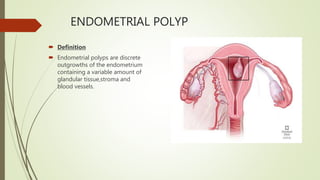
 Definition
 Endometrial polyps are discrete
outgrowths of the endometrium
containing a variable amount of
glandular tissue,stroma and
blood vessels.
RISK FACTORS:
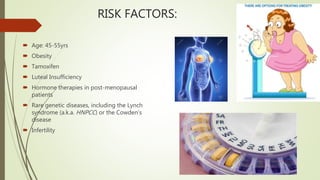
 Age: 45-55yrs
 Obesity
 Tamoxifen
 Luteal Insufficiency
 Hormone therapies in post-menopausal
patients
 Rare genetic diseases, including the Lynch
syndrome (a.k.a. HNPCC) or the Cowden’s
disease
 Infertility
CLINICAL FEATURES
DIAGNOSIS
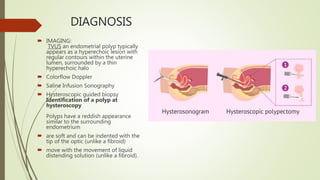
 IMAGING:
TVUS an endometrial polyp typically
appears as a hyperechoic lesion with
regular contours within the uterine
lumen, surrounded by a thin
hyperechoic halo
 Colorflow Doppler
 Saline Infusion Sonography
 Hysteroscopic guided biopsy
Identification of a polyp at
hysteroscopy
Polyps have a reddish appearance
similar to the surrounding
endometrium
 are soft and can be indented with the
tip of the optic (unlike a fibroid)
 move with the movement of liquid
distending solution (unlike a fibroid).
MANAGEMENT
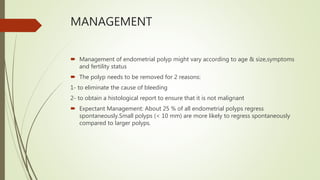
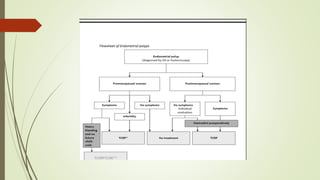
 Management of endometrial polyp might vary according to age & size,symptoms
and fertility status
 The polyp needs to be removed for 2 reasons:
1- to eliminate the cause of bleeding
2- to obtain a histological report to ensure that it is not malignant
 Expectant Management: About 25 % of all endometrial polyps regress
spontaneously.Small polyps (< 10 mm) are more likely to regress spontaneously
compared to larger polyps.
Hysteroscopic Resection
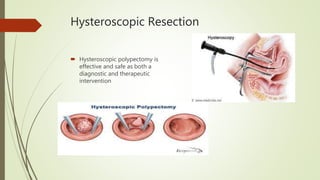
 Hysteroscopic polypectomy is
effective and safe as both a
diagnostic and therapeutic
intervention
Endometrial polyp & Cancer risk
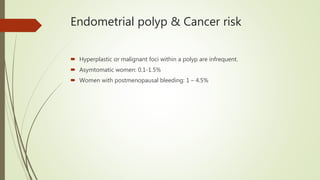
 Hyperplastic or malignant foci within a polyp are infrequent.
 Asymtomatic women: 0.1-1.5%
 Women with postmenopausal bleeding: 1 – 4.5%
THANKS

Endometrial polyp

  • 1.
  • 2.
    ENDOMETRIAL POLYP  Definition Endometrial polyps are discrete outgrowths of the endometrium containing a variable amount of glandular tissue,stroma and blood vessels.
  • 4.
    RISK FACTORS:  Age:45-55yrs  Obesity  Tamoxifen  Luteal Insufficiency  Hormone therapies in post-menopausal patients  Rare genetic diseases, including the Lynch syndrome (a.k.a. HNPCC) or the Cowden’s disease  Infertility
  • 5.
  • 6.
    DIAGNOSIS  IMAGING: TVUS anendometrial polyp typically appears as a hyperechoic lesion with regular contours within the uterine lumen, surrounded by a thin hyperechoic halo  Colorflow Doppler  Saline Infusion Sonography  Hysteroscopic guided biopsy Identification of a polyp at hysteroscopy Polyps have a reddish appearance similar to the surrounding endometrium  are soft and can be indented with the tip of the optic (unlike a fibroid)  move with the movement of liquid distending solution (unlike a fibroid).
  • 7.
    MANAGEMENT  Management ofendometrial polyp might vary according to age & size,symptoms and fertility status  The polyp needs to be removed for 2 reasons: 1- to eliminate the cause of bleeding 2- to obtain a histological report to ensure that it is not malignant  Expectant Management: About 25 % of all endometrial polyps regress spontaneously.Small polyps (< 10 mm) are more likely to regress spontaneously compared to larger polyps.
  • 8.
    Hysteroscopic Resection  Hysteroscopicpolypectomy is effective and safe as both a diagnostic and therapeutic intervention
  • 10.
    Endometrial polyp &Cancer risk  Hyperplastic or malignant foci within a polyp are infrequent.  Asymtomatic women: 0.1-1.5%  Women with postmenopausal bleeding: 1 – 4.5%
  • 11.