ANALYZING POETRY ENGLISH III
MS. CLZIANOSKI
LESSON OBJECTIVES
• Take notes to read and comprehend language of textbooks
• Identify and analyze theme and sound devices
• Understand and analyze form of poetry
• Apply TP-CASTT model for analyzing poetry
THE STRUCTURE OF POETRY
• FORM: In poetry, this refers to the distinctive
ways that the words are arranged on the page.
• GRAPHIC ELEMENTS: The poem’s length and
placement of lines.
• STANZAS: Similar to a paragraph, each stanza
conveys a unified idea and contributes to a
poem’s overall meaning.
FORM
POETIC ELEMENTS
• PROSODY/PROSE: The meter and rhythm of a
poem, as well as other sound devices and
imagery.
• RHYTHM: The power of stressed and
unstressed syllables in each line.
• METER: The pattern of rhythm.
• RHYME SCEME: A regular pattern of rhyme;
rhyme scheme is charted by assigning a letter
of the alphabet to matching end rhymes.
POETIC ELEMENTS
• CATALOGGING: Creating long lists for poetic
or rhetorical effect.
• IMAGERY:
the formation of mental images, figures, or like
nesses of things.
• FREE VERSE: poetry that does not rhyme or
have a regular meter.
• INFERENCE: a conclusion reached on the basis
of evidence and reasoning.
POETIC ELEMENTS
• THEME: the subject of a talk, a piece of writing,
a person's thoughts, or an exhibition; a topic.
• UNIVERSAL THEME: When a theme is relatable
by a wide range of readers.
• TONE: how the author feels about the text.
• MOOD: how you feel about the text.
POETIC ELEMENTS
• AUTHOR’S STYLE: Writing style refers to the
manner in which an author chooses to write to
his or her readers. A style reveals both the
writer's personality and voice, but it also shows
how he or she perceives the audience. The
choice of a conceptual writing style molds the
overall character of the work.
•AUTHOR’S PURPOSE: the reason an author
decides to write about a specific topic. Then,
once a topic is selected, the author must decide
whether his purpose for writing is to inform,
persuade, entertain, or explain his ideas to the
reader.
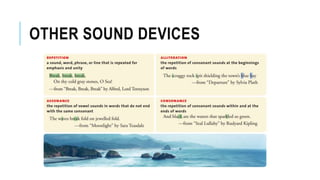
OTHER SOUND DEVICES
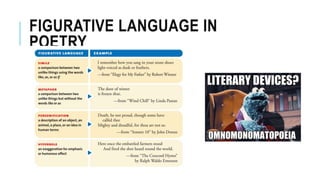
FIGURATIVE LANGUAGE IN
POETRY
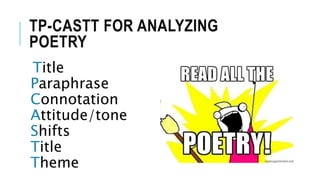
TP-CASTT FOR ANALYZING
POETRY
Title
Paraphrase
Connotation
Attitude/tone
Shifts
Title
Theme
TITLE
Consider the title and make a
prediction about what the poem is
about.
PARAPHRASE
Translate the poem line by line into your
own words on a literal level.
Look for complete thoughts (sentences
may be inverted) and look up unfamiliar
words.
CONNOTATION
Examine the poem for meaning
beyond the literal. Look for
figurative language, imagery, and
sound elements.
ATTITUDE/TONE
Notice the speaker’s tone and
attitude.
Humor? Sarcasm? Awe?
SHIFTS
Note any shifts or changes in
speaker or attitude. Look for key
words, time change, and
punctuation.
TITLE
Examine the title again, this time
on an interpretative level.
What does the title have to do
with the content of the poem?
THEME
Briefly state in your own words
what the poem is about (subject),
then what the poet is saying about
the subject (theme).

ANALYZING POETRY

  • 1.
    ANALYZING POETRY ENGLISHIII MS. CLZIANOSKI
  • 2.
    LESSON OBJECTIVES • Takenotes to read and comprehend language of textbooks • Identify and analyze theme and sound devices • Understand and analyze form of poetry • Apply TP-CASTT model for analyzing poetry
  • 3.
    THE STRUCTURE OFPOETRY • FORM: In poetry, this refers to the distinctive ways that the words are arranged on the page. • GRAPHIC ELEMENTS: The poem’s length and placement of lines. • STANZAS: Similar to a paragraph, each stanza conveys a unified idea and contributes to a poem’s overall meaning.
  • 4.
  • 5.
    POETIC ELEMENTS • PROSODY/PROSE:The meter and rhythm of a poem, as well as other sound devices and imagery. • RHYTHM: The power of stressed and unstressed syllables in each line. • METER: The pattern of rhythm. • RHYME SCEME: A regular pattern of rhyme; rhyme scheme is charted by assigning a letter of the alphabet to matching end rhymes.
  • 6.
    POETIC ELEMENTS • CATALOGGING:Creating long lists for poetic or rhetorical effect. • IMAGERY: the formation of mental images, figures, or like nesses of things. • FREE VERSE: poetry that does not rhyme or have a regular meter. • INFERENCE: a conclusion reached on the basis of evidence and reasoning.
  • 7.
    POETIC ELEMENTS • THEME:the subject of a talk, a piece of writing, a person's thoughts, or an exhibition; a topic. • UNIVERSAL THEME: When a theme is relatable by a wide range of readers. • TONE: how the author feels about the text. • MOOD: how you feel about the text.
  • 8.
    POETIC ELEMENTS • AUTHOR’SSTYLE: Writing style refers to the manner in which an author chooses to write to his or her readers. A style reveals both the writer's personality and voice, but it also shows how he or she perceives the audience. The choice of a conceptual writing style molds the overall character of the work. •AUTHOR’S PURPOSE: the reason an author decides to write about a specific topic. Then, once a topic is selected, the author must decide whether his purpose for writing is to inform, persuade, entertain, or explain his ideas to the reader.
  • 9.
  • 10.
  • 11.
  • 12.
    TITLE Consider the titleand make a prediction about what the poem is about.
  • 13.
    PARAPHRASE Translate the poemline by line into your own words on a literal level. Look for complete thoughts (sentences may be inverted) and look up unfamiliar words.
  • 14.
    CONNOTATION Examine the poemfor meaning beyond the literal. Look for figurative language, imagery, and sound elements.
  • 15.
    ATTITUDE/TONE Notice the speaker’stone and attitude. Humor? Sarcasm? Awe?
  • 16.
    SHIFTS Note any shiftsor changes in speaker or attitude. Look for key words, time change, and punctuation.
  • 17.
    TITLE Examine the titleagain, this time on an interpretative level. What does the title have to do with the content of the poem?
  • 18.
    THEME Briefly state inyour own words what the poem is about (subject), then what the poet is saying about the subject (theme).