Double Page Spread-Draft-SLIDESHARE
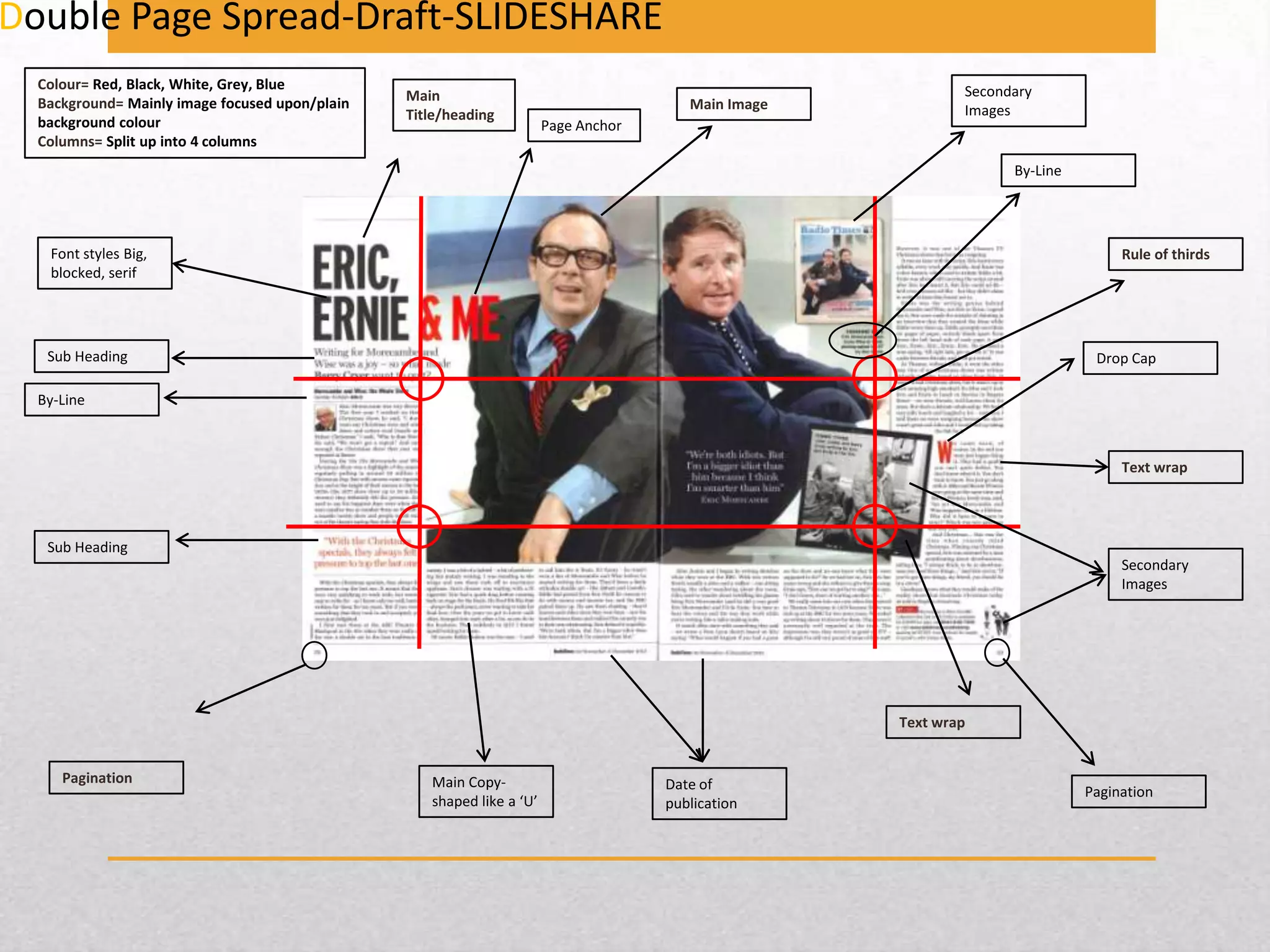
Colour= Red, Black, White, Grey, Blue
Background= Mainly image focused upon/plain
background colour
Columns= Split up into 4 columns

Main
Title/heading

Main Image
Page Anchor

Secondary
Images

By-Line

Font styles Big,
blocked, serif

Rule of thirds

Sub Heading

Drop Cap

By-Line

Text wrap

Sub Heading
Secondary
Images

Text wrap
Pagination

Main Copyshaped like a ‘U’

Date of
publication

Pagination
Double Page Spread
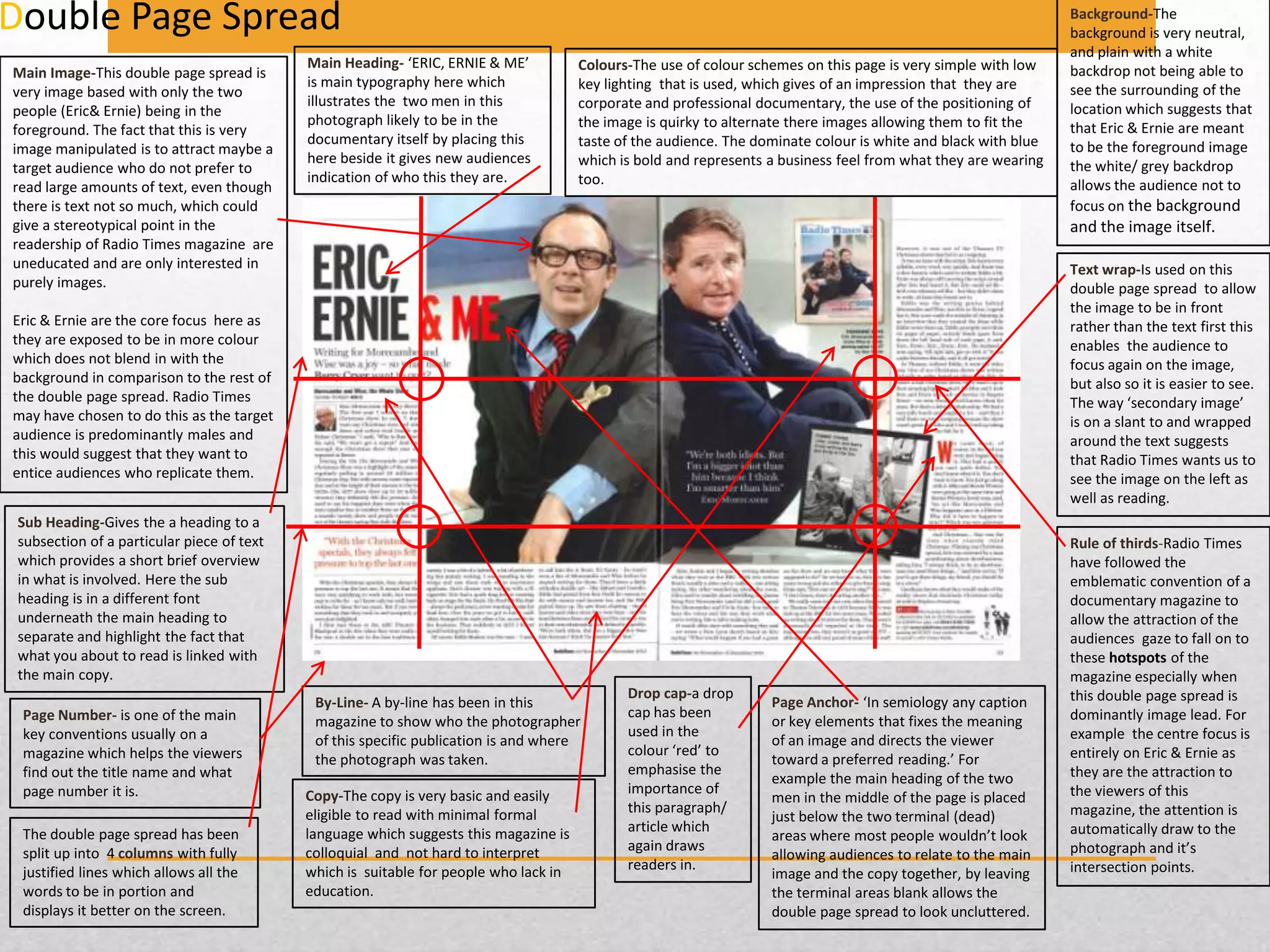
Main Image-This double page spread is
very image based with only the two
people (Eric& Ernie) being in the
foreground. The fact that this is very
image manipulated is to attract maybe a
target audience who do not prefer to
read large amounts of text, even though
there is text not so much, which could
give a stereotypical point in the
readership of Radio Times magazine are
uneducated and are only interested in
purely images.

Main Heading- ‘ERIC, ERNIE & ME’
is main typography here which
illustrates the two men in this
photograph likely to be in the
documentary itself by placing this
here beside it gives new audiences
indication of who this they are.

Colours-The use of colour schemes on this page is very simple with low
key lighting that is used, which gives of an impression that they are
corporate and professional documentary, the use of the positioning of
the image is quirky to alternate there images allowing them to fit the
taste of the audience. The dominate colour is white and black with blue
which is bold and represents a business feel from what they are wearing
too.

and the image itself.
Text wrap-Is used on this
double page spread to allow
the image to be in front
rather than the text first this
enables the audience to
focus again on the image,
but also so it is easier to see.
The way ‘secondary image’
is on a slant to and wrapped
around the text suggests
that Radio Times wants us to
see the image on the left as
well as reading.

Eric & Ernie are the core focus here as
they are exposed to be in more colour
which does not blend in with the
background in comparison to the rest of
the double page spread. Radio Times
may have chosen to do this as the target
audience is predominantly males and
this would suggest that they want to
entice audiences who replicate them.
Sub Heading-Gives the a heading to a
subsection of a particular piece of text
which provides a short brief overview
in what is involved. Here the sub
heading is in a different font
underneath the main heading to
separate and highlight the fact that
what you about to read is linked with
the main copy.

Page Number- is one of the main
key conventions usually on a
magazine which helps the viewers
find out the title name and what
page number it is.
The double page spread has been
split up into 4 columns with fully
justified lines which allows all the
words to be in portion and
displays it better on the screen.

Background-The
background is very neutral,
and plain with a white
backdrop not being able to
see the surrounding of the
location which suggests that
that Eric & Ernie are meant
to be the foreground image
the white/ grey backdrop
allows the audience not to
focus on the background

By-Line- A by-line has been in this
magazine to show who the photographer
of this specific publication is and where
the photograph was taken.

Copy-The copy is very basic and easily
eligible to read with minimal formal
language which suggests this magazine is
colloquial and not hard to interpret
which is suitable for people who lack in
education.

Drop cap-a drop
cap has been
used in the
colour ‘red’ to
emphasise the
importance of
this paragraph/
article which
again draws
readers in.

Page Anchor- ‘In semiology any caption
or key elements that fixes the meaning
of an image and directs the viewer
toward a preferred reading.’ For
example the main heading of the two
men in the middle of the page is placed
just below the two terminal (dead)
areas where most people wouldn’t look
allowing audiences to relate to the main
image and the copy together, by leaving
the terminal areas blank allows the
double page spread to look uncluttered.

Rule of thirds-Radio Times
have followed the
emblematic convention of a
documentary magazine to
allow the attraction of the
audiences gaze to fall on to
these hotspots of the
magazine especially when
this double page spread is
dominantly image lead. For
example the centre focus is
entirely on Eric & Ernie as
they are the attraction to
the viewers of this
magazine, the attention is
automatically draw to the
photograph and it’s
intersection points.
Audience & Institutions

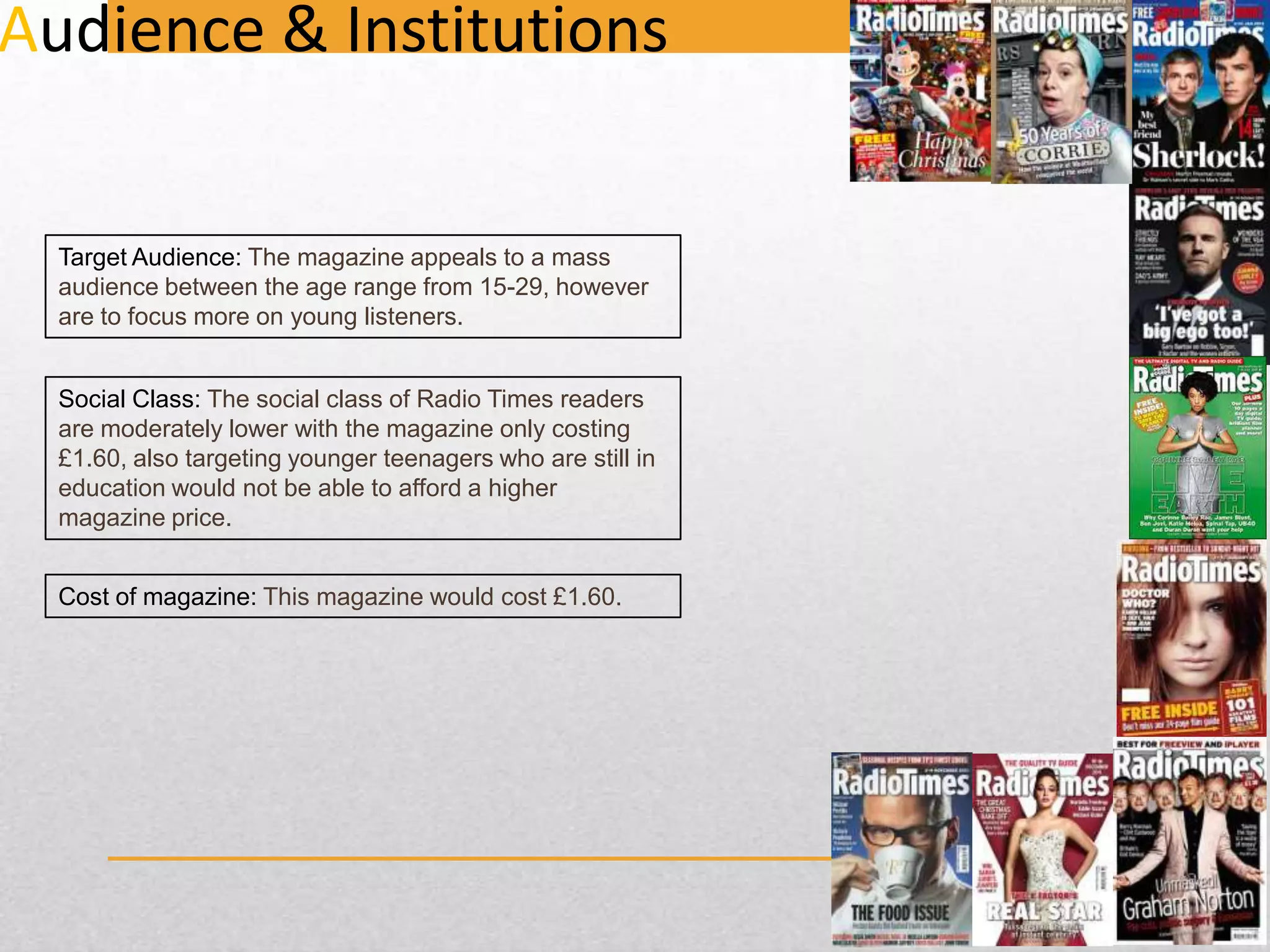
Target Audience: The magazine appeals to a mass
audience between the age range from 15-29, however
are to focus more on young listeners.
Social Class: The social class of Radio Times readers
are moderately lower with the magazine only costing
£1.60, also targeting younger teenagers who are still in
education would not be able to afford a higher
magazine price.
Cost of magazine: This magazine would cost £1.60.
House Style/Ethos
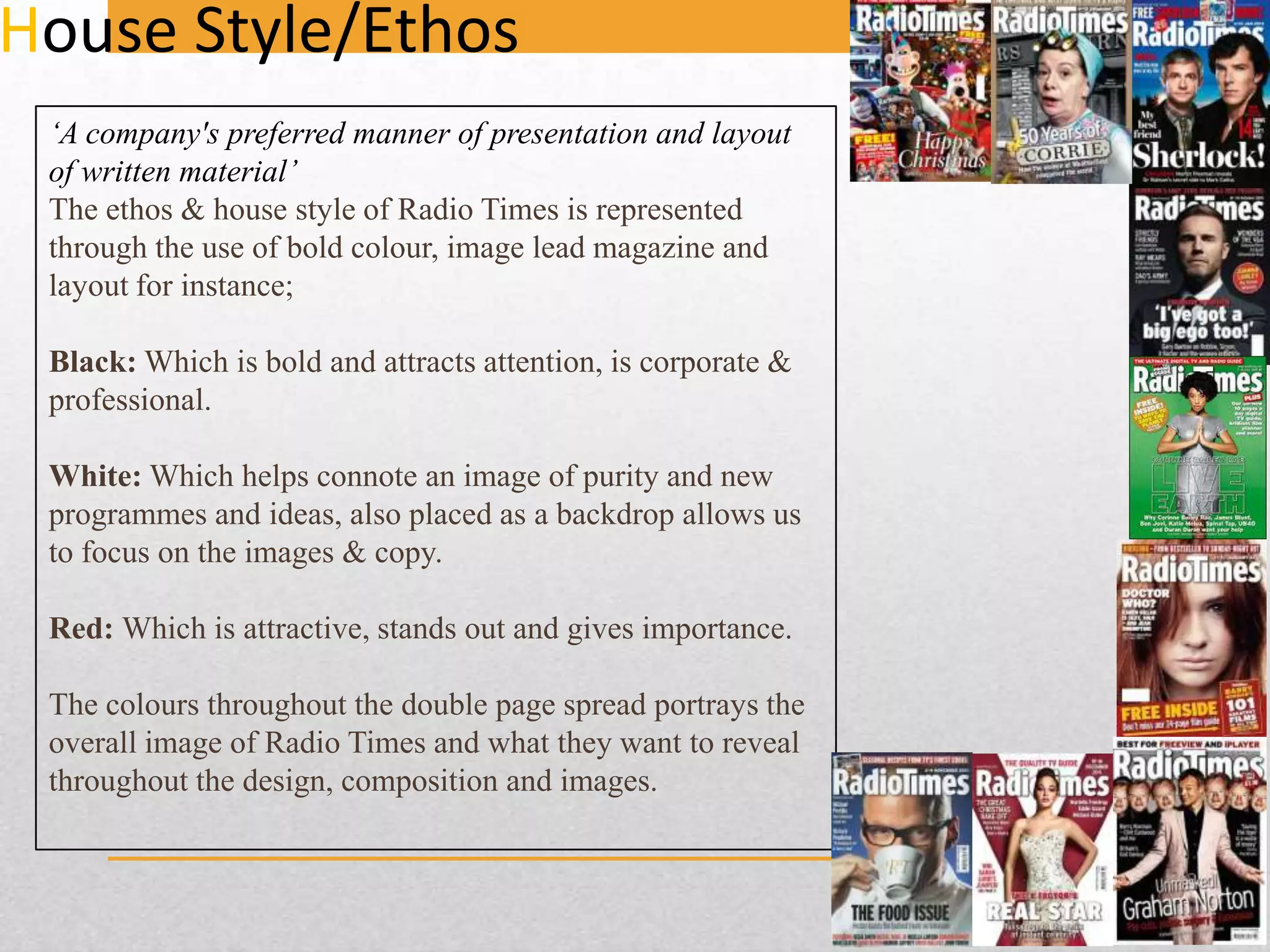
‘A company's preferred manner of presentation and layout
of written material’
The ethos & house style of Radio Times is represented
through the use of bold colour, image lead magazine and
layout for instance;
Black: Which is bold and attracts attention, is corporate &
professional.
White: Which helps connote an image of purity and new
programmes and ideas, also placed as a backdrop allows us
to focus on the images & copy.
Red: Which is attractive, stands out and gives importance.
The colours throughout the double page spread portrays the
overall image of Radio Times and what they want to reveal
throughout the design, composition and images.
Double Page Spread-Draft-SLIDESHARE
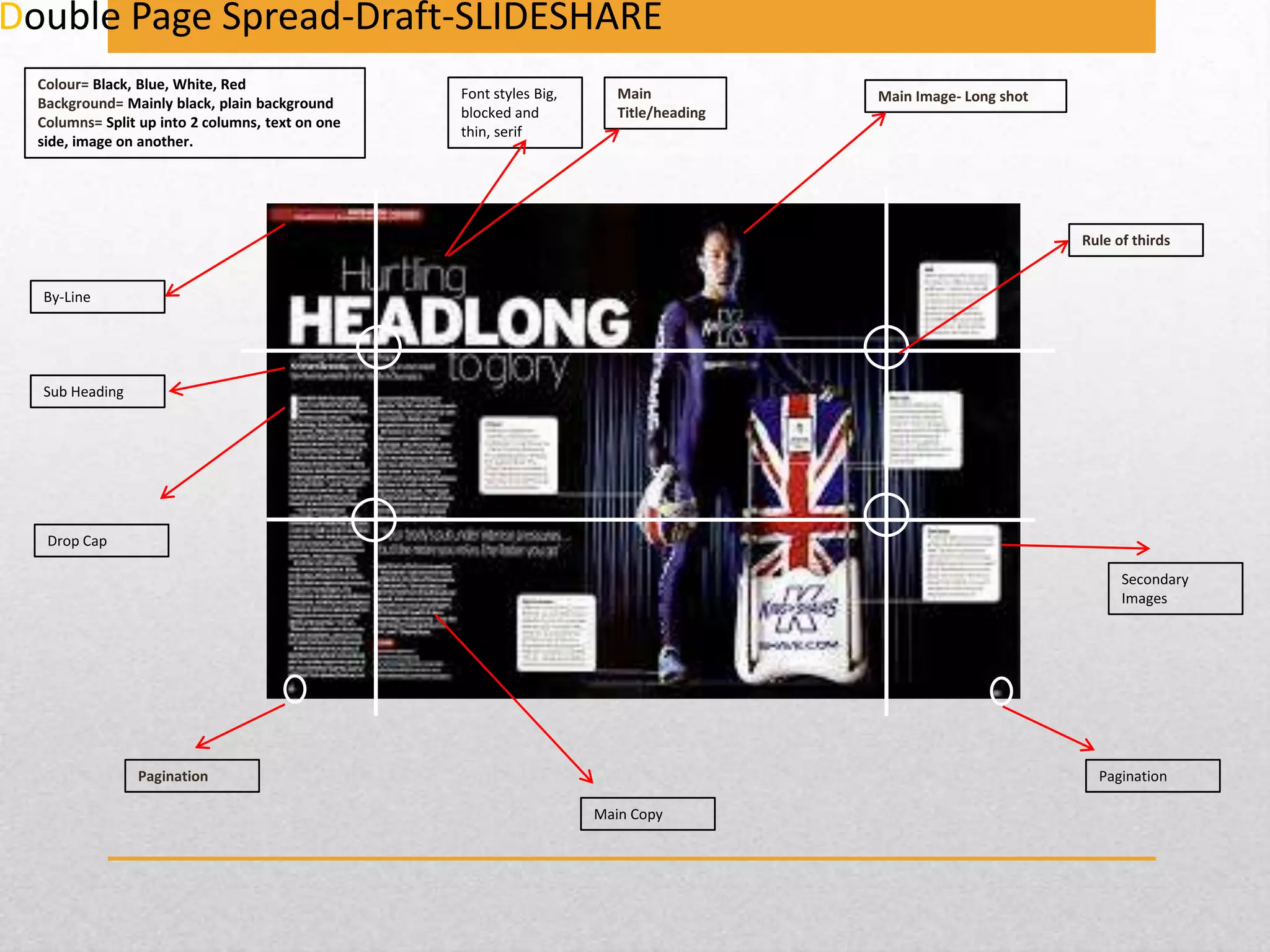
Colour= Black, Blue, White, Red
Background= Mainly black, plain background
Columns= Split up into 2 columns, text on one
side, image on another.

Font styles Big,
blocked and
thin, serif

Main
Title/heading

Main Image- Long shot

Rule of thirds

By-Line

Sub Heading

Drop Cap
Secondary
Images

Pagination

Pagination
Main Copy
Double Page Spread
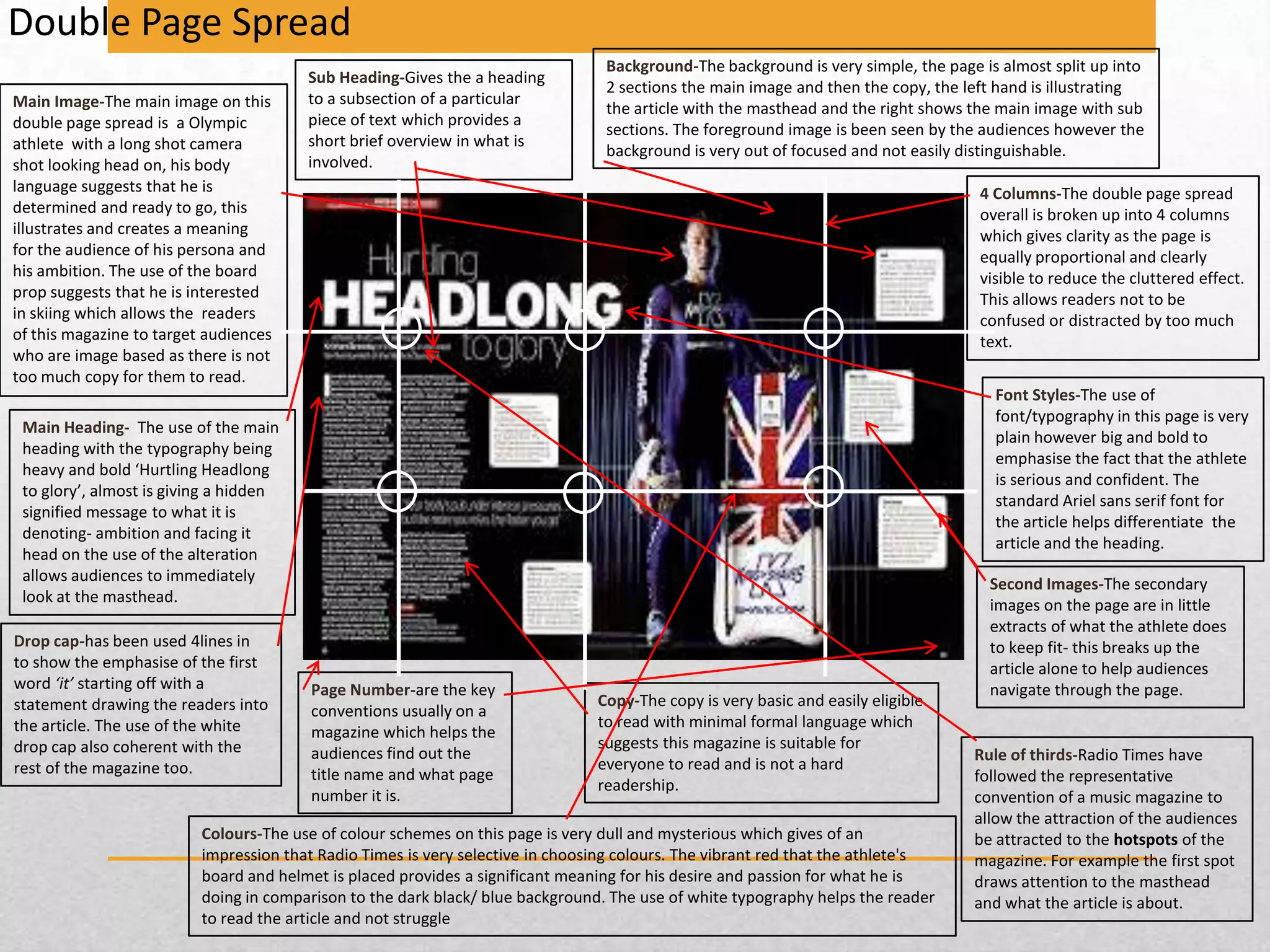
Main Image-The main image on this
double page spread is a Olympic
athlete with a long shot camera
shot looking head on, his body
language suggests that he is
determined and ready to go, this
illustrates and creates a meaning
for the audience of his persona and
his ambition. The use of the board
prop suggests that he is interested
in skiing which allows the readers
of this magazine to target audiences
who are image based as there is not
too much copy for them to read.

Sub Heading-Gives the a heading
to a subsection of a particular
piece of text which provides a
short brief overview in what is
involved.

Background-The background is very simple, the page is almost split up into
2 sections the main image and then the copy, the left hand is illustrating
the article with the masthead and the right shows the main image with sub
sections. The foreground image is been seen by the audiences however the
background is very out of focused and not easily distinguishable.

4 Columns-The double page spread
overall is broken up into 4 columns
which gives clarity as the page is
equally proportional and clearly
visible to reduce the cluttered effect.
This allows readers not to be
confused or distracted by too much
text.
Font Styles-The use of
font/typography in this page is very
plain however big and bold to
emphasise the fact that the athlete
is serious and confident. The
standard Ariel sans serif font for
the article helps differentiate the
article and the heading.

Main Heading- The use of the main
heading with the typography being
heavy and bold ‘Hurtling Headlong
to glory’, almost is giving a hidden
signified message to what it is
denoting- ambition and facing it
head on the use of the alteration
allows audiences to immediately
look at the masthead.
Drop cap-has been used 4lines in
to show the emphasise of the first
word ‘it’ starting off with a
statement drawing the readers into
the article. The use of the white
drop cap also coherent with the
rest of the magazine too.

Page Number-are the key
conventions usually on a
magazine which helps the
audiences find out the
title name and what page
number it is.

Copy-The copy is very basic and easily eligible
to read with minimal formal language which
suggests this magazine is suitable for
everyone to read and is not a hard
readership.

Colours-The use of colour schemes on this page is very dull and mysterious which gives of an
impression that Radio Times is very selective in choosing colours. The vibrant red that the athlete's
board and helmet is placed provides a significant meaning for his desire and passion for what he is
doing in comparison to the dark black/ blue background. The use of white typography helps the reader
to read the article and not struggle

Second Images-The secondary
images on the page are in little
extracts of what the athlete does
to keep fit- this breaks up the
article alone to help audiences
navigate through the page.

Rule of thirds-Radio Times have
followed the representative
convention of a music magazine to
allow the attraction of the audiences
be attracted to the hotspots of the
magazine. For example the first spot
draws attention to the masthead
and what the article is about.
Audience & Institutions

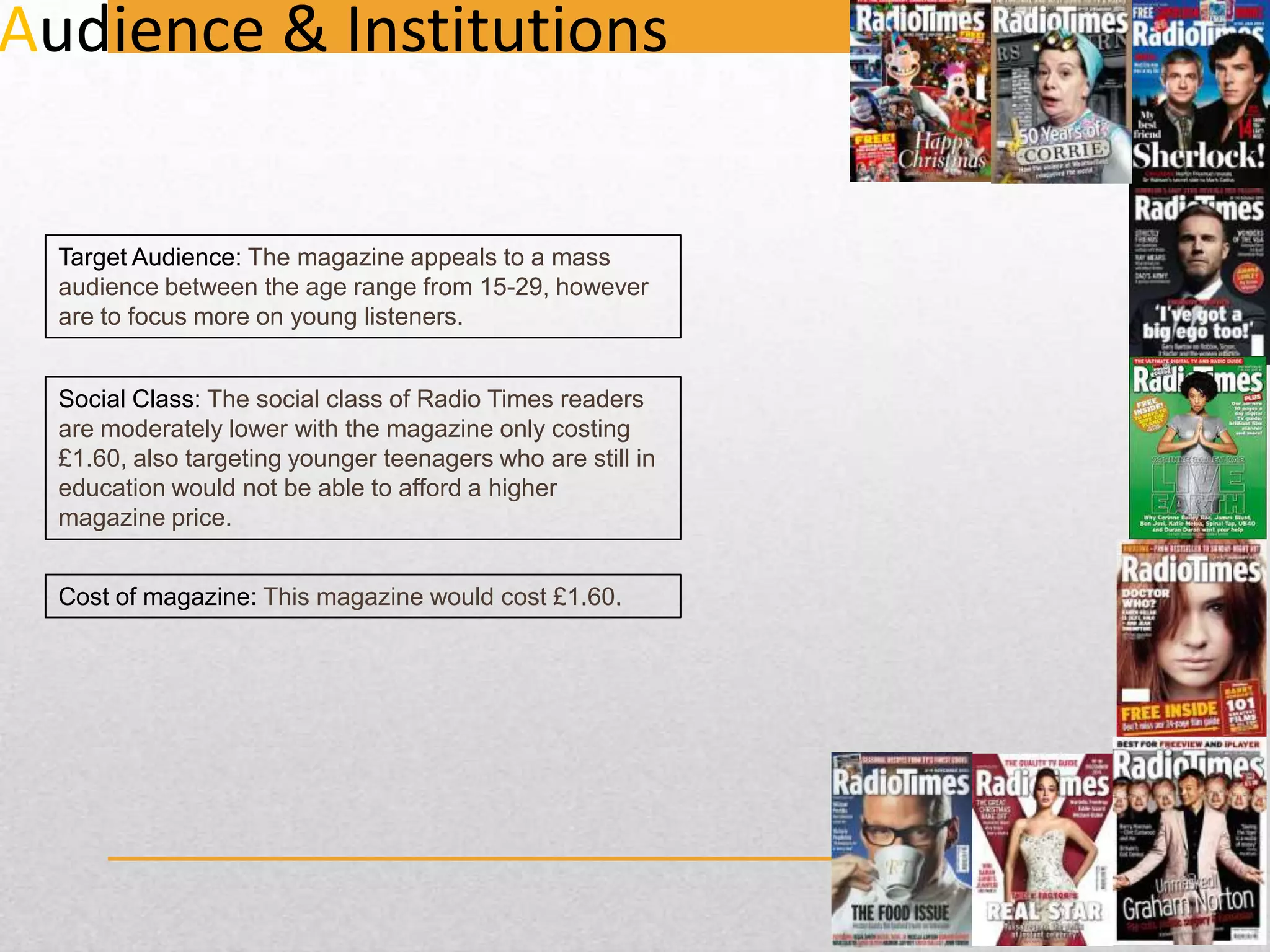
Target Audience: The magazine appeals to a mass
audience between the age range from 15-29, however
are to focus more on young listeners.
Social Class: The social class of Radio Times readers
are moderately lower with the magazine only costing
£1.60, also targeting younger teenagers who are still in
education would not be able to afford a higher
magazine price.
Cost of magazine: This magazine would cost £1.60.
House Style/Ethos
‘A company's preferred manner of presentation and layout
of written material’
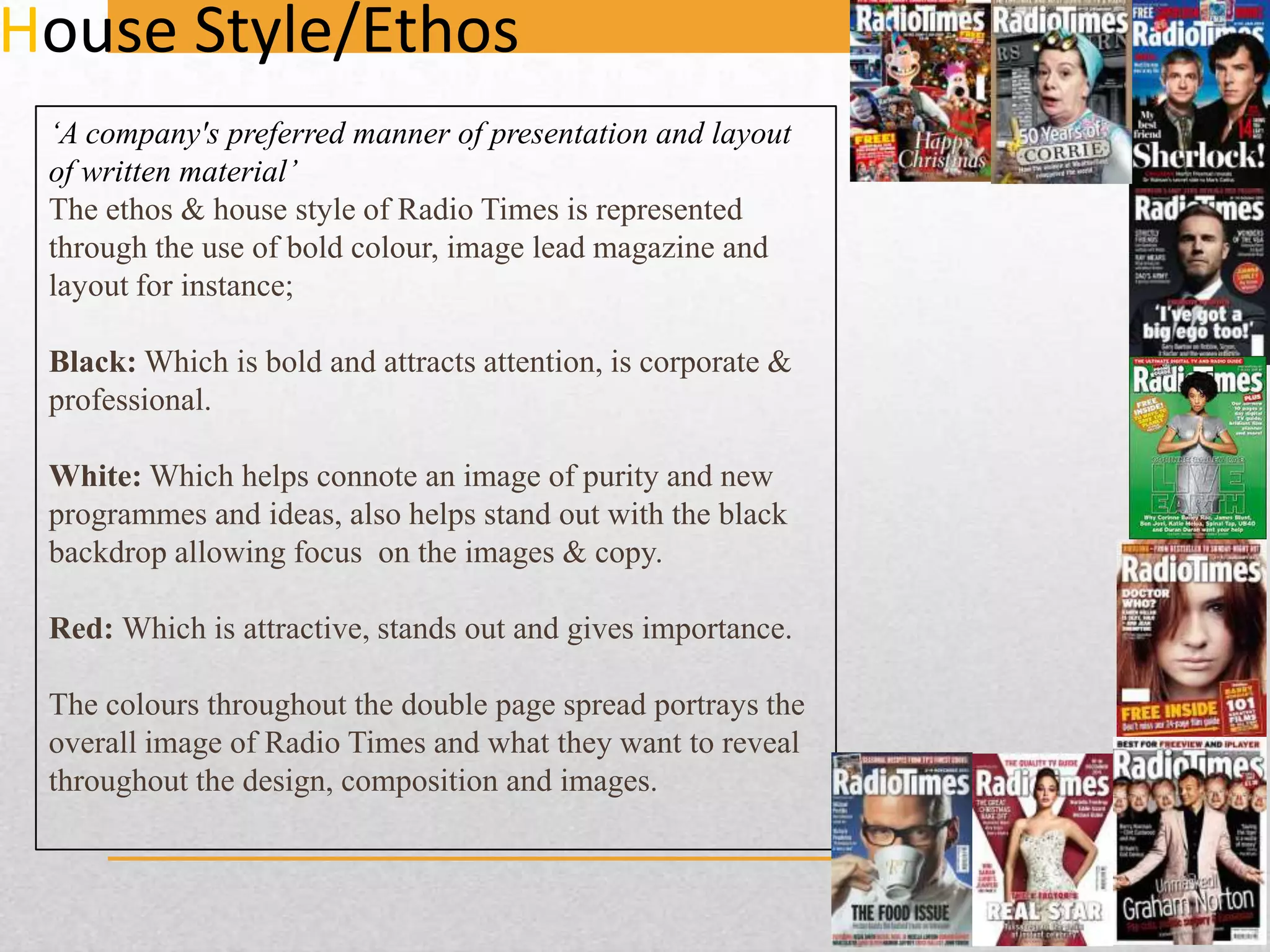
The ethos & house style of Radio Times is represented
through the use of bold colour, image lead magazine and
layout for instance;
Black: Which is bold and attracts attention, is corporate &
professional.
White: Which helps connote an image of purity and new
programmes and ideas, also helps stand out with the black
backdrop allowing focus on the images & copy.
Red: Which is attractive, stands out and gives importance.
The colours throughout the double page spread portrays the
overall image of Radio Times and what they want to reveal
throughout the design, composition and images.

Analysis of Double Page Spread-Radio Times

  • 1.
    Double Page Spread-Draft-SLIDESHARE Colour=Red, Black, White, Grey, Blue Background= Mainly image focused upon/plain background colour Columns= Split up into 4 columns Main Title/heading Main Image Page Anchor Secondary Images By-Line Font styles Big, blocked, serif Rule of thirds Sub Heading Drop Cap By-Line Text wrap Sub Heading Secondary Images Text wrap Pagination Main Copyshaped like a ‘U’ Date of publication Pagination
  • 2.
    Double Page Spread MainImage-This double page spread is very image based with only the two people (Eric& Ernie) being in the foreground. The fact that this is very image manipulated is to attract maybe a target audience who do not prefer to read large amounts of text, even though there is text not so much, which could give a stereotypical point in the readership of Radio Times magazine are uneducated and are only interested in purely images. Main Heading- ‘ERIC, ERNIE & ME’ is main typography here which illustrates the two men in this photograph likely to be in the documentary itself by placing this here beside it gives new audiences indication of who this they are. Colours-The use of colour schemes on this page is very simple with low key lighting that is used, which gives of an impression that they are corporate and professional documentary, the use of the positioning of the image is quirky to alternate there images allowing them to fit the taste of the audience. The dominate colour is white and black with blue which is bold and represents a business feel from what they are wearing too. and the image itself. Text wrap-Is used on this double page spread to allow the image to be in front rather than the text first this enables the audience to focus again on the image, but also so it is easier to see. The way ‘secondary image’ is on a slant to and wrapped around the text suggests that Radio Times wants us to see the image on the left as well as reading. Eric & Ernie are the core focus here as they are exposed to be in more colour which does not blend in with the background in comparison to the rest of the double page spread. Radio Times may have chosen to do this as the target audience is predominantly males and this would suggest that they want to entice audiences who replicate them. Sub Heading-Gives the a heading to a subsection of a particular piece of text which provides a short brief overview in what is involved. Here the sub heading is in a different font underneath the main heading to separate and highlight the fact that what you about to read is linked with the main copy. Page Number- is one of the main key conventions usually on a magazine which helps the viewers find out the title name and what page number it is. The double page spread has been split up into 4 columns with fully justified lines which allows all the words to be in portion and displays it better on the screen. Background-The background is very neutral, and plain with a white backdrop not being able to see the surrounding of the location which suggests that that Eric & Ernie are meant to be the foreground image the white/ grey backdrop allows the audience not to focus on the background By-Line- A by-line has been in this magazine to show who the photographer of this specific publication is and where the photograph was taken. Copy-The copy is very basic and easily eligible to read with minimal formal language which suggests this magazine is colloquial and not hard to interpret which is suitable for people who lack in education. Drop cap-a drop cap has been used in the colour ‘red’ to emphasise the importance of this paragraph/ article which again draws readers in. Page Anchor- ‘In semiology any caption or key elements that fixes the meaning of an image and directs the viewer toward a preferred reading.’ For example the main heading of the two men in the middle of the page is placed just below the two terminal (dead) areas where most people wouldn’t look allowing audiences to relate to the main image and the copy together, by leaving the terminal areas blank allows the double page spread to look uncluttered. Rule of thirds-Radio Times have followed the emblematic convention of a documentary magazine to allow the attraction of the audiences gaze to fall on to these hotspots of the magazine especially when this double page spread is dominantly image lead. For example the centre focus is entirely on Eric & Ernie as they are the attraction to the viewers of this magazine, the attention is automatically draw to the photograph and it’s intersection points.
  • 3.
    Audience & Institutions TargetAudience: The magazine appeals to a mass audience between the age range from 15-29, however are to focus more on young listeners. Social Class: The social class of Radio Times readers are moderately lower with the magazine only costing £1.60, also targeting younger teenagers who are still in education would not be able to afford a higher magazine price. Cost of magazine: This magazine would cost £1.60.
  • 4.
    House Style/Ethos ‘A company'spreferred manner of presentation and layout of written material’ The ethos & house style of Radio Times is represented through the use of bold colour, image lead magazine and layout for instance; Black: Which is bold and attracts attention, is corporate & professional. White: Which helps connote an image of purity and new programmes and ideas, also placed as a backdrop allows us to focus on the images & copy. Red: Which is attractive, stands out and gives importance. The colours throughout the double page spread portrays the overall image of Radio Times and what they want to reveal throughout the design, composition and images.
  • 5.
    Double Page Spread-Draft-SLIDESHARE Colour=Black, Blue, White, Red Background= Mainly black, plain background Columns= Split up into 2 columns, text on one side, image on another. Font styles Big, blocked and thin, serif Main Title/heading Main Image- Long shot Rule of thirds By-Line Sub Heading Drop Cap Secondary Images Pagination Pagination Main Copy
  • 6.
    Double Page Spread MainImage-The main image on this double page spread is a Olympic athlete with a long shot camera shot looking head on, his body language suggests that he is determined and ready to go, this illustrates and creates a meaning for the audience of his persona and his ambition. The use of the board prop suggests that he is interested in skiing which allows the readers of this magazine to target audiences who are image based as there is not too much copy for them to read. Sub Heading-Gives the a heading to a subsection of a particular piece of text which provides a short brief overview in what is involved. Background-The background is very simple, the page is almost split up into 2 sections the main image and then the copy, the left hand is illustrating the article with the masthead and the right shows the main image with sub sections. The foreground image is been seen by the audiences however the background is very out of focused and not easily distinguishable. 4 Columns-The double page spread overall is broken up into 4 columns which gives clarity as the page is equally proportional and clearly visible to reduce the cluttered effect. This allows readers not to be confused or distracted by too much text. Font Styles-The use of font/typography in this page is very plain however big and bold to emphasise the fact that the athlete is serious and confident. The standard Ariel sans serif font for the article helps differentiate the article and the heading. Main Heading- The use of the main heading with the typography being heavy and bold ‘Hurtling Headlong to glory’, almost is giving a hidden signified message to what it is denoting- ambition and facing it head on the use of the alteration allows audiences to immediately look at the masthead. Drop cap-has been used 4lines in to show the emphasise of the first word ‘it’ starting off with a statement drawing the readers into the article. The use of the white drop cap also coherent with the rest of the magazine too. Page Number-are the key conventions usually on a magazine which helps the audiences find out the title name and what page number it is. Copy-The copy is very basic and easily eligible to read with minimal formal language which suggests this magazine is suitable for everyone to read and is not a hard readership. Colours-The use of colour schemes on this page is very dull and mysterious which gives of an impression that Radio Times is very selective in choosing colours. The vibrant red that the athlete's board and helmet is placed provides a significant meaning for his desire and passion for what he is doing in comparison to the dark black/ blue background. The use of white typography helps the reader to read the article and not struggle Second Images-The secondary images on the page are in little extracts of what the athlete does to keep fit- this breaks up the article alone to help audiences navigate through the page. Rule of thirds-Radio Times have followed the representative convention of a music magazine to allow the attraction of the audiences be attracted to the hotspots of the magazine. For example the first spot draws attention to the masthead and what the article is about.
  • 7.
    Audience & Institutions TargetAudience: The magazine appeals to a mass audience between the age range from 15-29, however are to focus more on young listeners. Social Class: The social class of Radio Times readers are moderately lower with the magazine only costing £1.60, also targeting younger teenagers who are still in education would not be able to afford a higher magazine price. Cost of magazine: This magazine would cost £1.60.
  • 8.
    House Style/Ethos ‘A company'spreferred manner of presentation and layout of written material’ The ethos & house style of Radio Times is represented through the use of bold colour, image lead magazine and layout for instance; Black: Which is bold and attracts attention, is corporate & professional. White: Which helps connote an image of purity and new programmes and ideas, also helps stand out with the black backdrop allowing focus on the images & copy. Red: Which is attractive, stands out and gives importance. The colours throughout the double page spread portrays the overall image of Radio Times and what they want to reveal throughout the design, composition and images.