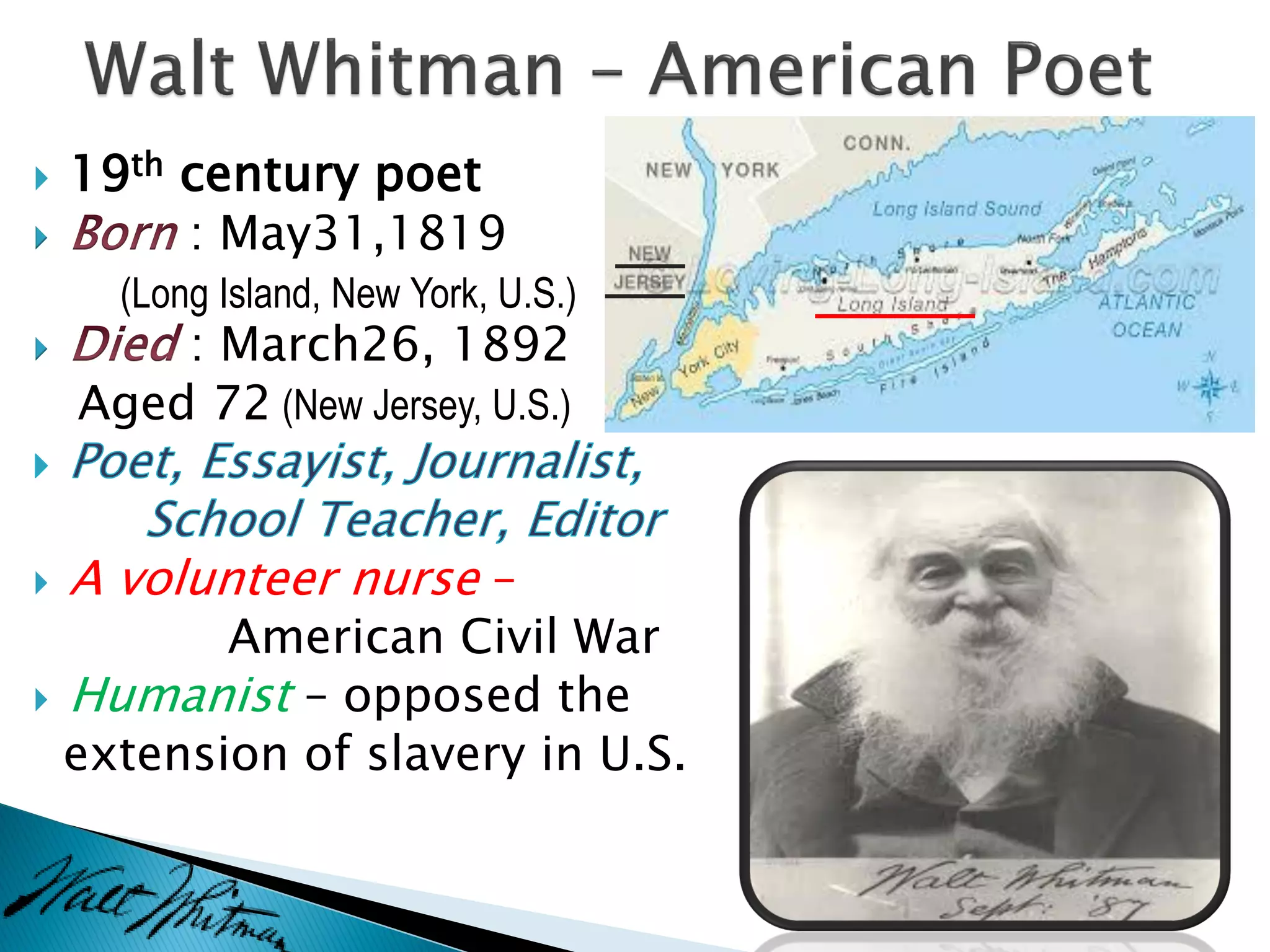
 19th century poet
 : May31,1819
(Long Island, New York, U.S.)
 : March26, 1892
Aged 72 (New Jersey, U.S.)
 A volunteer nurse –
American Civil War
 Humanist – opposed the
extension of slavery in U.S.
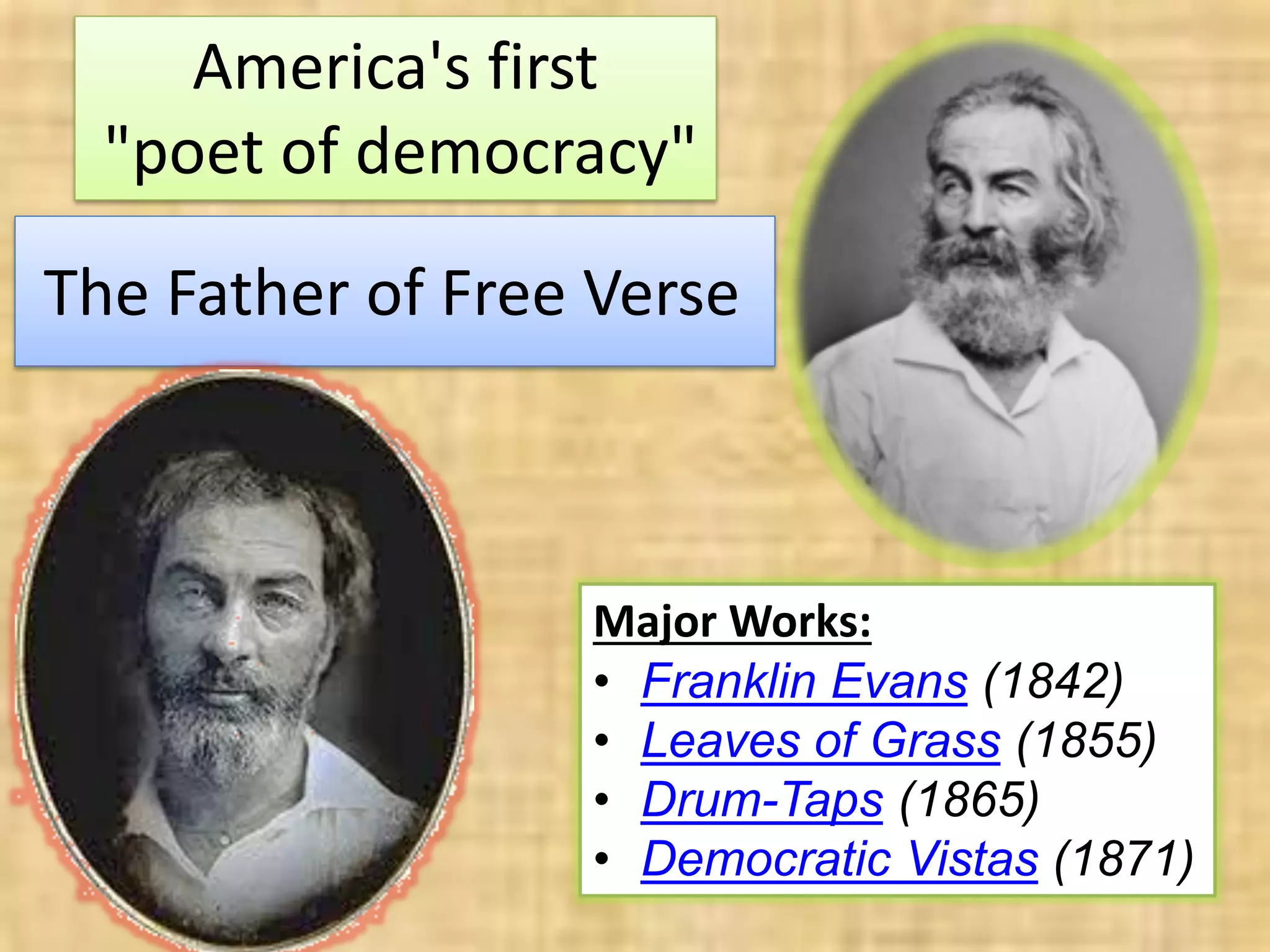
The Father of Free Verse
America's first
"poet of democracy"
Major Works:
• Franklin Evans (1842)
• Leaves of Grass (1855)
• Drum-Taps (1865)
• Democratic Vistas (1871)
• Theme of love, loss, happiness, sorrow, death,
poesy and their relation in language & poetry
• In a single setting and situation  sea-shore
• An intense lesson in mortality of life and
inspiration
• A masterful formal control of his material
 Free Verse
 Personification
 Inversion
 Symbols
 Rhyme
 Rhetorical Question
 Paradox
 Alliteration
 Repetition
Poetic Devices
A PERSONAL EXPERIENCE
• Whitman’s own trauma of separation
• A dramatization of his personal life
• Pain of the loss of his mother
• The eve of the civil war of the U.S.
• A communal idyll – dream of ‘Democratic America’
• Historical roots – elegy of dissolution
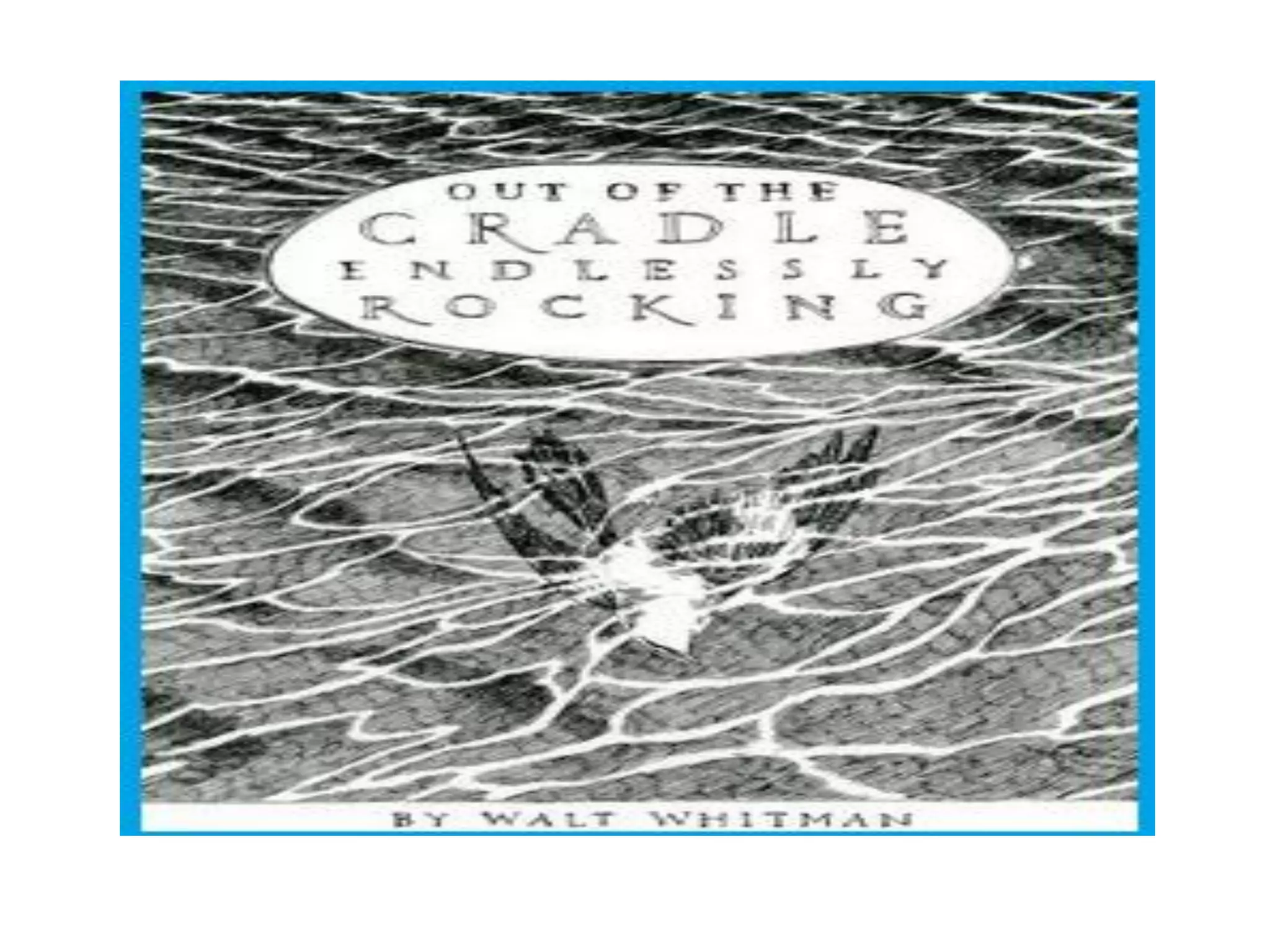
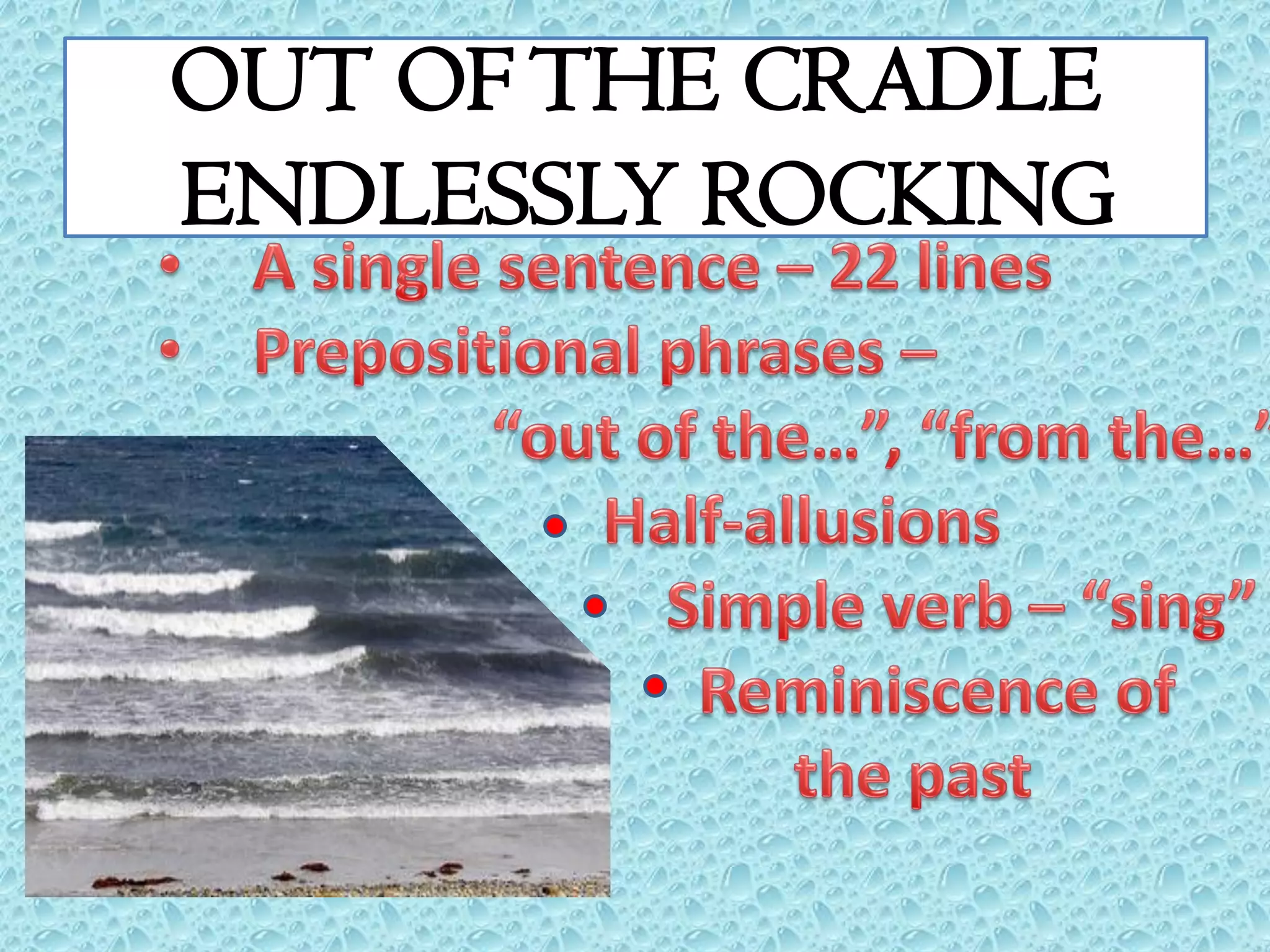
OUT OFTHE CRADLE
ENDLESSLY ROCKING
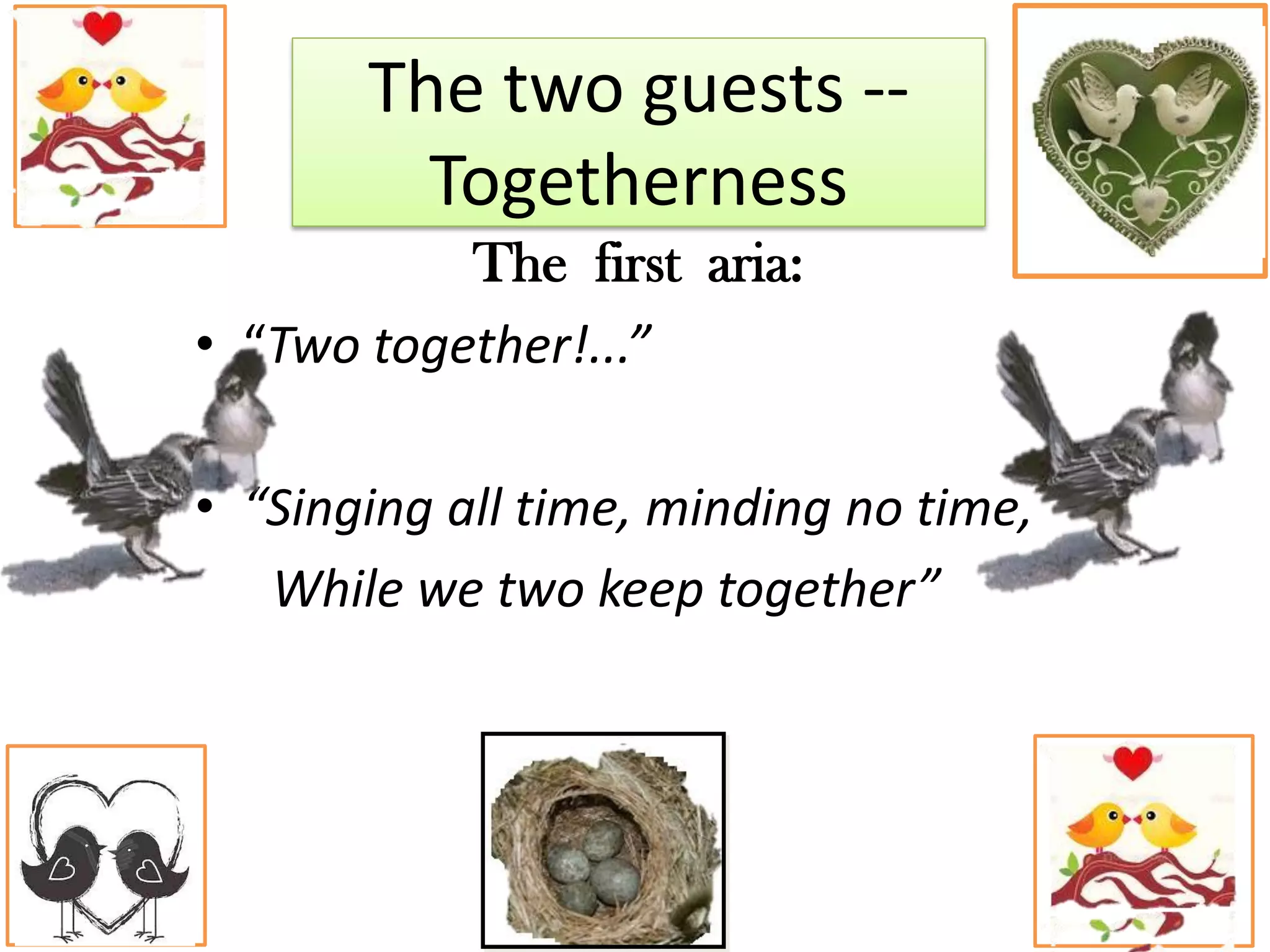
The first aria:
• “Two together!...”
• “Singing all time, minding no time,
While we two keep together”
The two guests --
Togetherness
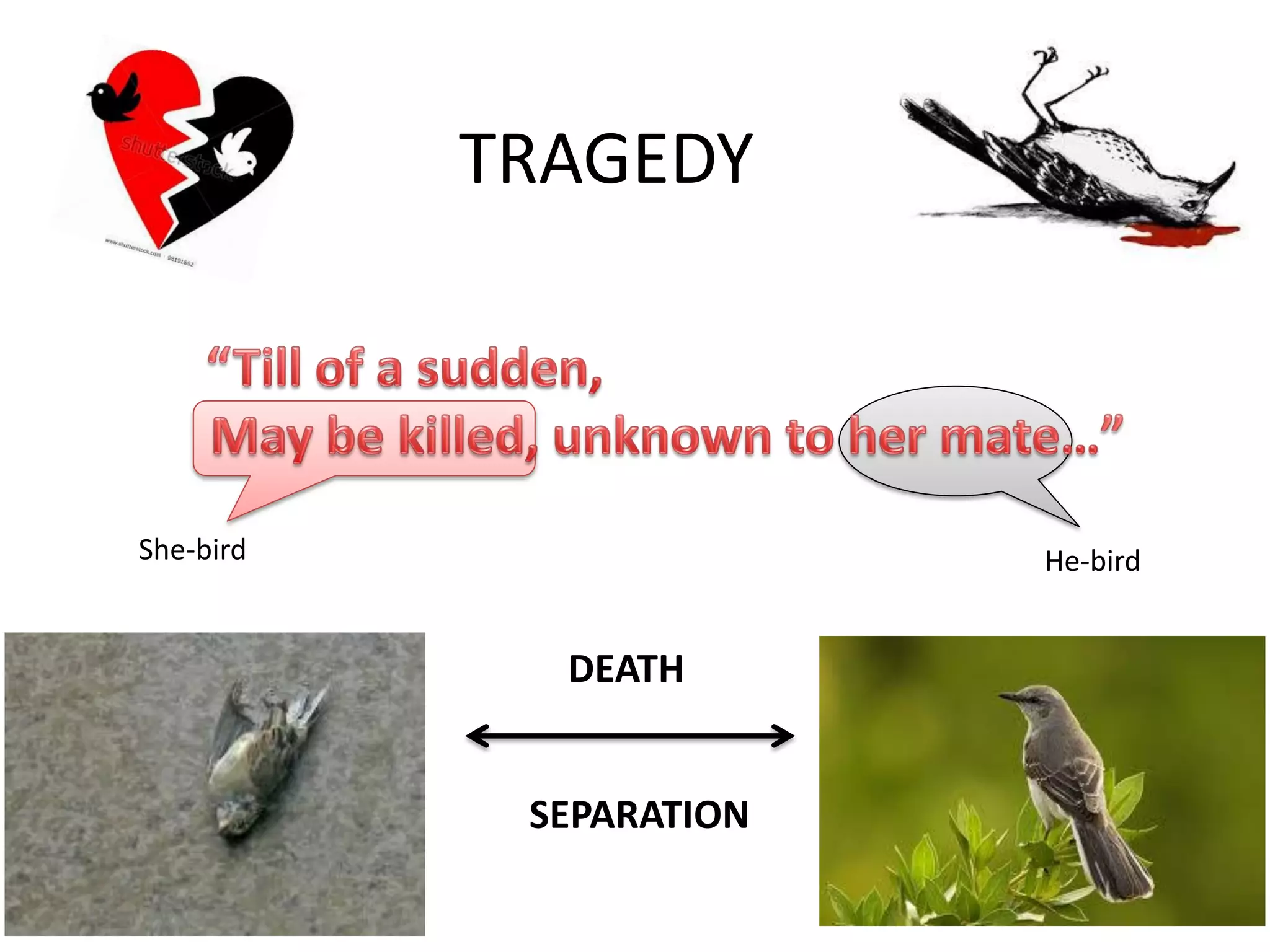
TRAGEDY
She-bird He-bird
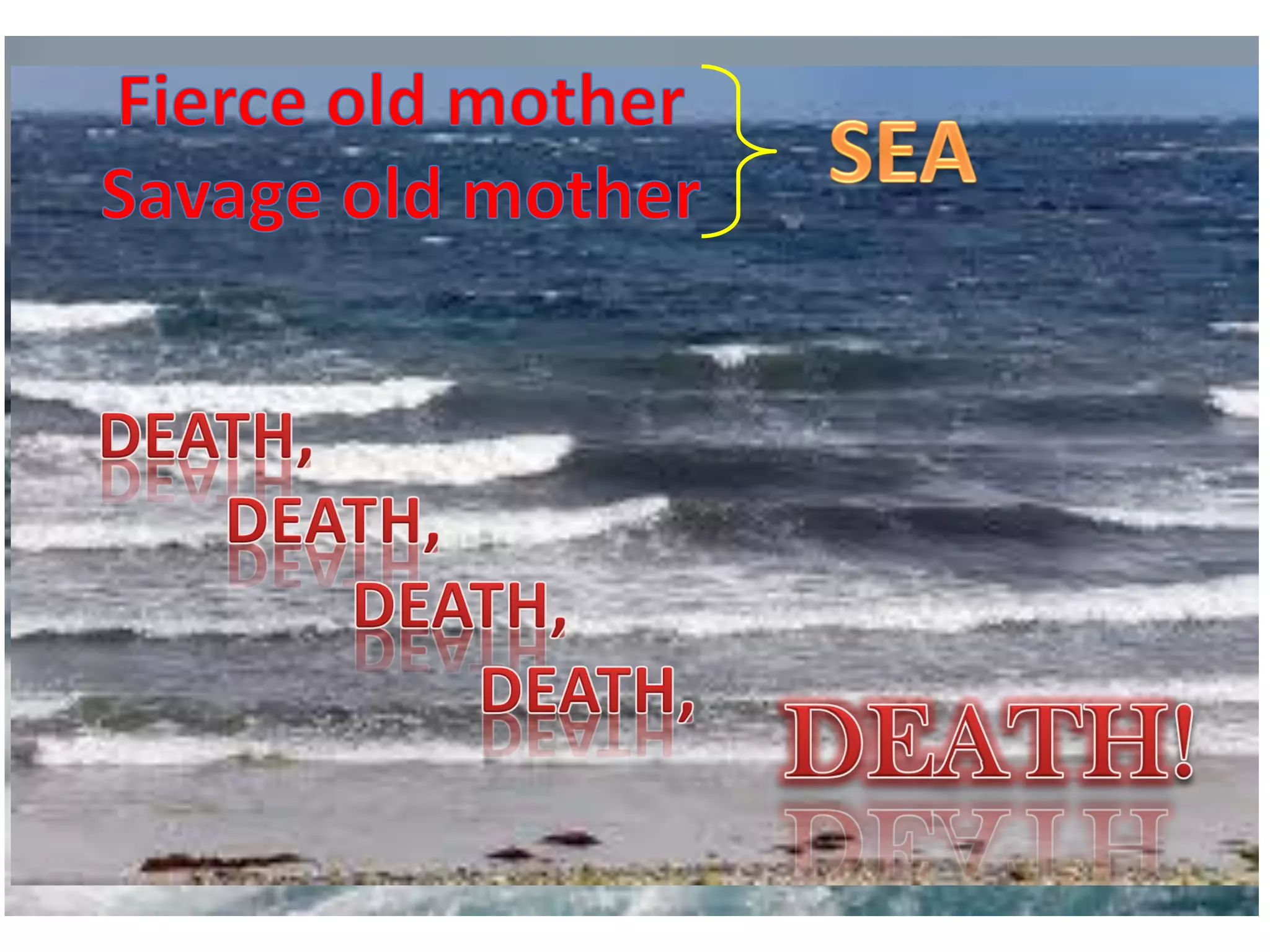
DEATH
SEPARATION
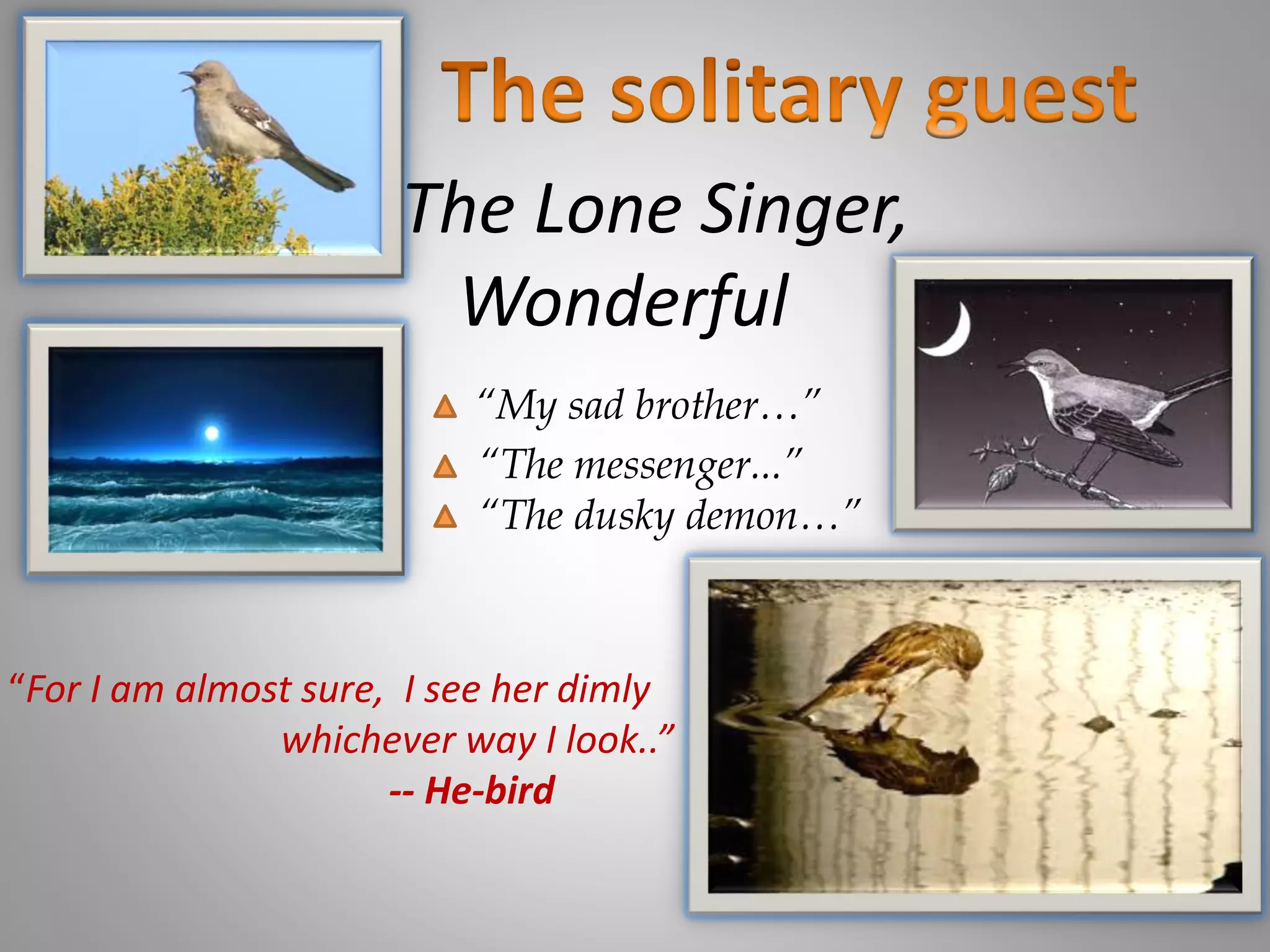
The Lone Singer,
Wonderful
“My sad brother…”
“The messenger...”
“The dusky demon…”
“For I am almost sure, I see her dimly
whichever way I look..”
-- He-bird
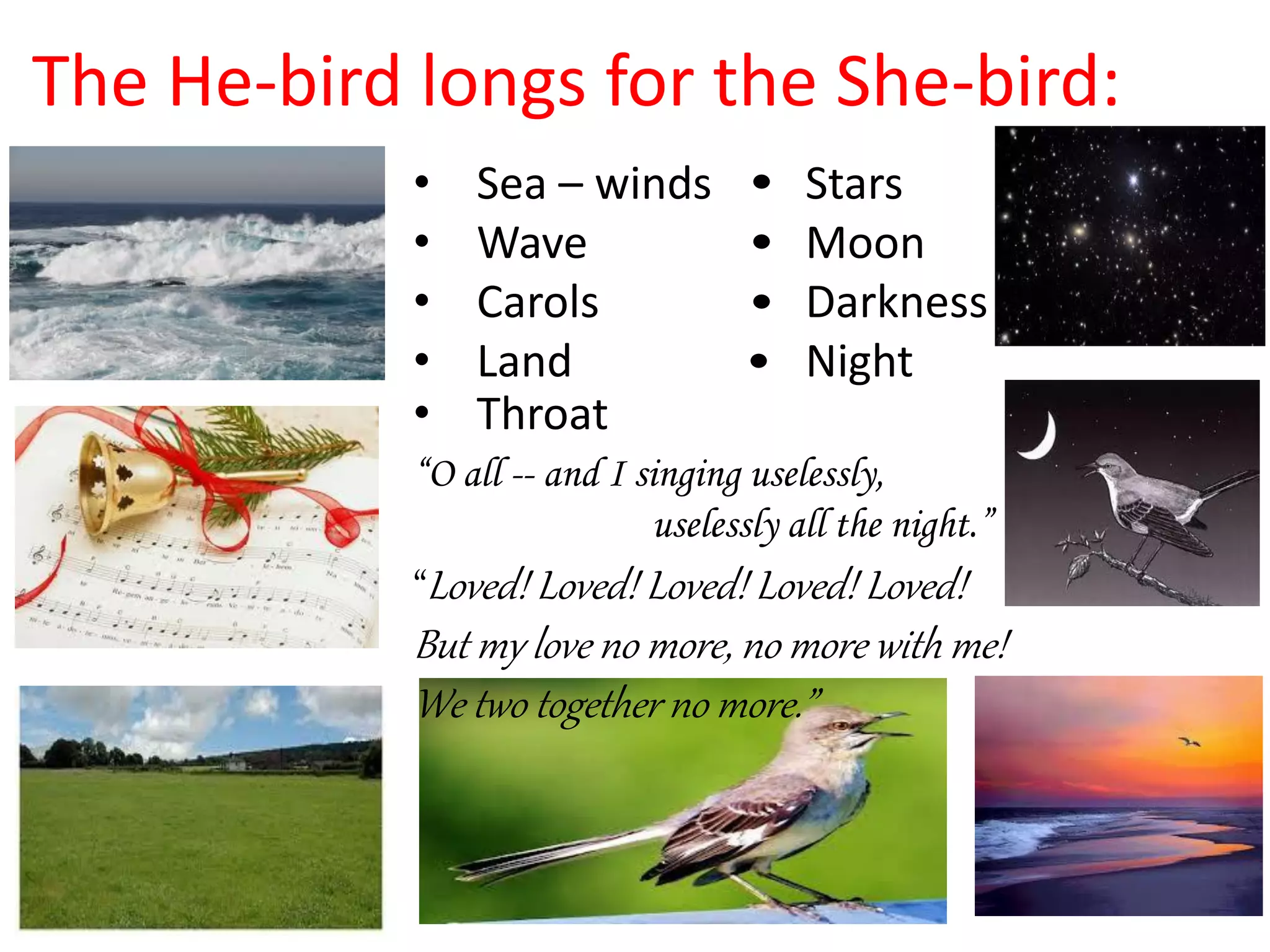
The He-bird longs for the She-bird:
• Sea – winds Stars
• Wave Moon
• Carols Darkness
• Land Night
• Throat
“O all -- and I singing uselessly,
uselessly all the night.”
“Loved! Loved! Loved! Loved! Loved!
But my love no more, no more with me!
We two together no more.”
• Becomes a poet –
“To the outsetting bard of love…”
“The unknown want, the destiny of me”
• Transforming experiences and dim memories into songs
• Locates his inspiration in other’s experiences
• The duty of a translator – not the originator of pathos
“ A thousand warbling echoes started to life within me…”
“With the thousand responsive songs, at random,
My own songs, awaked from that hour..”
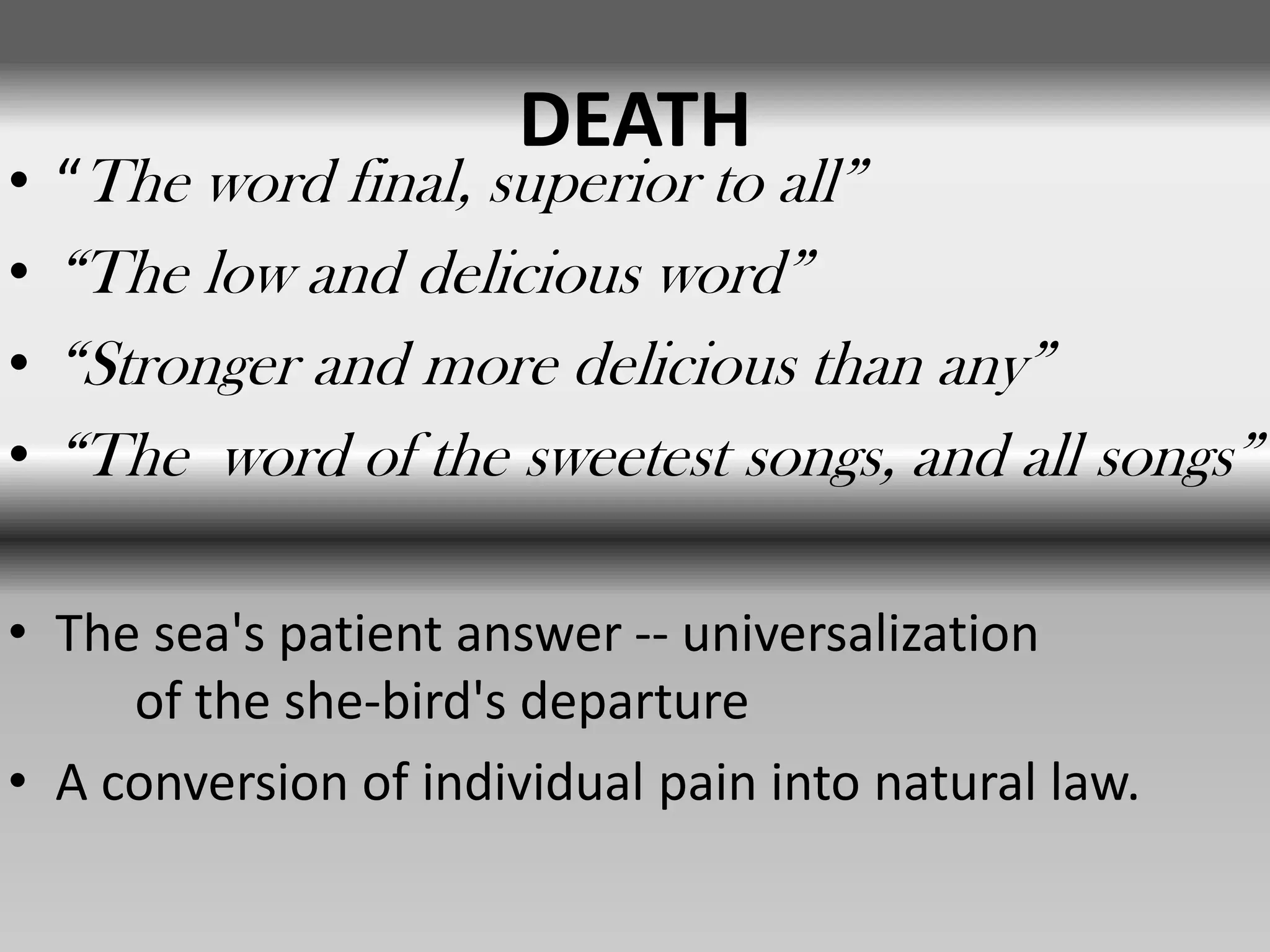
DEATH
• “The word final, superior to all”
• “The low and delicious word”
• “Stronger and more delicious than any”
• “The word of the sweetest songs, and all songs”
• The sea's patient answer -- universalization
of the she-bird's departure
• A conversion of individual pain into natural law.
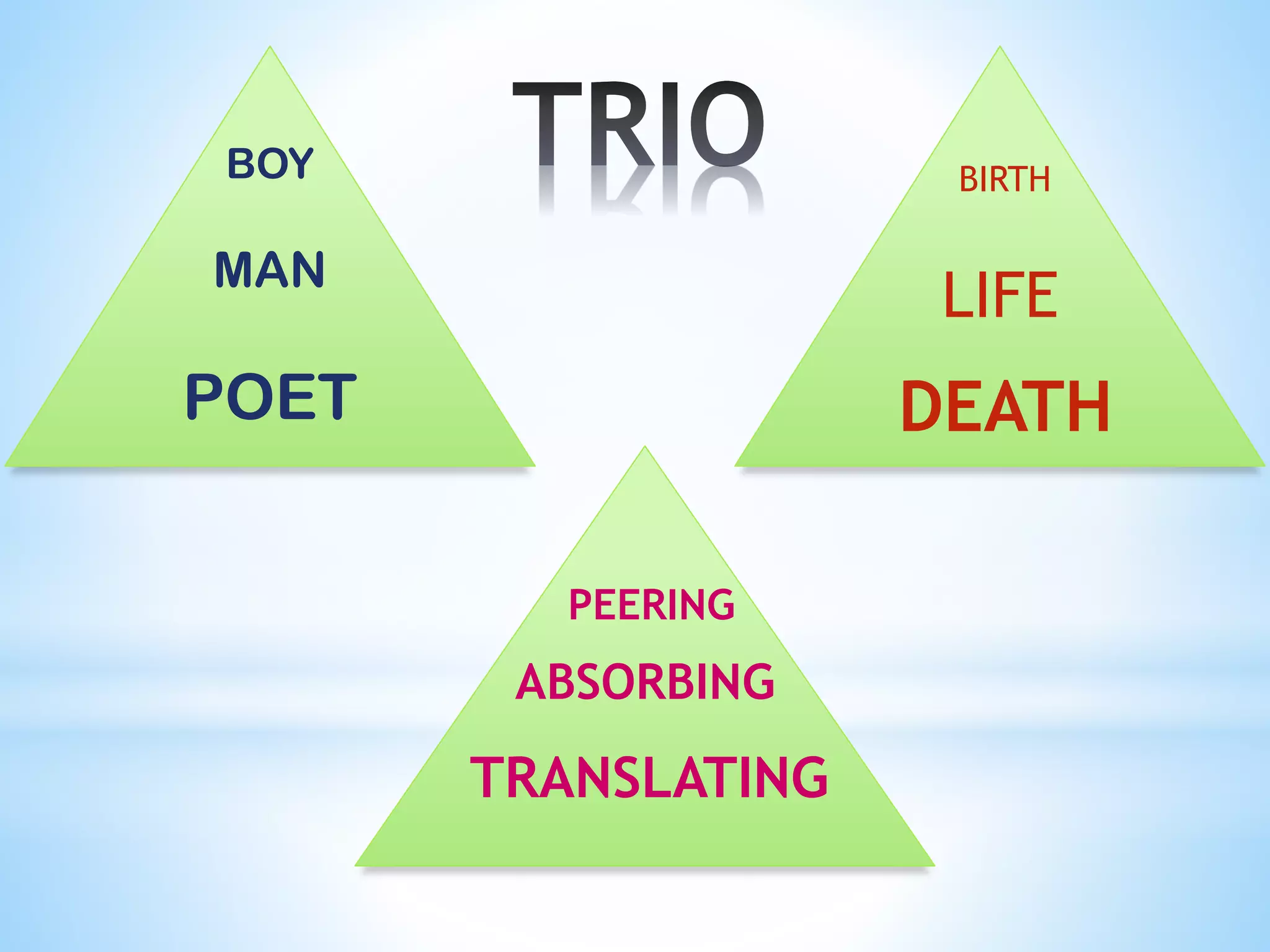
BOY
MAN
POET
LIFE
ABSORBING
BIRTH
DEATH
PEERING
TRANSLATING
• Transformation of the bird’s songs
• Change of emotions, poetic mood :
Happiness – Sorrow – Faith
• Love – Loss – Poetry
• A beautiful permutation of elegiac narrative
• Devoid of irony or insincerity
• An American folk quality – A tale of love and loss
• Suffering & Art – A Poet
`

Analysis of "Out of the cradle endlessly rocking" by Walt Whitman

  • 2.
     19th centurypoet  : May31,1819 (Long Island, New York, U.S.)  : March26, 1892 Aged 72 (New Jersey, U.S.)  A volunteer nurse – American Civil War  Humanist – opposed the extension of slavery in U.S.
  • 3.
    The Father ofFree Verse America's first "poet of democracy" Major Works: • Franklin Evans (1842) • Leaves of Grass (1855) • Drum-Taps (1865) • Democratic Vistas (1871)
  • 4.
    • Theme oflove, loss, happiness, sorrow, death, poesy and their relation in language & poetry • In a single setting and situation  sea-shore • An intense lesson in mortality of life and inspiration • A masterful formal control of his material
  • 5.
     Free Verse Personification  Inversion  Symbols  Rhyme  Rhetorical Question  Paradox  Alliteration  Repetition Poetic Devices
  • 6.
    A PERSONAL EXPERIENCE •Whitman’s own trauma of separation • A dramatization of his personal life • Pain of the loss of his mother • The eve of the civil war of the U.S. • A communal idyll – dream of ‘Democratic America’ • Historical roots – elegy of dissolution
  • 7.
  • 8.
    The first aria: •“Two together!...” • “Singing all time, minding no time, While we two keep together” The two guests -- Togetherness
  • 9.
  • 10.
    The Lone Singer, Wonderful “Mysad brother…” “The messenger...” “The dusky demon…” “For I am almost sure, I see her dimly whichever way I look..” -- He-bird
  • 11.
    The He-bird longsfor the She-bird: • Sea – winds Stars • Wave Moon • Carols Darkness • Land Night • Throat “O all -- and I singing uselessly, uselessly all the night.” “Loved! Loved! Loved! Loved! Loved! But my love no more, no more with me! We two together no more.”
  • 12.
    • Becomes apoet – “To the outsetting bard of love…” “The unknown want, the destiny of me” • Transforming experiences and dim memories into songs • Locates his inspiration in other’s experiences • The duty of a translator – not the originator of pathos “ A thousand warbling echoes started to life within me…” “With the thousand responsive songs, at random, My own songs, awaked from that hour..”
  • 14.
    DEATH • “The wordfinal, superior to all” • “The low and delicious word” • “Stronger and more delicious than any” • “The word of the sweetest songs, and all songs” • The sea's patient answer -- universalization of the she-bird's departure • A conversion of individual pain into natural law.
  • 15.
  • 16.
    • Transformation ofthe bird’s songs • Change of emotions, poetic mood : Happiness – Sorrow – Faith • Love – Loss – Poetry • A beautiful permutation of elegiac narrative • Devoid of irony or insincerity • An American folk quality – A tale of love and loss • Suffering & Art – A Poet
  • 17.