Analysing literature
Module 4
1
Theme
 Focus on the theme.
 Examples: hatred, revenge, love, hope, friendship,
etc.
 The message or central topic of a story.
 How is the theme presented? How is it dealt with
throughout the story? Are there differences in the
film and the novel when it comes to the theme?
Literary terms
3
 When focusing on the theme, you might want to
connect it to other aspects of the novel/film:
 Setting
 Characters
 Plot
 Metaphors and symbols
 Narrator
Setting
4
 When?
 Present, past or future
 How do we know?
 Where?
 The place
 One or several?
 How do we know?
 Are these things relevant to the theme?
Characters
5
 Protagonist – main character
 Antagonist – an important character that opposes
the main character.
 Appearance and personalities.
 Can you connect it to the theme?
Plot
6
 What the story is about.
 The main events.
 Can you see a connection to the theme?
Metaphors and symbols
7
 Metaphors – a way of describing something by
comparing it to something else:
“The city is a jungle.”
 Symbols - when an object is meant to represent
something or an idea greater than the object itself.
 Cross - representative of Christ or Christianity
 Owl - wisdom or knowledge
 Yellow - implies cowardice or rot
Narrator
8
 The “person” telling the story.
 Could be a character in the novel or someone from
the outside.
 First, second or third person narrator.
 Omniscient narrator – all-knowing
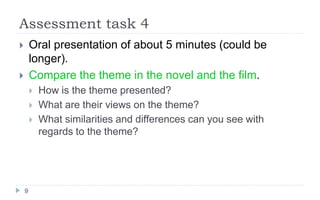
Assessment task 4
9
 Oral presentation of about 5 minutes (could be
longer).
 Compare the theme in the novel and the film.
 How is the theme presented?
 What are their views on the theme?
 What similarities and differences can you see with
regards to the theme?
Oral presentations
10
 Stick to the topic.
 Clear structure: introduction, middle, and a good
ending.
 Use notes – do not read from a script.
 Eye contact and body language.
 Advice on talks and presentations: p. 108-109 in
PGA

Analysing literature

  • 1.
  • 2.
    Theme  Focus onthe theme.  Examples: hatred, revenge, love, hope, friendship, etc.  The message or central topic of a story.  How is the theme presented? How is it dealt with throughout the story? Are there differences in the film and the novel when it comes to the theme?
  • 3.
    Literary terms 3  Whenfocusing on the theme, you might want to connect it to other aspects of the novel/film:  Setting  Characters  Plot  Metaphors and symbols  Narrator
  • 4.
    Setting 4  When?  Present,past or future  How do we know?  Where?  The place  One or several?  How do we know?  Are these things relevant to the theme?
  • 5.
    Characters 5  Protagonist –main character  Antagonist – an important character that opposes the main character.  Appearance and personalities.  Can you connect it to the theme?
  • 6.
    Plot 6  What thestory is about.  The main events.  Can you see a connection to the theme?
  • 7.
    Metaphors and symbols 7 Metaphors – a way of describing something by comparing it to something else: “The city is a jungle.”  Symbols - when an object is meant to represent something or an idea greater than the object itself.  Cross - representative of Christ or Christianity  Owl - wisdom or knowledge  Yellow - implies cowardice or rot
  • 8.
    Narrator 8  The “person”telling the story.  Could be a character in the novel or someone from the outside.  First, second or third person narrator.  Omniscient narrator – all-knowing
  • 9.
    Assessment task 4 9 Oral presentation of about 5 minutes (could be longer).  Compare the theme in the novel and the film.  How is the theme presented?  What are their views on the theme?  What similarities and differences can you see with regards to the theme?
  • 10.
    Oral presentations 10  Stickto the topic.  Clear structure: introduction, middle, and a good ending.  Use notes – do not read from a script.  Eye contact and body language.  Advice on talks and presentations: p. 108-109 in PGA