STORY ANALYSIS TASK 
TYRA CHUCK
STORY ANALYSIS 1 
PRACTICALITIES- issues when 
making it into a film (cast size, 
location, etc.) 
LOGICAL CAUSALITY- is it 
rational because it serves as a basis 
of what we will acknowledge as 
rational? 
THEAMATIC UNITY- are 
themes within the story linked 
throughout ? 
CHARACTER DEVELOPMENT-character 
motivation of growth. 
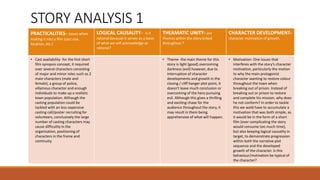
• Cast availability- for the first short 
film synopsis concept, it required 
over several characters consisting 
of major and minor roles such as 2 
main characters (male and 
female), a group of police, 
villainous character and enough 
individuals to make up a realistic 
town population. Although the 
casting population could be 
tackled with an less expensive 
casting call/poster recruiting for 
volunteers, conclusively the large 
number of casting characters may 
cause difficultly in the 
organisation, positioning of 
characters in the frame and 
continuity. 
• Theme- the main theme for this 
story is light (good) overcoming 
darkness (evil) however, due to 
interruption of character 
developments and growth in the 
closing / cliff hanger plot point, it 
doesn't leave much conclusion or 
overcoming of the hero pursuing 
evil. Although this gives a thrilling 
and exciting chase for the 
audience throughout the story, it 
may result in them being 
apprehensive of what will happen. 
• Motivation- One issues that 
interferes with the story’s character 
motivation, particularly the motion 
to why the main protagonist 
character wanting to restore colour 
throughout the town when 
breaking out of prison. Instead of 
breaking out or prison to restore 
and complete his mission, why does 
he not conform? In order to tackle 
this we wold have to accumulate a 
motivation that was both simple, as 
it would be in the form of a short 
film (over complicating the story 
would consume too much time), 
but also keeping logical causality in 
target, to demonstrate progression 
within both the narrative plot 
sequence and the developed 
growth of the character. Is this 
behaviour/motivation be typical of 
the character?
STORY ANALYSIS 1(CONT)- 
PRACTICALITIES- issues when 
making it into a film (cast size, 
location, etc.) 
LOGICAL CAUSALITY- is it 
rational because it serves as a basis 
of what we will acknowledge as 
rational? 
THEAMATIC UNITY- are 
themes within the story linked 
throughout ? 
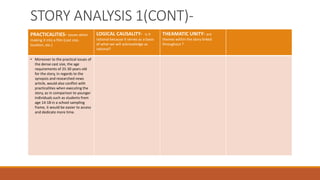
• Moreover to the practical issues of 
the dense cast size, the age 
requirements of 25-30 years old 
for the story, in regards to the 
synopsis and researched news 
article, would also conflict with 
practicalities when executing the 
story, as in comparison to younger 
individuals such as students from 
age 14-18 in a school sampling 
frame, it would be easier to access 
and dedicate more time.
STORY ANALYSIS 2 
PRACTICALITIES- issues when 
making it into a film (cast size, 
location, etc.) 
LOGICAL CAUSALITY- is it 
rational because it serves as a basis 
of what we will acknowledge as 
rational? 
THEAMATIC UNITY- are 
themes within the story linked 
throughout ? 
CHARACTER DEVELOPMENT-character 
motivation of growth. 
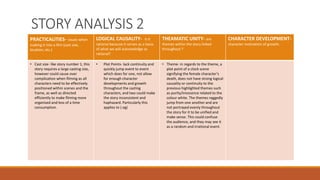
• Cast size- like story number 1, this 
story requires a large casting size, 
however could cause over 
complication when filming as all 
characters need to be effectively 
positioned within scenes and the 
frame, as well as directed 
efficiently to make filming more 
organised and less of a time 
consumption. 
• Plot Points- lack continuity and 
quickly jump event to event 
which does for one, not allow 
for enough character 
developments and growth 
throughout the casting 
characters, and two could make 
the story inconsistent and 
haphazard. Particularly this 
applies to ( eg) 
• Theme- in regards to the theme, a 
plot point of a clock scene 
signifying the female character’s 
death, does not have strong logical 
causality or continuity to the 
previous highlighted themes such 
as purity/innocence related to the 
colour white. The themes raggedly 
jump from one another and are 
not portrayed evenly throughout 
the story for it to be unified and 
make sense. This could confuse 
the audience, and they may see it 
as a random and irrational event.
STORY ANALYSIS 2 
PRACTICALITIES- issues when 
making it into a film (cast size, 
location, etc.) 
LOGICAL CAUSALITY- is it 
rational because it serves as a basis 
of what we will acknowledge as 
rational? 
THEAMATIC UNITY- are 
themes within the story linked 
throughout ? 
CHARACTER DEVELOPMENT-character 
motivation of growth. 
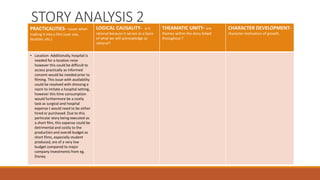
• Location- Additionally, hospital is 
needed for a location reise 
however this could be difficult to 
access practically as informed 
consent would be needed prior to 
filming. This issue with availability 
could be resolved with dressing a 
room to imitate a hospital setting, 
however this time consumption 
would furthermore be a costly 
task as surgical and hospital 
expense t would need to be either 
hired or purchased. Due to this 
particular story being executed as 
a short film, this expense could be 
detrimental and costly to the 
production and overall budget as 
short films, especially student 
produced, are of a very low 
budget compared to major 
company investments from eg. 
Disney.
STORY ANALYSIS 3 
PRACTICALITIES- issues when 
making it into a film (cast size, 
location, etc.) 
LOGICAL CAUSALITY- is it 
rational because it serves as a basis 
of what we will acknowledge as 
rational? 
THEAMATIC UNITY- are 
themes within the story linked 
throughout ? 
CHARACTER DEVELOPMENT-character 
motivation of growth. 
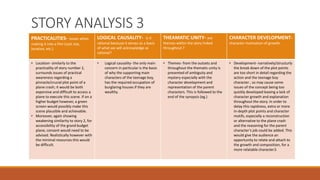
• Location- similarly to the 
practicality of story number 2, 
surrounds issues of practical 
awareness regarding a 
pinnacle/crucial plot point of a 
plane crash; it would be both 
expensive and difficult to access a 
plane to execute this scene. If on a 
higher budget however, a green 
screen would possibly make this 
scene plausible and achievable. 
• Moreover, again showing 
weakening similarity to story 2, for 
accessibility of the grand budget 
plane, consent would need to be 
advised. Realistically however with 
the minimal resources this would 
be difficult. 
• Logical causality- the only main 
concern in particular is the basis 
of why the supporting main 
characters of the teenage boy, 
has the required occupation of 
burglaring houses if they are 
wealthy. 
• Themes- from the outsets and 
throughout the thematic unity is 
presented of ambiguity and 
mystery especially with the 
character development and 
representation of the parent 
characters. This is followed to the 
end of the synopsis (eg.) 
• Development- narratively/structurly 
the break down of the plot points 
are too short in detail regarding the 
action and the teenage boy 
character , so may cause some 
issues of the concept being too 
quickly developed leaving a lack of 
character growth and explanation 
throughout the story. In order to 
delay this rapidness, extra or more 
in-depth plot points and character 
motifs, especially a reconstruction 
or alternative to the plane crash 
and the reasoning for the parent 
character’s job could be added. This 
would give the audience an 
opportunity to relate and attach to 
the growth and composition, for a 
more relatable character.S

Story analysis

  • 1.
  • 2.
    STORY ANALYSIS 1 PRACTICALITIES- issues when making it into a film (cast size, location, etc.) LOGICAL CAUSALITY- is it rational because it serves as a basis of what we will acknowledge as rational? THEAMATIC UNITY- are themes within the story linked throughout ? CHARACTER DEVELOPMENT-character motivation of growth. • Cast availability- for the first short film synopsis concept, it required over several characters consisting of major and minor roles such as 2 main characters (male and female), a group of police, villainous character and enough individuals to make up a realistic town population. Although the casting population could be tackled with an less expensive casting call/poster recruiting for volunteers, conclusively the large number of casting characters may cause difficultly in the organisation, positioning of characters in the frame and continuity. • Theme- the main theme for this story is light (good) overcoming darkness (evil) however, due to interruption of character developments and growth in the closing / cliff hanger plot point, it doesn't leave much conclusion or overcoming of the hero pursuing evil. Although this gives a thrilling and exciting chase for the audience throughout the story, it may result in them being apprehensive of what will happen. • Motivation- One issues that interferes with the story’s character motivation, particularly the motion to why the main protagonist character wanting to restore colour throughout the town when breaking out of prison. Instead of breaking out or prison to restore and complete his mission, why does he not conform? In order to tackle this we wold have to accumulate a motivation that was both simple, as it would be in the form of a short film (over complicating the story would consume too much time), but also keeping logical causality in target, to demonstrate progression within both the narrative plot sequence and the developed growth of the character. Is this behaviour/motivation be typical of the character?
  • 3.
    STORY ANALYSIS 1(CONT)- PRACTICALITIES- issues when making it into a film (cast size, location, etc.) LOGICAL CAUSALITY- is it rational because it serves as a basis of what we will acknowledge as rational? THEAMATIC UNITY- are themes within the story linked throughout ? • Moreover to the practical issues of the dense cast size, the age requirements of 25-30 years old for the story, in regards to the synopsis and researched news article, would also conflict with practicalities when executing the story, as in comparison to younger individuals such as students from age 14-18 in a school sampling frame, it would be easier to access and dedicate more time.
  • 4.
    STORY ANALYSIS 2 PRACTICALITIES- issues when making it into a film (cast size, location, etc.) LOGICAL CAUSALITY- is it rational because it serves as a basis of what we will acknowledge as rational? THEAMATIC UNITY- are themes within the story linked throughout ? CHARACTER DEVELOPMENT-character motivation of growth. • Cast size- like story number 1, this story requires a large casting size, however could cause over complication when filming as all characters need to be effectively positioned within scenes and the frame, as well as directed efficiently to make filming more organised and less of a time consumption. • Plot Points- lack continuity and quickly jump event to event which does for one, not allow for enough character developments and growth throughout the casting characters, and two could make the story inconsistent and haphazard. Particularly this applies to ( eg) • Theme- in regards to the theme, a plot point of a clock scene signifying the female character’s death, does not have strong logical causality or continuity to the previous highlighted themes such as purity/innocence related to the colour white. The themes raggedly jump from one another and are not portrayed evenly throughout the story for it to be unified and make sense. This could confuse the audience, and they may see it as a random and irrational event.
  • 5.
    STORY ANALYSIS 2 PRACTICALITIES- issues when making it into a film (cast size, location, etc.) LOGICAL CAUSALITY- is it rational because it serves as a basis of what we will acknowledge as rational? THEAMATIC UNITY- are themes within the story linked throughout ? CHARACTER DEVELOPMENT-character motivation of growth. • Location- Additionally, hospital is needed for a location reise however this could be difficult to access practically as informed consent would be needed prior to filming. This issue with availability could be resolved with dressing a room to imitate a hospital setting, however this time consumption would furthermore be a costly task as surgical and hospital expense t would need to be either hired or purchased. Due to this particular story being executed as a short film, this expense could be detrimental and costly to the production and overall budget as short films, especially student produced, are of a very low budget compared to major company investments from eg. Disney.
  • 6.
    STORY ANALYSIS 3 PRACTICALITIES- issues when making it into a film (cast size, location, etc.) LOGICAL CAUSALITY- is it rational because it serves as a basis of what we will acknowledge as rational? THEAMATIC UNITY- are themes within the story linked throughout ? CHARACTER DEVELOPMENT-character motivation of growth. • Location- similarly to the practicality of story number 2, surrounds issues of practical awareness regarding a pinnacle/crucial plot point of a plane crash; it would be both expensive and difficult to access a plane to execute this scene. If on a higher budget however, a green screen would possibly make this scene plausible and achievable. • Moreover, again showing weakening similarity to story 2, for accessibility of the grand budget plane, consent would need to be advised. Realistically however with the minimal resources this would be difficult. • Logical causality- the only main concern in particular is the basis of why the supporting main characters of the teenage boy, has the required occupation of burglaring houses if they are wealthy. • Themes- from the outsets and throughout the thematic unity is presented of ambiguity and mystery especially with the character development and representation of the parent characters. This is followed to the end of the synopsis (eg.) • Development- narratively/structurly the break down of the plot points are too short in detail regarding the action and the teenage boy character , so may cause some issues of the concept being too quickly developed leaving a lack of character growth and explanation throughout the story. In order to delay this rapidness, extra or more in-depth plot points and character motifs, especially a reconstruction or alternative to the plane crash and the reasoning for the parent character’s job could be added. This would give the audience an opportunity to relate and attach to the growth and composition, for a more relatable character.S