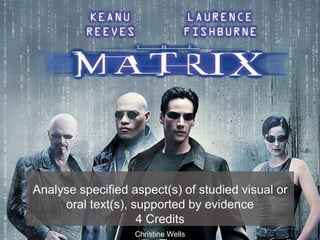
Analyse specified aspect(s) of studied visual or 
oral text(s), supported by evidence 
4 Credits 
Christine Wells
Learning Outcomes 
Gathering Processing 
Identify and describe key aspects of 
the text such as characterisation, 
setting, themes, and visual and 
verbal features. 
Explain where key aspects are 
demonstrated in the text. 
Compare and contrast characters.
success criteria 
Gathering Processing Applying 
Demonstrate 
engagement with the 
film through viewing 
and reading relevant 
information. 
Demonstrate 
understanding of key 
aspects through 
discussion and written 
answers. 
Analyse key aspects 
of the text and 
demonstrate 
understanding by 
producing written 
essays. 
Create a digital 
portfolio of study 
notes.
3 Act structure 
1. Create a flow chart to show the progression of the 
narrative. Include exposition, climax & resolution. 
2. For each section, write a brief description from the 
film. 
3. Include a visual/verbal feature to represent each 
section. 
4 
Thinking 
Relating to others 
Using language, text and symbols 
Managing self 
Participating and contributing 
Suggested app: 
Pureflow
close reading 
5 
Thinking 
Relating to others 
Using language, text and symbols 
Managing self 
Participating and contributing 
What is 
happening? 
Character(s) 
involved 
Visual/verbal 
feature 
Director’s 
intention
Getting to know the characters 
Choose 3 characters and complete 
a chart for each one. 
Character 
adjectives 
Visual/verbal feature 
What does the viewer 
learn? 
describing words or 
phrases 
costume & makeup 
About the character or 
their motivations 
camera work, sound 
and lighting 
About human behaviour 
in general 
dialogue 
About the world around 
us 
6 
Thinking 
Using language, text and symbols 
Managing self 
Participating and contributing
Characters & Challenges 
Any information about the characters is important to the film. 
Characters develop and change during the film as they face challenges 
and conflict. Write a blog post to discuss the following: 
1. Choose 1 character and describe a challenge in their life. 
2. Explain how they coped with it (aim for 3 ways). 
3. List 6 visual/verbal techniques which support your ideas. 
4. What do we learn about the type of person she/he is? 
5. Explain what the director wants us to learn from this character and how 
they dealt with their challenges/conflict. 
7 
Thinking 
Using language, text and symbols 
Managing self 
Participating and contributing
Compare and Contrast 
1. Work in pairs to create a Venn diagram to show the similarities 
and differences between 2 characters. Aim for 5 of each. 
2. Choose 1 similarity and one difference and discuss what may 
have caused this similarity or difference. 
Character 1 Character 2 
similarities 
Thinking 
Relating to others 
Using language, text and 
symbols 
Managing self 
Participating and 
contributing
change in a character 
1. Explain the outcome 
Thinking 
Using language, text and 
symbols 
Managing self 
Participating and 
contributing 
1. Describe the 
character at the 
beginning of the 
film. 
1 3 
2. Include 
visual/verbal 
features to 
support your 
description. 
1. Identify and describe the 
event or person that 
influenced a change in the 
character. 
2. Explain how the character 
changed. 
3. Include visual/verbal features. 
of this change. What 
did the character 
learn from this? 
2. What does the 
director want us as 
viewers to learn from 
this change? 
3. Include visual/verbal 
features. 
2
Relationship development 
Thinking 
Using language, text and 
symbols 
Managing self 
Participating and contributing 
1. Identify an 
important 
relationship in 
the film. 
2. Describe this 
relationship – 
are they 
friends, related, 
enemies? 
3. Identify any 
visual/verbal 
features that 
support your 
description. 
1. Identify and 
describe the 
changes in this 
relationship. 
Does the balance 
of power 
change? 
2. Describe a major 
conflict in their 
relationship. 
3. Does one person 
help the other in 
some way? What 
is the outcome? 
4. Include 
visual/verbal 
features. 
1. Describe the 
relationship at the 
end of the film. Do 
the characters 
respect one 
another? Why/why 
not? 
2. Explain what the 
director want us as 
viewers to learn 
from this 
relationship. 
3. Can this be linked to 
human nature or the 
world in general? 
4. Include visual/verbal 
techniques.
Essay Topics 
Thinking 
Using language, text and 
symbols 
Managing self 
Choose ONE of the following questions and write at least 400 
words. 
1. Analyse how the beginning AND ending of a text show an 
important change in a character or individual in a text you 
have studied. 
2. Analyse how a character or individual is influenced to make 
decisions in a text you have studied. 
3. Analyse how the growth of a relationship affects the climax in 
a text you have studied. 
Publish on Wordpress
Setting 
Thinking 
Relating to others 
Using language, text and symbols 
Managing self 
Participating and contributing 
• Setting may include reference to time, place, historical or social 
context, or atmosphere. 
1. Work in pairs to identify the 3 main settings in the text. 
2. Choose 1 and create a brainstorm of adjectives to describe it. 
3. Locate 3 visual/verbal features and images from the film that link to 
3 of your adjectives. 
Suggested app: 
PicCollage
Setting & Effect 
Thinking 
Using language, text and 
symbols 
Managing self 
Participating and 
contributing 
1. Explain the effect that the setting has on the life of the 
protagonist. 
2. Imagine how the setting would affect you. Write a blog post 
to describe how you would react to the setting. 
3. Explain what you think the director wants us to learn about 
the protagonist by placing him in this setting.
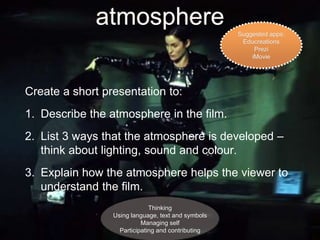
atmosphere 
Create a short presentation to: 
1. Describe the atmosphere in the film. 
2. List 3 ways that the atmosphere is developed – 
think about lighting, sound and colour. 
3. Explain how the atmosphere helps the viewer to 
understand the film. 
Thinking 
Using language, text and symbols 
Managing self 
Participating and contributing 
Suggested apps: 
Educreations 
Prezi 
iMovie
Themes 
Thinking 
Relating to others 
Using language, text and symbols 
Managing self 
Participating and contributing 
A theme is a broad idea, message, or moral of a story. The 
message may be about life, society, or human nature. Themes 
often explore timeless and universal ideas and are almost 
always implied rather than stated explicitly. 
1. In pairs, brainstorm a list of possible themes. 
2. For each theme, locate a YouTube clip for the relevant 
section of the film where the theme is shown. 
3. Post on your blog with an explanation of how this clip 
demonstrates the theme.
Theme and meaning 
1. Choose one theme and discuss the meaning of your theme. What 
does it mean exactly? 
2. Explain how this theme may be seen in today’s world. 
3. What does the director want us to understand about this theme? 
4. Identify any social issues that may be related to this theme. For 
example, health issues; power and violence related issues. 
Thinking 
Using language, text and symbols 
Managing self 
Participating and contributing
Theme & characters 
1. In pairs, choose 2 themes and list the characters that are 
linked to each theme. 
2. Explain why you linked each character to the theme. 
3. Include a visual/verbal feature for each. 
4. Explain what you think the director wants us to learn about 
these characters by using this theme. 
Thinking 
Relating to others 
Using language, text and symbols 
Managing self 
Participating and contributing
Theme in action 
In pairs, choose one of the following activities to complete: 
1. Choose a part of the film that shows one of the themes in action and 
create a short cartoon to show what happens. Include dialogue from 
the film. 
2. Create a collage of visual/verbal features from the film that are linked to 
the themes. 
3. Create a poster portraying the themes. Split your poster into sections, 
each section will be for each theme. Include characters & dialogue in 
the relevant section. 
Thinking 
Relating to others 
Using language, text and symbols 
Managing self 
Participating and contributing 
Suggested apps: 
Comic creator 
Pic Collage
Symbols 
Thinking 
Relating to others 
Using language, text and 
symbols 
Managing self 
Participating and 
contributing 
A symbol is a person, place, or thing comes to represent an abstract idea or 
concept -- it is anything that stands for something beyond itself. 
1. Create a Pinterest board for symbols. 
2. Choose 3 and explain what each one’s significance is, where it is seen in 
the text and which theme and character it is linked to. 
3. Explain why the director included each symbol. What does he want the 
viewer to learn or think about? 
Suggested app: 
Pinterest
Essay Topics 
1. Analyse how symbols are used to develop an idea in the text you 
have studied. 
2. Analyse how successful a text you have studied has been in 
influencing you to think differently about an issue. 
3. Analyse how important techniques are used to engage our emotions 
in a text you have studied. 
4. Analyse how atmosphere is established and maintained in a text you 
have studied. 
Thinking 
Using language, text and 
symbols 
Managing self
Assessment schedule 
Achievement 
• Analyse specified aspect(s) of studied written text(s), supported by evidence. 
Achievement with Merit 
• Analyse specified aspect(s) of studied written text(s) convincingly, supported by 
evidence. 
Achievement with Excellence 
• Analyse specified aspect(s) of studied written text(s) perceptively, supported by 
evidence. 21

The Matrix Film Study

  • 1.
    Analyse specified aspect(s)of studied visual or oral text(s), supported by evidence 4 Credits Christine Wells
  • 2.
    Learning Outcomes GatheringProcessing Identify and describe key aspects of the text such as characterisation, setting, themes, and visual and verbal features. Explain where key aspects are demonstrated in the text. Compare and contrast characters.
  • 3.
    success criteria GatheringProcessing Applying Demonstrate engagement with the film through viewing and reading relevant information. Demonstrate understanding of key aspects through discussion and written answers. Analyse key aspects of the text and demonstrate understanding by producing written essays. Create a digital portfolio of study notes.
  • 4.
    3 Act structure 1. Create a flow chart to show the progression of the narrative. Include exposition, climax & resolution. 2. For each section, write a brief description from the film. 3. Include a visual/verbal feature to represent each section. 4 Thinking Relating to others Using language, text and symbols Managing self Participating and contributing Suggested app: Pureflow
  • 5.
    close reading 5 Thinking Relating to others Using language, text and symbols Managing self Participating and contributing What is happening? Character(s) involved Visual/verbal feature Director’s intention
  • 6.
    Getting to knowthe characters Choose 3 characters and complete a chart for each one. Character adjectives Visual/verbal feature What does the viewer learn? describing words or phrases costume & makeup About the character or their motivations camera work, sound and lighting About human behaviour in general dialogue About the world around us 6 Thinking Using language, text and symbols Managing self Participating and contributing
  • 7.
    Characters & Challenges Any information about the characters is important to the film. Characters develop and change during the film as they face challenges and conflict. Write a blog post to discuss the following: 1. Choose 1 character and describe a challenge in their life. 2. Explain how they coped with it (aim for 3 ways). 3. List 6 visual/verbal techniques which support your ideas. 4. What do we learn about the type of person she/he is? 5. Explain what the director wants us to learn from this character and how they dealt with their challenges/conflict. 7 Thinking Using language, text and symbols Managing self Participating and contributing
  • 8.
    Compare and Contrast 1. Work in pairs to create a Venn diagram to show the similarities and differences between 2 characters. Aim for 5 of each. 2. Choose 1 similarity and one difference and discuss what may have caused this similarity or difference. Character 1 Character 2 similarities Thinking Relating to others Using language, text and symbols Managing self Participating and contributing
  • 9.
    change in acharacter 1. Explain the outcome Thinking Using language, text and symbols Managing self Participating and contributing 1. Describe the character at the beginning of the film. 1 3 2. Include visual/verbal features to support your description. 1. Identify and describe the event or person that influenced a change in the character. 2. Explain how the character changed. 3. Include visual/verbal features. of this change. What did the character learn from this? 2. What does the director want us as viewers to learn from this change? 3. Include visual/verbal features. 2
  • 10.
    Relationship development Thinking Using language, text and symbols Managing self Participating and contributing 1. Identify an important relationship in the film. 2. Describe this relationship – are they friends, related, enemies? 3. Identify any visual/verbal features that support your description. 1. Identify and describe the changes in this relationship. Does the balance of power change? 2. Describe a major conflict in their relationship. 3. Does one person help the other in some way? What is the outcome? 4. Include visual/verbal features. 1. Describe the relationship at the end of the film. Do the characters respect one another? Why/why not? 2. Explain what the director want us as viewers to learn from this relationship. 3. Can this be linked to human nature or the world in general? 4. Include visual/verbal techniques.
  • 11.
    Essay Topics Thinking Using language, text and symbols Managing self Choose ONE of the following questions and write at least 400 words. 1. Analyse how the beginning AND ending of a text show an important change in a character or individual in a text you have studied. 2. Analyse how a character or individual is influenced to make decisions in a text you have studied. 3. Analyse how the growth of a relationship affects the climax in a text you have studied. Publish on Wordpress
  • 12.
    Setting Thinking Relatingto others Using language, text and symbols Managing self Participating and contributing • Setting may include reference to time, place, historical or social context, or atmosphere. 1. Work in pairs to identify the 3 main settings in the text. 2. Choose 1 and create a brainstorm of adjectives to describe it. 3. Locate 3 visual/verbal features and images from the film that link to 3 of your adjectives. Suggested app: PicCollage
  • 13.
    Setting & Effect Thinking Using language, text and symbols Managing self Participating and contributing 1. Explain the effect that the setting has on the life of the protagonist. 2. Imagine how the setting would affect you. Write a blog post to describe how you would react to the setting. 3. Explain what you think the director wants us to learn about the protagonist by placing him in this setting.
  • 14.
    atmosphere Create ashort presentation to: 1. Describe the atmosphere in the film. 2. List 3 ways that the atmosphere is developed – think about lighting, sound and colour. 3. Explain how the atmosphere helps the viewer to understand the film. Thinking Using language, text and symbols Managing self Participating and contributing Suggested apps: Educreations Prezi iMovie
  • 15.
    Themes Thinking Relatingto others Using language, text and symbols Managing self Participating and contributing A theme is a broad idea, message, or moral of a story. The message may be about life, society, or human nature. Themes often explore timeless and universal ideas and are almost always implied rather than stated explicitly. 1. In pairs, brainstorm a list of possible themes. 2. For each theme, locate a YouTube clip for the relevant section of the film where the theme is shown. 3. Post on your blog with an explanation of how this clip demonstrates the theme.
  • 16.
    Theme and meaning 1. Choose one theme and discuss the meaning of your theme. What does it mean exactly? 2. Explain how this theme may be seen in today’s world. 3. What does the director want us to understand about this theme? 4. Identify any social issues that may be related to this theme. For example, health issues; power and violence related issues. Thinking Using language, text and symbols Managing self Participating and contributing
  • 17.
    Theme & characters 1. In pairs, choose 2 themes and list the characters that are linked to each theme. 2. Explain why you linked each character to the theme. 3. Include a visual/verbal feature for each. 4. Explain what you think the director wants us to learn about these characters by using this theme. Thinking Relating to others Using language, text and symbols Managing self Participating and contributing
  • 18.
    Theme in action In pairs, choose one of the following activities to complete: 1. Choose a part of the film that shows one of the themes in action and create a short cartoon to show what happens. Include dialogue from the film. 2. Create a collage of visual/verbal features from the film that are linked to the themes. 3. Create a poster portraying the themes. Split your poster into sections, each section will be for each theme. Include characters & dialogue in the relevant section. Thinking Relating to others Using language, text and symbols Managing self Participating and contributing Suggested apps: Comic creator Pic Collage
  • 19.
    Symbols Thinking Relatingto others Using language, text and symbols Managing self Participating and contributing A symbol is a person, place, or thing comes to represent an abstract idea or concept -- it is anything that stands for something beyond itself. 1. Create a Pinterest board for symbols. 2. Choose 3 and explain what each one’s significance is, where it is seen in the text and which theme and character it is linked to. 3. Explain why the director included each symbol. What does he want the viewer to learn or think about? Suggested app: Pinterest
  • 20.
    Essay Topics 1.Analyse how symbols are used to develop an idea in the text you have studied. 2. Analyse how successful a text you have studied has been in influencing you to think differently about an issue. 3. Analyse how important techniques are used to engage our emotions in a text you have studied. 4. Analyse how atmosphere is established and maintained in a text you have studied. Thinking Using language, text and symbols Managing self
  • 21.
    Assessment schedule Achievement • Analyse specified aspect(s) of studied written text(s), supported by evidence. Achievement with Merit • Analyse specified aspect(s) of studied written text(s) convincingly, supported by evidence. Achievement with Excellence • Analyse specified aspect(s) of studied written text(s) perceptively, supported by evidence. 21