Short Story Analysis
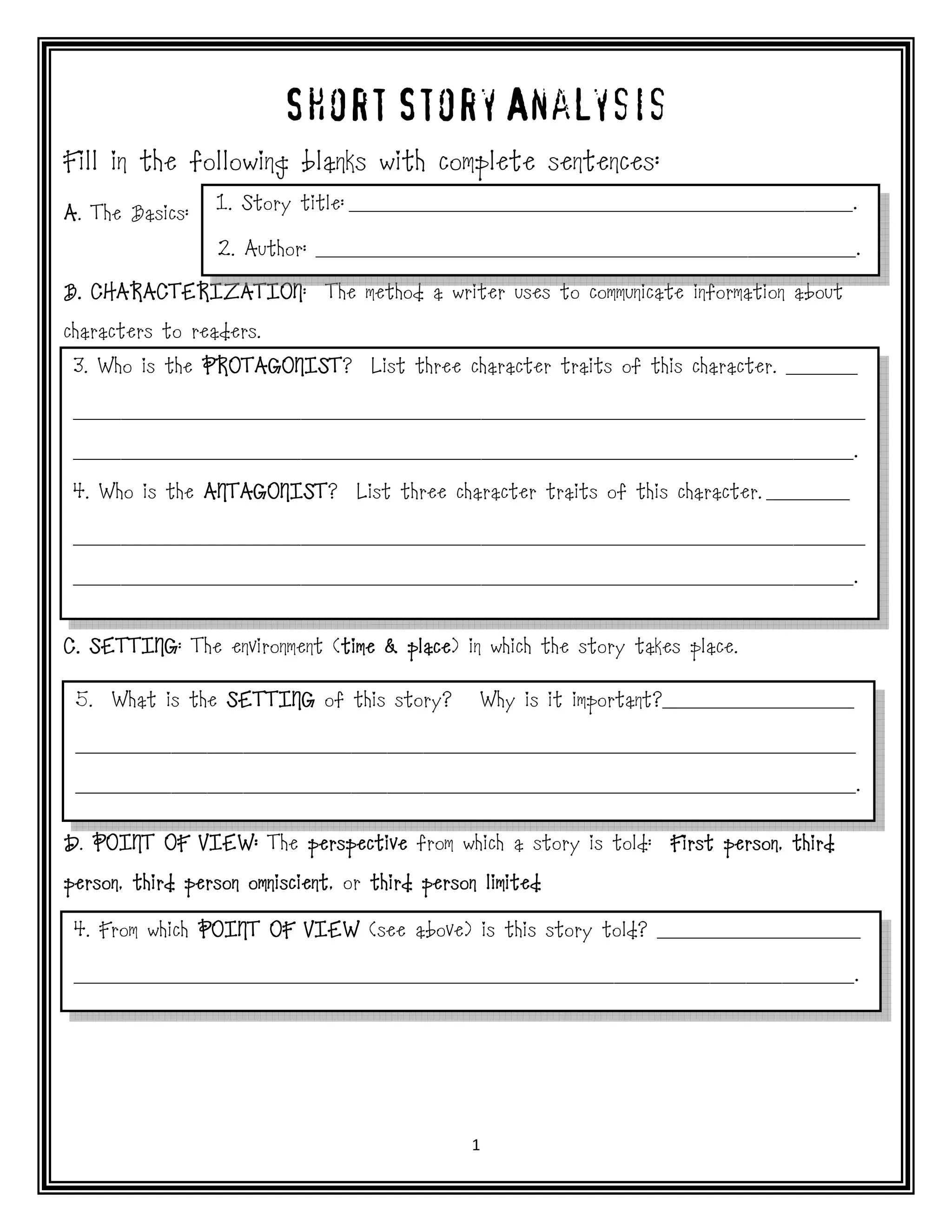
Fill in the following blanks with complete sentences:
                 1. Story title: __________________________________________.
A. The Basics:
                 2. Author: _____________________________________________.

   CHARACTERIZATION:
B. CHARACTERIZATION          The method a writer uses to communicate information about

characters to readers.
 3. Who is the PROTAGONIST
               PROTAGONIST?       List three character traits of this character. ______

 __________________________________________________________________

 _________________________________________________________________.

 4. Who is the ANTAGONIST
               ANTAGONIST?       List three character traits of this character. _______

 __________________________________________________________________

 _________________________________________________________________.


C. SETTING The environment (time & place in which the story takes place.
   SETTING:                 time   place)

 5.   What is the SETTING of this story?       Why is it important?________________

 _________________________________________________________________

 _________________________________________________________________.


D. POINT OF VIEW: The perspective from which a story is told: First person third
                                                                    person,

person,
person third person omniscient or third person limited
                    omniscient,

 4. From which POINT OF VIEW (see above) is this story told? _________________

 _________________________________________________________________.


                                              1
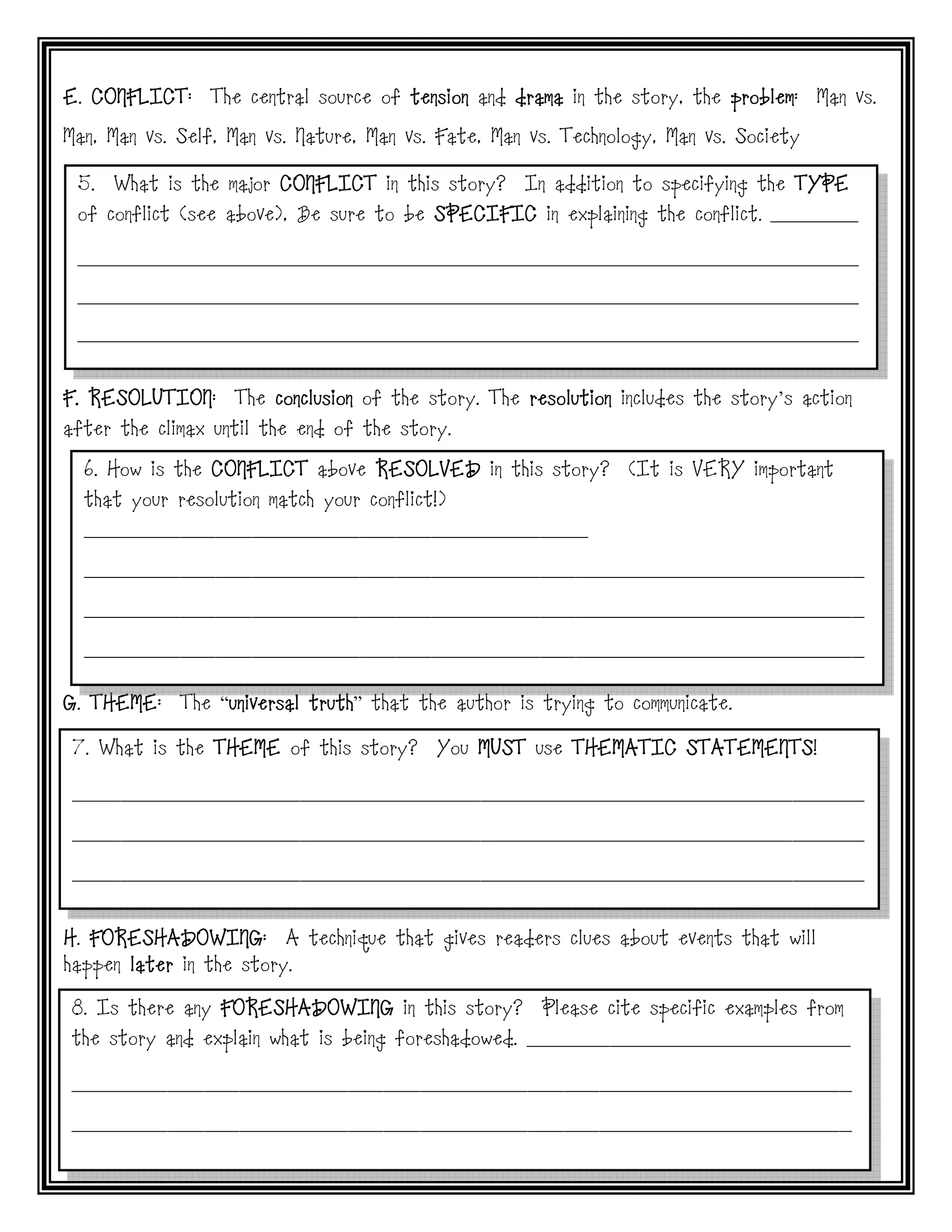
E. CONFLICT
   CONFLICT:    The central source of tension and drama in the story, the problem Man vs.
                                                                          problem:

Man, Man vs. Self, Man vs. Nature, Man vs. Fate, Man vs. Technology, Man vs. Society

 5.   What is the major CONFLICT in this story?     In addition to specifying the TYPE
 of conflict (see above), Be sure to be SPECIFIC in explaining the conflict. ________

 _______________________________________________________________________

 _______________________________________________________________________

 _______________________________________________________________________


F. RESOLUTION:
   RESOLUTION      The conclusion of the story. The resolution includes the story’s action
after the climax until the end of the story.

  6. How is the CONFLICT above RESOLVED in this story? (It is VERY important
  that your resolution match your conflict!)
  __________________________________________

  _________________________________________________________________

  _________________________________________________________________

  _________________________________________________________________

G. THEME
   THEME:    The “universal truth that the author is trying to communicate.
                  universal truth”

 7. What is the THEME of this story?      You MUST use THEMATIC STATEMENTS
                                                                STATEMENTS!

 __________________________________________________________________

 __________________________________________________________________

 __________________________________________________________________


H. FORESHADOWING A technique that gives readers clues about events that will
   FORESHADOWING:
happen later in the story.

8. Is there any FORESHADOWING in this story?          Please cite specific examples from
the story and explain what is being foreshadowed. ___________________________

_________________________________________________________________

_________________________________________________________________
                                               2
_________________________________________________________________
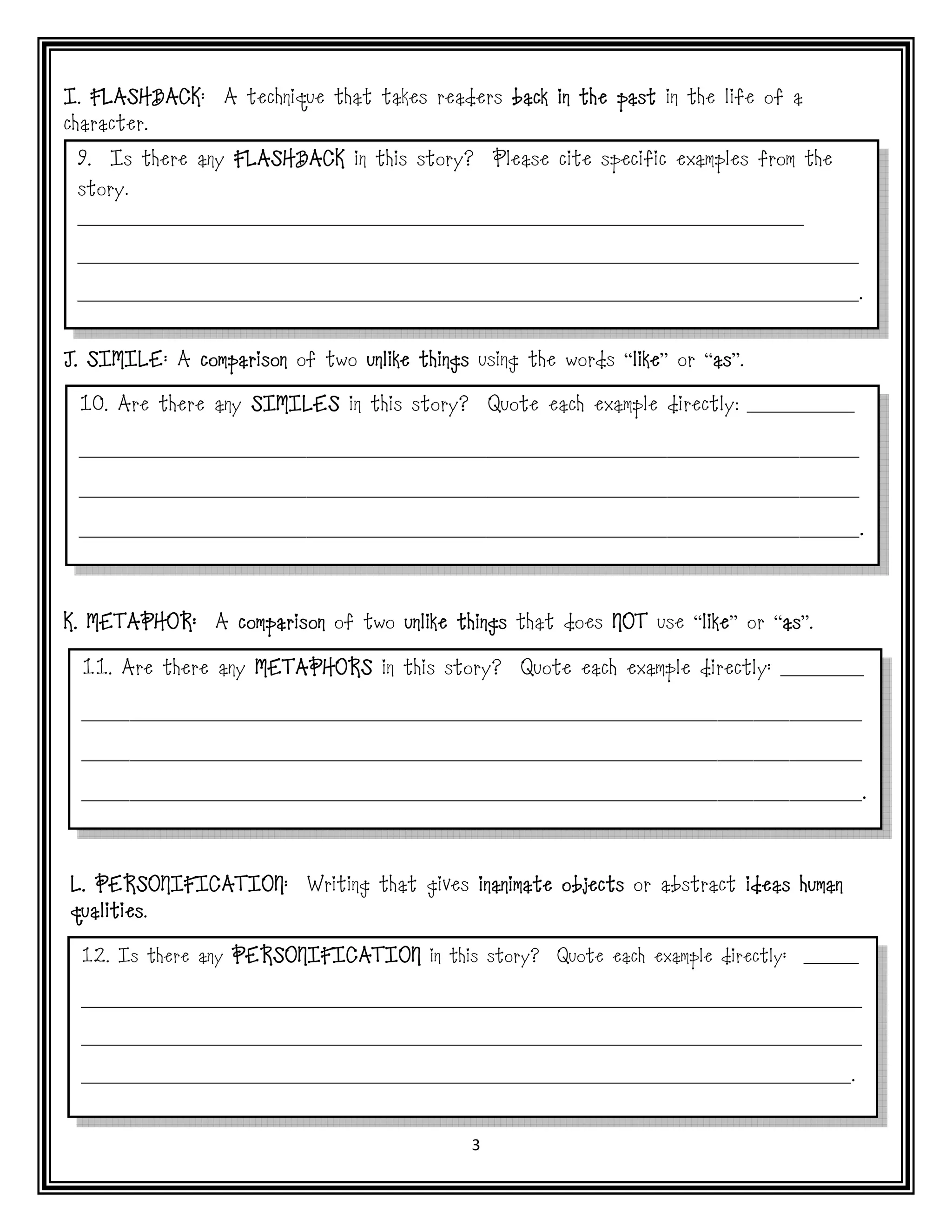
I. FLASHBACK
   FLASHBACK:    A technique that takes readers back in the past in the life of a
character.
 9.   Is there any FLASHBACK in this story?     Please cite specific examples from the
 story.
 __________________________________________________________________

 _______________________________________________________________________

 _______________________________________________________________________.


J. SIMILE A comparison of two unlike things using the words “like or “as
   SIMILE:                                                   like”
                                                             like     as”.
                                                                      as

 10. Are there any SIMILES in this story?       Quote each example directly: _________

 _________________________________________________________________

 _________________________________________________________________

 _________________________________________________________________.


K. METAPHOR: A comparison of two unlike things that does NOT use “like or “as
                                                                  like”
                                                                  like     as”.
                                                                           as

 11. Are there any METAPHORS in this story?        Quote each example directly: _______

 _________________________________________________________________

 _________________________________________________________________

 _________________________________________________________________.


   PERSONIFICATION:
L. PERSONIFICATION        Writing that gives inanimate objects or abstract ideas human
qualities.
qualities

 12. Is there any PERSONIFICATION in this story?       Quote each example directly:   _____

 _______________________________________________________________________

 _______________________________________________________________________

 ______________________________________________________________________.


                                            3
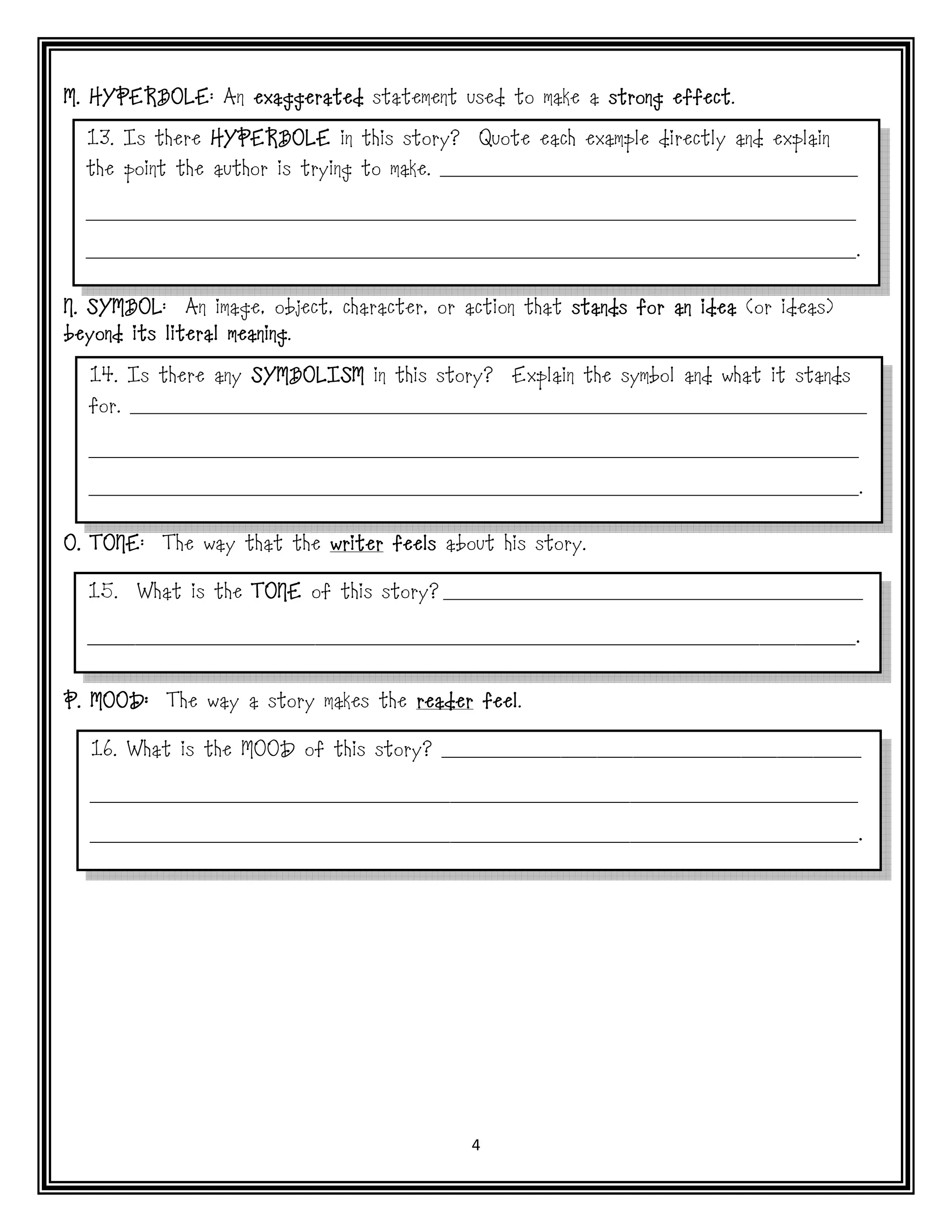
M. HYPERBOLE An exaggerated statement used to make a strong effect
   HYPERBOLE:                                               effect.

  13. Is there HYPERBOLE in this story?      Quote each example directly and explain
  the point the author is trying to make. ______________________________________

  ______________________________________________________________________

  ______________________________________________________________________.


N. SYMBOL An image, object, character, or action that stands for an idea (or ideas)
   SYMBOL:
                   meaning.
beyond its literal meaning

  14. Is there any SYMBOLISM in this story?     Explain the symbol and what it stands
  for. ___________________________________________________________________

  ______________________________________________________________________

  ______________________________________________________________________.


   TONE:
O. TONE    The way that the writer feels about his story.

  15.   What is the TONE of this story? ___________________________________

  ________________________________________________________________.


P. MOOD: The way a story makes the reader feel
                                          feel.

  16. What is the MOOD of this story? ___________________________________

  ________________________________________________________________

  ________________________________________________________________.


                                            4

Short Story Analysis Form

  • 1.
    Short Story Analysis Fillin the following blanks with complete sentences: 1. Story title: __________________________________________. A. The Basics: 2. Author: _____________________________________________. CHARACTERIZATION: B. CHARACTERIZATION The method a writer uses to communicate information about characters to readers. 3. Who is the PROTAGONIST PROTAGONIST? List three character traits of this character. ______ __________________________________________________________________ _________________________________________________________________. 4. Who is the ANTAGONIST ANTAGONIST? List three character traits of this character. _______ __________________________________________________________________ _________________________________________________________________. C. SETTING The environment (time & place in which the story takes place. SETTING: time place) 5. What is the SETTING of this story? Why is it important?________________ _________________________________________________________________ _________________________________________________________________. D. POINT OF VIEW: The perspective from which a story is told: First person third person, person, person third person omniscient or third person limited omniscient, 4. From which POINT OF VIEW (see above) is this story told? _________________ _________________________________________________________________. 1
  • 2.
    E. CONFLICT CONFLICT: The central source of tension and drama in the story, the problem Man vs. problem: Man, Man vs. Self, Man vs. Nature, Man vs. Fate, Man vs. Technology, Man vs. Society 5. What is the major CONFLICT in this story? In addition to specifying the TYPE of conflict (see above), Be sure to be SPECIFIC in explaining the conflict. ________ _______________________________________________________________________ _______________________________________________________________________ _______________________________________________________________________ F. RESOLUTION: RESOLUTION The conclusion of the story. The resolution includes the story’s action after the climax until the end of the story. 6. How is the CONFLICT above RESOLVED in this story? (It is VERY important that your resolution match your conflict!) __________________________________________ _________________________________________________________________ _________________________________________________________________ _________________________________________________________________ G. THEME THEME: The “universal truth that the author is trying to communicate. universal truth” 7. What is the THEME of this story? You MUST use THEMATIC STATEMENTS STATEMENTS! __________________________________________________________________ __________________________________________________________________ __________________________________________________________________ H. FORESHADOWING A technique that gives readers clues about events that will FORESHADOWING: happen later in the story. 8. Is there any FORESHADOWING in this story? Please cite specific examples from the story and explain what is being foreshadowed. ___________________________ _________________________________________________________________ _________________________________________________________________ 2 _________________________________________________________________
  • 3.
    I. FLASHBACK FLASHBACK: A technique that takes readers back in the past in the life of a character. 9. Is there any FLASHBACK in this story? Please cite specific examples from the story. __________________________________________________________________ _______________________________________________________________________ _______________________________________________________________________. J. SIMILE A comparison of two unlike things using the words “like or “as SIMILE: like” like as”. as 10. Are there any SIMILES in this story? Quote each example directly: _________ _________________________________________________________________ _________________________________________________________________ _________________________________________________________________. K. METAPHOR: A comparison of two unlike things that does NOT use “like or “as like” like as”. as 11. Are there any METAPHORS in this story? Quote each example directly: _______ _________________________________________________________________ _________________________________________________________________ _________________________________________________________________. PERSONIFICATION: L. PERSONIFICATION Writing that gives inanimate objects or abstract ideas human qualities. qualities 12. Is there any PERSONIFICATION in this story? Quote each example directly: _____ _______________________________________________________________________ _______________________________________________________________________ ______________________________________________________________________. 3
  • 4.
    M. HYPERBOLE Anexaggerated statement used to make a strong effect HYPERBOLE: effect. 13. Is there HYPERBOLE in this story? Quote each example directly and explain the point the author is trying to make. ______________________________________ ______________________________________________________________________ ______________________________________________________________________. N. SYMBOL An image, object, character, or action that stands for an idea (or ideas) SYMBOL: meaning. beyond its literal meaning 14. Is there any SYMBOLISM in this story? Explain the symbol and what it stands for. ___________________________________________________________________ ______________________________________________________________________ ______________________________________________________________________. TONE: O. TONE The way that the writer feels about his story. 15. What is the TONE of this story? ___________________________________ ________________________________________________________________. P. MOOD: The way a story makes the reader feel feel. 16. What is the MOOD of this story? ___________________________________ ________________________________________________________________ ________________________________________________________________. 4