Analyzing Stories 
Introducing the 
Elements of a Story
The following presentation includes 
many terms used to describe the 
elements or parts of a story. You will 
find this information helpful when you 
write or talk about short stories, 
novels, etc.
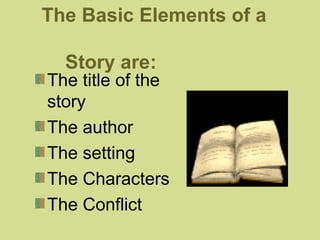
The Basic Elements of a 
Story are: 
The title of the 
story 
The author 
The setting 
The Characters 
The Conflict
The Point of View 
The Tone 
The Plot 
The Turning 
point or climax 
The Resolution
The Title of the Story 
The title of the story usually 
provides the reader a hint or clue 
of what the story will be about. 
Most of the time, the title appears 
in the initial page of the story. 
The title is usually written in 
bigger letters.
The Author 
Most of the stories that are 
written have explicit authors. 
The author is the person that 
writes the story, article or literary 
work. 
The stories that do not have 
explicit authors are said to be 
anonymous or that the author is 
unknown.
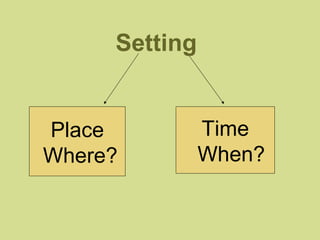
The Setting 
The setting of the story refers to the 
specific time and place of development 
of the story. 
To identify the setting of a story, the 
students must ask themselves the 
following questions: 
Where does the story take place? 
When does the story take place?
Setting 
Place 
Where? 
Time 
When?
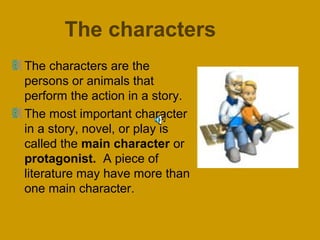
The characters 
The characters are the 
persons or animals that 
perform the action in a story. 
The most important character 
in a story, novel, or play is 
called the main character or 
protagonist. A piece of 
literature may have more than 
one main character.
The other characters 
that are necessary for 
the development of the 
story's plot but are less 
important are called the 
secondary 
characters.
The Conflict 
A problem or struggle between two 
opposing forces in a story. There are 
five basic types of conflicts: 
Man vs. man ( person against person) 
Man vs. himself ( person against self) 
Man vs. society 
Man vs. nature 
Man vs. fate ( God)
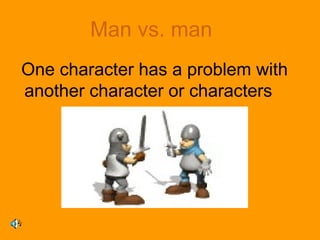
Man vs. man 
One character has a problem with 
another character or characters
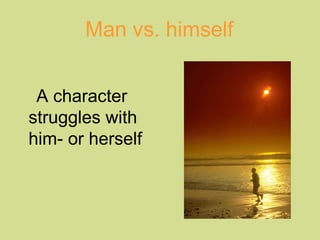
Man vs. himself 
A character 
struggles with 
him- or herself
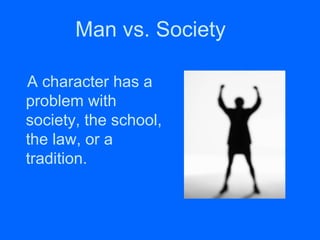
Man vs. Society 
A character has a 
problem with 
society, the school, 
the law, or a 
tradition.
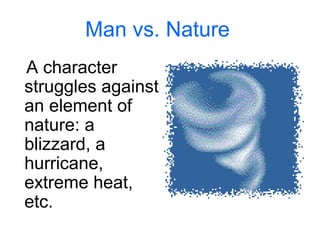
Man vs. Nature 
A character 
struggles against 
an element of 
nature: a 
blizzard, a 
hurricane, 
extreme heat, 
etc.
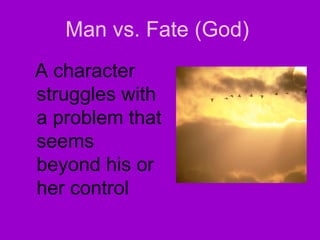
Man vs. Fate (God) 
A character 
struggles with 
a problem that 
seems 
beyond his or 
her control
Point of View 
The angle from 
which a story is 
told, which 
depends upon 
who is telling 
it.The different 
types of point of 
view are:
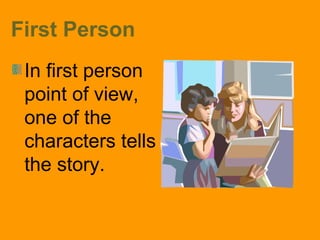
First Person 
In first person 
point of view, 
one of the 
characters tells 
the story.
Third Person 
In third person point of 
view, someone on the 
outside of the story is 
telling it. 
There are actually 
three third-person 
points of view:
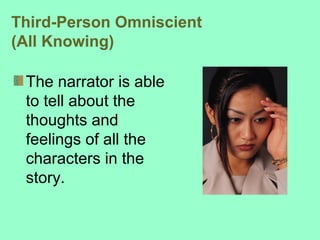
Third-Person Omniscient 
(All Knowing) 
The narrator is able 
to tell about the 
thoughts and 
feelings of all the 
characters in the 
story.
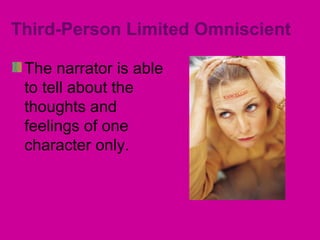
Third-Person Limited Omniscient 
The narrator is able 
to tell about the 
thoughts and 
feelings of one 
character only.
Camera (Objective) View 
The narrator tells 
the story, but 
shares no thoughts 
or feelings of the 
characters.
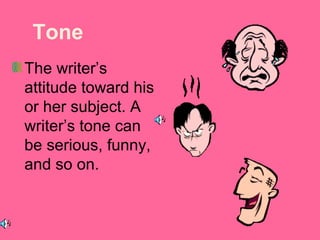
Tone 
The writer’s 
attitude toward his 
or her subject. A 
writer’s tone can 
be serious, funny, 
and so on.
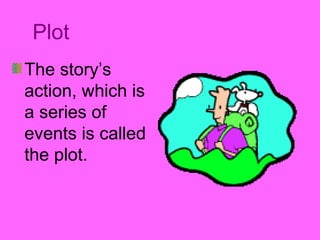
Plot 
The story’s 
action, which is 
a series of 
events is called 
the plot.
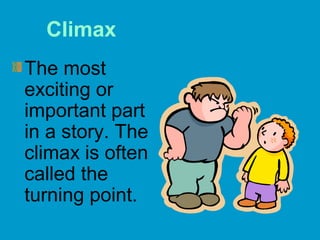
Climax 
The most 
exciting or 
important part 
in a story. The 
climax is often 
called the 
turning point.
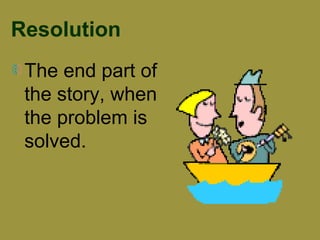
Resolution 
The end part of 
the story, when 
the problem is 
solved.
Prepared by 
Jeanette Carrasquillo 
Isabel Flores School 
Juncos, P.R. 
2014

Analyzing Stories

  • 1.
    Analyzing Stories Introducingthe Elements of a Story
  • 2.
    The following presentationincludes many terms used to describe the elements or parts of a story. You will find this information helpful when you write or talk about short stories, novels, etc.
  • 3.
    The Basic Elementsof a Story are: The title of the story The author The setting The Characters The Conflict
  • 4.
    The Point ofView The Tone The Plot The Turning point or climax The Resolution
  • 5.
    The Title ofthe Story The title of the story usually provides the reader a hint or clue of what the story will be about. Most of the time, the title appears in the initial page of the story. The title is usually written in bigger letters.
  • 6.
    The Author Mostof the stories that are written have explicit authors. The author is the person that writes the story, article or literary work. The stories that do not have explicit authors are said to be anonymous or that the author is unknown.
  • 7.
    The Setting Thesetting of the story refers to the specific time and place of development of the story. To identify the setting of a story, the students must ask themselves the following questions: Where does the story take place? When does the story take place?
  • 8.
  • 9.
    The characters Thecharacters are the persons or animals that perform the action in a story. The most important character in a story, novel, or play is called the main character or protagonist. A piece of literature may have more than one main character.
  • 10.
    The other characters that are necessary for the development of the story's plot but are less important are called the secondary characters.
  • 11.
    The Conflict Aproblem or struggle between two opposing forces in a story. There are five basic types of conflicts: Man vs. man ( person against person) Man vs. himself ( person against self) Man vs. society Man vs. nature Man vs. fate ( God)
  • 12.
    Man vs. man One character has a problem with another character or characters
  • 13.
    Man vs. himself A character struggles with him- or herself
  • 14.
    Man vs. Society A character has a problem with society, the school, the law, or a tradition.
  • 15.
    Man vs. Nature A character struggles against an element of nature: a blizzard, a hurricane, extreme heat, etc.
  • 16.
    Man vs. Fate(God) A character struggles with a problem that seems beyond his or her control
  • 17.
    Point of View The angle from which a story is told, which depends upon who is telling it.The different types of point of view are:
  • 18.
    First Person Infirst person point of view, one of the characters tells the story.
  • 19.
    Third Person Inthird person point of view, someone on the outside of the story is telling it. There are actually three third-person points of view:
  • 20.
    Third-Person Omniscient (AllKnowing) The narrator is able to tell about the thoughts and feelings of all the characters in the story.
  • 21.
    Third-Person Limited Omniscient The narrator is able to tell about the thoughts and feelings of one character only.
  • 22.
    Camera (Objective) View The narrator tells the story, but shares no thoughts or feelings of the characters.
  • 23.
    Tone The writer’s attitude toward his or her subject. A writer’s tone can be serious, funny, and so on.
  • 24.
    Plot The story’s action, which is a series of events is called the plot.
  • 25.
    Climax The most exciting or important part in a story. The climax is often called the turning point.
  • 26.
    Resolution The endpart of the story, when the problem is solved.
  • 27.
    Prepared by JeanetteCarrasquillo Isabel Flores School Juncos, P.R. 2014