Writing the Literary Analysis
Demystifying the process.
An analysis explains what a
work of literature means, and
how it means it.
How is a literary analysis
an argument?
 When writing a literary analysis, you will
focus on specific attribute(s) of the text(s).
 When discussing these attributes, you will
want to make sure that you are making a
specific, arguable point (thesis) about these
attributes.
 You will defend this point with reasons and
evidence drawn from the text. (Much like a
lawyer!)
How to Analyze a Story
 Essential Elements of the Story
 Structure of the Story
 Rhetorical Elements
 Meaning of the Story
How to Analyze a Story
 Meaning of the Story
(Interpretation)
 Identify the theme(s) and how the author
announces it.
 Explain how the story elements contribute
to the theme.
 Identify contextual elements (allusions,
symbols, other devices) that point beyond
the story to the author’s life/experience,
history or to other writings.
How to Analyze a Story
 Essential Elements of the Story
 Theme: main idea—what the work adds up to
 Plot: Relationship and patterns of events
 Characters: people the author creates
 Including the narrator of a story or the speaker
of a poem
 Setting: when and where the action happens
 Point of View: perspective or attitude of the
narrator or speaker
Theme
 Main idea or underlying meaning of the
literary work.
 What the author wants the reader to
understand about the subject
 In fables, this may also be the moral of the
story
Sequence of
Conflict/Crisis/Resolution
 All stories, literary essays, biographies,
and plays have a beginning, a middle,
and an end.
 Typically, the beginning is used to describe
the conflict/problem faced by the
character/subject.
 The middle is used to describe the climax or
crisis reached by the character/subject.
 The end is used to resolve the
conflict/problem and establish a theme.
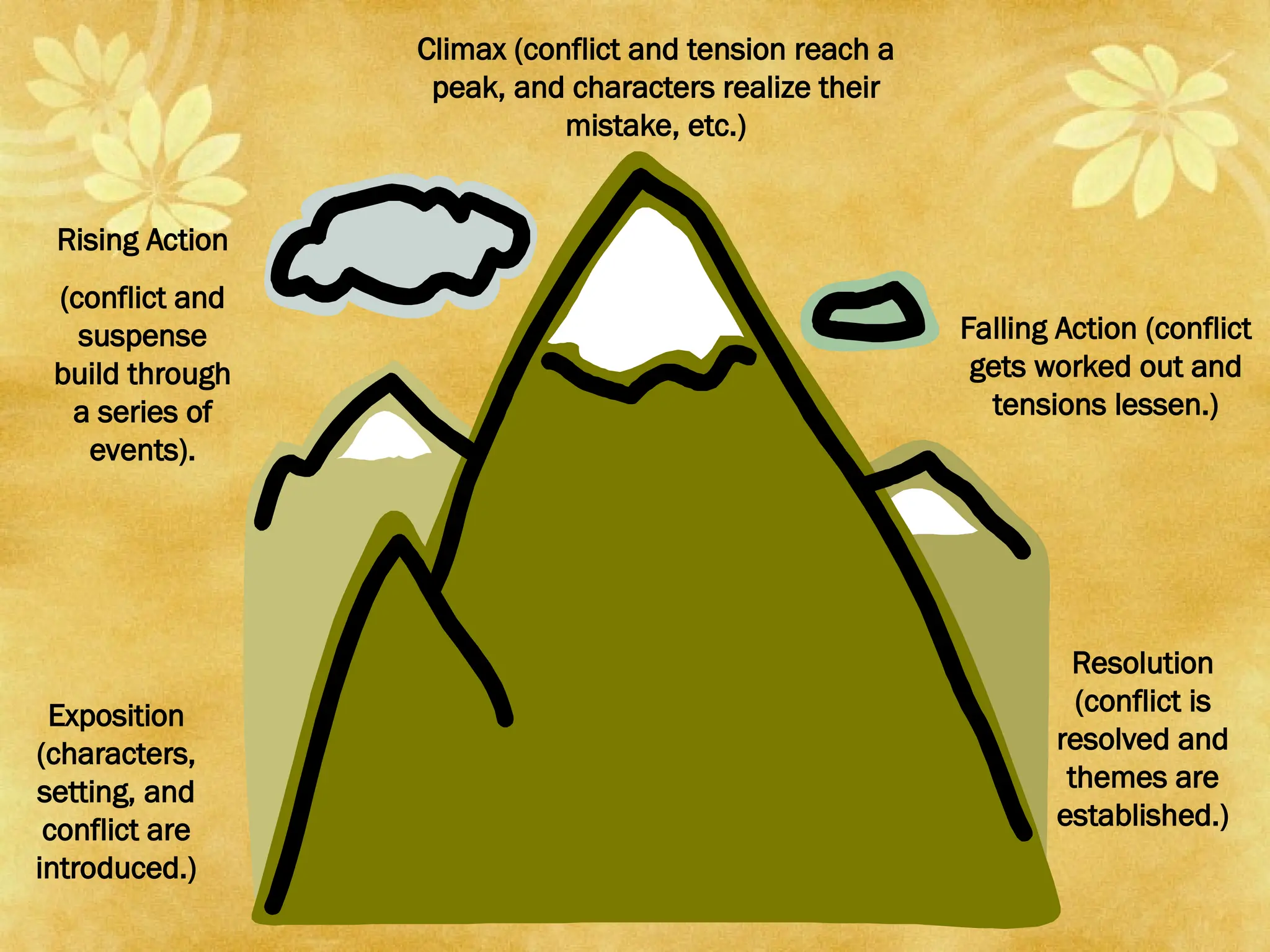
Climax (conflict and tension reach a
peak, and characters realize their
mistake, etc.)
Exposition
(characters,
setting, and
conflict are
introduced.)
Rising Action
(conflict and
suspense
build through
a series of
events).
Falling Action (conflict
gets worked out and
tensions lessen.)
Resolution
(conflict is
resolved and
themes are
established.)
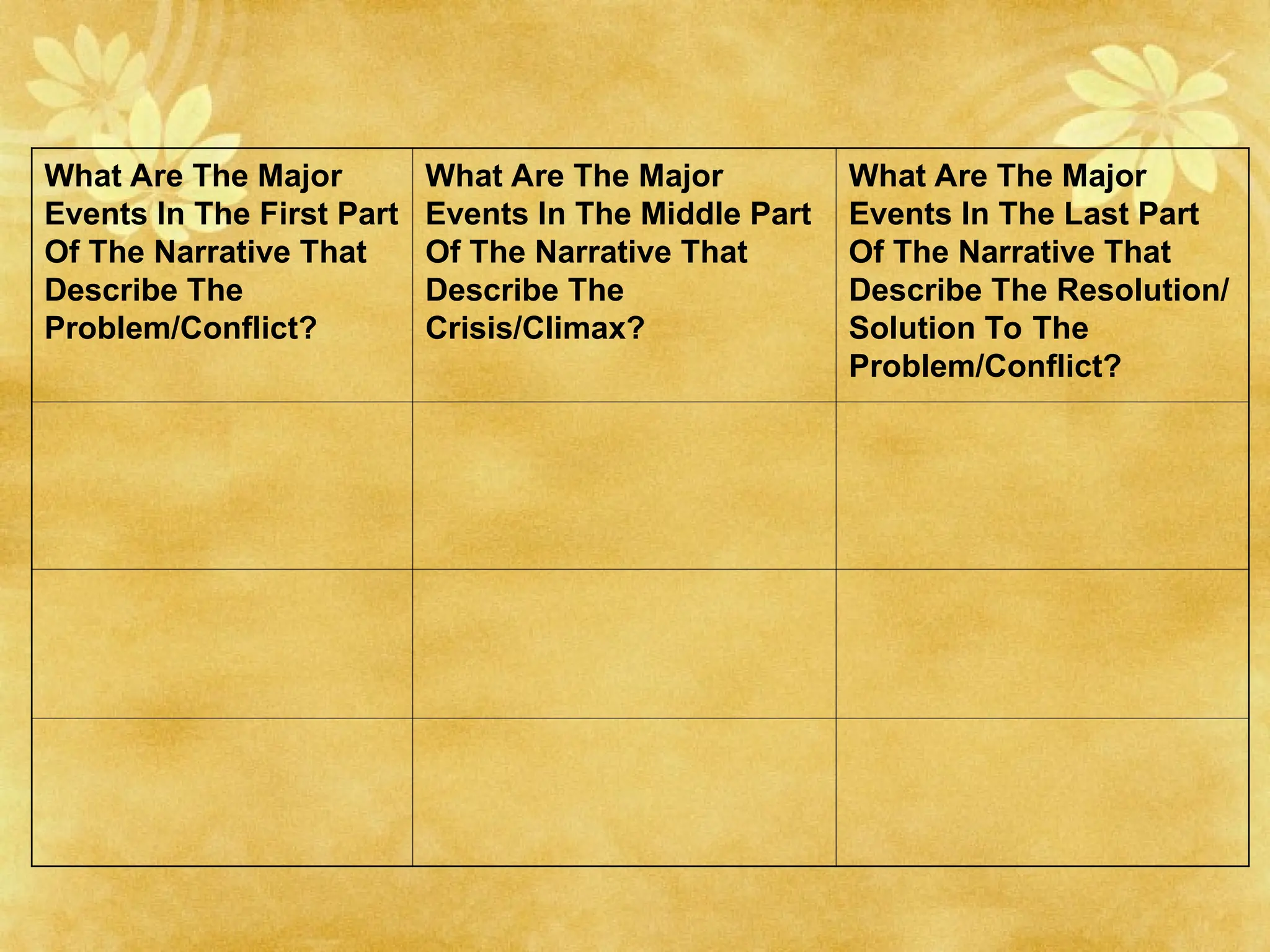
What Are The Major
Events In The First Part
Of The Narrative That
Describe The
Problem/Conflict?
What Are The Major
Events In The Middle Part
Of The Narrative That
Describe The
Crisis/Climax?
What Are The Major
Events In The Last Part
Of The Narrative That
Describe The Resolution/
Solution To The
Problem/Conflict?
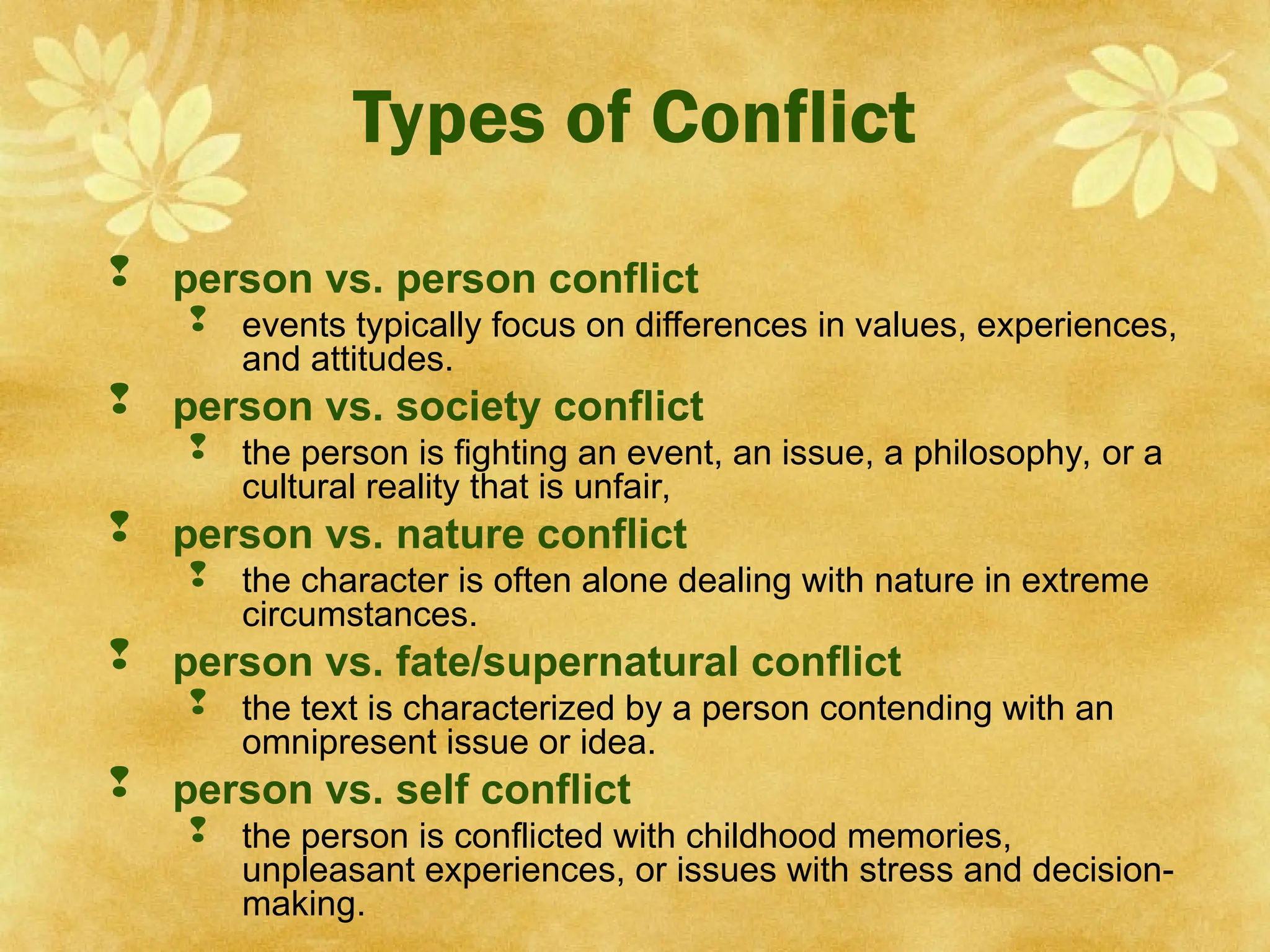
Types of Conflict
 person vs. person conflict
 events typically focus on differences in values, experiences,
and attitudes.
 person vs. society conflict
 the person is fighting an event, an issue, a philosophy, or a
cultural reality that is unfair,
 person vs. nature conflict
 the character is often alone dealing with nature in extreme
circumstances.
 person vs. fate/supernatural conflict
 the text is characterized by a person contending with an
omnipresent issue or idea.
 person vs. self conflict
 the person is conflicted with childhood memories,
unpleasant experiences, or issues with stress and decision-
making.
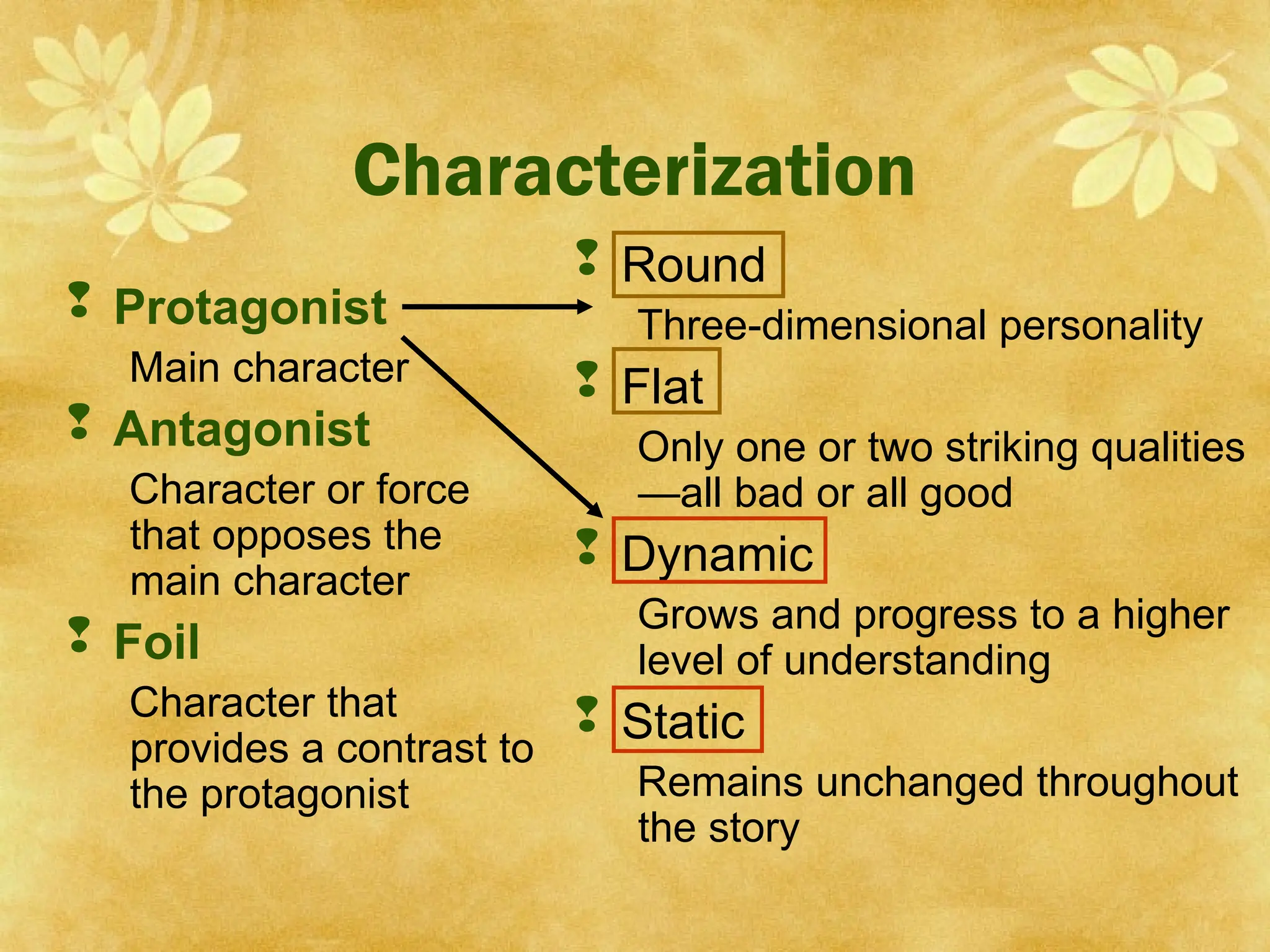
Characterization
 Protagonist
Main character
 Antagonist
Character or force
that opposes the
main character
 Foil
Character that
provides a contrast to
the protagonist
 Round
Three-dimensional personality
 Flat
Only one or two striking qualities
—all bad or all good
 Dynamic
Grows and progress to a higher
level of understanding
 Static
Remains unchanged throughout
the story
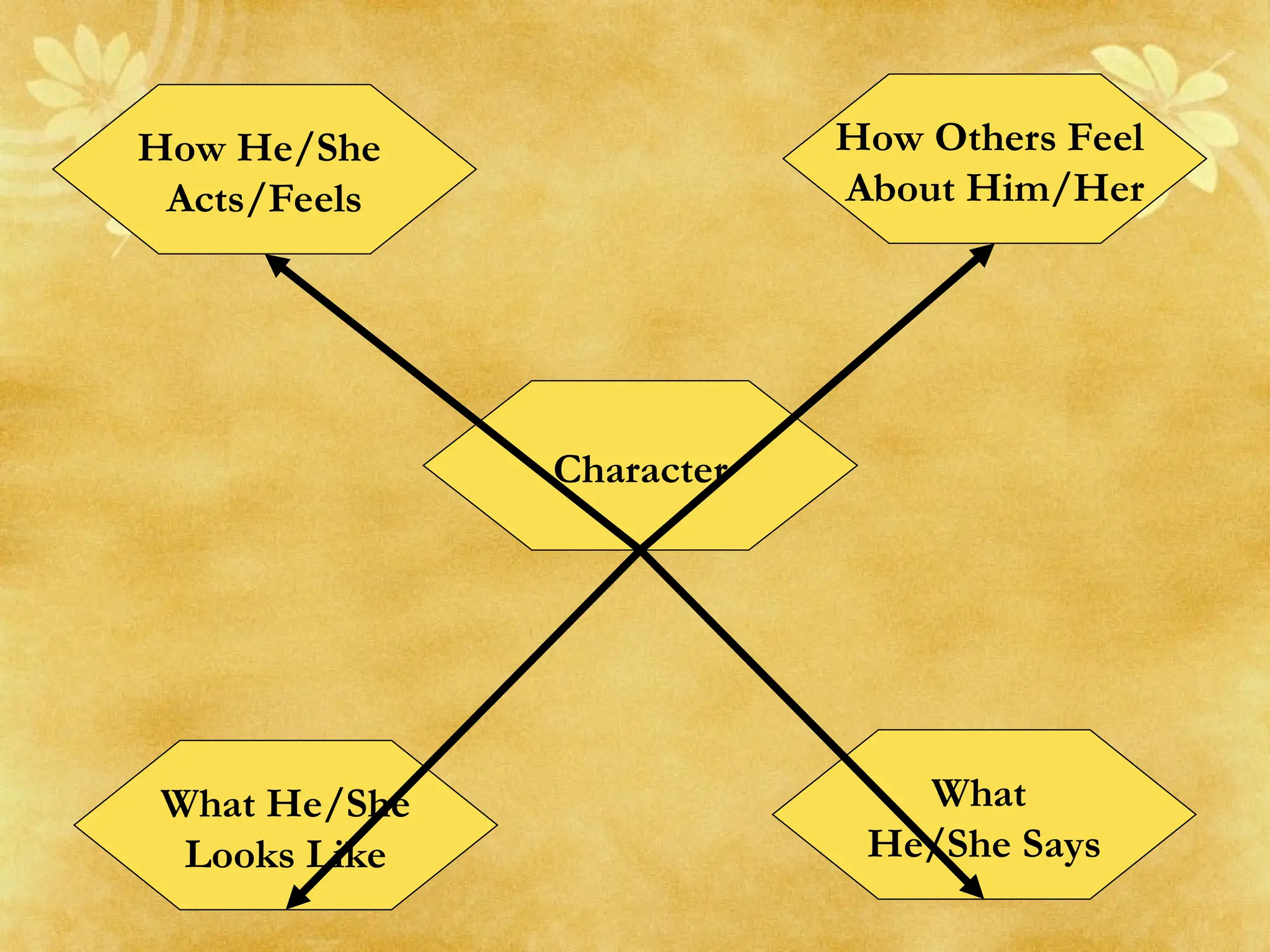
Character
How He/She
Acts/Feels
How Others Feel
About Him/Her
What He/She
Looks Like
What
He/She Says
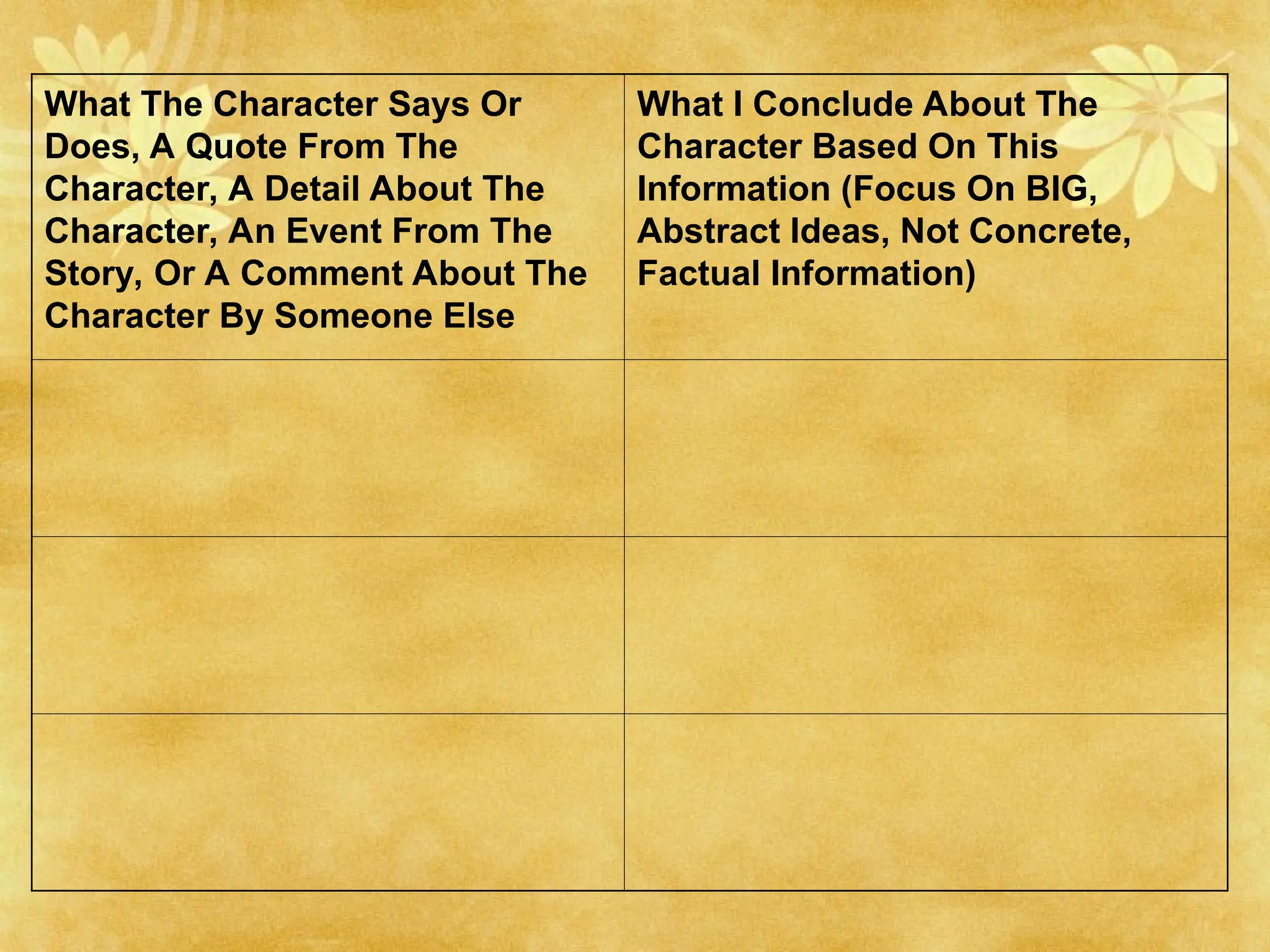
What The Character Says Or
Does, A Quote From The
Character, A Detail About The
Character, An Event From The
Story, Or A Comment About The
Character By Someone Else
What I Conclude About The
Character Based On This
Information (Focus On BIG,
Abstract Ideas, Not Concrete,
Factual Information)
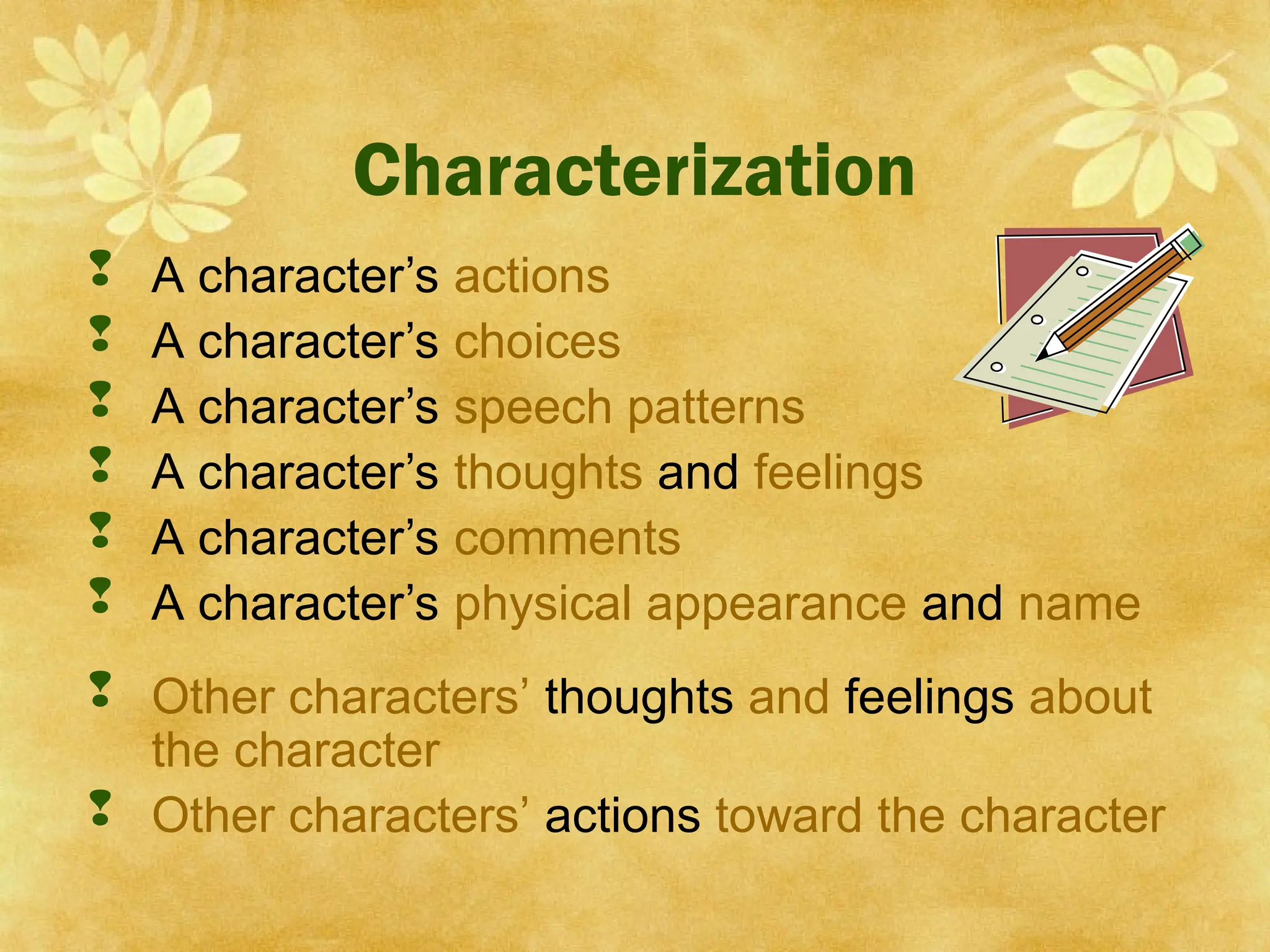
 A character’s actions
 A character’s choices
 A character’s speech patterns
 A character’s thoughts and feelings
 A character’s comments
 A character’s physical appearance and name
 Other characters’ thoughts and feelings about
the character
 Other characters’ actions toward the character
Characterization
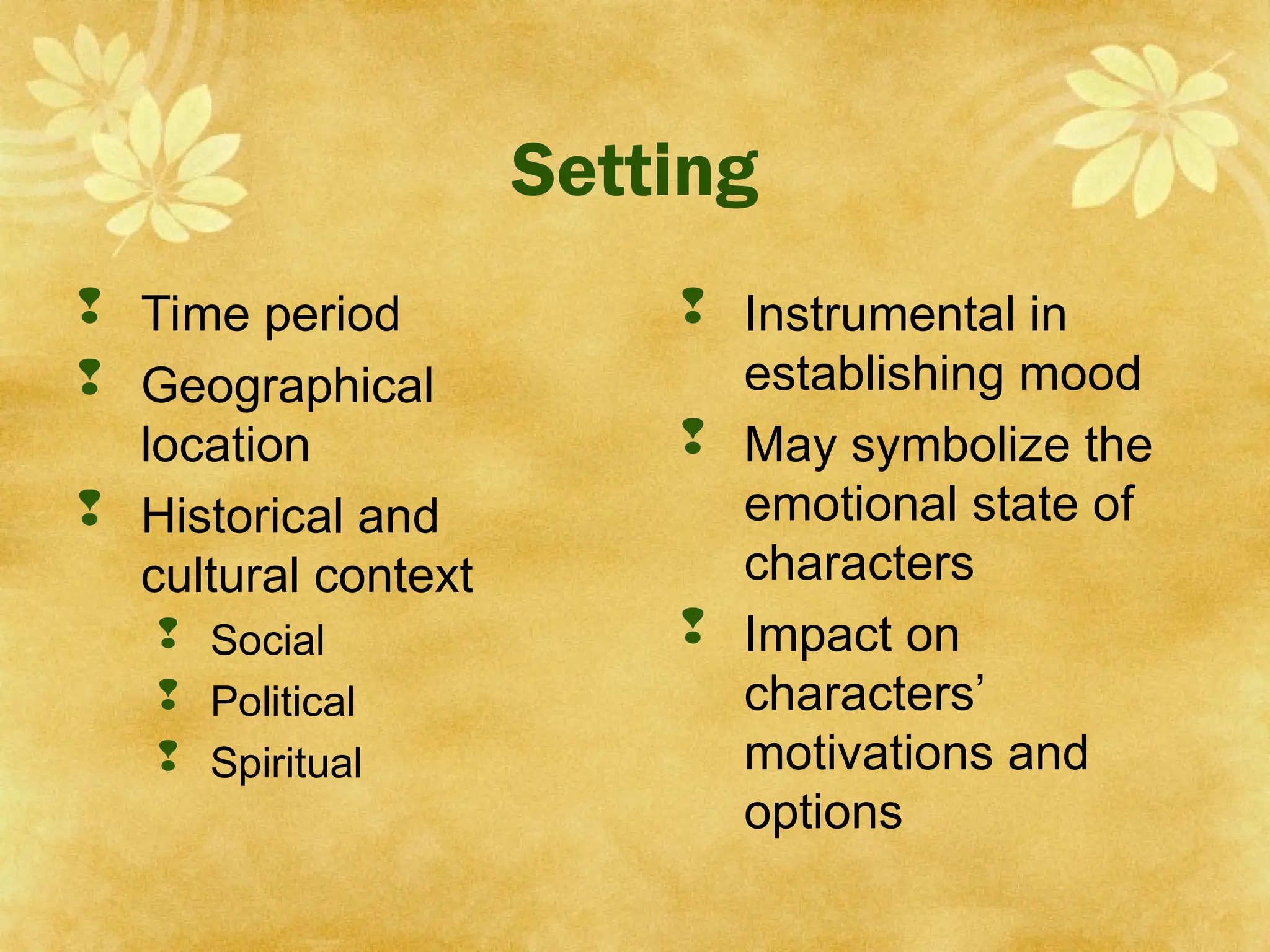
Setting
 Time period
 Geographical
location
 Historical and
cultural context
 Social
 Political
 Spiritual
 Instrumental in
establishing mood
 May symbolize the
emotional state of
characters
 Impact on
characters’
motivations and
options
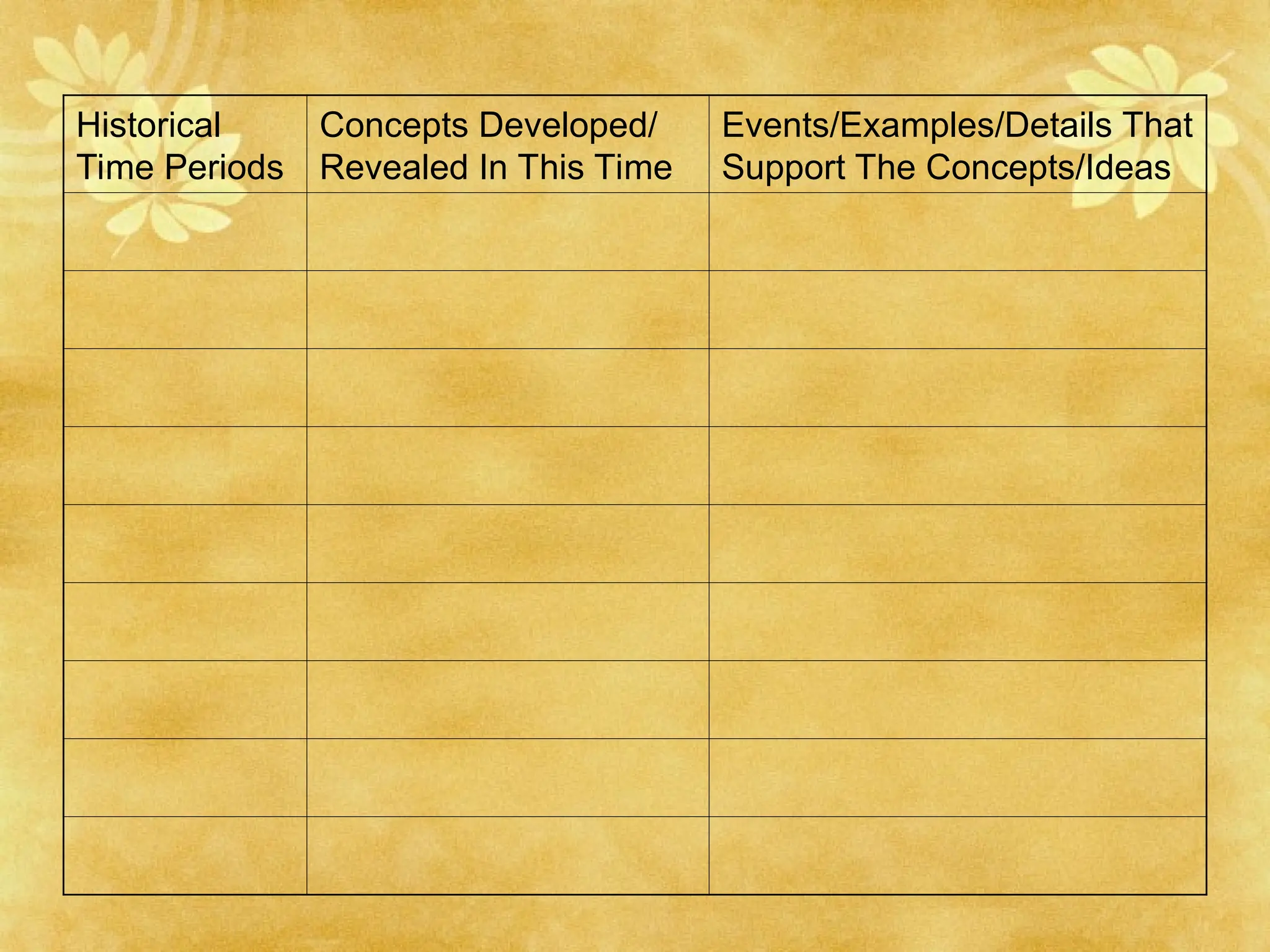
Historical
Time Periods
Concepts Developed/
Revealed In This Time
Events/Examples/Details That
Support The Concepts/Ideas
Point of View
 First Person
 Narrator is a character within the story—reveals
own thoughts and feelings but not those of others
 Third Person
 Objective: narrator outside the story acts as a
reporter—cannot tell what characters are thinking
 Limited: narrator outside the story but can see into
the mind of one of the characters
 Omniscient: narrator is all-knowing outsider who can
enter the mind of more than one character.
How to Analyze a Story
Rhetorical Elements: Identify the
author’s use and explain their
importance
 Foreshadowing
 Use of hints or clues to suggest event that will
occur later in the story
 Builds suspense—means of making the
narrative more believable
 Tone
 Author’s attitude—stated or implied—toward
the subject
 Revealed through word choice and details
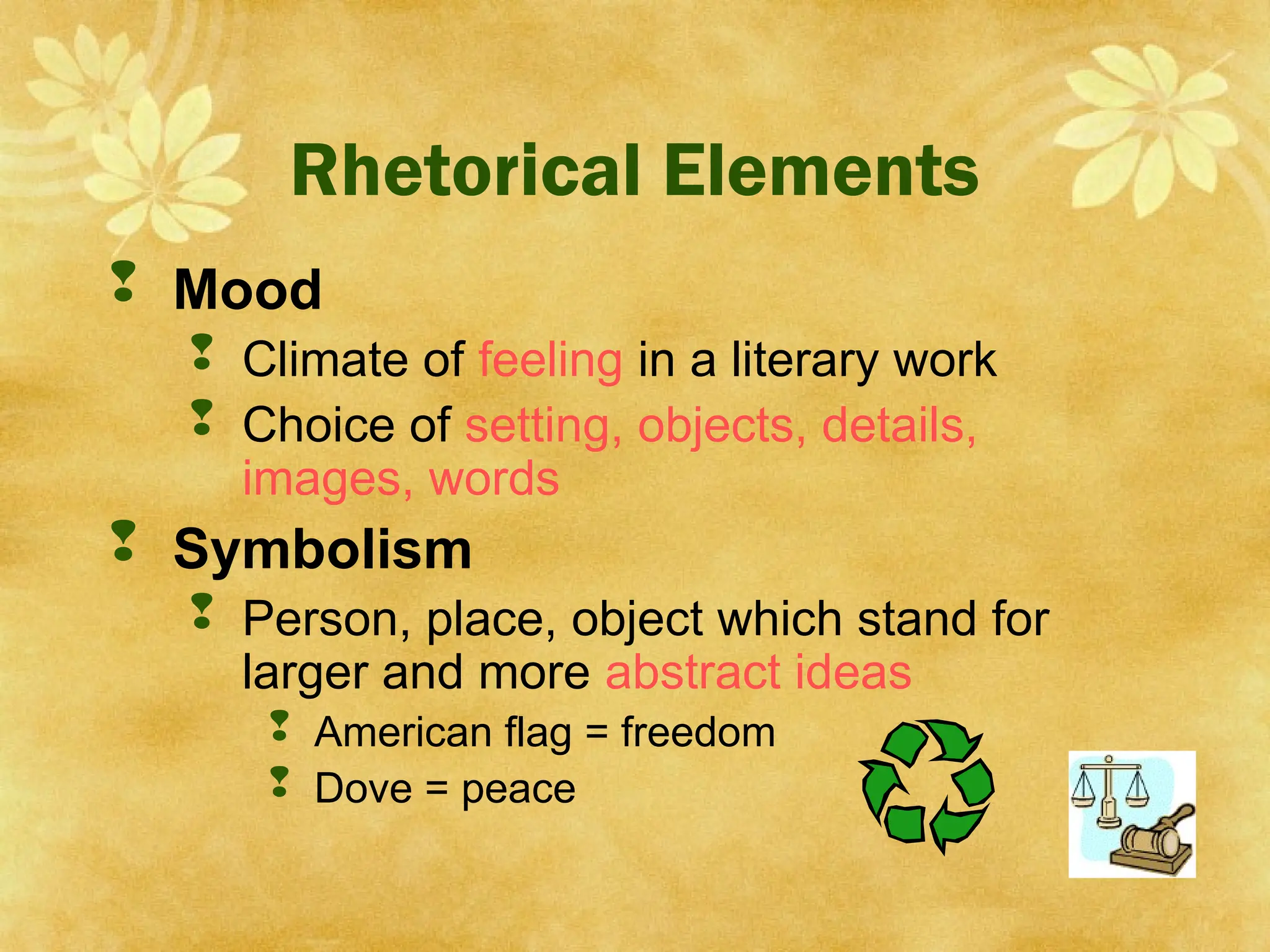
Rhetorical Elements
 Mood
 Climate of feeling in a literary work
 Choice of setting, objects, details,
images, words
 Symbolism
 Person, place, object which stand for
larger and more abstract ideas
 American flag = freedom
 Dove = peace
Rhetorical Elements
 Irony: contrast between what is
expected or what appears to be and
what actually is
 Verbal Irony—contrast between what is
said and what is actually meant
 Irony of Situation—an event that is the
opposite of what is expected or intended
 Dramatic Irony—Audience or reader
knows more than the characters know
Rhetorical Elements
 Figurative Language: language that
goes beyond the literal meaning of
words
 Simile
 Metaphor
 Alliteration
 Personification
 Onomatopoeia
 Hyperbole
Introduction
 A literary analysis is a paper that gives
a deep and illuminating explanation of
a literary work--it is a Critical
Interpretation.
 We will learn how to formulate a deep
thesis, organize a paper coherently,
and use a number of different critical
methods
Creating a Thesis
 The thesis should state the basic point you
want to communicate, oftentimes including
your main elements of support
 It should be clear and understandable
 It should be deep, something that not everyone
would think of
 It should be significant, something that the
majority of people interested in your text would
find helpful
 It should be new and original
Creating a Thesis
 Start by reading the text closely
 Craft a statement that summarizes your
thoughts about the text and responds
to the ideas of other critics—a working
thesis
 Modify your working thesis as you
continue to interact with your research
and the text
Creating a Thesis
 Don’t be afraid to modify your thesis even
after you’ve begun writing the body of your
paper—it’s better to change it than to have a
bad one
 Spend the body of your paper arguing that
your thesis provides an interpretation which
is clearly supported by the text.
 Do not deviate from discussion related to
your thesis
How do I support a
thesis statement?
 Examples from the text
 Direct quotations
 Summaries of scenes/action
 Paraphrases
 Other critics’ opinions
 Historical and social context
Tips for Writing the Body
 Begin by finding common threads among the
items supporting your thesis—oftentimes,
writing an outline helps this process along
 Begin writing with the body, making sure that
each paragraph centers on one specific idea
 Make sure that the topic sentence of each
paragraph demonstrates a link between the
content of the paragraph and your thesis
statement
Conclusion
 Remember to strive for
depth and significance
 Remember to center
your paper on your
thesis
 Remember to organize
your paragraphs
around a central theme
(your thesis)
Go hit a home
run!
The Literary and Analysis Introduction.ppt

  • 1.
    Writing the LiteraryAnalysis Demystifying the process.
  • 2.
    An analysis explainswhat a work of literature means, and how it means it.
  • 3.
    How is aliterary analysis an argument?  When writing a literary analysis, you will focus on specific attribute(s) of the text(s).  When discussing these attributes, you will want to make sure that you are making a specific, arguable point (thesis) about these attributes.  You will defend this point with reasons and evidence drawn from the text. (Much like a lawyer!)
  • 4.
    How to Analyzea Story  Essential Elements of the Story  Structure of the Story  Rhetorical Elements  Meaning of the Story
  • 5.
    How to Analyzea Story  Meaning of the Story (Interpretation)  Identify the theme(s) and how the author announces it.  Explain how the story elements contribute to the theme.  Identify contextual elements (allusions, symbols, other devices) that point beyond the story to the author’s life/experience, history or to other writings.
  • 6.
    How to Analyzea Story  Essential Elements of the Story  Theme: main idea—what the work adds up to  Plot: Relationship and patterns of events  Characters: people the author creates  Including the narrator of a story or the speaker of a poem  Setting: when and where the action happens  Point of View: perspective or attitude of the narrator or speaker
  • 7.
    Theme  Main ideaor underlying meaning of the literary work.  What the author wants the reader to understand about the subject  In fables, this may also be the moral of the story
  • 8.
    Sequence of Conflict/Crisis/Resolution  Allstories, literary essays, biographies, and plays have a beginning, a middle, and an end.  Typically, the beginning is used to describe the conflict/problem faced by the character/subject.  The middle is used to describe the climax or crisis reached by the character/subject.  The end is used to resolve the conflict/problem and establish a theme.
  • 9.
    Climax (conflict andtension reach a peak, and characters realize their mistake, etc.) Exposition (characters, setting, and conflict are introduced.) Rising Action (conflict and suspense build through a series of events). Falling Action (conflict gets worked out and tensions lessen.) Resolution (conflict is resolved and themes are established.)
  • 10.
    What Are TheMajor Events In The First Part Of The Narrative That Describe The Problem/Conflict? What Are The Major Events In The Middle Part Of The Narrative That Describe The Crisis/Climax? What Are The Major Events In The Last Part Of The Narrative That Describe The Resolution/ Solution To The Problem/Conflict?
  • 11.
    Types of Conflict person vs. person conflict  events typically focus on differences in values, experiences, and attitudes.  person vs. society conflict  the person is fighting an event, an issue, a philosophy, or a cultural reality that is unfair,  person vs. nature conflict  the character is often alone dealing with nature in extreme circumstances.  person vs. fate/supernatural conflict  the text is characterized by a person contending with an omnipresent issue or idea.  person vs. self conflict  the person is conflicted with childhood memories, unpleasant experiences, or issues with stress and decision- making.
  • 12.
    Characterization  Protagonist Main character Antagonist Character or force that opposes the main character  Foil Character that provides a contrast to the protagonist  Round Three-dimensional personality  Flat Only one or two striking qualities —all bad or all good  Dynamic Grows and progress to a higher level of understanding  Static Remains unchanged throughout the story
  • 13.
    Character How He/She Acts/Feels How OthersFeel About Him/Her What He/She Looks Like What He/She Says
  • 14.
    What The CharacterSays Or Does, A Quote From The Character, A Detail About The Character, An Event From The Story, Or A Comment About The Character By Someone Else What I Conclude About The Character Based On This Information (Focus On BIG, Abstract Ideas, Not Concrete, Factual Information)
  • 15.
     A character’sactions  A character’s choices  A character’s speech patterns  A character’s thoughts and feelings  A character’s comments  A character’s physical appearance and name  Other characters’ thoughts and feelings about the character  Other characters’ actions toward the character Characterization
  • 16.
    Setting  Time period Geographical location  Historical and cultural context  Social  Political  Spiritual  Instrumental in establishing mood  May symbolize the emotional state of characters  Impact on characters’ motivations and options
  • 17.
    Historical Time Periods Concepts Developed/ RevealedIn This Time Events/Examples/Details That Support The Concepts/Ideas
  • 18.
    Point of View First Person  Narrator is a character within the story—reveals own thoughts and feelings but not those of others  Third Person  Objective: narrator outside the story acts as a reporter—cannot tell what characters are thinking  Limited: narrator outside the story but can see into the mind of one of the characters  Omniscient: narrator is all-knowing outsider who can enter the mind of more than one character.
  • 19.
    How to Analyzea Story Rhetorical Elements: Identify the author’s use and explain their importance  Foreshadowing  Use of hints or clues to suggest event that will occur later in the story  Builds suspense—means of making the narrative more believable  Tone  Author’s attitude—stated or implied—toward the subject  Revealed through word choice and details
  • 20.
    Rhetorical Elements  Mood Climate of feeling in a literary work  Choice of setting, objects, details, images, words  Symbolism  Person, place, object which stand for larger and more abstract ideas  American flag = freedom  Dove = peace
  • 21.
    Rhetorical Elements  Irony:contrast between what is expected or what appears to be and what actually is  Verbal Irony—contrast between what is said and what is actually meant  Irony of Situation—an event that is the opposite of what is expected or intended  Dramatic Irony—Audience or reader knows more than the characters know
  • 22.
    Rhetorical Elements  FigurativeLanguage: language that goes beyond the literal meaning of words  Simile  Metaphor  Alliteration  Personification  Onomatopoeia  Hyperbole
  • 23.
    Introduction  A literaryanalysis is a paper that gives a deep and illuminating explanation of a literary work--it is a Critical Interpretation.  We will learn how to formulate a deep thesis, organize a paper coherently, and use a number of different critical methods
  • 24.
    Creating a Thesis The thesis should state the basic point you want to communicate, oftentimes including your main elements of support  It should be clear and understandable  It should be deep, something that not everyone would think of  It should be significant, something that the majority of people interested in your text would find helpful  It should be new and original
  • 25.
    Creating a Thesis Start by reading the text closely  Craft a statement that summarizes your thoughts about the text and responds to the ideas of other critics—a working thesis  Modify your working thesis as you continue to interact with your research and the text
  • 26.
    Creating a Thesis Don’t be afraid to modify your thesis even after you’ve begun writing the body of your paper—it’s better to change it than to have a bad one  Spend the body of your paper arguing that your thesis provides an interpretation which is clearly supported by the text.  Do not deviate from discussion related to your thesis
  • 27.
    How do Isupport a thesis statement?  Examples from the text  Direct quotations  Summaries of scenes/action  Paraphrases  Other critics’ opinions  Historical and social context
  • 28.
    Tips for Writingthe Body  Begin by finding common threads among the items supporting your thesis—oftentimes, writing an outline helps this process along  Begin writing with the body, making sure that each paragraph centers on one specific idea  Make sure that the topic sentence of each paragraph demonstrates a link between the content of the paragraph and your thesis statement
  • 29.
    Conclusion  Remember tostrive for depth and significance  Remember to center your paper on your thesis  Remember to organize your paragraphs around a central theme (your thesis) Go hit a home run!