















Internet Technology and Web
Engineering
By: Professor Lili Saghafi
University of Windsor
June 2015
Introduction
• WWW, the world wide web or shortly the web - really nothing more than
an information service on the Internet – has changed our world by
creating a whole new digital world that is closely intertwined with our real
world, making reality what was previously unimaginable: communication
across the world in seconds, watching movies on a smartphone, playing
games or looking at photos with remote partners in distant continents,
shopping or banking from your couch … In our course on Internet and
web technologies you will learn how it all works.
• We start off by introducing the underlying technologies of the web: URI,
HTTP, HTML, CSS and XML. If this sounds cryptic, rest assured that you will
soon become familiar with what it’s all about. We will then focus on web
services and web programming technologies along with their practical
application. And we will look at how search engines – our fast and
reliable signposts in the digital world – actually work to find contents
and services on the web. The course concludes with a look at cloud
computing and how it is changing the way we will access computing
power in the future.
Topics in this introduction
• MOORE’S LAW
• THE INTERNET IN INDUSTRY AND RESEARCH
• IT CHALLENGE
• HOW WE OVERCOME THESE OBSTACLES BY
INTERNET PROGRAMMING
• HTML5, CASCADING STYLE SHEETS (CSS), JAVASCRIPT,
IQUARY, BROWSERS
• EVOLUTION OF THE INTERNET AND WORLD WIDE WEB
• Some Network basics PACKET SWITCHING, TCP/IP
• A BRIEF HISTORY OF WEB
• WHERE WE GO, 3 D CHIPS, PARALLEL PROCESSING CHIPS ,
QUANTUM COMPUTING , MOLECULAR COMPUTERS (
TRANSISTORS)
Moore’s Law
• Every year or two, the capacities of computers have
approximately doubled inexpensively. This remarkable
trend often is called Moore’s Law.
• Moore’s Law and related observations apply especially to
the amount of memory that computers have for programs,
the amount of secondary storage (such as disk storage)
they have to hold programs and data over longer periods of
time, and their processor speeds—the speeds at which
computers execute their programs (i.e., do their work).
• Similar growth has occurred in the communications field, in
which costs have plummeted as enormous demand for
communications bandwidth (i.e., information-carrying
capacity) has attracted intense competition.
The death of Moore’s law
Videos and Articles:
•Moore's Law is dead
•Tweaking Moore's Law and the Computers of the Post-Silicon
THE IMPORTANCE OF INTERNET
IN INDUSTRY AND RESEARCH
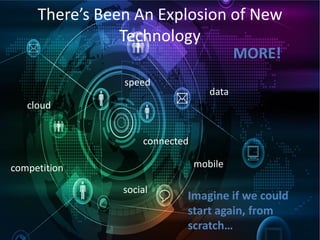
cloud
data
mobile
MORE!
competition
speed
social
connected
There’s Been An Explosion of New
Technology
Imagine if we could
start again, from
scratch…
Data Discovery• The revenge of the full client
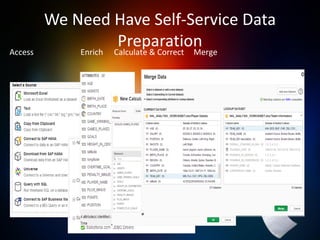
We Need Have Self-Service Data
PreparationAccess Enrich Calculate & Correct Merge
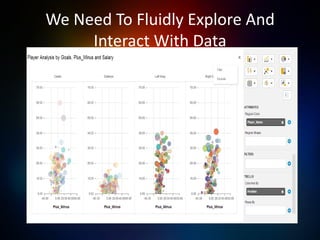
We Need To Fluidly Explore And
Interact With Data
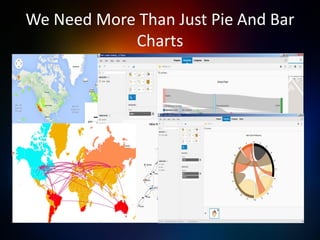
We Need More Than Just Pie And Bar
Charts
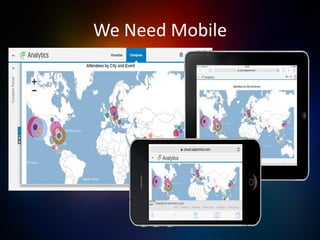
We Need Mobile
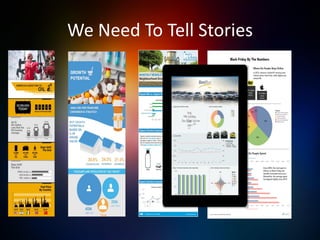
We Need To Tell Stories
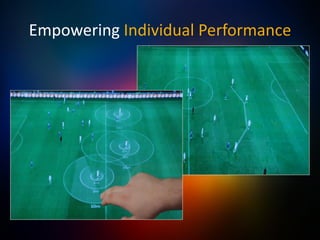
Empowering Individual Performance
Predictive Maintenance
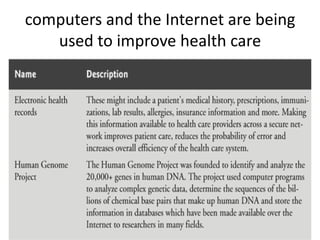
computers and the Internet are being
used to improve health care
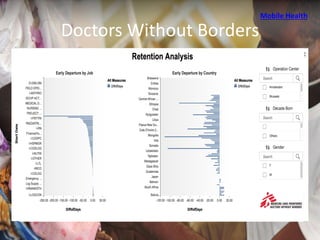
Doctors Without Borders
Mobile Health
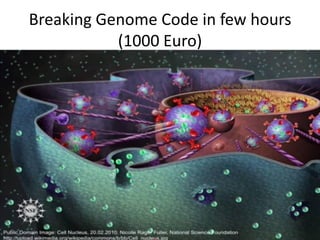
Breaking Genome Code in few hours
(1000 Euro)
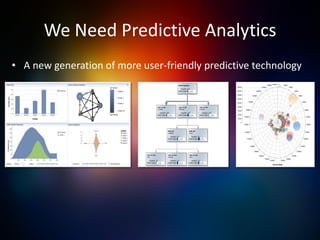
We Need Predictive Analytics
• A new generation of more user-friendly predictive technology
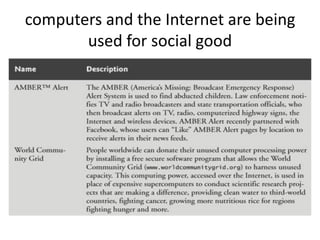
computers and the Internet are being
used for social good
Intelligent Airports
• "Improving the passenger experience" is the
number one driver of IT investment by the
majority (59%) of the world's airports.“
• 10% customers have smart phone and access
to internet.
• Traffic in the airport can be controlled by
tracing these sensors on smartphones
• Placement of boots and retailers
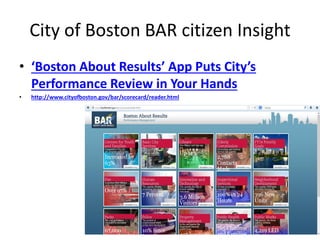
City of Boston BAR citizen Insight
• ‘Boston About Results’ App Puts City’s
Performance Review in Your Hands
• http://www.cityofboston.gov/bar/scorecard/reader.html
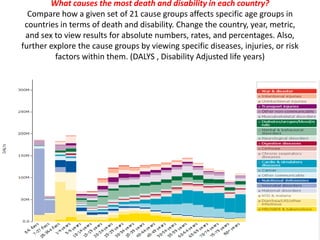
What causes the most death and disability in each country?
Compare how a given set of 21 cause groups affects specific age groups in
countries in terms of death and disability. Change the country, year, metric,
and sex to view results for absolute numbers, rates, and percentages. Also,
further explore the cause groups by viewing specific diseases, injuries, or risk
factors within them. (DALYS , Disability Adjusted life years)
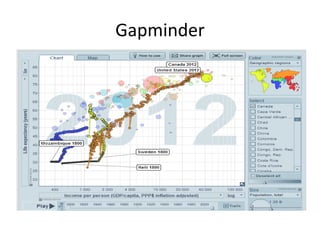
Gapminder
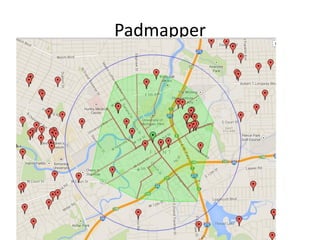
Padmapper
We Need Support For Teams
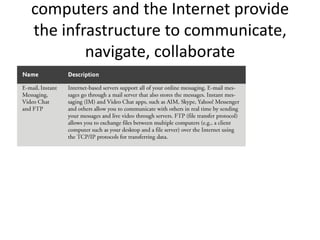
computers and the Internet provide the
infrastructure to communicate, navigate,
collaborate
29
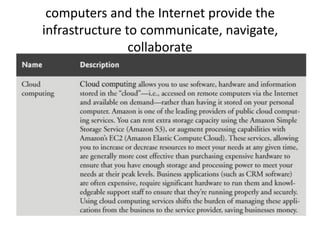
We Need Cloud
30
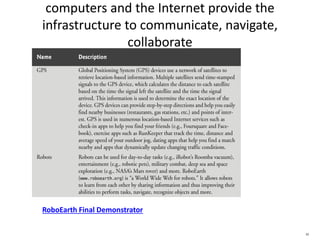
computers and the Internet provide the
infrastructure to communicate, navigate,
collaborate
RoboEarth Final Demonstrator
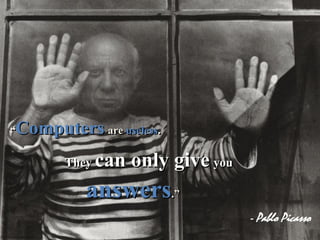
“Computersare useless.
- Pablo Picasso
They can only giveyou
answers.”
computers and the Internet provide
the infrastructure to communicate,
navigate, collaborate
Simple
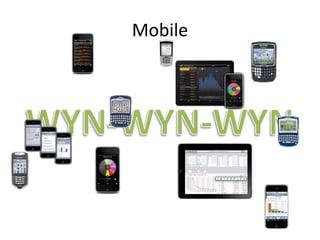
Mobile
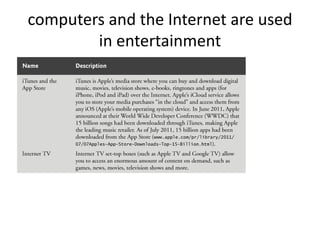
computers and the Internet are used
in entertainment
IT Challenge
• Product Cycle Shorten
• Unpredictability
• Need to replan faster
• Predication Future
• Respond to Market
• Focus from PROCESS to People
• Data Doubles every 18 Months
• Hyper Connected People in Real Time
interacting in an unstructured way
HOW WE OVERCOME THESE OBSTACLES
BY INTERNET PROGRAMMING
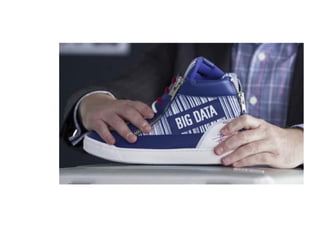
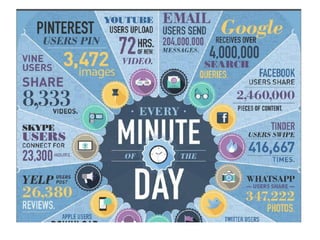
Big Data
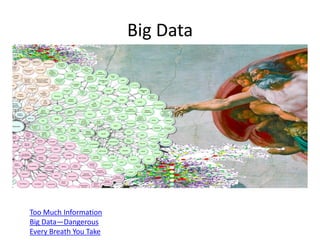
Too Much Information
Big Data—Dangerous
Every Breath You Take
Big Data
• 2.7 Zettabytes of electronic data exist in the
world
• today – 2,700,000,000,000,000,000,000 bytes
• This is equal to the storage required for more
than 200 billion HD movies
• New data is produced at an exponential rate.
• Decoding the human genome originally took 10
years to process; now it can be achieved in one
week
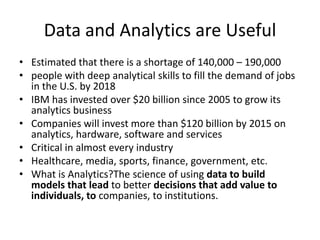
Data and Analytics are Useful
• Estimated that there is a shortage of 140,000 – 190,000
• people with deep analytical skills to fill the demand of jobs
in the U.S. by 2018
• IBM has invested over $20 billion since 2005 to grow its
analytics business
• Companies will invest more than $120 billion by 2015 on
analytics, hardware, software and services
• Critical in almost every industry
• Healthcare, media, sports, finance, government, etc.
• What is Analytics?The science of using data to build
models that lead to better decisions that add value to
individuals, to companies, to institutions.
47
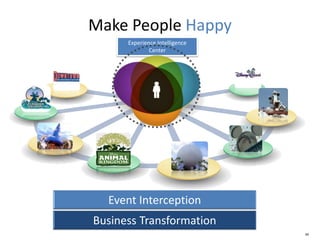
Experience Intelligence
Center
Event Interception
Business Transformation
Make People Happy
48
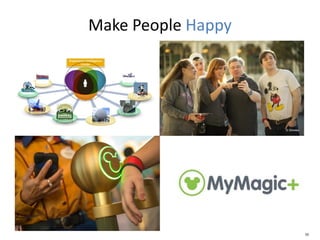
Make People Happy
Internet Programming
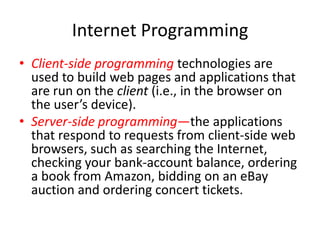
• Client-side programming technologies are
used to build web pages and applications that
are run on the client (i.e., in the browser on
the user’s device).
• Server-side programming—the applications
that respond to requests from client-side web
browsers, such as searching the Internet,
checking your bank-account balance, ordering
a book from Amazon, bidding on an eBay
auction and ordering concert tickets.
HTML5
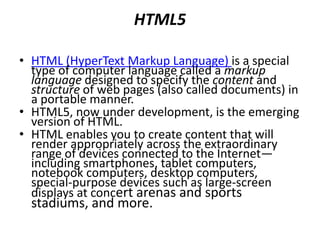
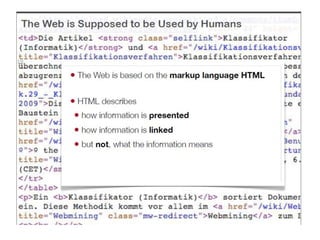
• HTML (HyperText Markup Language) is a special
type of computer language called a markup
language designed to specify the content and
structure of web pages (also called documents) in
a portable manner.
• HTML5, now under development, is the emerging
version of HTML.
• HTML enables you to create content that will
render appropriately across the extraordinary
range of devices connected to the Internet—
including smartphones, tablet computers,
notebook computers, desktop computers,
special-purpose devices such as large-screen
displays at concert arenas and sports
stadiums, and more.
HTML5
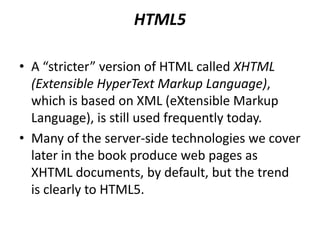
• A “stricter” version of HTML called XHTML
(Extensible HyperText Markup Language),
which is based on XML (eXtensible Markup
Language), is still used frequently today.
• Many of the server-side technologies we cover
later in the book produce web pages as
XHTML documents, by default, but the trend
is clearly to HTML5.
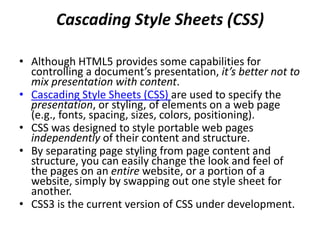
Cascading Style Sheets (CSS)
• Although HTML5 provides some capabilities for
controlling a document’s presentation, it’s better not to
mix presentation with content.
• Cascading Style Sheets (CSS) are used to specify the
presentation, or styling, of elements on a web page
(e.g., fonts, spacing, sizes, colors, positioning).
• CSS was designed to style portable web pages
independently of their content and structure.
• By separating page styling from page content and
structure, you can easily change the look and feel of
the pages on an entire website, or a portion of a
website, simply by swapping out one style sheet for
another.
• CSS3 is the current version of CSS under development.
JavaScript
• JavaScript helps you build dynamic web pages (i.e., pages
that can be modified “on the fly” in response to events,
such as user input, time changes and more) and computer
applications.
• It enables you to do the client-side programming of web
applications.
• JavaScript was created by Netscape.
• Both Netscape and Microsoft have been instrumental in the
standardization of JavaScript by ECMA International
(formerly the European Computer Manufacturers
Association) as ECMAScript.
• ECMAScript 5, the latest version of the standard,
corresponds to the version of JavaScript we use in this
book.
• JavaScript is a portable scripting language. Programs
written in JavaScript can run in web browsers across a wide
range of devices.
Web Browsers and Web-Browser
Portability
• Ensuring a consistent look and feel on client-
side browsers is one of the great challenges of
developing web-based applications.
• Currently, a standard does not exist to which
software vendors must adhere when creating
web browsers.
• Although browsers share a common set of
features, each browser might render pages
differently.
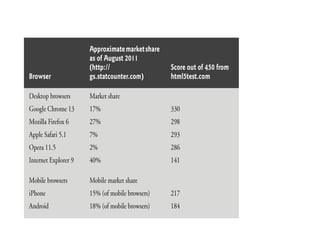
• Browsers are available in many versions and
on many different platforms (Microsoft
Windows, Apple Macintosh, Linux, UNIX, etc.).
• Vendors add features to each new version that
sometimes result in cross-platform
incompatibility issues.
• It’s difficult to develop web pages that render
correctly on all versions of each browser.
jQuery
• jQuery (jQuery.org) is currently the most popular of
hundreds of JavaScript libraries.
– www.activoinc.com/blog/2008/11/03/jquery-emerges-as-most-
popular-javascript-library-for-web-development/
• jQuery simplifies JavaScript programming by making it
easier to manipulate a web page’s elements and interact
with servers in a portable manner across various web
browsers.
• It provides a library of custom graphical user interface (GUI)
controls (beyond the basic GUI controls provided by
HTML5) that can be used to enhance the look and feel of
your web pages.
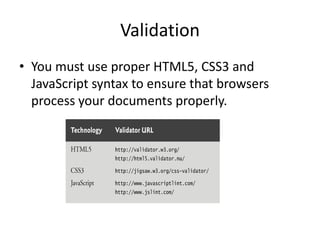
Validation
• You must use proper HTML5, CSS3 and
JavaScript syntax to ensure that browsers
process your documents properly.
EVOLUTION OF THE INTERNET
AND WORLD WIDE WEB
Evolution of the Internet and World
Wide Web
• The Internet—a global network of computers—was
made possible by the convergence of computing and
communications technologies.
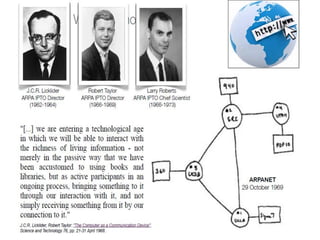
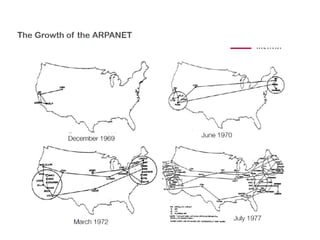
• In the late 1960s, ARPA (the Advanced Research
Projects Agency) rolled out blueprints for networking
the main computer systems of about a dozen ARPA-
funded universities and research institutions.
• They were to be connected with communications lines
operating at a then-stunning 56 Kbps (i.e., 56,000 bits
per second)—this at a time when most people (of the
few who could) were connecting over telephone lines
to computers at a rate of 110 bits per second.
• A bit (short for “binary digit”) is the smallest data
item in a computer; it can assume the value 0 or
1.
• ARPA proceeded to implement the ARPANET,
which eventually evolved into today’s Internet.
• Rather than enabling researchers to share each
other’s computers, it rapidly became clear that
communicating quickly and easily via electronic
mail was the key early benefit of the ARPANET.
• This is true even today on the Internet, which
facilitates communications of all kinds among the
world’s Internet users.
Packet Switching
• One of the primary goals for ARPANET was to
allow multiple users to send and receive
information simultaneously over the same
communications paths (e.g., phone lines).
• The network operated with a technique
called packet switching, in which digital data
was sent in small bundles called packets.
• The packets contained address, error-control
and sequencing information.
• The address information allowed packets to
be routed to their destinations.
• The sequencing information helped in reassembling
the packets—which, because of complex routing
mechanisms, could actually arrive out of order—into
their original order for presentation to the recipient.
• Packets from different senders were intermixed on the
same lines to efficiently use the available bandwidth.
• The network was designed to operate without
centralized control.
• If a portion of the network failed, the remaining
working portions would still route packets from
senders to receivers over alternative paths for
reliability.
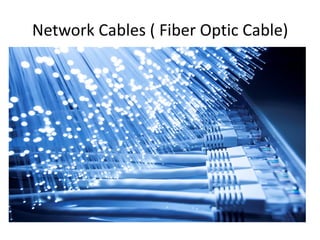
Network Cables ( Fiber Optic Cable)
TCP/IP
• The protocol (i.e., set of rules) for communicating over the
ARPANET became known as TCP—the Transmission Control
Protocol.
• TCP ensured that messages were properly routed from sender
to receiver and that they arrived intact.
• As the Internet evolved, organizations worldwide were
implementing their own networks for both intraorganization
(i.e., within the organization) and interorganization (i.e.,
between organizations) communications.
• One challenge was to get these different networks to
communicate.
• ARPA accomplished this with the development of IP—
the Internet Protocol, truly creating a network of
networks, the current architecture of the Internet.
• The combined set of protocols is now commonly called
TCP/IP.
• Each computer on the Internet has a unique IP address.
• The current IP standard, Internet Protocol version 4
(IPv4), has been in use since 1984 and will soon run out
of possible addresses.
• IPv6 is just starting to be deployed. It features
enhanced security and a new addressing scheme,
hugely expanding the number of IP addresses available
so that we will not run out of IP addresses in the
forseeable future.
Explosive Growth
• Initially, Internet use was limited to
universities and research institutions; then the
military began using it intensively.
• Eventually, the government decided to allow
access to the Internet for commercial
purposes.
• Bandwidth (i.e., the information-carrying
capacity) on the Internet’s is increasing rapidly
as costs dramatically decline.
A BRIEF HISTORY OF WEB
WWW
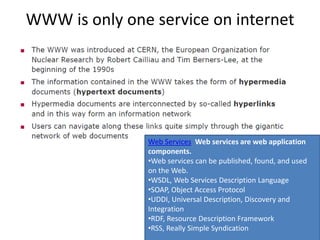
WWW is only one service on internet
Web Services Web services are web application
components.
•Web services can be published, found, and used
on the Web.
•WSDL, Web Services Description Language
•SOAP, Object Access Protocol
•UDDI, Universal Description, Discovery and
Integration
•RDF, Resource Description Framework
•RSS, Really Simple Syndication
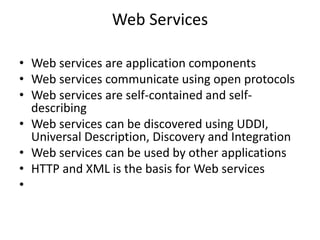
Web Services
• Web services are application components
• Web services communicate using open protocols
• Web services are self-contained and self-
describing
• Web services can be discovered using UDDI,
Universal Description, Discovery and Integration
• Web services can be used by other applications
• HTTP and XML is the basis for Web services
•
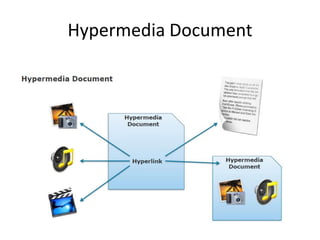
Hypermedia Document
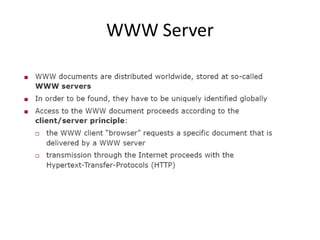
WWW Server
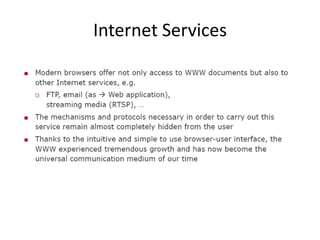
Internet Services
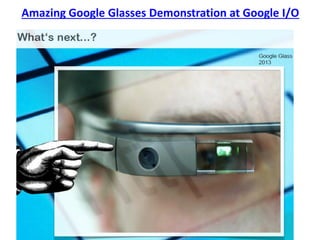
Amazing Google Glasses Demonstration at Google I/O
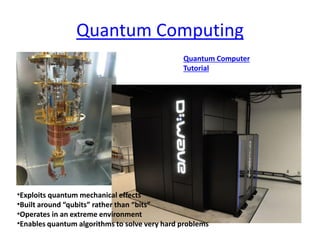
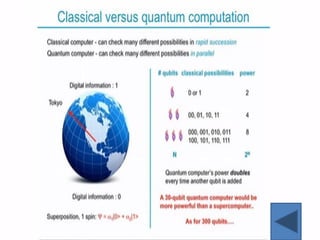
Quantum Computing
•Exploits quantum mechanical effects
•Built around “qubits” rather than “bits”
•Operates in an extreme environment
•Enables quantum algorithms to solve very hard problems
Quantum Computer
Tutorial
The internet of Things
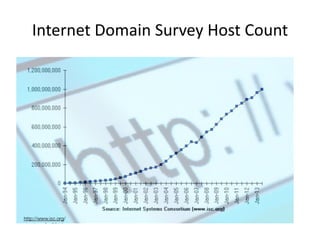
Internet Domain Survey Host Count
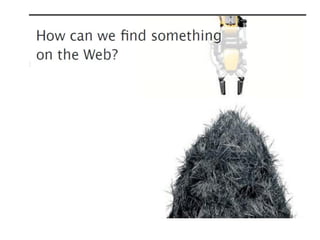
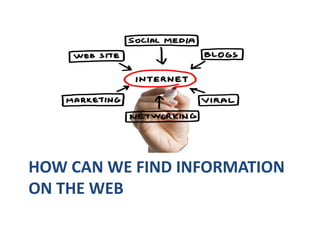
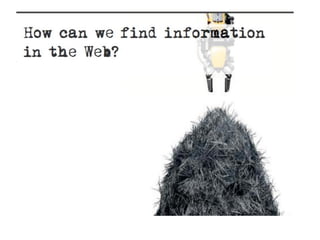
HOW CAN WE FIND INFORMATION
ON THE WEB
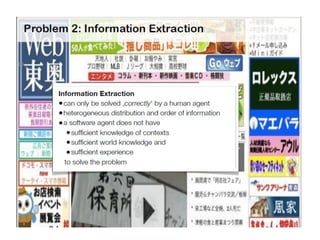
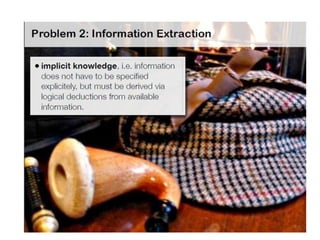
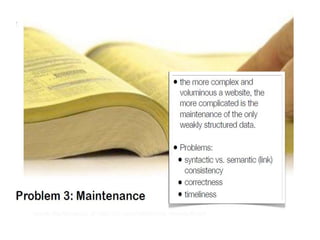
Current Solution
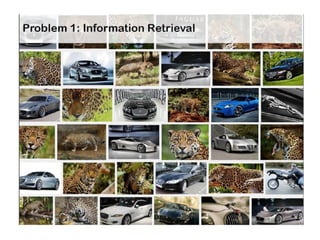
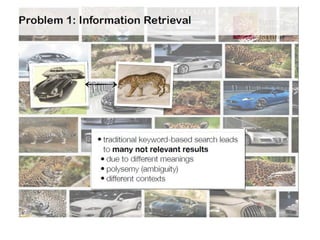
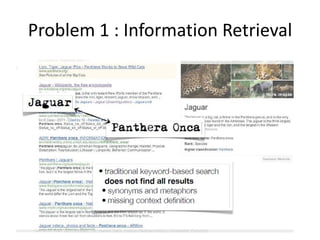
Problem 1 : Information Retrieval
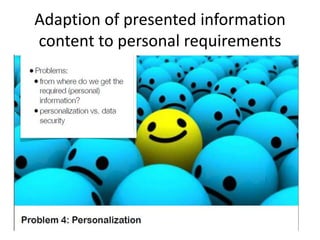
Adaption of presented information
content to personal requirements
119
Conclusion
120
Technology is Important – But It’s Not
About Technology
“The stone age was marked
by man's clever use of
crude tools; the
information age, to date,
has been marked by
man's crude use of clever
tools.”
Thank you!
Great Audience
Professor Lili Saghafi
proflilisaghafi@gmail.com
Any Question?
References, Images Credit
• Internet and World Wide Web How To Program, 5/E , (Harvey & Paul) Deitel &
Associates
• New Perspectives on the Internet: Comprehensive, 9th Edition Gary P.
Schneider Quinnipiac University
• Web Development and Design Foundations with HTML5, 6/E, Terry Felke-
Morris, Harper College
• SAP Market Place https://websmp102.sap-ag.de/HOME#wrapper
• Forbeshttp://www.forbes.com/sites/sap/2013/10/28/how-fashion-retailer-burberry-
keeps-customers-coming-back-for-more/
• Youtube
• Professor Saghafi’s blog https://sites.google.com/site/professorlilisaghafi/
• TED Talks
• TEDXtalks
• http://www.slideshare.net/lsaghafi/
• Timo Elliot
• https://sites.google.com/site/psuircb/
• http://fortune.com/

Internet technology and web engineering

  • 1.
    Internet Technology andWeb Engineering By: Professor Lili Saghafi University of Windsor June 2015
  • 2.
    Introduction • WWW, theworld wide web or shortly the web - really nothing more than an information service on the Internet – has changed our world by creating a whole new digital world that is closely intertwined with our real world, making reality what was previously unimaginable: communication across the world in seconds, watching movies on a smartphone, playing games or looking at photos with remote partners in distant continents, shopping or banking from your couch … In our course on Internet and web technologies you will learn how it all works. • We start off by introducing the underlying technologies of the web: URI, HTTP, HTML, CSS and XML. If this sounds cryptic, rest assured that you will soon become familiar with what it’s all about. We will then focus on web services and web programming technologies along with their practical application. And we will look at how search engines – our fast and reliable signposts in the digital world – actually work to find contents and services on the web. The course concludes with a look at cloud computing and how it is changing the way we will access computing power in the future.
  • 3.
    Topics in thisintroduction • MOORE’S LAW • THE INTERNET IN INDUSTRY AND RESEARCH • IT CHALLENGE • HOW WE OVERCOME THESE OBSTACLES BY INTERNET PROGRAMMING • HTML5, CASCADING STYLE SHEETS (CSS), JAVASCRIPT, IQUARY, BROWSERS • EVOLUTION OF THE INTERNET AND WORLD WIDE WEB • Some Network basics PACKET SWITCHING, TCP/IP • A BRIEF HISTORY OF WEB • WHERE WE GO, 3 D CHIPS, PARALLEL PROCESSING CHIPS , QUANTUM COMPUTING , MOLECULAR COMPUTERS ( TRANSISTORS)
  • 4.
    Moore’s Law • Everyyear or two, the capacities of computers have approximately doubled inexpensively. This remarkable trend often is called Moore’s Law. • Moore’s Law and related observations apply especially to the amount of memory that computers have for programs, the amount of secondary storage (such as disk storage) they have to hold programs and data over longer periods of time, and their processor speeds—the speeds at which computers execute their programs (i.e., do their work). • Similar growth has occurred in the communications field, in which costs have plummeted as enormous demand for communications bandwidth (i.e., information-carrying capacity) has attracted intense competition. The death of Moore’s law Videos and Articles: •Moore's Law is dead •Tweaking Moore's Law and the Computers of the Post-Silicon
  • 5.
    THE IMPORTANCE OFINTERNET IN INDUSTRY AND RESEARCH
  • 6.
    cloud data mobile MORE! competition speed social connected There’s Been AnExplosion of New Technology Imagine if we could start again, from scratch…
  • 7.
    Data Discovery• Therevenge of the full client
  • 8.
    We Need HaveSelf-Service Data PreparationAccess Enrich Calculate & Correct Merge
  • 9.
    We Need ToFluidly Explore And Interact With Data
  • 10.
    We Need MoreThan Just Pie And Bar Charts
  • 11.
  • 12.
    We Need ToTell Stories
  • 13.
  • 14.
  • 16.
    computers and theInternet are being used to improve health care
  • 17.
  • 18.
    Breaking Genome Codein few hours (1000 Euro)
  • 19.
    We Need PredictiveAnalytics • A new generation of more user-friendly predictive technology
  • 20.
    computers and theInternet are being used for social good
  • 21.
    Intelligent Airports • "Improvingthe passenger experience" is the number one driver of IT investment by the majority (59%) of the world's airports.“ • 10% customers have smart phone and access to internet. • Traffic in the airport can be controlled by tracing these sensors on smartphones • Placement of boots and retailers
  • 22.
    City of BostonBAR citizen Insight • ‘Boston About Results’ App Puts City’s Performance Review in Your Hands • http://www.cityofboston.gov/bar/scorecard/reader.html
  • 23.
    What causes themost death and disability in each country? Compare how a given set of 21 cause groups affects specific age groups in countries in terms of death and disability. Change the country, year, metric, and sex to view results for absolute numbers, rates, and percentages. Also, further explore the cause groups by viewing specific diseases, injuries, or risk factors within them. (DALYS , Disability Adjusted life years)
  • 24.
  • 26.
  • 27.
    We Need SupportFor Teams
  • 28.
    computers and theInternet provide the infrastructure to communicate, navigate, collaborate
  • 29.
  • 30.
    30 computers and theInternet provide the infrastructure to communicate, navigate, collaborate RoboEarth Final Demonstrator
  • 31.
    “Computersare useless. - PabloPicasso They can only giveyou answers.”
  • 32.
    computers and theInternet provide the infrastructure to communicate, navigate, collaborate
  • 33.
  • 34.
  • 35.
    computers and theInternet are used in entertainment
  • 36.
    IT Challenge • ProductCycle Shorten • Unpredictability • Need to replan faster • Predication Future • Respond to Market • Focus from PROCESS to People • Data Doubles every 18 Months • Hyper Connected People in Real Time interacting in an unstructured way
  • 37.
    HOW WE OVERCOMETHESE OBSTACLES BY INTERNET PROGRAMMING
  • 43.
    Big Data Too MuchInformation Big Data—Dangerous Every Breath You Take
  • 44.
    Big Data • 2.7Zettabytes of electronic data exist in the world • today – 2,700,000,000,000,000,000,000 bytes • This is equal to the storage required for more than 200 billion HD movies • New data is produced at an exponential rate. • Decoding the human genome originally took 10 years to process; now it can be achieved in one week
  • 45.
    Data and Analyticsare Useful • Estimated that there is a shortage of 140,000 – 190,000 • people with deep analytical skills to fill the demand of jobs in the U.S. by 2018 • IBM has invested over $20 billion since 2005 to grow its analytics business • Companies will invest more than $120 billion by 2015 on analytics, hardware, software and services • Critical in almost every industry • Healthcare, media, sports, finance, government, etc. • What is Analytics?The science of using data to build models that lead to better decisions that add value to individuals, to companies, to institutions.
  • 47.
  • 48.
  • 55.
    Internet Programming • Client-sideprogramming technologies are used to build web pages and applications that are run on the client (i.e., in the browser on the user’s device). • Server-side programming—the applications that respond to requests from client-side web browsers, such as searching the Internet, checking your bank-account balance, ordering a book from Amazon, bidding on an eBay auction and ordering concert tickets.
  • 56.
    HTML5 • HTML (HyperTextMarkup Language) is a special type of computer language called a markup language designed to specify the content and structure of web pages (also called documents) in a portable manner. • HTML5, now under development, is the emerging version of HTML. • HTML enables you to create content that will render appropriately across the extraordinary range of devices connected to the Internet— including smartphones, tablet computers, notebook computers, desktop computers, special-purpose devices such as large-screen displays at concert arenas and sports stadiums, and more.
  • 57.
    HTML5 • A “stricter”version of HTML called XHTML (Extensible HyperText Markup Language), which is based on XML (eXtensible Markup Language), is still used frequently today. • Many of the server-side technologies we cover later in the book produce web pages as XHTML documents, by default, but the trend is clearly to HTML5.
  • 58.
    Cascading Style Sheets(CSS) • Although HTML5 provides some capabilities for controlling a document’s presentation, it’s better not to mix presentation with content. • Cascading Style Sheets (CSS) are used to specify the presentation, or styling, of elements on a web page (e.g., fonts, spacing, sizes, colors, positioning). • CSS was designed to style portable web pages independently of their content and structure. • By separating page styling from page content and structure, you can easily change the look and feel of the pages on an entire website, or a portion of a website, simply by swapping out one style sheet for another. • CSS3 is the current version of CSS under development.
  • 59.
    JavaScript • JavaScript helpsyou build dynamic web pages (i.e., pages that can be modified “on the fly” in response to events, such as user input, time changes and more) and computer applications. • It enables you to do the client-side programming of web applications. • JavaScript was created by Netscape. • Both Netscape and Microsoft have been instrumental in the standardization of JavaScript by ECMA International (formerly the European Computer Manufacturers Association) as ECMAScript. • ECMAScript 5, the latest version of the standard, corresponds to the version of JavaScript we use in this book. • JavaScript is a portable scripting language. Programs written in JavaScript can run in web browsers across a wide range of devices.
  • 60.
    Web Browsers andWeb-Browser Portability • Ensuring a consistent look and feel on client- side browsers is one of the great challenges of developing web-based applications. • Currently, a standard does not exist to which software vendors must adhere when creating web browsers. • Although browsers share a common set of features, each browser might render pages differently.
  • 61.
    • Browsers areavailable in many versions and on many different platforms (Microsoft Windows, Apple Macintosh, Linux, UNIX, etc.). • Vendors add features to each new version that sometimes result in cross-platform incompatibility issues. • It’s difficult to develop web pages that render correctly on all versions of each browser.
  • 63.
    jQuery • jQuery (jQuery.org)is currently the most popular of hundreds of JavaScript libraries. – www.activoinc.com/blog/2008/11/03/jquery-emerges-as-most- popular-javascript-library-for-web-development/ • jQuery simplifies JavaScript programming by making it easier to manipulate a web page’s elements and interact with servers in a portable manner across various web browsers. • It provides a library of custom graphical user interface (GUI) controls (beyond the basic GUI controls provided by HTML5) that can be used to enhance the look and feel of your web pages.
  • 64.
    Validation • You mustuse proper HTML5, CSS3 and JavaScript syntax to ensure that browsers process your documents properly.
  • 65.
    EVOLUTION OF THEINTERNET AND WORLD WIDE WEB
  • 66.
    Evolution of theInternet and World Wide Web • The Internet—a global network of computers—was made possible by the convergence of computing and communications technologies. • In the late 1960s, ARPA (the Advanced Research Projects Agency) rolled out blueprints for networking the main computer systems of about a dozen ARPA- funded universities and research institutions. • They were to be connected with communications lines operating at a then-stunning 56 Kbps (i.e., 56,000 bits per second)—this at a time when most people (of the few who could) were connecting over telephone lines to computers at a rate of 110 bits per second.
  • 67.
    • A bit(short for “binary digit”) is the smallest data item in a computer; it can assume the value 0 or 1. • ARPA proceeded to implement the ARPANET, which eventually evolved into today’s Internet. • Rather than enabling researchers to share each other’s computers, it rapidly became clear that communicating quickly and easily via electronic mail was the key early benefit of the ARPANET. • This is true even today on the Internet, which facilitates communications of all kinds among the world’s Internet users.
  • 68.
    Packet Switching • Oneof the primary goals for ARPANET was to allow multiple users to send and receive information simultaneously over the same communications paths (e.g., phone lines). • The network operated with a technique called packet switching, in which digital data was sent in small bundles called packets. • The packets contained address, error-control and sequencing information. • The address information allowed packets to be routed to their destinations.
  • 69.
    • The sequencinginformation helped in reassembling the packets—which, because of complex routing mechanisms, could actually arrive out of order—into their original order for presentation to the recipient. • Packets from different senders were intermixed on the same lines to efficiently use the available bandwidth. • The network was designed to operate without centralized control. • If a portion of the network failed, the remaining working portions would still route packets from senders to receivers over alternative paths for reliability.
  • 70.
    Network Cables (Fiber Optic Cable)
  • 71.
    TCP/IP • The protocol(i.e., set of rules) for communicating over the ARPANET became known as TCP—the Transmission Control Protocol. • TCP ensured that messages were properly routed from sender to receiver and that they arrived intact. • As the Internet evolved, organizations worldwide were implementing their own networks for both intraorganization (i.e., within the organization) and interorganization (i.e., between organizations) communications. • One challenge was to get these different networks to communicate.
  • 72.
    • ARPA accomplishedthis with the development of IP— the Internet Protocol, truly creating a network of networks, the current architecture of the Internet. • The combined set of protocols is now commonly called TCP/IP. • Each computer on the Internet has a unique IP address. • The current IP standard, Internet Protocol version 4 (IPv4), has been in use since 1984 and will soon run out of possible addresses. • IPv6 is just starting to be deployed. It features enhanced security and a new addressing scheme, hugely expanding the number of IP addresses available so that we will not run out of IP addresses in the forseeable future.
  • 73.
    Explosive Growth • Initially,Internet use was limited to universities and research institutions; then the military began using it intensively. • Eventually, the government decided to allow access to the Internet for commercial purposes. • Bandwidth (i.e., the information-carrying capacity) on the Internet’s is increasing rapidly as costs dramatically decline.
  • 74.
  • 85.
  • 86.
    WWW is onlyone service on internet Web Services Web services are web application components. •Web services can be published, found, and used on the Web. •WSDL, Web Services Description Language •SOAP, Object Access Protocol •UDDI, Universal Description, Discovery and Integration •RDF, Resource Description Framework •RSS, Really Simple Syndication
  • 87.
    Web Services • Webservices are application components • Web services communicate using open protocols • Web services are self-contained and self- describing • Web services can be discovered using UDDI, Universal Description, Discovery and Integration • Web services can be used by other applications • HTTP and XML is the basis for Web services •
  • 88.
  • 89.
  • 90.
  • 94.
    Amazing Google GlassesDemonstration at Google I/O
  • 95.
    Quantum Computing •Exploits quantummechanical effects •Built around “qubits” rather than “bits” •Operates in an extreme environment •Enables quantum algorithms to solve very hard problems Quantum Computer Tutorial
  • 97.
  • 98.
  • 101.
    HOW CAN WEFIND INFORMATION ON THE WEB
  • 103.
  • 112.
    Problem 1 :Information Retrieval
  • 118.
    Adaption of presentedinformation content to personal requirements
  • 119.
  • 120.
    120 Technology is Important– But It’s Not About Technology “The stone age was marked by man's clever use of crude tools; the information age, to date, has been marked by man's crude use of clever tools.”
  • 121.
    Thank you! Great Audience ProfessorLili Saghafi proflilisaghafi@gmail.com Any Question?
  • 122.
    References, Images Credit •Internet and World Wide Web How To Program, 5/E , (Harvey & Paul) Deitel & Associates • New Perspectives on the Internet: Comprehensive, 9th Edition Gary P. Schneider Quinnipiac University • Web Development and Design Foundations with HTML5, 6/E, Terry Felke- Morris, Harper College • SAP Market Place https://websmp102.sap-ag.de/HOME#wrapper • Forbeshttp://www.forbes.com/sites/sap/2013/10/28/how-fashion-retailer-burberry- keeps-customers-coming-back-for-more/ • Youtube • Professor Saghafi’s blog https://sites.google.com/site/professorlilisaghafi/ • TED Talks • TEDXtalks • http://www.slideshare.net/lsaghafi/ • Timo Elliot • https://sites.google.com/site/psuircb/ • http://fortune.com/