A Reference Model for OER 
Robert Schuwer 
Pierre Gorissen
2 
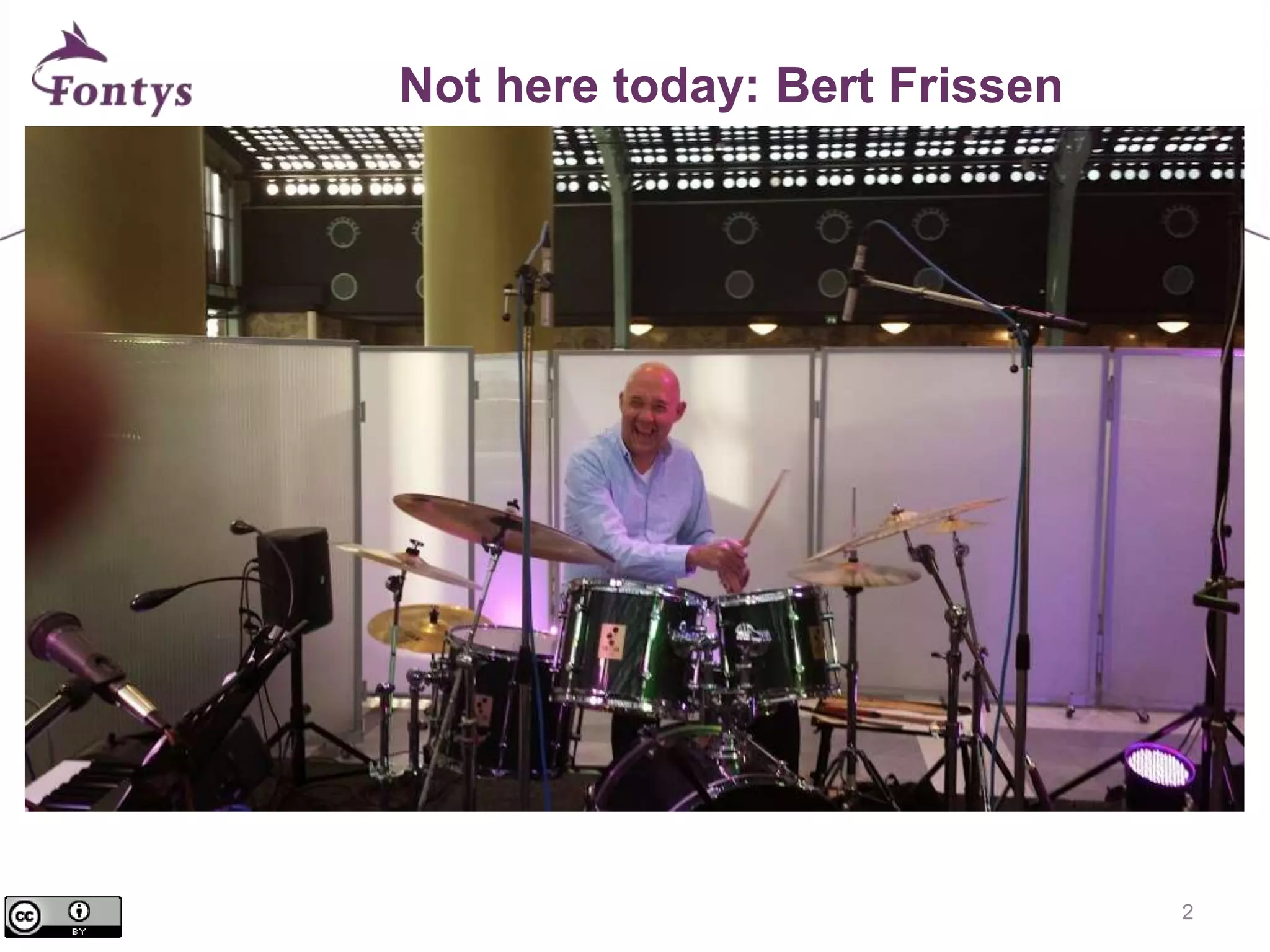
Not here today: Bert Frissen
3 
Agenda 
• Why? 
• What is available? 
• What are we looking for? 
• What can this look like? 
• Which issues remain?
4 
Why? 
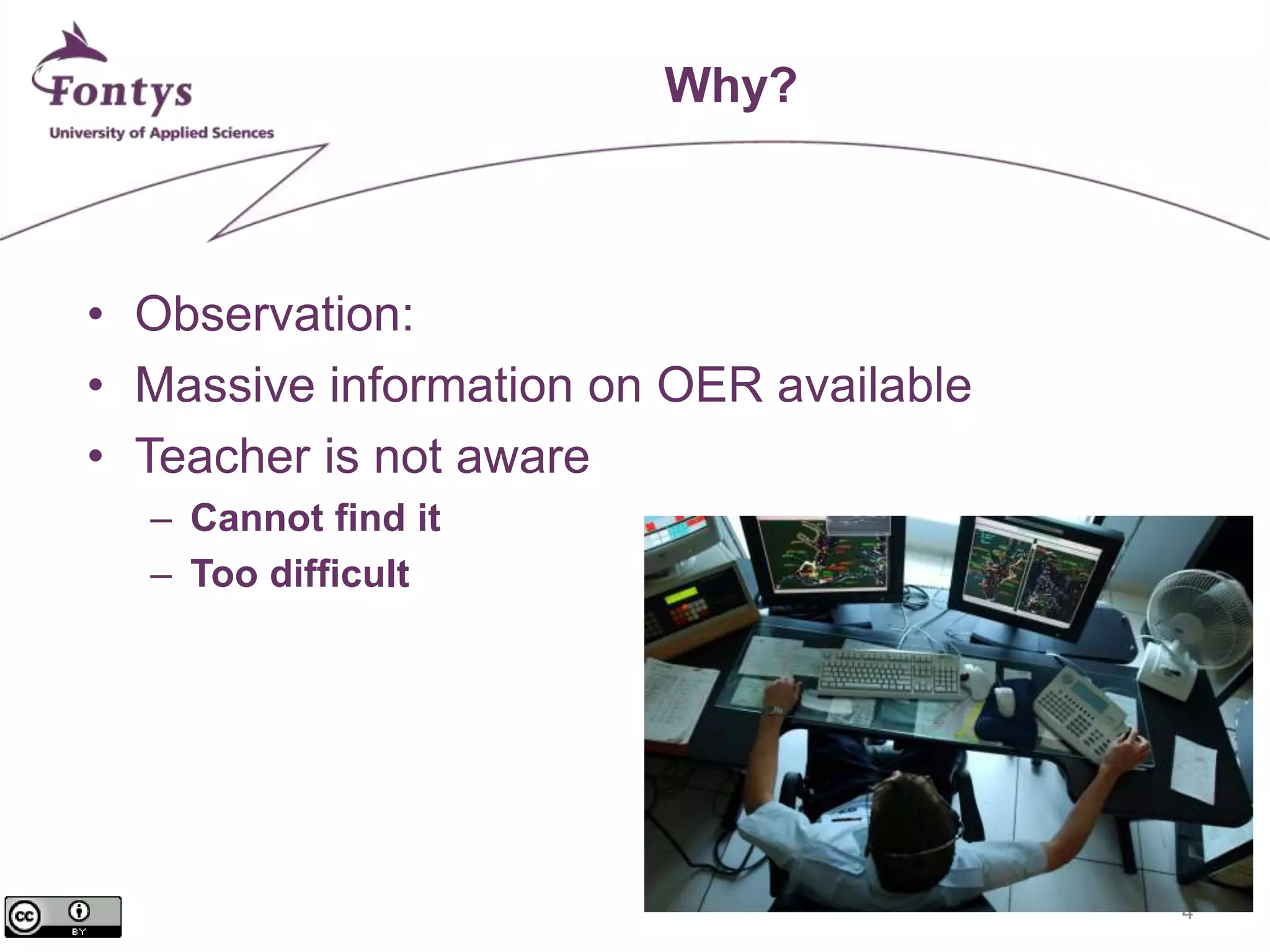
• Observation: 
• Massive information on OER available 
• Teacher is not aware 
– Cannot find it 
– Too difficult
Voettekst 5 
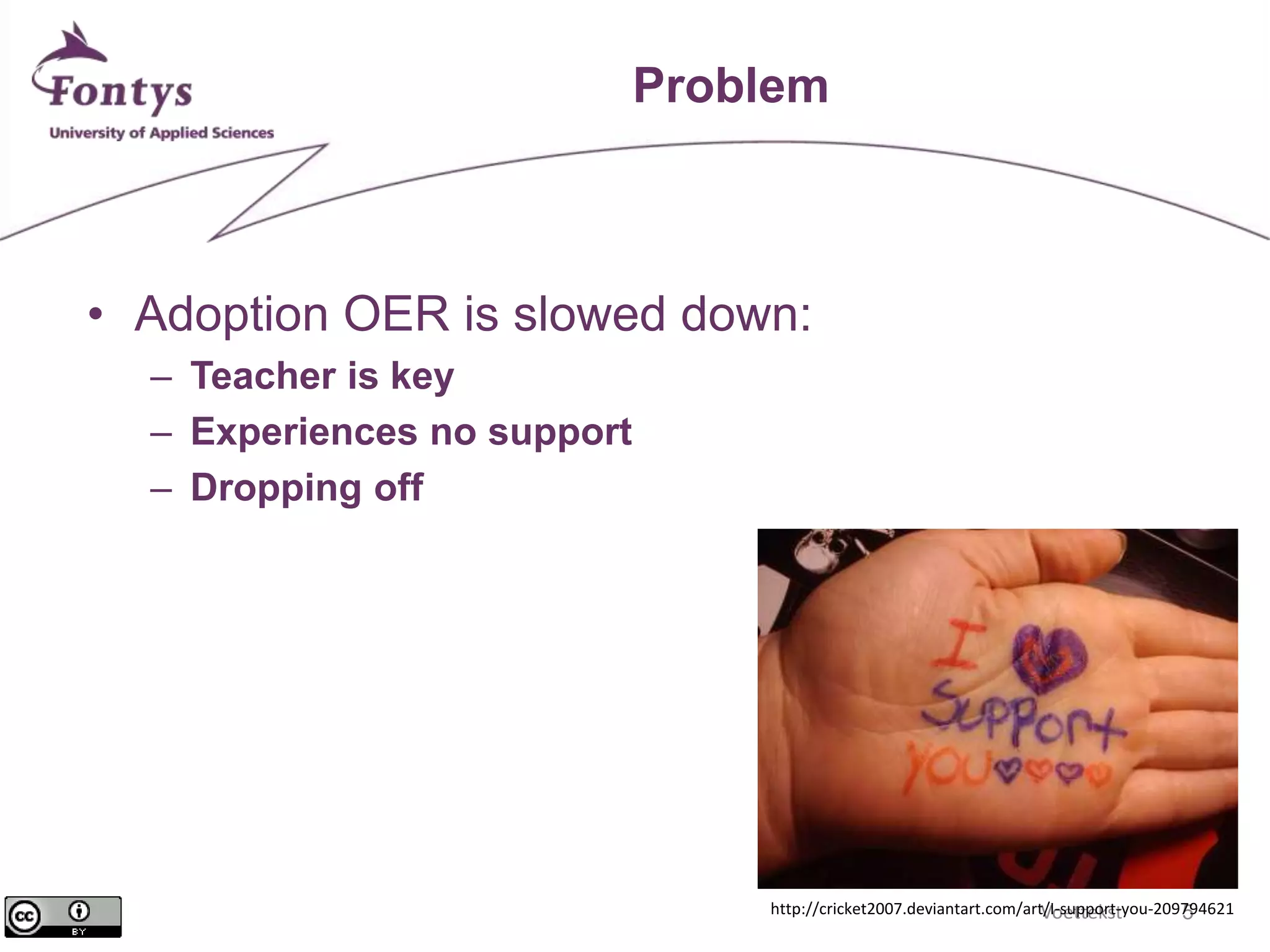
Problem 
• Adoption OER is slowed down: 
– Teacher is key 
– Experiences no support 
– Dropping off 
http://cricket2007.deviantart.com/art/I-support-you-209794621
Voettekst 6 
What is already available? 
• A lot! 
• What is missing? 
• Inspiration
7 
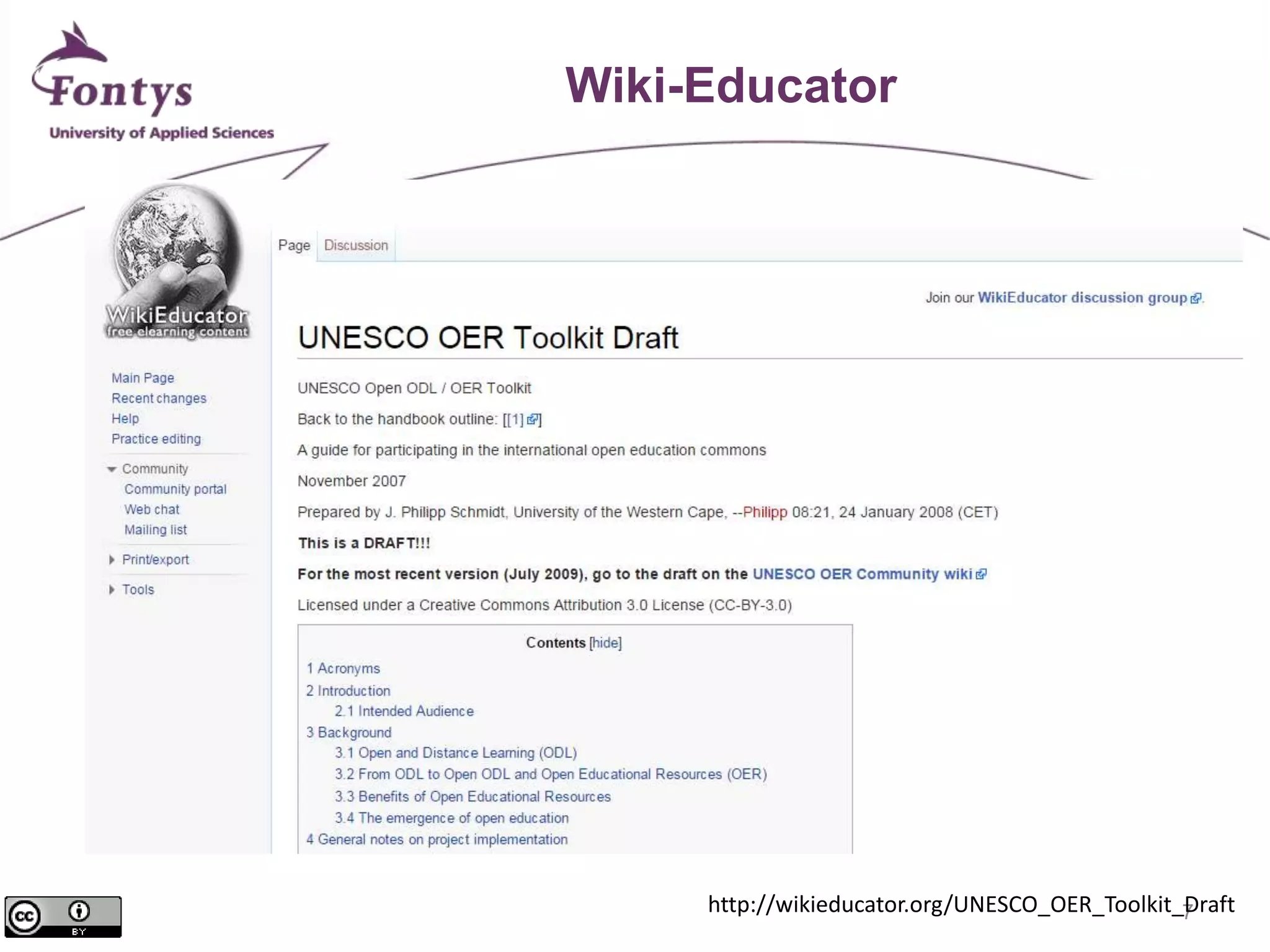
Wiki-Educator 
http://wikieducator.org/UNESCO_OER_Toolkit_Draft
8 
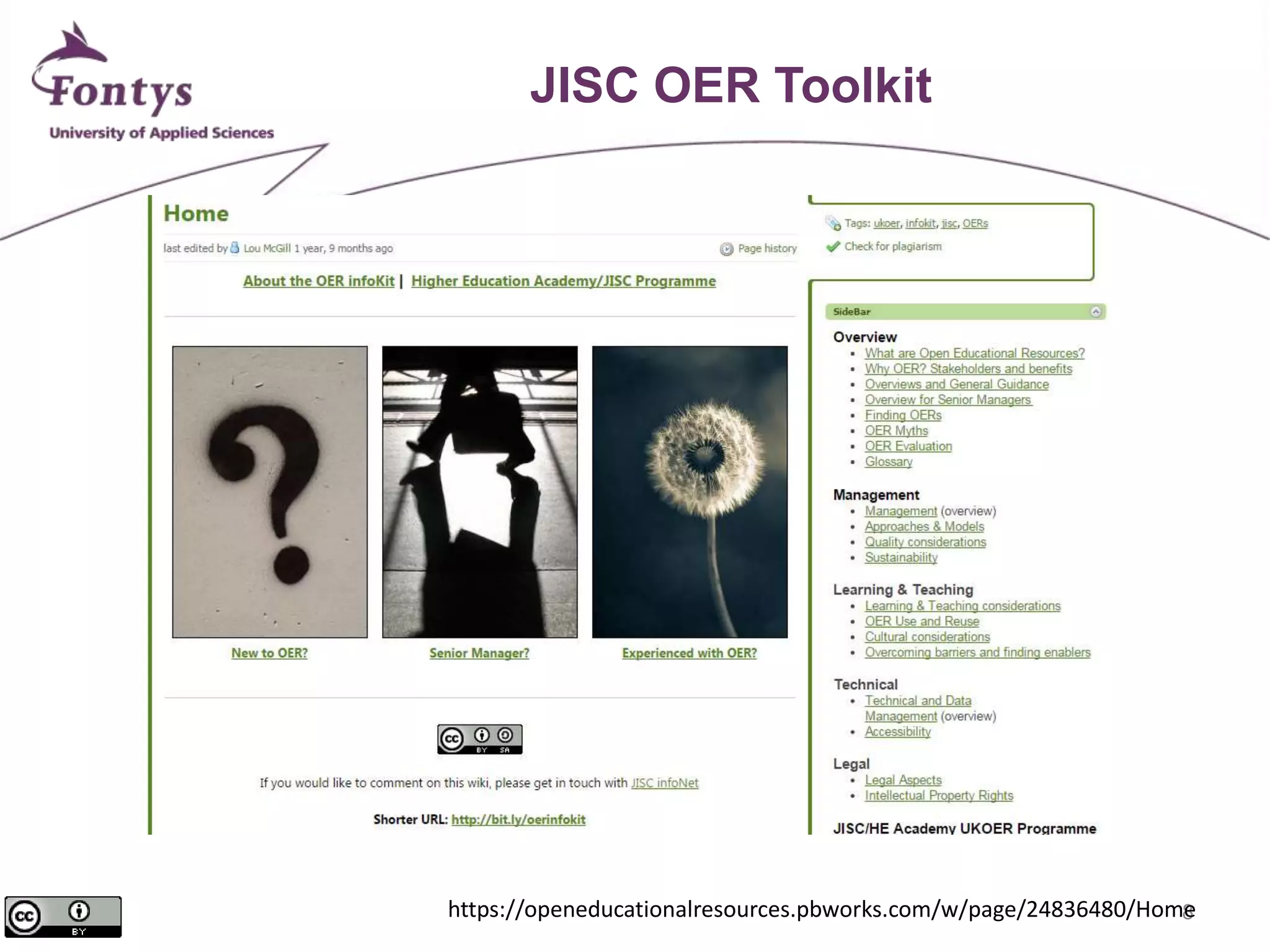
JISC OER Toolkit 
https://openeducationalresources.pbworks.com/w/page/24836480/Home
9 
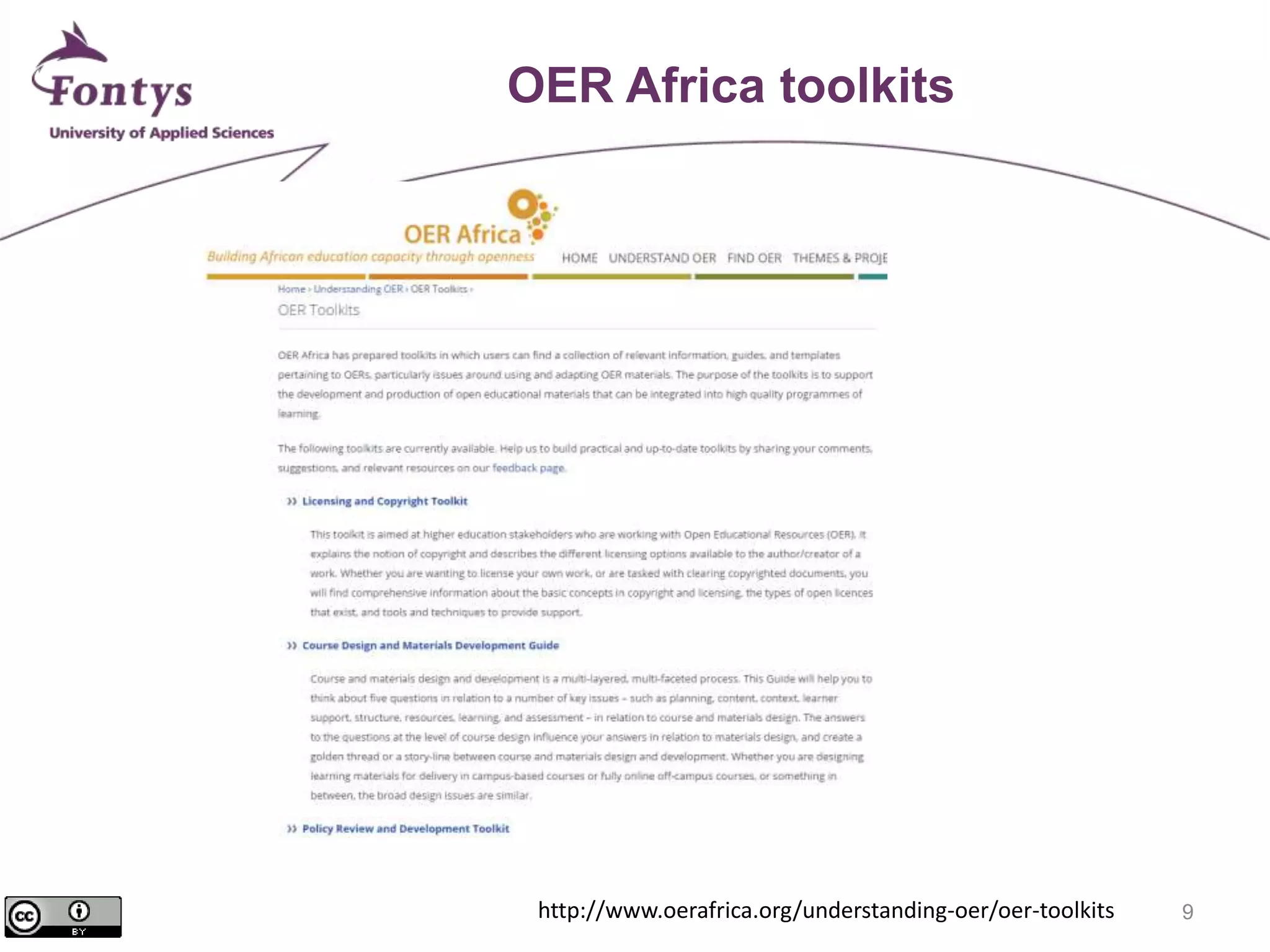
OER Africa toolkits 
http://www.oerafrica.org/understanding-oer/oer-toolkits
10 
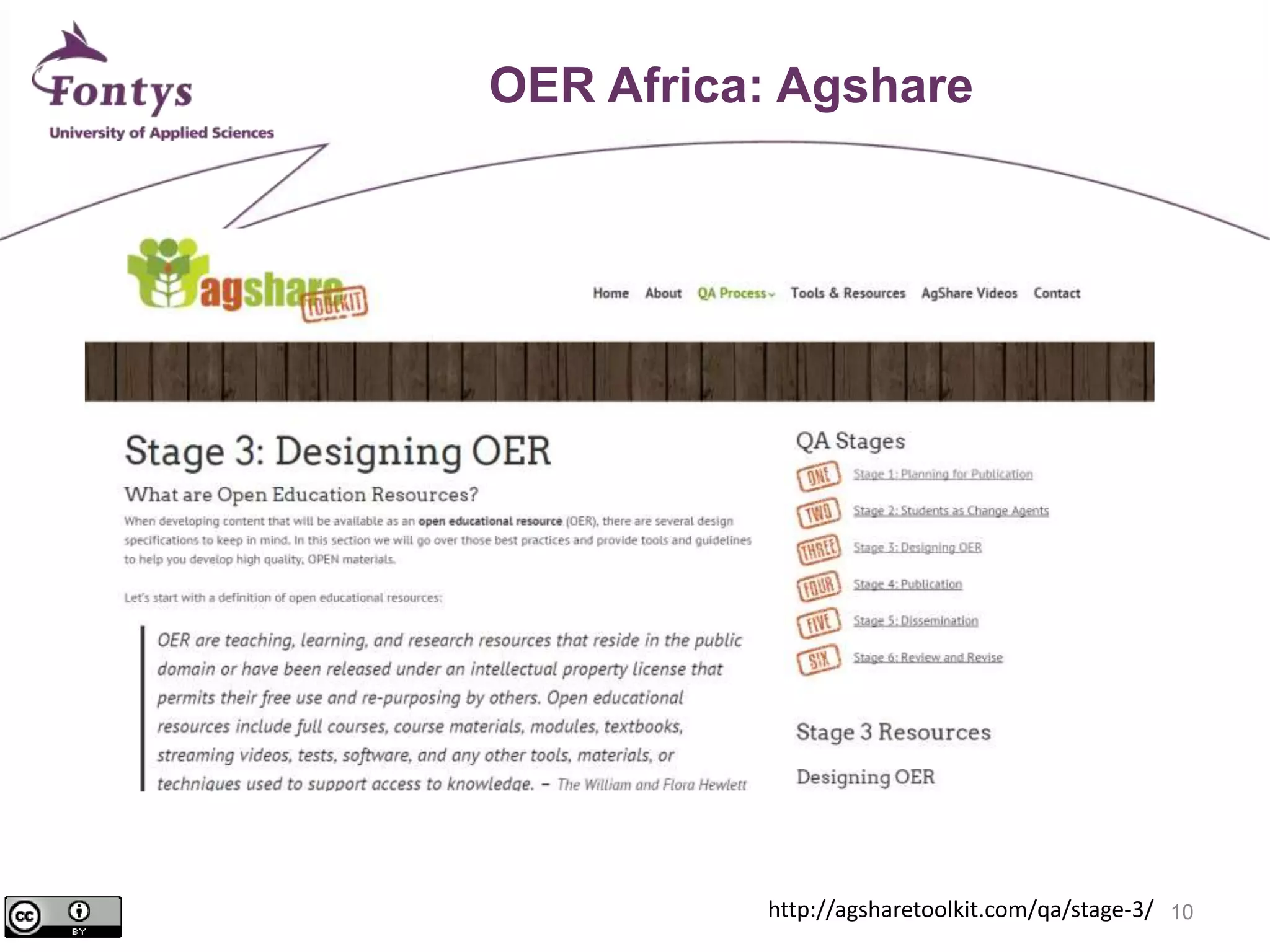
OER Africa: Agshare 
http://agsharetoolkit.com/qa/stage-3/
11 
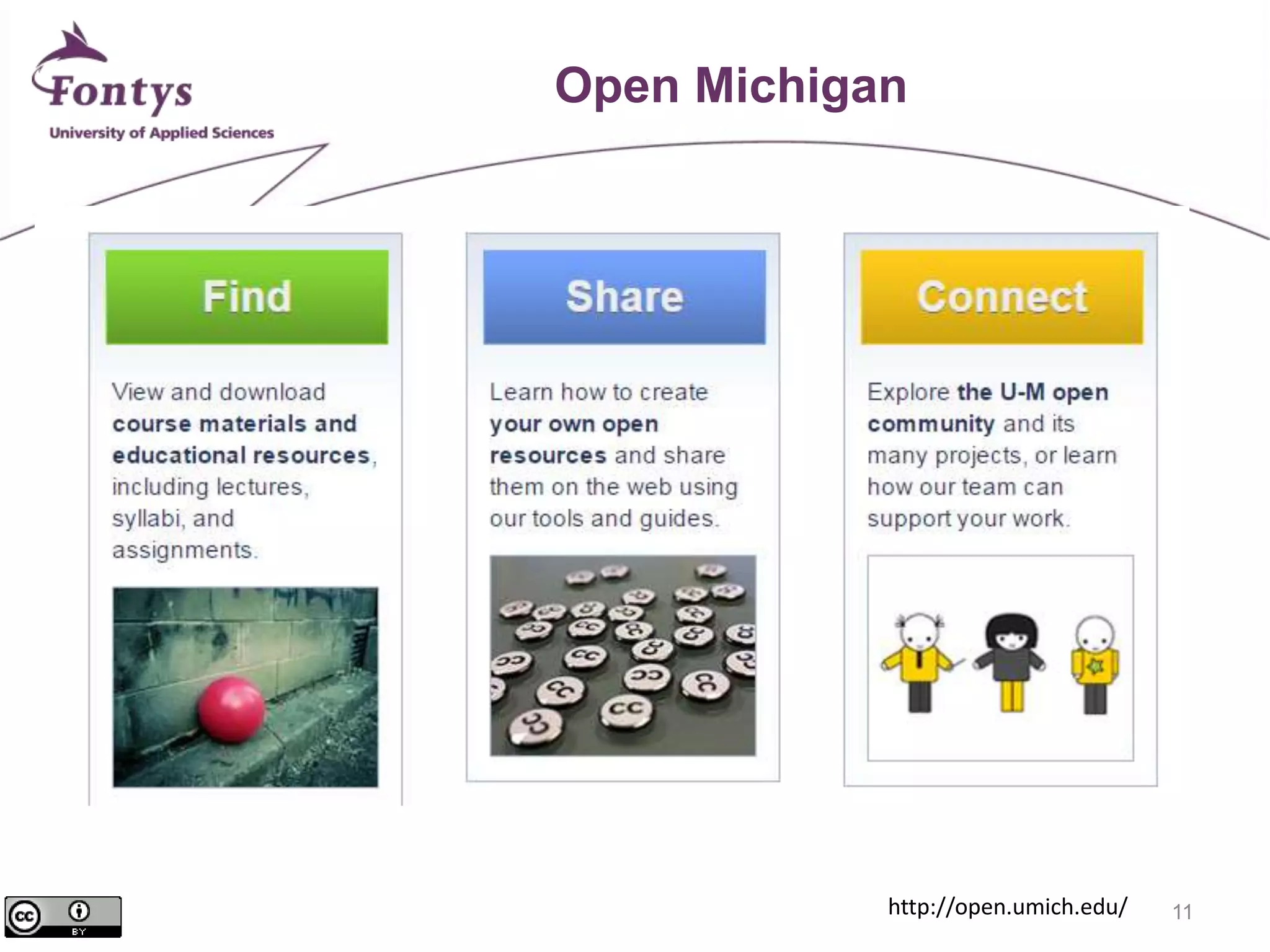
Open Michigan 
http://open.umich.edu/
12 
A Basic Guide to OER 
http://www.col.org/resources/publications/Pages/detail.aspx?PID=357
13 
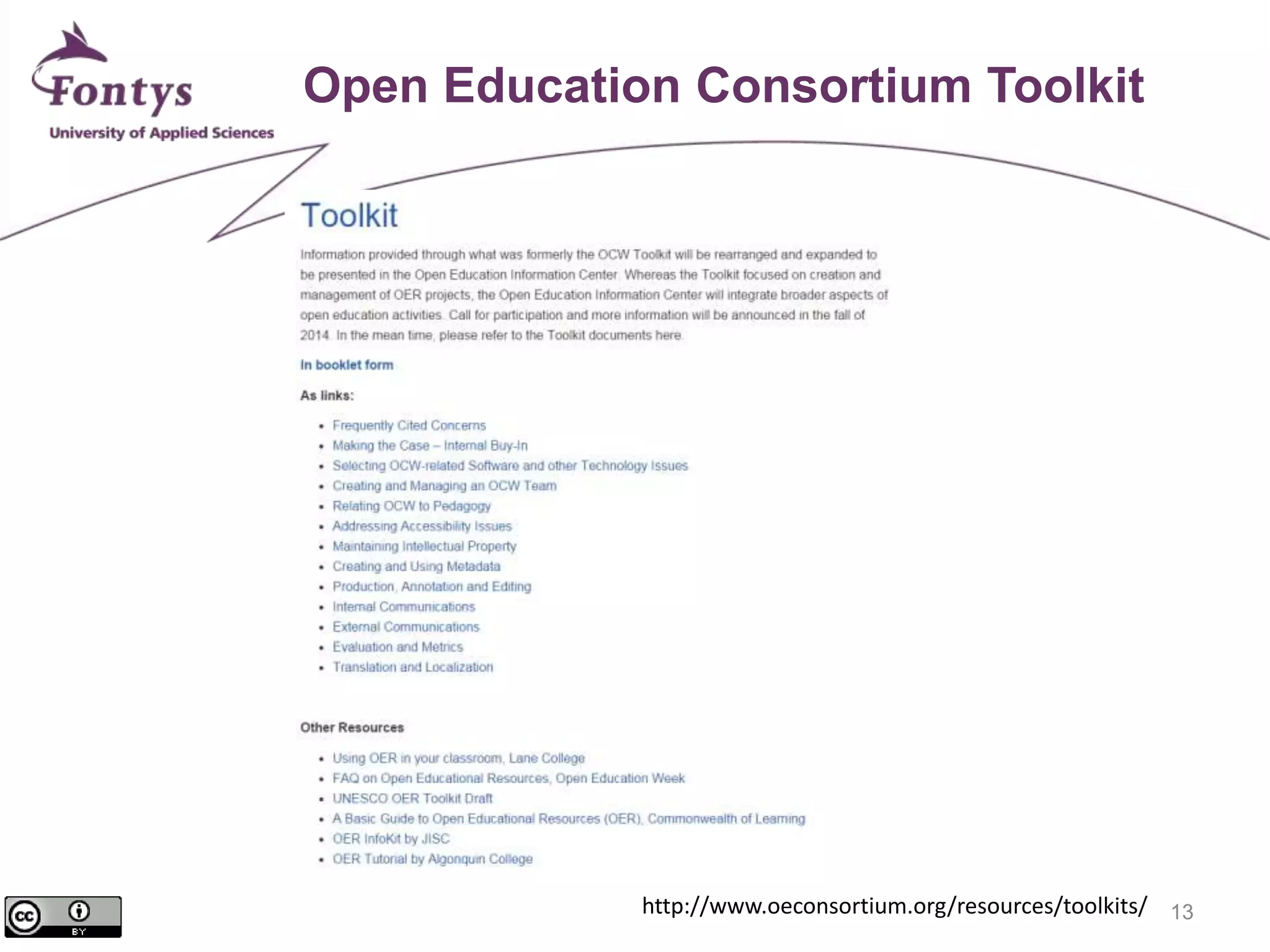
Open Education Consortium Toolkit 
http://www.oeconsortium.org/resources/toolkits/
14 
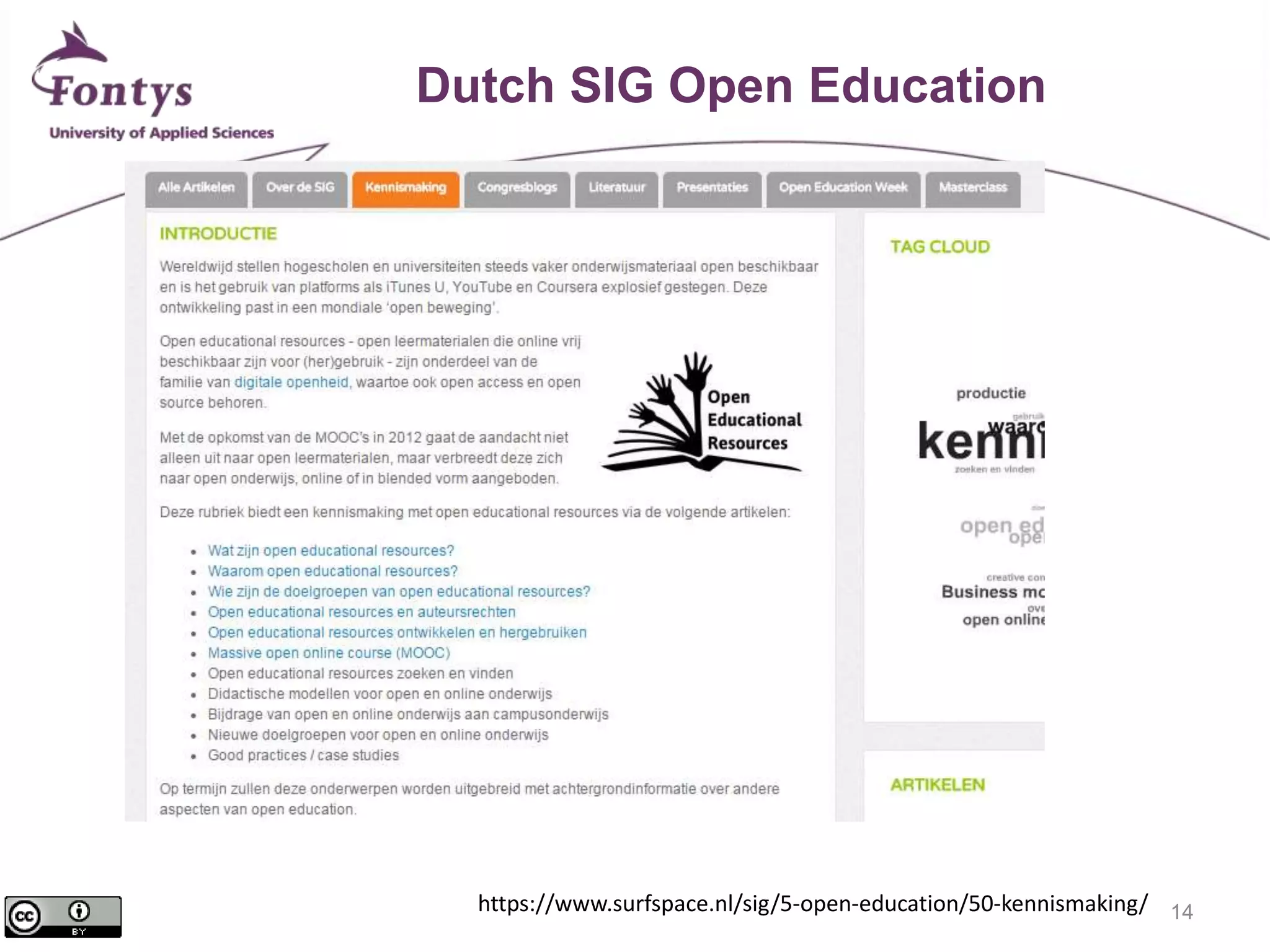
Dutch SIG Open Education 
https://www.surfspace.nl/sig/5-open-education/50-kennismaking/
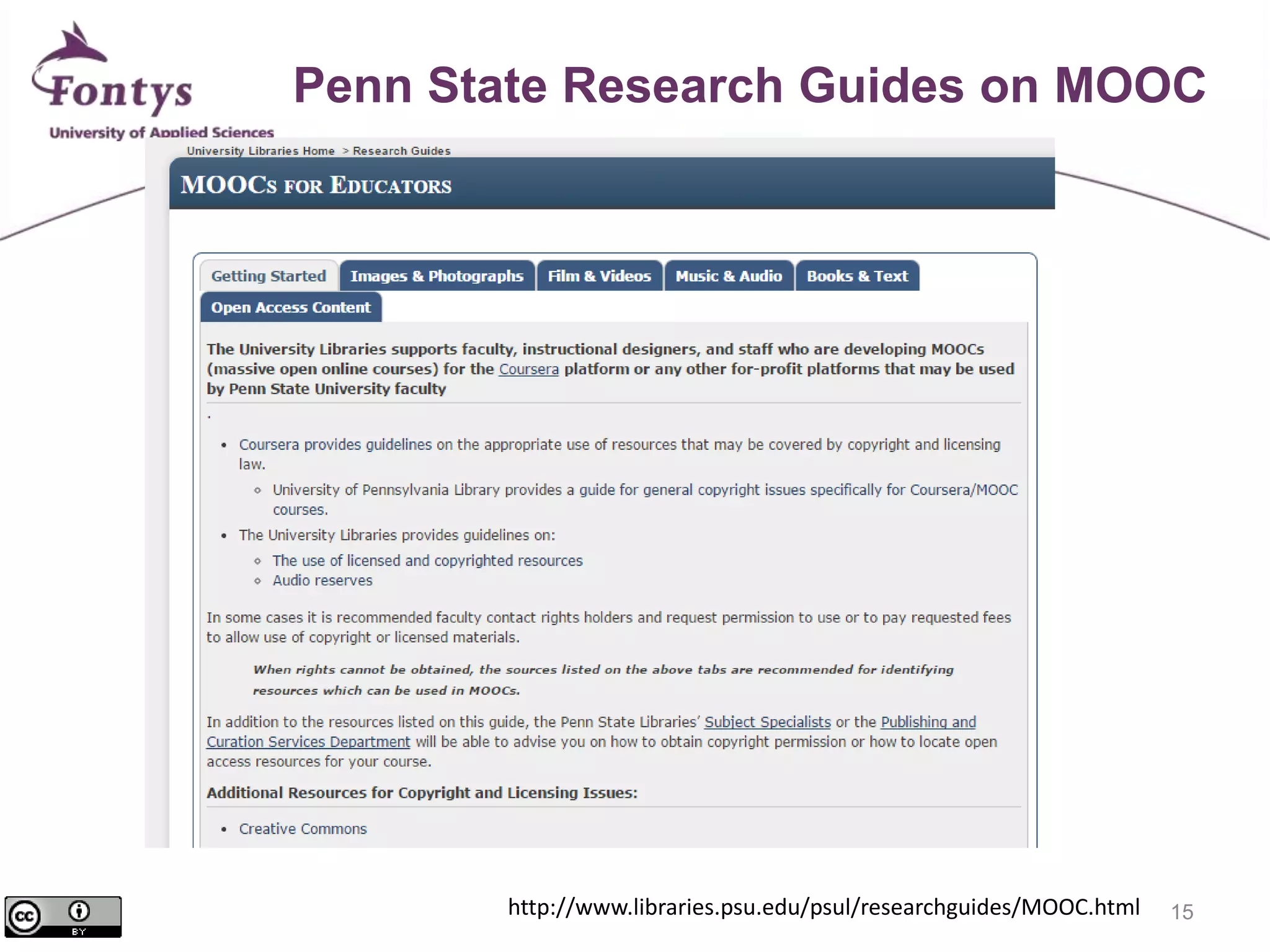
Penn State Research Guides on MOOC 
15 
http://www.libraries.psu.edu/psul/researchguides/MOOC.html
Voettekst 16 
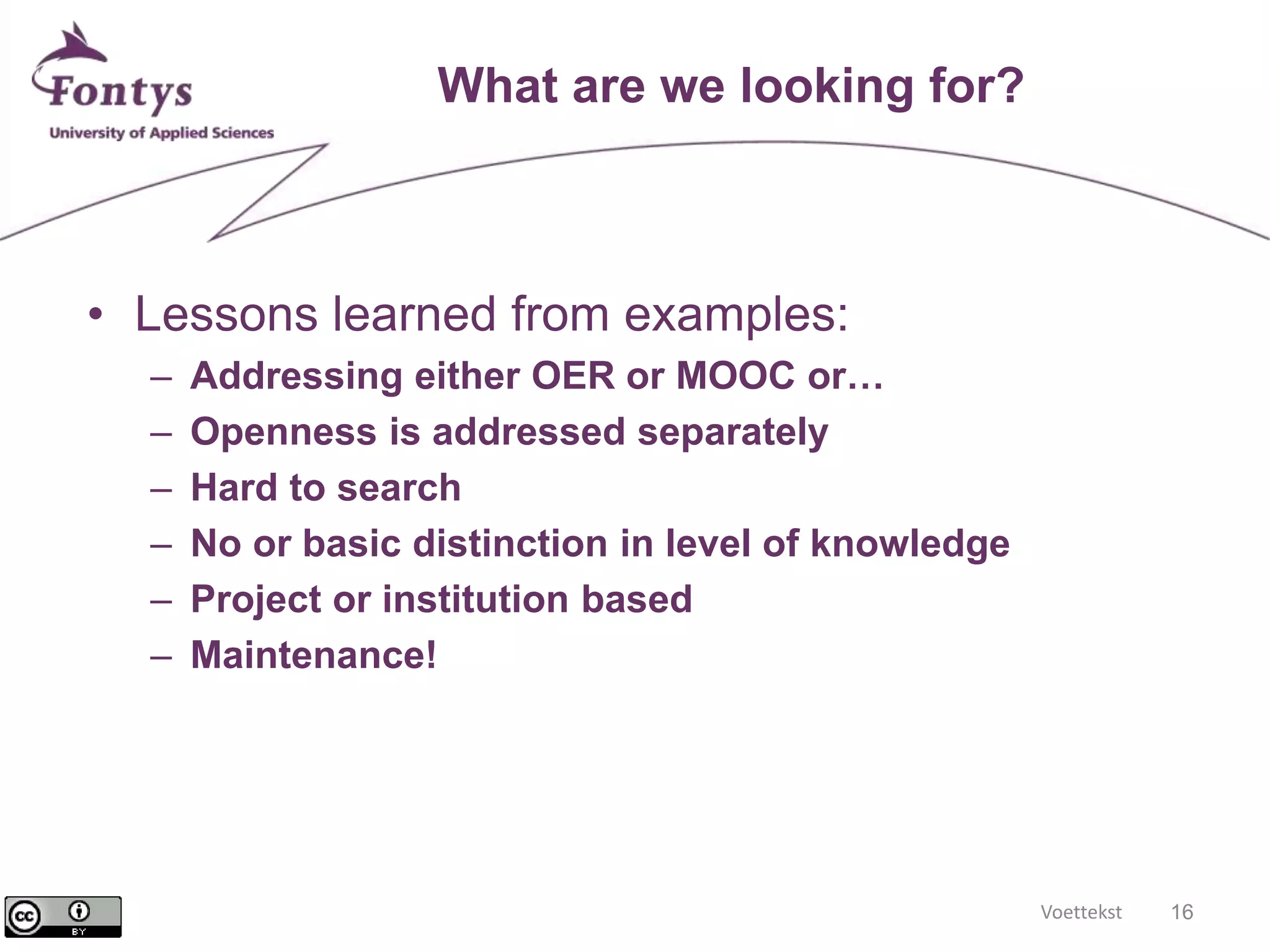
What are we looking for? 
• Lessons learned from examples: 
– Addressing either OER or MOOC or… 
– Openness is addressed separately 
– Hard to search 
– No or basic distinction in level of knowledge 
– Project or institution based 
– Maintenance!
17 
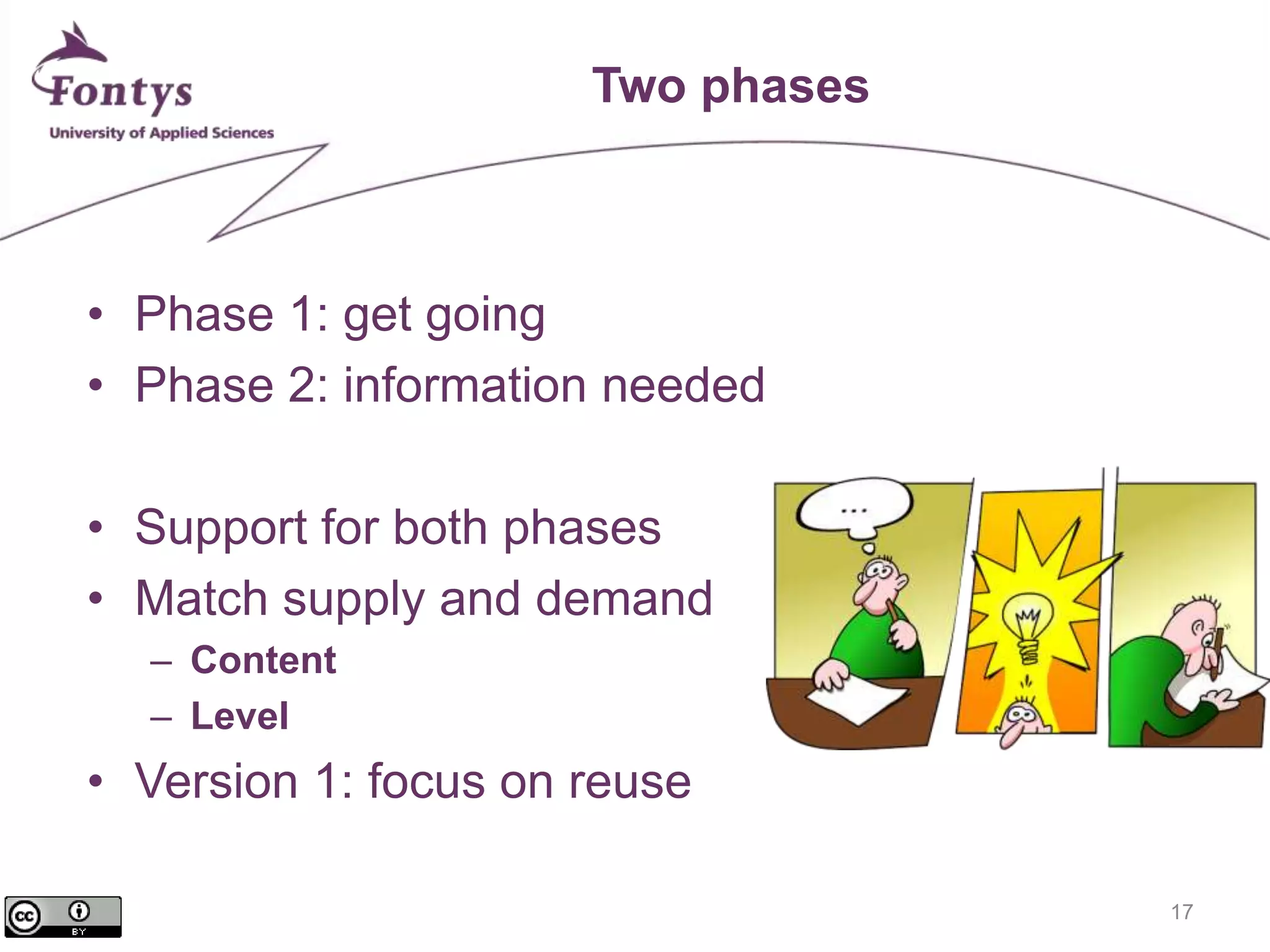
Two phases 
• Phase 1: get going 
• Phase 2: information needed 
• Support for both phases 
• Match supply and demand 
– Content 
– Level 
• Version 1: focus on reuse
18 
Demand and supply 
• Level of knowledge needed 
– Per OER aspect 
• Level of knowledge present 
• Refer to human expert available
Voettekst 19 
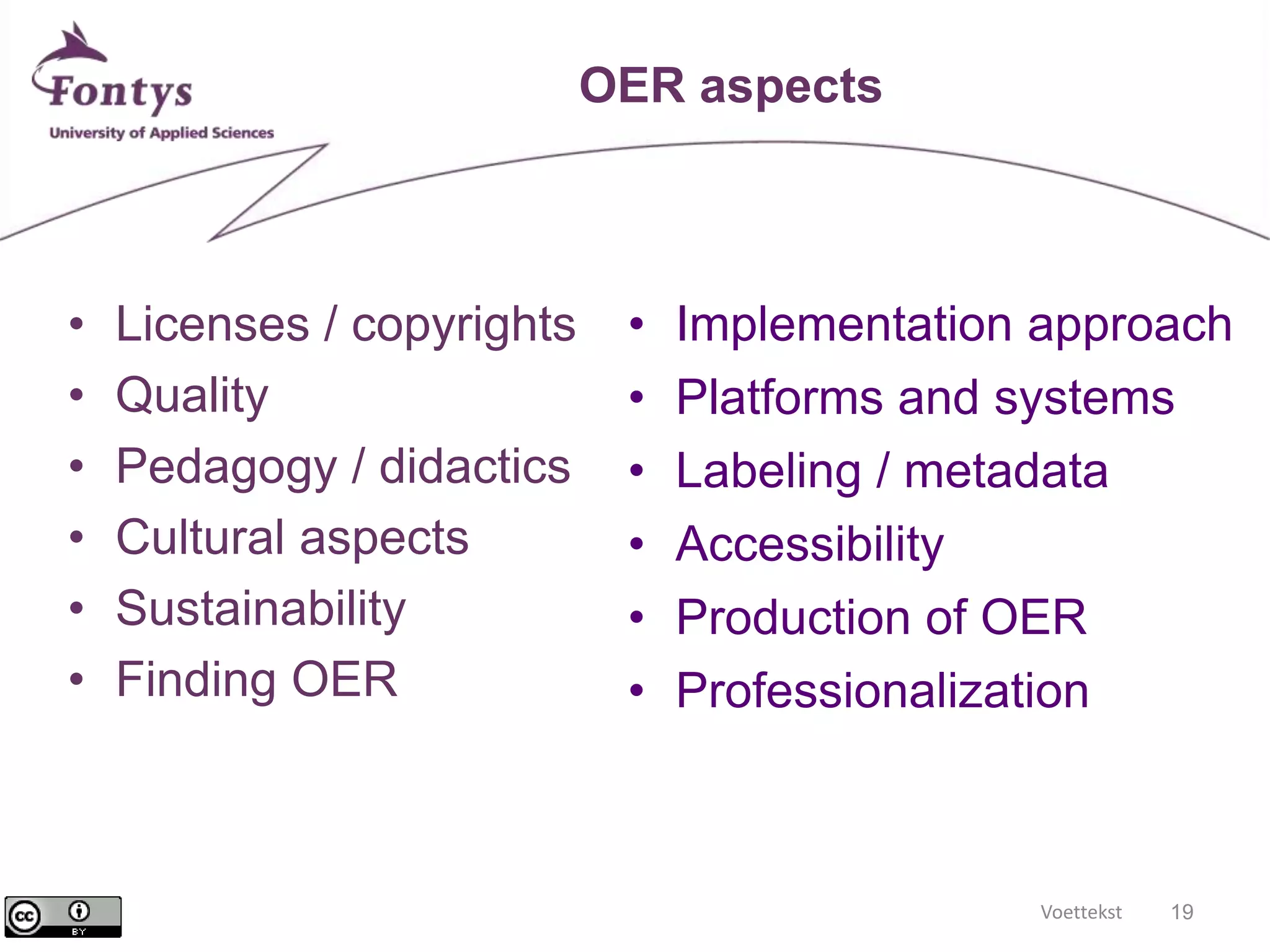
OER aspects 
• Licenses / copyrights 
• Quality 
• Pedagogy / didactics 
• Cultural aspects 
• Sustainability 
• Finding OER 
• Implementation approach 
• Platforms and systems 
• Labeling / metadata 
• Accessibility 
• Production of OER 
• Professionalization
20 
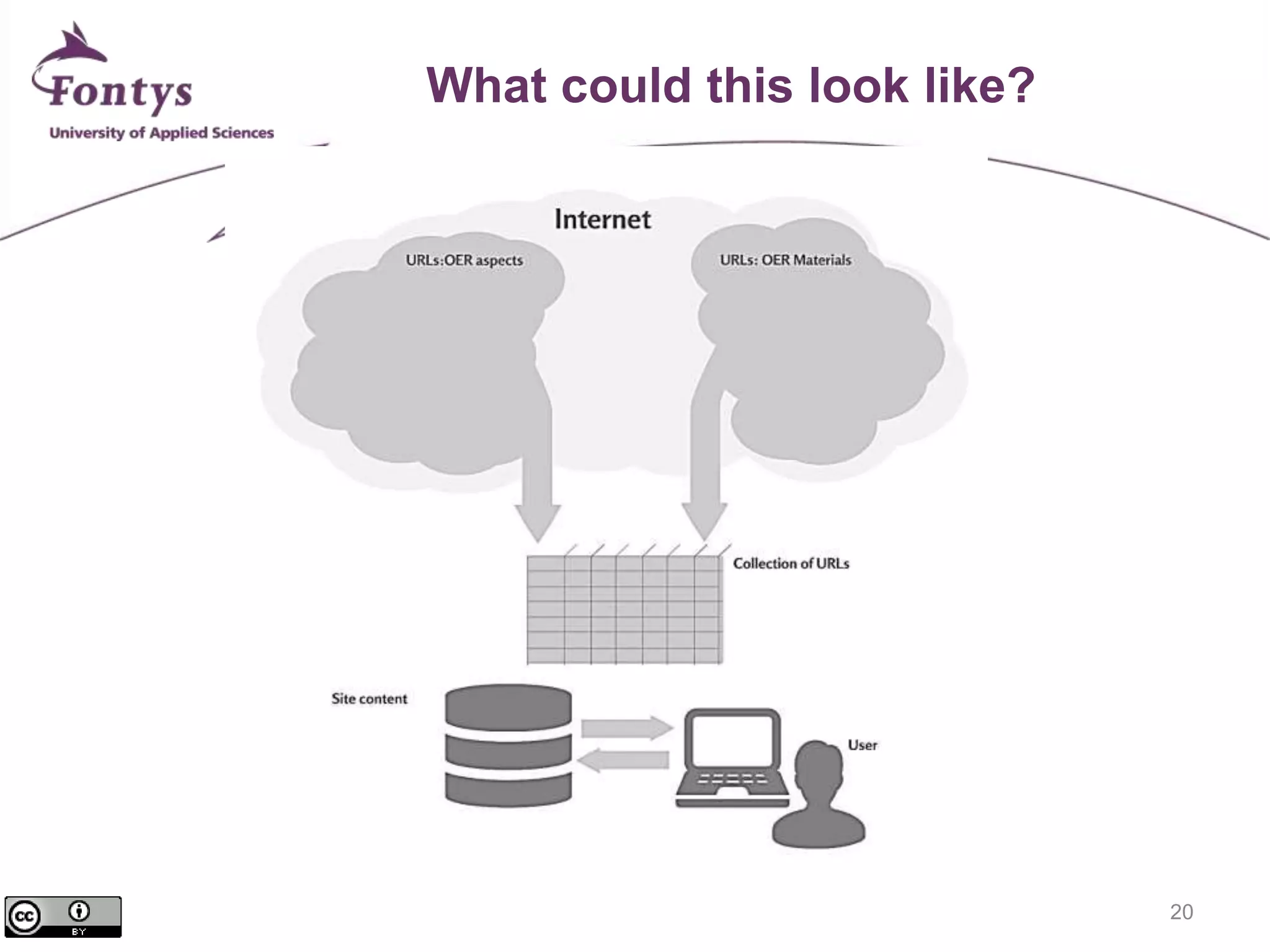
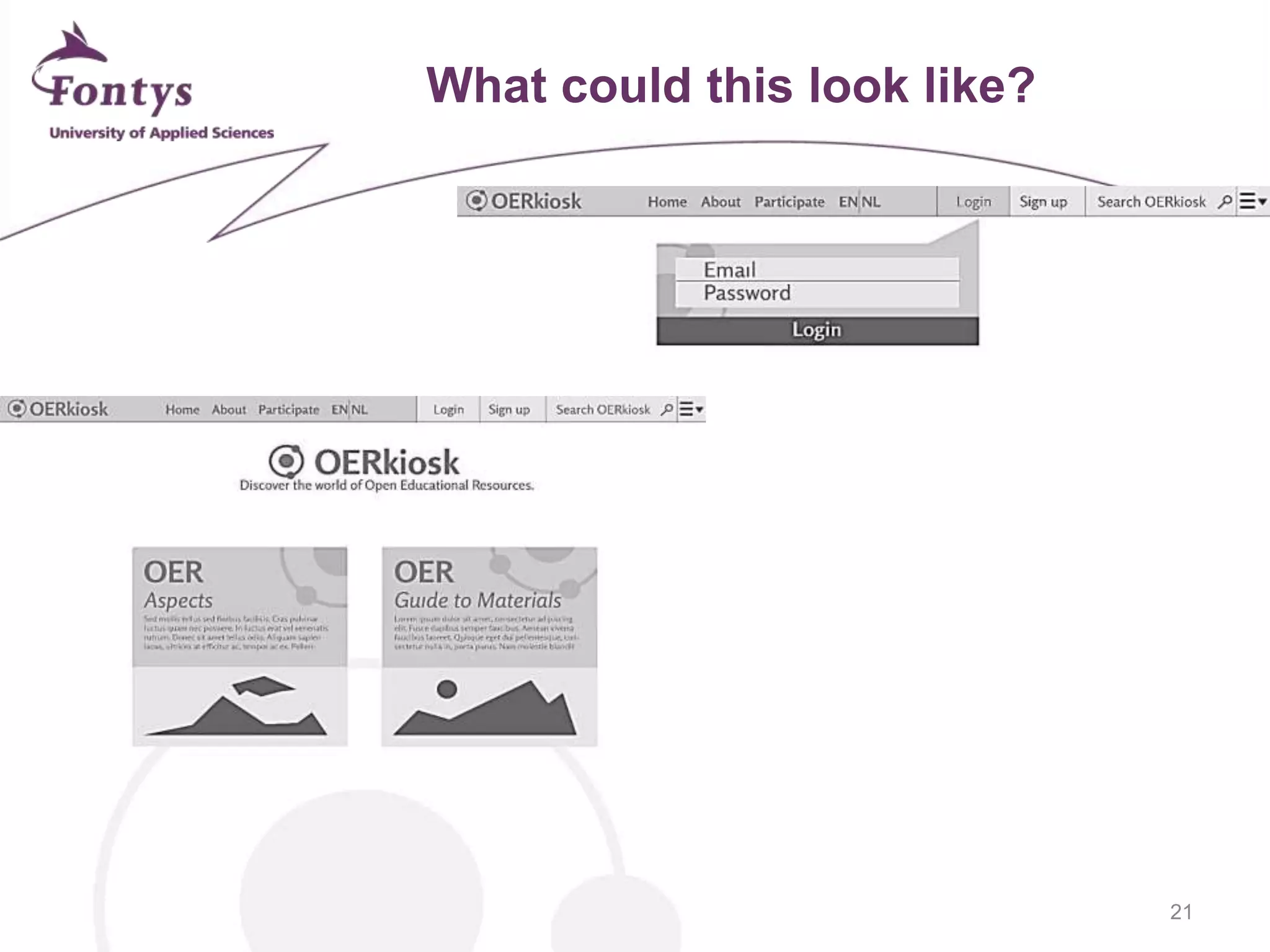
What could this look like?
21 
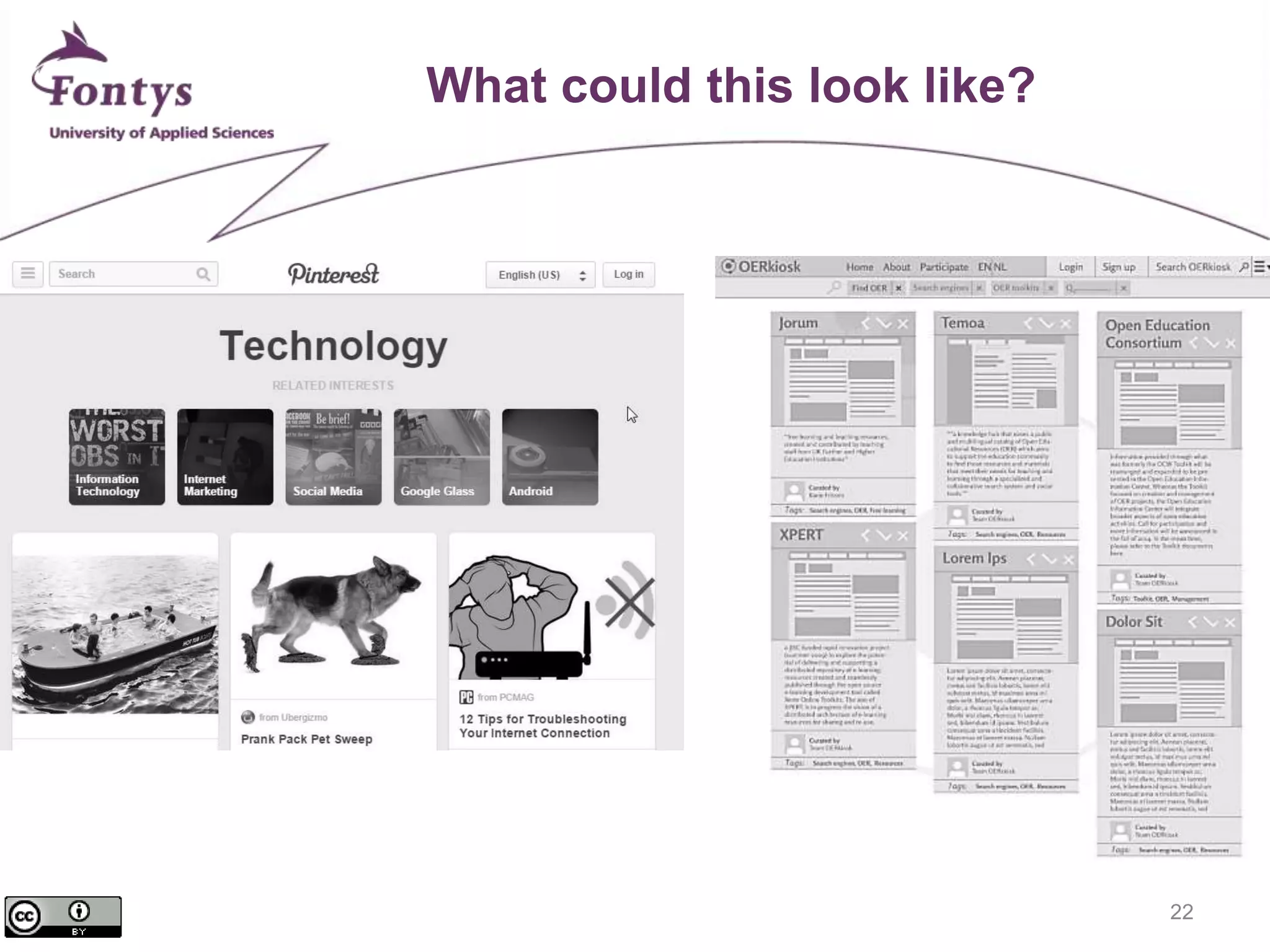
What could this look like?
22 
What could this look like?
23 
Which issues remain? 
• Who provides the information? 
• Maintenance? 
• Owner? 
– Community? 
– Consortium? 
• Copyright crucial! 
• Website?
24 
Thank you! 
p.gorissen@fontys.nl r.schuwer@fontys.nl
25

An OER Reference Model to Support Teachers in OER

  • 1.
    A Reference Modelfor OER Robert Schuwer Pierre Gorissen
  • 2.
    2 Not heretoday: Bert Frissen
  • 3.
    3 Agenda •Why? • What is available? • What are we looking for? • What can this look like? • Which issues remain?
  • 4.
    4 Why? •Observation: • Massive information on OER available • Teacher is not aware – Cannot find it – Too difficult
  • 5.
    Voettekst 5 Problem • Adoption OER is slowed down: – Teacher is key – Experiences no support – Dropping off http://cricket2007.deviantart.com/art/I-support-you-209794621
  • 6.
    Voettekst 6 Whatis already available? • A lot! • What is missing? • Inspiration
  • 7.
  • 8.
    8 JISC OERToolkit https://openeducationalresources.pbworks.com/w/page/24836480/Home
  • 9.
    9 OER Africatoolkits http://www.oerafrica.org/understanding-oer/oer-toolkits
  • 10.
    10 OER Africa:Agshare http://agsharetoolkit.com/qa/stage-3/
  • 11.
    11 Open Michigan http://open.umich.edu/
  • 12.
    12 A BasicGuide to OER http://www.col.org/resources/publications/Pages/detail.aspx?PID=357
  • 13.
    13 Open EducationConsortium Toolkit http://www.oeconsortium.org/resources/toolkits/
  • 14.
    14 Dutch SIGOpen Education https://www.surfspace.nl/sig/5-open-education/50-kennismaking/
  • 15.
    Penn State ResearchGuides on MOOC 15 http://www.libraries.psu.edu/psul/researchguides/MOOC.html
  • 16.
    Voettekst 16 Whatare we looking for? • Lessons learned from examples: – Addressing either OER or MOOC or… – Openness is addressed separately – Hard to search – No or basic distinction in level of knowledge – Project or institution based – Maintenance!
  • 17.
    17 Two phases • Phase 1: get going • Phase 2: information needed • Support for both phases • Match supply and demand – Content – Level • Version 1: focus on reuse
  • 18.
    18 Demand andsupply • Level of knowledge needed – Per OER aspect • Level of knowledge present • Refer to human expert available
  • 19.
    Voettekst 19 OERaspects • Licenses / copyrights • Quality • Pedagogy / didactics • Cultural aspects • Sustainability • Finding OER • Implementation approach • Platforms and systems • Labeling / metadata • Accessibility • Production of OER • Professionalization
  • 20.
    20 What couldthis look like?
  • 21.
    21 What couldthis look like?
  • 22.
    22 What couldthis look like?
  • 23.
    23 Which issuesremain? • Who provides the information? • Maintenance? • Owner? – Community? – Consortium? • Copyright crucial! • Website?
  • 24.
    24 Thank you! p.gorissen@fontys.nl r.schuwer@fontys.nl
  • 25.