AMERICAN REVOLUTION
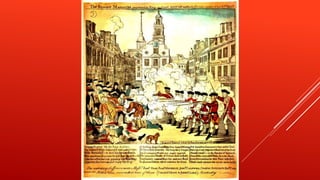
BOSTON MASSACRE
 Protesting the taxes
 Colonists were shouting insults at the British soldiers, throwing things
 Someone yelled “fire” and the soldiers shot into the crowd
 5 colonialists were shot
 These are considered the first American casualties in the War for
Independence
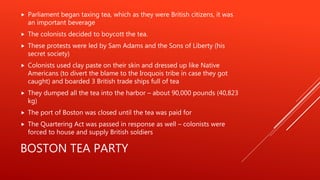
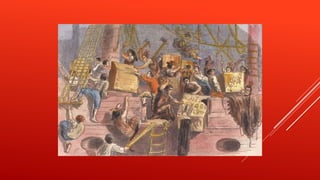
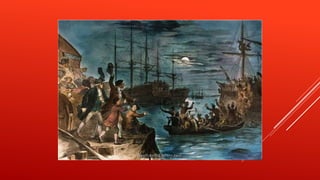
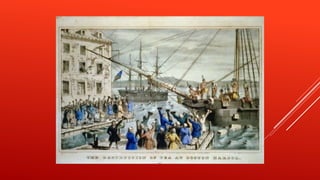
BOSTON TEA PARTY
 Parliament began taxing tea, which as they were British citizens, it was
an important beverage
 The colonists decided to boycott the tea.
 These protests were led by Sam Adams and the Sons of Liberty (his
secret society)
 Colonists used clay paste on their skin and dressed up like Native
Americans (to divert the blame to the Iroquois tribe in case they got
caught) and boarded 3 British trade ships full of tea
 They dumped all the tea into the harbor – about 90,000 pounds (40,823
kg)
 The port of Boston was closed until the tea was paid for
 The Quartering Act was passed in response as well – colonists were
forced to house and supply British soldiers
EDENTON TEA PARTY AND OTHERS
 The Edenton Tea Party was organized by women
 It was one of the earliest organized political actions by women in US
history
 Other tea parties took place in Charleston, New York, and Annapolis.
OTHER EVENTS BEFORE THE DECLARATION
 Common Sense
 Written by Thomas Paine and encouraged colonists to declare independence
 The “Shot Heard ‘Round the World”
 British soldiers were going to capture the militias’ weapons in Boston
 Paul Revere, William Dawes, and Israel Bissell warned them that “the Red Coats
are coming.” – a popular phrase today even though it was unlikely that they ever
really said it
 The Battles of Lexington (lost) and Concord (won) ensued
 They do not who fired the first shot
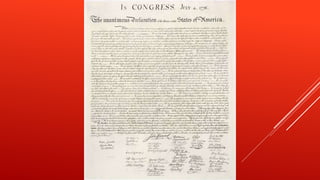
DECLARATION OF INDEPENDENCE
 Written by Thomas Jefferson at age 33
 “No taxation without representation”
 Sugar Act, 1764
 Stamp Act, 1765
 Townshend Acts, 1767
 Signed July 4, 1776
 “We hold these truths to be self-evident, that all men are created equal,
that they are endowed by their Creator with certain unalienable Rights,
that among these are Life, Liberty and the pursuit of Happiness. ——”
 John Hancock signed his name extra large and clear, so that the king
could read his name without his glasses!
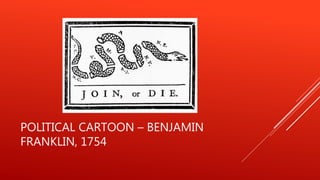
POLITICAL CARTOON – BENJAMIN
FRANKLIN, 1754
INDEPENDENCE WAR
 Only 1/3 were in favor of independence, 1/3 were Loyalist (wanted to
stay), and 1/3 were neutral
 Made an alliance with France (Benjamin Franklin was sent to France to
ask for military aid and money)
 France, Spain, and Holland all provided supplies
 Sometimes Loyalists were “tar and feathered” by the Sons of Liberty
 Deborah Sampson – women were not allowed to enlist, so she dressed
as a man and joined the Continental Army in October 1778
 Important battles: Bunker Hill (“Don’t shoot till you see the white of
their eyes,” 1775), Trenton (1776), Saratoga (Called the “Turning Point”
of the war because it caused the French to give support to the rebels,
1777), Yorktown (This battle “convinced” the British that victory was out
of reach, 1781)
 25,000 Americans died – 8,000 in battle and 17,000 from sickness and
other causes
 Parliament voted to end the War on March 4, 1782
 The Treaty of Paris was signed September 3, 1783
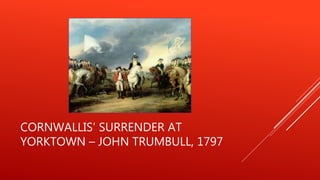
CORNWALLIS’ SURRENDER AT
YORKTOWN – JOHN TRUMBULL, 1797
GEORGE WASHINGTON
 Took command 1775
 Reorganized militia units
 Replaced incompetent officers
 Created strict moral codes
 Turned undisciplined, homesick farmers into soldiers
 Secured re-enlistment after the Battle of Trenton
 Was not paid
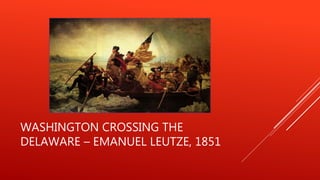
WASHINGTON CROSSING THE
DELAWARE – EMANUEL LEUTZE, 1851
LIBERTY BELL
 Symbol of America’s independence
 Rung to mark the reading of the Declaration of Independence
 Cracked the first time it was rung
 Located in Philadelphia and it hangs in Independence Hall
THE ARTICLES OF CONFEDERATION
 Precursor document to the current Constitution
 Lasted from 1781-1789
 Federal government had NO power – they couldn’t tax or raise armies
 The revolutionaries did not want to have another “king” again
 No executive or judicial branches
 Representatives were frequently absent
 Needed 13 out 13 to amend the document, 9 out of 13 to pass a law
 State governments had significantly more, unchecked power
 The only accomplishment of the Confederation Congress was the
Northwest Ordinance of 1787, where they established a system to
accept a territory into statehood
 When the population reached 60,000, the territory could hold a state
constitutional convention
 Ohio became a state in 1803
 This is important because they were forbidden from settling west of the
Appalachian Mountains by the British in 1763
 Trade was difficult between states – there were often heavy taxes and
each state had its own currency
 Shay’s Rebellion – in response to the heavy taxes levied in the States
 Truly showed the weakness of the Confederation Congress
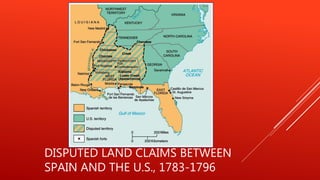
DISPUTED LAND CLAIMS BETWEEN
SPAIN AND THE U.S., 1783-1796
CONSTITUTION OF THE UNITED STATES
 Written by James Madison in 1787
 Federal government was given more power but still limited
 Division of branches with checks and balances
 Defined what the federal government could do, not what it wasn’t allowed to do
 States were supposed to be on the same level as the federal government
 The Bill of Rights were added to further protect individual liberty
 The Constitution's first words—We the People of the United States, in order to
form a more perfect union, establish justice, insure domestic tranquility, provide for
the common defense, promote the general welfare, and secure the blessings of
liberty to ourselves and our posterity, do ordain and establish this Constitution for
the United States of America—affirm that the government of the United States
exists to serve its citizens.
 George Washington and John Adams became the first President and Vice-President
of the United States

American Revolution

  • 1.
  • 2.
    BOSTON MASSACRE  Protestingthe taxes  Colonists were shouting insults at the British soldiers, throwing things  Someone yelled “fire” and the soldiers shot into the crowd  5 colonialists were shot  These are considered the first American casualties in the War for Independence
  • 4.
    BOSTON TEA PARTY Parliament began taxing tea, which as they were British citizens, it was an important beverage  The colonists decided to boycott the tea.  These protests were led by Sam Adams and the Sons of Liberty (his secret society)  Colonists used clay paste on their skin and dressed up like Native Americans (to divert the blame to the Iroquois tribe in case they got caught) and boarded 3 British trade ships full of tea  They dumped all the tea into the harbor – about 90,000 pounds (40,823 kg)  The port of Boston was closed until the tea was paid for  The Quartering Act was passed in response as well – colonists were forced to house and supply British soldiers
  • 8.
    EDENTON TEA PARTYAND OTHERS  The Edenton Tea Party was organized by women  It was one of the earliest organized political actions by women in US history  Other tea parties took place in Charleston, New York, and Annapolis.
  • 9.
    OTHER EVENTS BEFORETHE DECLARATION  Common Sense  Written by Thomas Paine and encouraged colonists to declare independence  The “Shot Heard ‘Round the World”  British soldiers were going to capture the militias’ weapons in Boston  Paul Revere, William Dawes, and Israel Bissell warned them that “the Red Coats are coming.” – a popular phrase today even though it was unlikely that they ever really said it  The Battles of Lexington (lost) and Concord (won) ensued  They do not who fired the first shot
  • 10.
    DECLARATION OF INDEPENDENCE Written by Thomas Jefferson at age 33  “No taxation without representation”  Sugar Act, 1764  Stamp Act, 1765  Townshend Acts, 1767  Signed July 4, 1776  “We hold these truths to be self-evident, that all men are created equal, that they are endowed by their Creator with certain unalienable Rights, that among these are Life, Liberty and the pursuit of Happiness. ——”  John Hancock signed his name extra large and clear, so that the king could read his name without his glasses!
  • 12.
    POLITICAL CARTOON –BENJAMIN FRANKLIN, 1754
  • 13.
    INDEPENDENCE WAR  Only1/3 were in favor of independence, 1/3 were Loyalist (wanted to stay), and 1/3 were neutral  Made an alliance with France (Benjamin Franklin was sent to France to ask for military aid and money)  France, Spain, and Holland all provided supplies  Sometimes Loyalists were “tar and feathered” by the Sons of Liberty  Deborah Sampson – women were not allowed to enlist, so she dressed as a man and joined the Continental Army in October 1778
  • 14.
     Important battles:Bunker Hill (“Don’t shoot till you see the white of their eyes,” 1775), Trenton (1776), Saratoga (Called the “Turning Point” of the war because it caused the French to give support to the rebels, 1777), Yorktown (This battle “convinced” the British that victory was out of reach, 1781)  25,000 Americans died – 8,000 in battle and 17,000 from sickness and other causes  Parliament voted to end the War on March 4, 1782  The Treaty of Paris was signed September 3, 1783
  • 15.
    CORNWALLIS’ SURRENDER AT YORKTOWN– JOHN TRUMBULL, 1797
  • 16.
    GEORGE WASHINGTON  Tookcommand 1775  Reorganized militia units  Replaced incompetent officers  Created strict moral codes  Turned undisciplined, homesick farmers into soldiers  Secured re-enlistment after the Battle of Trenton  Was not paid
  • 17.
    WASHINGTON CROSSING THE DELAWARE– EMANUEL LEUTZE, 1851
  • 18.
    LIBERTY BELL  Symbolof America’s independence  Rung to mark the reading of the Declaration of Independence  Cracked the first time it was rung  Located in Philadelphia and it hangs in Independence Hall
  • 19.
    THE ARTICLES OFCONFEDERATION  Precursor document to the current Constitution  Lasted from 1781-1789  Federal government had NO power – they couldn’t tax or raise armies  The revolutionaries did not want to have another “king” again  No executive or judicial branches  Representatives were frequently absent  Needed 13 out 13 to amend the document, 9 out of 13 to pass a law  State governments had significantly more, unchecked power
  • 20.
     The onlyaccomplishment of the Confederation Congress was the Northwest Ordinance of 1787, where they established a system to accept a territory into statehood  When the population reached 60,000, the territory could hold a state constitutional convention  Ohio became a state in 1803  This is important because they were forbidden from settling west of the Appalachian Mountains by the British in 1763  Trade was difficult between states – there were often heavy taxes and each state had its own currency  Shay’s Rebellion – in response to the heavy taxes levied in the States  Truly showed the weakness of the Confederation Congress
  • 21.
    DISPUTED LAND CLAIMSBETWEEN SPAIN AND THE U.S., 1783-1796
  • 22.
    CONSTITUTION OF THEUNITED STATES  Written by James Madison in 1787  Federal government was given more power but still limited  Division of branches with checks and balances  Defined what the federal government could do, not what it wasn’t allowed to do  States were supposed to be on the same level as the federal government  The Bill of Rights were added to further protect individual liberty  The Constitution's first words—We the People of the United States, in order to form a more perfect union, establish justice, insure domestic tranquility, provide for the common defense, promote the general welfare, and secure the blessings of liberty to ourselves and our posterity, do ordain and establish this Constitution for the United States of America—affirm that the government of the United States exists to serve its citizens.  George Washington and John Adams became the first President and Vice-President of the United States