American Revolution
What was American Revolution
 By AD 1770’s, there were 13 colonies of Great Britain in North
America.
 The colonial government was represented by the British crown (King
George III).
 Tensions grew over time between the residents of Great Britain’s 13
North American colonies and the colonial government, which
resulted in a full-fledged war by 1775.
 The American residents fought against the British by making an
alliance with France.
 Americans defeated the British in the American Revolutionary War,
thus becoming the United States of America.
Background
 Before 1492, the entire focus of history was limited to the old world.
 This changed when the sea route to America was discovered by
Christopher Columbus in 1492.
 After that, various European powers established colonies in North
America, prominent among them being Spain, Holland, France and
England.
 The colonies were populated mainly by European migrants who
were landless peasants, people facing religious persecution, traders,
explorers, and others seeking adventure and profit in these new
found lands.
 The rivalry was especially strong between England and France,
which culminated in the seven years war (1756-63).
 It is known as the “first true world war” and was fought in Europe,
West Africa, the Americas, India and the Philippines.
 The war concluded with the Battle of Wandiwash (1760) with the
decisive British victory.
 This ushered in an era of British supremacy across the globe.
 Both parties signed the Treaty of Paris (1763), bringing an end to the
war.
American Colonies
 The colonies of England lined the Atlantic coast and were thirteen in
number.
 The colonies had a diverse population, but the majority of them
were independent farmers.
 With time, new industries were set up producing wool, flax and
leather, mostly for European markets.
 Politically, the colonies were governed by a locally elected
assembly.
 They enacted laws and levied taxes.
 Though they enjoyed some independence, they were ultimately
answerable to the mother country (Britain).
Political causes of the American
Revolution
 No Representatives of Colonies in the British Parliament
 Resource draining of the colonies
 Taxation without representation
 since the colonies were not represented in the British parliament, many
people asserted that the British government had no rights to tax the
colonies. They used the slogan ‘No Taxation without Representation’
 Boston Tea Party (1773), where tea cartons carried by British ships
were thrown at the sea, Britain’s right to levy taxes was eroded over
time. This power was assumed by respective local governments.
Economic causes of the American
Revolution
 England’s policies prevented the economic development of
colonies.
 Laws were enacted that mandated them to use only British ships for
international trade.
 Export limitations – products like tobacco, sugar and cotton could
only be exported to England.
 Heavy import duties for products from other colonies and outside
England.
 Restrictions on Industrialisation – development of industries like iron,
steel and textiles were prohibited in the colonies.
 Goods from England were forced upon the colonies.
 Policies were adopted to impede the growth of industries and
commerce in the colonies.
 Stamp duty – In 1765, the British Parliament enacted the Stamp Act.
It was made mandatory to affix stamps on every legal document.
This led to widespread protest, many of them turning violent.
 Rent – The aristocrats from England bought most of the land in North
America and prohibited land ownership rights of the colonisers in
the west.
 They wanted to keep the colonisers as rentiers for perpetuity.
 The British attempts to levy taxes were resisted. Upon on objection,
Britain was forced to withdraw most taxes except that for the tea.
Ideological causes of the American
Revolution
 The enlightenment philosophers like Locke, Harrington and Milton
caught popular imagination.
 They believed that all people had certain inalienable rights that no
government should be allowed to infringe.
 This was in direct contrast with the oppressive British rule.
 Inequalities of British society was despised by many philosophers like
Thomas Paine and Thomas Jefferson.
 They asserted the right to rebellion and emphasized on the absurdity
of a continent being governed by an island.
The American Revolutionary War
 The representatives of 13 colonies met at Philadelphia (1774) for the
first continental congress.
 Their appeal for just treatment was rejected by the king and their
actions declared as mutiny.
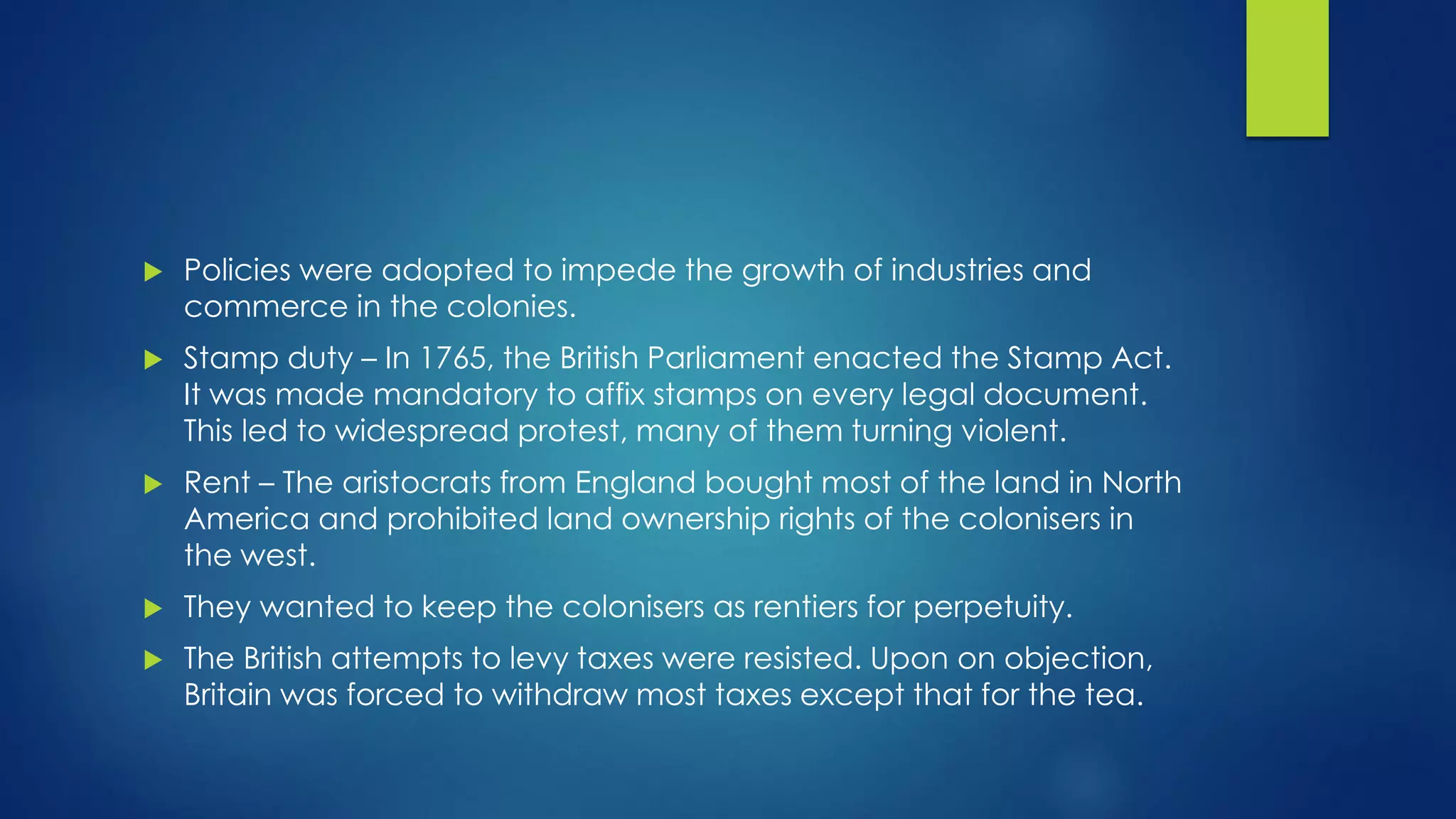
 The War started in 1775 with colonial militias clashing against British
troops for the first time.
 The congress met again in Second continental congress (1776) and
declared independence on July 4.
 The declaration, among other things, asserted the inalienable rights
of men that had to be protected.
 This was later elaborated in the Bill of rights.
 People were seen as the source of authority.
 This would pave way for the first modern democratic state with a
written constitution.
 The Americans were aided by the French, who were looking for an
opportunity to strike at Britain.
 The trouble brewing at home (Irish rebellion) also made things difficult
for the British.
 Other enemies of the British like Spain and Holland also started fighting
them at different locations of the continent.
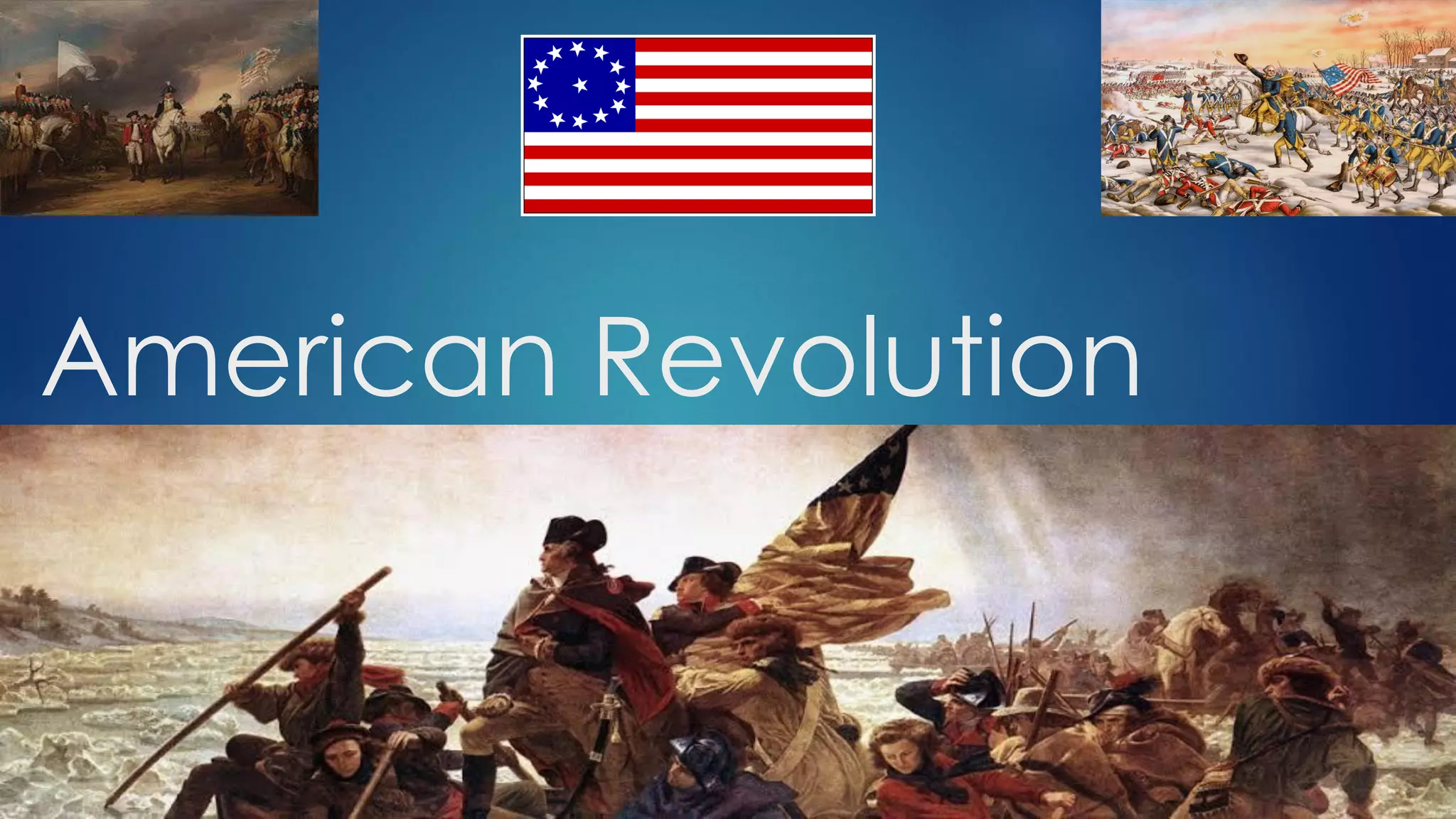
 War ended with English commander Lord Cornwallis surrendering to
George Washington in 1781.
 The treaty of Paris was signed in 1783 between England and USA which
formally brought an end to the war.
The significance of the American
Revolution
 The revolution led to the establishment of a republic based on the
first written constitution in the world.
 This was a marked contrast to the other states were Monarchies
were still in power.
 This inspired people across the world to struggle for democratic and
republican forms of government.
 It established a federal state with powers divided between the
federal government and states.
 This provided a nice template for power-sharing in diverse countries
that needed complex polities.
 Besides, there was a separation of powers between various organs
of the state.
 Certain inalienable rights were given to the people – this limited the
government against the authority of people and reduced government
interference in their lives.
 Democracy was established, but it was far from perfect.
 Sections like Negroes and women were denied voting rights.
 But the journey to democracy had begun.
 It led to many uprisings in Europe, with the French revolution being the
biggest.
 Many generals who participated in the war was instrumental in the
French revolution.
 Thinkers like Thomas Paine also participated in the revolution.
 This led to a spread of modern ideas in Europe.

American revolution

  • 1.
  • 2.
    What was AmericanRevolution  By AD 1770’s, there were 13 colonies of Great Britain in North America.  The colonial government was represented by the British crown (King George III).  Tensions grew over time between the residents of Great Britain’s 13 North American colonies and the colonial government, which resulted in a full-fledged war by 1775.  The American residents fought against the British by making an alliance with France.  Americans defeated the British in the American Revolutionary War, thus becoming the United States of America.
  • 3.
    Background  Before 1492,the entire focus of history was limited to the old world.  This changed when the sea route to America was discovered by Christopher Columbus in 1492.  After that, various European powers established colonies in North America, prominent among them being Spain, Holland, France and England.  The colonies were populated mainly by European migrants who were landless peasants, people facing religious persecution, traders, explorers, and others seeking adventure and profit in these new found lands.
  • 4.
     The rivalrywas especially strong between England and France, which culminated in the seven years war (1756-63).  It is known as the “first true world war” and was fought in Europe, West Africa, the Americas, India and the Philippines.  The war concluded with the Battle of Wandiwash (1760) with the decisive British victory.  This ushered in an era of British supremacy across the globe.  Both parties signed the Treaty of Paris (1763), bringing an end to the war.
  • 5.
    American Colonies  Thecolonies of England lined the Atlantic coast and were thirteen in number.  The colonies had a diverse population, but the majority of them were independent farmers.  With time, new industries were set up producing wool, flax and leather, mostly for European markets.  Politically, the colonies were governed by a locally elected assembly.  They enacted laws and levied taxes.  Though they enjoyed some independence, they were ultimately answerable to the mother country (Britain).
  • 6.
    Political causes ofthe American Revolution  No Representatives of Colonies in the British Parliament  Resource draining of the colonies  Taxation without representation  since the colonies were not represented in the British parliament, many people asserted that the British government had no rights to tax the colonies. They used the slogan ‘No Taxation without Representation’  Boston Tea Party (1773), where tea cartons carried by British ships were thrown at the sea, Britain’s right to levy taxes was eroded over time. This power was assumed by respective local governments.
  • 7.
    Economic causes ofthe American Revolution  England’s policies prevented the economic development of colonies.  Laws were enacted that mandated them to use only British ships for international trade.  Export limitations – products like tobacco, sugar and cotton could only be exported to England.  Heavy import duties for products from other colonies and outside England.  Restrictions on Industrialisation – development of industries like iron, steel and textiles were prohibited in the colonies.  Goods from England were forced upon the colonies.
  • 8.
     Policies wereadopted to impede the growth of industries and commerce in the colonies.  Stamp duty – In 1765, the British Parliament enacted the Stamp Act. It was made mandatory to affix stamps on every legal document. This led to widespread protest, many of them turning violent.  Rent – The aristocrats from England bought most of the land in North America and prohibited land ownership rights of the colonisers in the west.  They wanted to keep the colonisers as rentiers for perpetuity.  The British attempts to levy taxes were resisted. Upon on objection, Britain was forced to withdraw most taxes except that for the tea.
  • 9.
    Ideological causes ofthe American Revolution  The enlightenment philosophers like Locke, Harrington and Milton caught popular imagination.  They believed that all people had certain inalienable rights that no government should be allowed to infringe.  This was in direct contrast with the oppressive British rule.  Inequalities of British society was despised by many philosophers like Thomas Paine and Thomas Jefferson.  They asserted the right to rebellion and emphasized on the absurdity of a continent being governed by an island.
  • 10.
    The American RevolutionaryWar  The representatives of 13 colonies met at Philadelphia (1774) for the first continental congress.  Their appeal for just treatment was rejected by the king and their actions declared as mutiny.  The War started in 1775 with colonial militias clashing against British troops for the first time.  The congress met again in Second continental congress (1776) and declared independence on July 4.  The declaration, among other things, asserted the inalienable rights of men that had to be protected.  This was later elaborated in the Bill of rights.
  • 11.
     People wereseen as the source of authority.  This would pave way for the first modern democratic state with a written constitution.  The Americans were aided by the French, who were looking for an opportunity to strike at Britain.  The trouble brewing at home (Irish rebellion) also made things difficult for the British.  Other enemies of the British like Spain and Holland also started fighting them at different locations of the continent.  War ended with English commander Lord Cornwallis surrendering to George Washington in 1781.  The treaty of Paris was signed in 1783 between England and USA which formally brought an end to the war.
  • 12.
    The significance ofthe American Revolution  The revolution led to the establishment of a republic based on the first written constitution in the world.  This was a marked contrast to the other states were Monarchies were still in power.  This inspired people across the world to struggle for democratic and republican forms of government.  It established a federal state with powers divided between the federal government and states.  This provided a nice template for power-sharing in diverse countries that needed complex polities.  Besides, there was a separation of powers between various organs of the state.
  • 13.
     Certain inalienablerights were given to the people – this limited the government against the authority of people and reduced government interference in their lives.  Democracy was established, but it was far from perfect.  Sections like Negroes and women were denied voting rights.  But the journey to democracy had begun.  It led to many uprisings in Europe, with the French revolution being the biggest.  Many generals who participated in the war was instrumental in the French revolution.  Thinkers like Thomas Paine also participated in the revolution.  This led to a spread of modern ideas in Europe.