The Alveolar- Capillary Unit Dimitar Sajkov MD, DSc, PhD, FRACP
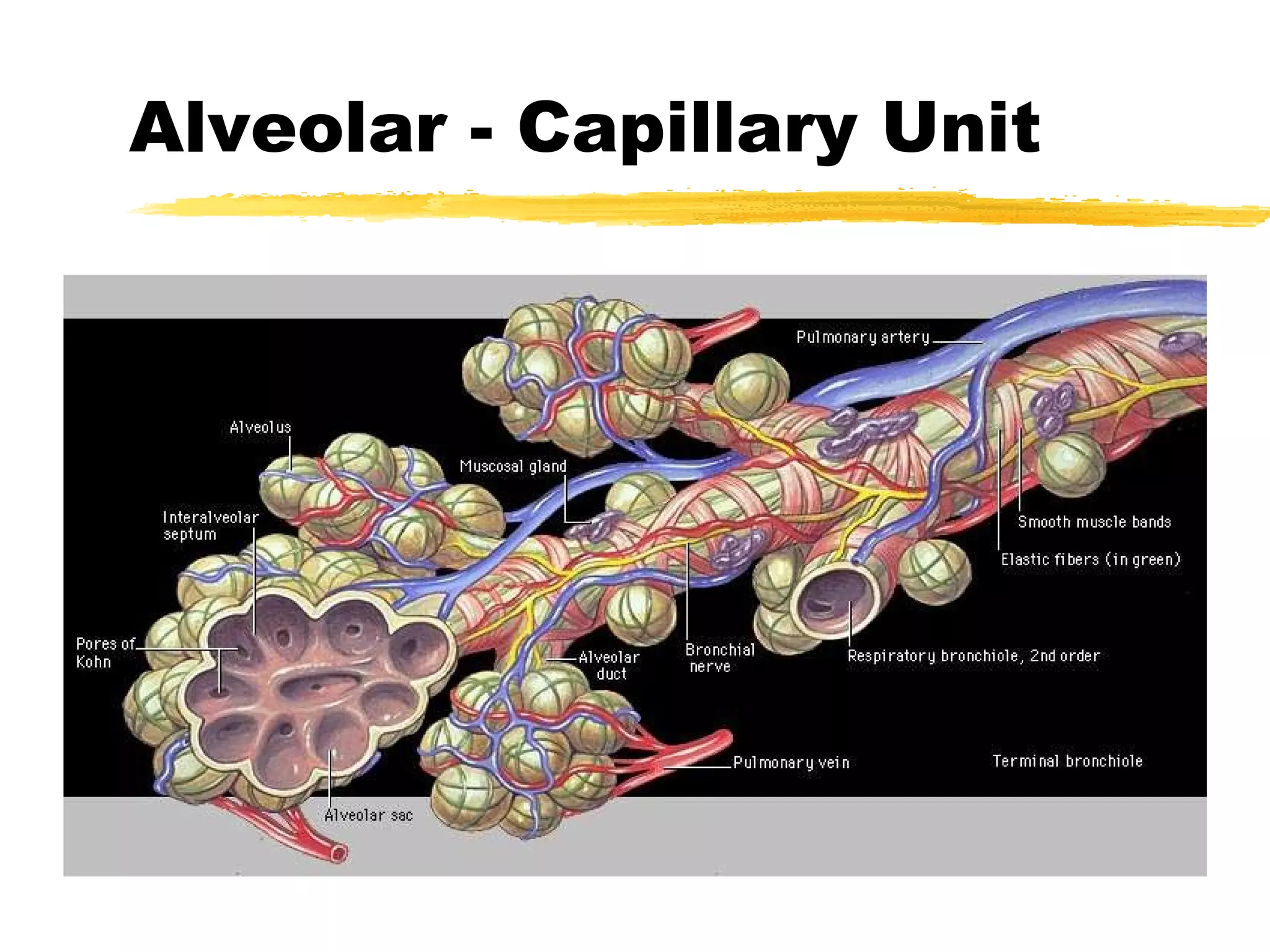
Alveolar - Capillary Unit
Alveolar - Capillary Unit Complex cardiovascular system with multiple functions: Gas exchange Oxygen sensing and redistribution of pulmonary blood flow Non-respiratory functions physical and chemical filter activating and endocrine functions fluid-balance regulator
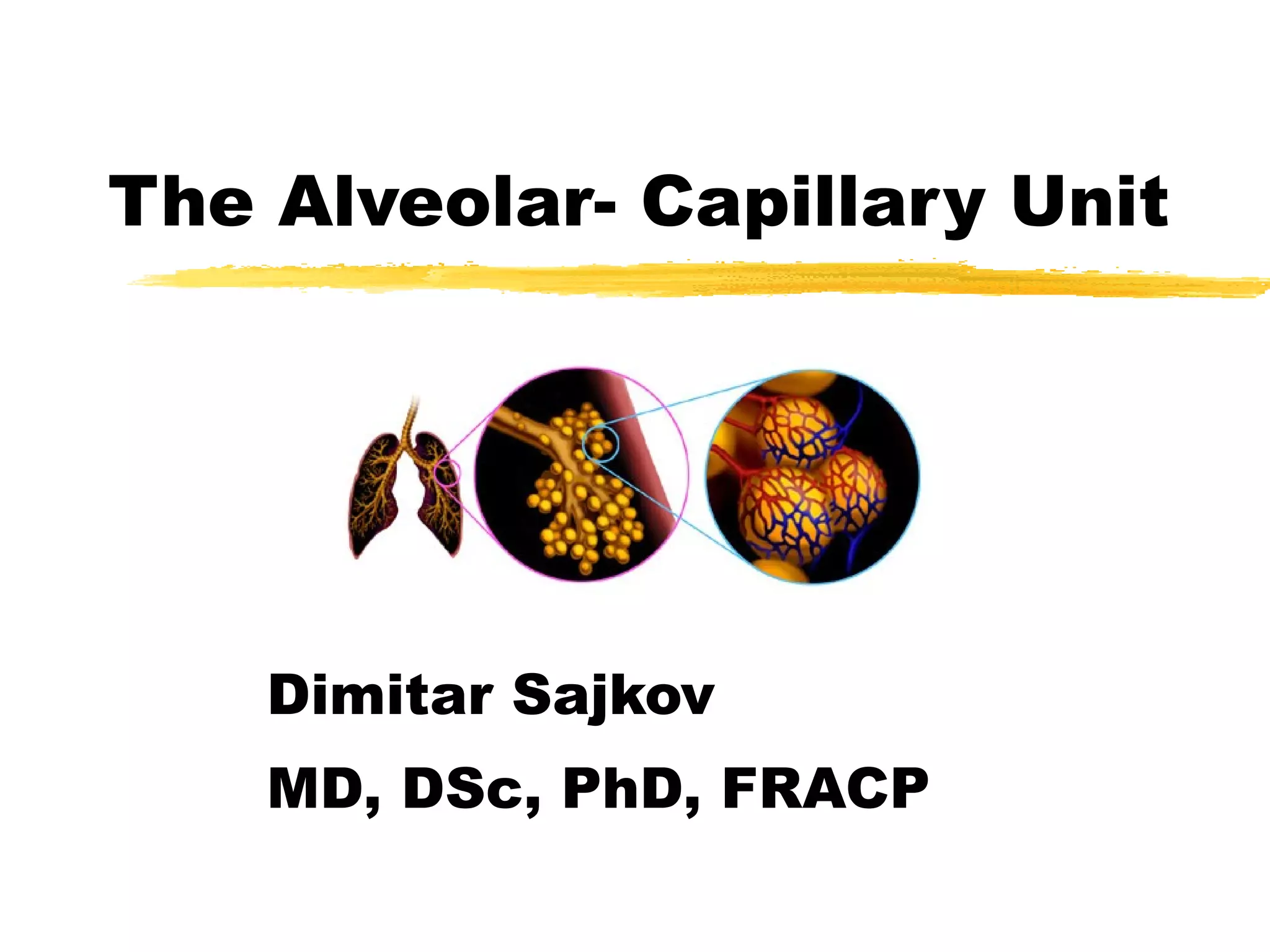
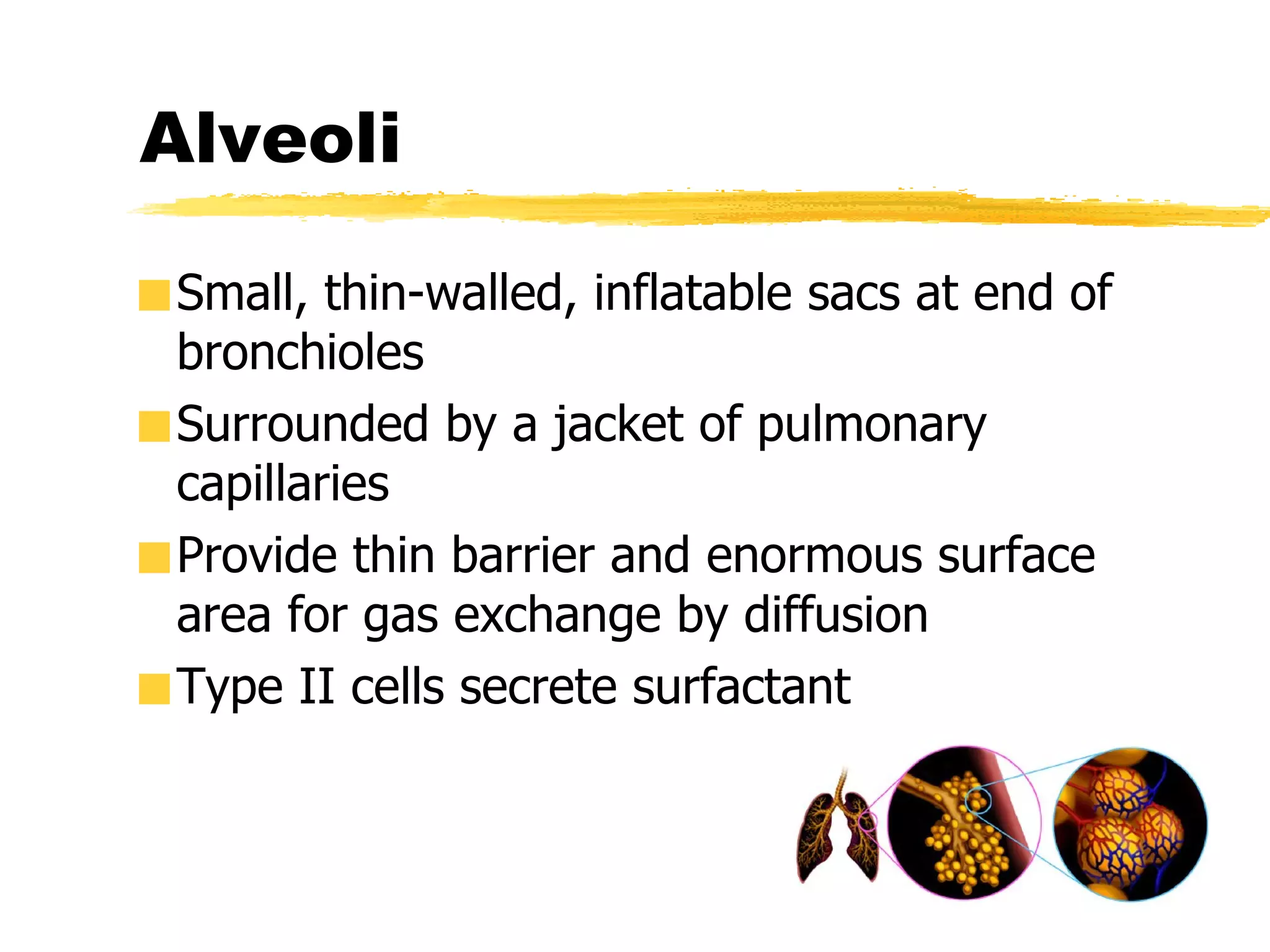
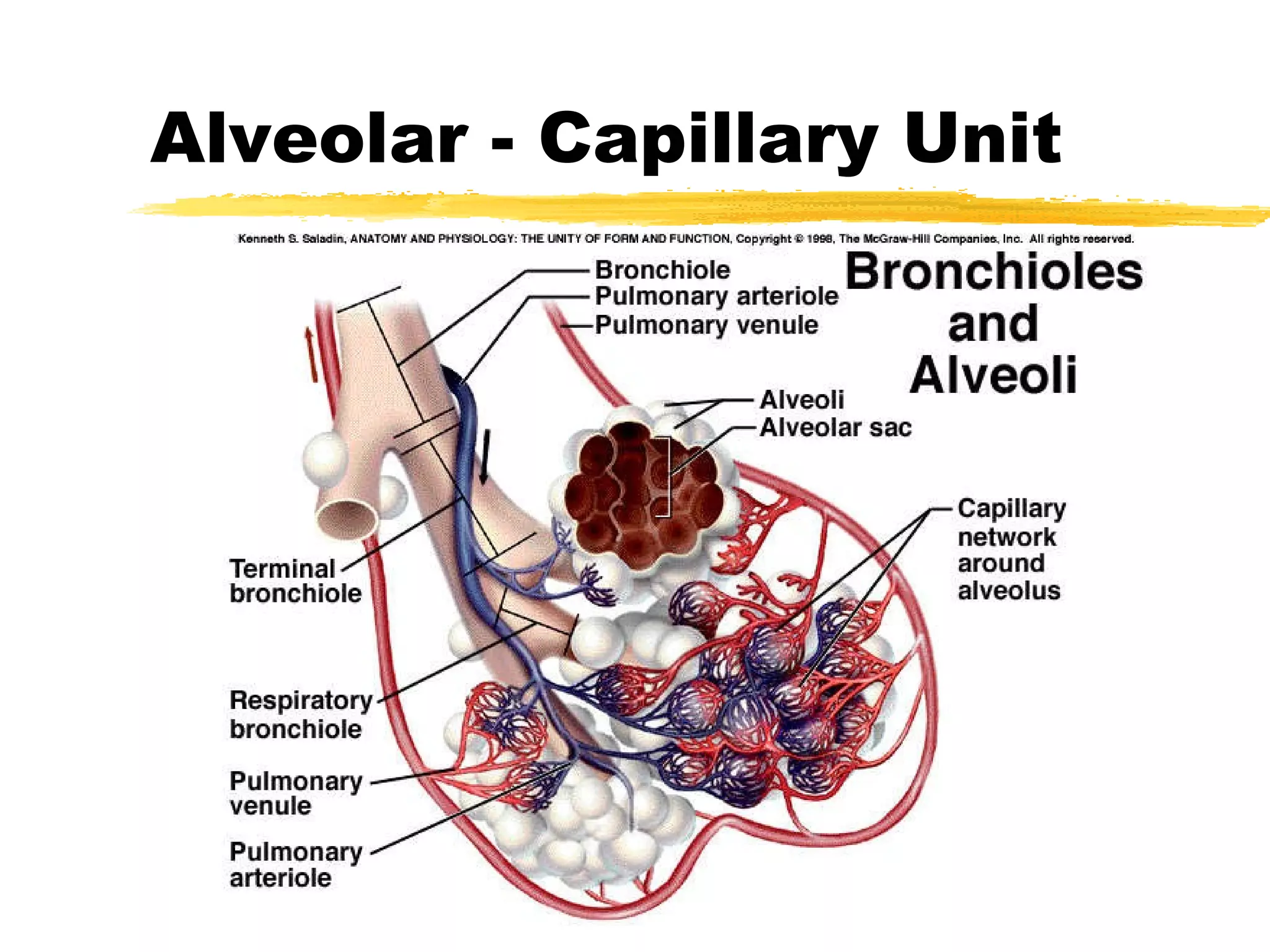
Alveoli Small, thin-walled, inflatable sacs at end of bronchioles Surrounded by a jacket of pulmonary capillaries Provide thin barrier and enormous surface area for gas exchange by diffusion Type II cells secrete surfactant
Alveolar - Capillary Unit
Alveolar - Capillary Unit A scanning electron micrograph of the alveoli.  Humans have a thin layer of about 700 million alveoli within their lungs. This layer is crucial in the process called respiration, exchanging O 2  and CO 2  with the surrounding blood capillaries.
 
Alveolar - Capillary Unit Structure
Alveolar - Capillary Unit 1 - Capillary 2 - Alveolus 3 - RBC 4 - Endothelium 5 - Basal Membrane 3 4 5
Gas Exchange
Gas Exchange - Diffusion
Gas Exchange Partial Pressures of O 2  and CO 2  in the body   (normal, resting conditions):   Alveoli  PO 2  = 100 mm Hg  PCO 2  = 40 mm Hg  Alveolar capillaries  Entering the alveolar capillaries  PO 2  = 40 mm Hg  (relatively low because this blood has just returned from the systemic circulation & has lost much of its O 2 )   PCO 2  = 45 mm Hg  (relatively high because the blood returning from the systemic circulation has picked up CO 2 )
Gas Exchange While in the alveolar capillaries, the diffusion of gasses occurs: O 2  diffuses from the alveoli into the blood & CO 2  from the blood into the alveoli.   Leaving the alveolar capillaries  PO 2  = 100 mm Hg  PCO 2  = 40 mm Hg
Gas Exchange Blood leaving the alveolar capillaries returns to the left atrium & is pumped by the left ventricle into the systemic circulation. This blood travels through arteries & arterioles and into the systemic, or body, capillaries. As blood travels through arteries & arterioles, no gas exchange occurs.  Entering the systemic capillaries  PO 2  = 100 mm Hg  PCO 2  = 40 mm Hg  Body cells (resting conditions)  PO 2  = 40 mm Hg  PCO 2  = 45 mm Hg
Because of the differences in partial pressures of O 2  & CO 2  in the systemic capillaries & the body cells, O 2  diffuses from the blood & into the cells, while CO 2  diffuses from the cells into the blood.   Leaving the systemic capillaries  PO 2  = 40 mm Hg  PCO 2  = 45 mm Hg  Blood leaving the systemic capillaries returns to the heart (right atrium) via venules & veins (and no gas exchange occurs while blood is in venules & veins). This blood is then pumped to the lungs (and the alveolar capillaries) by the right ventricle. Gas Exchange
Gas Exchange
Non-Respiratory Functions of the Lung Physical Filter Chemical Filter Activating Organ Endocrine Organ Fluid Balance regulator
Physical Filter All particles larger than red blood cells (e.g. bubbles, clots, fat cells, fibrin) Role in removing damaged white cells Rapidly cleared by phagocytosis and proteolytic enzymes
Chemical Filter  (John Vane’s theory) Locally Acting  (removed) serotonin (90%) noradrenaline (35%) acetylcholine (95%) bradykinin (90%) angiotensin I (30%) PGE 2  (95%) PGF 2a  (95%) leukotrienes (95%) ATP, AMP (90+%) Circulating  (not affected) dopamine adrenaline histamine vasopressin angiotensin II PGA 2 substance P oxytocin eledoisin
Compliance C =   V/  P Describes how much lung inflation can be achieved by a unit pressure increase Measures the elastic characteristics, or “stretchiness” of the lung Varies with the degree of lung inflation and is different on inspiration or expiration
Compliance
Surface Tension and Compliance Kurt von Neergard (1929) suggested that ST was less than that of water and that surface active substances were present
Surface Tension 75% of tendency of the lung to collapse is due to surface tension (ST) at the gas-liquid interface
Surface Tension in Lung Mechanics r = 1 cm r = 10   m = = 10 x 10 -4  cm Assume ST is constant at 72 dyne/cm Law of Laplace:  P = 2T/r A ) P = 2T/r = 2 x 72/1 = = 144 dyne/cm 2 B ) P = 2T/r = 2 x 72/10 -3  = = 144,000 dyne/cm 2  = = 80 cmH 2 O 1000 X the pressure is required to maintain B than A A B
Alveolar Surface Tension Forces Attraction of liquid molecules produces surface tension (ST), which draws liquids closer together resists force that would increase the area of the surface ST is reduced by surfactant
Surfactant Phospholipid produced by type II alveolar cells    surface tension in alveoli    total lung compliance    lung “stability”
Reduces “stiffness” of the lungs Protects patency of small airways Prevents total collapse of the alveoli (i.e. stabilises alveoli) Reduces work of breathing Prevents small alveoli emptying into larger ones Roles of Surfactant
Roles of Surfactant Prevents movement of fluid into the alveolus and keeps lungs dry  (osmotic > hydrostatic pressure) Acts as an anti-glue Stimulates Lung host defence system: Immunosuppresses Acts as a chemotactic agent Opsonises bacteria Enhances mucous clearance
Surfactant Composition Phospholipids 80% dipalmitoyphosphatidylcholine (DPCC) 60% Phosphatidylglycerol/ethanolamine/inositol 20% Neutral Lipids 10% Mostly Cholesterol Surfactant Proteins 10% SP-A; SP-D: hydrophilic SP-B; SP-C: hydrophobic L/S ratio: predictor of foetal lung maturity L – lecithin S – Sphyngomyelin
Surfactant Proteins SP-A: Hydrophilic formation of tubular lattice regulatory function defence function SP-B: Hydrophobic re-formation of layer after compression SP-C: Hydrophobic spreading function SP-D: Hydrophilic regulatory function defence function
Surfactant Metabolism Produced, stored and secreted by type II alveolar cells and Clara cells Half-time for turnover 5 - 10 hours 90% recycled by type II pneumocytes 10% cleared by alveolar macrophages SP-A is primary regulator of metabolism and lung defence mechanisms
Type II Alveolar Cell
Surfactant
Loss of Surfactant Function Inhibition   by serum proteins (albumin), fibrinogen, meconium, bilirubin and degradation products Inactivation   by O 2  radicals and enzymes (phospholipases) Decreased pool size   due to lung injury Mechanical factors   (eg. Alveolar collapse) Enhanced conversion   to small aggregate forms of lipids
Interdependence
Interdependence
The Foetal Lung Airways formed by week 16 Alveoli start to form ~ at week 20; ~20 million alveoli present at birth Alveolar type II cells appear ~ at week 24 Foetal lung fluid (5 ml/kg/hr) maintains lung at FRC [high Cl - , low HCO 3  and protein c.f. plasma] Foetal breathing: development of neural control
Amniocentesis:  phosphatidylcholine increases rapidly after ~ 33 wk Lecithin/Sphingomyelin ratio + 2.0 at ~ 35 wk 80% of infants < 30 wk have RDS 45% of infants < 32 wk have RDS At birth: adrenaline activates Na channels in type II cell (vasopressin, cortisol and T 3  are also involved); aquaporins: water channel-forming proteins The Foetal Lung
Not conducive to gas exchange Thick blood gas barrier Low compliance Immature epithelial cells Low surfactant levels Small area for gas exchange Poorly vascularized High resistance to blood flow Conducive to gas exchange Thin blood gas barrier Highly compliant Mature epithelial cells Adequate surfactant Large area for gas exchange Highly vascular Low resistance to blood flow Immature lung Mature lung
Surfactant - Acute Effects Oxygenation improvement Improved lung compliance More uniform lung inflation    inflammation and implementation of lung defence mechanisms
Acute Lung Injury: A Condition Involving Impaired Oxygenation  Defined as: A ratio of the partial pressure of arterial oxygenation (PaO 2 ) to the fraction of inspired oxygen (FiO 2 ) that is < 300 regardless of whether or how much positive end-expiratory pressure is used to provide respiratory support  Bilateral pulmonary infiltrates on chest radiograph  Pulmonary Artery Occlusion Pressure of < 18 mmHg or no clinical evidence of elevated left atrial pressure When the injury is “severe”, we have recognizable clinical features of ARDS.
ARDS – Predisposing Factors Direct Injury Inhalation Injury (i.e. Burns)  Aspiration (i.e. chemical pneumonitis) Indirect Injury Bacterial Sepsis (i.e. endotoxemia)  Pancreatitis With some of these “predisposing conditions”, the risk of A.R.D.S. is substantial Gastric Aspiration & Sepsis: Overall Mortality of 30 - 40 %
ARDS - Management Measures to correct the abnormality in vascular permeability or to limit the degree of inflammatory reaction present in ARDS, do not exist. Clinical management involves primarily supportive measures aimed at maintaining cellular and physiologic function, while the acute lung injury resolves. What cellular functions are you trying to maintain ? Alveolar Gas Exchange  Organ Perfusion  Aerobic Metabolism
Alveolar – Capillary Unit

Alveolar Capillary Unit

  • 1.
    The Alveolar- CapillaryUnit Dimitar Sajkov MD, DSc, PhD, FRACP
  • 2.
  • 3.
    Alveolar - CapillaryUnit Complex cardiovascular system with multiple functions: Gas exchange Oxygen sensing and redistribution of pulmonary blood flow Non-respiratory functions physical and chemical filter activating and endocrine functions fluid-balance regulator
  • 4.
    Alveoli Small, thin-walled,inflatable sacs at end of bronchioles Surrounded by a jacket of pulmonary capillaries Provide thin barrier and enormous surface area for gas exchange by diffusion Type II cells secrete surfactant
  • 5.
  • 6.
    Alveolar - CapillaryUnit A scanning electron micrograph of the alveoli. Humans have a thin layer of about 700 million alveoli within their lungs. This layer is crucial in the process called respiration, exchanging O 2 and CO 2 with the surrounding blood capillaries.
  • 7.
  • 8.
    Alveolar - CapillaryUnit Structure
  • 9.
    Alveolar - CapillaryUnit 1 - Capillary 2 - Alveolus 3 - RBC 4 - Endothelium 5 - Basal Membrane 3 4 5
  • 10.
  • 11.
    Gas Exchange -Diffusion
  • 12.
    Gas Exchange PartialPressures of O 2 and CO 2 in the body (normal, resting conditions): Alveoli PO 2 = 100 mm Hg PCO 2 = 40 mm Hg Alveolar capillaries Entering the alveolar capillaries PO 2 = 40 mm Hg (relatively low because this blood has just returned from the systemic circulation & has lost much of its O 2 ) PCO 2 = 45 mm Hg (relatively high because the blood returning from the systemic circulation has picked up CO 2 )
  • 13.
    Gas Exchange Whilein the alveolar capillaries, the diffusion of gasses occurs: O 2 diffuses from the alveoli into the blood & CO 2 from the blood into the alveoli. Leaving the alveolar capillaries PO 2 = 100 mm Hg PCO 2 = 40 mm Hg
  • 14.
    Gas Exchange Bloodleaving the alveolar capillaries returns to the left atrium & is pumped by the left ventricle into the systemic circulation. This blood travels through arteries & arterioles and into the systemic, or body, capillaries. As blood travels through arteries & arterioles, no gas exchange occurs. Entering the systemic capillaries PO 2 = 100 mm Hg PCO 2 = 40 mm Hg Body cells (resting conditions) PO 2 = 40 mm Hg PCO 2 = 45 mm Hg
  • 15.
    Because of thedifferences in partial pressures of O 2 & CO 2 in the systemic capillaries & the body cells, O 2 diffuses from the blood & into the cells, while CO 2 diffuses from the cells into the blood. Leaving the systemic capillaries PO 2 = 40 mm Hg PCO 2 = 45 mm Hg Blood leaving the systemic capillaries returns to the heart (right atrium) via venules & veins (and no gas exchange occurs while blood is in venules & veins). This blood is then pumped to the lungs (and the alveolar capillaries) by the right ventricle. Gas Exchange
  • 16.
  • 17.
    Non-Respiratory Functions ofthe Lung Physical Filter Chemical Filter Activating Organ Endocrine Organ Fluid Balance regulator
  • 18.
    Physical Filter Allparticles larger than red blood cells (e.g. bubbles, clots, fat cells, fibrin) Role in removing damaged white cells Rapidly cleared by phagocytosis and proteolytic enzymes
  • 19.
    Chemical Filter (John Vane’s theory) Locally Acting (removed) serotonin (90%) noradrenaline (35%) acetylcholine (95%) bradykinin (90%) angiotensin I (30%) PGE 2 (95%) PGF 2a (95%) leukotrienes (95%) ATP, AMP (90+%) Circulating (not affected) dopamine adrenaline histamine vasopressin angiotensin II PGA 2 substance P oxytocin eledoisin
  • 20.
    Compliance C =  V/  P Describes how much lung inflation can be achieved by a unit pressure increase Measures the elastic characteristics, or “stretchiness” of the lung Varies with the degree of lung inflation and is different on inspiration or expiration
  • 21.
  • 22.
    Surface Tension andCompliance Kurt von Neergard (1929) suggested that ST was less than that of water and that surface active substances were present
  • 23.
    Surface Tension 75%of tendency of the lung to collapse is due to surface tension (ST) at the gas-liquid interface
  • 24.
    Surface Tension inLung Mechanics r = 1 cm r = 10  m = = 10 x 10 -4 cm Assume ST is constant at 72 dyne/cm Law of Laplace: P = 2T/r A ) P = 2T/r = 2 x 72/1 = = 144 dyne/cm 2 B ) P = 2T/r = 2 x 72/10 -3 = = 144,000 dyne/cm 2 = = 80 cmH 2 O 1000 X the pressure is required to maintain B than A A B
  • 25.
    Alveolar Surface TensionForces Attraction of liquid molecules produces surface tension (ST), which draws liquids closer together resists force that would increase the area of the surface ST is reduced by surfactant
  • 26.
    Surfactant Phospholipid producedby type II alveolar cells  surface tension in alveoli  total lung compliance  lung “stability”
  • 27.
    Reduces “stiffness” ofthe lungs Protects patency of small airways Prevents total collapse of the alveoli (i.e. stabilises alveoli) Reduces work of breathing Prevents small alveoli emptying into larger ones Roles of Surfactant
  • 28.
    Roles of SurfactantPrevents movement of fluid into the alveolus and keeps lungs dry (osmotic > hydrostatic pressure) Acts as an anti-glue Stimulates Lung host defence system: Immunosuppresses Acts as a chemotactic agent Opsonises bacteria Enhances mucous clearance
  • 29.
    Surfactant Composition Phospholipids80% dipalmitoyphosphatidylcholine (DPCC) 60% Phosphatidylglycerol/ethanolamine/inositol 20% Neutral Lipids 10% Mostly Cholesterol Surfactant Proteins 10% SP-A; SP-D: hydrophilic SP-B; SP-C: hydrophobic L/S ratio: predictor of foetal lung maturity L – lecithin S – Sphyngomyelin
  • 30.
    Surfactant Proteins SP-A:Hydrophilic formation of tubular lattice regulatory function defence function SP-B: Hydrophobic re-formation of layer after compression SP-C: Hydrophobic spreading function SP-D: Hydrophilic regulatory function defence function
  • 31.
    Surfactant Metabolism Produced,stored and secreted by type II alveolar cells and Clara cells Half-time for turnover 5 - 10 hours 90% recycled by type II pneumocytes 10% cleared by alveolar macrophages SP-A is primary regulator of metabolism and lung defence mechanisms
  • 32.
  • 33.
  • 34.
    Loss of SurfactantFunction Inhibition by serum proteins (albumin), fibrinogen, meconium, bilirubin and degradation products Inactivation by O 2 radicals and enzymes (phospholipases) Decreased pool size due to lung injury Mechanical factors (eg. Alveolar collapse) Enhanced conversion to small aggregate forms of lipids
  • 35.
  • 36.
  • 37.
    The Foetal LungAirways formed by week 16 Alveoli start to form ~ at week 20; ~20 million alveoli present at birth Alveolar type II cells appear ~ at week 24 Foetal lung fluid (5 ml/kg/hr) maintains lung at FRC [high Cl - , low HCO 3 and protein c.f. plasma] Foetal breathing: development of neural control
  • 38.
    Amniocentesis: phosphatidylcholineincreases rapidly after ~ 33 wk Lecithin/Sphingomyelin ratio + 2.0 at ~ 35 wk 80% of infants < 30 wk have RDS 45% of infants < 32 wk have RDS At birth: adrenaline activates Na channels in type II cell (vasopressin, cortisol and T 3 are also involved); aquaporins: water channel-forming proteins The Foetal Lung
  • 39.
    Not conducive togas exchange Thick blood gas barrier Low compliance Immature epithelial cells Low surfactant levels Small area for gas exchange Poorly vascularized High resistance to blood flow Conducive to gas exchange Thin blood gas barrier Highly compliant Mature epithelial cells Adequate surfactant Large area for gas exchange Highly vascular Low resistance to blood flow Immature lung Mature lung
  • 40.
    Surfactant - AcuteEffects Oxygenation improvement Improved lung compliance More uniform lung inflation  inflammation and implementation of lung defence mechanisms
  • 41.
    Acute Lung Injury:A Condition Involving Impaired Oxygenation Defined as: A ratio of the partial pressure of arterial oxygenation (PaO 2 ) to the fraction of inspired oxygen (FiO 2 ) that is < 300 regardless of whether or how much positive end-expiratory pressure is used to provide respiratory support Bilateral pulmonary infiltrates on chest radiograph Pulmonary Artery Occlusion Pressure of < 18 mmHg or no clinical evidence of elevated left atrial pressure When the injury is “severe”, we have recognizable clinical features of ARDS.
  • 42.
    ARDS – PredisposingFactors Direct Injury Inhalation Injury (i.e. Burns) Aspiration (i.e. chemical pneumonitis) Indirect Injury Bacterial Sepsis (i.e. endotoxemia) Pancreatitis With some of these “predisposing conditions”, the risk of A.R.D.S. is substantial Gastric Aspiration & Sepsis: Overall Mortality of 30 - 40 %
  • 43.
    ARDS - ManagementMeasures to correct the abnormality in vascular permeability or to limit the degree of inflammatory reaction present in ARDS, do not exist. Clinical management involves primarily supportive measures aimed at maintaining cellular and physiologic function, while the acute lung injury resolves. What cellular functions are you trying to maintain ? Alveolar Gas Exchange Organ Perfusion Aerobic Metabolism
  • 44.

Editor's Notes

  • #24 Von Neergaard, using excised lungs filled with air or liquid, demonstrated that “in all states of expansion surface tension was responsible for a greater part of lung elastic recoil than was tissue elasticity”. Von Neergaard K. Gesant Exp Med 1929 Gruenwald described surface tension as a factor in the “resistance of neonatal lungs to aeration”. Gruenwald P. Am J Obstet Gynecol 1947 Pattle and Clements described the role of surfactant in lung stability during the respiratory cycle. Pattle R.E. Nature 1955, Clements J.A. Proc. Soc Exp Biol Med 1957 Avery and Mead discovered that surfactant deficiency was the cause of neonatal respiratory distress syndrome (RDS). Avery M.E. &amp; Mead J. Am J Dis Child 1959 In 1972 the importance of the hydrophobic proteins was described by Clements and co-workers but successful treatment in humans did not occur until 1980. Clements J.A. Physiologist 1962
  • #25 Law of Laplace: the pressure inside a bubble is inversely proportional to the radius, due to the surface tension of fluid lining. This surface is created by the air-fluid interface. Bubbles with a small radius need large pressure to keep them inflated. Bubbles with a large radius need less pressure. The effect of the Law of Laplace is more complex on alveoli because they are all interconnected, therefore if one tends to collapse it will expand neighbouring alveoli. Obeying Laplace&apos;s law smaller alveoli would tend to collapse at end expiration forcing air into the larger alveoli that over-inflate. However the film pressure generated by surfactants acts to neutralise the differences and stabilise the lung.
  • #27 Surfactant is a complex substance containing phospholipids and a number of apoproteins. This essential fluid is produced by the Type II alveolar cells, and lines the alveoli and smallest bronchioles. Surfactant reduces surface tension throughout the lung, thereby contributing to its general compliance. It is also important because it stabilizes the alveoli. LaplaceХs Law tells us that the pressure within a spherical structure with surface tension, such as the alveolus, is inversely proportional to the radius of the sphere (P=4T/r for a sphere with two liquid-gas interfaces, like a soap bubble, and P=2T/r for a sphere with one liquid-gas interface, like an alveolus: P=pressure, T=surface tension, and r=radius). That is, at a constant surface tension, small alveoli will generate bigger pressures within them than will large alveoli. Smaller alveoli would therefore be expected to empty into larger alveoli as lung volume decreases. This does not occur, however, because surfactant differentiallyreduces surface tension, more at lower volumes and less at higher volumes, leading to alveolar stability and reducing the likelihood of alveolar collapse. Surfactant is formed relatively late in fetal life; thus premature infants born without adequate amounts experience respiratory distress and may die.
  • #30 Pulmonary surfactant is a complex mixture of lipids and specific apoproteins, 80% phospholipid, 8-10% neutral lipids and 10-12% proteins. The phospholipid component consists of 60% saturated phosphatidylcholine (PC), 20% unsaturated PC and anionic phospholipids, phosphatidylglycerol (PG) and phosphatidylinosotol. The main active component is dipalmityl phosphotidylcholine (DPPC) which is responsible for reducing surface tension and maintaining alveolar stability. The protein part of the surfactant system is a small fraction of pulmonary surfactant and includes two major categories differing in structure and hydrophobicity.
  • #34 Interaction of surfactant with airway inflammation in asthma. After uptake through the airway surfactant barrier (right side of figure), allergens are presented by dendritic cells (DC) to T cells (T) that release IL-2, proliferate, and differentiate into T helper 2 lymphocytes (Th2). These Th2 cells release cytokines (IL-4 and IL-5) that attract eosinophils (Eos) and stimulate IgE production by differentiated B lymphocytes (B). IgE is bound to mast cells (MC) that, upon stimulation with allergen, release mediators (such as histamine) inducing acute asthma attacks. Activated eosinophils degranulate and release toxic mediators like eosinophil cationic protein (ECP), leukotrienes (LT), and transforming growth factor-β (TGF-β) that induce epithelial damage and chronic airway inflammation. ECP is shown in bold because ECP, but not LT or TGF-β, has been shown to cause surfactant dysfunction (unpublished data). The various effects of surfactant proteins SP-A, SP-B, SP-C and SP-D are indicated. SP-A and SP-D are shown in bold to emphasize the importance of these surfactant molecules as immunomodulators in asthma. Mechanisms of stimulation, activation, induction, or release are symbolized by arrows whereas inhibition, decrease, or down-regulation are symbolized by lines terminated by =. ? is used to indicate that the effects of SP-A/SP-D are presently unclear. PL = phospholipid.
  • #39 A number of indices of foetal lung maturity based on the determination of surfactant constituents in the amniotic fluid have been proposed. Amniotic fluid contains phospholipids, including phosphatidylcholine (lecithin), sphingomyelin, phosphatidylinositol and phosphatidylglyerol (PG), some enzymes of the pathways of phospholipid synthesis, lamellar bodies, and lung specific apoproteins. The amount of these substances in amniotic fluid changes towards the end of gestation in a manner related to foetal lung maturity. Determination of the lecithin to sphingomyelin (L/S) ratio is by far the most widely used and accepted method. However, there is still controversy regarding the high incidence of false immature values, and the increased incidence of false mature values (from 1 to 15%) especially in pregnancies complicated by diabetes mellitus; an immature L/S ratio may predict respiratory distress syndrome (RDS) only in about 50% of cases. The incidence of false immature L/S ratio as well as other amniotic fluid tests depends upon patient variability, method employed, threshold taken for differentiating a normal from an abnormal condition, and on the fact that only few authors report their results in terms of sensitivity and specificity. Where laboratory facilities are minimal, it is advisable to perform the shake test or to measure the optical density of amniotic fluid. However, when these tests indicate immaturity, additional tests, such as determination of the L/S ratio or the lung profile (including PG), must be performed.