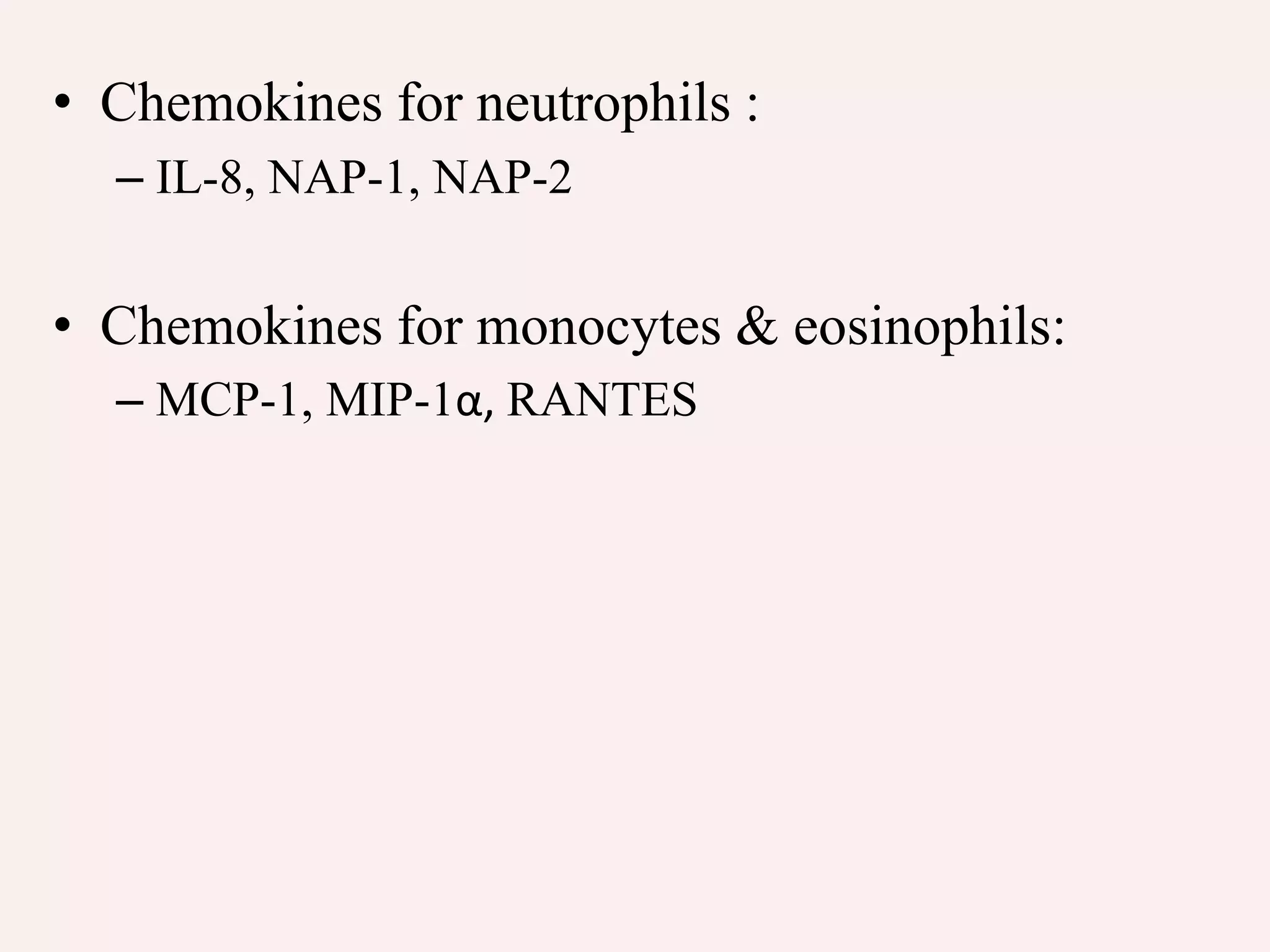
Defence Mechanisms Of
Lung
Presented by:
Dr. Rohit Mahavarkar
Dept. Of Pulmonary
Medicine
• Everyday our lungs is exposed to 7000 litres of
air.
• It is exposed to dust, pollen, bacteria etc.
• Despite these exposures, pathology does not
occur always. This is due to local primary
protective mechanism.
• If infections penetrate primary defences, then
secondary responses including inflammatory and
classical immune responses come to action.
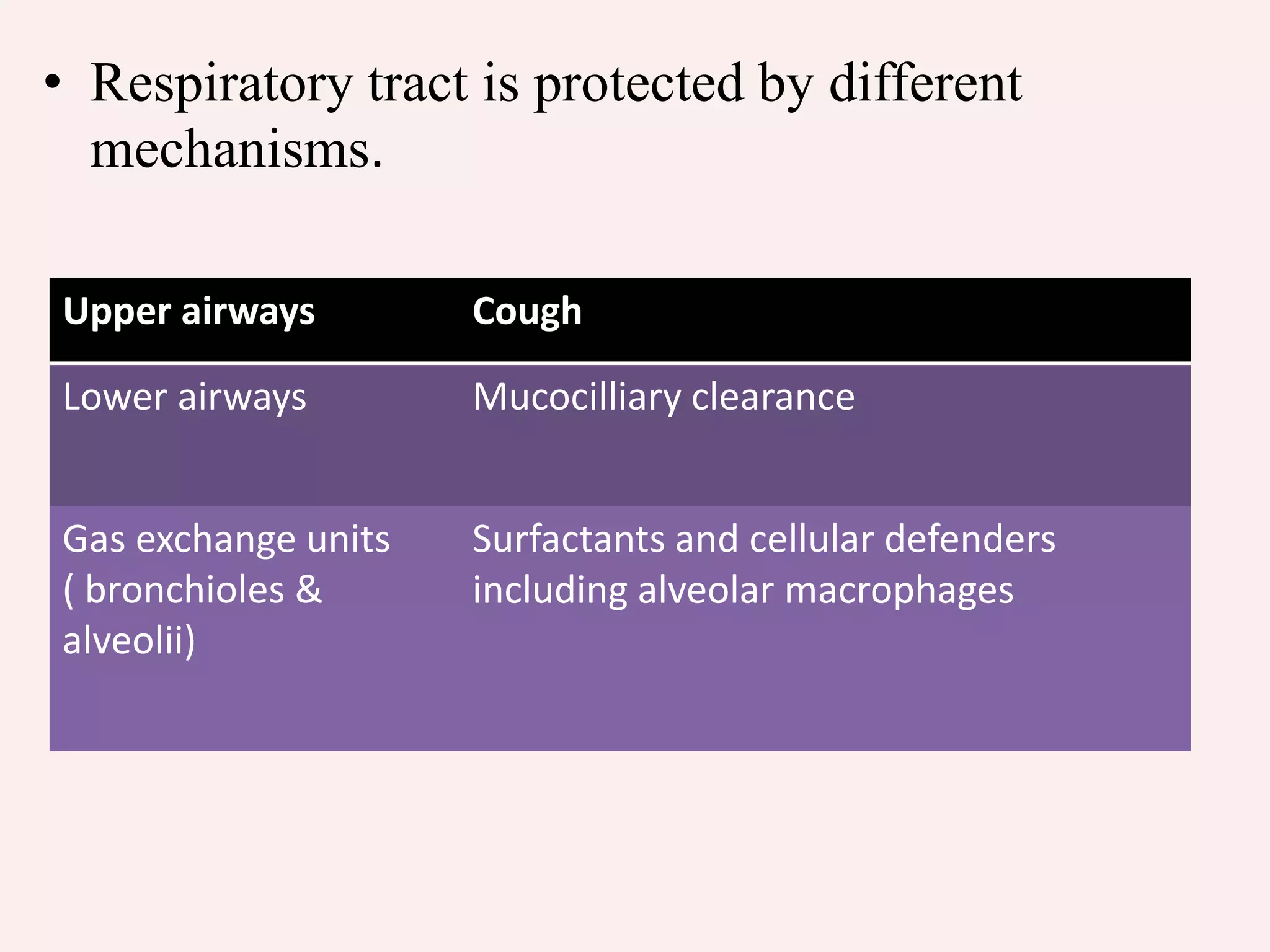
• Respiratory tract is protected by different
mechanisms.
Upper airways Cough
Lower airways Mucocilliary clearance
Gas exchange units
( bronchioles &
alveolii)
Surfactants and cellular defenders
including alveolar macrophages
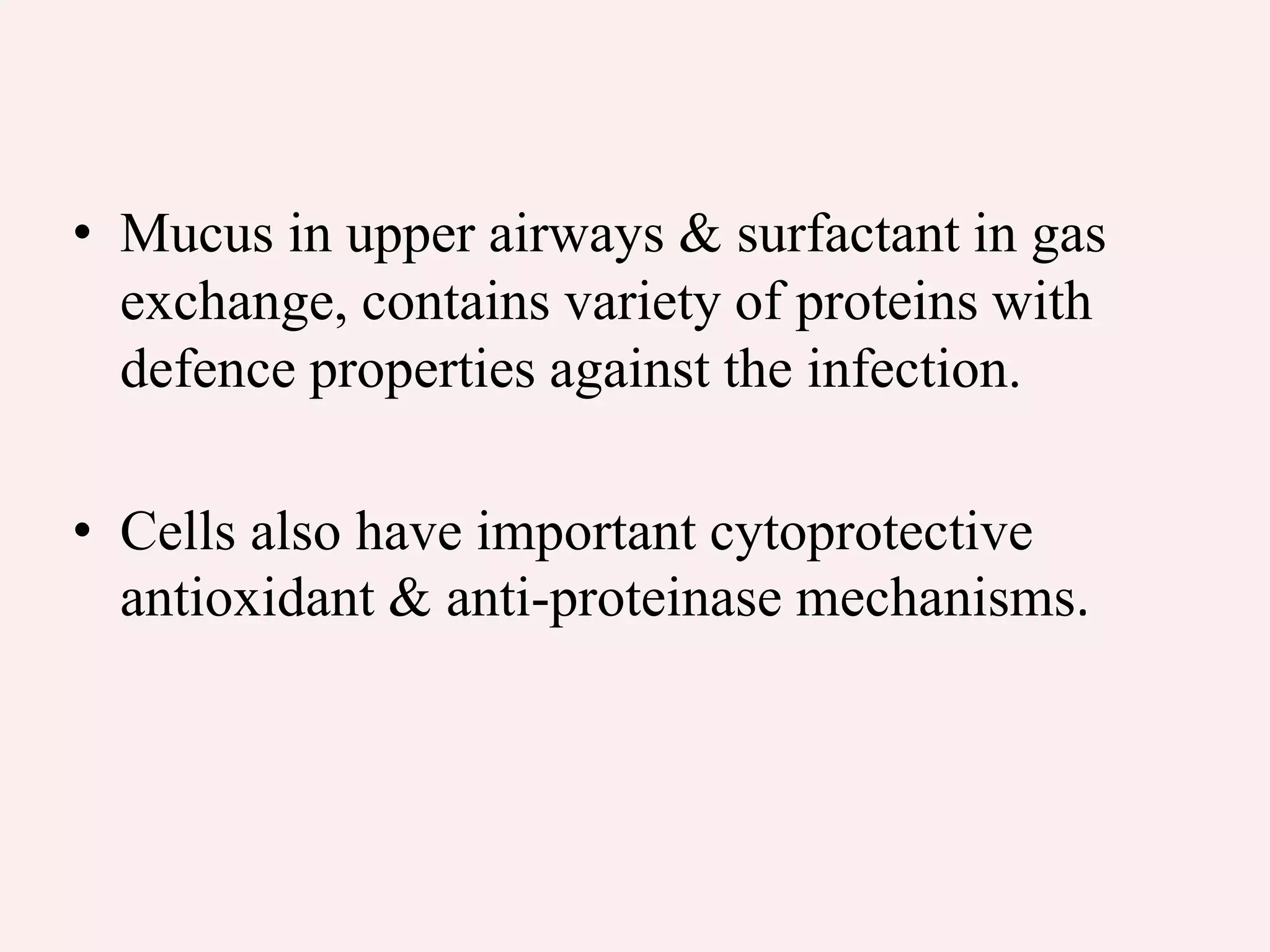
• Mucus in upper airways & surfactant in gas
exchange, contains variety of proteins with
defence properties against the infection.
• Cells also have important cytoprotective
antioxidant & anti-proteinase mechanisms.
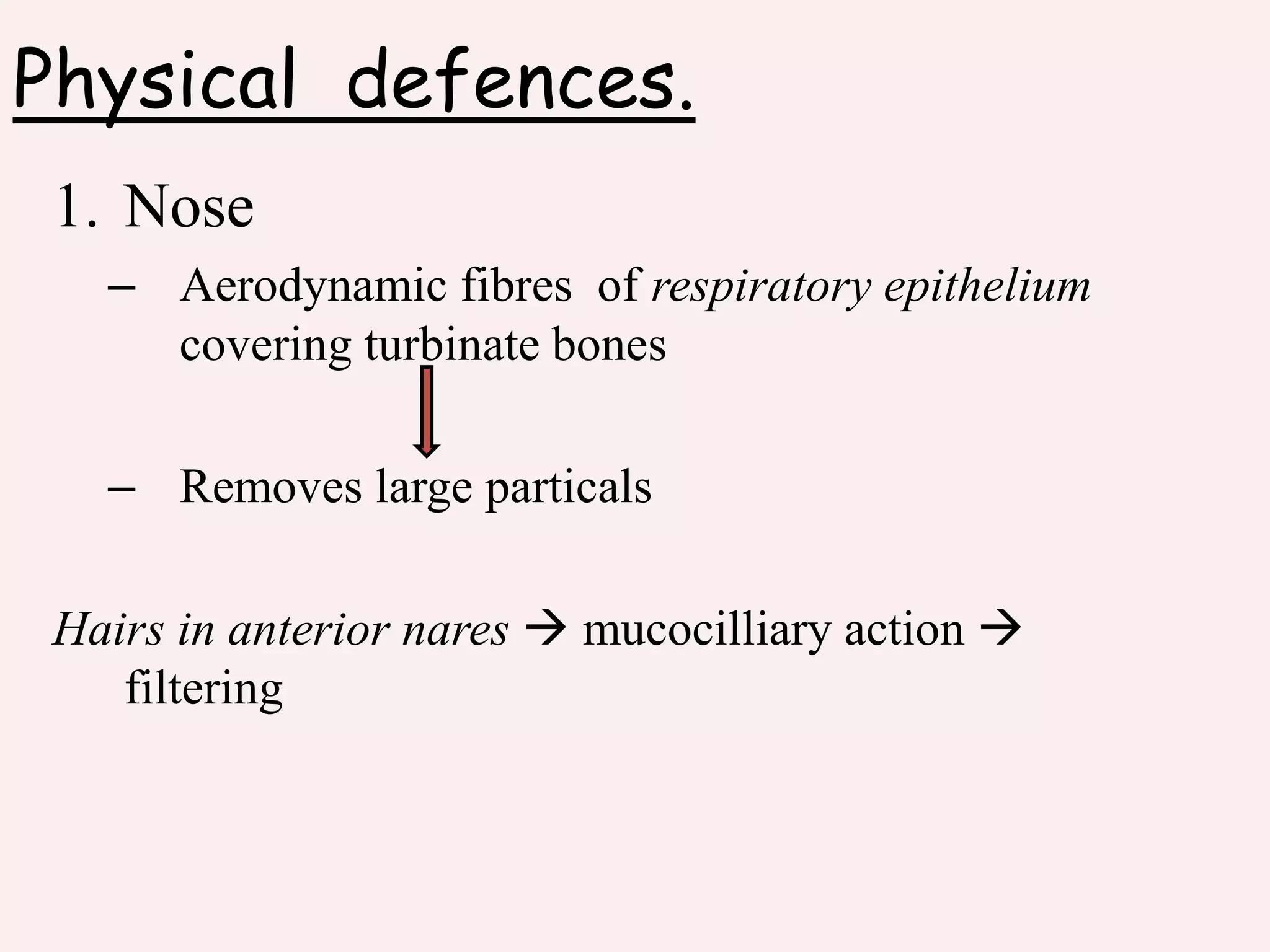
Physical defences.
1. Nose
– Aerodynamic fibres of respiratory epithelium
covering turbinate bones
– Removes large particals
Hairs in anterior nares  mucocilliary action 
filtering
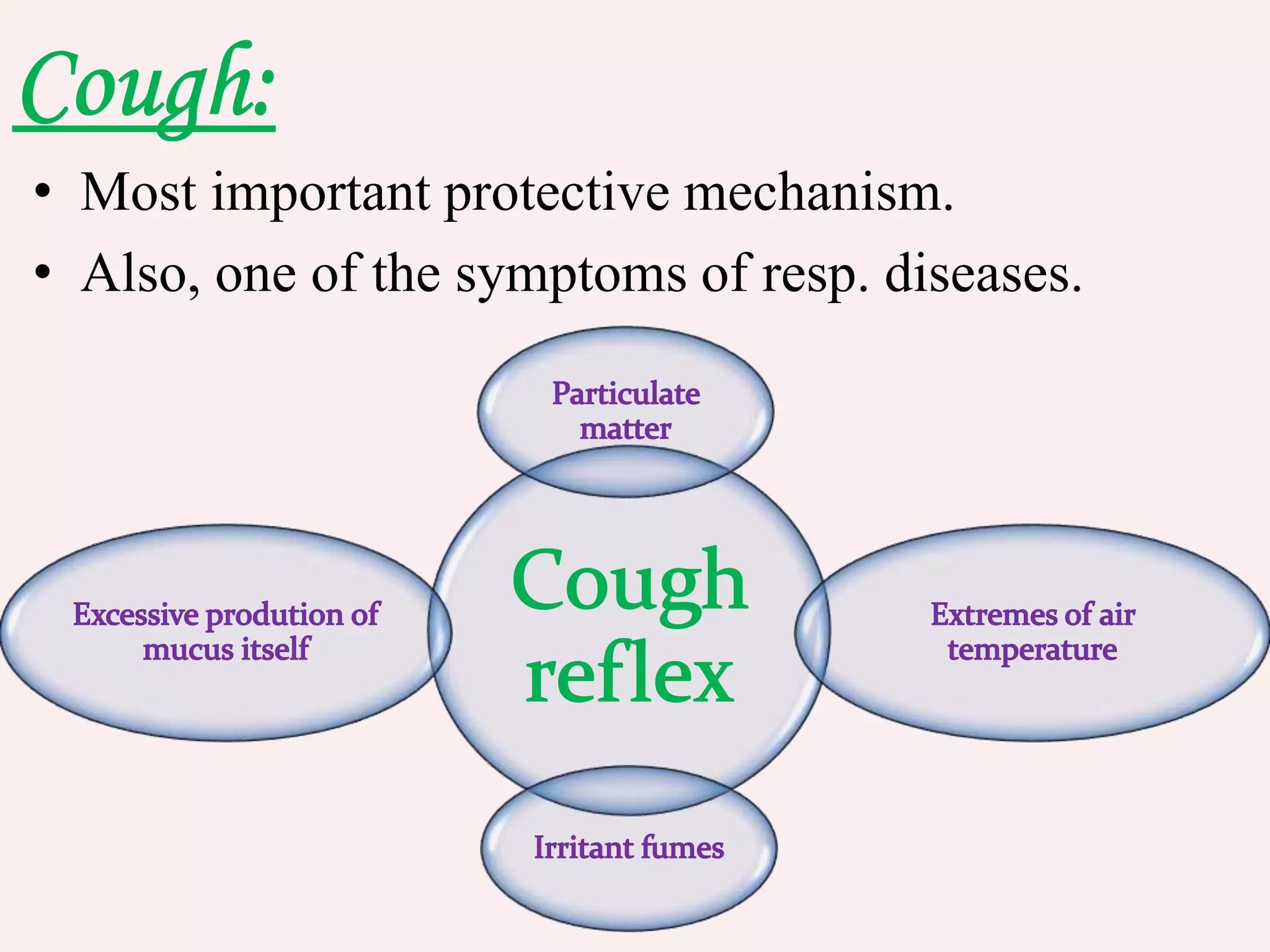
• Most important protective mechanism.
• Also, one of the symptoms of resp. diseases.
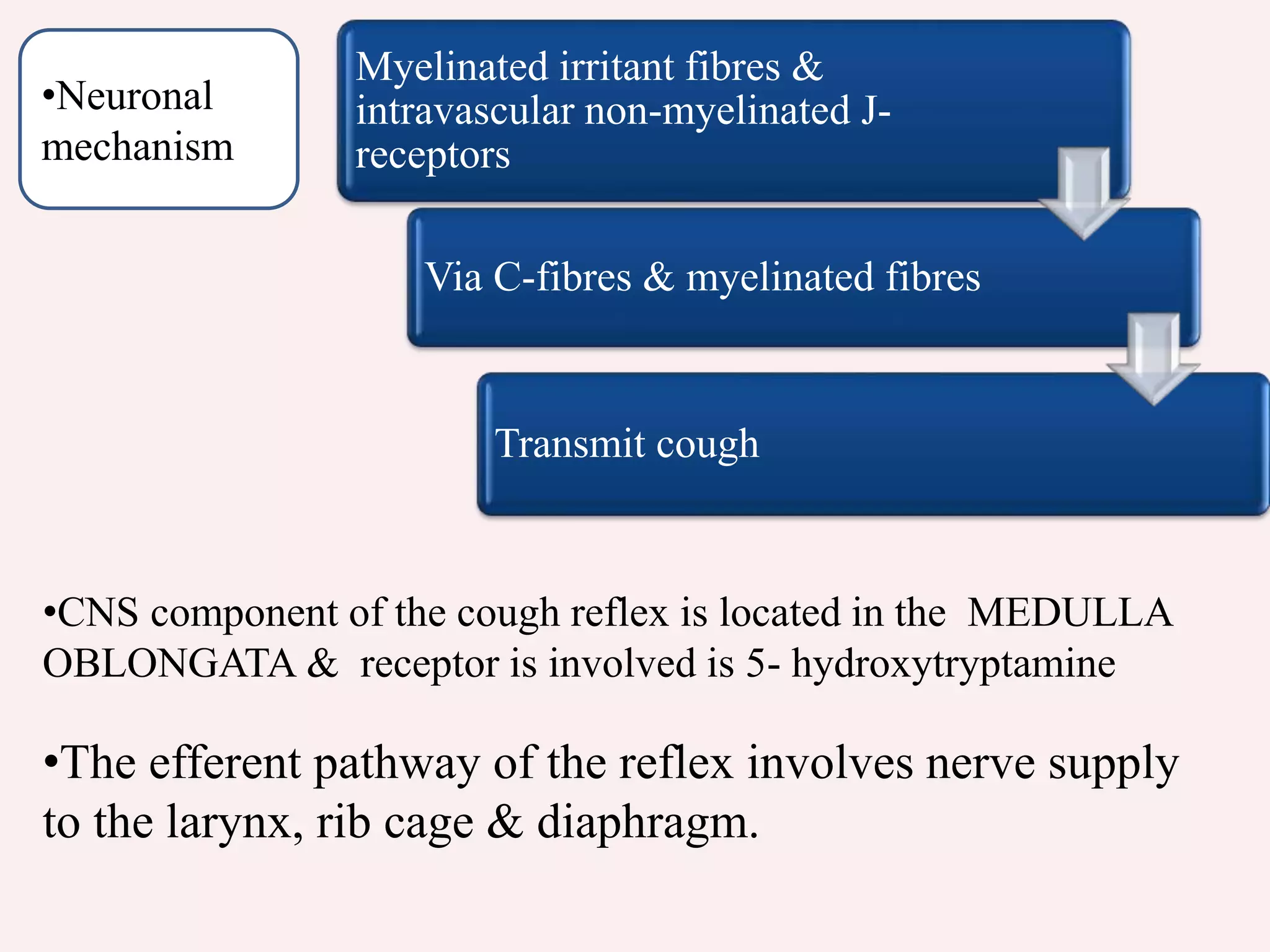
•The efferent pathway of the reflex involves nerve supply
to the larynx, rib cage & diaphragm.
•CNS component of the cough reflex is located in the MEDULLA
OBLONGATA & receptor is involved is 5- hydroxytryptamine
Myelinated irritant fibres &
intravascular non-myelinated J-
receptors
Via C-fibres & myelinated fibres
Transmit cough
•Neuronal
mechanism
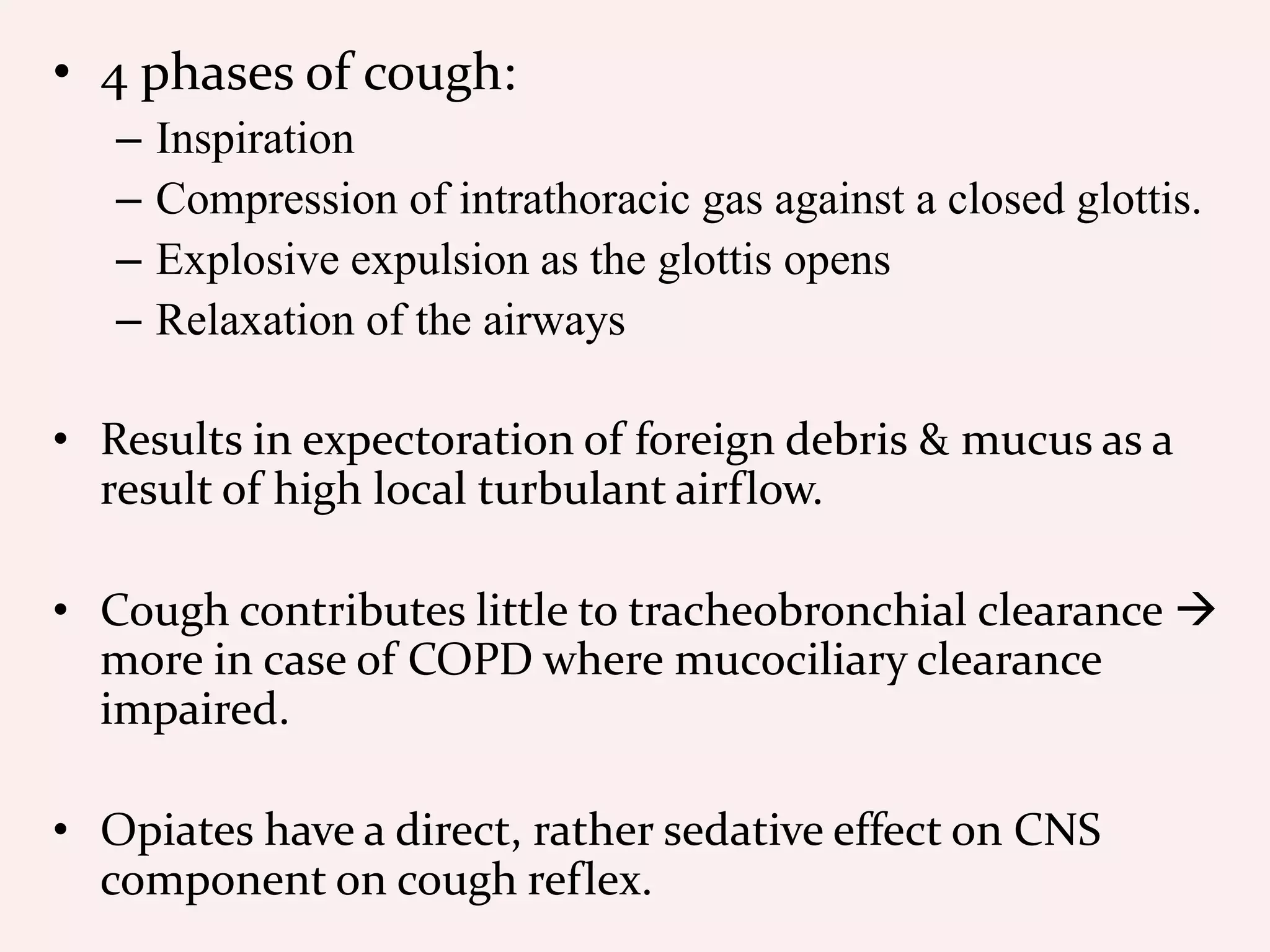
• 4 phases of cough:
– Inspiration
– Compression of intrathoracic gas against a closed glottis.
– Explosive expulsion as the glottis opens
– Relaxation of the airways
• Results in expectoration of foreign debris & mucus as a
result of high local turbulant airflow.
• Cough contributes little to tracheobronchial clearance 
more in case of COPD where mucociliary clearance
impaired.
• Opiates have a direct, rather sedative effect on CNS
component on cough reflex.
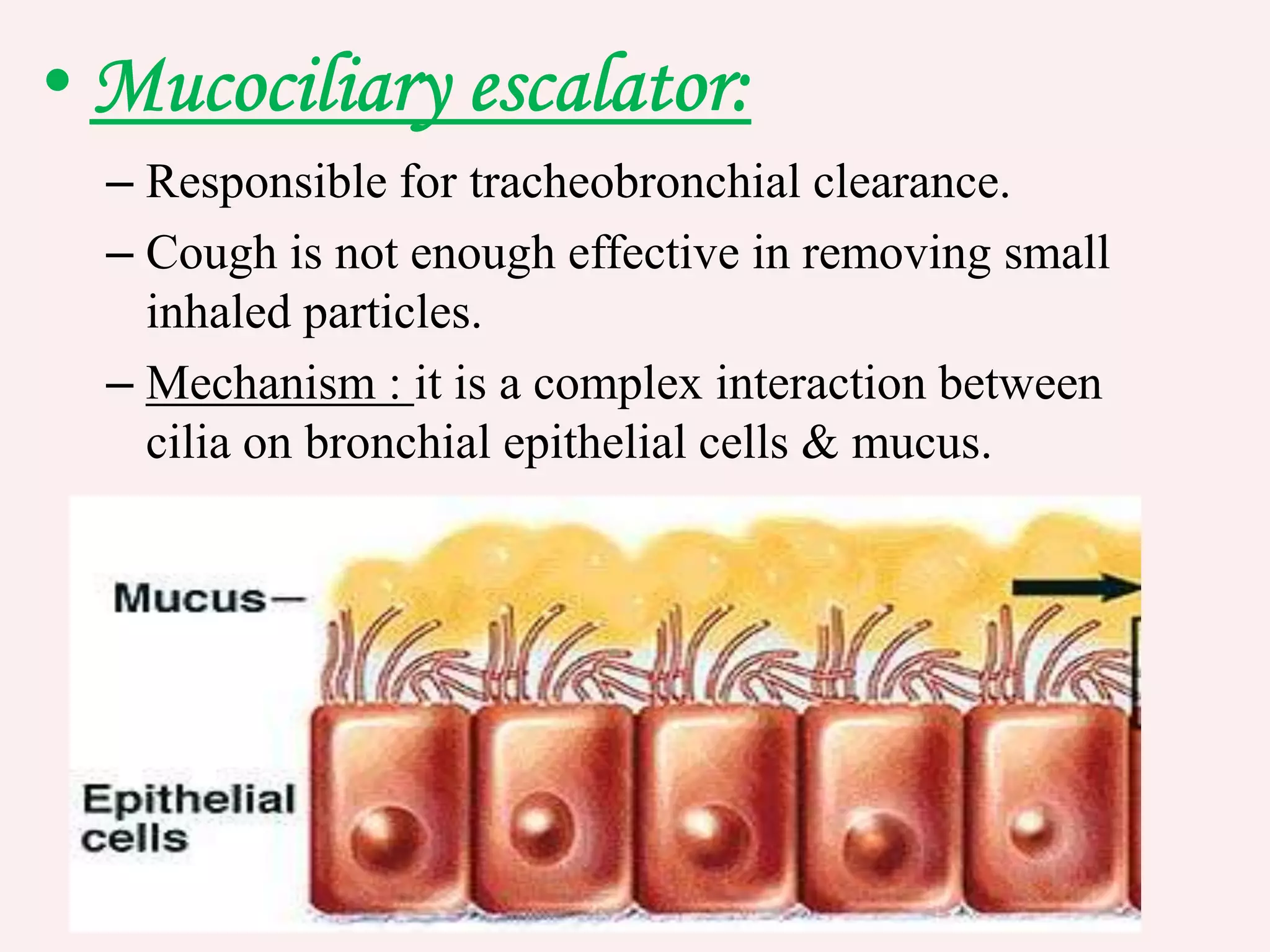
– Responsible for tracheobronchial clearance.
– Cough is not enough effective in removing small
inhaled particles.
– Mechanism : it is a complex interaction between
cilia on bronchial epithelial cells & mucus.
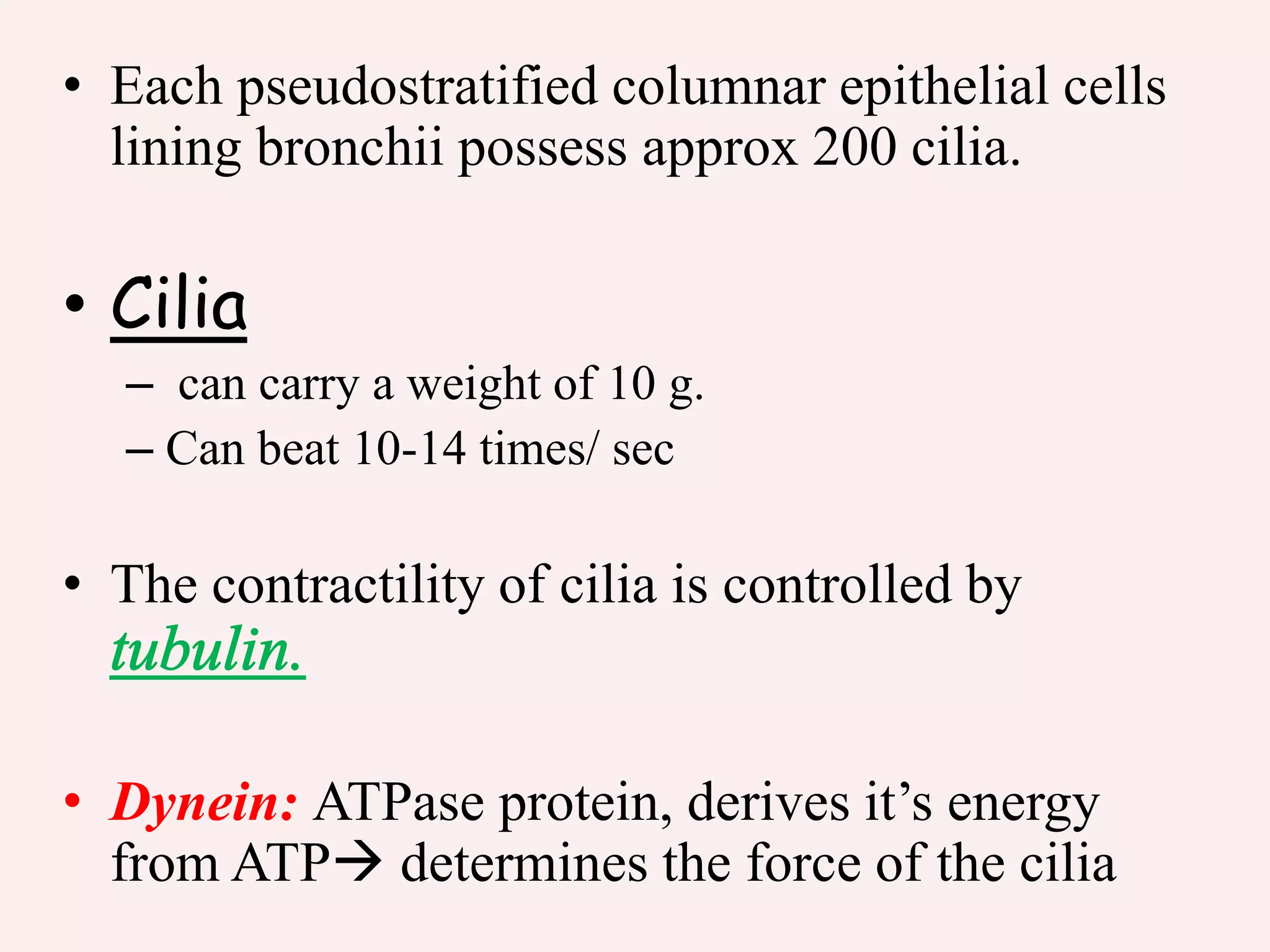
• Each pseudostratified columnar epithelial cells
lining bronchii possess approx 200 cilia.
• Cilia
– can carry a weight of 10 g.
– Can beat 10-14 times/ sec
• The contractility of cilia is controlled by
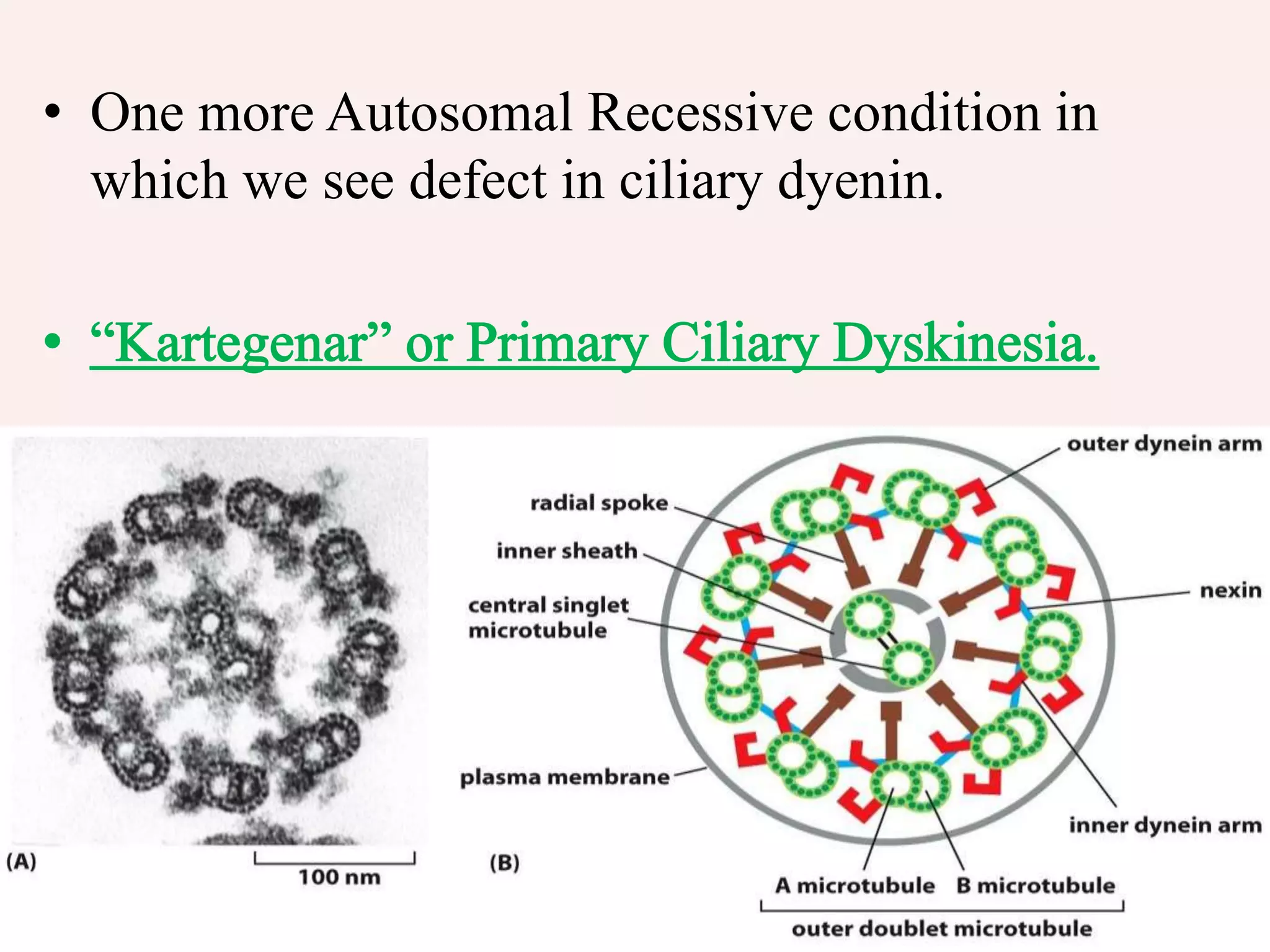
• Dynein: ATPase protein, derives it’s energy
from ATP determines the force of the cilia
• Ciliary motility: ( how to
determine?)
– can be assessed directly by cytological specimens
from nasal and bronchial brushings, to enumerate
ciliary beat frequency.
– Imaging techniques.
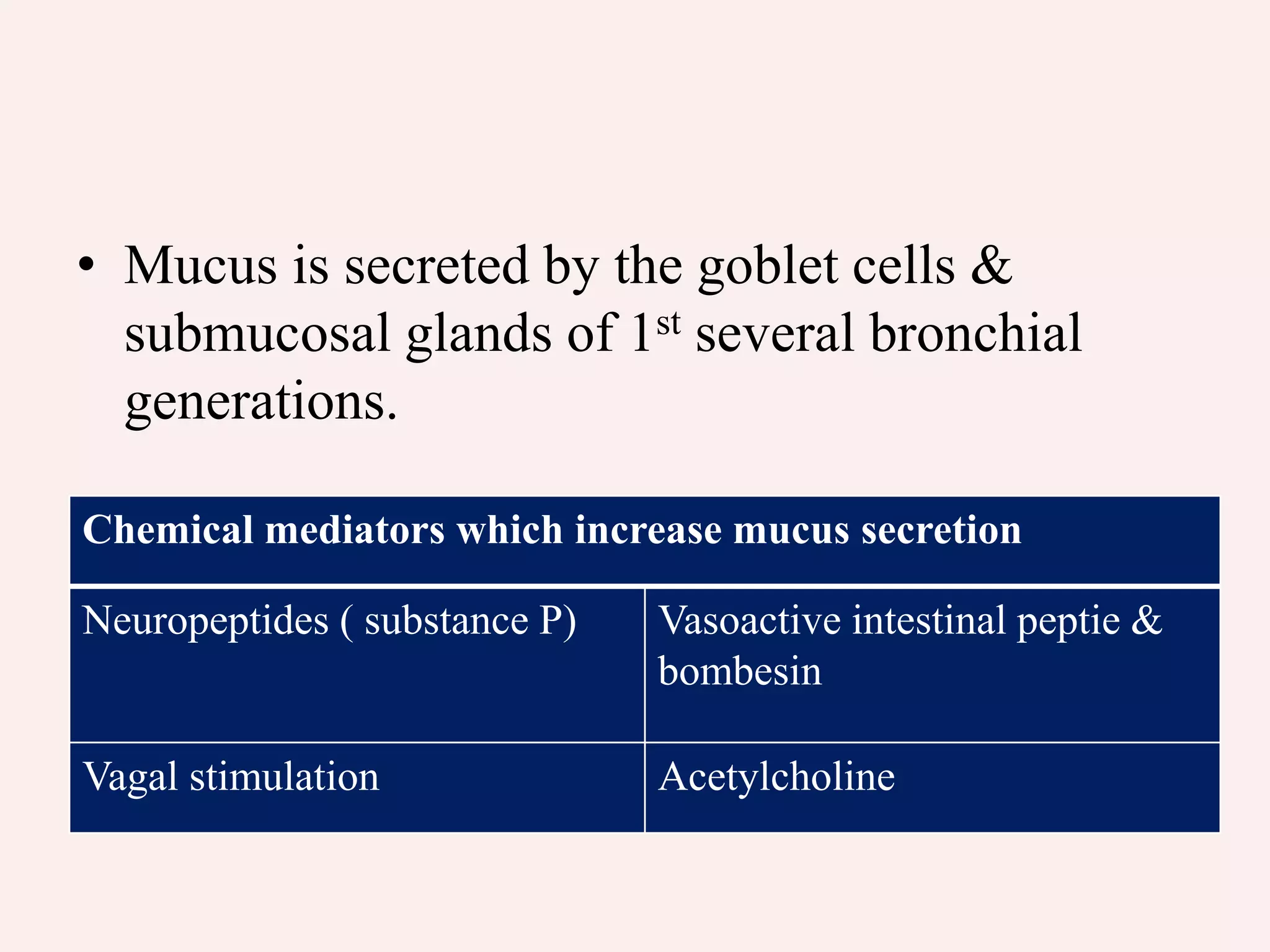
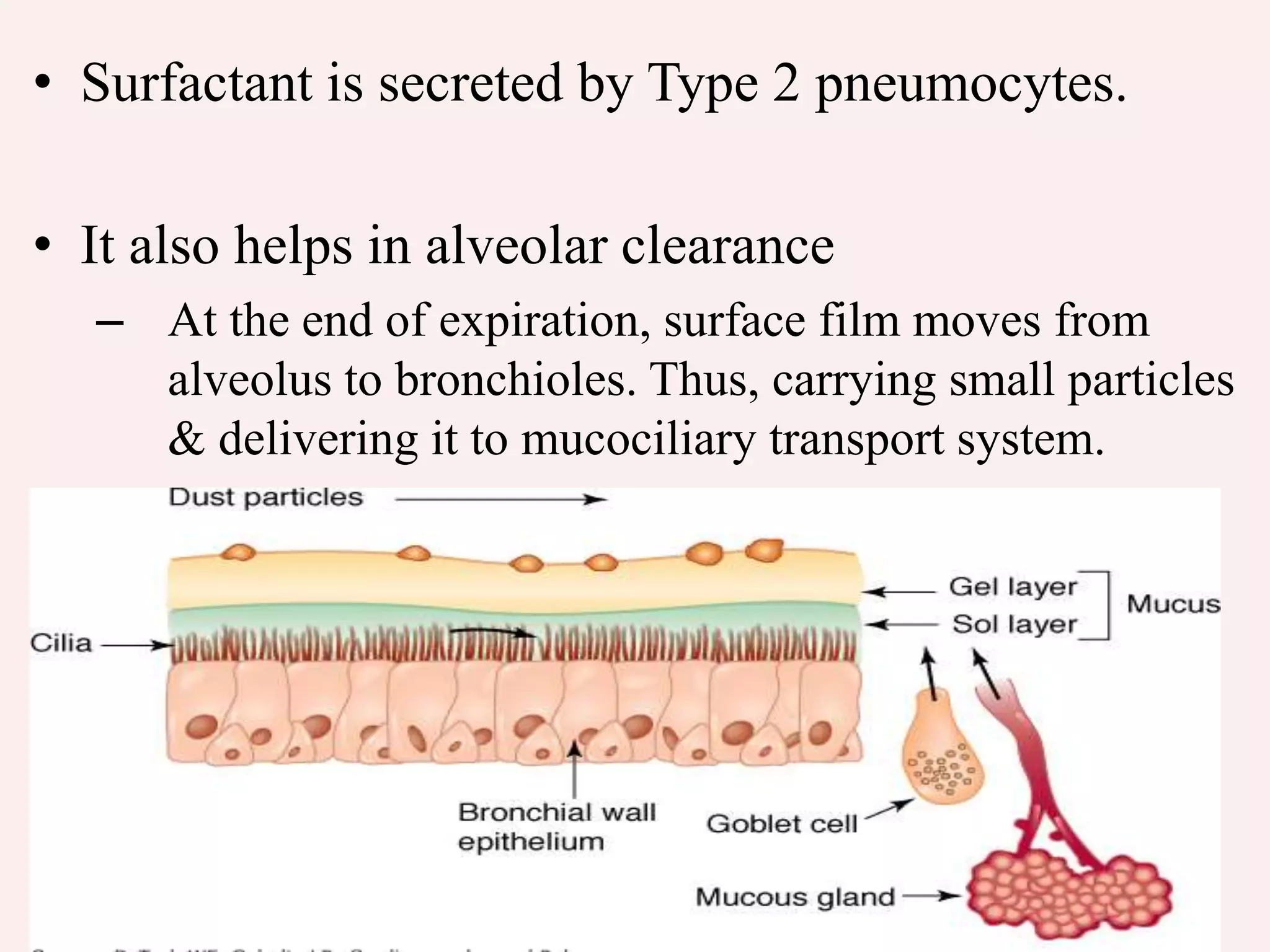
• Mucus is secreted by the goblet cells &
submucosal glands of 1st several bronchial
generations.
Chemical mediators which increase mucus secretion
Neuropeptides ( substance P) Vasoactive intestinal peptie &
bombesin
Vagal stimulation Acetylcholine
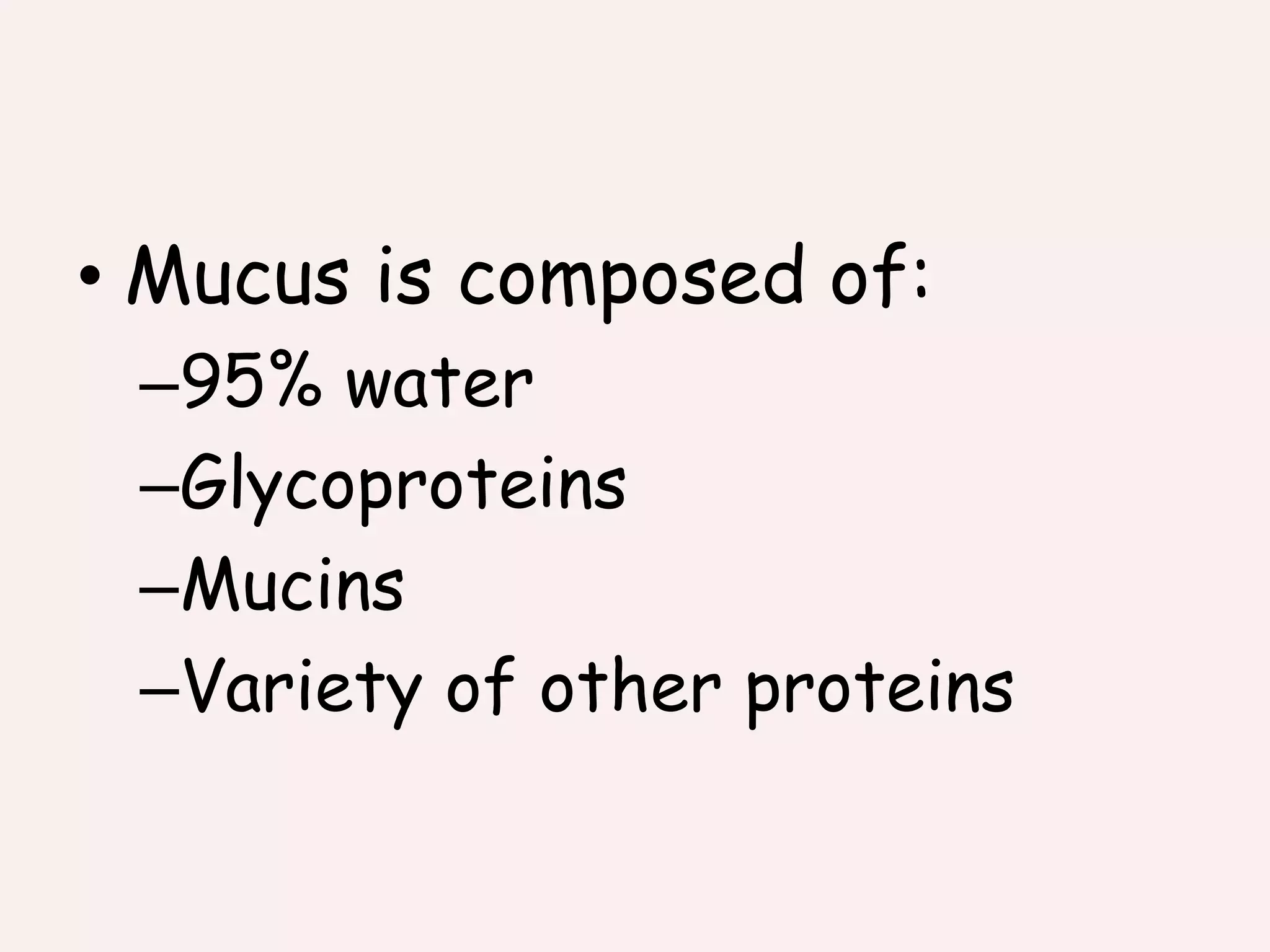
• Mucus is composed of:
–95% water
–Glycoproteins
–Mucins
–Variety of other proteins
What is the main
function of
mucus?
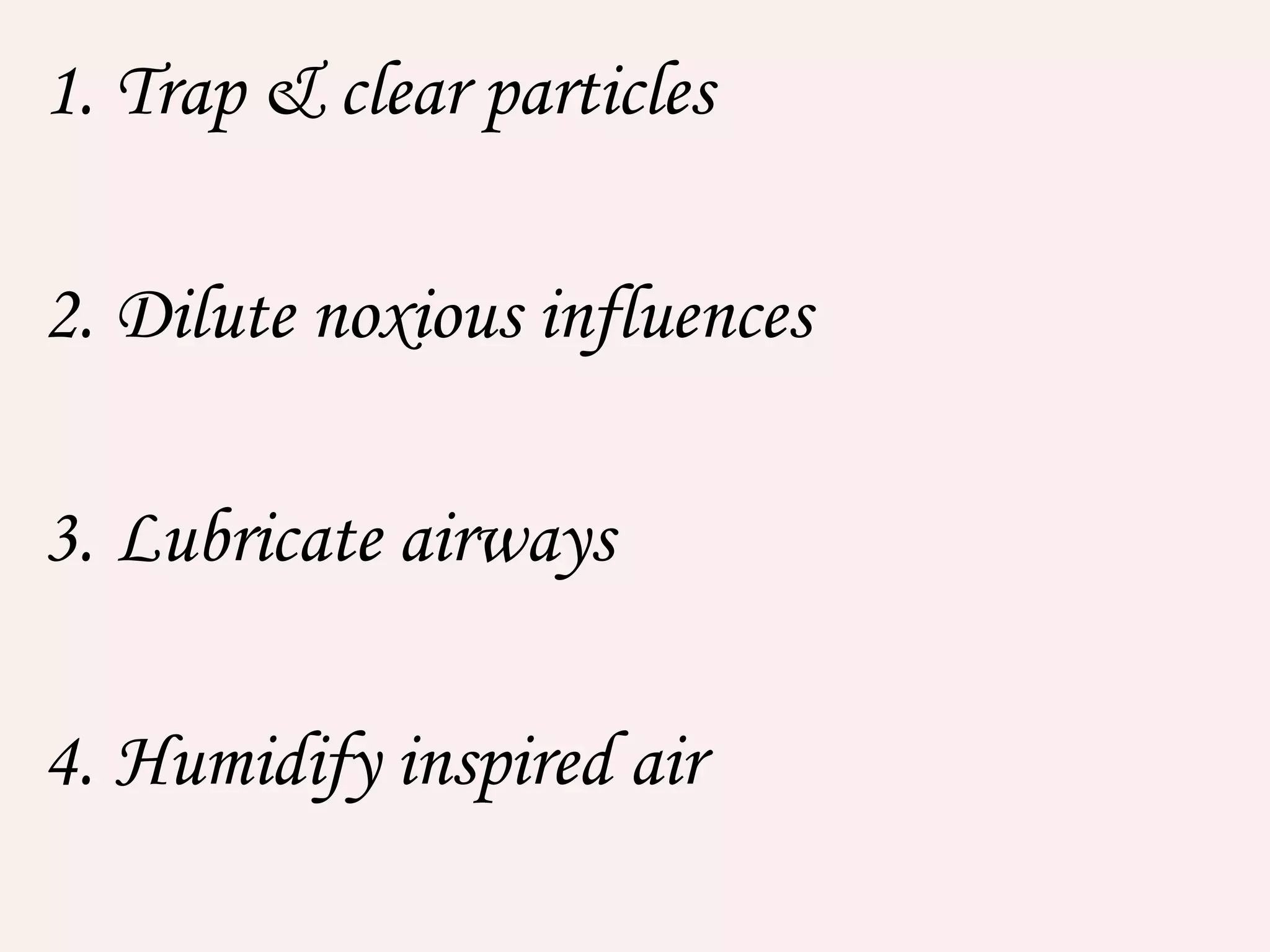
1. Trap & clear particles
2. Dilute noxious influences
3. Lubricate airways
4. Humidify inspired air
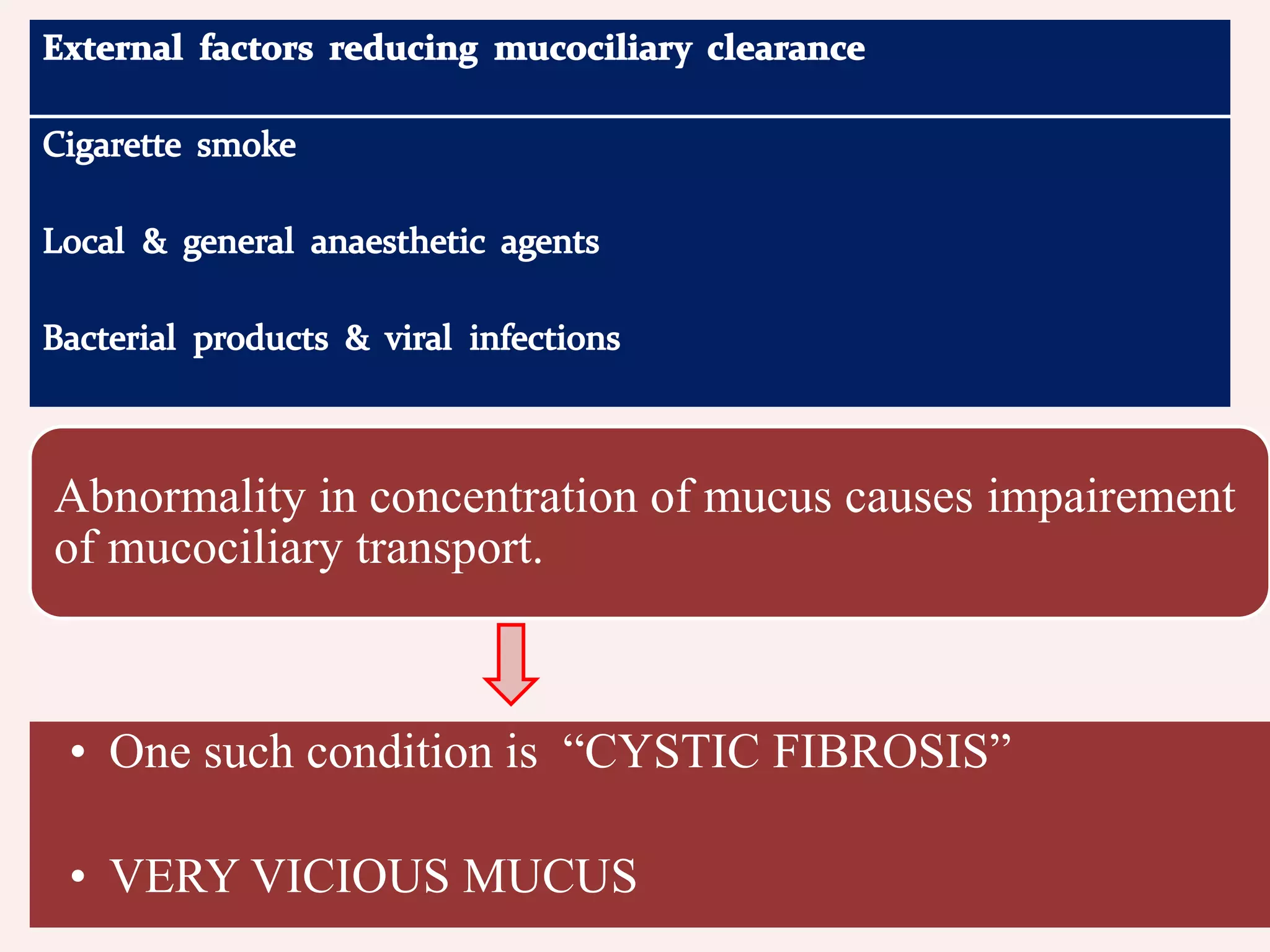
Abnormality in concentration of mucus causes impairement
of mucociliary transport.
• One such condition is “CYSTIC FIBROSIS”
• VERY VICIOUS MUCUS
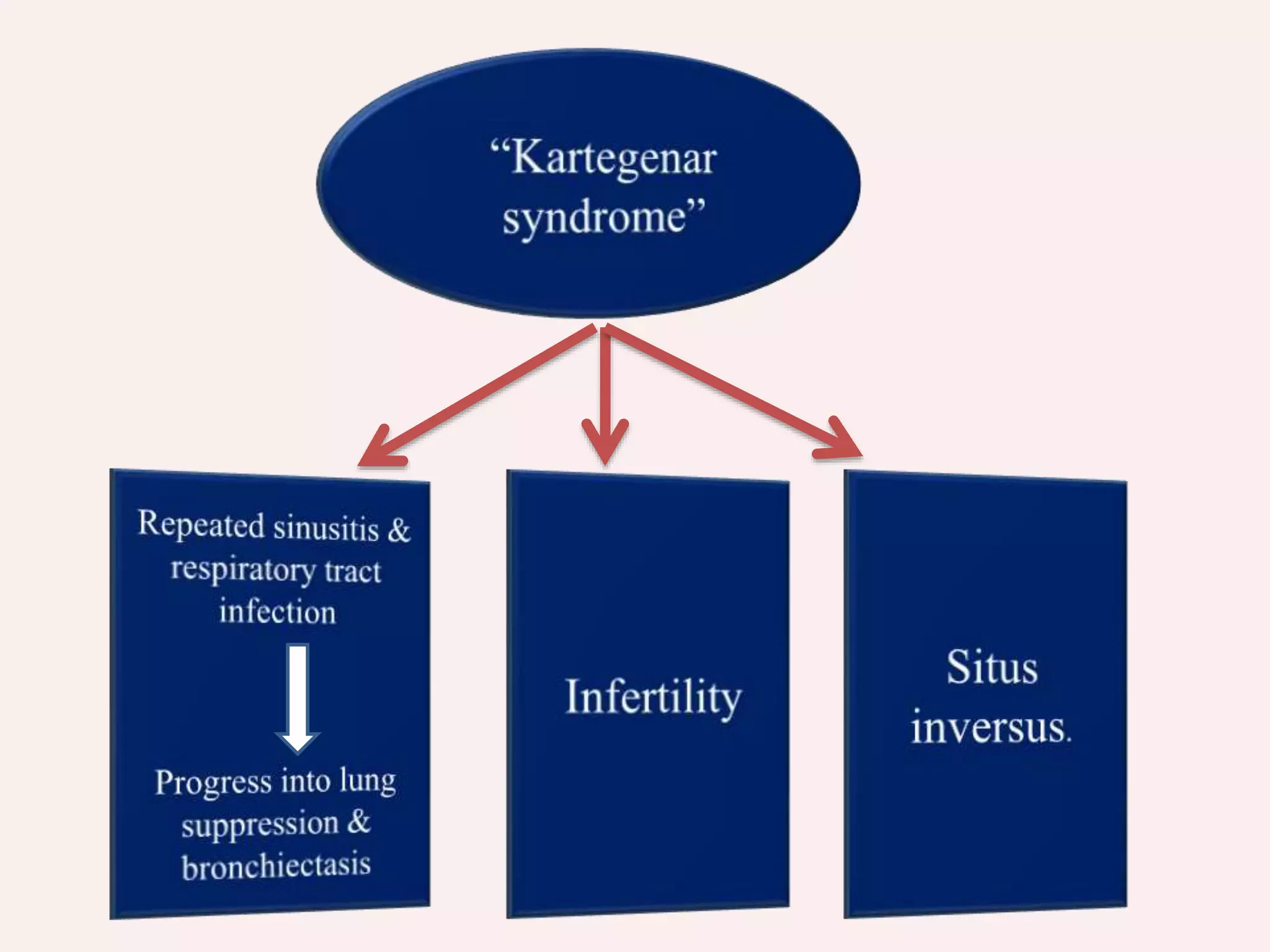
• One more Autosomal Recessive condition in
which we see defect in ciliary dyenin.
• Active material lining alveolar surface that
reduces surface tension.
• What is surface tension?
–It is a collapsing force!!!!
–So the surfactant prevents
the alveolii from collapsing
• Surfactant is secreted by Type 2 pneumocytes.
• It also helps in alveolar clearance
– At the end of expiration, surface film moves from
alveolus to bronchioles. Thus, carrying small particles
& delivering it to mucociliary transport system.
• The composition of surfactant also contains
surfactant proteins
– SP-A
– SP-B
– SP-C
– SP-D
• Surfactant also enhances local non-specific
pulmonary immune defence mechanisms.
• It exerts influence on neutrophils function which
include neutrophil adhesion.
Surfactant proteins:
– Most abundant
– Closely resemble C1q.
– Enhances alveolar macrophages phagocytosis.
, may also share same effects of SP-A on
inflammatory cells & macrophages.
• Surfactant can be damaged by a number of noxious
stimuli. Alteration in surfactant is important in
pathogenesis of ARDS.
• Apart from surfactant proteins, many other
proteins are important in lung defences. Such
proteins are derived from plasma.
Immunoglobulins
• Normally all secretions contain immunoglobulins but in
different proportions.
• IgA, is in excess as compared to IgG & IgM.
• Immunoglobulins produced by a local lung tissue – from
plasma cells & B-lymphocytes
• IgA is secreted maximum in the upper airways.
• Deficiency oF IgA is associated with bacterial infections.
Defensins & other proteins
• Defensins is a family of cytotoxic cationic peptides secreted
mainly by the leukocytes.
• The anti-bacterial effect can be correlated with the charge,
which is determined by the argenine content of the
molecule.
• They kill
– gram +ve organism
– Fungi
– Viruses
• Lactoferrin is an iron binding protein which competes with
the bacteria, iron is an essential growth factor in certain
bacteria.
Complement proteins
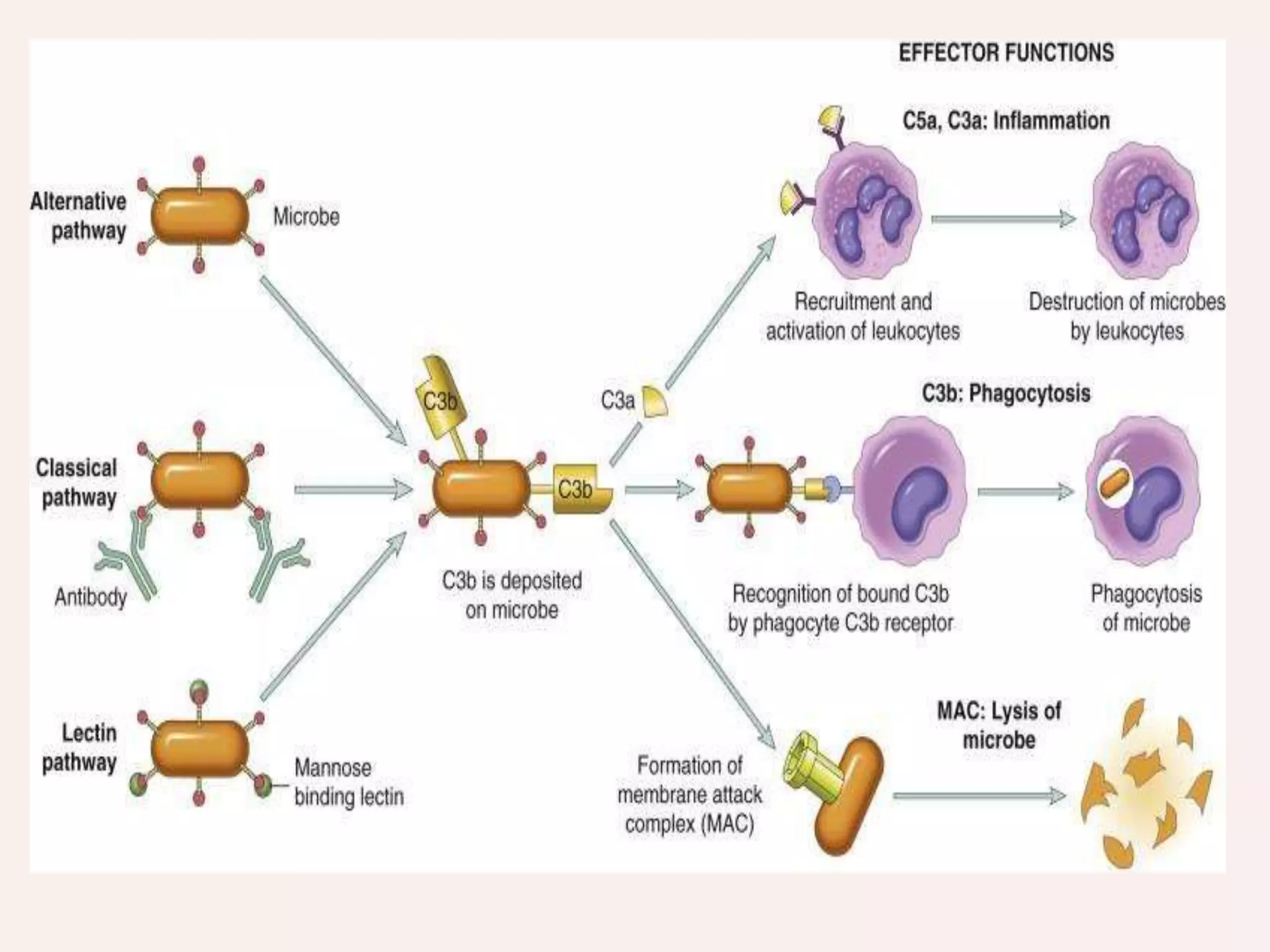
• During inflammation, the delivery of complement
proteins to lungs is increased by plasma exudation.
• Alveolar macrophages secrete C3a, C3b, C5a.
• Patient with have recurrent URTI &
LRTI, with Strep. pneumoniae & H. Influenzae.
• C3 has important role in bacterial defence as it has
action of opsonin (C3b) its is phagocytosed by
macrophages.
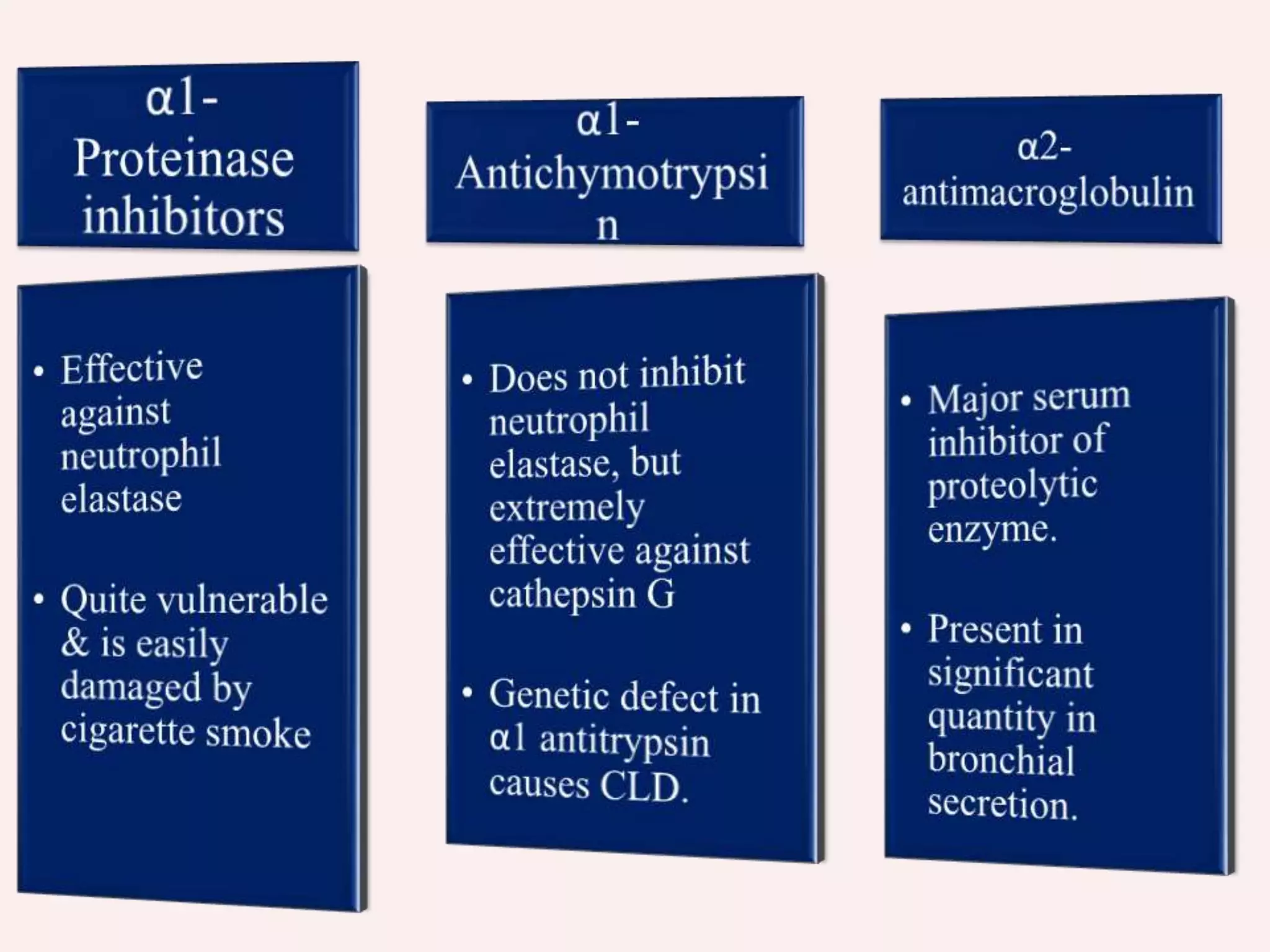
• Many of these agents may be derived from
alveolar macrophages & airway epithelial
cells.
• During inflammatory & injurious processes
the rate of secretion of these important
protective agents is likely to be greatly
enhanced
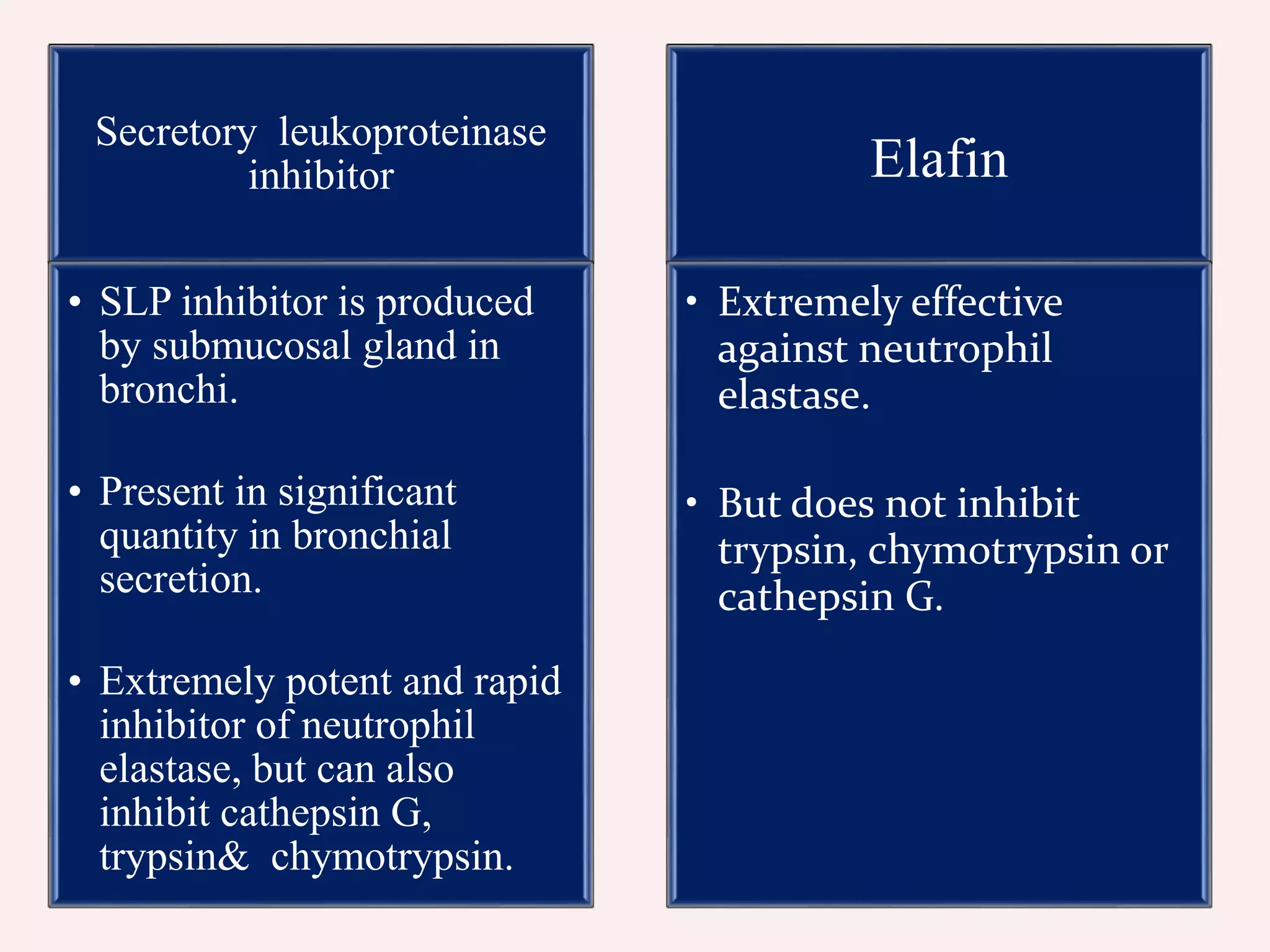
Secretory leukoproteinase
inhibitor
• SLP inhibitor is produced
by submucosal gland in
bronchi.
• Present in significant
quantity in bronchial
secretion.
• Extremely potent and rapid
inhibitor of neutrophil
elastase, but can also
inhibit cathepsin G,
trypsin& chymotrypsin.
Elafin
• Extremely effective
against neutrophil
elastase.
• But does not inhibit
trypsin, chymotrypsin or
cathepsin G.
• Neutrophil Elastase is also known as
one of the most destructive enzymes in the
body.
• Once unregulated, this enzyme disturbs
the function of the lung permeability barrier
and induces the release of pro-inflammatory
cytokines.
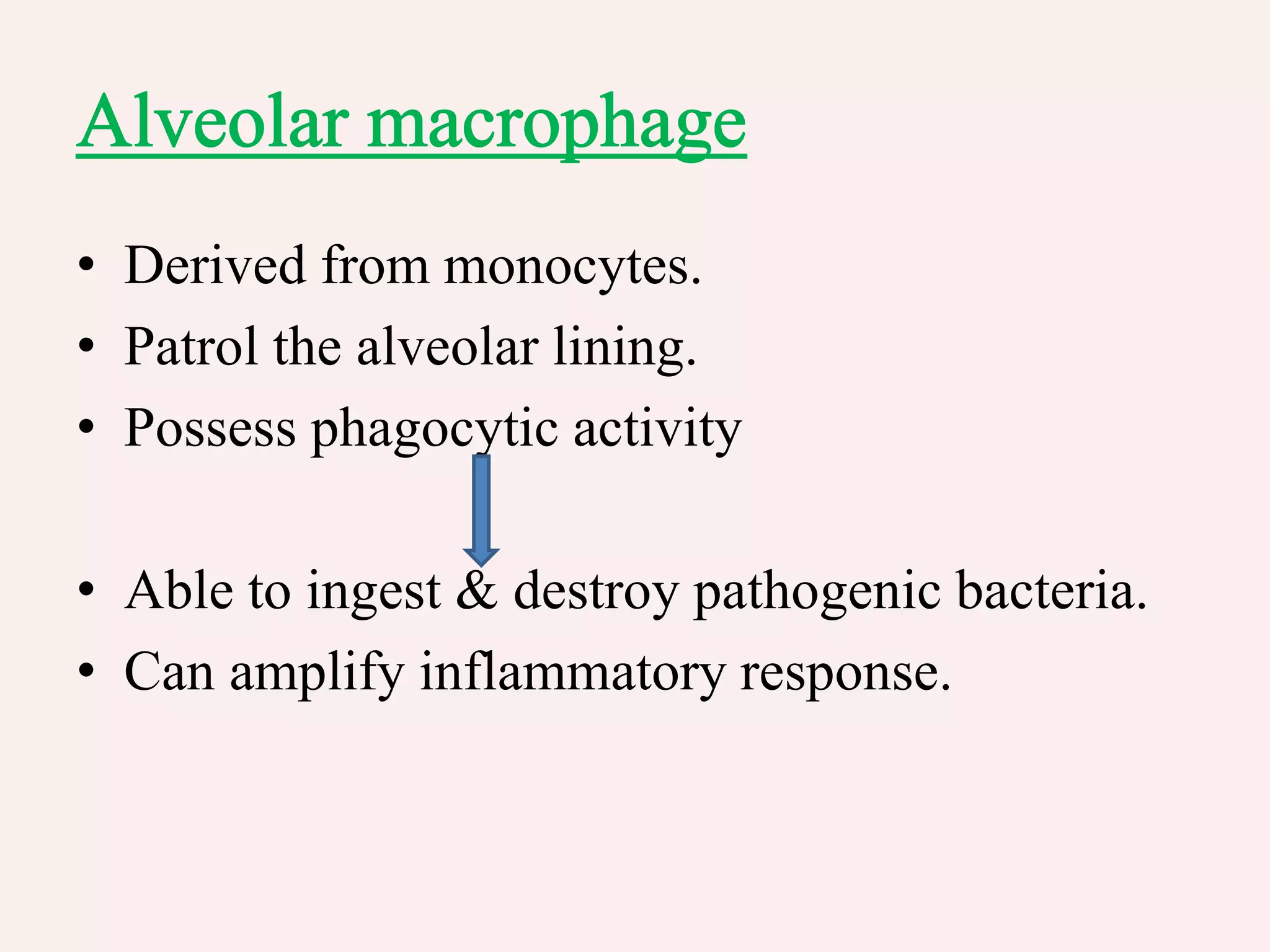
• Derived from monocytes.
• Patrol the alveolar lining.
• Possess phagocytic activity
• Able to ingest & destroy pathogenic bacteria.
• Can amplify inflammatory response.
• Role in repairing inflammatory tissue.
• Have a wide range of degradative enzymes.
• Have capacity to digest proteins, lipids,
carbohydrates.
• Activated macrophages form nitrite & nitrate,
which contribute to antifungal, antiparasitic, &
tumorocidal activities.
• Macrophages also call in a number of other
phagocytic cells e.g neutrophil, eosinophil, by
specific generation of chemokines.
• Despite such powerful mechanism, not all
phagocytosed particles are destroyed.
– Minerals such as Quartz & Abestos.
– Number of microorganisms including MTB.
Initiation & control of inflammatory response.
• Macrophages secrete a number of chemotactic
proteins including members of 5-LOX & COX
pathway which exert important proinflammatory
effects.
• Leukotriene B4 which is a specific neutrophil
chemotoxin.
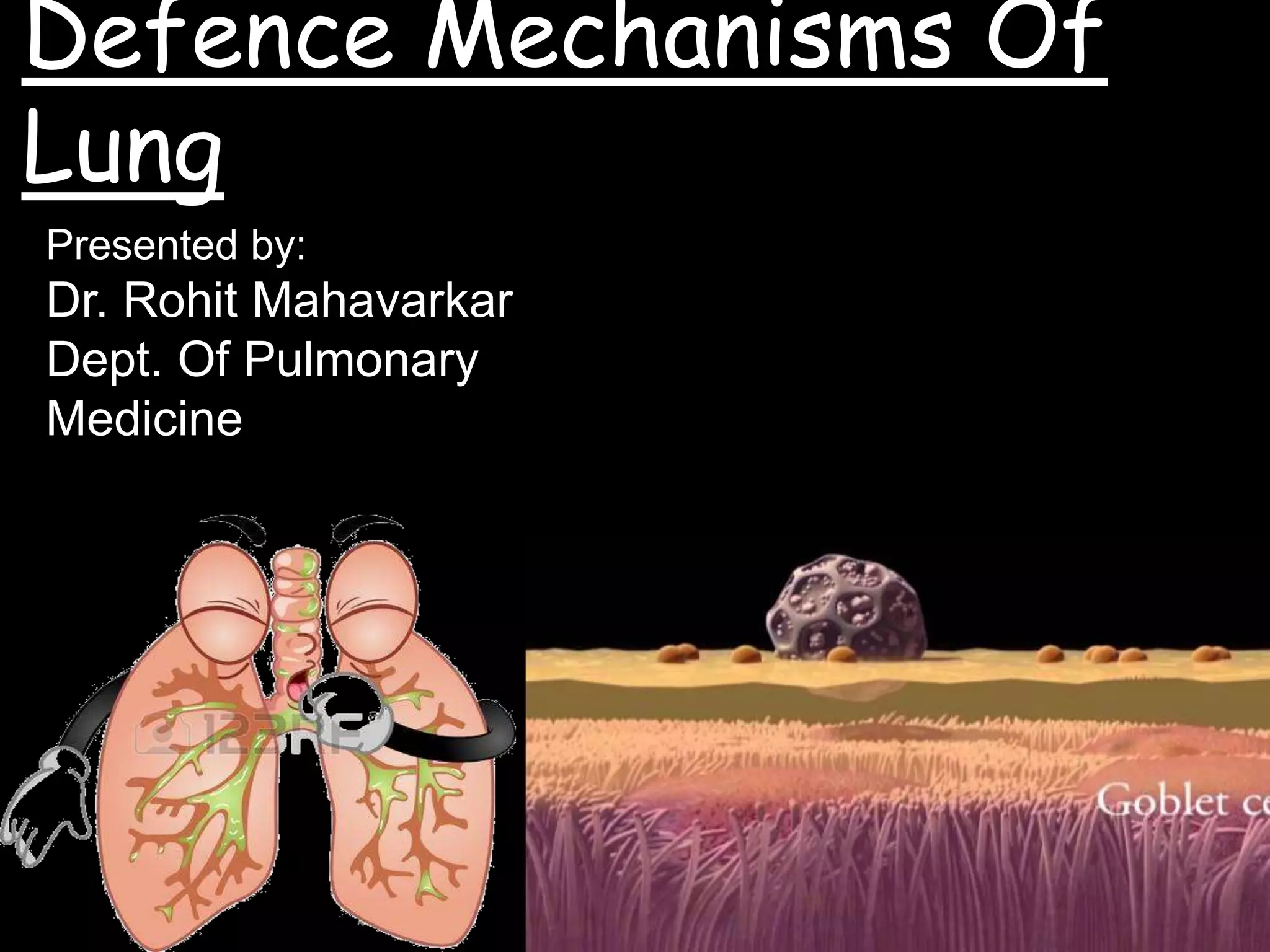
• Chemokines for neutrophils :
– IL-8, NAP-1, NAP-2
• Chemokines for monocytes & eosinophils:
– MCP-1, MIP-1α, RANTES
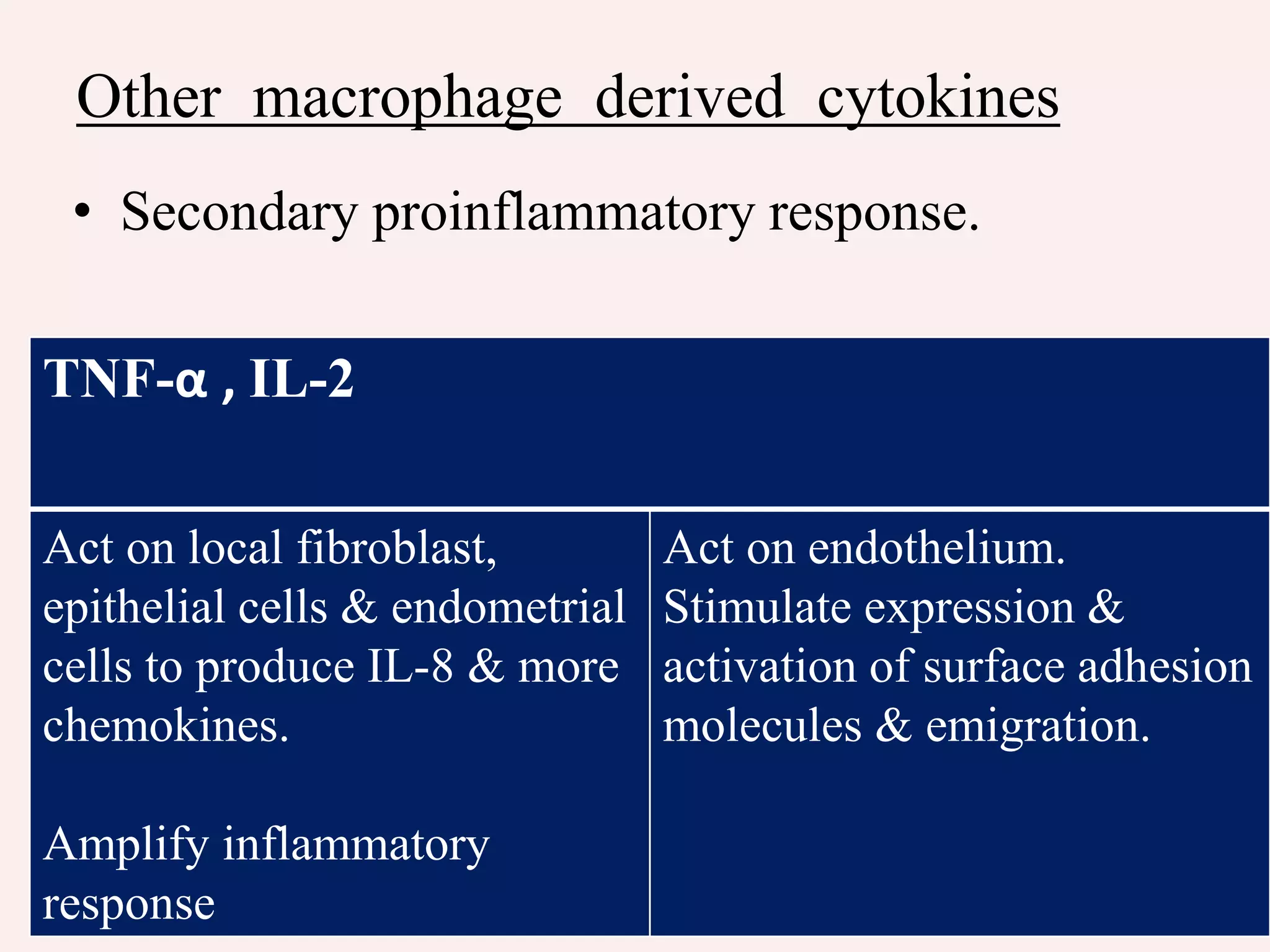
Other macrophage derived cytokines
• Secondary proinflammatory response.
TNF-α , IL-2
Act on local fibroblast,
epithelial cells & endometrial
cells to produce IL-8 & more
chemokines.
Amplify inflammatory
response
Act on endothelium.
Stimulate expression &
activation of surface adhesion
molecules & emigration.
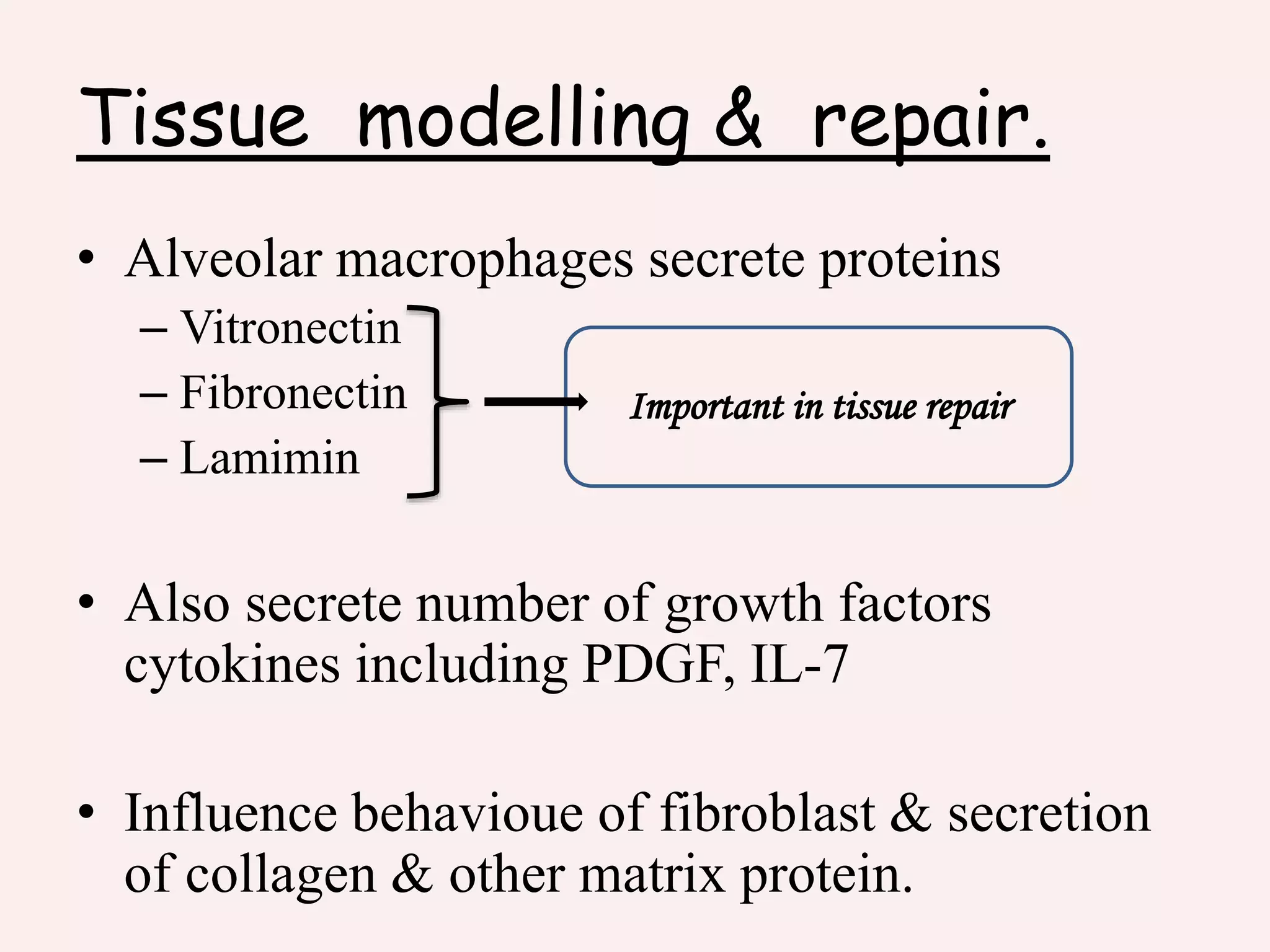
Tissue modelling & repair.
• Alveolar macrophages secrete proteins
– Vitronectin
– Fibronectin
– Lamimin
• Also secrete number of growth factors
cytokines including PDGF, IL-7
• Influence behavioue of fibroblast & secretion
of collagen & other matrix protein.
Defence mechanism of lung

Defence mechanism of lung

  • 1.
    Defence Mechanisms Of Lung Presentedby: Dr. Rohit Mahavarkar Dept. Of Pulmonary Medicine
  • 2.
    • Everyday ourlungs is exposed to 7000 litres of air. • It is exposed to dust, pollen, bacteria etc. • Despite these exposures, pathology does not occur always. This is due to local primary protective mechanism. • If infections penetrate primary defences, then secondary responses including inflammatory and classical immune responses come to action.
  • 3.
    • Respiratory tractis protected by different mechanisms. Upper airways Cough Lower airways Mucocilliary clearance Gas exchange units ( bronchioles & alveolii) Surfactants and cellular defenders including alveolar macrophages
  • 4.
    • Mucus inupper airways & surfactant in gas exchange, contains variety of proteins with defence properties against the infection. • Cells also have important cytoprotective antioxidant & anti-proteinase mechanisms.
  • 5.
    Physical defences. 1. Nose –Aerodynamic fibres of respiratory epithelium covering turbinate bones – Removes large particals Hairs in anterior nares  mucocilliary action  filtering
  • 6.
    • Most importantprotective mechanism. • Also, one of the symptoms of resp. diseases.
  • 7.
    •The efferent pathwayof the reflex involves nerve supply to the larynx, rib cage & diaphragm. •CNS component of the cough reflex is located in the MEDULLA OBLONGATA & receptor is involved is 5- hydroxytryptamine Myelinated irritant fibres & intravascular non-myelinated J- receptors Via C-fibres & myelinated fibres Transmit cough •Neuronal mechanism
  • 8.
    • 4 phasesof cough: – Inspiration – Compression of intrathoracic gas against a closed glottis. – Explosive expulsion as the glottis opens – Relaxation of the airways • Results in expectoration of foreign debris & mucus as a result of high local turbulant airflow. • Cough contributes little to tracheobronchial clearance  more in case of COPD where mucociliary clearance impaired. • Opiates have a direct, rather sedative effect on CNS component on cough reflex.
  • 9.
    – Responsible fortracheobronchial clearance. – Cough is not enough effective in removing small inhaled particles. – Mechanism : it is a complex interaction between cilia on bronchial epithelial cells & mucus.
  • 10.
    • Each pseudostratifiedcolumnar epithelial cells lining bronchii possess approx 200 cilia. • Cilia – can carry a weight of 10 g. – Can beat 10-14 times/ sec • The contractility of cilia is controlled by • Dynein: ATPase protein, derives it’s energy from ATP determines the force of the cilia
  • 11.
    • Ciliary motility:( how to determine?) – can be assessed directly by cytological specimens from nasal and bronchial brushings, to enumerate ciliary beat frequency. – Imaging techniques.
  • 12.
    • Mucus issecreted by the goblet cells & submucosal glands of 1st several bronchial generations. Chemical mediators which increase mucus secretion Neuropeptides ( substance P) Vasoactive intestinal peptie & bombesin Vagal stimulation Acetylcholine
  • 13.
    • Mucus iscomposed of: –95% water –Glycoproteins –Mucins –Variety of other proteins
  • 14.
    What is themain function of mucus?
  • 15.
    1. Trap &clear particles 2. Dilute noxious influences 3. Lubricate airways 4. Humidify inspired air
  • 16.
    Abnormality in concentrationof mucus causes impairement of mucociliary transport. • One such condition is “CYSTIC FIBROSIS” • VERY VICIOUS MUCUS
  • 17.
    • One moreAutosomal Recessive condition in which we see defect in ciliary dyenin.
  • 19.
    • Active materiallining alveolar surface that reduces surface tension. • What is surface tension? –It is a collapsing force!!!! –So the surfactant prevents the alveolii from collapsing
  • 21.
    • Surfactant issecreted by Type 2 pneumocytes. • It also helps in alveolar clearance – At the end of expiration, surface film moves from alveolus to bronchioles. Thus, carrying small particles & delivering it to mucociliary transport system.
  • 22.
    • The compositionof surfactant also contains surfactant proteins – SP-A – SP-B – SP-C – SP-D • Surfactant also enhances local non-specific pulmonary immune defence mechanisms. • It exerts influence on neutrophils function which include neutrophil adhesion.
  • 23.
    Surfactant proteins: – Mostabundant – Closely resemble C1q. – Enhances alveolar macrophages phagocytosis. , may also share same effects of SP-A on inflammatory cells & macrophages. • Surfactant can be damaged by a number of noxious stimuli. Alteration in surfactant is important in pathogenesis of ARDS.
  • 24.
    • Apart fromsurfactant proteins, many other proteins are important in lung defences. Such proteins are derived from plasma.
  • 25.
    Immunoglobulins • Normally allsecretions contain immunoglobulins but in different proportions. • IgA, is in excess as compared to IgG & IgM. • Immunoglobulins produced by a local lung tissue – from plasma cells & B-lymphocytes • IgA is secreted maximum in the upper airways. • Deficiency oF IgA is associated with bacterial infections.
  • 26.
    Defensins & otherproteins • Defensins is a family of cytotoxic cationic peptides secreted mainly by the leukocytes. • The anti-bacterial effect can be correlated with the charge, which is determined by the argenine content of the molecule. • They kill – gram +ve organism – Fungi – Viruses • Lactoferrin is an iron binding protein which competes with the bacteria, iron is an essential growth factor in certain bacteria.
  • 27.
    Complement proteins • Duringinflammation, the delivery of complement proteins to lungs is increased by plasma exudation. • Alveolar macrophages secrete C3a, C3b, C5a. • Patient with have recurrent URTI & LRTI, with Strep. pneumoniae & H. Influenzae. • C3 has important role in bacterial defence as it has action of opsonin (C3b) its is phagocytosed by macrophages.
  • 29.
    • Many ofthese agents may be derived from alveolar macrophages & airway epithelial cells. • During inflammatory & injurious processes the rate of secretion of these important protective agents is likely to be greatly enhanced
  • 31.
    Secretory leukoproteinase inhibitor • SLPinhibitor is produced by submucosal gland in bronchi. • Present in significant quantity in bronchial secretion. • Extremely potent and rapid inhibitor of neutrophil elastase, but can also inhibit cathepsin G, trypsin& chymotrypsin. Elafin • Extremely effective against neutrophil elastase. • But does not inhibit trypsin, chymotrypsin or cathepsin G.
  • 32.
    • Neutrophil Elastaseis also known as one of the most destructive enzymes in the body. • Once unregulated, this enzyme disturbs the function of the lung permeability barrier and induces the release of pro-inflammatory cytokines.
  • 33.
    • Derived frommonocytes. • Patrol the alveolar lining. • Possess phagocytic activity • Able to ingest & destroy pathogenic bacteria. • Can amplify inflammatory response.
  • 34.
    • Role inrepairing inflammatory tissue. • Have a wide range of degradative enzymes. • Have capacity to digest proteins, lipids, carbohydrates.
  • 35.
    • Activated macrophagesform nitrite & nitrate, which contribute to antifungal, antiparasitic, & tumorocidal activities. • Macrophages also call in a number of other phagocytic cells e.g neutrophil, eosinophil, by specific generation of chemokines. • Despite such powerful mechanism, not all phagocytosed particles are destroyed. – Minerals such as Quartz & Abestos. – Number of microorganisms including MTB.
  • 36.
    Initiation & controlof inflammatory response. • Macrophages secrete a number of chemotactic proteins including members of 5-LOX & COX pathway which exert important proinflammatory effects. • Leukotriene B4 which is a specific neutrophil chemotoxin.
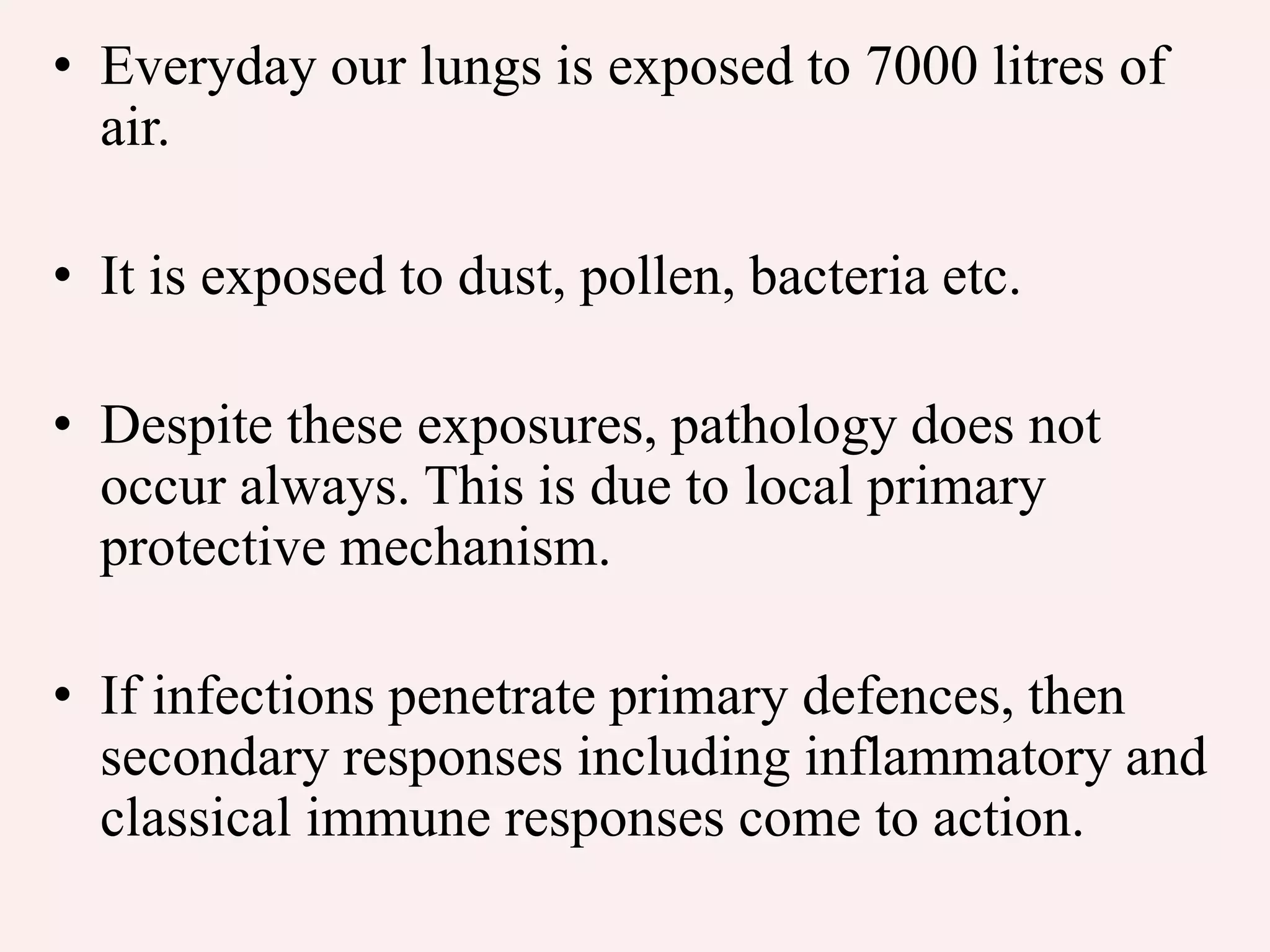
  • 37.
    • Chemokines forneutrophils : – IL-8, NAP-1, NAP-2 • Chemokines for monocytes & eosinophils: – MCP-1, MIP-1α, RANTES
  • 38.
    Other macrophage derivedcytokines • Secondary proinflammatory response. TNF-α , IL-2 Act on local fibroblast, epithelial cells & endometrial cells to produce IL-8 & more chemokines. Amplify inflammatory response Act on endothelium. Stimulate expression & activation of surface adhesion molecules & emigration.
  • 39.
    Tissue modelling &repair. • Alveolar macrophages secrete proteins – Vitronectin – Fibronectin – Lamimin • Also secrete number of growth factors cytokines including PDGF, IL-7 • Influence behavioue of fibroblast & secretion of collagen & other matrix protein.