Common Types of
Renewable Energy
A quick look into alternative energy sources
Solar Energy
 Energy produced by the sun.
 By harnessing the energy received by
the sun, we can generate power and
provide a cleaner environment.
 Solar Energy has gained much popularity
in the past decade and is considered an
effective alternative to fossil fuels and
natural gases.
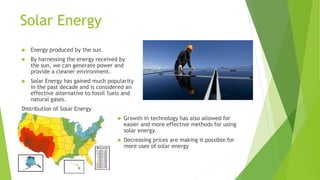
Distribution of Solar Energy
 Growth in technology has also allowed for
easier and more effective methods for using
solar energy.
 Decreasing prices are making it possible for
more uses of solar energy
Harnessing Solar Energy
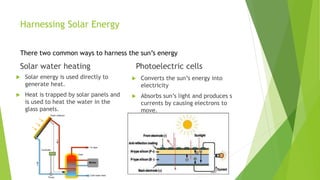
There two common ways to harness the sun’s energy
Solar water heating
 Solar energy is used directly to
generate heat.
 Heat is trapped by solar panels and
is used to heat the water in the
glass panels.
Photoelectric cells
 Converts the sun’s energy into
electricity
 Absorbs sun’s light and produces s
currents by causing electrons to
move.
Wind Energy
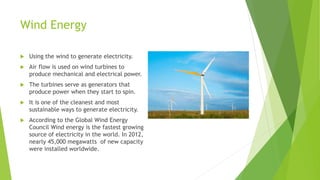
 Using the wind to generate electricity.
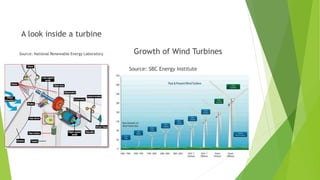
 Air flow is used on wind turbines to
produce mechanical and electrical power.
 The turbines serve as generators that
produce power when they start to spin.
 It is one of the cleanest and most
sustainable ways to generate electricity.
 According to the Global Wind Energy
Council Wind energy is the fastest growing
source of electricity in the world. In 2012,
nearly 45,000 megawatts of new capacity
were installed worldwide.
A look inside a turbine
Source: National Renewable Energy Laboratory Growth of Wind Turbines
Source: SBC Energy Institute
Geothermal Energy
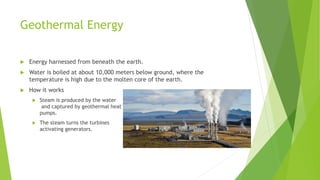
 Energy harnessed from beneath the earth.
 Water is boiled at about 10,000 meters below ground, where the
temperature is high due to the molten core of the earth.
 How it works
 Steam is produced by the water
and captured by geothermal heat
pumps.
 The steam turns the turbines
activating generators.
Hydroelectric Energy
 Energy captured by the movement of water
 It is clean, renewable, predictable, and easy to control
 How it works:
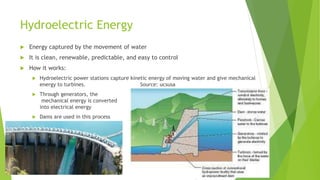
 Hydroelectric power stations capture kinetic energy of moving water and give mechanical
energy to turbines. Source: ucsusa
 Through generators, the
mechanical energy is converted
into electrical energy
 Dams are used in this process

Alt enre

  • 1.
    Common Types of RenewableEnergy A quick look into alternative energy sources
  • 2.
    Solar Energy  Energyproduced by the sun.  By harnessing the energy received by the sun, we can generate power and provide a cleaner environment.  Solar Energy has gained much popularity in the past decade and is considered an effective alternative to fossil fuels and natural gases. Distribution of Solar Energy  Growth in technology has also allowed for easier and more effective methods for using solar energy.  Decreasing prices are making it possible for more uses of solar energy
  • 3.
    Harnessing Solar Energy Theretwo common ways to harness the sun’s energy Solar water heating  Solar energy is used directly to generate heat.  Heat is trapped by solar panels and is used to heat the water in the glass panels. Photoelectric cells  Converts the sun’s energy into electricity  Absorbs sun’s light and produces s currents by causing electrons to move.
  • 4.
    Wind Energy  Usingthe wind to generate electricity.  Air flow is used on wind turbines to produce mechanical and electrical power.  The turbines serve as generators that produce power when they start to spin.  It is one of the cleanest and most sustainable ways to generate electricity.  According to the Global Wind Energy Council Wind energy is the fastest growing source of electricity in the world. In 2012, nearly 45,000 megawatts of new capacity were installed worldwide.
  • 5.
    A look insidea turbine Source: National Renewable Energy Laboratory Growth of Wind Turbines Source: SBC Energy Institute
  • 6.
    Geothermal Energy  Energyharnessed from beneath the earth.  Water is boiled at about 10,000 meters below ground, where the temperature is high due to the molten core of the earth.  How it works  Steam is produced by the water and captured by geothermal heat pumps.  The steam turns the turbines activating generators.
  • 7.
    Hydroelectric Energy  Energycaptured by the movement of water  It is clean, renewable, predictable, and easy to control  How it works:  Hydroelectric power stations capture kinetic energy of moving water and give mechanical energy to turbines. Source: ucsusa  Through generators, the mechanical energy is converted into electrical energy  Dams are used in this process