











DOUBLE 
CLICK
CLICK 
HERE
CLICK 
HERE
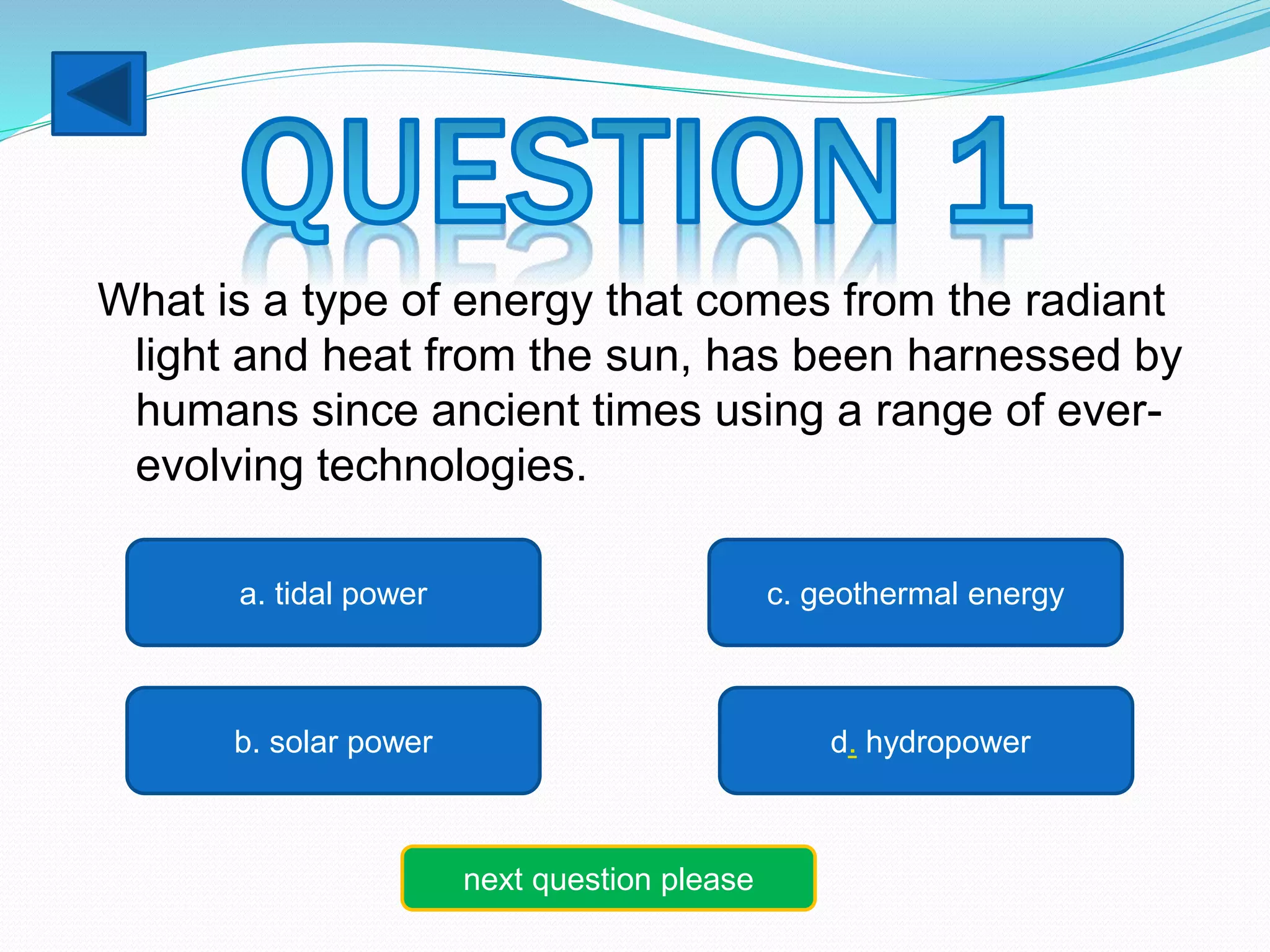
What is a type of energy that comes from the radiant 
light and heat from the sun, has been harnessed by 
humans since ancient times using a range of ever-evolving 
technologies. 
a. tidal power 
b. solar power 
c. geothermal energy 
d. hydropower 
next question please
CLICK 
HERE
Back to question
What do we call a type of energy that is derived from 
the force or energy of moving water, which may be 
harnessed for useful purposes. 
a. tidal power c. hydropower energy 
b. geothermal energy d. wind energy 
next question please
Back to question
What is a form of hydropower that converts the energy 
of tides into electricity or other useful forms of power. 
c. geothermal energy 
a. solar energy 
b. tidal energy d. wind energy 
next question please
Back to question
What is a thermal energy generated and stored in the 
Earth. 
c. solar energy 
a. geothermal energy 
b. hydropower energy d. tidal energy 
next question please
Back to question
What is a form of power that converts the energy of 
the wind into electricity or other useful forms of 
power. 
c. geothermal energy 
a. tidal energy 
b. solar energy d. wind energy 
Next please
CLICK 
HERE
Back to question
 Alternative energy is an umbrella term that refers to any 
source of usable energy intended to replace fuel sources 
without the undesired consequences of the replaced 
fuels.[1] 
 The term "alternative" presupposes a set of undesirable 
energy technologies against which "alternative energies" 
are contrasted. As such, the list of energy technologies 
excluded is an indicator of which problems the alternative 
technologies are intended to address. Controversies 
regarding dominant sources of energy and their 
alternatives have a long history. The nature of what was 
regarded alternative energy sources has changed 
considerably over time, and today, because of the variety 
of energy choices and differing goals of their advocates, 
defining some energy types as "alternative" is highly 
controversial.
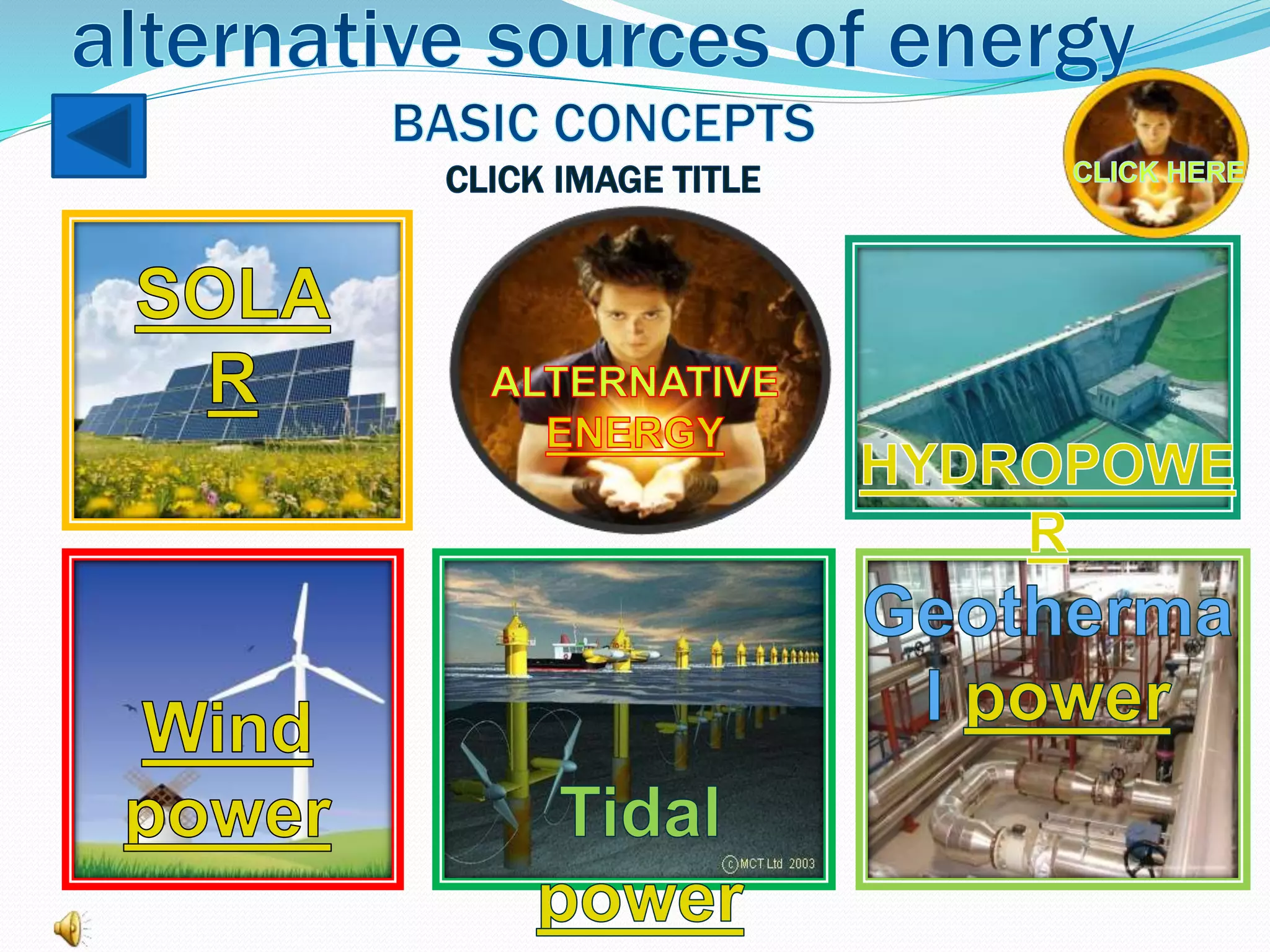
Solar energy, radiant light and heat from the sun, has been 
harnessed by humans since ancient times using a range of 
ever-evolving technologies. Solar radiation, along with 
secondary solar-powered resources such as wind and wave 
power, hydroelectricity and biomass, account for most of the 
available renewable energy on earth. Only a minuscule 
fraction of the available solar energy is used. 
Solar powered electrical generation relies on heat engines and 
photovoltaics. Solar energy's uses are limited only by human 
ingenuity. A partial list of solar applications includes space 
heating and cooling through solar architecture, potable water 
via distillation and disinfection, daylighting, solar hot water, 
solar cooking, and high temperature process heat for industrial 
purposes.To harvest the solar energy, the most common way 
is to use solar panels.
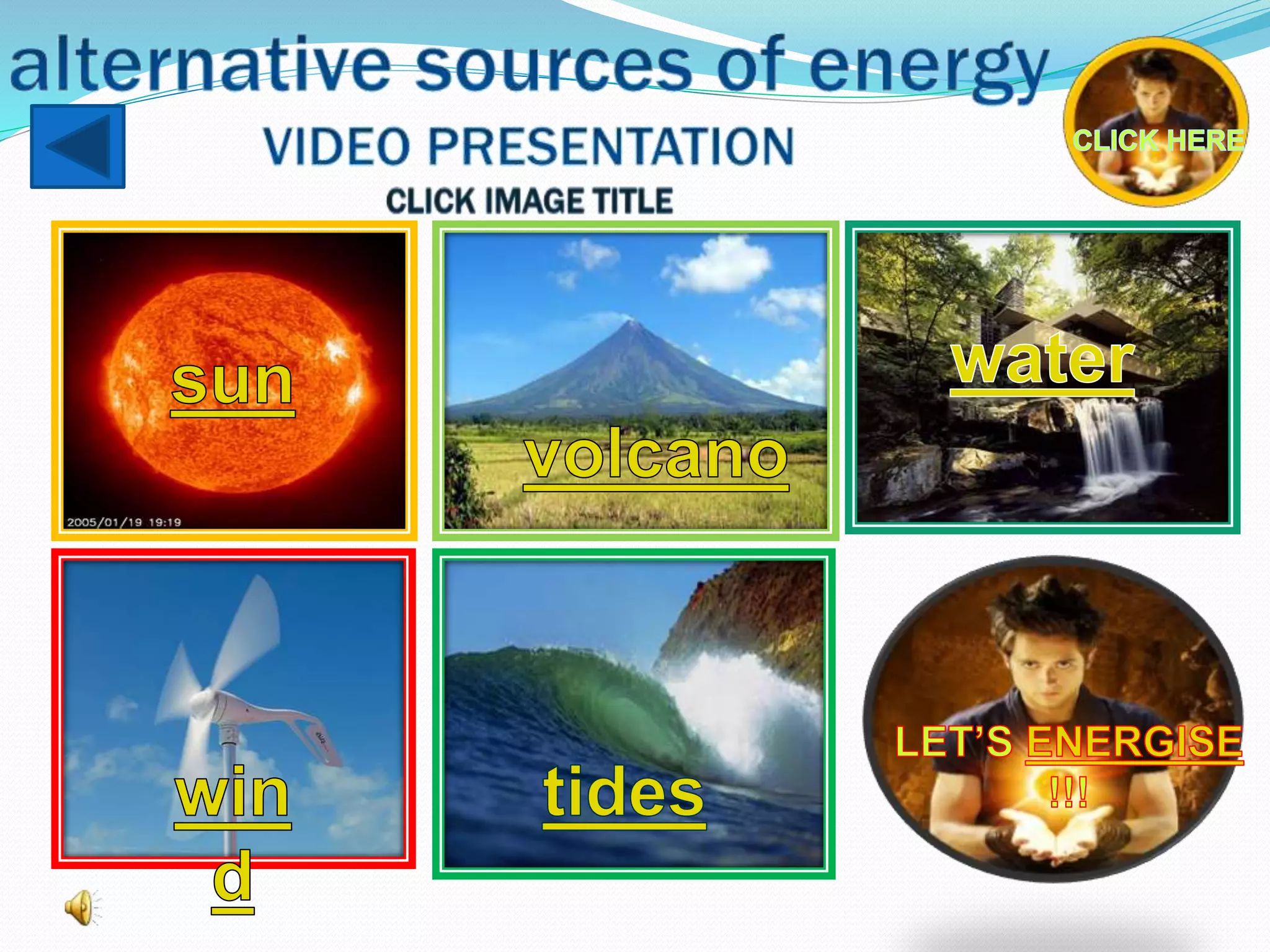
 Geothermal energy is thermal energy generated and stored in the 
Earth. Thermal energy is energy that determines the temperature of 
matter. Earth's geothermal energy originates from the original 
formation of the planet, from radioactive decay of minerals, from 
volcanic activity, and from solar energy absorbed at the surface. The 
geothermal gradient, which is the difference in temperature between 
the core of the planet and its surface, drives a continuous conduction 
of thermal energy in the form of heat from the core to the surface. 
 From hot springs, geothermal energy has been used for bathing 
since Paleolithic times and for space heating since ancient Roman 
times, but it is now better known for electricity generation. Worldwide, 
about 10,715 megawatts (MW) of geothermal power is online in 24 
countries. An additional 28 gigawatts of direct geothermal heating 
capacity is installed for district heating, space heating, spas, 
industrial processes, desalination and agricultural applications.[1]
Tidal power, also called tidal energy, is a form of hydropower that 
converts the energy of tides into electricity or other useful forms of 
power. The first large-scale tidal power plant (the Rance Tidal Power 
Station) started operation in 1966. 
Although not yet widely used, tidal power has potential for future 
electricity generation. Tides are more predictable than wind energy 
and solar power. Among sources of renewable energy, tidal power 
has traditionally suffered from relatively high cost and limited 
availability of sites with sufficiently high tidal ranges or flow velocities, 
thus constricting its total availability. However, many recent 
technological developments and improvements, both in design (e.g. 
dynamic tidal power, tidal lagoons) and turbine technology (e.g. new 
axial turbines, crossflow turbines), indicate that the total availability of 
tidal power may be much higher than previously assumed, and that 
economic and environmental costs may be brought down to 
competitive levels
Hydropower, hydraulic power or water power is power that is 
derived from the force or energy of moving water, which may 
be harnessed for useful purposes. Prior to the development of 
electric power, hydropower was used for irrigation, and 
operation of various machines, such as watermills, textile 
machines, sawmills, dock cranes, and domestic lifts. 
Another method used a trompe to produce compressed air from 
falling water, which could then be used to power other 
machinery at a distance from the water. 
In hydrology, hydropower is manifested in the force of the water 
on the riverbed and banks of a river. It is particularly powerful 
when the river is in flood. The force of the water results in the 
removal of sediment and other materials from the riverbed and 
banks of the river, causing erosion and other alterations.
Wind power is the conversion of wind energy into a useful form 
of energy, such as using wind turbines to make electricity, wind 
mills for mechanical power, wind pumps for pumping water or 
drainage, or sails to propel ships. 
Large-scale wind farms are connected to the electric power 
transmission network; smaller facilities are used to provide 
electricity to isolated locations. Utility companies increasingly 
buy back surplus electricity produced by small domestic 
turbines. Wind energy, as an alternative to fossil fuels, is 
plentiful, renewable, widely distributed, clean, and produces 
no greenhouse gas emissions during operation. However, the 
construction of wind farms is not universally welcomed 
because of their visual impact but any effects on the 
environment are generally among the least problematic of any 
power source.
Alternative energy source

Alternative energy source

  • 1.
  • 2.
  • 5.
  • 6.
    What is atype of energy that comes from the radiant light and heat from the sun, has been harnessed by humans since ancient times using a range of ever-evolving technologies. a. tidal power b. solar power c. geothermal energy d. hydropower next question please
  • 7.
  • 8.
  • 9.
    What do wecall a type of energy that is derived from the force or energy of moving water, which may be harnessed for useful purposes. a. tidal power c. hydropower energy b. geothermal energy d. wind energy next question please
  • 11.
  • 12.
    What is aform of hydropower that converts the energy of tides into electricity or other useful forms of power. c. geothermal energy a. solar energy b. tidal energy d. wind energy next question please
  • 14.
  • 15.
    What is athermal energy generated and stored in the Earth. c. solar energy a. geothermal energy b. hydropower energy d. tidal energy next question please
  • 17.
  • 18.
    What is aform of power that converts the energy of the wind into electricity or other useful forms of power. c. geothermal energy a. tidal energy b. solar energy d. wind energy Next please
  • 19.
  • 20.
  • 26.
     Alternative energyis an umbrella term that refers to any source of usable energy intended to replace fuel sources without the undesired consequences of the replaced fuels.[1]  The term "alternative" presupposes a set of undesirable energy technologies against which "alternative energies" are contrasted. As such, the list of energy technologies excluded is an indicator of which problems the alternative technologies are intended to address. Controversies regarding dominant sources of energy and their alternatives have a long history. The nature of what was regarded alternative energy sources has changed considerably over time, and today, because of the variety of energy choices and differing goals of their advocates, defining some energy types as "alternative" is highly controversial.
  • 27.
    Solar energy, radiantlight and heat from the sun, has been harnessed by humans since ancient times using a range of ever-evolving technologies. Solar radiation, along with secondary solar-powered resources such as wind and wave power, hydroelectricity and biomass, account for most of the available renewable energy on earth. Only a minuscule fraction of the available solar energy is used. Solar powered electrical generation relies on heat engines and photovoltaics. Solar energy's uses are limited only by human ingenuity. A partial list of solar applications includes space heating and cooling through solar architecture, potable water via distillation and disinfection, daylighting, solar hot water, solar cooking, and high temperature process heat for industrial purposes.To harvest the solar energy, the most common way is to use solar panels.
  • 28.
     Geothermal energyis thermal energy generated and stored in the Earth. Thermal energy is energy that determines the temperature of matter. Earth's geothermal energy originates from the original formation of the planet, from radioactive decay of minerals, from volcanic activity, and from solar energy absorbed at the surface. The geothermal gradient, which is the difference in temperature between the core of the planet and its surface, drives a continuous conduction of thermal energy in the form of heat from the core to the surface.  From hot springs, geothermal energy has been used for bathing since Paleolithic times and for space heating since ancient Roman times, but it is now better known for electricity generation. Worldwide, about 10,715 megawatts (MW) of geothermal power is online in 24 countries. An additional 28 gigawatts of direct geothermal heating capacity is installed for district heating, space heating, spas, industrial processes, desalination and agricultural applications.[1]
  • 29.
    Tidal power, alsocalled tidal energy, is a form of hydropower that converts the energy of tides into electricity or other useful forms of power. The first large-scale tidal power plant (the Rance Tidal Power Station) started operation in 1966. Although not yet widely used, tidal power has potential for future electricity generation. Tides are more predictable than wind energy and solar power. Among sources of renewable energy, tidal power has traditionally suffered from relatively high cost and limited availability of sites with sufficiently high tidal ranges or flow velocities, thus constricting its total availability. However, many recent technological developments and improvements, both in design (e.g. dynamic tidal power, tidal lagoons) and turbine technology (e.g. new axial turbines, crossflow turbines), indicate that the total availability of tidal power may be much higher than previously assumed, and that economic and environmental costs may be brought down to competitive levels
  • 30.
    Hydropower, hydraulic poweror water power is power that is derived from the force or energy of moving water, which may be harnessed for useful purposes. Prior to the development of electric power, hydropower was used for irrigation, and operation of various machines, such as watermills, textile machines, sawmills, dock cranes, and domestic lifts. Another method used a trompe to produce compressed air from falling water, which could then be used to power other machinery at a distance from the water. In hydrology, hydropower is manifested in the force of the water on the riverbed and banks of a river. It is particularly powerful when the river is in flood. The force of the water results in the removal of sediment and other materials from the riverbed and banks of the river, causing erosion and other alterations.
  • 31.
    Wind power isthe conversion of wind energy into a useful form of energy, such as using wind turbines to make electricity, wind mills for mechanical power, wind pumps for pumping water or drainage, or sails to propel ships. Large-scale wind farms are connected to the electric power transmission network; smaller facilities are used to provide electricity to isolated locations. Utility companies increasingly buy back surplus electricity produced by small domestic turbines. Wind energy, as an alternative to fossil fuels, is plentiful, renewable, widely distributed, clean, and produces no greenhouse gas emissions during operation. However, the construction of wind farms is not universally welcomed because of their visual impact but any effects on the environment are generally among the least problematic of any power source.