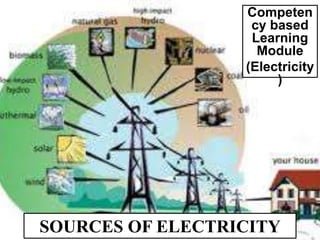
SOURCES OF ELECTRICITY
Competen
cy based
Learning
Module
(Electricity
)
Friction
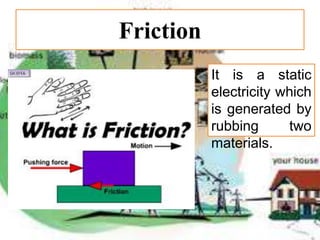
It is a static
electricity which
is generated by
rubbing two
materials.
Chemical Action
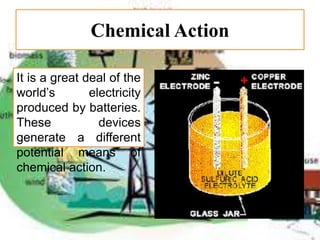
It is a great deal of the
world’s electricity
produced by batteries.
These devices
generate a different
potential means of
chemical action.
Heat Action
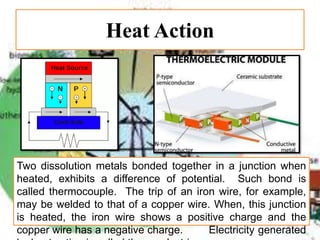
Two dissolution metals bonded together in a junction when
heated, exhibits a difference of potential. Such bond is
called thermocouple. The trip of an iron wire, for example,
may be welded to that of a copper wire. When, this junction
is heated, the iron wire shows a positive charge and the
copper wire has a negative charge. Electricity generated
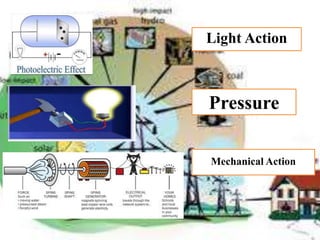
Light Action
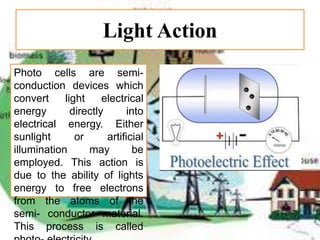
Photo cells are semi-
conduction devices which
convert light electrical
energy directly into
electrical energy. Either
sunlight or artificial
illumination may be
employed. This action is
due to the ability of lights
energy to free electrons
from the atoms of the
semi- conductor material.
This process is called
Pressure
It is a difference of potential appears across the face of
certain crystal such as quarts, when they are squeezed
or stretched. This is called piezo-electricity.
Mechanical Action
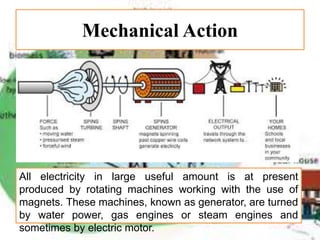
All electricity in large useful amount is at present
produced by rotating machines working with the use of
magnets. These machines, known as generator, are turned
by water power, gas engines or steam engines and
sometimes by electric motor.
There are
many different
types of
mechanical
power plants
to produce
electrical
energy.
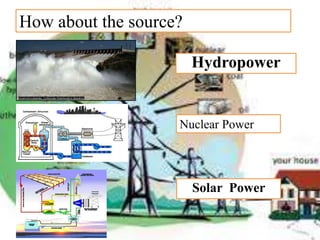
Hydropower
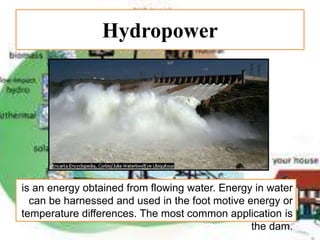
is an energy obtained from flowing water. Energy in water
can be harnessed and used in the foot motive energy or
temperature differences. The most common application is
the dam.
Hydropower cont.
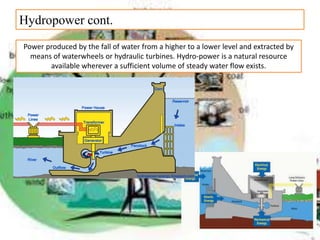
Power produced by the fall of water from a higher to a lower level and extracted by
means of waterwheels or hydraulic turbines. Hydro-power is a natural resource
available wherever a sufficient volume of steady water flow exists.
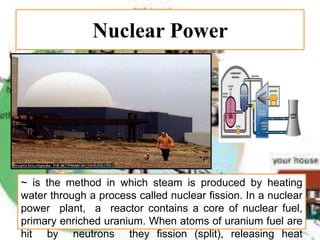
Nuclear Power
~ is the method in which steam is produced by heating
water through a process called nuclear fission. In a nuclear
power plant, a reactor contains a core of nuclear fuel,
primary enriched uranium. When atoms of uranium fuel are
hit by neutrons they fission (split), releasing heat
Nuclear Power cont.
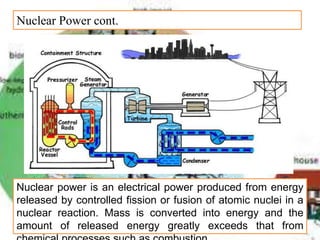
Nuclear power is an electrical power produced from energy
released by controlled fission or fusion of atomic nuclei in a
nuclear reaction. Mass is converted into energy and the
amount of released energy greatly exceeds that from
Solar Power
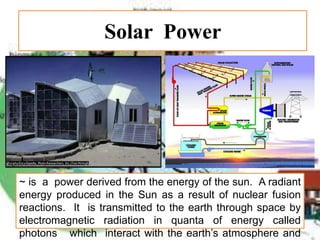
~ is a power derived from the energy of the sun. A radiant
energy produced in the Sun as a result of nuclear fusion
reactions. It is transmitted to the earth through space by
electromagnetic radiation in quanta of energy called
photons which interact with the earth’s atmosphere and
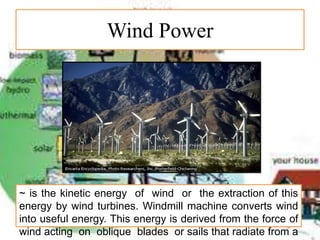
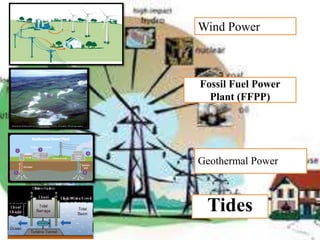
Wind Power
~ is the kinetic energy of wind or the extraction of this
energy by wind turbines. Windmill machine converts wind
into useful energy. This energy is derived from the force of
wind acting on oblique blades or sails that radiate from a
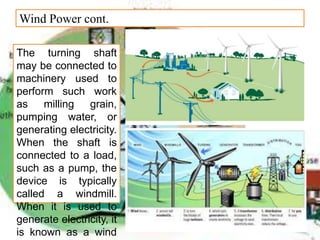
Wind Power cont.
The turning shaft
may be connected to
machinery used to
perform such work
as milling grain,
pumping water, or
generating electricity.
When the shaft is
connected to a load,
such as a pump, the
device is typically
called a windmill.
When it is used to
generate electricity, it
is known as a wind
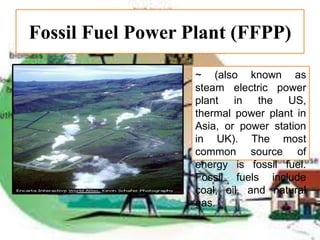
Fossil Fuel Power Plant (FFPP)
~ (also known as
steam electric power
plant in the US,
thermal power plant in
Asia, or power station
in UK). The most
common source of
energy is fossil fuel.
Fossil fuels include
coal, oil, and natural
gas.
Fossil Fuel Power Plant cont.
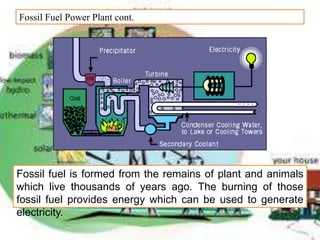
Fossil fuel is formed from the remains of plant and animals
which live thousands of years ago. The burning of those
fossil fuel provides energy which can be used to generate
electricity.
Geothermal Power
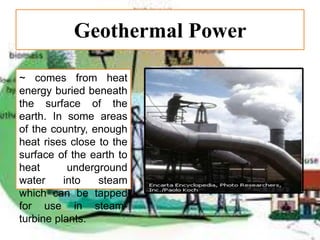
~ comes from heat
energy buried beneath
the surface of the
earth. In some areas
of the country, enough
heat rises close to the
surface of the earth to
heat underground
water into steam
which can be tapped
for use in steam-
turbine plants.
Geothermal Power cont.
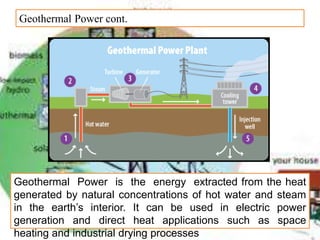
Geothermal Power is the energy extracted from the heat
generated by natural concentrations of hot water and steam
in the earth’s interior. It can be used in electric power
generation and direct heat applications such as space
heating and industrial drying processes
Tides
~ is another kind of energy that involves water. Ocean tides
can be used to turn turbines to generate electricity. For this
to be possible, a dam must be built across the mouth of a
bay. Water then is trapped behind the dam at the high tide.
At the low tide, the water is allowed to run out through the
dam and used to turn on electrical generator.
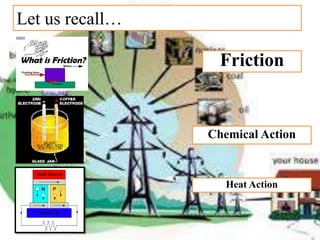
Let us recall…
Friction
Chemical Action
Heat Action
Light Action
Pressure
Mechanical Action
How about the source?
Hydropower
Nuclear Power
Solar Power
Wind Power
Fossil Fuel Power
Plant (FFPP)
Geothermal Power
Tides
Get one half (crosswise) sheet of
paper. Answer Self-Check 2.1
Stop Cheating! Or else, I’ll
throw your paper on the
garbage bin.
God is watching you!
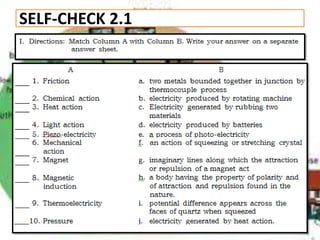
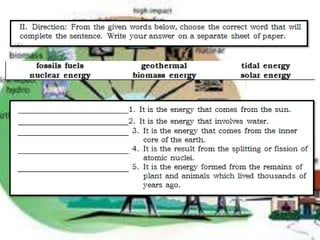
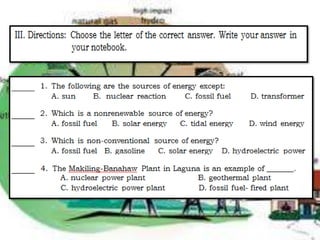
SELF-CHECK 2.1
Sources of Electricity

Sources of Electricity

  • 1.
    SOURCES OF ELECTRICITY Competen cybased Learning Module (Electricity )
  • 2.
    Friction It is astatic electricity which is generated by rubbing two materials.
  • 3.
    Chemical Action It isa great deal of the world’s electricity produced by batteries. These devices generate a different potential means of chemical action.
  • 4.
    Heat Action Two dissolutionmetals bonded together in a junction when heated, exhibits a difference of potential. Such bond is called thermocouple. The trip of an iron wire, for example, may be welded to that of a copper wire. When, this junction is heated, the iron wire shows a positive charge and the copper wire has a negative charge. Electricity generated
  • 5.
    Light Action Photo cellsare semi- conduction devices which convert light electrical energy directly into electrical energy. Either sunlight or artificial illumination may be employed. This action is due to the ability of lights energy to free electrons from the atoms of the semi- conductor material. This process is called
  • 6.
    Pressure It is adifference of potential appears across the face of certain crystal such as quarts, when they are squeezed or stretched. This is called piezo-electricity.
  • 7.
    Mechanical Action All electricityin large useful amount is at present produced by rotating machines working with the use of magnets. These machines, known as generator, are turned by water power, gas engines or steam engines and sometimes by electric motor.
  • 8.
    There are many different typesof mechanical power plants to produce electrical energy.
  • 9.
    Hydropower is an energyobtained from flowing water. Energy in water can be harnessed and used in the foot motive energy or temperature differences. The most common application is the dam.
  • 10.
    Hydropower cont. Power producedby the fall of water from a higher to a lower level and extracted by means of waterwheels or hydraulic turbines. Hydro-power is a natural resource available wherever a sufficient volume of steady water flow exists.
  • 11.
    Nuclear Power ~ isthe method in which steam is produced by heating water through a process called nuclear fission. In a nuclear power plant, a reactor contains a core of nuclear fuel, primary enriched uranium. When atoms of uranium fuel are hit by neutrons they fission (split), releasing heat
  • 12.
    Nuclear Power cont. Nuclearpower is an electrical power produced from energy released by controlled fission or fusion of atomic nuclei in a nuclear reaction. Mass is converted into energy and the amount of released energy greatly exceeds that from
  • 13.
    Solar Power ~ isa power derived from the energy of the sun. A radiant energy produced in the Sun as a result of nuclear fusion reactions. It is transmitted to the earth through space by electromagnetic radiation in quanta of energy called photons which interact with the earth’s atmosphere and
  • 14.
    Wind Power ~ isthe kinetic energy of wind or the extraction of this energy by wind turbines. Windmill machine converts wind into useful energy. This energy is derived from the force of wind acting on oblique blades or sails that radiate from a
  • 15.
    Wind Power cont. Theturning shaft may be connected to machinery used to perform such work as milling grain, pumping water, or generating electricity. When the shaft is connected to a load, such as a pump, the device is typically called a windmill. When it is used to generate electricity, it is known as a wind
  • 16.
    Fossil Fuel PowerPlant (FFPP) ~ (also known as steam electric power plant in the US, thermal power plant in Asia, or power station in UK). The most common source of energy is fossil fuel. Fossil fuels include coal, oil, and natural gas.
  • 17.
    Fossil Fuel PowerPlant cont. Fossil fuel is formed from the remains of plant and animals which live thousands of years ago. The burning of those fossil fuel provides energy which can be used to generate electricity.
  • 18.
    Geothermal Power ~ comesfrom heat energy buried beneath the surface of the earth. In some areas of the country, enough heat rises close to the surface of the earth to heat underground water into steam which can be tapped for use in steam- turbine plants.
  • 19.
    Geothermal Power cont. GeothermalPower is the energy extracted from the heat generated by natural concentrations of hot water and steam in the earth’s interior. It can be used in electric power generation and direct heat applications such as space heating and industrial drying processes
  • 20.
    Tides ~ is anotherkind of energy that involves water. Ocean tides can be used to turn turbines to generate electricity. For this to be possible, a dam must be built across the mouth of a bay. Water then is trapped behind the dam at the high tide. At the low tide, the water is allowed to run out through the dam and used to turn on electrical generator.
  • 21.
  • 22.
  • 23.
    How about thesource? Hydropower Nuclear Power Solar Power
  • 24.
    Wind Power Fossil FuelPower Plant (FFPP) Geothermal Power Tides
  • 25.
    Get one half(crosswise) sheet of paper. Answer Self-Check 2.1 Stop Cheating! Or else, I’ll throw your paper on the garbage bin. God is watching you!
  • 26.