RENEWABLE SOURCES
OF ENERGY
DONE
BY
PREMKUMAR.S
DEVA.R
 Energy is the power to do works and drive machine.
 Energy cannot be made or destroyed , regarding motion,
there are kinetic and potential energy
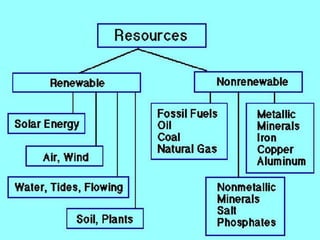
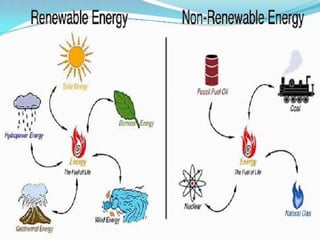
 Regarding power there are two kinds of energy
1.Renewable energy
2.Non-renewable energy
INTRODUCTION
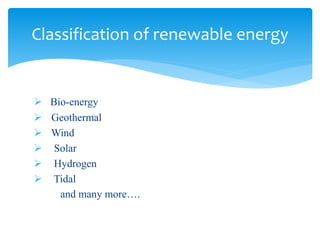
 Bio-energy
 Geothermal
 Wind
 Solar
 Hydrogen
 Tidal
and many more….
Classification of renewable energy
 Most renewable energy comes either by directly or
indirectly from the sun.
 Sunlight or solar energy , can be directly for heating and
lighting homes and other buildings , for generating
electricity.
 Solar radiation is radiant energy emitted by the sun ,
particularly electromagnetic energy. About half of the
energy is in the visible.
 Solar technologies are generally classified as active and
passive solar energy.
Solar Energy
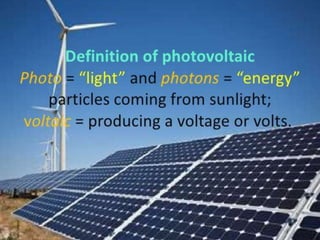
 When sunlight is absorbed by the materials , the solar
energy knocks electron loose from their atoms , allowing
the electrons to flow through the material to produce
electricity.
 Several connected PV arrays can provide enough power
for a household ; for large electric utility or industrial
applications , hundreds of arrays can be interconnected
to form a single , large PV systems.
Photovoltaic (PV) Effect
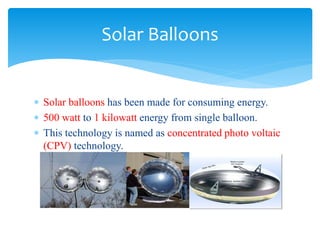
 Solar balloons has been made for consuming energy.
 500 watt to 1 kilowatt energy from single balloon.
 This technology is named as concentrated photo voltaic
(CPV) technology.
Solar Balloons
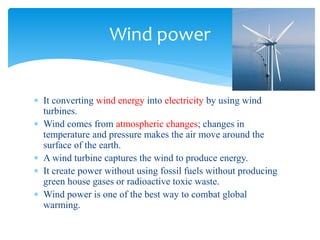
 It converting wind energy into electricity by using wind
turbines.
 Wind comes from atmospheric changes; changes in
temperature and pressure makes the air move around the
surface of the earth.
 A wind turbine captures the wind to produce energy.
 It create power without using fossil fuels without producing
green house gases or radioactive toxic waste.
 Wind power is one of the best way to combat global
warming.
Wind power
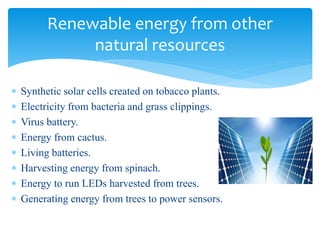
 Synthetic solar cells created on tobacco plants.
 Electricity from bacteria and grass clippings.
 Virus battery.
 Energy from cactus.
 Living batteries.
 Harvesting energy from spinach.
 Energy to run LEDs harvested from trees.
 Generating energy from trees to power sensors.
Renewable energy from other
natural resources
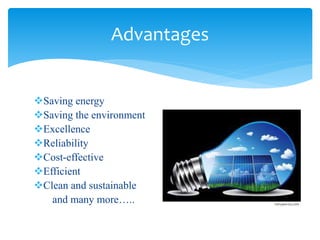
Saving energy
Saving the environment
Excellence
Reliability
Cost-effective
Efficient
Clean and sustainable
and many more…..
Advantages
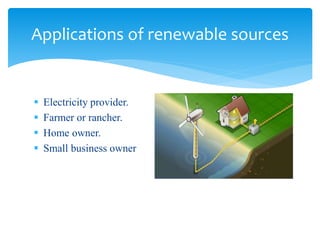
 Electricity provider.
 Farmer or rancher.
 Home owner.
 Small business owner
Applications of renewable sources
Renewable energy technologies can help to contribute to a
clean and secure energy for our nation and the world.
Our earth.
We have to make a balance between energy consumptions
and environment protection.
We have to make more efforts to ensure that the world’s
resources are to be used in a sustainable energy.
conclusion
Books
• Advanced Renewable Energy System , S.C.Bhatia.
• Energy technology, S.Rao & B.B.Parulekar.
Websites
 www.stateofgreen.com
 www.solarpedia.com
References
 Renewable sources

Renewable sources

  • 1.
  • 3.
     Energy isthe power to do works and drive machine.  Energy cannot be made or destroyed , regarding motion, there are kinetic and potential energy  Regarding power there are two kinds of energy 1.Renewable energy 2.Non-renewable energy INTRODUCTION
  • 6.
     Bio-energy  Geothermal Wind  Solar  Hydrogen  Tidal and many more…. Classification of renewable energy
  • 7.
     Most renewableenergy comes either by directly or indirectly from the sun.  Sunlight or solar energy , can be directly for heating and lighting homes and other buildings , for generating electricity.  Solar radiation is radiant energy emitted by the sun , particularly electromagnetic energy. About half of the energy is in the visible.  Solar technologies are generally classified as active and passive solar energy. Solar Energy
  • 9.
     When sunlightis absorbed by the materials , the solar energy knocks electron loose from their atoms , allowing the electrons to flow through the material to produce electricity.  Several connected PV arrays can provide enough power for a household ; for large electric utility or industrial applications , hundreds of arrays can be interconnected to form a single , large PV systems. Photovoltaic (PV) Effect
  • 10.
     Solar balloonshas been made for consuming energy.  500 watt to 1 kilowatt energy from single balloon.  This technology is named as concentrated photo voltaic (CPV) technology. Solar Balloons
  • 11.
     It convertingwind energy into electricity by using wind turbines.  Wind comes from atmospheric changes; changes in temperature and pressure makes the air move around the surface of the earth.  A wind turbine captures the wind to produce energy.  It create power without using fossil fuels without producing green house gases or radioactive toxic waste.  Wind power is one of the best way to combat global warming. Wind power
  • 13.
     Synthetic solarcells created on tobacco plants.  Electricity from bacteria and grass clippings.  Virus battery.  Energy from cactus.  Living batteries.  Harvesting energy from spinach.  Energy to run LEDs harvested from trees.  Generating energy from trees to power sensors. Renewable energy from other natural resources
  • 14.
    Saving energy Saving theenvironment Excellence Reliability Cost-effective Efficient Clean and sustainable and many more….. Advantages
  • 15.
     Electricity provider. Farmer or rancher.  Home owner.  Small business owner Applications of renewable sources
  • 16.
    Renewable energy technologiescan help to contribute to a clean and secure energy for our nation and the world. Our earth. We have to make a balance between energy consumptions and environment protection. We have to make more efforts to ensure that the world’s resources are to be used in a sustainable energy. conclusion
  • 17.
    Books • Advanced RenewableEnergy System , S.C.Bhatia. • Energy technology, S.Rao & B.B.Parulekar. Websites  www.stateofgreen.com  www.solarpedia.com References