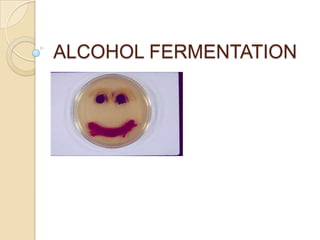
ALCOHOL FERMENTATION
INDEX:
 INTRODUCTION
 PROCESS
 ORGANISMS USED
 SUBSTRET AND MEDIA
COMPOSITION AND IDEAL
CONDITION
 PRODUCT RECOVERY
 USES
 CONCLUSION
alcoholic fermentation, also
referred to as, Ethanol
fermentation, is a biological
process in which sugars such as
glucose, fructose, and sucrose are
converted into cellular energy and
thereby produce ethanol and carbon
dioxide as metabolic waste
products. Because yeasts perform
this conversion in the absence of
oxygen ethanol fermentation is
classified as anaerobic.
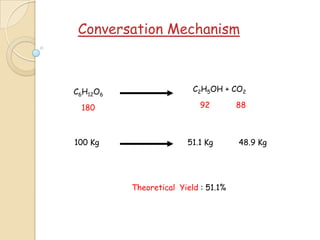
Conversation Mechanism
C6H12O6
180
C2H5OH + CO2
92 88
100 Kg 51.1 Kg 48.9 Kg
Theoretical Yield : 51.1%
Sugar ====> Alcohol + Carbon dioxide gas + Energy
(Glucose) (Ethyl alcohol)
Organisms used:
Bacteria:
 Zymomonas mobilis
 Closteridium acetobutylicum
 Klebsiella pneumoniae
Yeast
 Saccharomyces cerevisiae
 Saccharomyces carlsbergenesiae
 Saccharomyces saki
 Saccharomyces oviformis
 Candida utilis
 Mucur sp.
FERMANTABLE SUBSTRATE
 Sugary materials
 Starchy material
 Cellulosic materials
SUGARY MATERIALS:
Molasses
Suger cane
Sugar beet
Sweet potato
Sulfide waste
Weet sorgum
Whey
glucose
Succrose
Lactose
STARCHY MATERIALS
cereals:
wheat,maize,barley,sorgum,corn,rice
Roots:
potato,tropica
Mild products:
wheat flour,corn feed
CELLULOSIC MATERIALS
Wood
Paper waste
Agricultural waste
Nutrient Raw material
Carbon molasses, starch
Nitrogen corn steep liquor, soybean
meal, pure ammonia or
ammonium salts, urea, nitrate
salts, phosphate salts
Vitamins
and growth
factors
biotin, yeast extract, beef
extract, corn steep liquor,
wheat germ meal
Fermentation media
CONDITIONS FOR FERMENTATION
Carbon sources: pure sugar or crude
sugars/molasses (10-18%).
Growth factors: can be provided in the
form of molasses.
pH: 4.8-5.0.
Temperature: 21-26 F. Temp. can be
controlled by heating or cooling of
tanks.
CONTN……..
Time: Depends on yeast strain.
Usual time is between 30 to
72hrs.
Yield: 0.4 gallon of ethyl alcohol per
one
gallon of molasses. 90%
carbohydrates can be
converted in to alcohol.
FERMENTATION PROCESS CARRY
OUT BY:
 batch fermentation
 Continuous fermentation
continuous fermentation is used
because of several advantages.
FERMENTATION
 Inoculums size:
In range of 3% to 10% with an
average about 4%
 Media:
10 -18%. Concentrations
greater than 20% are not employed as
they could be detrimental to yeast.
PRODUCT RECOVERY
 Distillation is a separation process for a
mixture of liquids or oils. It relies on
differences in the boiling points of the
component liquids to be separated.
 Alcohol can be obtained by distillation
and column is known as rectified
column.
 Can also be recovered by fractional
distillation. Distillate contains 95.6%
ethyl alcohol and 4.4% water.
BY-PRODUCTS
 Three byproducts generated
1.Carbon dioxide- used for production of
dry ice and pure form used for
preparation of soft drinks.
2.Yeast biomass- used for animal fodder
because it contains high protein,
vitamins etc.
3.Distillery effluents- used as a fertilizer
and animal feed.
Ethanol Tolerance
Growth Tolerance Production Tolerance
Ethanol level
at which
Growth ceases
6-9% wt/vol
Ethanol level
at which
Ethanol production ceases
15% wt/vol or higher
USES:
 Fuels
Some alcohols, mainly ethanol
and methanol can be used as an alcohol
fuel
 Preservative
 Solvents
 Alcohols have applications in industry
and science as reagents or solvents
ethanol can be used as a solvent in
medical drugs, perfumes and vegetable
essences such as vanilla
 Alcoholic beverages
 Antifreeze
 Antiseptics
 Ethanol can be used as
an antiseptic to disinfect the skin.
CONCLUSION
 Thus alcohol production is an
important fermentation because of
following reasons:
1.Gives ethyl alcohol used for
consumption as well as industrial
purposes.
2.Gives byproducts like carbon dioxide,
yeast biomass, fertilizer etc.
3.Gives effective utilization of agro-
waste eg. Molasses, sulphite waste
liquor etc.

Alcohol fermentation

  • 1.
  • 2.
    INDEX:  INTRODUCTION  PROCESS ORGANISMS USED  SUBSTRET AND MEDIA COMPOSITION AND IDEAL CONDITION  PRODUCT RECOVERY  USES  CONCLUSION
  • 3.
    alcoholic fermentation, also referredto as, Ethanol fermentation, is a biological process in which sugars such as glucose, fructose, and sucrose are converted into cellular energy and thereby produce ethanol and carbon dioxide as metabolic waste products. Because yeasts perform this conversion in the absence of oxygen ethanol fermentation is classified as anaerobic.
  • 4.
    Conversation Mechanism C6H12O6 180 C2H5OH +CO2 92 88 100 Kg 51.1 Kg 48.9 Kg Theoretical Yield : 51.1%
  • 5.
    Sugar ====> Alcohol+ Carbon dioxide gas + Energy (Glucose) (Ethyl alcohol)
  • 6.
    Organisms used: Bacteria:  Zymomonasmobilis  Closteridium acetobutylicum  Klebsiella pneumoniae Yeast  Saccharomyces cerevisiae  Saccharomyces carlsbergenesiae  Saccharomyces saki  Saccharomyces oviformis  Candida utilis  Mucur sp.
  • 7.
    FERMANTABLE SUBSTRATE  Sugarymaterials  Starchy material  Cellulosic materials
  • 8.
    SUGARY MATERIALS: Molasses Suger cane Sugarbeet Sweet potato Sulfide waste Weet sorgum Whey glucose Succrose Lactose
  • 9.
  • 10.
  • 11.
    Nutrient Raw material Carbonmolasses, starch Nitrogen corn steep liquor, soybean meal, pure ammonia or ammonium salts, urea, nitrate salts, phosphate salts Vitamins and growth factors biotin, yeast extract, beef extract, corn steep liquor, wheat germ meal Fermentation media
  • 12.
    CONDITIONS FOR FERMENTATION Carbonsources: pure sugar or crude sugars/molasses (10-18%). Growth factors: can be provided in the form of molasses. pH: 4.8-5.0. Temperature: 21-26 F. Temp. can be controlled by heating or cooling of tanks.
  • 13.
    CONTN…….. Time: Depends onyeast strain. Usual time is between 30 to 72hrs. Yield: 0.4 gallon of ethyl alcohol per one gallon of molasses. 90% carbohydrates can be converted in to alcohol.
  • 14.
    FERMENTATION PROCESS CARRY OUTBY:  batch fermentation  Continuous fermentation continuous fermentation is used because of several advantages.
  • 15.
    FERMENTATION  Inoculums size: Inrange of 3% to 10% with an average about 4%  Media: 10 -18%. Concentrations greater than 20% are not employed as they could be detrimental to yeast.
  • 16.
    PRODUCT RECOVERY  Distillationis a separation process for a mixture of liquids or oils. It relies on differences in the boiling points of the component liquids to be separated.  Alcohol can be obtained by distillation and column is known as rectified column.  Can also be recovered by fractional distillation. Distillate contains 95.6% ethyl alcohol and 4.4% water.
  • 18.
    BY-PRODUCTS  Three byproductsgenerated 1.Carbon dioxide- used for production of dry ice and pure form used for preparation of soft drinks. 2.Yeast biomass- used for animal fodder because it contains high protein, vitamins etc. 3.Distillery effluents- used as a fertilizer and animal feed.
  • 19.
    Ethanol Tolerance Growth ToleranceProduction Tolerance Ethanol level at which Growth ceases 6-9% wt/vol Ethanol level at which Ethanol production ceases 15% wt/vol or higher
  • 20.
    USES:  Fuels Some alcohols,mainly ethanol and methanol can be used as an alcohol fuel  Preservative  Solvents  Alcohols have applications in industry and science as reagents or solvents ethanol can be used as a solvent in medical drugs, perfumes and vegetable essences such as vanilla
  • 21.
     Alcoholic beverages Antifreeze  Antiseptics  Ethanol can be used as an antiseptic to disinfect the skin.
  • 22.
    CONCLUSION  Thus alcoholproduction is an important fermentation because of following reasons: 1.Gives ethyl alcohol used for consumption as well as industrial purposes. 2.Gives byproducts like carbon dioxide, yeast biomass, fertilizer etc. 3.Gives effective utilization of agro- waste eg. Molasses, sulphite waste liquor etc.