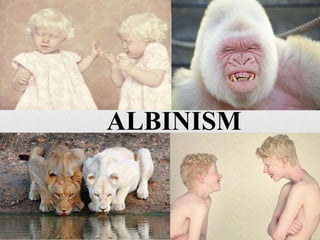
ALBINISM
ALBINISM
CONTENTS
• What is Albinism?
• What causes it?
• What are the problems associated with it?
• Types of Albinism
• What are the treatment options for albinism?
• Animals and plants with albinism
• Albinism in Tanzania
?
?
?
?
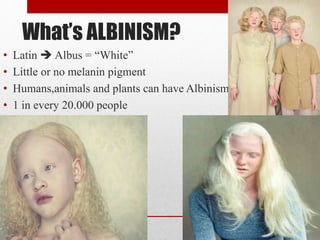
What’s ALBINISM?
• Latin  Albus = “White”
• Little or no melanin pigment
• Humans,animals and plants can have Albinism
• 1 in every 20.000 people
• have white or very light blonde hair
• sometimes brown or ginger hair
• very pale skin
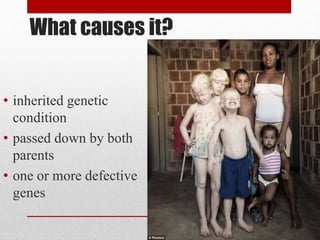
What causes it?
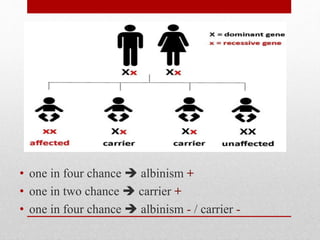
• inherited genetic
condition
• passed down by both
parents
• one or more defective
genes
• one in four chance  albinism +
• one in two chance  carrier +
• one in four chance  albinism - / carrier -
What are the problems associated with it?
• Two main problems
1.Skin Problems
2.Eye Problems
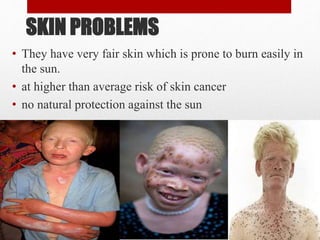
• They have very fair skin which is prone to burn easily in
the sun.
• at higher than average risk of skin cancer
• no natural protection against the sun
SKIN PROBLEMS
EYE PROBLEMS
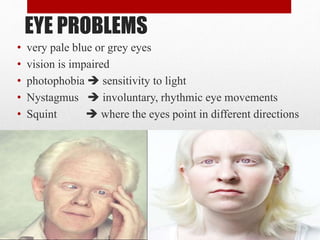
• very pale blue or grey eyes
• vision is impaired
• photophobia  sensitivity to light
• Nystagmus  involuntary, rhythmic eye movements
• Squint  where the eyes point in different directions
TYPES OF ALBINISM
• two main categories of albinism
1. Ocular albinism
2. Oculocutaneous
1. OCULAR ALBINISM
• eyes lack melanin pigment
• skin and hair appear normal or only slightly lighter
• accounts for 10 to 15 percent of all albinism cases
2. Oculocutaneous Albinism (OCA)
• most common form of albinism
• dilution of the color of the hair, skin, and eyes
• 4 main subtypes
A. OCA1
B. OCA2
C. OCA3
D. OCA4
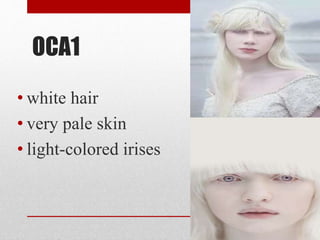
OCA1
• white hair
• very pale skin
• light-colored irises
OCA2
• minimal amount of melanin pigment
• less severe
• skin creamy white color
• hair may be light yellow, blond, or light brown
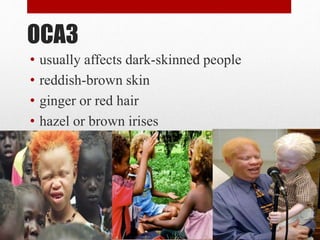
OCA3
• usually affects dark-skinned people
• reddish-brown skin
• ginger or red hair
• hazel or brown irises
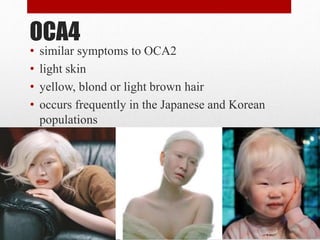
OCA4
• similar symptoms to OCA2
• light skin
• yellow, blond or light brown hair
• occurs frequently in the Japanese and Korean
populations
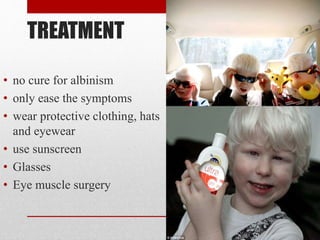
TREATMENT
• no cure for albinism
• only ease the symptoms
• wear protective clothing, hats
and eyewear
• use sunscreen
• Glasses
• Eye muscle surgery
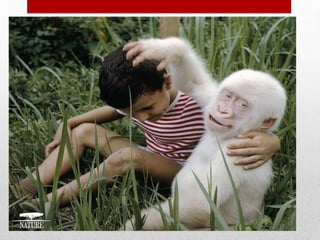
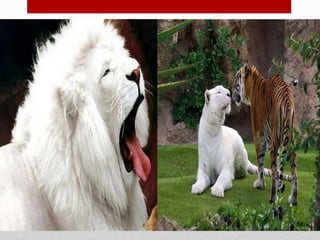
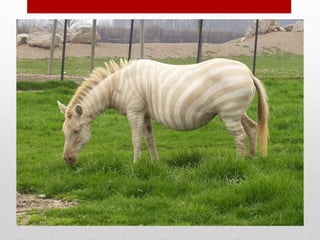
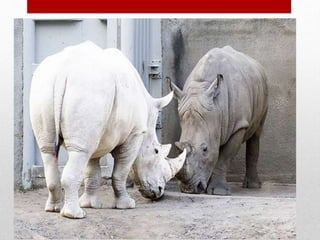
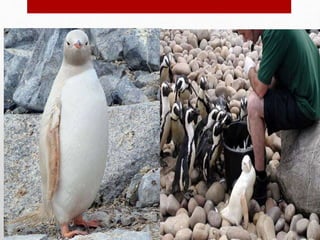
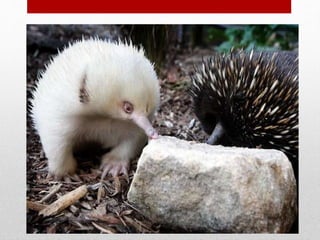
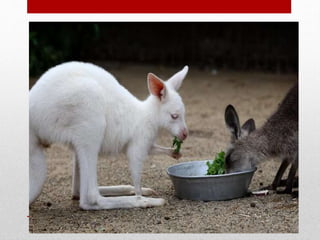
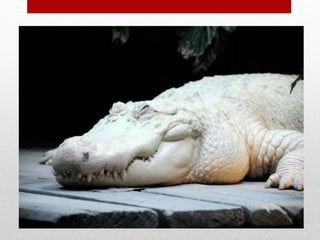
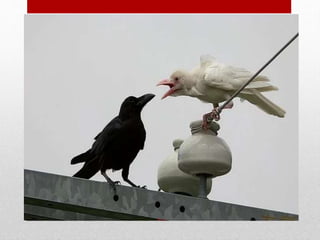
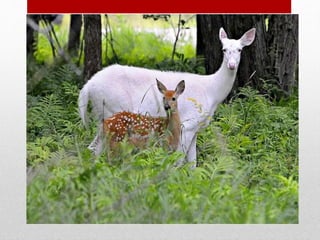
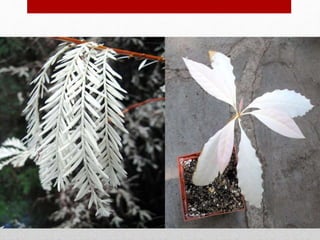
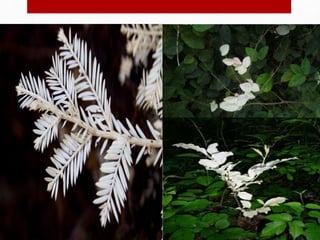
SOME ANIMALS AND PLANTS
WITH ALBINISM
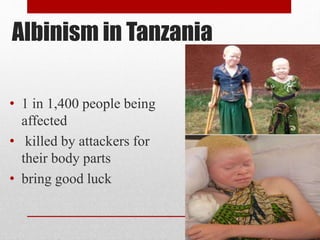
Albinism in Tanzania
• 1 in 1,400 people being
affected
• killed by attackers for
their body parts
• bring good luck
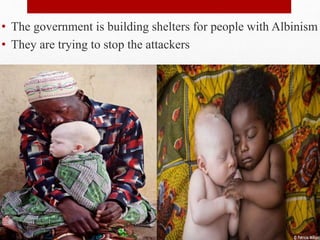
• The government is building shelters for people with Albinism
• They are trying to stop the attackers
THANKS FOR LISTENING . . .

Albinism

  • 1.
  • 2.
    CONTENTS • What isAlbinism? • What causes it? • What are the problems associated with it? • Types of Albinism • What are the treatment options for albinism? • Animals and plants with albinism • Albinism in Tanzania ? ? ? ?
  • 3.
    What’s ALBINISM? • Latin Albus = “White” • Little or no melanin pigment • Humans,animals and plants can have Albinism • 1 in every 20.000 people
  • 4.
    • have whiteor very light blonde hair • sometimes brown or ginger hair • very pale skin
  • 5.
    What causes it? •inherited genetic condition • passed down by both parents • one or more defective genes
  • 6.
    • one infour chance  albinism + • one in two chance  carrier + • one in four chance  albinism - / carrier -
  • 7.
    What are theproblems associated with it? • Two main problems 1.Skin Problems 2.Eye Problems
  • 8.
    • They havevery fair skin which is prone to burn easily in the sun. • at higher than average risk of skin cancer • no natural protection against the sun SKIN PROBLEMS
  • 9.
    EYE PROBLEMS • verypale blue or grey eyes • vision is impaired • photophobia  sensitivity to light • Nystagmus  involuntary, rhythmic eye movements • Squint  where the eyes point in different directions
  • 10.
    TYPES OF ALBINISM •two main categories of albinism 1. Ocular albinism 2. Oculocutaneous
  • 11.
    1. OCULAR ALBINISM •eyes lack melanin pigment • skin and hair appear normal or only slightly lighter • accounts for 10 to 15 percent of all albinism cases
  • 12.
    2. Oculocutaneous Albinism(OCA) • most common form of albinism • dilution of the color of the hair, skin, and eyes • 4 main subtypes A. OCA1 B. OCA2 C. OCA3 D. OCA4
  • 13.
    OCA1 • white hair •very pale skin • light-colored irises
  • 14.
    OCA2 • minimal amountof melanin pigment • less severe • skin creamy white color • hair may be light yellow, blond, or light brown
  • 15.
    OCA3 • usually affectsdark-skinned people • reddish-brown skin • ginger or red hair • hazel or brown irises
  • 16.
    OCA4 • similar symptomsto OCA2 • light skin • yellow, blond or light brown hair • occurs frequently in the Japanese and Korean populations
  • 17.
    TREATMENT • no curefor albinism • only ease the symptoms • wear protective clothing, hats and eyewear • use sunscreen • Glasses • Eye muscle surgery
  • 18.
    SOME ANIMALS ANDPLANTS WITH ALBINISM
  • 31.
    Albinism in Tanzania •1 in 1,400 people being affected • killed by attackers for their body parts • bring good luck
  • 32.
    • The governmentis building shelters for people with Albinism • They are trying to stop the attackers
  • 33.