A fact about weather disturbance
• According to the weather channel, Asian
countries get hit by weather disturbances
more often than countries that are away
from Asia
What is a weather
disturbance?
A weather disturbance is a strong
wind and water combined and can
cause weather disturbance
examples of weather disturbance
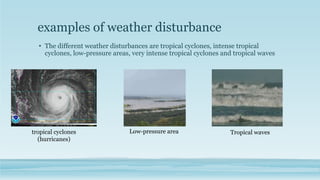
• The different weather disturbances are tropical cyclones, intense tropical
cyclones, low-pressure areas, very intense tropical cyclones and tropical waves
tropical cyclones
(hurricanes)
Low-pressure area Tropical waves
Prevailing Winds in the
Philippines
• Being near the equator, the Philippines has a
tropical climate that has three prevailing wind
systems:
The northeast monsoon or amihan
Southwest monsoon or habagat
And trade winds
three prevailing wind systems
The northeast monsoon or
amihan
• The northeast monsoon or
amihan is characterized by cold
and dry weather.
Southwest monsoon or
habagat
• is very warm and humid, occurs
when warm moist air flows over
the country from the southwest
direction.
• The trade winds or easterlies are the
permanent east-to-west prevailing
winds that flow in the Earth's equatorial
region.
Trade wind
What is a trade wind?
• The trade winds are winds that reliably blow east to
west just north and south of the equator. The winds
help ships travel west, and they can also steer
storms such as hurricanes.
THE INTERTROPICAL CONVERGENCE ZONE
(ITCZ)
The Intertropical Convergence Zone or ITCZ is where the
northeast and the southwest trade winds meet. It creates a low-
pressure area (LPA), which may develop into a tropical cyclone.
Types of weather disturbance
• Tropical cyclones
• Tornadoes
• And thunderstorms
Are some of the types of weather disturbance that affect people in different parts of
the world
Tropical cyclone
• A tropical cyclone is a rapidly rotating storm characterized by a low-pressure
area, strong winds, and organized thunder storms, which produce heavy rain.
• A hurricane is the most destructive storm in North America
What is a hurricane?
• A hurricane is an eye of a storm and is also known as the source of the storm
• A hurricane is a tropical storm with winds that have reached a constant speed of
74 miles per hour or more. The eye of a storm is usually 20-30 miles wide and
may extend over 400 miles. The dangers of a storm include torrential rains, high
winds, and storm surges.
Thunderstorm
• A thunder storm is a dangerous weather disturbance characterized by heavy
rains, lightning and loud thunder sounds
Tornado
• A tornado is another violent storm and also another wind storm that is more
dangerous than a thunderstorm.
Classification of tropical cyclones
P-PHILIPPINE A-ATMOSPHERIC G-GEOPHYSICAL AND A-ASTRONOMICAL S-
SERVICES A-ADMINISTRATION.
Tropical depression (TD) When the tropical disturbance becomes stronger and the wind begins to
spiral toward a center of a low-pressure area.
Tropical storms (TS) A tropical storm is composed of organized systems of strong thunderstorms
with an intense circulation of winds near the center and of rain fall forming into distinct bands
Severe Tropical Storm (STS) A tropical storm becomes a severe tropical storm when its winds reach a
maximum speed of 89 to 117 kph, or 48 to 63 knots
Typhoon (TY) A tropical storm becomes a typhoon when the air movements form around the eye of
the low=pressure area and reach a wind speed of 118 to 220 kph, or 64 to 120 knots
Super Typhoon (STY) A tropical cyclone with a wind speed exceeding 220 kph. Or 120 knots, is
Formation of a Typhoon
The warm water in the ocean heats up the air above it , allowing it to evaporate.
Parts of a typhoon
A typhoon has 3 parts:
The eye The region of calm, clear skies, and low pressure and around which the entire storm rotates
The eye wall The area surrounding the eye the region with the most damaging winds and heaviest rains
And rain bands The dense thunderstorm clouds that spirals around the eye wall slowly counterclockwise
or in the same directors as that of the winds

WEATHER-DISTURBANCES-Group-2 (1).pptx

  • 1.
    A fact aboutweather disturbance • According to the weather channel, Asian countries get hit by weather disturbances more often than countries that are away from Asia
  • 2.
    What is aweather disturbance? A weather disturbance is a strong wind and water combined and can cause weather disturbance
  • 3.
    examples of weatherdisturbance • The different weather disturbances are tropical cyclones, intense tropical cyclones, low-pressure areas, very intense tropical cyclones and tropical waves tropical cyclones (hurricanes) Low-pressure area Tropical waves
  • 4.
    Prevailing Winds inthe Philippines
  • 5.
    • Being nearthe equator, the Philippines has a tropical climate that has three prevailing wind systems: The northeast monsoon or amihan Southwest monsoon or habagat And trade winds
  • 6.
    three prevailing windsystems The northeast monsoon or amihan • The northeast monsoon or amihan is characterized by cold and dry weather. Southwest monsoon or habagat • is very warm and humid, occurs when warm moist air flows over the country from the southwest direction. • The trade winds or easterlies are the permanent east-to-west prevailing winds that flow in the Earth's equatorial region. Trade wind
  • 7.
    What is atrade wind? • The trade winds are winds that reliably blow east to west just north and south of the equator. The winds help ships travel west, and they can also steer storms such as hurricanes. THE INTERTROPICAL CONVERGENCE ZONE (ITCZ) The Intertropical Convergence Zone or ITCZ is where the northeast and the southwest trade winds meet. It creates a low- pressure area (LPA), which may develop into a tropical cyclone.
  • 8.
    Types of weatherdisturbance • Tropical cyclones • Tornadoes • And thunderstorms Are some of the types of weather disturbance that affect people in different parts of the world Tropical cyclone • A tropical cyclone is a rapidly rotating storm characterized by a low-pressure area, strong winds, and organized thunder storms, which produce heavy rain. • A hurricane is the most destructive storm in North America
  • 9.
    What is ahurricane? • A hurricane is an eye of a storm and is also known as the source of the storm • A hurricane is a tropical storm with winds that have reached a constant speed of 74 miles per hour or more. The eye of a storm is usually 20-30 miles wide and may extend over 400 miles. The dangers of a storm include torrential rains, high winds, and storm surges. Thunderstorm • A thunder storm is a dangerous weather disturbance characterized by heavy rains, lightning and loud thunder sounds Tornado • A tornado is another violent storm and also another wind storm that is more dangerous than a thunderstorm.
  • 10.
    Classification of tropicalcyclones P-PHILIPPINE A-ATMOSPHERIC G-GEOPHYSICAL AND A-ASTRONOMICAL S- SERVICES A-ADMINISTRATION. Tropical depression (TD) When the tropical disturbance becomes stronger and the wind begins to spiral toward a center of a low-pressure area. Tropical storms (TS) A tropical storm is composed of organized systems of strong thunderstorms with an intense circulation of winds near the center and of rain fall forming into distinct bands Severe Tropical Storm (STS) A tropical storm becomes a severe tropical storm when its winds reach a maximum speed of 89 to 117 kph, or 48 to 63 knots Typhoon (TY) A tropical storm becomes a typhoon when the air movements form around the eye of the low=pressure area and reach a wind speed of 118 to 220 kph, or 64 to 120 knots Super Typhoon (STY) A tropical cyclone with a wind speed exceeding 220 kph. Or 120 knots, is
  • 11.
    Formation of aTyphoon The warm water in the ocean heats up the air above it , allowing it to evaporate. Parts of a typhoon A typhoon has 3 parts: The eye The region of calm, clear skies, and low pressure and around which the entire storm rotates The eye wall The area surrounding the eye the region with the most damaging winds and heaviest rains And rain bands The dense thunderstorm clouds that spirals around the eye wall slowly counterclockwise or in the same directors as that of the winds

Editor's Notes