BUILDING AN 
INNOVATION & 
STRATEGY PROCESS 
 Alan Harlan CEO 
 09/13/2014
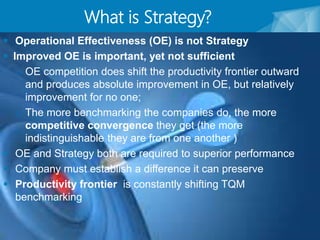
 Operational Effectiveness (OE) is not Strategy 
 Improved OE is important, yet not sufficient 
o OE competition does shift the productivity frontier outward 
and produces absolute improvement in OE, but relatively 
improvement for no one; 
o The more benchmarking the companies do, the more 
competitive convergence they get (the more 
indistinguishable they are from one another ) 
 OE and Strategy both are required to superior performance 
 Company must establish a difference it can preserve 
 Productivity frontier is constantly shifting TQM 
benchmarking 
What is Strategy?
3 
Case Study 
IKEA’s Activity System
4 
Southwest Airlines Case Study
New strategy playbook: innovation proficiency 
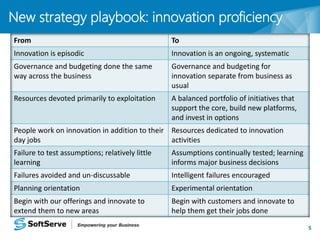
From To 
Innovation is episodic Innovation is an ongoing, systematic 
Governance and budgeting done the same 
way across the business 
Governance and budgeting for 
innovation separate from business as 
usual 
Resources devoted primarily to exploitation A balanced portfolio of initiatives that 
support the core, build new platforms, 
and invest in options 
People work on innovation in addition to their 
day jobs 
Resources dedicated to innovation 
activities 
Failure to test assumptions; relatively little 
learning 
Assumptions continually tested; learning 
informs major business decisions 
Failures avoided and un-discussable Intelligent failures encouraged 
Planning orientation Experimental orientation 
Begin with our offerings and innovate to 
extend them to new areas 
Begin with customers and innovate to 
help them get their jobs done 
5
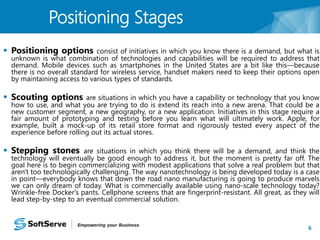
 Positioning options consist of initiatives in which you know there is a demand, but what is 
unknown is what combination of technologies and capabilities will be required to address that 
demand. Mobile devices such as smartphones in the United States are a bit like this—because 
there is no overall standard for wireless service, handset makers need to keep their options open 
by maintaining access to various types of standards. 
 Scouting options are situations in which you have a capability or technology that you know 
how to use, and what you are trying to do is extend its reach into a new arena. That could be a 
new customer segment, a new geography, or a new application. Initiatives in this stage require a 
fair amount of prototyping and testing before you learn what will ultimately work. Apple, for 
example, built a mock-up of its retail store format and rigorously tested every aspect of the 
experience before rolling out its actual stores. 
 Stepping stones are situations in which you think there will be a demand, and think the 
technology will eventually be good enough to address it, but the moment is pretty far off. The 
goal here is to begin commercializing with modest applications that solve a real problem but that 
aren't too technologically challenging. The way nanotechnology is being developed today is a case 
in point—everybody knows that down the road nano manufacturing is going to produce marvels 
we can only dream of today. What is commercially available using nano-scale technology today? 
Wrinkle-free Docker's pants. Cellphone screens that are fingerprint-resistant. All great, as they will 
lead step-by-step to an eventual commercial solution. 
6 
Positioning Stages
Building an Innovation Proficiency 
• Step 1. Assess the current State of Things and Define 
the Growth Gap 
• Step 2. Get Senior Management Alignment and 
Resource Commitment 
• Step 3. Set Up and Innovation Governance Process 
• Step 4. Start Building a System and Introducing It to the 
Organization 
• Step 5. Start Off with Something Tangible and Real 
• Step 6. Create the Supporting Structures for Innovation 
7
An opportunity portfolio 
8 
Technical and execution 
uncertainty 
High Positioning options 
Stepping 
stones 
Medium Platform launches 
Scouting 
options 
Low Core enhancements 
Low Medium High 
Market and organizational uncertainty
A low-growth portfolio 
9
Competitive AnalysisDifferentiation 
10 
6 
5 
4 
3 
2 
1 
0 
Ranking 
Competitive Worksheet 
EPAM 
SS 
Global 
Differentiation 
worksheet 
EPAM SS Global 
SDLC Best Practices 2 4 2 
UI/UX COE 5 1 3 
Analytics DS Practices 3 1 3 
Diverse Mobil Port Folio 4 2 3 
Embedded Development 0.5 0 3 
Retail Vertical 4 2 4 
Healthcare Technology 1.5 3.5 4.5 
Enterprise Tech/ NetW 4 4 4 
Digital Media 5 1 3 
Automotive 0 0 5
Operational Effectiveness is not strategy 
Embody your culture 
Fail Fast ( Intelligent Failure ) 
Have as much FIT as possible 
 Differentiate from your competition 
Continuous improvement 
Have fun! 
11 
Summary
Thank you 
USA TELEPHONE 
Toll-Free: 866.687.3588 
Office: 239.690.3111 
EMAIL 
info@softserveinc.com 
WEBSITE: 
www.softserveinc.com 
EUROPE OFFICES 
United Kingdom 
Germany 
Netherlands 
Ukraine 
Bulgaria 
Poland 
US OFFICES 
Austin, TX 
Fort Myers, FL 
Boston, MA 
Newport Beach, CA 
Salt Lake City, UT

Building an Innovation & Strategy Process

  • 1.
    BUILDING AN INNOVATION& STRATEGY PROCESS  Alan Harlan CEO  09/13/2014
  • 2.
     Operational Effectiveness(OE) is not Strategy  Improved OE is important, yet not sufficient o OE competition does shift the productivity frontier outward and produces absolute improvement in OE, but relatively improvement for no one; o The more benchmarking the companies do, the more competitive convergence they get (the more indistinguishable they are from one another )  OE and Strategy both are required to superior performance  Company must establish a difference it can preserve  Productivity frontier is constantly shifting TQM benchmarking What is Strategy?
  • 3.
    3 Case Study IKEA’s Activity System
  • 4.
  • 5.
    New strategy playbook:innovation proficiency From To Innovation is episodic Innovation is an ongoing, systematic Governance and budgeting done the same way across the business Governance and budgeting for innovation separate from business as usual Resources devoted primarily to exploitation A balanced portfolio of initiatives that support the core, build new platforms, and invest in options People work on innovation in addition to their day jobs Resources dedicated to innovation activities Failure to test assumptions; relatively little learning Assumptions continually tested; learning informs major business decisions Failures avoided and un-discussable Intelligent failures encouraged Planning orientation Experimental orientation Begin with our offerings and innovate to extend them to new areas Begin with customers and innovate to help them get their jobs done 5
  • 6.
     Positioning optionsconsist of initiatives in which you know there is a demand, but what is unknown is what combination of technologies and capabilities will be required to address that demand. Mobile devices such as smartphones in the United States are a bit like this—because there is no overall standard for wireless service, handset makers need to keep their options open by maintaining access to various types of standards.  Scouting options are situations in which you have a capability or technology that you know how to use, and what you are trying to do is extend its reach into a new arena. That could be a new customer segment, a new geography, or a new application. Initiatives in this stage require a fair amount of prototyping and testing before you learn what will ultimately work. Apple, for example, built a mock-up of its retail store format and rigorously tested every aspect of the experience before rolling out its actual stores.  Stepping stones are situations in which you think there will be a demand, and think the technology will eventually be good enough to address it, but the moment is pretty far off. The goal here is to begin commercializing with modest applications that solve a real problem but that aren't too technologically challenging. The way nanotechnology is being developed today is a case in point—everybody knows that down the road nano manufacturing is going to produce marvels we can only dream of today. What is commercially available using nano-scale technology today? Wrinkle-free Docker's pants. Cellphone screens that are fingerprint-resistant. All great, as they will lead step-by-step to an eventual commercial solution. 6 Positioning Stages
  • 7.
    Building an InnovationProficiency • Step 1. Assess the current State of Things and Define the Growth Gap • Step 2. Get Senior Management Alignment and Resource Commitment • Step 3. Set Up and Innovation Governance Process • Step 4. Start Building a System and Introducing It to the Organization • Step 5. Start Off with Something Tangible and Real • Step 6. Create the Supporting Structures for Innovation 7
  • 8.
    An opportunity portfolio 8 Technical and execution uncertainty High Positioning options Stepping stones Medium Platform launches Scouting options Low Core enhancements Low Medium High Market and organizational uncertainty
  • 9.
  • 10.
    Competitive AnalysisDifferentiation 10 6 5 4 3 2 1 0 Ranking Competitive Worksheet EPAM SS Global Differentiation worksheet EPAM SS Global SDLC Best Practices 2 4 2 UI/UX COE 5 1 3 Analytics DS Practices 3 1 3 Diverse Mobil Port Folio 4 2 3 Embedded Development 0.5 0 3 Retail Vertical 4 2 4 Healthcare Technology 1.5 3.5 4.5 Enterprise Tech/ NetW 4 4 4 Digital Media 5 1 3 Automotive 0 0 5
  • 11.
    Operational Effectiveness isnot strategy Embody your culture Fail Fast ( Intelligent Failure ) Have as much FIT as possible  Differentiate from your competition Continuous improvement Have fun! 11 Summary
  • 12.
    Thank you USATELEPHONE Toll-Free: 866.687.3588 Office: 239.690.3111 EMAIL info@softserveinc.com WEBSITE: www.softserveinc.com EUROPE OFFICES United Kingdom Germany Netherlands Ukraine Bulgaria Poland US OFFICES Austin, TX Fort Myers, FL Boston, MA Newport Beach, CA Salt Lake City, UT