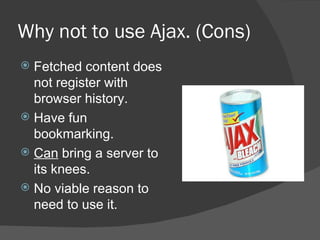
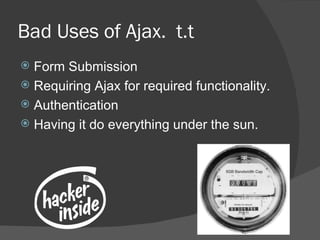
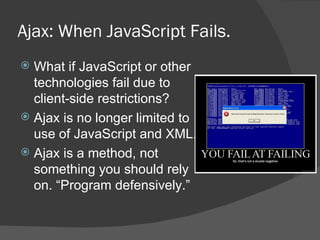
Ajax allows for asynchronous updating of parts of a web page without reloading the entire page. It was originally defined using XML and JavaScript but no longer requires either. While Ajax can improve functionality and reduce bandwidth usage, it also has drawbacks like not updating browser history and potentially overloading servers. Ajax works best for dynamic content updates on sites like Gmail, Google Maps, and social media sites but should not be relied on exclusively in case JavaScript fails. Developers need backup plans for when Ajax-reliant features do not function properly.

![What is Ajax [AJAX]? Original Acronym of AJAX: Asynchronous JavaScript and XML. Currently known as Ajax which doesn’t require XML or JavaScript. Ajax code is typically called and run on the client-side.](https://image.slidesharecdn.com/ajax-1228934422635231-1/85/Ajax-Presentation-2-320.jpg)





![AJAX Introduction [Autosaved].pptx](https://cdn.slidesharecdn.com/ss_thumbnails/ajaxintroductionautosaved-230307063244-a2b830ee-thumbnail.jpg?width=640&height=640&fit=bounds)


