OVERVIEW OF AJAX
KEY POINTS
 AJAX was designed by Jesse James Garrett.
 AJAX became widespread during late 2005.
 It is a Client Side Web Development Technique.
 Used to develop Asynchronous web application.
ASYNCHRONOUS JAVASCRIPT AND XML
(AJAX)
WHAT IS AJAX?
 Ajax is a client side technology, that can help increase the speed and usability of an
application's web pages by updating only part of the page at a time, rather than
requiring the entire page to be reloaded after a user-initiated change.
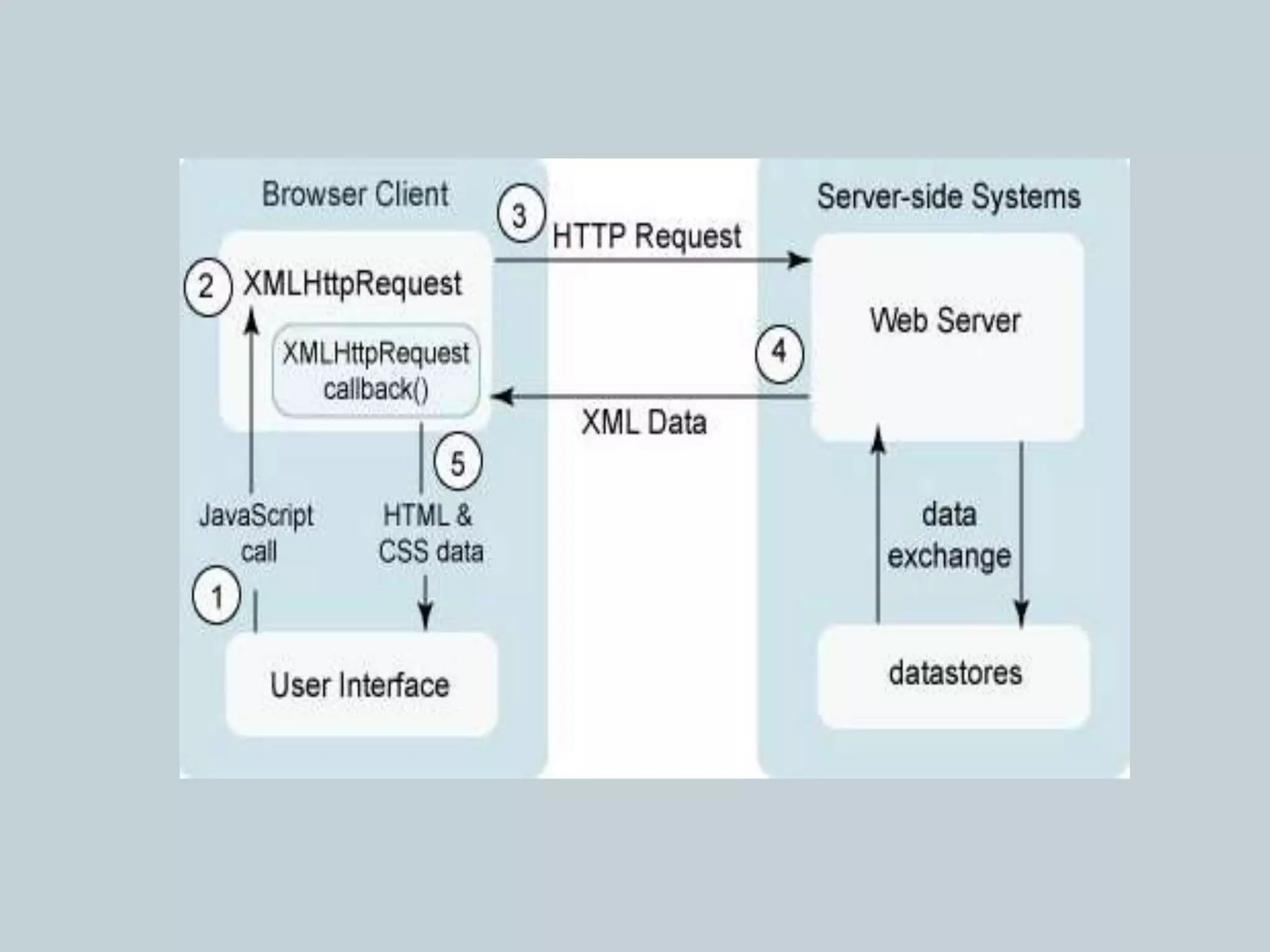
 Using Ajax, the pages of your application can exchange small amounts of data with
the server without going through a form submit.
 AJAX is a technique for creating fast and dynamic web pages.
 AJAX allows web pages to be updated asynchronously by exchanging small amounts
of data with the server behind the scenes. This means that it is possible to update
parts of a web page, without reloading the whole page.
AJAX is based on internet standards, and uses a combination of:
 XMLHttpRequest object (to exchange data asynchronously
with a server)
 JavaScript/DOM (to display/interact with the information)
 CSS (to style the data)
 XML (often used as the format for transferring data)
THE AJAX TECHNIQUE
 JavaScript allows for interaction with the browser and responding to
events.
 DOM for accessing and manipulating the structure of the HTML of the
page.
 XML which represents the data passed between the server and client.
 An XMLHttpRequest object for asynchronously exchanging the XML
data between the client and the server.
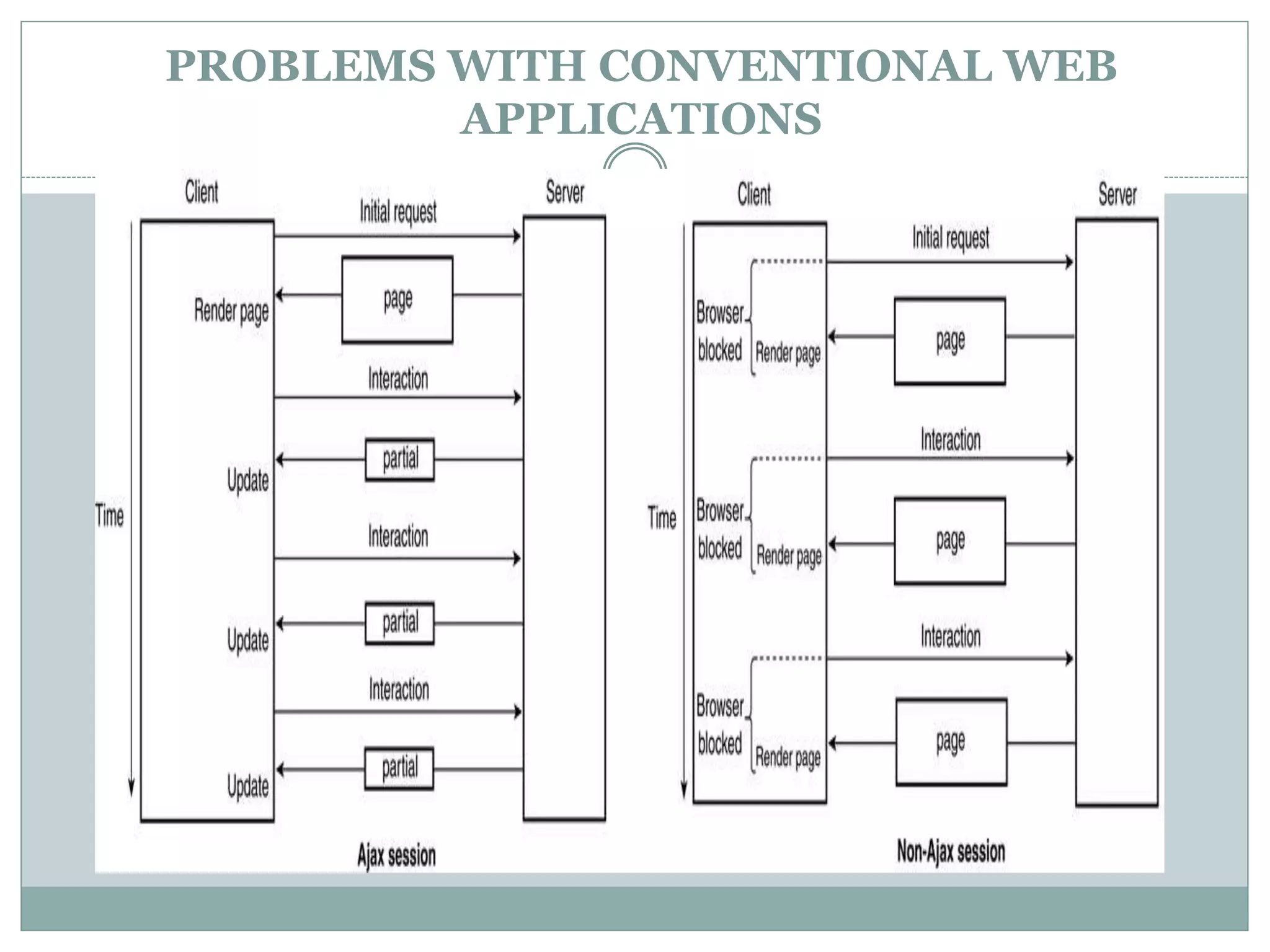
 Classic web pages, (which do not use AJAX) must reload the entire page if the
content should change.
PROBLEMS WITH CONVENTIONAL WEB
APPLICATIONS
 Interruption of user operation
 Users cannot perform any operation while waiting for a response
 Loss of operational context during refresh
 Loss of information on the screen
 Loss of scrolled position
 No instant feedback's to user activities
 A user has to wait for the next page
 Constrained by HTML
 Lack of useful widgets
 These are the reasons why Rich Internet Application (RIA) technologies
were born.
 With an HTTP request, a web page can make a request to, and get a
response from a web server - without reloading the page.
 The user will stay on the same page, and he or she will not notice that
scripts request pages, or send data to a server in the background.
 HTML and HTTP are weak.
 “Click, wait, and refresh” user interaction
 Synchronous “request/response” communication model
ADVANTAGES OF USING AJAX
EXAMPLES
Several applications using AJAX includes the following:
 Google Map
 Gmail
 YouTube
 Facebook

Overview of AJAX

  • 1.
  • 2.
    KEY POINTS  AJAXwas designed by Jesse James Garrett.  AJAX became widespread during late 2005.  It is a Client Side Web Development Technique.  Used to develop Asynchronous web application. ASYNCHRONOUS JAVASCRIPT AND XML (AJAX)
  • 3.
    WHAT IS AJAX? Ajax is a client side technology, that can help increase the speed and usability of an application's web pages by updating only part of the page at a time, rather than requiring the entire page to be reloaded after a user-initiated change.  Using Ajax, the pages of your application can exchange small amounts of data with the server without going through a form submit.  AJAX is a technique for creating fast and dynamic web pages.  AJAX allows web pages to be updated asynchronously by exchanging small amounts of data with the server behind the scenes. This means that it is possible to update parts of a web page, without reloading the whole page.
  • 4.
    AJAX is basedon internet standards, and uses a combination of:  XMLHttpRequest object (to exchange data asynchronously with a server)  JavaScript/DOM (to display/interact with the information)  CSS (to style the data)  XML (often used as the format for transferring data) THE AJAX TECHNIQUE
  • 6.
     JavaScript allowsfor interaction with the browser and responding to events.  DOM for accessing and manipulating the structure of the HTML of the page.  XML which represents the data passed between the server and client.  An XMLHttpRequest object for asynchronously exchanging the XML data between the client and the server.  Classic web pages, (which do not use AJAX) must reload the entire page if the content should change.
  • 7.
  • 8.
     Interruption ofuser operation  Users cannot perform any operation while waiting for a response  Loss of operational context during refresh  Loss of information on the screen  Loss of scrolled position  No instant feedback's to user activities  A user has to wait for the next page  Constrained by HTML  Lack of useful widgets  These are the reasons why Rich Internet Application (RIA) technologies were born.
  • 9.
     With anHTTP request, a web page can make a request to, and get a response from a web server - without reloading the page.  The user will stay on the same page, and he or she will not notice that scripts request pages, or send data to a server in the background.  HTML and HTTP are weak.  “Click, wait, and refresh” user interaction  Synchronous “request/response” communication model ADVANTAGES OF USING AJAX
  • 10.
    EXAMPLES Several applications usingAJAX includes the following:  Google Map  Gmail  YouTube  Facebook