AJAX Basics
Server Communication

    Presentation by Mike Wilcox
         January 6th, 2009
What is AJAX?
• Term coined by Jesse James Garrett of Adaptive Path
   in February 2005

• Originally stood for “Asynchronous JavaScript and
   XML”

• Now understood to encompass a range of techniques
• Usually features HTTP communication without client
   refresh

• Consider: Changing the DOM without changing
   pages


http://www.adaptivepath.com/ideas/essays/archives/000385.php
Browsers
Internet Explorer
• Let's hear it for IE!
• Actually, IE 4.0 was a tremendous achievement
  done by a Microsoft “Dream Team”

• Introduced AJAX: DOM manipulation, XHR
• After winning the browser war with Netscape,
  the Dream Team disbanded

• Killer App:
 • It's forced upon Windows users
FireFox
  • First real competition for IE since Netscape
       (about 20% of the market)

  • Built by the Mozilla Corporation, with Netscape
       code and developers

  • Killer App:
   • Being Open Source made it popular early on
           with users

      • FireBug has made FireFox the primary
           platform for which to develop
http://en.wikipedia.org/wiki/Browser_market_share
WebKit
• Used by Safari, Google Chrome, AIR, iPhone,
   Android, Nokia (much more)

• Ported from KHTML by the WebKit Team with
   help from Apple

• Mike originally laughed at the silly little
   wannabe

• Killer App:
 • Insane performance
Why Ajax - i.e., not Flash
• Standardized UI (the reason for Flex)
• Open Source
• View Source
• Human-readable Text-based Transports are
  simpler

• No compiling
• Part of the Open Web
What is “Open Web”??
  • Cross-Platform Standards
  • No Vendor Lock-in
  • Anyone Can Innovate
  • Powerful, Universal Clients
  • Open Source Implementations
  • Mashable, Searchable, and Integrated

http://codinginparadise.org/weblog/index.html
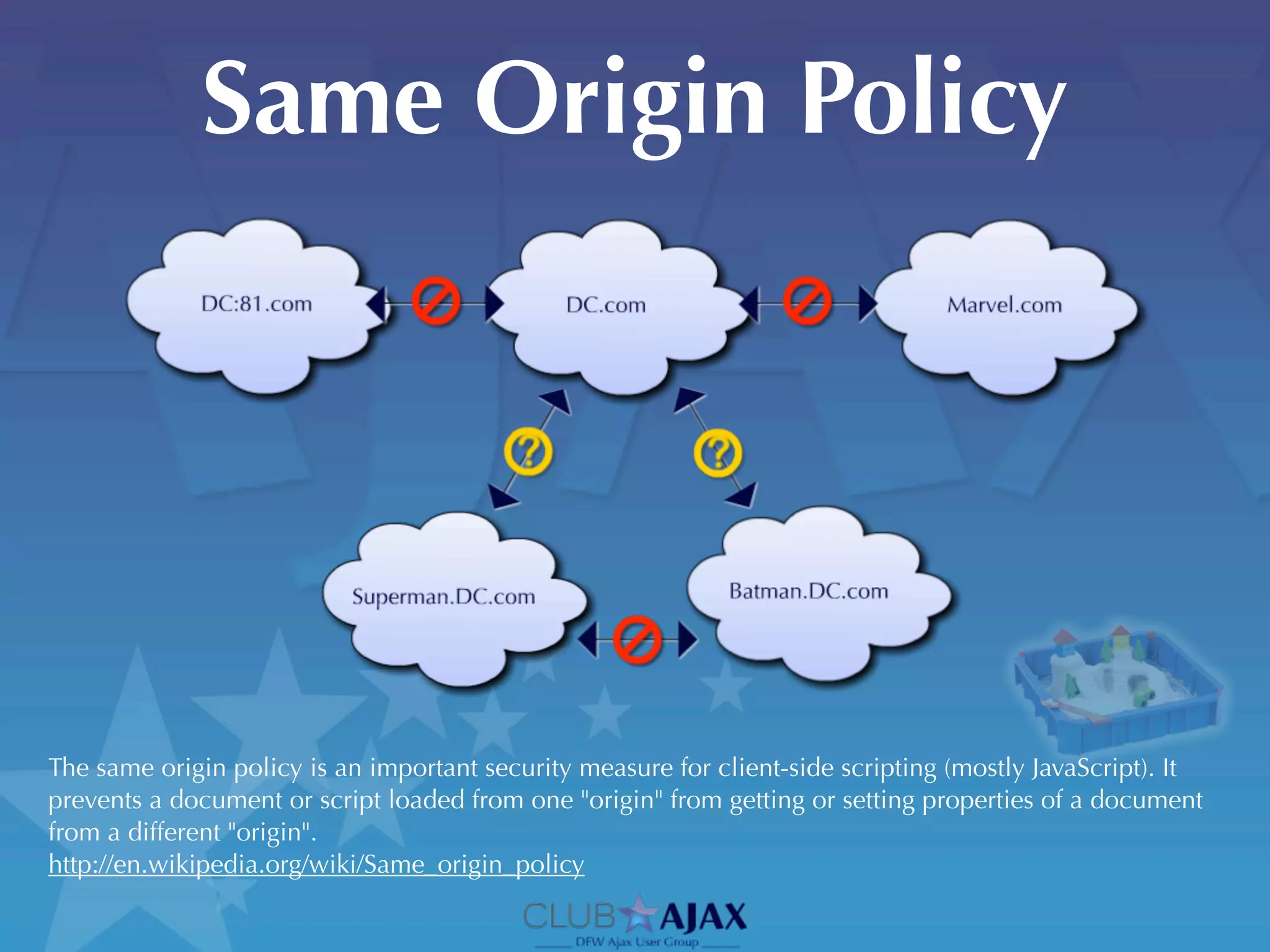
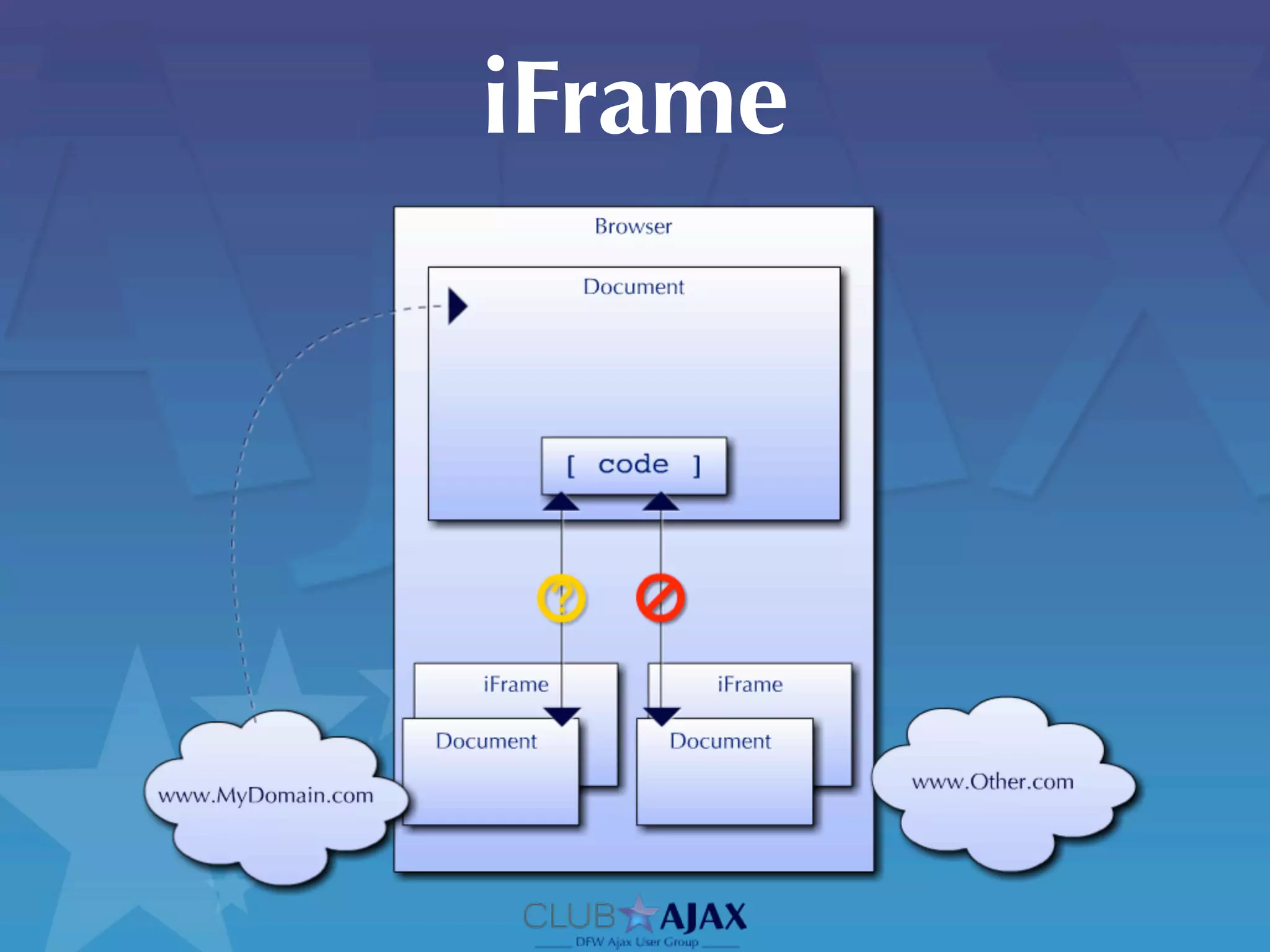
Same Origin Policy


The same origin policy is an important security measure for client-side scripting (mostly JavaScript). It
prevents a document or script loaded from one "origin" from getting or setting properties of a document
from a different "origin".
http://en.wikipedia.org/wiki/Same_origin_policy
Server
Communication
  Methods
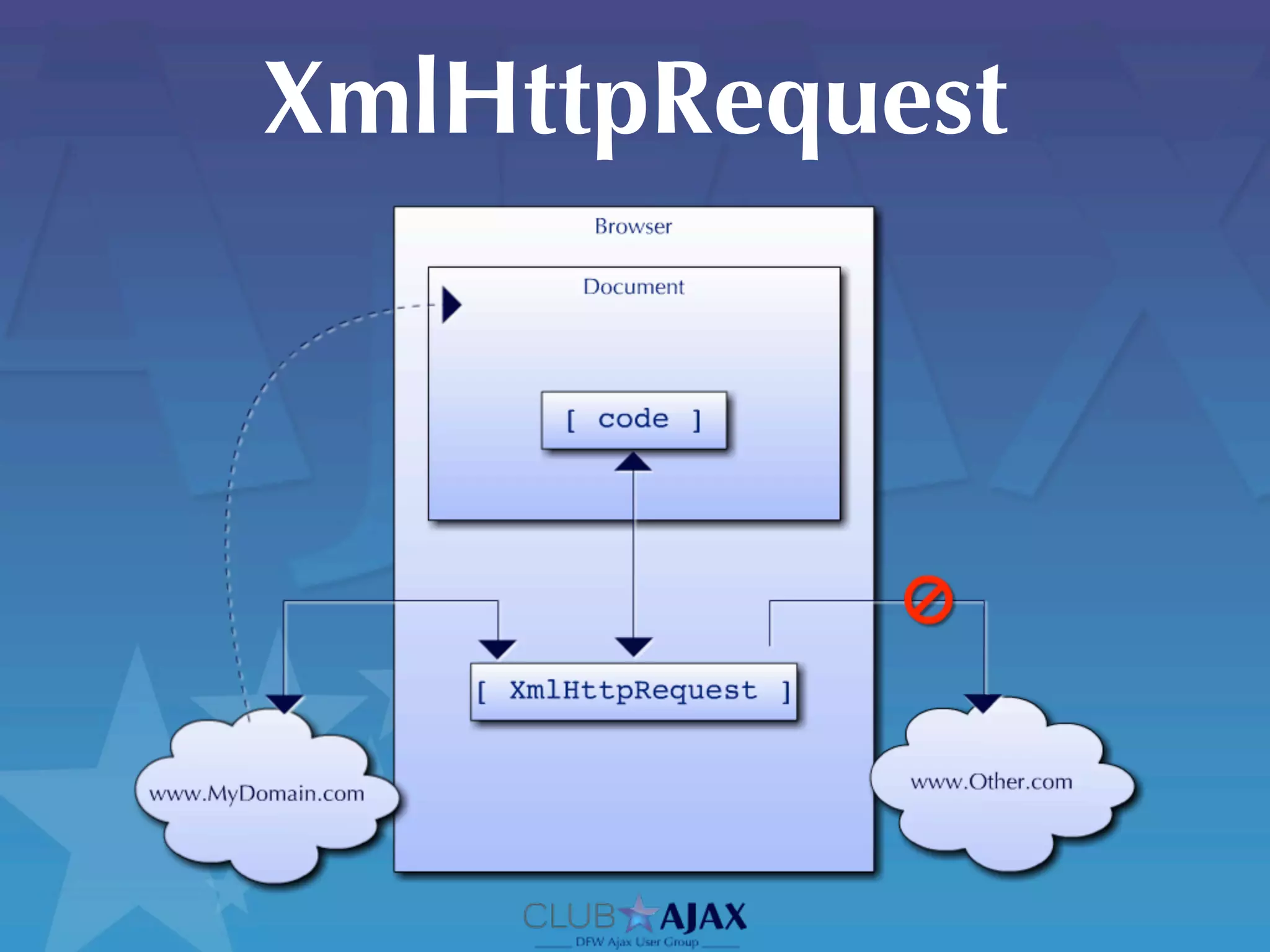
XmlHttpRequest
XmlHttpRequest
• Pros:
 • Standard
 • Native Browser Method
 • Handles All REST calls
• Cons:
 • No cross domain
iFrame
iFrame
• Pros:
 • Used primarily for binary transports, like File
     Uploads

• Cons:
 • Hard as Hell to use
 • With extreme trickery will do cross domain,
     but only with server cooperation
Remote Scripting
Remote Scripting
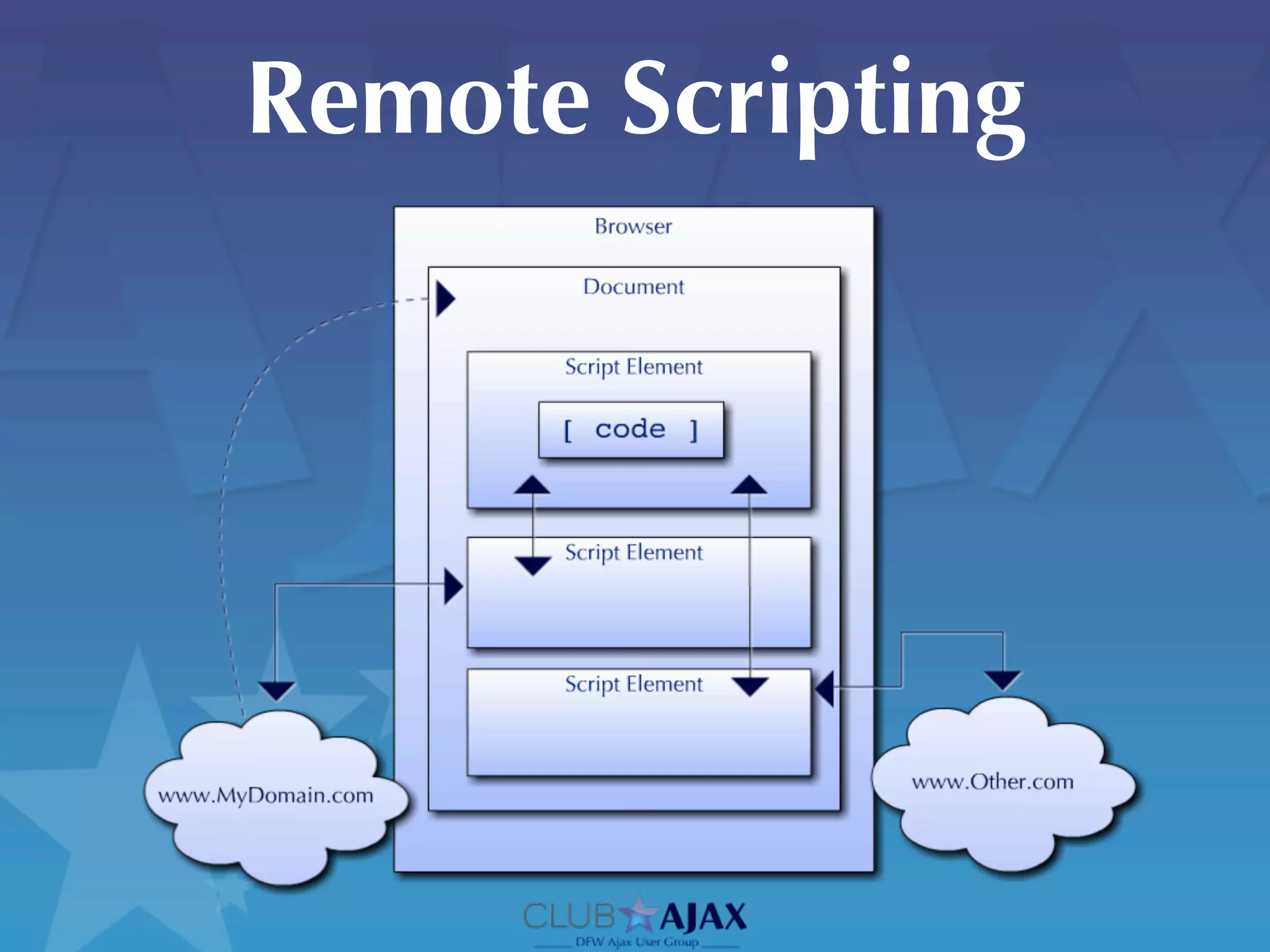
• Pros:
 • Super Easy
 • Cross Domain!
 • Already JavaScript - hey, that's what we're using!
• Cons:
 • Only does JavaScript (and JSON)
 • An XML OR HTML formatted error is hard to catch
 • Only POST and GET
 • Need very minor server cooperation
ClubAJAX Basics - Server Communication

ClubAJAX Basics - Server Communication

  • 1.
    AJAX Basics Server Communication Presentation by Mike Wilcox January 6th, 2009
  • 2.
    What is AJAX? •Term coined by Jesse James Garrett of Adaptive Path in February 2005 • Originally stood for “Asynchronous JavaScript and XML” • Now understood to encompass a range of techniques • Usually features HTTP communication without client refresh • Consider: Changing the DOM without changing pages http://www.adaptivepath.com/ideas/essays/archives/000385.php
  • 3.
  • 4.
    Internet Explorer • Let'shear it for IE! • Actually, IE 4.0 was a tremendous achievement done by a Microsoft “Dream Team” • Introduced AJAX: DOM manipulation, XHR • After winning the browser war with Netscape, the Dream Team disbanded • Killer App: • It's forced upon Windows users
  • 5.
    FireFox •First real competition for IE since Netscape (about 20% of the market) • Built by the Mozilla Corporation, with Netscape code and developers • Killer App: • Being Open Source made it popular early on with users • FireBug has made FireFox the primary platform for which to develop http://en.wikipedia.org/wiki/Browser_market_share
  • 6.
    WebKit • Used bySafari, Google Chrome, AIR, iPhone, Android, Nokia (much more) • Ported from KHTML by the WebKit Team with help from Apple • Mike originally laughed at the silly little wannabe • Killer App: • Insane performance
  • 7.
    Why Ajax -i.e., not Flash • Standardized UI (the reason for Flex) • Open Source • View Source • Human-readable Text-based Transports are simpler • No compiling • Part of the Open Web
  • 8.
    What is “OpenWeb”?? • Cross-Platform Standards • No Vendor Lock-in • Anyone Can Innovate • Powerful, Universal Clients • Open Source Implementations • Mashable, Searchable, and Integrated http://codinginparadise.org/weblog/index.html
  • 9.
    Same Origin Policy Thesame origin policy is an important security measure for client-side scripting (mostly JavaScript). It prevents a document or script loaded from one "origin" from getting or setting properties of a document from a different "origin". http://en.wikipedia.org/wiki/Same_origin_policy
  • 10.
  • 11.
  • 12.
    XmlHttpRequest • Pros: •Standard • Native Browser Method • Handles All REST calls • Cons: • No cross domain
  • 13.
  • 14.
    iFrame • Pros: •Used primarily for binary transports, like File Uploads • Cons: • Hard as Hell to use • With extreme trickery will do cross domain, but only with server cooperation
  • 15.
  • 16.
    Remote Scripting • Pros: • Super Easy • Cross Domain! • Already JavaScript - hey, that's what we're using! • Cons: • Only does JavaScript (and JSON) • An XML OR HTML formatted error is hard to catch • Only POST and GET • Need very minor server cooperation