Airborne diseases
Md. Abdullah Al Mamun Shohag
M. Pharm, University of Asia Pacific
mamun6679@gmail.com
Airborne disease
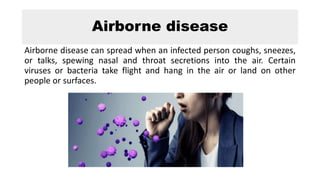
Airborne disease can spread when an infected person coughs, sneezes,
or talks, spewing nasal and throat secretions into the air. Certain
viruses or bacteria take flight and hang in the air or land on other
people or surfaces.
Types of airborne diseases
Many diseases are spread through the air, including these:
 The common cold
 Influenza
 Tuberculosis
 Measles
 Chickenpox
 Anthrax (inhalational)
 Smallpox and
 Cryptococcosis etc.
Common cold
 Causes:
Millions of cases occur of the common cold every year. The cause of
cold is rhinovirus. There are several viruses that can cause a cold, but
it’s usually a rhinovirus.
 Mode of Transmission:
The common cold virus is typically transmitted via airborne droplets
(aerosols), direct contact with infected nasal secretions, or fomites
(contaminated objects).
Common cold
 Sign and symptoms:
The typical symptoms of a cold include a cough, Low-grade fever, a
runny nose, nasal congestion and itchy or sore throat, sometimes
accompanied by muscle ache, fatigue, headache, and loss of appetite.
 Treatment:
Treatment should focus on symptom relief. The most commonly used
treatments include over-the-counter, antihistamines, decongestants,
cough suppressants, and expectorants.
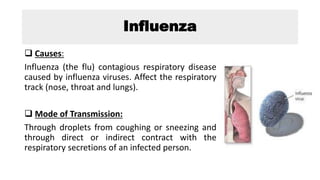
Influenza
 Causes:
Influenza (the flu) contagious respiratory disease
caused by influenza viruses. Affect the respiratory
track (nose, throat and lungs).
 Mode of Transmission:
Through droplets from coughing or sneezing and
through direct or indirect contract with the
respiratory secretions of an infected person.
Influenza
 Sign and symptoms:
Sign and symptoms includes fever, headache, malaise, cough, sore
throat, nasal congestion and body aches.
 Treatment:
There are mainly two types of drugs are mainly use.
I. Neuraminidase inhibitors (oseltamivir, peramivir, and zanamivir)
II. M2 inhibitors (amantidine, rimantidine)
Tuberculosis (TB)
 Causes:
Tuberculosis is caused by bacteria called
Mycobacterium tuberculosis.
 Mode of Transmission:
The bacteria spread from one person to another
through microscopic droplets released into the air. A
person with the untreated, active form of
tuberculosis can transmit the bacteria via: Sneezing,
Coughing, Speaking, Singing, Laughing.
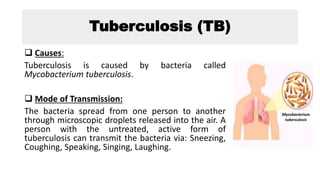
Mycobacterium
tuberculosis
Tuberculosis (TB)
 Sign and symptoms:
The signs and symptoms of active tuberculosis in the lungs include a bad
cough that lasts 3 weeks or longer, Coughing up blood, Chest pain, Fever,
Fatigue, Loss of appetite and Night sweats.
 Treatment:
Medications are the cornerstone of tuberculosis treatment. But treating TB
takes much longer than treating other types of bacterial infections. The most
common medications used to treat tuberculosis include: Isoniazid, Rifampin
(Rifadin, Rimactane), Ethambutol (Myambutol), Pyrazinamide.
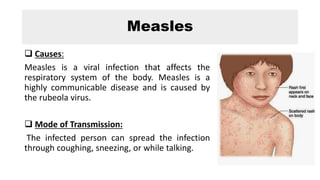
Measles
 Causes:
Measles is a viral infection that affects the
respiratory system of the body. Measles is a
highly communicable disease and is caused by
the rubeola virus.
 Mode of Transmission:
The infected person can spread the infection
through coughing, sneezing, or while talking.
Measles
 Sign and symptoms:
Some common symptoms of measles may include: Fever, Runny nose,
Sore throat, Red eyes, Cough, Rashes etc.
 Treatment:
There are no prescribed medicines for the treatment of measles. The
virus itself disappears in few weeks. However, a doctor may give some
medicines to ease the patient from the symptoms of measles. Vitamin
A supplements, acetaminophen to reduce muscle soreness, steam
intake, and plenty of fluid intakes can help in the treatment of measles.
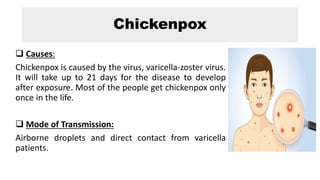
Chickenpox
 Causes:
Chickenpox is caused by the virus, varicella-zoster virus.
It will take up to 21 days for the disease to develop
after exposure. Most of the people get chickenpox only
once in the life.
 Mode of Transmission:
Airborne droplets and direct contact from varicella
patients.
Chickenpox
 Sign and symptoms:
Initial symptoms of chicken pox includes: Fatigue Mild fever Lack of
appetite & a feeling of being generally unwell. This is quickly followed the
development of red , itchy skin rash and insect-like bites that usually
appears first on the abdomen or back and face. Flu-like symptoms
includes higher fever, abdominal pain, sore throat and headache
 Treatment:
Drugs used in the treatment of chickenpox are antiviral drugs,
antihistamines & antipyretics. Commonly used drug is acyclovir. Antiviral
medicines can be taken orally intravenously or applied on the skin.
Conclusion
Airborne diseases happen all around the world and affect virtually
everyone. Incidence is lower in countries where vaccines are widely
available and affordable. The common infections can spread by
airborne transmission are Anthrax, Chickenpox, Influenza, Measles,
Smallpox, Cryptococcosis, Tuberculosis and the common cold. It is
impossible to completely avoid airborne pathogens. Vaccines can
reduce chances of getting some airborne diseases. Vaccines also lower
the risk for others in the community.
Thank You

Airborne diseases

  • 1.
    Airborne diseases Md. AbdullahAl Mamun Shohag M. Pharm, University of Asia Pacific mamun6679@gmail.com
  • 2.
    Airborne disease Airborne diseasecan spread when an infected person coughs, sneezes, or talks, spewing nasal and throat secretions into the air. Certain viruses or bacteria take flight and hang in the air or land on other people or surfaces.
  • 3.
    Types of airbornediseases Many diseases are spread through the air, including these:  The common cold  Influenza  Tuberculosis  Measles  Chickenpox  Anthrax (inhalational)  Smallpox and  Cryptococcosis etc.
  • 4.
    Common cold  Causes: Millionsof cases occur of the common cold every year. The cause of cold is rhinovirus. There are several viruses that can cause a cold, but it’s usually a rhinovirus.  Mode of Transmission: The common cold virus is typically transmitted via airborne droplets (aerosols), direct contact with infected nasal secretions, or fomites (contaminated objects).
  • 5.
    Common cold  Signand symptoms: The typical symptoms of a cold include a cough, Low-grade fever, a runny nose, nasal congestion and itchy or sore throat, sometimes accompanied by muscle ache, fatigue, headache, and loss of appetite.  Treatment: Treatment should focus on symptom relief. The most commonly used treatments include over-the-counter, antihistamines, decongestants, cough suppressants, and expectorants.
  • 6.
    Influenza  Causes: Influenza (theflu) contagious respiratory disease caused by influenza viruses. Affect the respiratory track (nose, throat and lungs).  Mode of Transmission: Through droplets from coughing or sneezing and through direct or indirect contract with the respiratory secretions of an infected person.
  • 7.
    Influenza  Sign andsymptoms: Sign and symptoms includes fever, headache, malaise, cough, sore throat, nasal congestion and body aches.  Treatment: There are mainly two types of drugs are mainly use. I. Neuraminidase inhibitors (oseltamivir, peramivir, and zanamivir) II. M2 inhibitors (amantidine, rimantidine)
  • 8.
    Tuberculosis (TB)  Causes: Tuberculosisis caused by bacteria called Mycobacterium tuberculosis.  Mode of Transmission: The bacteria spread from one person to another through microscopic droplets released into the air. A person with the untreated, active form of tuberculosis can transmit the bacteria via: Sneezing, Coughing, Speaking, Singing, Laughing. Mycobacterium tuberculosis
  • 9.
    Tuberculosis (TB)  Signand symptoms: The signs and symptoms of active tuberculosis in the lungs include a bad cough that lasts 3 weeks or longer, Coughing up blood, Chest pain, Fever, Fatigue, Loss of appetite and Night sweats.  Treatment: Medications are the cornerstone of tuberculosis treatment. But treating TB takes much longer than treating other types of bacterial infections. The most common medications used to treat tuberculosis include: Isoniazid, Rifampin (Rifadin, Rimactane), Ethambutol (Myambutol), Pyrazinamide.
  • 10.
    Measles  Causes: Measles isa viral infection that affects the respiratory system of the body. Measles is a highly communicable disease and is caused by the rubeola virus.  Mode of Transmission: The infected person can spread the infection through coughing, sneezing, or while talking.
  • 11.
    Measles  Sign andsymptoms: Some common symptoms of measles may include: Fever, Runny nose, Sore throat, Red eyes, Cough, Rashes etc.  Treatment: There are no prescribed medicines for the treatment of measles. The virus itself disappears in few weeks. However, a doctor may give some medicines to ease the patient from the symptoms of measles. Vitamin A supplements, acetaminophen to reduce muscle soreness, steam intake, and plenty of fluid intakes can help in the treatment of measles.
  • 12.
    Chickenpox  Causes: Chickenpox iscaused by the virus, varicella-zoster virus. It will take up to 21 days for the disease to develop after exposure. Most of the people get chickenpox only once in the life.  Mode of Transmission: Airborne droplets and direct contact from varicella patients.
  • 13.
    Chickenpox  Sign andsymptoms: Initial symptoms of chicken pox includes: Fatigue Mild fever Lack of appetite & a feeling of being generally unwell. This is quickly followed the development of red , itchy skin rash and insect-like bites that usually appears first on the abdomen or back and face. Flu-like symptoms includes higher fever, abdominal pain, sore throat and headache  Treatment: Drugs used in the treatment of chickenpox are antiviral drugs, antihistamines & antipyretics. Commonly used drug is acyclovir. Antiviral medicines can be taken orally intravenously or applied on the skin.
  • 14.
    Conclusion Airborne diseases happenall around the world and affect virtually everyone. Incidence is lower in countries where vaccines are widely available and affordable. The common infections can spread by airborne transmission are Anthrax, Chickenpox, Influenza, Measles, Smallpox, Cryptococcosis, Tuberculosis and the common cold. It is impossible to completely avoid airborne pathogens. Vaccines can reduce chances of getting some airborne diseases. Vaccines also lower the risk for others in the community.
  • 15.