MAPEH GRADE 7
K-12 QUARTER 4
HEALTH EDUCATION
DISEASE PREVENTION AND
CONTROL
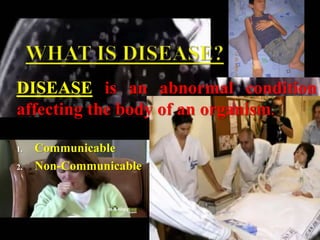
DISEASE is an abnormal condition
affecting the body of an organism.
1. Communicable
2. Non-Communicable
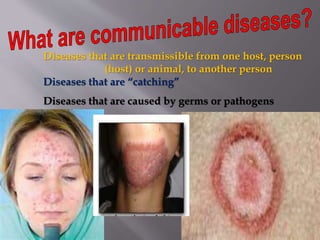
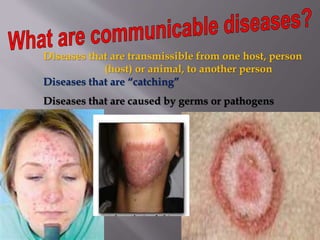
Diseases that are transmissible from one host, person
(host) or animal, to another person
Diseases that are “catching”
Diseases that are caused by germs or pathogens
•an organism that causes disease to its host, also
known as infectious/disease agent.
• infects, or invades the body and attacks its
cells and tissues.
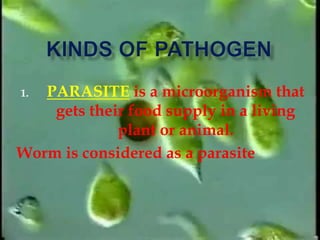
1. PARASITE is a microorganism that
gets their food supply in a living
plant or animal.
Worm is considered as a parasite
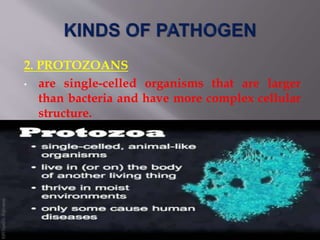
2. PROTOZOANS
• are single-celled organisms that are larger
than bacteria and have more complex cellular
structure.
•
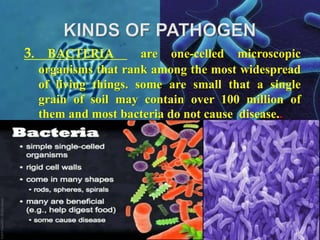
3. BACTERIA are one-celled microscopic
organisms that rank among the most widespread
of living things. some are small that a single
grain of soil may contain over 100 million of
them and most bacteria do not cause disease..
•
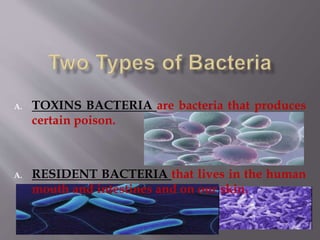
A. TOXINS BACTERIA are bacteria that produces
certain poison.
A. RESIDENT BACTERIA that lives in the human
mouth and intestines and on our skin.
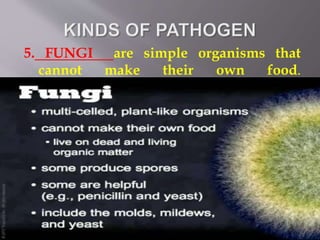
5. FUNGI are simple organisms that
cannot make their own food.
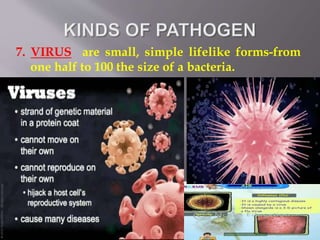
7. VIRUS are small, simple lifelike forms-from
one half to 100 the size of a bacteria.
.
.
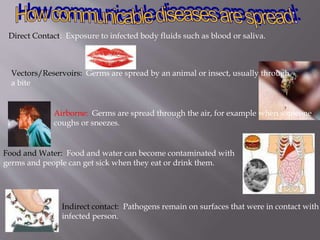
Direct Contact: Exposure to infected body fluids such as blood or saliva.
Vectors/Reservoirs: Germs are spread by an animal or insect, usually through
a bite
Airborne: Germs are spread through the air, for example when someone
coughs or sneezes.
Food and Water: Food and water can become contaminated with
germs and people can get sick when they eat or drink them.
Indirect contact: Pathogens remain on surfaces that were in contact with
infected person.
1. Environmental Factors.
a. Sanitation and sanitation facilities -can affect the
transmission of diseases where food and water can become
contaminated because of poor sanitation.
b. Pollution also plays a major role in
disease transmission as evidenced by floods during the rainy
season.
c. Climate takes its role as an environmental factor. In our
country we only have the dry and wet seasons where various
microorganisms that can cause morbidity can thrive on each
of these seasons.
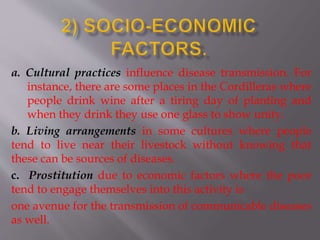
a. Cultural practices influence disease transmission. For
instance, there are some places in the Cordilleras where
people drink wine after a tiring day of planting and
when they drink they use one glass to show unity.
b. Living arrangements in some cultures where people
tend to live near their livestock without knowing that
these can be sources of diseases.
c. Prostitution due to economic factors where the poor
tend to engage themselves into this activity is
one avenue for the transmission of communicable diseases
as well.
Diseases that are transmissible from one host, person
(host) or animal, to another person
Diseases that are “catching”
Diseases that are caused by germs or pathogens
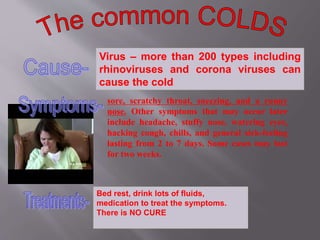
Virus – more than 200 types including
rhinoviruses and corona viruses can
cause the cold
sore, scratchy throat, sneezing, and a runny
nose. Other symptoms that may occur later
include headache, stuffy nose, watering eyes,
hacking cough, chills, and general sick-feeling
lasting from 2 to 7 days. Some cases may last
for two weeks.
Bed rest, drink lots of fluids,
medication to treat the symptoms.
There is NO CURE
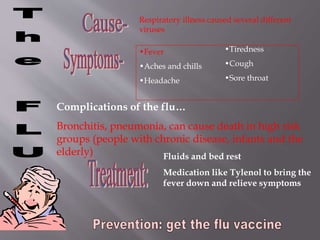
Respiratory illness caused several different
viruses
•Fever
•Aches and chills
•Headache
•Tiredness
•Cough
•Sore throat
Complications of the flu…
Bronchitis, pneumonia, can cause death in high risk
groups (people with chronic disease, infants and the
elderly) Fluids and bed rest
Medication like Tylenol to bring the
fever down and relieve symptoms
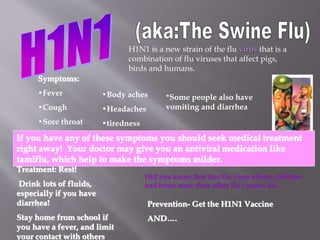
H1N1 is a new strain of the flu virus that is a
combination of flu viruses that affect pigs,
birds and humans.
Symptoms:
•Fever
•Cough
•Sore throat
•Body aches
•Headaches
•tiredness
*Some people also have
vomiting and diarrhea
If you have any of these symptoms you should seek medical treatment
right away! Your doctor may give you an antiviral medication like
tamiflu, which help to make the symptoms milder.
Treatment: Rest!
Drink lots of fluids,
especially if you have
diarrhea!
Stay home from school if
you have a fever, and limit
your contact with others
Prevention- Get the H1N1 Vaccine
AND….
Did you know that this flu virus affects children
and teens more than other flu viruses do…
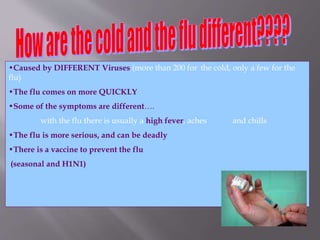
•Caused by DIFFERENT Viruses (more than 200 for the cold, only a few for the
flu)
•The flu comes on more QUICKLY
•Some of the symptoms are different….
with the flu there is usually a high fever, aches and chills
•The flu is more serious, and can be deadly
•There is a vaccine to prevent the flu
(seasonal and H1N1)
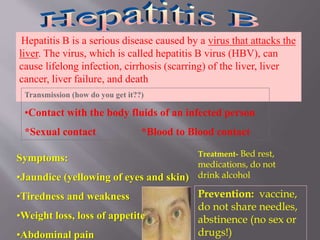
Hepatitis B is a serious disease caused by a virus that attacks the
liver. The virus, which is called hepatitis B virus (HBV), can
cause lifelong infection, cirrhosis (scarring) of the liver, liver
cancer, liver failure, and death
Transmission (how do you get it??)
•Contact with the body fluids of an infected person
*Sexual contact *Blood to Blood contact
Symptoms:
•Jaundice (yellowing of eyes and skin)
•Tiredness and weakness
•Weight loss, loss of appetite
•Abdominal pain
Treatment- Bed rest,
medications, do not
drink alcohol
Prevention: vaccine,
do not share needles,
abstinence (no sex or
drugs!)
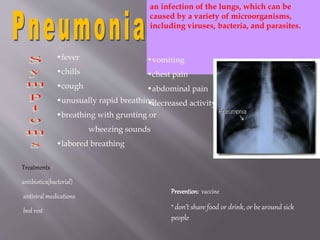
an infection of the lungs, which can be
caused by a variety of microorganisms,
including viruses, bacteria, and parasites.
•fever
•chills
•cough
•unusually rapid breathing
•breathing with grunting or
wheezing sounds
•labored breathing
•vomiting
•chest pain
•abdominal pain
•decreased activity
Treatments :
antibiotics(bacterial)
antiviral medications
bed rest
Prevention: vaccine
* don’t share food or drink, or be around sick
people
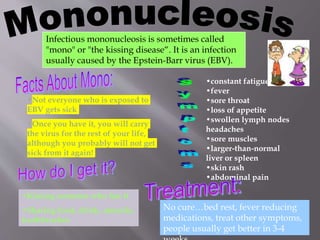
Infectious mononucleosis is sometimes called
"mono" or "the kissing disease“. It is an infection
usually caused by the Epstein-Barr virus (EBV).
•Not everyone who is exposed to
EBV gets sick
•Once you have it, you will carry
the virus for the rest of your life,
although you probably will not get
sick from it again!
•constant fatigue
•fever
•sore throat
•loss of appetite
•swollen lymph nodes
headaches
•sore muscles
•larger-than-normal
liver or spleen
•skin rash
•abdominal pain
•Kissing someone who has it
•Sharing food, drink, utensils,
toothbrushes
No cure…bed rest, fever reducing
medications, treat other symptoms,
people usually get better in 3-4
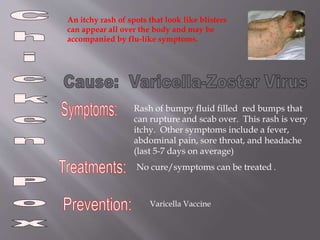
An itchy rash of spots that look like blisters
can appear all over the body and may be
accompanied by flu-like symptoms.
Rash of bumpy fluid filled red bumps that
can rupture and scab over. This rash is very
itchy. Other symptoms include a fever,
abdominal pain, sore throat, and headache
(last 5-7 days on average)
No cure/symptoms can be treated .
Varicella Vaccine
 MAPEH GRADE 8
TEACHER
 LUCENA CITY
NATIONAL HIGH
SCHOOL
 LUCENA CITY

COMMUNICABLE DISEASE AND PATHOGENS2 (1).pptx

  • 1.
    MAPEH GRADE 7 K-12QUARTER 4 HEALTH EDUCATION DISEASE PREVENTION AND CONTROL
  • 2.
    DISEASE is anabnormal condition affecting the body of an organism. 1. Communicable 2. Non-Communicable
  • 3.
    Diseases that aretransmissible from one host, person (host) or animal, to another person Diseases that are “catching” Diseases that are caused by germs or pathogens
  • 4.
    •an organism thatcauses disease to its host, also known as infectious/disease agent. • infects, or invades the body and attacks its cells and tissues.
  • 5.
    1. PARASITE isa microorganism that gets their food supply in a living plant or animal. Worm is considered as a parasite
  • 6.
    2. PROTOZOANS • aresingle-celled organisms that are larger than bacteria and have more complex cellular structure. •
  • 7.
    3. BACTERIA areone-celled microscopic organisms that rank among the most widespread of living things. some are small that a single grain of soil may contain over 100 million of them and most bacteria do not cause disease.. •
  • 8.
    A. TOXINS BACTERIAare bacteria that produces certain poison. A. RESIDENT BACTERIA that lives in the human mouth and intestines and on our skin.
  • 9.
    5. FUNGI aresimple organisms that cannot make their own food.
  • 10.
    7. VIRUS aresmall, simple lifelike forms-from one half to 100 the size of a bacteria. . .
  • 11.
    Direct Contact: Exposureto infected body fluids such as blood or saliva. Vectors/Reservoirs: Germs are spread by an animal or insect, usually through a bite Airborne: Germs are spread through the air, for example when someone coughs or sneezes. Food and Water: Food and water can become contaminated with germs and people can get sick when they eat or drink them. Indirect contact: Pathogens remain on surfaces that were in contact with infected person.
  • 12.
    1. Environmental Factors. a.Sanitation and sanitation facilities -can affect the transmission of diseases where food and water can become contaminated because of poor sanitation. b. Pollution also plays a major role in disease transmission as evidenced by floods during the rainy season. c. Climate takes its role as an environmental factor. In our country we only have the dry and wet seasons where various microorganisms that can cause morbidity can thrive on each of these seasons.
  • 13.
    a. Cultural practicesinfluence disease transmission. For instance, there are some places in the Cordilleras where people drink wine after a tiring day of planting and when they drink they use one glass to show unity. b. Living arrangements in some cultures where people tend to live near their livestock without knowing that these can be sources of diseases. c. Prostitution due to economic factors where the poor tend to engage themselves into this activity is one avenue for the transmission of communicable diseases as well.
  • 14.
    Diseases that aretransmissible from one host, person (host) or animal, to another person Diseases that are “catching” Diseases that are caused by germs or pathogens
  • 15.
    Virus – morethan 200 types including rhinoviruses and corona viruses can cause the cold sore, scratchy throat, sneezing, and a runny nose. Other symptoms that may occur later include headache, stuffy nose, watering eyes, hacking cough, chills, and general sick-feeling lasting from 2 to 7 days. Some cases may last for two weeks. Bed rest, drink lots of fluids, medication to treat the symptoms. There is NO CURE
  • 16.
    Respiratory illness causedseveral different viruses •Fever •Aches and chills •Headache •Tiredness •Cough •Sore throat Complications of the flu… Bronchitis, pneumonia, can cause death in high risk groups (people with chronic disease, infants and the elderly) Fluids and bed rest Medication like Tylenol to bring the fever down and relieve symptoms
  • 17.
    H1N1 is anew strain of the flu virus that is a combination of flu viruses that affect pigs, birds and humans. Symptoms: •Fever •Cough •Sore throat •Body aches •Headaches •tiredness *Some people also have vomiting and diarrhea If you have any of these symptoms you should seek medical treatment right away! Your doctor may give you an antiviral medication like tamiflu, which help to make the symptoms milder. Treatment: Rest! Drink lots of fluids, especially if you have diarrhea! Stay home from school if you have a fever, and limit your contact with others Prevention- Get the H1N1 Vaccine AND…. Did you know that this flu virus affects children and teens more than other flu viruses do…
  • 18.
    •Caused by DIFFERENTViruses (more than 200 for the cold, only a few for the flu) •The flu comes on more QUICKLY •Some of the symptoms are different…. with the flu there is usually a high fever, aches and chills •The flu is more serious, and can be deadly •There is a vaccine to prevent the flu (seasonal and H1N1)
  • 19.
    Hepatitis B isa serious disease caused by a virus that attacks the liver. The virus, which is called hepatitis B virus (HBV), can cause lifelong infection, cirrhosis (scarring) of the liver, liver cancer, liver failure, and death Transmission (how do you get it??) •Contact with the body fluids of an infected person *Sexual contact *Blood to Blood contact Symptoms: •Jaundice (yellowing of eyes and skin) •Tiredness and weakness •Weight loss, loss of appetite •Abdominal pain Treatment- Bed rest, medications, do not drink alcohol Prevention: vaccine, do not share needles, abstinence (no sex or drugs!)
  • 20.
    an infection ofthe lungs, which can be caused by a variety of microorganisms, including viruses, bacteria, and parasites. •fever •chills •cough •unusually rapid breathing •breathing with grunting or wheezing sounds •labored breathing •vomiting •chest pain •abdominal pain •decreased activity Treatments : antibiotics(bacterial) antiviral medications bed rest Prevention: vaccine * don’t share food or drink, or be around sick people
  • 21.
    Infectious mononucleosis issometimes called "mono" or "the kissing disease“. It is an infection usually caused by the Epstein-Barr virus (EBV). •Not everyone who is exposed to EBV gets sick •Once you have it, you will carry the virus for the rest of your life, although you probably will not get sick from it again! •constant fatigue •fever •sore throat •loss of appetite •swollen lymph nodes headaches •sore muscles •larger-than-normal liver or spleen •skin rash •abdominal pain •Kissing someone who has it •Sharing food, drink, utensils, toothbrushes No cure…bed rest, fever reducing medications, treat other symptoms, people usually get better in 3-4
  • 22.
    An itchy rashof spots that look like blisters can appear all over the body and may be accompanied by flu-like symptoms. Rash of bumpy fluid filled red bumps that can rupture and scab over. This rash is very itchy. Other symptoms include a fever, abdominal pain, sore throat, and headache (last 5-7 days on average) No cure/symptoms can be treated . Varicella Vaccine
  • 23.
     MAPEH GRADE8 TEACHER  LUCENA CITY NATIONAL HIGH SCHOOL  LUCENA CITY