Introduction
The operating cycle of an IC engine can be broken down
into a sequence of separate processes
Intake, Compression, Combustion, Expansion and
Exhaust
Actual IC Engine does not operate on ideal
thermodynamic cycle that are operated on open cycle.
The accurate analysis of IC engine processes is very
complicated, to understand it well, it is advantageous to
analyze the performance of an Idealized closed cycle
Air standard cycle
Air-Standard cycle differs from the actual by the
following
1. The gas mixture in the cylinder is treated as air for
the .entire cycle, and property values of air are used
in the analysis.
2. The real open cycle is changed into a closed cycle
by assuming that the gases being exhausted are fed
back into the intake system.
3. The combustion process is replaced with a heat
addition term Qin of equal energy value
Cont-
4. The open exhaust process, which carries a large
amount of enthalpy is denoted by Qout of the equal
energy value
5. Actual engine processes are approximated with ideal
processes
a. The almost-constant-pressure intake and exhaust
strokes are assumed to be constant pressure.
b. Compression strokes and expansion strokes are
approximated by isentropic processes
Cont-
C. The combustion process is idealized by a constant-
volume process (SI cycle), a constant-pressure
process (CI cycle),or a combination of both (CI Dual
cycle).
d. Exhaust blow down is approximated by a constant-
volume process.
e. All processes are considered reversible.
Diesel cycle
Fuel is injected into the combustion chamber very
late in the compression stroke Due to ignition delay
and the finite time required to inject the fuel,
combustion lasted into the expansion stroke
This keeps the pressure at peak levels well past TDC.
Combustion process is approximated as constant-
pressure heat input in an air standard cycle
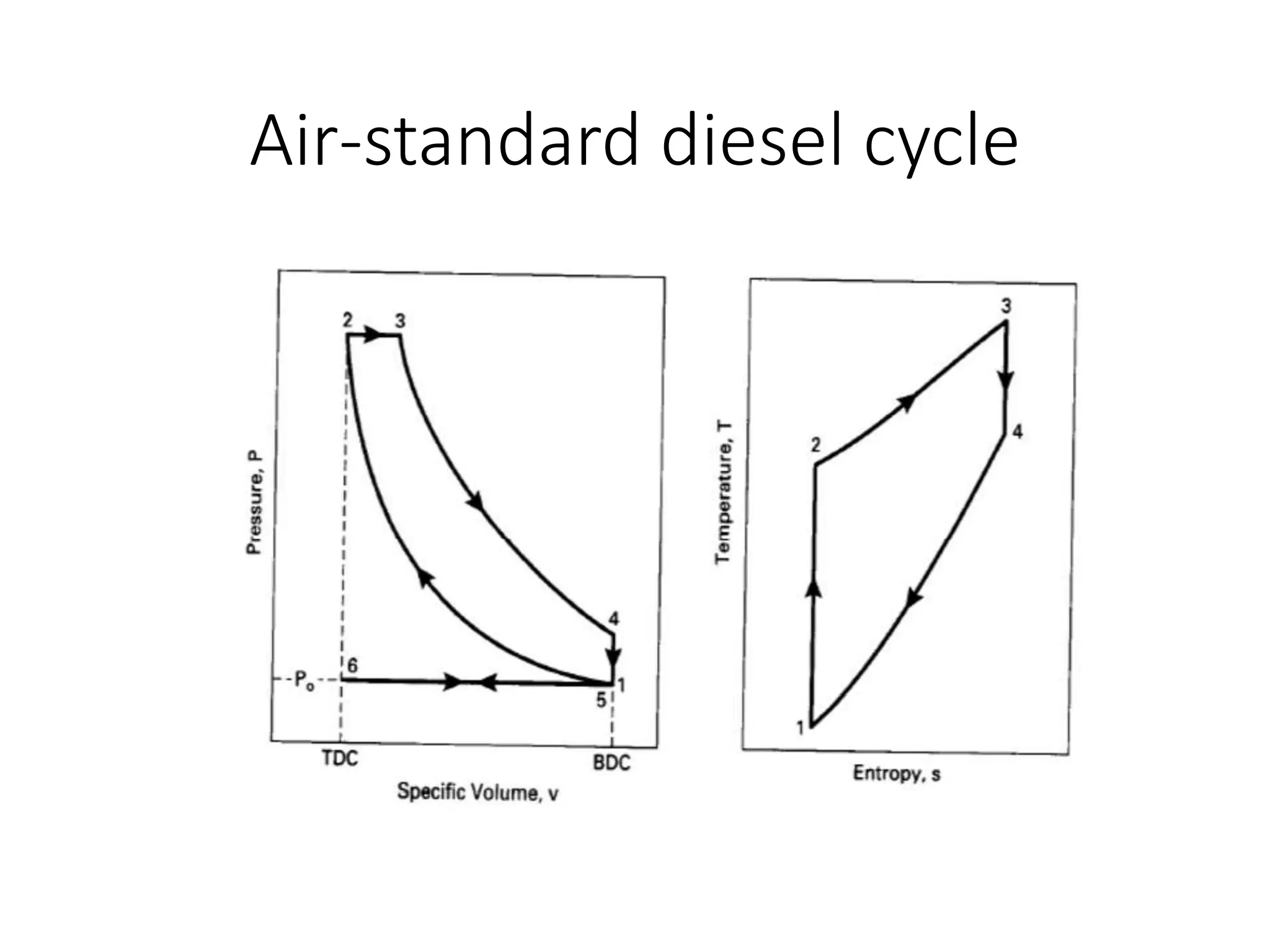
Air-standard diesel cycle
Thermodynamic Analysis of Air-
Standard Diesel
Cycle
Process 6-1-Constant-pressure intake of air at Po.
Intake valve open and exhaust valve closed:
Process 1-2- Isentropic
Compression Stroke
• All valves closed:
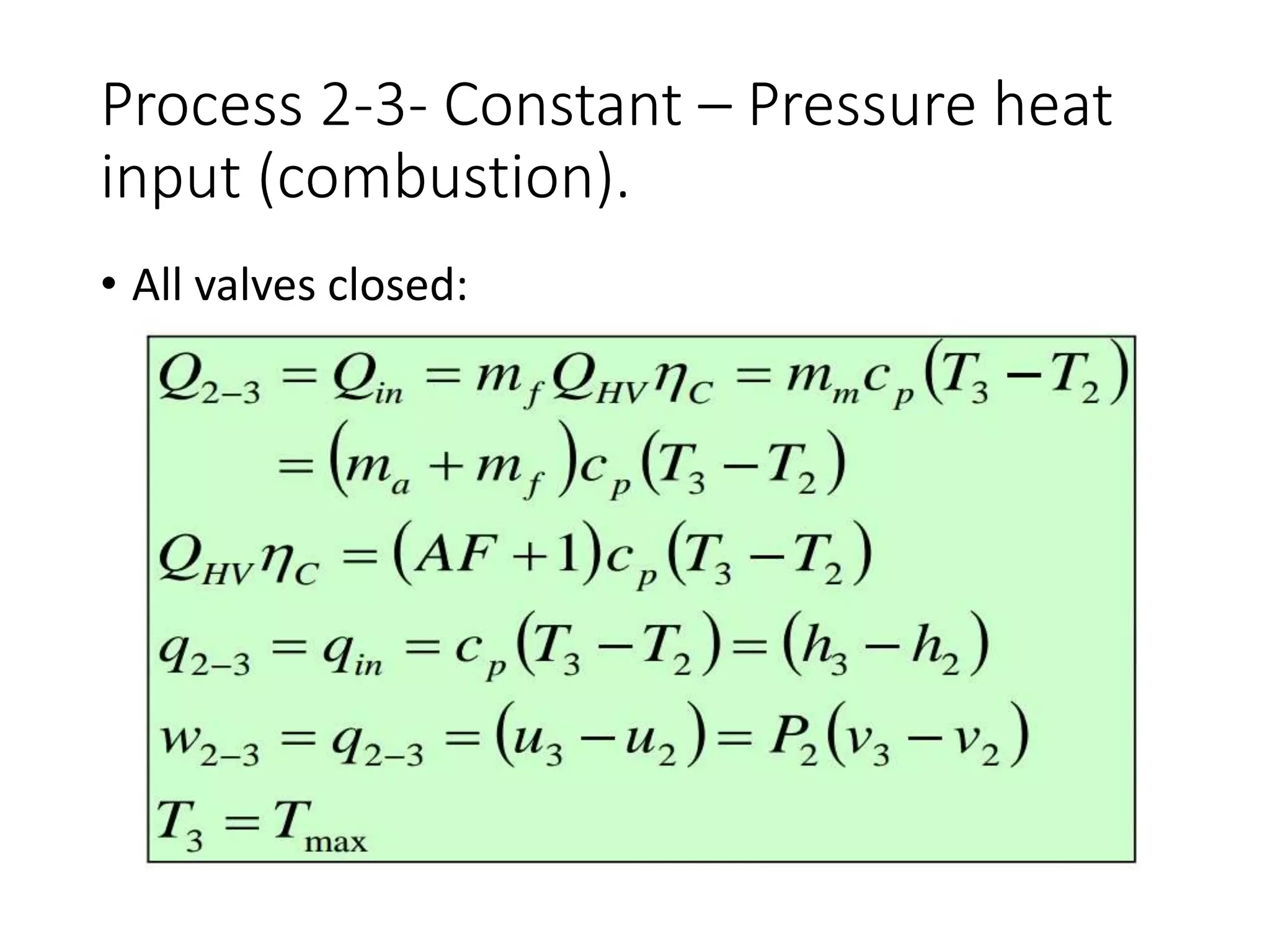
Process 2-3- Constant – Pressure heat
input (combustion).
• All valves closed:
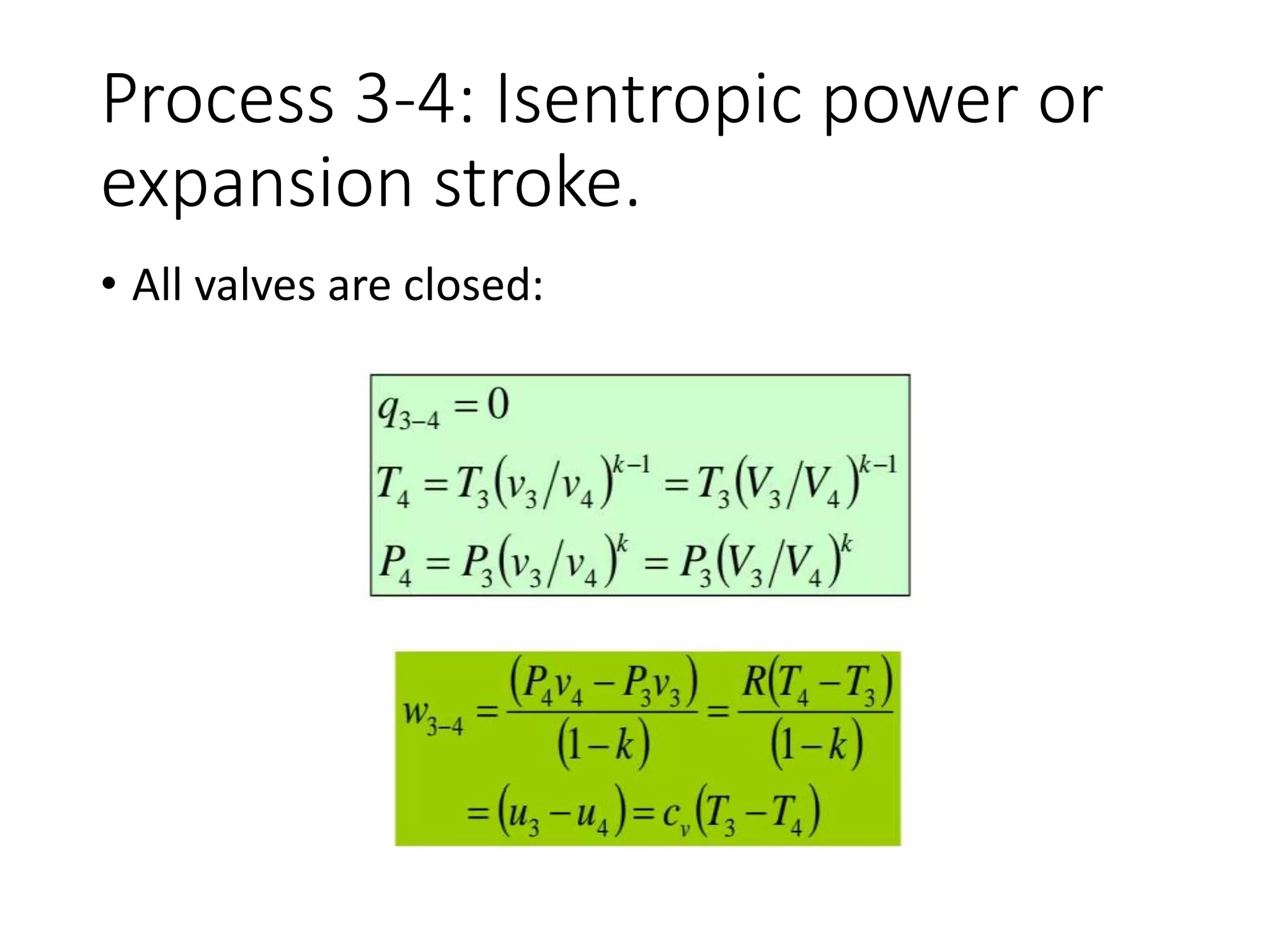
Process 3-4: Isentropic power or
expansion stroke.
• All valves are closed:
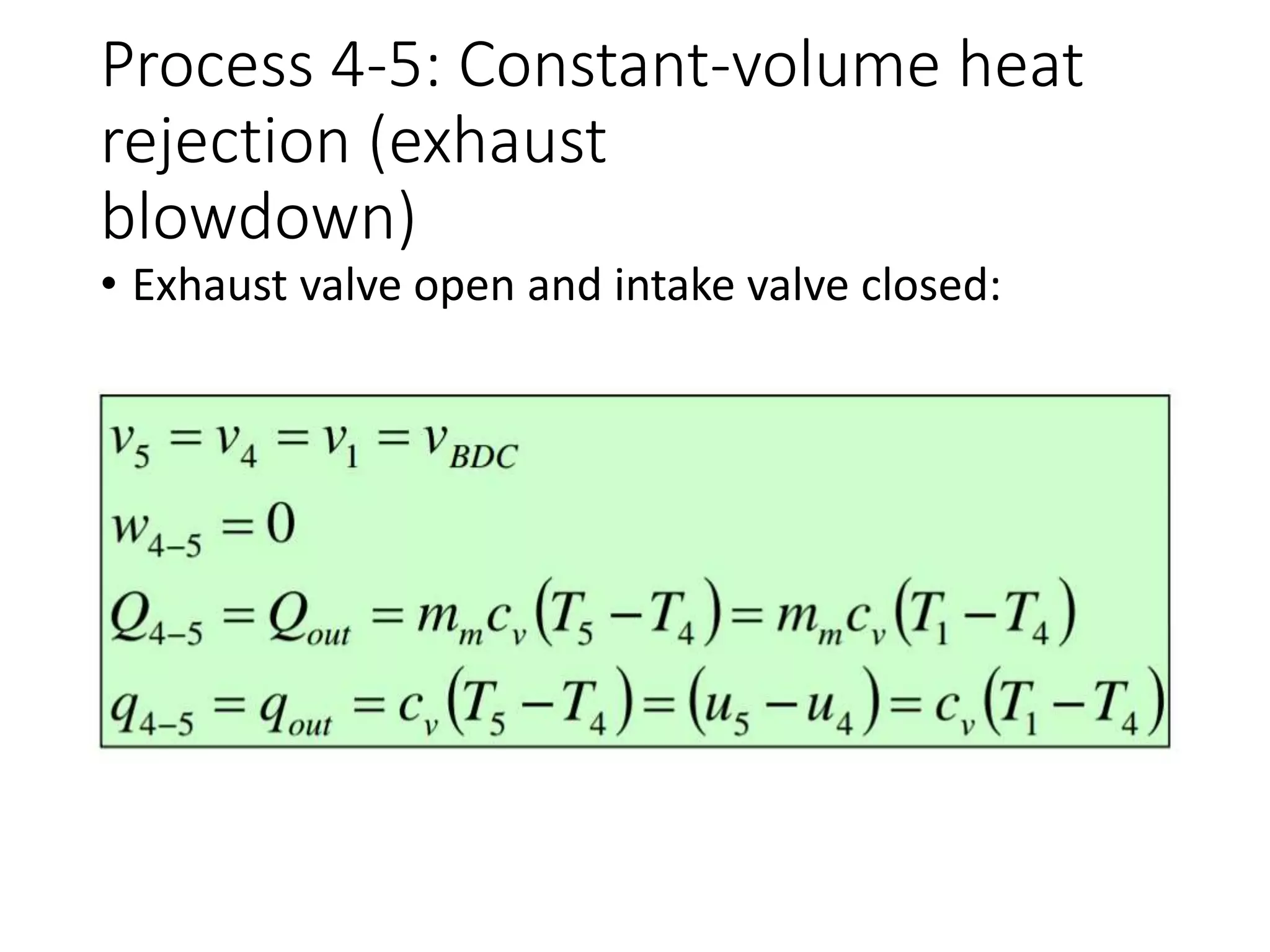
Process 4-5: Constant-volume heat
rejection (exhaust
blowdown)
• Exhaust valve open and intake valve closed:
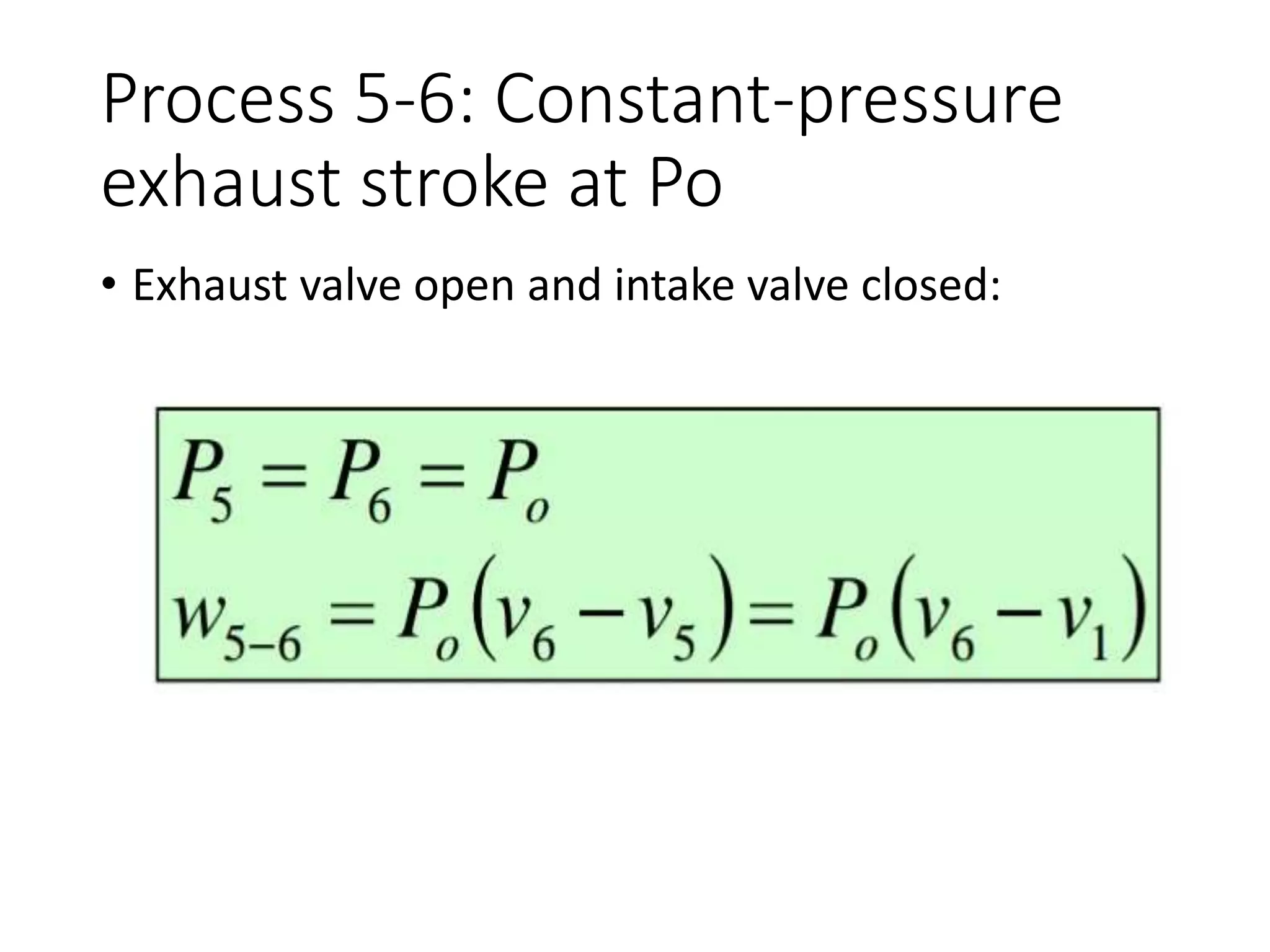
Process 5-6: Constant-pressure
exhaust stroke at Po
• Exhaust valve open and intake valve closed:
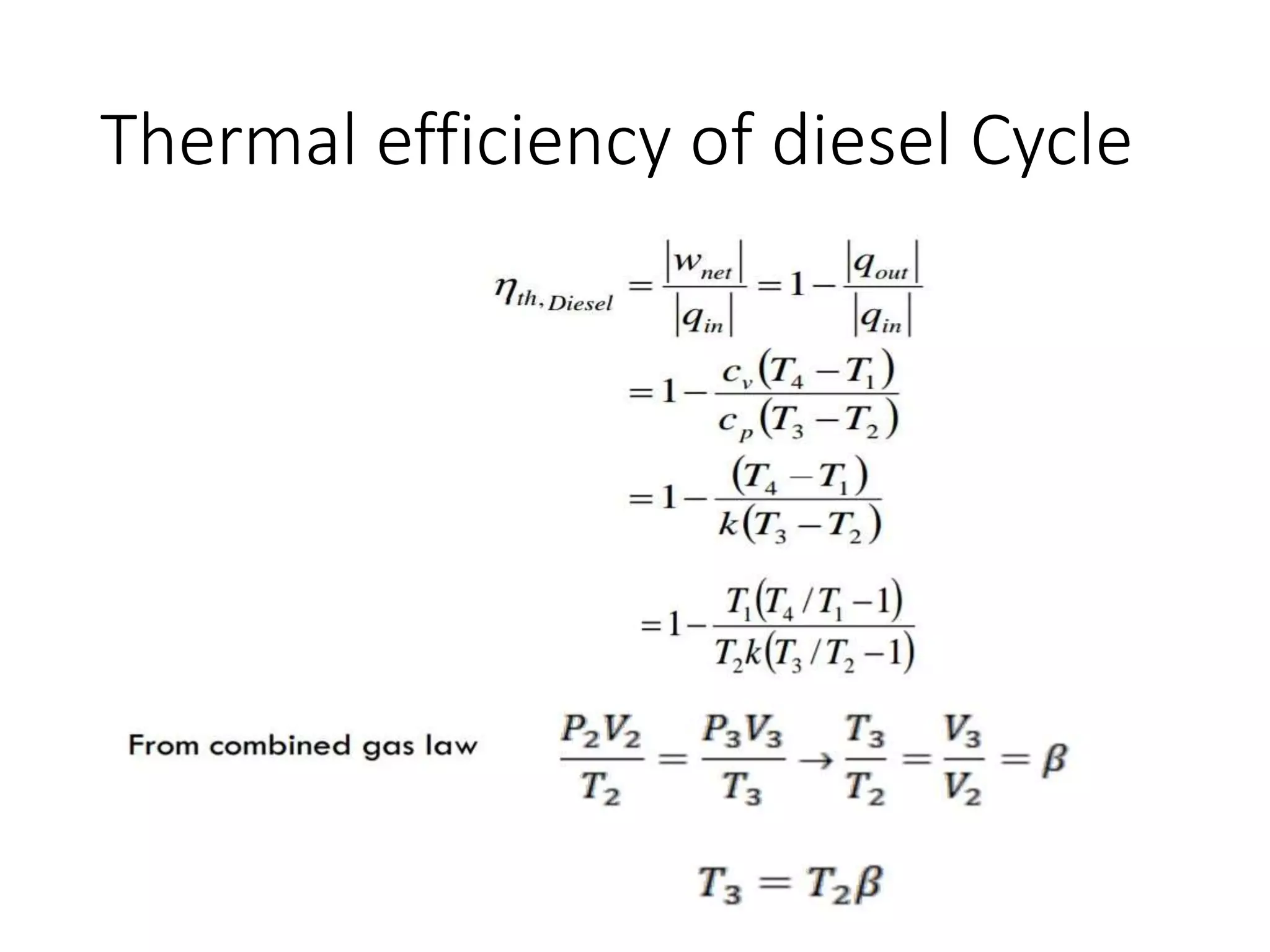
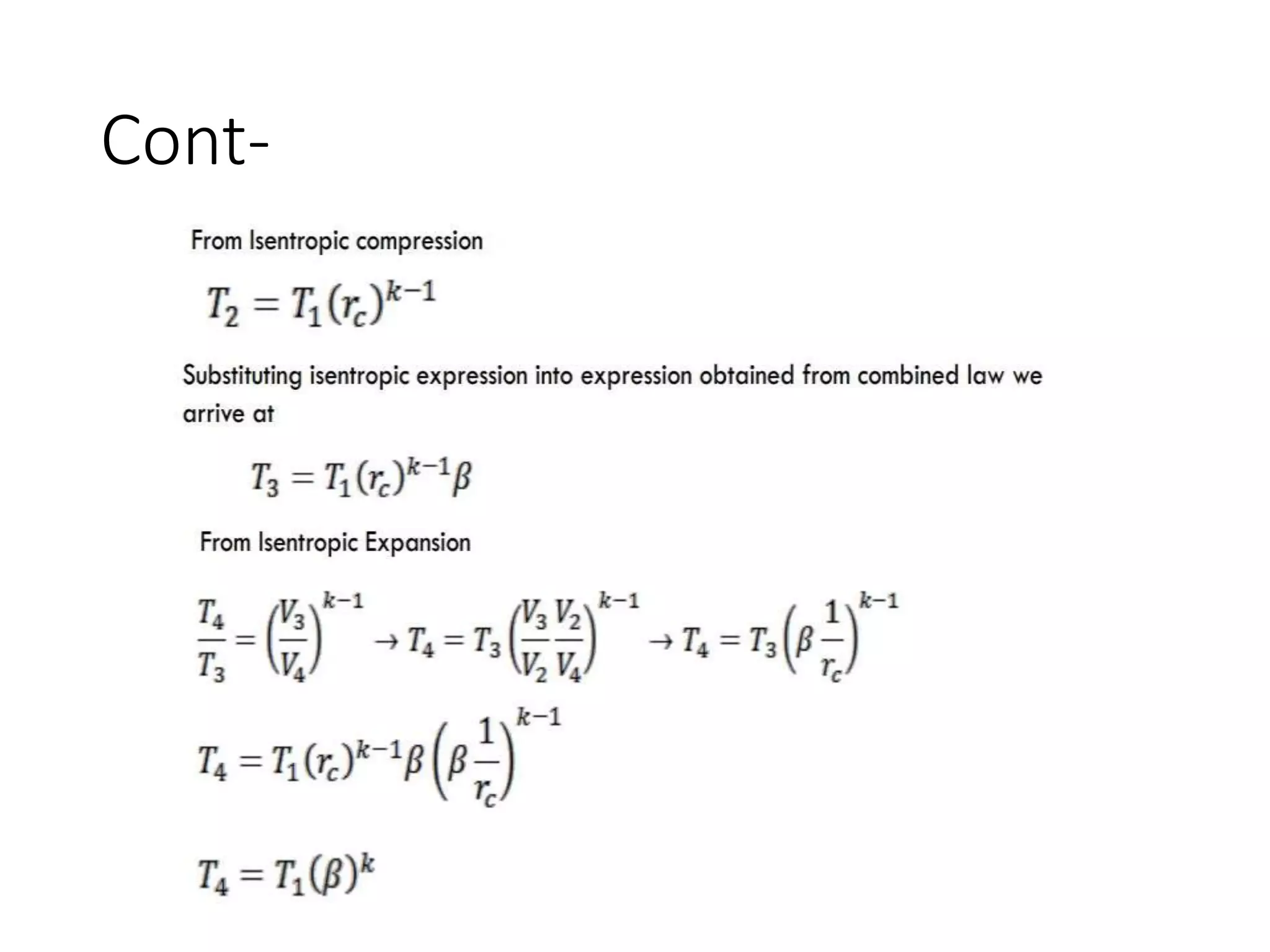
Thermal efficiency of diesel Cycle
Cont-
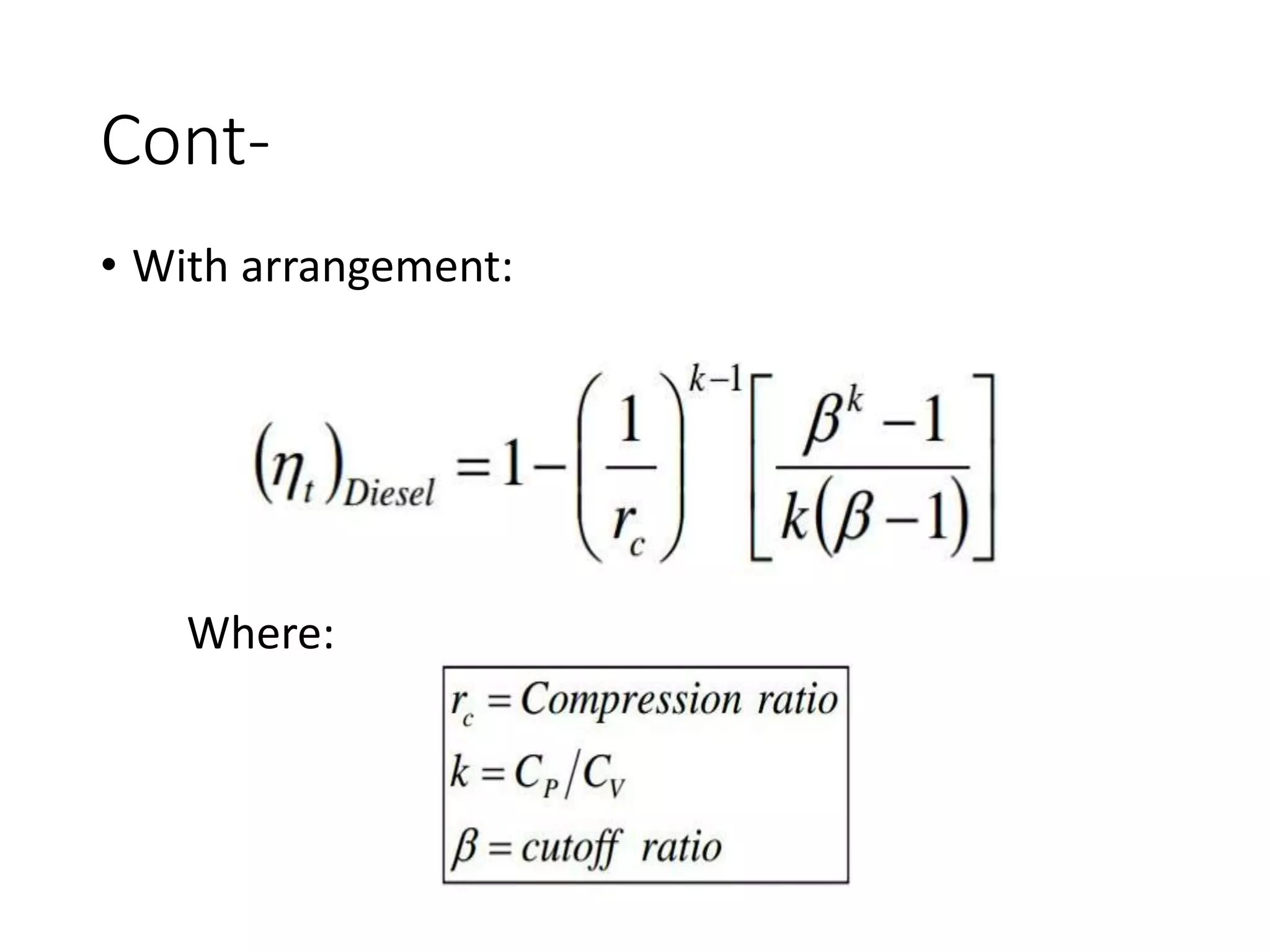
Cont-
• With arrangement:
Where:

Air standard cycle

  • 1.
    Introduction The operating cycleof an IC engine can be broken down into a sequence of separate processes Intake, Compression, Combustion, Expansion and Exhaust Actual IC Engine does not operate on ideal thermodynamic cycle that are operated on open cycle. The accurate analysis of IC engine processes is very complicated, to understand it well, it is advantageous to analyze the performance of an Idealized closed cycle
  • 2.
    Air standard cycle Air-Standardcycle differs from the actual by the following 1. The gas mixture in the cylinder is treated as air for the .entire cycle, and property values of air are used in the analysis. 2. The real open cycle is changed into a closed cycle by assuming that the gases being exhausted are fed back into the intake system. 3. The combustion process is replaced with a heat addition term Qin of equal energy value
  • 3.
    Cont- 4. The openexhaust process, which carries a large amount of enthalpy is denoted by Qout of the equal energy value 5. Actual engine processes are approximated with ideal processes a. The almost-constant-pressure intake and exhaust strokes are assumed to be constant pressure. b. Compression strokes and expansion strokes are approximated by isentropic processes
  • 4.
    Cont- C. The combustionprocess is idealized by a constant- volume process (SI cycle), a constant-pressure process (CI cycle),or a combination of both (CI Dual cycle). d. Exhaust blow down is approximated by a constant- volume process. e. All processes are considered reversible.
  • 5.
    Diesel cycle Fuel isinjected into the combustion chamber very late in the compression stroke Due to ignition delay and the finite time required to inject the fuel, combustion lasted into the expansion stroke This keeps the pressure at peak levels well past TDC. Combustion process is approximated as constant- pressure heat input in an air standard cycle
  • 6.
  • 7.
    Thermodynamic Analysis ofAir- Standard Diesel Cycle Process 6-1-Constant-pressure intake of air at Po. Intake valve open and exhaust valve closed:
  • 8.
    Process 1-2- Isentropic CompressionStroke • All valves closed:
  • 9.
    Process 2-3- Constant– Pressure heat input (combustion). • All valves closed:
  • 10.
    Process 3-4: Isentropicpower or expansion stroke. • All valves are closed:
  • 11.
    Process 4-5: Constant-volumeheat rejection (exhaust blowdown) • Exhaust valve open and intake valve closed:
  • 12.
    Process 5-6: Constant-pressure exhauststroke at Po • Exhaust valve open and intake valve closed:
  • 13.
  • 14.
  • 15.