Air Pollution and 
Global Change 
Module 13 
Pay close attention to each slide. 
Click on the speaker on each slide for additional information.
What is Air Pollution 
 Air is a mixture of many gases including: Nitrogen, 
Oxygen, Carbon Dioxide, Water Vapor and trace 
other gases. 
 Any change in the atmosphere that has harmful 
effects is called air pollution 
 Any substance that causes pollution is called a 
pollutant
Composition of the Air 
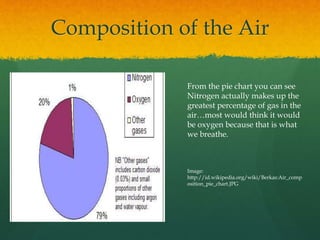
From the pie chart you can see 
Nitrogen actually makes up the 
greatest percentage of gas in the 
air…most would think it would 
be oxygen because that is what 
we breathe. 
Image: 
http://id.wikipedia.org/wiki/Berkas:Air_comp 
osition_pie_chart.JPG
How does pollution make 
it into the Air? 
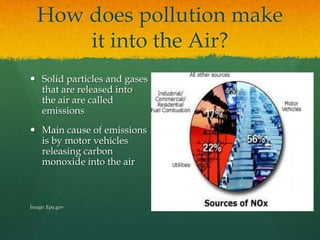
 Solid particles and gases 
that are released into 
the air are called 
emissions 
 Main cause of emissions 
is by motor vehicles 
releasing carbon 
monoxide into the air 
Image: Epa.gov
Smoke + Fog = Smog 
 When certain gases in the air react with sunlight it 
can create a think brownish haze called 
photochemical smog 
 When the smog level is high it can settle over a city 
creating a dirty haze 
 Potential threats to humans are breathing trouble, 
throat irritation and burning eyes 
 Major sources of smog are the gases emitted by 
vehicles
Smog continued… 
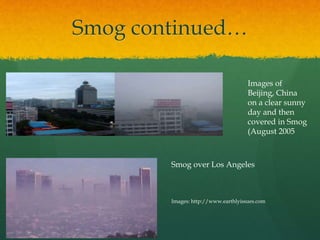
Images of 
Beijing, China 
on a clear sunny 
day and then 
covered in Smog 
(August 2005 
Smog over Los Angeles 
Images: http://www.earthlyissues.com
Acid Rain 
 Acid rain is another type of air pollution 
 It is caused by power plants and factories that burn 
coal and oil and release chemicals into the air 
 These gases react with water vapor in the 
atmosphere forming acids which return to Earth’s 
surface in the form of precipitation 
 Acid rain affects many things in the environment 
including: fish, plants, buildings, statues, etc…
Acid rain Continued… 
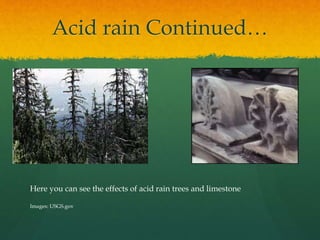
Here you can see the effects of acid rain trees and limestone 
Images: USGS.gov
Not all pollution is outside 
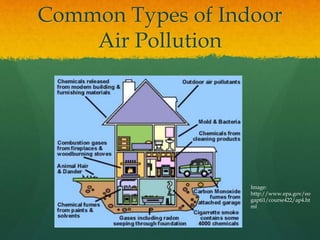
 The air inside buildings can be polluted too= indoor air 
pollution 
 Dust, pet hair, air fresheners, smoke and toxic fumes 
from cleaning supplies can all contribute to air pollution 
 Carbon Monoxide (CO) is an indoor air pollutant that is 
a colorless and odorless gas that forms when wood, coal, 
oil or gas is not completely burned 
 Radon is another colorless and odorless gas formed 
naturally by certain rocks underground that is 
radioactive.
Common Types of Indoor 
Air Pollution 
Image: 
http://www.epa.gov/eo 
gapti1/course422/ap4.ht 
ml
Human Impact on 
Environment 
 Humans are the leading factor in creating air 
pollution and other hazardous wastes on earth 
 Humans contribute to deforestation (cutting down 
trees which produce oxygen) 
 Humans also effect the natural process on earth 
called The Greenhouse effect 
 Hazardous waste is any material that can be 
harmful to human health or the environment if not 
properly disposed of
Greenhouse Effect 
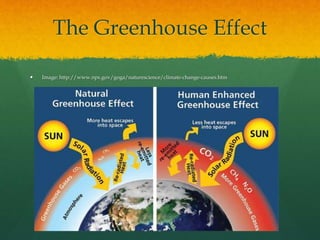
 Greenhouse gases trap heat in the air which aids in 
keep the earth a suitable temperature for us to 
survive 
 Humans add greenhouse gases to the atmosphere 
through everyday activities including driving and 
burning fossil fuels 
 The more greenhouse gases that are trapped in the 
atmosphere the more likely it is for our overall 
temperature of earth to increase (global warming)
The Greenhouse Effect 
 Image: http://www.nps.gov/goga/naturescience/climate-change-causes.htm
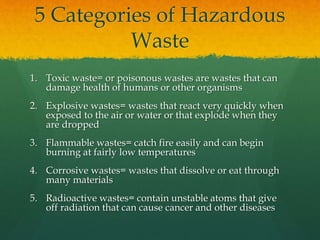
5 Categories of Hazardous 
Waste 
1. Toxic waste= or poisonous wastes are wastes that can 
damage health of humans or other organisms 
2. Explosive wastes= wastes that react very quickly when 
exposed to the air or water or that explode when they 
are dropped 
3. Flammable wastes= catch fire easily and can begin 
burning at fairly low temperatures 
4. Corrosive wastes= wastes that dissolve or eat through 
many materials 
5. Radioactive wastes= contain unstable atoms that give 
off radiation that can cause cancer and other diseases
Health Effects of 
Hazardous Wastes 
 Short term exposure to hazardous wastes may cause 
irritation to certain body parts or more severe health 
problems 
 Long term exposure may cause diseases such as 
cancer and may damage body organs including: the 
brain, liver, kidneys and lungs
Getting Rid of 
Hazardous Wastes 
 Methods of hazardous waste disposal include burial in 
landfills, incineration and breakdown by living organisms 
 Liquid wastes can be stored in deep rock layers 
 Most often Hazardous wastes are disposed in carefully 
designed landfills 
 These landfills are lined with clay and plastic to keep 
chemicals from seeping into the soil and groundwater (which 
could cause serious contamination and health problems) 
 The best way to manage hazardous waste is to produce less of 
them and educate consumers on finding substitutes for 
common household chemicals
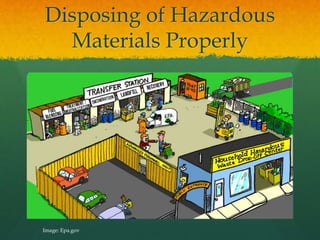
Disposing of Hazardous 
Materials Properly 
Image: Epa.gov

Air pollution ppt no sound

  • 1.
    Air Pollution and Global Change Module 13 Pay close attention to each slide. Click on the speaker on each slide for additional information.
  • 2.
    What is AirPollution  Air is a mixture of many gases including: Nitrogen, Oxygen, Carbon Dioxide, Water Vapor and trace other gases.  Any change in the atmosphere that has harmful effects is called air pollution  Any substance that causes pollution is called a pollutant
  • 3.
    Composition of theAir From the pie chart you can see Nitrogen actually makes up the greatest percentage of gas in the air…most would think it would be oxygen because that is what we breathe. Image: http://id.wikipedia.org/wiki/Berkas:Air_comp osition_pie_chart.JPG
  • 4.
    How does pollutionmake it into the Air?  Solid particles and gases that are released into the air are called emissions  Main cause of emissions is by motor vehicles releasing carbon monoxide into the air Image: Epa.gov
  • 5.
    Smoke + Fog= Smog  When certain gases in the air react with sunlight it can create a think brownish haze called photochemical smog  When the smog level is high it can settle over a city creating a dirty haze  Potential threats to humans are breathing trouble, throat irritation and burning eyes  Major sources of smog are the gases emitted by vehicles
  • 6.
    Smog continued… Imagesof Beijing, China on a clear sunny day and then covered in Smog (August 2005 Smog over Los Angeles Images: http://www.earthlyissues.com
  • 7.
    Acid Rain Acid rain is another type of air pollution  It is caused by power plants and factories that burn coal and oil and release chemicals into the air  These gases react with water vapor in the atmosphere forming acids which return to Earth’s surface in the form of precipitation  Acid rain affects many things in the environment including: fish, plants, buildings, statues, etc…
  • 8.
    Acid rain Continued… Here you can see the effects of acid rain trees and limestone Images: USGS.gov
  • 9.
    Not all pollutionis outside  The air inside buildings can be polluted too= indoor air pollution  Dust, pet hair, air fresheners, smoke and toxic fumes from cleaning supplies can all contribute to air pollution  Carbon Monoxide (CO) is an indoor air pollutant that is a colorless and odorless gas that forms when wood, coal, oil or gas is not completely burned  Radon is another colorless and odorless gas formed naturally by certain rocks underground that is radioactive.
  • 10.
    Common Types ofIndoor Air Pollution Image: http://www.epa.gov/eo gapti1/course422/ap4.ht ml
  • 11.
    Human Impact on Environment  Humans are the leading factor in creating air pollution and other hazardous wastes on earth  Humans contribute to deforestation (cutting down trees which produce oxygen)  Humans also effect the natural process on earth called The Greenhouse effect  Hazardous waste is any material that can be harmful to human health or the environment if not properly disposed of
  • 12.
    Greenhouse Effect Greenhouse gases trap heat in the air which aids in keep the earth a suitable temperature for us to survive  Humans add greenhouse gases to the atmosphere through everyday activities including driving and burning fossil fuels  The more greenhouse gases that are trapped in the atmosphere the more likely it is for our overall temperature of earth to increase (global warming)
  • 13.
    The Greenhouse Effect  Image: http://www.nps.gov/goga/naturescience/climate-change-causes.htm
  • 14.
    5 Categories ofHazardous Waste 1. Toxic waste= or poisonous wastes are wastes that can damage health of humans or other organisms 2. Explosive wastes= wastes that react very quickly when exposed to the air or water or that explode when they are dropped 3. Flammable wastes= catch fire easily and can begin burning at fairly low temperatures 4. Corrosive wastes= wastes that dissolve or eat through many materials 5. Radioactive wastes= contain unstable atoms that give off radiation that can cause cancer and other diseases
  • 15.
    Health Effects of Hazardous Wastes  Short term exposure to hazardous wastes may cause irritation to certain body parts or more severe health problems  Long term exposure may cause diseases such as cancer and may damage body organs including: the brain, liver, kidneys and lungs
  • 16.
    Getting Rid of Hazardous Wastes  Methods of hazardous waste disposal include burial in landfills, incineration and breakdown by living organisms  Liquid wastes can be stored in deep rock layers  Most often Hazardous wastes are disposed in carefully designed landfills  These landfills are lined with clay and plastic to keep chemicals from seeping into the soil and groundwater (which could cause serious contamination and health problems)  The best way to manage hazardous waste is to produce less of them and educate consumers on finding substitutes for common household chemicals
  • 17.
    Disposing of Hazardous Materials Properly Image: Epa.gov