Dust ExplosionsTim Myers, Ph.D., P.E.Exponent, Inc.9 Strathmore RoadNatick, MA 01760tmyers@exponent.com(508) 652-8572
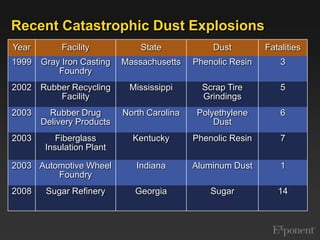
Recent Catastrophic Dust Explosions
Effect of Particle Size on Combustion RateSource: After Eckhoff, Dust Explosions in the Process Industries (2003).
Elements of a Dust ExplosionCombustible dustSmall particle sizeOxidizableOxidizer (e.g. air)Ignition sourceDispersion of dustConfinement
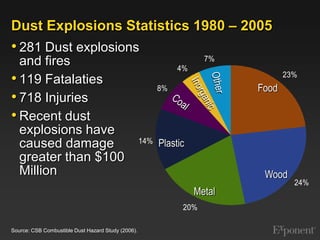
Dust Explosions Statistics 1980 – 2005 OtherFoodInorganicCoalPlasticWoodMetal281 Dust explosions and fires119 Fatalaties718 InjuriesRecent dust explosions have caused damage greater than $100 MillionSource: CSB Combustible Dust Hazard Study (2006).
OSHA Dust Explosion Hazard RegulationsOSHA does not currently have a comprehensive general industry regulation for the prevention of dust explosions. In November 2006 The CSB recommended that OSHA develop regulations based on current NFPA standards.  In 2008 and 2009, the U.S. House of Representatives passed the Worker Protection against Combustible Dust Explosions and Fires Act (H.R. 5522) which would have required OSHA to issue rules regulating combustible dusts.  April 29, 2009, OSHA announced rulemaking on combustible dust hazardsAugust 2009 – Advanced Notice of Proposed RulemakingDecember 2009 – Stakeholder meetings
OSHA Combustible Dust National Emphasis ProgramEffective October 18, 2007Reissued March 11, 2008Identified16 industry codes with “more frequent and/or HIGH consequence combustible dust explosions/fires”Identified 48 industry codes that “may have potential for combustible dust explosions/fires”OutreachTargeted inspectionsNEP and other documents have listed OSHA regulations believed to apply to dust explosions
Standards for the Prevention of Dust Fires and ExplosionsNFPA 61 Standard for the Prevention of Fires and Dust Explosions in Agricultural and Food Processing FacilitiesNFPA 120 Standard for Fire Prevention and Control in Coal MinesNFPA 484 Standard for Combustible MetalsNFPA 654 Standard for the Prevention of Fire and Dust Explosions from the Manufacturing, Processing, and Handling of Combustible Particulate SolidsNFPA 655 Standard for the Prevention of Sulfur Fires and ExplosionsNFPA 664 Standard of Fires and Explosions in Wood Processing and Woodworking FacilitiesNFPA 850 Recommended Practice for Fire Protection for Electric Generating Plants and High Voltage Direct Current Converter Stations
SummaryRecent catastrophic dust explosions have placed an increased emphasis on the prevention and mitigation of dust explosions. In response to CSB recommendations, OSHA introduced a Combustible Dust National Emphasis Program (NEP) and is now proposing combustible dust regulations.  NFPA standards and guidelines provide guidance for the prevention and mitigation of dust fires and explosions. NFPA guidelines for preventing and mitigating explosions focuses on:Housekeeping and dust collectionRemoval of ignition sourcesMaintenance and trainingExplosion protection of equipment

Dust Explosions

  • 1.
    Dust ExplosionsTim Myers,Ph.D., P.E.Exponent, Inc.9 Strathmore RoadNatick, MA 01760tmyers@exponent.com(508) 652-8572
  • 2.
  • 3.
    Effect of ParticleSize on Combustion RateSource: After Eckhoff, Dust Explosions in the Process Industries (2003).
  • 4.
    Elements of aDust ExplosionCombustible dustSmall particle sizeOxidizableOxidizer (e.g. air)Ignition sourceDispersion of dustConfinement
  • 5.
    Dust Explosions Statistics1980 – 2005 OtherFoodInorganicCoalPlasticWoodMetal281 Dust explosions and fires119 Fatalaties718 InjuriesRecent dust explosions have caused damage greater than $100 MillionSource: CSB Combustible Dust Hazard Study (2006).
  • 6.
    OSHA Dust ExplosionHazard RegulationsOSHA does not currently have a comprehensive general industry regulation for the prevention of dust explosions. In November 2006 The CSB recommended that OSHA develop regulations based on current NFPA standards. In 2008 and 2009, the U.S. House of Representatives passed the Worker Protection against Combustible Dust Explosions and Fires Act (H.R. 5522) which would have required OSHA to issue rules regulating combustible dusts. April 29, 2009, OSHA announced rulemaking on combustible dust hazardsAugust 2009 – Advanced Notice of Proposed RulemakingDecember 2009 – Stakeholder meetings
  • 7.
    OSHA Combustible DustNational Emphasis ProgramEffective October 18, 2007Reissued March 11, 2008Identified16 industry codes with “more frequent and/or HIGH consequence combustible dust explosions/fires”Identified 48 industry codes that “may have potential for combustible dust explosions/fires”OutreachTargeted inspectionsNEP and other documents have listed OSHA regulations believed to apply to dust explosions
  • 8.
    Standards for thePrevention of Dust Fires and ExplosionsNFPA 61 Standard for the Prevention of Fires and Dust Explosions in Agricultural and Food Processing FacilitiesNFPA 120 Standard for Fire Prevention and Control in Coal MinesNFPA 484 Standard for Combustible MetalsNFPA 654 Standard for the Prevention of Fire and Dust Explosions from the Manufacturing, Processing, and Handling of Combustible Particulate SolidsNFPA 655 Standard for the Prevention of Sulfur Fires and ExplosionsNFPA 664 Standard of Fires and Explosions in Wood Processing and Woodworking FacilitiesNFPA 850 Recommended Practice for Fire Protection for Electric Generating Plants and High Voltage Direct Current Converter Stations
  • 9.
    SummaryRecent catastrophic dustexplosions have placed an increased emphasis on the prevention and mitigation of dust explosions. In response to CSB recommendations, OSHA introduced a Combustible Dust National Emphasis Program (NEP) and is now proposing combustible dust regulations. NFPA standards and guidelines provide guidance for the prevention and mitigation of dust fires and explosions. NFPA guidelines for preventing and mitigating explosions focuses on:Housekeeping and dust collectionRemoval of ignition sourcesMaintenance and trainingExplosion protection of equipment