AGRI SUPPLY CHAIN :
PROSPECTS & CHALLENGES
Divya Chhabra
GBPUA&T,
Pantnagar
LAYOUT OF PRESENTATION
• Background
• Introduction
• Problems in supply chain
• Prospects in supply chain
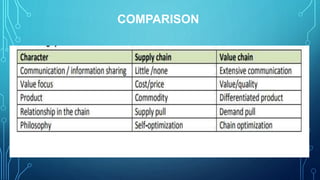
• Comparison of food supply and food value chain
• Case study
• Government initiatives
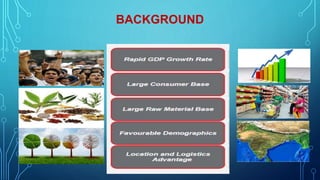
BACKGROUND
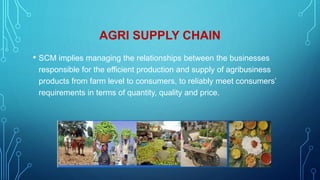
AGRI SUPPLY CHAIN
• SCM implies managing the relationships between the businesses
responsible for the efficient production and supply of agribusiness
products from farm level to consumers, to reliably meet consumers’
requirements in terms of quantity, quality and price.
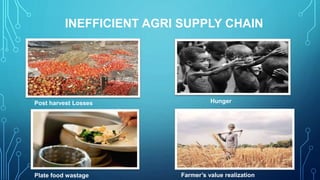
INEFFICIENT AGRI SUPPLY CHAIN
Post harvest Losses
Plate food wastage
Hunger
Farmer’s value realization
PROBLEMS IN INDIAN AGRI SUPPLY CHAIN
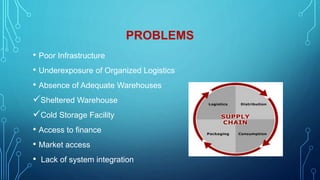
PROBLEMS
• Poor Infrastructure
• Underexposure of Organized Logistics
• Absence of Adequate Warehouses
Sheltered Warehouse
Cold Storage Facility
• Access to finance
• Market access
• Lack of system integration
PROSPECTS IN SUPPLY CHAIN
• Encouraging 3PL (Third Party Logistics) Players
• Warehousing with Private-Public Partnership
• Increasing the Cold Storage Facility
• Enabling the Farmer – The Coco Cola Way
• Strengthening the Information system
• Government policies
• Skill /Training Institutions
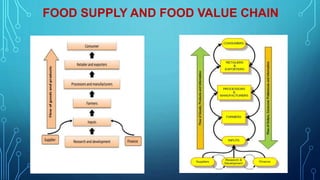
FOOD SUPPLY AND FOOD VALUE CHAIN
COMPARISON
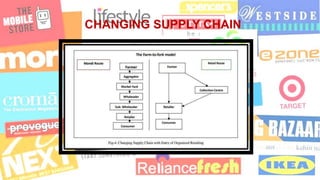
CHANGING SUPPLY CHAIN
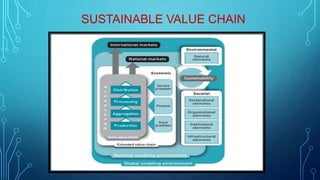
SUSTAINABLE VALUE CHAIN
CASE STUDY OF VARIOUS FARMER’S
LINKAGES
• SABMiller in Rajasthan
• Contract farming in maize by Suguna poultry
• SAFAL – fruits and vegetable growers’ association
• Mahagrapes
• ICRISAT
• Rythu Bazaar
• Apni Mandi – Farmer’s market in Punjab
Agri supply chain
Agri supply chain

Agri supply chain

  • 1.
    AGRI SUPPLY CHAIN: PROSPECTS & CHALLENGES Divya Chhabra GBPUA&T, Pantnagar
  • 2.
    LAYOUT OF PRESENTATION •Background • Introduction • Problems in supply chain • Prospects in supply chain • Comparison of food supply and food value chain • Case study • Government initiatives
  • 3.
  • 4.
    AGRI SUPPLY CHAIN •SCM implies managing the relationships between the businesses responsible for the efficient production and supply of agribusiness products from farm level to consumers, to reliably meet consumers’ requirements in terms of quantity, quality and price.
  • 6.
    INEFFICIENT AGRI SUPPLYCHAIN Post harvest Losses Plate food wastage Hunger Farmer’s value realization
  • 7.
    PROBLEMS IN INDIANAGRI SUPPLY CHAIN
  • 8.
    PROBLEMS • Poor Infrastructure •Underexposure of Organized Logistics • Absence of Adequate Warehouses Sheltered Warehouse Cold Storage Facility • Access to finance • Market access • Lack of system integration
  • 9.
    PROSPECTS IN SUPPLYCHAIN • Encouraging 3PL (Third Party Logistics) Players • Warehousing with Private-Public Partnership • Increasing the Cold Storage Facility • Enabling the Farmer – The Coco Cola Way • Strengthening the Information system • Government policies • Skill /Training Institutions
  • 10.
    FOOD SUPPLY ANDFOOD VALUE CHAIN
  • 11.
  • 12.
  • 13.
  • 14.
    CASE STUDY OFVARIOUS FARMER’S LINKAGES • SABMiller in Rajasthan • Contract farming in maize by Suguna poultry • SAFAL – fruits and vegetable growers’ association • Mahagrapes • ICRISAT • Rythu Bazaar • Apni Mandi – Farmer’s market in Punjab