Presented By
AJIT MAJUMDER
Deptt. of ABMFT
ABMFT 1601
Presentation On
Distribution channels involved in Agribusiness
case study:
PresentedBy
AJIT MAJUMDER
Deptt. of ABMFT
ABMFT 1601
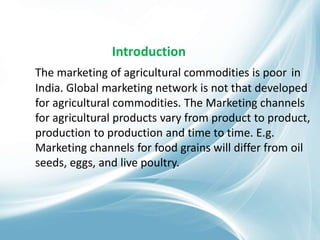
Introduction
The marketing of agricultural commodities is poor in
India. Global marketing network is not that developed
for agricultural commodities. The Marketing channels
for agricultural products vary from product to product,
production to production and time to time. E.g.
Marketing channels for food grains will differ from oil
seeds, eggs, and live poultry.
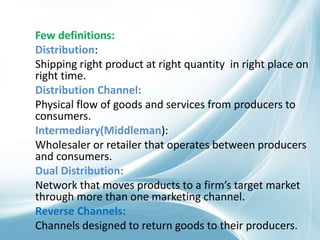
Few definitions:
Distribution:
Shipping right product at right quantity in right place on
right time.
Distribution Channel:
Physical flow of goods and services from producers to
consumers.
Intermediary(Middleman):
Wholesaler or retailer that operates between producers
and consumers.
Dual Distribution:
Network that moves products to a firm’s target market
through more than one marketing channel.
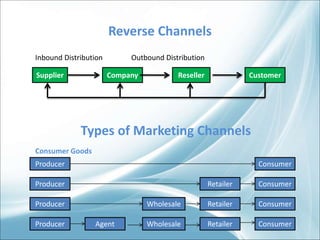
Reverse Channels:
Channels designed to return goods to their producers.
Reverse Channels
Inbound Distribution Outbound Distribution
Consumer Goods
Supplier Company Reseller Customer
Agent
Producer
Producer
Producer
Producer
Wholesale
Wholesale
Retailer
Retailer
Retailer Consumer
Consumer
Consumer
Consumer
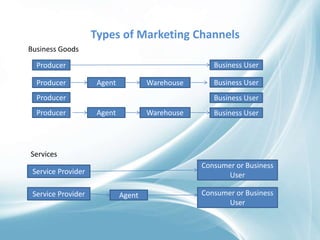
Types of Marketing Channels
Producer
Producer
Producer
Producer
Agent
Agent
Warehouse
Warehouse Business User
Business User
Business User
Business User
Service Provider
Service Provider Agent Consumer or Business
User
Consumer or Business
User
Types of Marketing Channels
Business Goods
Services
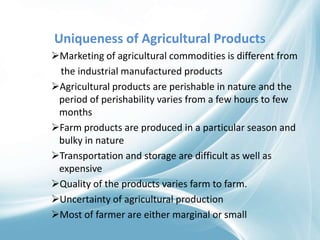
Uniqueness of Agricultural Products
Marketing of agricultural commodities is different from
the industrial manufactured products
Agricultural products are perishable in nature and the
period of perishability varies from a few hours to few
months
Farm products are produced in a particular season and
bulky in nature
Transportation and storage are difficult as well as
expensive
Quality of the products varies farm to farm.
Uncertainty of agricultural production
Most of farmer are either marginal or small
Role of Distribution Channels in Agribusiness
Marketing
• Distribution Channels serve as a network, which creates value
for the consumer by generating possession, time and place
utilities.
• There are a number of middlemen and merchants, including
govt. and cooperative agencies, who act as links between the
producers and consumers.
• Place utility of agricultural products.
• Time utility to make possible to have efficient and faster
delivery of products to the final consumer.
• Availability of goods in convenient pack, size, shape and weight
creates convenience value for the consumer.
Channels Involved in Agriculture
products Distribution
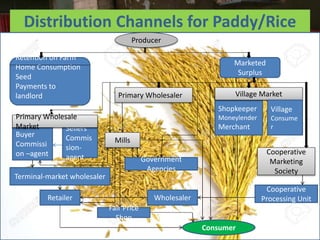
Distribution Channels for Paddy/Rice
Retention on Farm
Home Consumption
Seed
Payments to
landlord
Marketed
Surplus
Buyer
Commissi
on –agent
Sellers
Commis
sion-
agent
Primary Wholesale
Market
Primary Wholesaler
Shopkeeper
Moneylender
Merchant
Village Market
Mills
Terminal-market wholesaler
Government
Agencies
Retailer Wholesaler
Cooperative
Processing Unit
Fair Price
Shop
Consumer
Producer
Cooperative
Marketing
Society
c Village
Consume
r
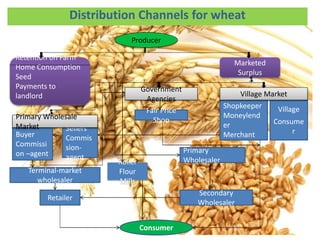
Distribution Channels for wheat
Retention on Farm
Home Consumption
Seed
Payments to
landlord
Marketed
Surplus
Buyer
Commissi
on –agent
Sellers
Commis
sion-
agent
Primary Wholesale
Market
Primary
Wholesaler
Village
Consume
r
Shopkeeper
Moneylend
er
Merchant
Village Market
Roller
Flour
Mills
Terminal-market
wholesaler
Government
Agencies
Retailer
Secondary
Wholesaler
Fair Price
Shop
Consumer
Producer
c
c
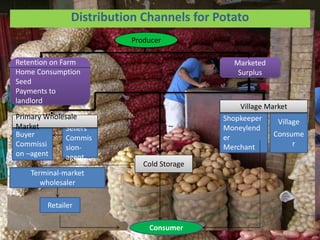
Distribution Channels for Potato
Retention on Farm
Home Consumption
Seed
Payments to
landlord
Marketed
Surplus
Buyer
Commissi
on –agent
Sellers
Commis
sion-
agent
Primary Wholesale
Market
Village
Consume
r
Shopkeeper
Moneylend
er
Merchant
Village Market
Cold Storage
Terminal-market
wholesaler
Retailer
Consumer
Producer
c
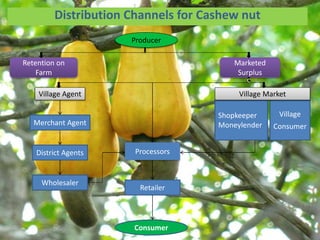
Distribution Channels for Cashew nut
Retention on
Farm
Marketed
Surplus
Wholesaler
Village
Consumer
Shopkeeper
Moneylender
Village Market
Processors
Village Agent
Consumer
Producer
c
Merchant Agent
District Agents
Retailer
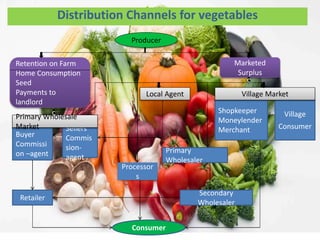
Distribution Channels for vegetables
Retention on Farm
Home Consumption
Seed
Payments to
landlord
Marketed
Surplus
Buyer
Commissi
on –agent
Sellers
Commis
sion-
agent
Primary Wholesale
Market
Primary
Wholesaler
Village
Consumer
Shopkeeper
Moneylender
Merchant
Village Market
Processor
s
Local Agent
Retailer
Secondary
Wholesaler
Consumer
Producer
c
c
Conclusion
Distribution Channel in India is multi layer structure. And there
are multiple nos of middlemen responsible for delivering agriculture
products from producer to consumer. Farmers with land less than
0.5 ac usually go to nearer market and keep selling their grains,
vegetables, live stocks, etc weekly. Farmers with land not more
than 5 ac mostly sell their produce in nearer market or other
weekly market. Farmers with land more than 0.5 ac tends to choose
different modes of channel
Distribution channels involved in agribusiness

Distribution channels involved in agribusiness

  • 1.
    Presented By AJIT MAJUMDER Deptt.of ABMFT ABMFT 1601 Presentation On Distribution channels involved in Agribusiness case study: PresentedBy AJIT MAJUMDER Deptt. of ABMFT ABMFT 1601
  • 2.
    Introduction The marketing ofagricultural commodities is poor in India. Global marketing network is not that developed for agricultural commodities. The Marketing channels for agricultural products vary from product to product, production to production and time to time. E.g. Marketing channels for food grains will differ from oil seeds, eggs, and live poultry.
  • 3.
    Few definitions: Distribution: Shipping rightproduct at right quantity in right place on right time. Distribution Channel: Physical flow of goods and services from producers to consumers. Intermediary(Middleman): Wholesaler or retailer that operates between producers and consumers. Dual Distribution: Network that moves products to a firm’s target market through more than one marketing channel. Reverse Channels: Channels designed to return goods to their producers.
  • 4.
    Reverse Channels Inbound DistributionOutbound Distribution Consumer Goods Supplier Company Reseller Customer Agent Producer Producer Producer Producer Wholesale Wholesale Retailer Retailer Retailer Consumer Consumer Consumer Consumer Types of Marketing Channels
  • 5.
    Producer Producer Producer Producer Agent Agent Warehouse Warehouse Business User BusinessUser Business User Business User Service Provider Service Provider Agent Consumer or Business User Consumer or Business User Types of Marketing Channels Business Goods Services
  • 6.
    Uniqueness of AgriculturalProducts Marketing of agricultural commodities is different from the industrial manufactured products Agricultural products are perishable in nature and the period of perishability varies from a few hours to few months Farm products are produced in a particular season and bulky in nature Transportation and storage are difficult as well as expensive Quality of the products varies farm to farm. Uncertainty of agricultural production Most of farmer are either marginal or small
  • 7.
    Role of DistributionChannels in Agribusiness Marketing • Distribution Channels serve as a network, which creates value for the consumer by generating possession, time and place utilities. • There are a number of middlemen and merchants, including govt. and cooperative agencies, who act as links between the producers and consumers. • Place utility of agricultural products. • Time utility to make possible to have efficient and faster delivery of products to the final consumer. • Availability of goods in convenient pack, size, shape and weight creates convenience value for the consumer.
  • 8.
    Channels Involved inAgriculture products Distribution
  • 9.
    Distribution Channels forPaddy/Rice Retention on Farm Home Consumption Seed Payments to landlord Marketed Surplus Buyer Commissi on –agent Sellers Commis sion- agent Primary Wholesale Market Primary Wholesaler Shopkeeper Moneylender Merchant Village Market Mills Terminal-market wholesaler Government Agencies Retailer Wholesaler Cooperative Processing Unit Fair Price Shop Consumer Producer Cooperative Marketing Society c Village Consume r
  • 10.
    Distribution Channels forwheat Retention on Farm Home Consumption Seed Payments to landlord Marketed Surplus Buyer Commissi on –agent Sellers Commis sion- agent Primary Wholesale Market Primary Wholesaler Village Consume r Shopkeeper Moneylend er Merchant Village Market Roller Flour Mills Terminal-market wholesaler Government Agencies Retailer Secondary Wholesaler Fair Price Shop Consumer Producer c c
  • 11.
    Distribution Channels forPotato Retention on Farm Home Consumption Seed Payments to landlord Marketed Surplus Buyer Commissi on –agent Sellers Commis sion- agent Primary Wholesale Market Village Consume r Shopkeeper Moneylend er Merchant Village Market Cold Storage Terminal-market wholesaler Retailer Consumer Producer c
  • 12.
    Distribution Channels forCashew nut Retention on Farm Marketed Surplus Wholesaler Village Consumer Shopkeeper Moneylender Village Market Processors Village Agent Consumer Producer c Merchant Agent District Agents Retailer
  • 13.
    Distribution Channels forvegetables Retention on Farm Home Consumption Seed Payments to landlord Marketed Surplus Buyer Commissi on –agent Sellers Commis sion- agent Primary Wholesale Market Primary Wholesaler Village Consumer Shopkeeper Moneylender Merchant Village Market Processor s Local Agent Retailer Secondary Wholesaler Consumer Producer c c
  • 14.
    Conclusion Distribution Channel inIndia is multi layer structure. And there are multiple nos of middlemen responsible for delivering agriculture products from producer to consumer. Farmers with land less than 0.5 ac usually go to nearer market and keep selling their grains, vegetables, live stocks, etc weekly. Farmers with land not more than 5 ac mostly sell their produce in nearer market or other weekly market. Farmers with land more than 0.5 ac tends to choose different modes of channel